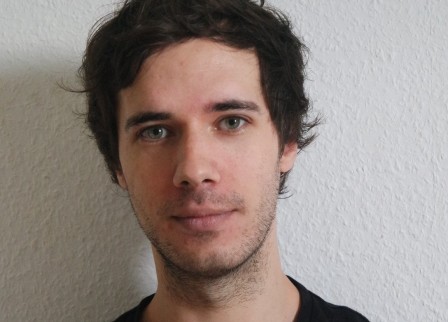
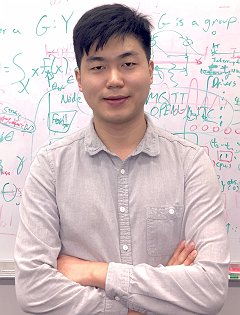
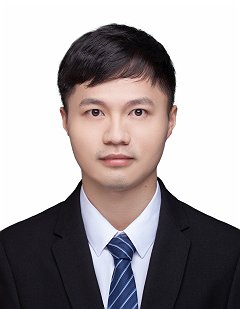
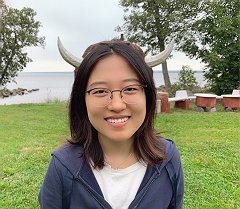
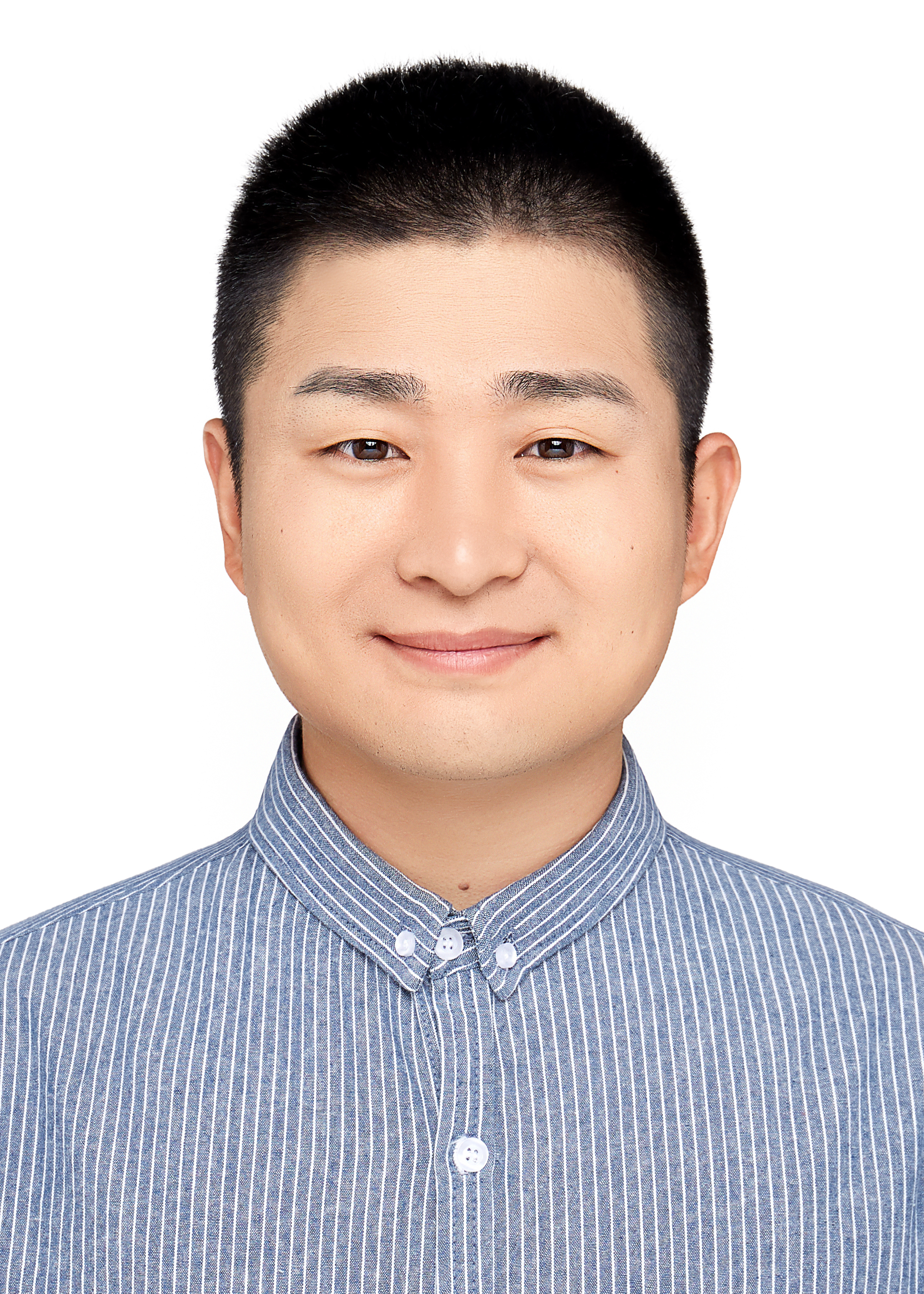
Prof. Dr. Thomas Kopinski is a Professor at the Faculty of Engineering and Economics, South Westphalia University of Applied Sciences in Meschede, Germany. He leads the AI Safety and Collective Intelligence Lab, focusing on cutting-edge research in machine learning applications for industrial and automotive systems. His work bridges academic research and industry collaborations, notably with BMW AG. Research Focus: His team explores: Deep learning architectures for real-time gesture recognition and automotive HMI AI safety protocols and collective intelligence frameworks Industrial applications including predictive maintenance and anomaly detection 3D programming and sensor fusion techniques Team & Students: Current advisees include PhD candidates working on: Bayesian deep learning for predictive maintenance (Felix Neubürger) Generative models for image synthesis (Yasser Saeid) Object recognition in crash test videos (Daniel Gierse) Key Projects: Actively directs WiTraPres and Core Transformer initiatives, with upcoming R&D in AI Safety launching in 2025. Industrial collaborations focus on automotive safety systems and manufacturing optimization.
Muhammad Naeem is a Postdoctoral Researcher at the Institute of Community Medicine, University Medicine Greifswald, specializing in epidemiological investigations of metabolic diseases. His primary affiliation is with Till Itterman's Lab within the Study of Health in Pomerania (SHIP) consortium, with additional affiliations at the Max Planck Institute for Demographic Research and DGepi (German Society for Epidemiology). Previously associated with the Department of Zoology at University of Malakand, Pakistan, his research bridges population health and clinical medicine. Dr. Naeem's research focuses on the epidemiology of metabolic disorders, with particular emphasis on body composition analysis , hepatic/splenic volume assessment , and their relationships with diabetes, cardiovascular risks, and mortality. His work uniquely compares measurement modalities (anthropometry, bioelectrical impedance, MRI) to determine optimal biomarkers for disease prediction. Current investigations examine sex-specific lipid mediator effects, organ volume-fitness relationships, and longitudinal inflammatory dynamics. His publication record shows significant productivity with 12 peer-reviewed articles (2016-2025), including 8 in the last three years. Analysis of his recent work reveals a strong trend toward multimodal assessment of body composition and organ volumes as predictors of metabolic disease, with increasing methodological sophistication in longitudinal and sex-stratified analyses. Research consistently leverages the SHIP cohort's rich dataset combining clinical, imaging, and biochemical parameters. Member of DGepi (German Society for Epidemiology) Affiliated with Max Planck Institute for Demographic Research Active contributor to SHIP study consortium Dr. Naeem's research program demonstrates robust institutional support through access to the SHIP cohort infrastructure, including advanced imaging facilities and population databases. His collaborative network spans multiple German research institutions and international partners, facilitating comprehensive investigations into metabolic disease pathways. The lab environment emphasizes rigorous epidemiological methods and translational applications of population findings to clinical practice.
Prof. Dr. Christian Rich is a Professor at Frankfurt University of Applied Sciences in the Faculty of Computer Science and Engineering. He holds leadership roles as head of three bachelor's degree programs: Business Information Systems, Engineering Business Information Systems, and International Business Information Systems. Additionally, he serves on the examination board for business informatics. His research focuses on applied information technology domains: Databases & Information Systems : Design and optimization of data architectures Data Warehousing : Business intelligence infrastructure IT Security : Data protection frameworks IT Project Management : Implementation methodologies Office hours are held Thursdays 2:15-3:15 PM in Building 1, Room 227, with alternative scheduling available via email. Contact methods include rich@fra-uas.de with PGP/GPG or S/MIME encryption options. Course materials are accessible through the campUAS e-learning platform.
Professor Michael Beck holds a HTA Professorship in Sustainable Horticultural Management at the University of Applied Sciences Weihenstephan-Triesdorf (HSWT), where he also serves as Director of the Institute of Horticulture. He is affiliated with the Department of Horticulture and Food Technology, contributing to HSWT's research focus on sustainable land use and horticultural production. His research interests span Sustainable Horticultural Management , Water Resource Management in Agriculture , Digital Knowledge Bases for Agricultural Decision Support , and LED Lighting Control in Horticulture . Professor Beck has pioneered work in developing decision support systems for nutrient management using semantic web technologies and fuzzy logic, as well as exploring energy-saving strategies through dynamic LED lighting in plant production. His recent publications demonstrate a strong trend toward digital transformation in agriculture, focusing on data integration, knowledge management, and precision farming techniques. These works consistently address practical challenges faced by farmers while incorporating cutting-edge technologies to improve sustainability and efficiency. Lead researcher on water-saving potential assessment in horticultural irrigation systems Principal investigator for projects bundling research capacities in sustainable horticulture Key contributor to Bavaria's agricultural data space initiatives Professor Beck's advisory approach centers on practical, field-tested solutions that bridge the gap between academic research and real-world agricultural challenges. His projects typically involve close collaboration with industry partners, ensuring research outcomes directly benefit farming practices. As Director of the Institute of Horticulture, he oversees research activities focused on optimizing horticultural production while maintaining environmental sustainability.
Maura John serves as a Research Associate at the Chair of Bioinformatics at Hochschule Weihenstephan-Triesdorf's Straubing Campus for Sustainable Resource Use. Her research focuses on developing advanced computational methods for biological data analysis, with particular expertise in genome-wide association studies and protein structure prediction. Her primary research interests include: Genome-wide association studies with permutation-based significance thresholds that preserve population structure Development of bioinformatics tools like permGWAS2 and easyPheno Protein thermostability prediction using machine learning approaches Genomic selection methodologies for crop breeding applications Dr. John's recent publications demonstrate a strong focus on methodological improvements in computational biology, particularly addressing limitations of traditional approaches in handling skewed phenotype distributions and population structure. Her work bridges theoretical statistical methods with practical biological applications across plant genomics and protein science. Notable contributions include: permGWAS2: An improved method that maintains population structure during permutations ProLaTherm: A protein language model-based thermophilicity predictor outperforming existing methods easyPheno: A comprehensive Python framework for phenotype prediction model comparison Her research program demonstrates strong collaborative efforts with Dominik Grimm's group and other bioinformatics researchers, focusing on developing open-source tools that address critical challenges in genomic data analysis. The work has practical applications in plant breeding, protein engineering, and understanding genotype-phenotype relationships.
Xin Zhang serves as an Assistant Professor in the Department of Computer Science and Technology within the School of Electronics Engineering and Computer Science at Peking University. His academic profile demonstrates deep engagement with programming languages and software engineering research communities through active participation in major conferences including ASE, SPLASH/OOPSLA, PLDI, and ICSE. Dr. Zhang's research focuses on the synergistic relationship between program analysis and machine learning. He investigates how ML/AI techniques can enhance traditional program analysis methods while simultaneously developing program analysis approaches to improve the interpretability, fairness, robustness, and safety of AI systems. His work spans probabilistic program analysis, abstraction refinement techniques, Bayesian modeling for program semantics, and applications of graph neural networks to static analysis problems. His publication record shows consistent contributions to top venues from 2016 through 2025, with recent work emphasizing Bayesian program analysis, abstraction refinement methods, and the intersection of formal methods with machine learning. The trajectory of his research demonstrates increasing sophistication in combining traditional program analysis techniques with modern AI approaches. Dr. Zhang actively contributes to the academic community as a program committee member for major conferences including ASE, SAS, PLDI, and SPLASH. His service includes reviewing, session chairing, and committee participation across multiple venues, reflecting his standing in the programming languages and software engineering communities.
Xiao Yu is a Research Fellow (Assistant Research Professor) at the State Key Laboratory of Blockchain and Data Security, Zhejiang University, Hangzhou, China. Previously, they were a Postdoctoral Researcher at Huawei under Prof. Xin Xia. They hold dual PhD degrees: from Wuhan University's School of Computer Science (December 2020) supervised by Prof. Jin Liu, and from City University of Hong Kong's Department of Computer Science (March 2021) supervised by Prof. Qing Li and Prof. Jacky Wai Keung. Research focuses on three interconnected domains: LLMs Data Governance and Evaluation addressing hallucination phenomena and task-specific LLM evaluation in software engineering; Intelligent Software Engineering leveraging deep learning for code generation, annotation, and maintenance; and Software Security and Reliability investigating vulnerability detection, log anomaly identification, and security bug classification. Their work bridges theoretical advancements with industrial applications, particularly in blockchain and data security contexts. Recent publications demonstrate strong trends in realistic LLM evaluation (RealisticCodeBench), vulnerability detection using semi-supervised learning, and industrial anomaly detection. Key thematic areas include effort-aware defect prediction, code smell detection, and the practical application of large language models in software engineering tasks, with increasing emphasis on data quality and privacy considerations. Xiao Yu actively contributes to the academic community through extensive service roles including journal reviewing for ACM Transactions on Software Engineering and Methodology, IEEE Transactions on Dependable and Secure Computing, and serving on program committees for major conferences like APSEC 2025 and ASE 2025. They have supervised numerous graduate students as evidenced by authorship patterns in publications. Based at Zhejiang University's State Key Laboratory of Blockchain and Data Security, their research operates at the intersection of academic rigor and industrial relevance, with strong collaborations spanning multiple institutions including Huawei, Wuhan University, and City University of Hong Kong.
Xiaoning Du is a Senior Lecturer (equivalent to U.S. Associate Professor) at the Department of Software Systems and Cybersecurity within the Faculty of Information Technology at Monash University, Australia. She was promoted to this position effective July 1, 2025, having previously served as a Lecturer (Assistant Professor) since joining Monash in February 2021. Her research bridges the gap between theory and practical applications of program analysis and formal methods in evaluating traditional and AI-assisted software systems. Dr. Du's educational background includes: PhD from Nanyang Technological University (2020) Bachelor's degree from Fudan University (2014) Dr. Du specializes in software engineering, artificial intelligence, and cybersecurity , with particular focus on SE4AI (Software Engineering for AI), software analysis and testing . Her research has made significant contributions to the security and quality assurance of intelligent software systems, especially intelligent software engineering tools. She is best known for her work on Devign , BigCodeBench , DeepStellar , and SimPy , which have advanced the fields of code generation, program analysis, and AI security. Her approach consistently bridges theoretical foundations with practical applications to improve software quality and security. Dr. Du's recent publications demonstrate a strong focus on the intersection of software engineering and AI, particularly examining how large language models interact with source code. Her work addresses critical challenges in code generation efficiency, security vulnerabilities in AI-assisted development, and fairness in AI systems. She has made significant contributions to benchmarking frameworks like BigCodeBench and has pioneered research on watermarking techniques to protect code datasets from misuse by neural code completion models. Dr. Du has received numerous prestigious awards and recognitions: 2024 Google Research Scholar Award in Software Engineering ACM SIGSOFT Distinguished Paper Award (ISSTA'24) ICLR Oral presentation (2025) 2024 FIT Dean's Early Career Researcher of the Year Award Multiple FIT ECR Seed Grants (2021-2023) Dr. Du actively mentors PhD students, with notable successes including Terry (2024-2025 IBM PhD Fellowship Award recipient) and Zhensu (2024 Bytedance Scholarship Award recipient). She is currently seeking self-motivated PhD students with strong programming skills and relevant research experience, offering full scholarship support. Her research has been supported by multiple grants including the Google Research Scholar Program award and several FIT ECR Seed Grants that have enabled her team to pursue innovative research in software security and AI-assisted development. Dr. Du leads a research group focused on intelligent software systems security and quality assurance. Her team has developed several influential tools and benchmarks including Devign, BigCodeBench, DeepStellar, and SimPy. These resources have become important assets for researchers and practitioners working at the intersection of software engineering and artificial intelligence, particularly in the areas of code generation, program analysis, and security testing of AI systems.
Jie Lu is an Associate Professor at the Institute of Computing Technology of the Chinese Academy of Sciences (ICT, CAS), where he leads research in software security and program analysis. His work focuses on developing advanced program analysis techniques to improve software reliability and security, with applications in cloud systems, distributed environments, and modern web applications. Dr. Lu's research interests include: Software Security: Focusing on vulnerability detection and prevention in open-source software Program Analysis: Specializing in static/dynamic analysis techniques and context-sensitive pointer analysis Cloud Systems: Researching distributed system security, crash-recovery, and concurrency bug detection His recent publications demonstrate a strong focus on practical security solutions for real-world systems. The research spans Kubernetes ecosystems, PHP applications, Linux kernel security, Java web applications, and Windows IPC systems. A notable trend is the development of precise static analysis techniques that balance efficiency with accuracy, addressing the longstanding challenge in program analysis. His work often bridges theoretical advances with practical implementations that have been adopted by industry. Dr. Lu has received several prestigious awards: ACM SIGSOFT Distinguished Paper Award 2025 Best Paper Honorable Mention at CCS 2022 Chinese Academy of Sciences Outstanding Doctoral Dissertation 2021 Chinese Academy of Sciences President's Special Award 2020 ICT New Hundred Stars 2020 Dr. Lu actively mentors students and researchers, recruiting PhD candidates, Master students, and research interns interested in software security and program analysis. His research has been supported by the National Natural Science Foundation of China, CCF-Huawei Innovation Research Plan, and CCF-Ant Research Fund. The Program Analysis Group (ICT-PAG) at the National Key Laboratory of Processor has successfully identified numerous errors and vulnerabilities in popular open-source applications, with over 200 severe bugs confirmed by the open-source community and assigned more than 100 CVE numbers. His research group, the Program Analysis Group (ICT-PAG), is based in the National Key Laboratory of Processor at ICT, CAS. The group has achieved significant impact through both academic publications in top venues (SOSP, CCS, USENIX Security, NDSS, OOPSLA, ISSTA, FSE, ASE, TSE) and practical applications in leading IT companies and government organizations.
Masud Rahman is an Associate Professor in the Faculty of Computer Science at Dalhousie University, Canada, where he leads the RAISE Lab. Previously a tenure-track Assistant Professor, he completed his Ph.D. in Computer Science/Software Engineering from the University of Saskatchewan and a postdoctoral fellowship at Polytechnique Montreal. His academic career demonstrates strong progression with significant research impact in software engineering. Faculty of Computer Science, Dalhousie University (Current) University of Saskatchewan (Ph.D. studies) Polytechnique Montreal (Postdoctoral research) Dr. Rahman's research focuses on the intelligent automation of software maintenance and evolution, particularly targeting software debugging, code search, and code reviews. His work strategically combines Software Engineering with Artificial Intelligence techniques including Machine/Deep Learning, Information Retrieval, Mining Software Repositories, and Natural Language Processing. His industry experience as a professional developer for three years significantly shaped his research direction toward solving practical software maintenance challenges that cost the global economy billions annually. His research program addresses critical problems in software bug detection, diagnosis, explanation, and reproduction, with increasing focus on AI-powered and simulation modeling software. His publications demonstrate consistent output in top-tier venues including 7 papers at ICSE (A*), 3 at FSE (A*), 3 at ASE (A*), 8 at EMSE (A), 6 at ICSME (A), and 9 at MSR (A). The research trends show increasing focus on deep learning applications for software engineering problems, with particular attention to code search, bug localization, and debugging automation. His work has evolved from traditional information retrieval approaches to incorporate advanced neural network techniques and generative AI. Governor General's Gold Medal 2019 U of S Doctoral Thesis Award 2019 CS Best PhD Thesis Award 2019 TCSE Distinguished Paper Award Most Influential Paper Award Dr Keith Geddes Award Dalhousie Belong Research Fellowship President's Gold Medal (Bangladesh) Dr. Rahman has secured $500K+ in competitive research funding as Principal Investigator, including an NSERC Discovery Grant, Mitacs Accelerate International, and Climate Action and Awareness Fund. He actively collaborates with industry partners including Metabob Inc., Mozilla Firefox, and Vendasta Technologies. His service to the community includes extensive program committee work for major conferences and journal reviewing. He leads the RAISE Lab, which focuses on developing AI-powered solutions for software maintenance challenges, with current projects emphasizing sustainable software innovation and sustainable AI as part of Dalhousie's strategic goals.
Lian Li is a Professor in the Institute of Computing Technology at the Chinese Academy of Sciences, where he leads the program analysis research group. He holds a PhD from the University of New South Wales, Australia, and a Bachelor's degree from Tsinghua University in Engineering Physics. His research focuses on developing innovative program analysis techniques and tools to enhance software reliability and security. His educational background includes a PhD in Computer Science from the University of New South Wales (2003-2007) with a thesis on "ScratchPad Management for Static Data Aggregates" under Professor Jinling Xue, and a Bachelor's degree in Engineering Physics from Tsinghua University (1993-1998). Lian Li's research primarily centers on program analysis techniques, particularly static analysis methods for software security and reliability. His group developed Wukong, a static analysis and detection system capable of identifying deep security vulnerabilities across functions, components, and complex dependencies in C/C++, Java, and Android applications. This tool has discovered thousands of errors in popular open-source software including Google Chromium, Bash, sed, and Hadoop, with hundreds confirmed by developers and over 50 CVEs assigned. His publication record shows a strong focus on program analysis, particularly context-sensitive pointer analysis, taint analysis, and vulnerability detection. His recent work (2021-2024) demonstrates continued innovation in context-free language reachability, efficient IFDS algorithms, and specialized analysis for generics and authorization vulnerabilities. His research spans cybersecurity, programming languages, and software engineering domains, with emphasis on practical applications for real-world software systems. ASE 2019 Distinguished Paper Award CCS 2022 Best Paper Honorable Mention Lian Li has guided numerous PhD and Master's students in computer system architecture and software theory. His research group maintains active collaborations across various software analysis domains, with funding supporting their work on tools like Wukong. They have developed significant intellectual property including multiple patents related to program analysis techniques. The program analysis research group he leads focuses on developing practical tools for software reliability and security. Their work bridges theoretical program analysis with real-world applications, particularly through the Wukong analysis system which has been successfully applied to major open-source projects.
Andrea Arcuri is a Professor of Software Engineering at Kristiania University College in Oslo, Norway, where he leads the AISE lab. Since 2020, he also holds a part-time position as Adjunct Professor at Oslo Metropolitan University. After 5 years in industry (WesternGeco and Scienta/Telenor), he returned to academia full-time in October 2016. His research primarily focuses on automated software testing and search-based software engineering. Prof. Arcuri's research interests center around Software Testing , Search-Based Software Engineering , and Automated Testing techniques. He has made significant contributions to the field through the development of testing tools like EvoMaster for system-level test generation and EvoSuite for unit test generation. His work bridges theoretical foundations with practical applications, particularly in RESTful API testing and enterprise systems. His recent publications show a strong trend toward practical applications of search-based testing in industry settings, with particular emphasis on RESTful API testing, fuzz testing, and integration with modern development practices like DevOps. The research spans both theoretical foundations of search-based testing and practical tool development. ACM SIGSOFT Impact Paper Award 2023 for EvoSuite ICST 2022 10-Year Most Influential Paper Award ICSE 2021 10-Year Most Influential Paper Award Ranked 2nd Most Active Early Stage SE Researcher in JSS'18 Multiple Best/Distinguished Paper awards at SSBSE, ASE, and ISSTA Prof. Arcuri actively supervises PhD students and post-docs, including Iva Kertusha, Susruthan Seran, and Onur Duman. He serves in leadership roles for major conferences, including as FSE 2025 Artifact Track Chair and ICST 2022 Test Tool and Demo Track Chair. His research is supported through various academic grants and industry collaborations. He leads the AISE (Artificial Intelligence and Software Engineering) lab at Kristiania University College, where his team develops and maintains the EvoMaster system test generation tool. The lab focuses on practical applications of search-based software testing in real-world enterprise settings.
Sebastian Leuoth serves as Professor and Vice Dean of the Faculty of Informatics at Hof University, based at the Institute of Information Systems (iisys) on the Hof campus. He holds office hours Wednesdays 13:15-13:45 via email and Zoom from Building B, Room B129, and directs the Business Informatics program as its academic leader. His research centers on Information Systems with specialized expertise in Database Management Systems and Business Informatics integration. He examines how database technologies enable business process optimization, enterprise resource planning, and data-driven decision-making in organizational contexts. Current work emphasizes practical applications of information systems in German industrial and SME environments through his program leadership.
Professor Kristina Schädler is a faculty member at the West Coast University of Applied Sciences (FH Westküste), where she serves as Professor of Data Processing within the School of Technology. She has been with the university since 2005 and also served as Dean of the Department of Technology. Her academic background includes a PhD in machine learning from TU Berlin, where she was awarded the Chorafas Research Prize for young scientists. West Coast University of Applied Sciences (since 2005) TU Berlin, Institute of Computer Science (1994-1999) Martin Luther University Halle/Wittenberg (1990-1994) Professor Schädler's research focuses on artificial intelligence and machine learning applications, particularly in image processing and data analysis. Her work spans multiple domains including industrial automation, agricultural technology, renewable energy, and animal husbandry. She has led numerous research projects that bridge academic theory with practical industrial applications, with particular emphasis on developing robust image processing systems that can be deployed in real-world settings. Her research portfolio demonstrates a consistent pattern of applying advanced machine learning techniques to solve practical problems across diverse industries. The ANIMET project, which developed facial recognition for horses, and the MaviSeg system for multichannel image segmentation represent her innovative approach to adapting computer vision technologies for specialized applications. Her work often involves close collaboration with industry partners to ensure practical relevance and implementation. Chorafas Research Prize for young scientists Innovationspreis at Equitana (2013) for the ANIMET project Professor Schädler has supervised numerous student theses that have resulted in practical applications across various domains. Her research group has secured funding from multiple sources including the European Commission, BMBF, and regional development agencies. She has established the CICAD project as a sustainable competence center for industrial image processing, which has trained multiple doctoral students through cooperative programs with the University of Lübeck. Her work demonstrates strong industry connections with companies like HIT Hinrichs Innovation + Technik, MBJ Solutions, and Fischer und Tausche Kondensatoren. Her research laboratory focuses on industrial image processing applications, with specialized equipment for 2D/3D imaging, spectral analysis, and machine learning implementation. The CICAD project established a dedicated competence center that continues to develop new applications of image processing technology across multiple industries.