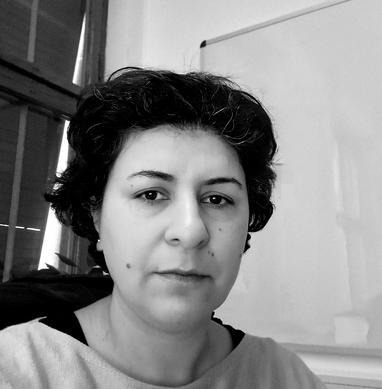
Maike Buchin is a Professor of Theoretical Computer Science / Algorithmics at the Faculty of Computer Science, Ruhr-University Bochum, where she has been serving since 2019. She also holds the position of Studiendekanin Informatik (Dean of Studies for Computer Science). Prior to her current position, she was a Visiting Professor at Technical University Dortmund (2017-2019) and a Juniorprofessor at Ruhr University Bochum (2013-2017). Dr. Buchin's research focuses on computational geometry, algorithms, and trajectory analysis. Her work particularly emphasizes Frechet distance computations, curve matching, and geometric algorithms. She has made significant contributions to understanding the computational complexity of geometric problems and developing efficient algorithms for trajectory data analysis. Her research has applications in geographic information systems, movement pattern analysis, and shape comparison. Analysis of her recent publications reveals a strong focus on clustering algorithms for polygonal curves, Frechet distance computations, and trajectory analysis. Her work bridges theoretical computer science with practical applications in GIS and movement data analysis. She has developed approximation algorithms, coreset constructions, and efficient query processing techniques for geometric problems. Her research has been published in top-tier venues including ACM Transactions on Algorithms, Computational Geometry: Theory and Applications, and proceedings of major conferences like Symposium on Computational Geometry (SoCG) and European Symposium on Algorithms (ESA). Dr. Buchin has supervised numerous students and taught courses including Algorithm Paradigms, Computer Science 2 - Algorithms and Data Structures, Computer Science 3 - Theoretical Computer Science, Geometric Algorithms, Data Structures, and seminars on Cryptology and Theoretical Computer Science. She leads research in the Theoretical Computer Science / Algorithmics group at Ruhr-University Bochum, collaborating with researchers worldwide on computational geometry problems and their applications.