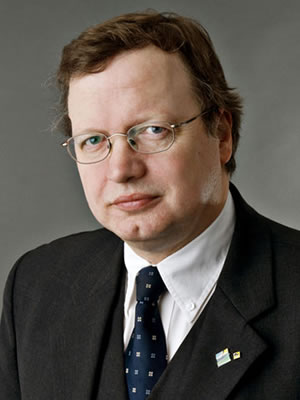
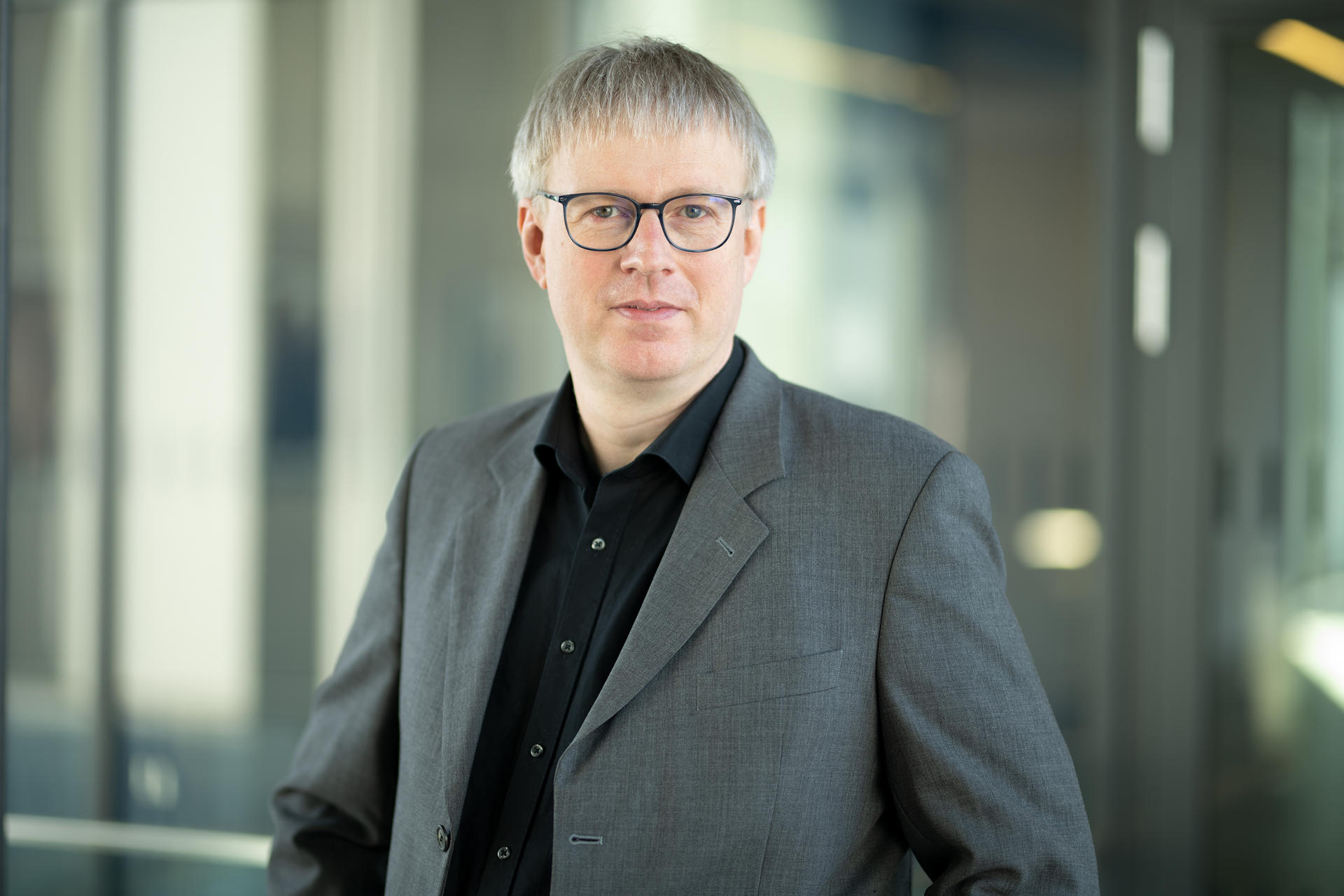
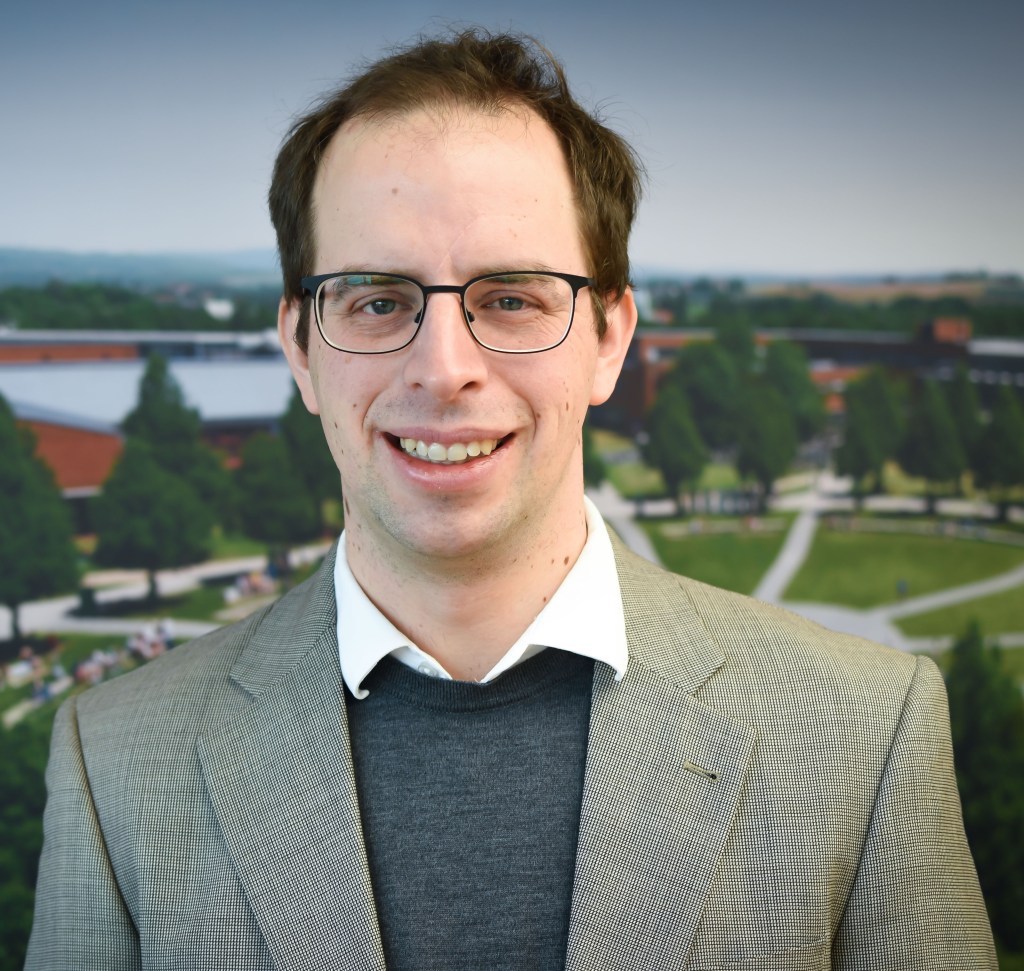
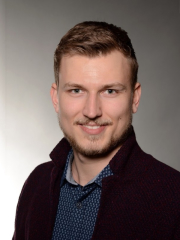
Prof. Dr. rer. nat. Knut Verbarg is a faculty member at Stralsund University of Applied Sciences, specializing in Business Informatics . His work focuses on databases, ERP systems, and IT-supported project management. He teaches courses such as Business Informatics , Databases I/II , and In-Memory Computing , with direct contact via email at Knut.Verbarg@hochschule-stralsund.de.
Prof. Dr. rer. nat. habil. Andreas Heuer holds the Chair of Database and Information Systems at the Institute of Computer Science, University of Rostock. He is actively involved in teaching and research related to database technologies and big data analysis. Research Focus: Object-relational databases, semantic query optimization, provenance management, SQL-based parallelization, privacy-aware request processing, and digital libraries. Teaching: Courses on databases, big data processing, relational database theory, and data science. Functions: Head of the Steinbeis Transfer Center for Databases, Search Engines and Digital Libraries (DBIS). Memberships: German Computer Science Society (GI), ACM, IEEE, German University Association (DHV), and the Interdisciplinary Faculty (INF) Department of Ageing of the Individual and Society.
Prof. Dr. med. Henning Schneider serves as a Professor at the Technical University of Central Hesse (THM), School of Health, with his office located at Ostanlage 45, Building B14, Room 2.07. His research spans telemedicine systems for chronic disease management, rare disease monitoring, and clinical informatics, with significant publications in emergency medicine technology and respiratory care. His primary research interests include: Telemedicine implementation for COPD and rare diseases Clinical data interoperability and EHR optimization Digital health solutions for pre-hospital emergency care Predictive modeling in chronic disease management IT-supported clinical trial recruitment systems Analysis of his 15 most recent publications (2015-2024) reveals consistent focus on telemonitoring technologies for respiratory diseases, evolving into rare disease awareness systems (RD-MON) and drone-based emergency response tools. His work emphasizes practical clinical integration, with methodologies centered on semantic interoperability (LOINC/FHIR), user acceptance studies, and health economic evaluations. Regarding academic mentorship, no doctoral students or formal advisees are documented in the provided materials. His collaborative research involves institutions across Germany, with frequent co-authorship with Sohrabi, Blasini, and Marquardt, though specific grant details remain unreported. Current projects appear centered on VR tolerability assessment and IT-enhanced trial recruitment, reflecting ongoing engagement with emerging health technologies.
Stefan Geisler is a Professor at Ruhr West University of Applied Sciences since 2010. He holds the professorship for Applied Computer Science / Human-Machine Interaction and serves as Program Director for the Human-Technology Interaction program. Since 2016, he has led the Positive Computing Research Institute , contributes to the Intelligent Mobility research program , and directs the Media and Interaction Department in the North Rhine-Westphalian doctoral program. Research Focus: Human-Machine Interaction (HMI), Natural User Interfaces (NUI), Usability Engineering, Automotive HMI, and Intelligent Mobility. Projects: Golden Rules in Automotive HMI, PARCURA (smart glasses in hospitals), UsAHome (home HMI systems), BMBF-funded AHA project (safety-critical interfaces), and intercultural/intergenerational innovation development. Collaborations: FH Struktur, IQPC Conference, CAMO network, and North Rhine-Westphalian doctoral program. Teaching: Covers the entire usability engineering lifecycle, emphasizing user testing integration and intuitive interface design. Publication Trends: Focus on automotive HMI optimization, gesture-based interaction, user experience in mobility systems, and human-centered design for safety-critical applications. Subfields include driver assistance systems, natural user interfaces in automated vehicles, and usability testing methodologies. Leadership: Directs the Positive Computing Research Institute and the Media and Interaction Department. Supervises doctoral research in intercultural innovation and automotive NUI development.
Felix Kiehn is a Researcher in the Department of Informatics at the University of Hamburg, where he focuses on distributed database systems and polyglot persistence architectures. He is currently completing his dissertation titled Design and Implementation of a scalable polyglot database system for data migration and mediation under the supervision of Prof. Dr. Norbert Ritter. His research explores: Polyglot persistence frameworks for heterogeneous data systems Data migration and mediation techniques Scalable architectures for NoSQL databases Distributed query optimization Kiehn's publications primarily address challenges in distributed data management, with recent work focusing on constraint modeling in polyglot systems (2024) and operator placement for spatio-temporal data processing (2022). He actively supervises student research, advising both Bachelor's and Master's theses on database topics. Current projects include contributing to the HADeS (Heterogenous and Adaptive Database System) research initiative.
Benjamin Wollmer is a Researcher at the Visual Systems (VSIS) department within the Faculty of Mathematics, Informatics and Natural Sciences at the University of Hamburg. He is actively involved in research projects such as Baqend and HADeS , focusing on web performance optimization and scalable data management. Research Focus : Web Engineering, Performance Optimization, Polyglot Data Management Key Publications : Explored delta encoding for web compression, scalable test data generation, and caching strategies Teaching : Supervised 15+ theses on topics including real-time databases and client-side performance
Wolfram Wingerath is a Professor for Data Science at the University of Oldenburg (since 2022) and previously served as Head of Data Engineering & Research at Baqend GmbH (2018-2022). He earned his PhD in Computer Science (2019) from the University of Hamburg, focusing on scalable push-based real-time query systems (InvaliDB). His research interests include: Real-time databases and stream processing NoSQL and polystore systems Web performance optimization Probabilistic data management Cloud computing and distributed systems Key publication trends show expertise in real-time data architectures, caching mechanisms, and performance engineering. Notable collaborations include Benjamin Wollmer and Felix Gessert . He has advised 49+ student theses and served on PC committees for ICDE, VLDB, and EDBT. His editorial roles include membership on Datenbank-Spektrum and organizing the BTW 2025 Data Science Challenge .
Jin Ke is a Doctoral Researcher at the Chair of Data Engineering, Technical University of Munich (TUM), since 2024, contributing to research and teaching activities at the Heilbronn campus. Previously, he served as a Doctoral Researcher at Ruhr Universität Bochum (2023-2024). His educational background includes: Master of Science in Applied Informatics, Ruhr-Universität Bochum (2020-2023) Bachelor of Science in Informatics, Technische Universität Dortmund (2017-2020) Research focuses on foundational data engineering with emphasis on knowledge graph implementation, database system optimization, and semantic data integration. His work bridges theoretical frameworks with practical applications in scalable data infrastructure development, particularly for academic and research-oriented data ecosystems. As part of Prof. Maribel Acosta's research group, he contributes to Collaborative Research Centers CRC 1608 and CRC 1625, addressing advanced data management challenges through semantic technologies and distributed systems design.
Herbert Woisetschläger is a Researcher at the Chair of Decentralized Information Systems and Data Management at the Technical University of Munich , pursuing his Ph.D. in distributed machine learning systems. He holds an M.Sc. in Information Systems (2020) and a B.Sc. in Business Administration (2017). Education M.Sc. in Information Systems, Technical University of Munich (2020) B.Sc. in Business Administration, Catholic University Eichstätt-Ingolstadt (2017) His research interests focus on: Distributed deep learning architectures Federated learning for industrial processes Economic implications of decentralized machine learning Blockchain-based systems for data management Herbert has taught courses on cloud databases , blockchain technologies , and large-scale graph processing since 2019, combining theoretical foundations with practical implementation. His work bridges distributed systems engineering with applied machine learning economics. Previously, he worked as a visiting associate at a Silicon Valley technology consulting firm and in CIO advisory at a global management consultancy, gaining industry experience before returning to academia.
Prof. Dr. Ruben Mayer is a computer science professor and current head of the Chair of Data Systems at the University of Bayreuth (since March 2023). He also serves as a guest professor at the Technical University of Munich (TUM) . Prior roles include interim professorships at TUM Campus Heilbronn and TUM's Chair of Application and Middleware Systems, following postdoctoral research at TUM and University of Stuttgart. His research focuses on large-scale distributed data analytics systems , including complex event processing , graph processing , deep learning systems , and decentralized systems like blockchains and edge computing. Recent work emphasizes federated learning and graph neural networks , with interdisciplinary exploration of machine learning and law . ACM DEBS Grand Challenge Audience Award (2016, 2017) ACM DEBS Grand Challenge Performance Award (2016) He has served as reviewer for top conferences like NeurIPS and ICDE, and as Associate Editor for PVLDB Volume 19 (VLDB 2026). His teaching spans cloud databases , distributed systems , and blockchain technologies across multiple semesters at TUM.
Dr. Susanne Dunker is a Working Group Leader and Deputy Department Head at the Department for Physiological Diversity at the Helmholtz Centre for Environmental Research (UFZ) and the German Center for Integrative Biodiversity Research (iDiv) in Leipzig, Germany. Her research bridges aquatic and terrestrial ecosystems with a focus on biodiversity assessment using advanced imaging techniques. Dr. Dunker's research interests span water quality, phytoplankton diversity, cyanobacterial blooms, air quality, pollination, and pollen diversity. She has pioneered the use of multispectral imaging flow cytometry for environmental monitoring, enabling high-throughput analysis of phytoplankton communities and pollen diversity. Her work integrates machine learning with biological analysis to develop innovative monitoring strategies for both aquatic and aerial ecosystems, with applications in understanding biodiversity dynamics, ecosystem services, and human health impacts. Her publication record demonstrates a strong focus on developing and applying imaging flow cytometry techniques across multiple domains. The research shows a clear trajectory from aquatic systems (phytoplankton analysis) to terrestrial systems (pollen analysis), with increasing integration of machine learning and deep learning approaches. Her work has significant implications for environmental monitoring, biodiversity assessment, and understanding the impacts of environmental change on ecosystem functioning. UFZ Technology Transfer Award (2019) UFZ Sustainability Challenge Award (2022) Dr. Dunker leads multiple research projects including PollenNet, OrthoDiv, ProtistQuant, PlanktAI, and SedimentAI, demonstrating her leadership in interdisciplinary research. Her work on reducing plastic in laboratories shows her commitment to sustainable research practices. She serves as a reviewer for numerous high-impact journals and participates in important scientific commissions including the German VDI/DIN mirror committee on automated pollen monitoring. Her laboratory utilizes advanced imaging flow cytometry and deep learning approaches to analyze biodiversity across different ecosystems. The iCyt platform she co-leads provides integrative cytomics support for biodiversity research. Her team's work connects microscopic biological processes with ecosystem-level functions, creating a bridge between cellular traits and environmental monitoring applications.
Dr. Stefan Klotz is Head of the Research Unit 'Ecosystems of the Future' and the Department of Community Ecology at the Helmholtz Center for Environmental Research (UFZ) in Halle, Germany. He holds a Diploma in Biology and Chemistry (1984) and a PhD in Phyto-Ecology (1996) from Martin-Luther-University Halle-Wittenberg. His research integrates community ecology, macroecology, and global change biology, focusing on biodiversity responses to climate change, land-use intensification, and invasive species. Key interests include ecosystem resilience, vegetation science, and ecological database development. Publications emphasize biodiversity dynamics under global change, with recurring themes in pollination networks, invasive species impacts, grassland resilience, and plant trait databases. Recent work advances large-scale ecological monitoring and experimental infrastructures. Professional Leadership & Projects: Board Member, International Association for Ecology (INTECOL) General Secretary, European Ecological Federation (EEF) Coordinator: EXPEER (EU ecosystem research infrastructure), ALARM (biodiversity risks), LEGATO (land-use engineering), and ALTER-Net (European biodiversity network) He leads UFZ's Community Ecology team, overseeing research on climate-ecosystem interactions and mentoring in macroecology, molecular ecology, and conservation biology.
Marten Borchers is a Researcher at the Department of Computer Science, Faculty of Mathematics, Computer Science and Natural Sciences, University of Hamburg. His work focuses on Business Information Systems and Socio-Technical Systems Design (WISTS) . Education : Dual Master's Degree from University of Bremen (AI, ML, NLP, IT Management), semester at University of Tartu Professional Experience : 4+ years in IT Consulting (Public Service Consultant) Research Interests include: Smart City and Climate Change Mitigation AI/ML Applications in Urban Mobility Collaboration Engineering for Citizen Participation E-Government and Digital Transformation His publications since 2023 focus on: ML-Based Energy Prediction for Electric Buses Bloom's Taxonomy in LLM-Assisted Learning Mobile Apps for Storm Flood Emergency Management AI Support for Urban Participation Platforms Scientific Awards : 2025 Hamburg Teaching Award (team award) for cross-border teaching innovations Advising & Grants : Co-author with Eva Bittner on 6 publications Collaboration with Springer, ACM, and IEEE journals Labs & Teams : Active member of WISTS (Socio-Technical Systems Design) research group Participant in D²S²C Hamburg and DDLitLab projects Collaboration with Hochbahn AG and STEAM ecosystem analysis
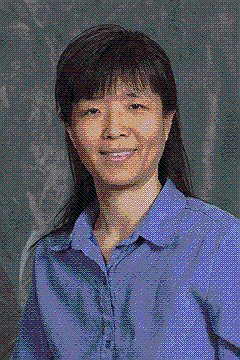
Annie Liu serves as Professor of Computer Science at Stony Brook University, holding a PhD from Cornell University alongside prior degrees from Peking and Tsinghua Universities. Her research centers on systematic methods for language and algorithm design, with emphasis on optimization frameworks applicable across critical computing domains. Her educational credentials include: BS in Computer Science from Peking University MEng in Computer Science from Tsinghua University PhD in Computer Science from Cornell University Liu’s research program investigates systematic analysis and transformation techniques for design optimization, particularly through incrementalization—the discrete counterpart of calculus differentiation. Her work spans optimizing compilers , interactive environments , database systems , distributed computing , and security , with projects addressing modeling, verification, code generation, and testing for real-time systems, semantic Web, and big data applications. The Design and Analysis Research Laboratory she directs bridges theoretical foundations with practical implementations. Analysis of her 2012-2025 publications reveals an evolution from foundational distributed algorithm design toward unifying frameworks for solver semantics and assurance. Key trends include increasing integration of incremental computation principles across compiler optimizations, database queries, and distributed system reliability. Her scientific recognition includes: State University of New York Chancellor’s Award for Excellence in Scholarship and Creative Activities Professor Liu has delivered over 100 international talks and maintains active conference leadership, serving on program committees for POPL, PEPM, and SPLASH through 2026. While specific grant details aren’t provided, her sustained involvement in high-impact venues like PADL and LPOP demonstrates significant research influence. She directs the Design and Analysis Research Laboratory where interdisciplinary teams advance optimization methodologies for emerging computational challenges.
Dominique Stutzmann is an Honorary Professor at Humboldt University of Berlin (since 2023) and Research Professor ( Research Director ) at the Institute for Research and History of Texts (IRHT-CNRS) since 2010. Specializing in Latin Palaeography , they lead the Department of Latin Palaeography at IRHT and coordinate the "Cluster 3: Artificial Intelligence" within the EquipEx Biblissima+ infrastructure. Their work bridges Medieval Manuscript Studies with Digital Humanities , focusing on text-image alignment , script classification , and machine learning applications for historical document analysis. Academic Education 2021: Qualification for a professorship ( Venia legendi ) from the Conseil National des Universités 2009: Habilitation thesis on Cistercian library networks 2002: Doctoral thesis Summa cum laude on Fontenay Abbey 2000: Paleographic Archivist diploma Summa cum laude Research Interests encompass medieval writing systems , digital paleography , manuscript digitization , and computational analysis of historical documents . They pioneered AI-driven full-text search engines for medieval manuscripts and developed open-source tools like Oriflamms for text-image alignment. Scientific Leadership includes Managing €2M+ in national/international grants Organizing colloquia and workshops Advisory roles for ERC projects DiDip and PRAYER Key Collaborations involve institutions such as the Bibliothèque Nationale de France , University of Hamburg , and University of Pennsylvania . Their editorial work spans journals like Scripta and Humanités numériques .