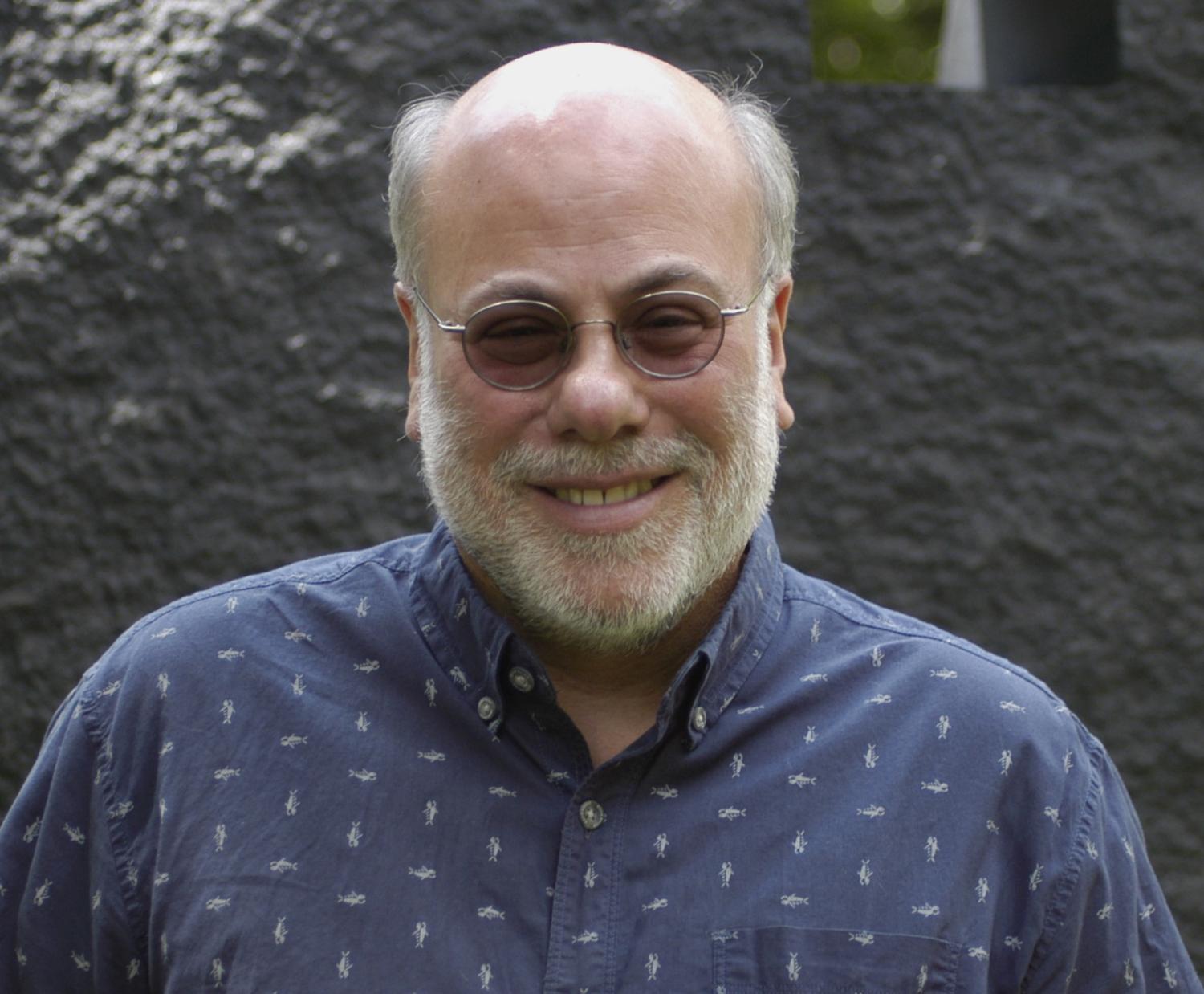
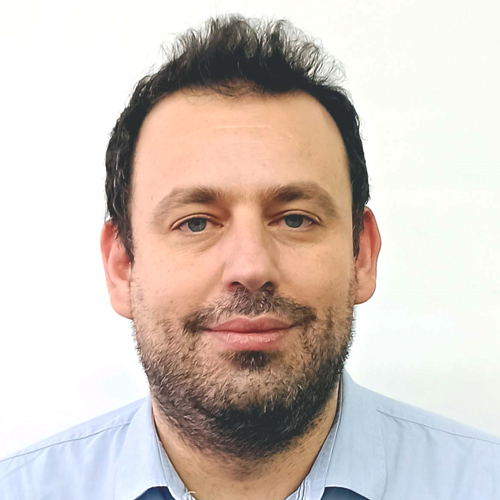
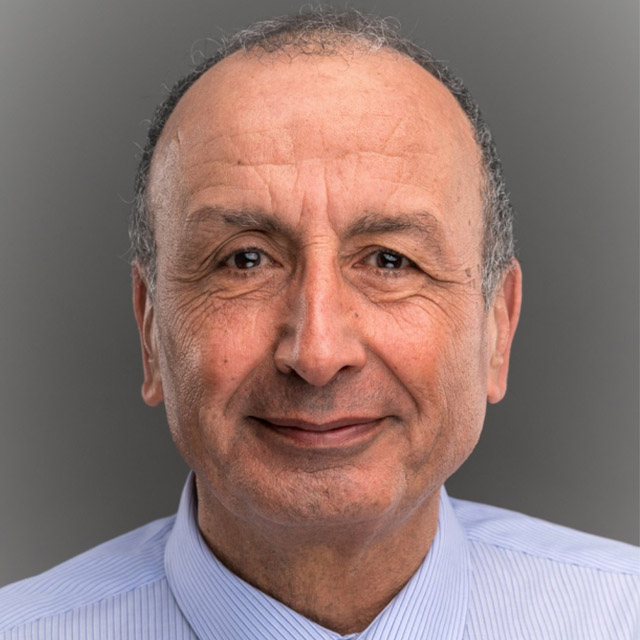
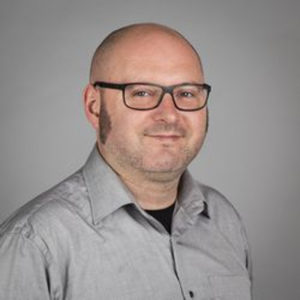
Bernd Münzer is a researcher at the Institute of Information Technology at Alpen-Adria-Universität Klagenfurt. His work focuses on medical multimedia, video retrieval systems, and human-computer interaction, particularly in endoscopic and laparoscopic video analysis. He contributes to projects involving deep learning for content identification, interactive exploration tools, and medical data visualization. Medical video analysis and retrieval Human-computer interaction in multimedia systems Endoscopic imaging and surgical skill assessment Dynamic content descriptors for video processing Collaborative video search frameworks Temporal analysis of clinical multimedia data His research includes developing tools like ECAT for endoscopic annotation, diveXplore for interactive exploration, and datasets such as Cataract-101 for surgical analysis. Projects emphasize medical multimedia applications, efficient video encoding, and augmented interfaces for clinical workflows.
Michael A. Harrison is a Professor affiliated with the Graduate School of Business at Stanford University. His research focuses on formal languages, compiler design, automata theory, and operating systems security. He has contributed extensively to foundational areas of computer science, including parsing algorithms, context-free grammars, and software engineering methodologies. His work often intersects with theoretical computer science and practical applications in document processing and user interface systems. Notable publications include works on hypermedia systems, static program analysis, and historical tributes to key figures in computer science. Education and career highlights include a prolific publication record spanning over five decades, collaborations with prominent researchers like Seymour Ginsburg and Jim Gray, and editorial roles in major conferences such as POPL and STOC. His work on protection mechanisms in operating systems and compiler optimization has had lasting impacts on both theoretical and applied computing domains. Research interests emphasize bridging theory and practice, particularly in areas like document systems, security protocols, and algorithmic efficiency. His contributions to the SIGMOD and IEEE Transactions series highlight expertise in database systems and multimedia frameworks.
Steven Hayward is a Professor of Computational Biology at the School of Computing Sciences , University of East Anglia. He serves as Director of Research and is affiliated with the Computational Biology Group , Centre for Japanese Studies , and Visual Computing and Signal Processing units. His work bridges computational methods with biological questions. Education: BSc(Hons) in Physics from University of Bristol, Diplom in Physics from Johannes-Gutenberg University, Mainz, and PhD in Molecular Biology from University of Edinburgh. Hayward's research focuses on protein structure and conformational changes , particularly their relationship to function. He employs biogeometry , molecular dynamics , and bioinformatics to investigate: DynDom software and its database for protein domain movements α-sheet structure in amyloid formation for diseases like Alzheimer’s and Parkinson’s Interactive docking tools (e.g., DockIT) using VR and haptic devices Recent articles show his expertise in HDAC6 inhibition , amyloid protofilament modeling , and GPU-accelerated molecular visualization . His 15 most recent works span 2017–2025 and include collaborative projects with European and Japanese institutions. Scientific awards include: Biophysics and Physicobiology Editors' choice award (2017) Great Britain Sasakawa Foundation Fellowship (2024) JSPS Bridge Fellowship (2015) Hayward collaborates with Professor Akio Kitao (Tokyo Tech), Professor James Milner-White (Glasgow), and Dr Stephen Laycock (UEA). He has secured grants from ELIXIR Europe , Daiwa Anglo-Japanese Foundation , and JSPS for projects including PDBe-KB database development and VR-based education tools. Current initiatives involve creating a system for studying protein conformational landscapes and interactive docking platforms.
Wayne Seltzer is an Adjunct Assistant Professor at the University of Colorado’s ATLAS Institute, where he teaches electronics in the BTU Lab and oversees the Boulder U-Fix-It Clinic. He also instructs robotics engineering camps through CU Science Discovery. Previously, he was a Principal Product Manager at Oracle Corp., focusing on service automation technologies. Seltzer holds an M.S. and B.S. in Electrical Engineering and Computer Science from MIT. His research interests span STEAM education, musical interface design, and technologies including operating systems, networking, and telecommunications. Education: M.S. Electrical Engineering & Computer Science, MIT B.S. Electrical Engineering & Computer Science, MIT Research & Outreach: Seltzer leads the Boulder U-Fix-It Clinic, empowering participants to repair everyday items like appliances and electronics. His work emphasizes hands-on learning and interdisciplinary innovation. He has contributed to projects like the Jam Station, exploring gamified collaborative music experiences. Labs/Teams: BTU Lab (ATLAS Institute), Boulder U-Fix-It Clinic.
Prof. Marek Miłosz is a Professor at Lublin University of Technology, leading the Department of Software Engineering and Database Systems and the Laboratory of Motion Analysis and Interface Ergonomics. His work focuses on 3D Information Technology for cultural heritage preservation, software engineering, human-computer interaction, and mobile application development. He has spearheaded projects like the 3D Digital Silk Road initiative and the T1DCoach diabetes management app, emphasizing interdisciplinary collaboration between computer science and cultural/humanitarian fields. Research interests include: 3D digitization of historical architecture AI-driven sign language resources Competency-based curriculum design Usability testing of medical applications Ontological approaches in education Recent publications (2023-2025) highlight advancements in gesture recognition systems, low-resource language datasets, and computational methods for cultural heritage preservation. His work bridges technological innovation with societal impact through UNESCO-related heritage projects and health tech solutions. Key projects include: Development of DiagNurse clinical support app 3D digitization of Silk Road monuments Competency-based curriculum ontologies AI-powered linguistic resources for disabled communities He coordinates international education initiatives like the MADEM and PROMIS programs, integrating industry needs into computer science curricula. His laboratory develops innovative solutions for interface ergonomics and motion analysis in rehabilitation contexts.
Małgorzata Plechawska-Wójcik is an Assistant Professor at the Lublin University of Technology, affiliated with the Faculty of Electrical Engineering and Computer Science and the Department of Computer Science. Her research focuses on bioinformatics, software engineering, GUI usability, and interdisciplinary applications of machine learning in healthcare and neurology. She leads or contributes to projects such as the T1DCoach diabetes management application and the Integrated Development Programme of the university. Her work spans comparative analyses of programming frameworks, database systems, and game engines, emphasizing performance optimization and usability. Education details are not explicitly listed, but her academic role indicates advanced qualifications in engineering and computer science. Current projects include collaborations with ANMC, Moodle, and Eduroam initiatives, alongside research into schizophrenia detection via retinal measures and EEG analysis. Research interests include: Bioinformatics : Leveraging machine learning for medical diagnosis (e.g., schizophrenia detection via optical coherence tomography and neural networks). Software Engineering : Comparative studies of frameworks (React.js, Solid.js), scripting languages (JavaScript, Kotlin), and database mapping tools (NuGet). Human-Computer Interaction : Evaluating GUI usability in e-commerce, streaming services, and serious games for education and healthcare. Publications highlight trends in: Machine learning applications in neuroscience and healthcare. Performance benchmarking of web, mobile, and game development tools. Comparative analyses of frameworks and architectures (e.g., Spring vs Laravel, Godot scripting languages). Notably, she has been honored with the Merit Medal for the City of Lublin alongside colleagues from the Computer Science Department. Her advising and grant involvement include project management tools, serious games for first aid training, and environmental monitoring systems using Arduino platforms. Key labs and initiatives include collaborations with the Katedra Informatyki (Computer Science Department) on projects like LubGame Conference and the Moodle integration for educational tools. Her work bridges theoretical computer science with practical applications in healthcare, education, and industry.
Petar J. Rajković is an Assistant Professor in the Department of Computing and Informatics at the Faculty of Electronic Engineering, University of Niš. His work focuses on medical information systems and algorithm development for specialized applications. He received his M.S. (2009) and B.S. (2002) from the University of Niš. Research includes string comparison algorithms for Serbian names and digital filter implementations. Key areas: Web-based medical information systems Adaptation of phonetic algorithms for Serbian language Content management for educational applications Noise reduction in digital signal processing
Dr. Moawia Eldow is a Clinical Associate Professor in the Department of Computer Science and Engineering at the University of North Texas. His research spans artificial intelligence, machine learning, and computer vision, with applications in healthcare, security, and education. His recent work includes COVID-19 detection algorithms and facial recognition systems. His publications demonstrate a consistent focus on neural networks, pattern recognition, and human-computer interaction. Recent articles explore AI diagnostics, educational technology, and cybersecurity, reflecting interdisciplinary collaboration with healthcare and linguistics domains. Dr. Eldow maintains an extensive publication record with contributions to IEEE, Springer, and ACM venues. His lab investigates adaptive algorithms for real-world challenges including medical diagnostics and network optimization.
Douglas Vandemark is a Research Professor at the University of New Hampshire (UNH), affiliated with the Ocean Process Analysis Laboratory (OPAL) within the School of Earth, Oceans, & Space. His research focuses on air-sea interactions, ocean remote sensing, and the exchange of momentum, heat, and greenhouse gases between the ocean and atmosphere. Vandemark specializes in microwave remote sensing techniques, including altimetry, scatterometry, radiometry, and synthetic aperture radar (SAR), applied at regional and global scales. He also develops novel observation platforms and sensors to enhance marine measurements. Education: Ph.D. in Earth Science (Oceanography), University of New Hampshire M.S. in Engineering, University of Massachusetts - Amherst B.S., Hope College Research interests include carbon dioxide dynamics, satellite applications for ocean monitoring, electromagnetic propagation in the marine environment, and physical oceanography. Vandemark has led or contributed to NASA-funded projects involving SWOT, Ocean Surface Topography, Ocean Vector Wind, and other satellite missions. His work emphasizes improving observational tools and understanding ocean-atmosphere interfaces. Advising and Grants: Vandemark has served as Principal Investigator on multiple NASA science teams, including those focused on SWOT and GLIMR satellite missions. His grants support interdisciplinary efforts combining remote sensing, field measurements, and computational modeling to address climate and oceanographic challenges. Labs/Teams: Active in the Ocean Process Analysis Laboratory (OPAL), which develops advanced remote sensing methodologies and collaborates with global research networks.
Dani Or is the Nevada Engineering Distinguished Professor in the Department of Civil & Environmental Engineering at the University of Nevada, Reno. His research focuses on mass and energy transport in porous media, landslide mechanics, evaporation dynamics from porous surfaces, and biophysical processes in soil. He has held roles such as Editor-in-Chief of the Vadose Zone Journal and chairs major conferences like the Gordon Research Conference on Flow and Transport (2008). Dr. Or’s work bridges soil physics, environmental engineering, and geophysics, with a strong emphasis on global-scale applications such as ecosystem water limitation and wildfire impacts. His contributions include pioneering studies on soil hydraulic conductivity, evaporation suppression technologies, and the integration of machine learning for soil moisture prediction. Awards: John Dalton Medal (2017), National Academy of Engineering (2022), Caltech Moore Scholar (2023). Grants & Advising: Leads interdisciplinary projects on soil structure dynamics, wildfire modeling, and geothermal engineering. No specific advisee list is provided in the text. Labs/Teams: Collaborates with global teams on soil parameterization databases (e.g., GSHP) and wildfire-soil interaction frameworks.
Professor John Keating is an Associate Professor in the Department of Computer Science at Maynooth University’s Faculty of Science & Engineering. He co-founded Maynooth University’s former Institute An Foras Feasa and served as Associate Director and Acting Director. His educational background includes a PhD in Atmospheric Physics (1990, Maynooth University) MEd (2006, Open University) EdD in Science Learning and Applied Linguistics (2014, Open University) . Keating’s research spans the intersection of Educational Technology , Digital Humanities , Interaction Design , and Linguistic Analytical Methods , with a focus on Collaborative Learning , Science Learning , and Collaborative Annotation in online environments. His recent work (2020-2025) emphasizes systemic functional linguistic analyses of Online Collaborative Discourse . His 15 most recent publications address topics such as Digital Humanities methodologies Collaborative learning systems Optical and digital watermarking Chaos-based pattern recognition XML for historical databases , reflecting his interdisciplinary expertise. Scientific awards include Maynooth University Teaching Fellowship (2019) IBM Faculty Fellow (2004-6) EPSRC Visiting Fellow (1994-6) Royal Irish Academy/Royal Society Fellow (1993) . Keating leads funded projects in Digital Humanities education Collaborative annotation software Graph-based data models Virtual research platforms , with grants from Maynooth University, IRCHSS, and Government of Ireland. He co-founded Maynooth’s An Foras Feasa imaging lab (AFFIL) for hyperspectral scanning and digital humanities infrastructure. He supervises funded doctoral and masters candidates in Digital Humanities and Educational Technology.
Dr. Thomas McFadden is an Assistant Professor at Stony Brook University, specializing in theoretical and comparative syntax, morphology, and historical linguistics with a focus on Germanic languages (especially English and German) and Tamil. He holds a Ph.D. from the University of Pennsylvania (2004) and has held prior positions as a PostDoc at the University of Stuttgart, faculty member at the University of Tromsø, and Research Associate at the Leibniz-Zentrum Allgemeine Sprachwissenschaft (ZAS) in Berlin. His research explores the syntax-morphology interface, historical syntax using electronic corpora, and linguistic database management. He leads projects such as the DFG/AHRC-funded LASER project on syntactic structure and the DFG-funded B01 project on periphrasis in English historical linguistics. Education: Ph.D. in Linguistics, University of Pennsylvania (2004) Research Interests: Finiteness, subject behavior in embedded clauses, aspect in historical English, allophoric agreement in Tamil, case structures, alternative phase theory. His work integrates corpus-based and theoretical approaches, with extensive experience in database management (MySQL) and fieldwork.
Tamara Munzner is a researcher in computer science with a focus on visualization and interactive 3D graphics. She holds a B.S. in Computer Science from Stanford University and pursued a PhD at Stanford's Computer Science Department. She was part of the senior technical staff at the Geometry Center, University of Minnesota, where she contributed to projects like Geomview, WebOOGL, and the Outside In animation. Her work integrates visualization with the World Wide Web, emphasizing user interfaces and interactive systems. Notable achievements include developing the Triangle Tiling exhibit with the Science Museum of Minnesota and contributions to the Siggraph Electronic Theater. Her research spans scientific visualization, web integration of 3D graphics, and collaborative visualization tools. Education: B.S. in Computer Science, Stanford University, 1991 PhD candidate in Computer Science, Stanford University (as of 1995) Research Interests: Munzner's work emphasizes interactive systems, 3D graphics visualization, and the integration of web technologies with visualization tools. She pioneered projects like Cyberview and WebOOGL, which enabled distributed 3D visualization via the web. Her focus on user interfaces and accessibility has shaped modern approaches to visualization design. Professional Contributions: Co-author of Geomview, a widely used 3D visualization system Animator/director of the Outside In mathematical animation Key contributor to the Triangle Tiling exhibit
Alexey Gotsman is a tenured Research Professor at the IMDEA Software Institute in Madrid, Spain. He holds a PhD from the University of Cambridge (UK) and works part-time as a visiting academic at Amazon Web Services. His research focuses on the intersection of software verification and distributed computing, addressing challenges in fault tolerance, consistency models, and distributed algorithms. Education: PhD in Computer Science, University of Cambridge, UK Research Interests: His work spans software verification (e.g., formal methods for concurrent systems), distributed computing (e.g., consensus protocols, state machine replication), and fault-tolerant systems . Key areas include Byzantine fault tolerance, consistency models for distributed databases, and algorithmic optimization for geo-replicated systems. Grants & Awards: ERC Starting Grant 'RACCOON' (2017–2022) Ramón y Cajal Fellowship (2017–2022) Coordinated the EU FP7-funded ADVENT project (2013–2016) Best Paper Awards at OPODIS'23, DISC'18, and PODC'16 Teaching & Outreach: Organized the Summer School on Practice and Theory of Distributed Computing (2020, 2023) and co-chaired conferences like FORTE 2020. Active on program committees for major venues like DISC, PODC, and EuroSys. Research Group: Current advisees include PhD students Alejandro Naser-Pastoriza and Fedor Ryabinin. Notable alumni include Vitor Enes (PhD 2021) and Artem Khyzha (PhD 2019). The group focuses on theoretical and practical advances in distributed systems, producing tools like the SwiftPaxos consensus protocol and the Atomic Multicast library.
Dr.-Ing. Karin Schwarzenberger is Group Leader for Interfacial Phenomena at Helmholtz-Zentrum Dresden-Rossendorf (HZDR) and since 2020 deputy group leader for the Chair of Transport Processes at Interfaces at TU Dresden. She has been continuously affiliated with TU Dresden’s Faculty of Mechanical Engineering since 2003, advancing from diploma studies through PhD to post-doctoral and leadership roles. Education: Doctoral studies (Dr.-Ing.), TU Dresden, Faculty of Mechanical Engineering, 2010–2015 Thesis: “Experimental Investigations on Stationary Solutal Marangoni Instability” Diploma in Process Engineering, TU Dresden, 2003–2010 Diploma Thesis: “Calculation of Interaction Energies between Fractal Aggregates” Research Interests Karin Schwarzenberger’s work centers on interfacial transport phenomena, pattern formation, and multiphase flows. Key areas include: Interfacial dynamics at liquid/liquid and liquid/gas boundaries Particle–particle and particle–interface interactions Solutal Marangoni instabilities and convective structures Coacervation and complexation of polymers and surfactants Microgravity effects on buoyancy-driven instabilities Her experimental approach combines high-resolution optical diagnostics with numerical simulations to unravel the coupling between mass transfer, surface tension gradients, and hydrodynamic instabilities. Publication Trends Between 2012 and 2025 Schwarzenberger has published more than 30 peer-reviewed articles. Recent work (2022–2025) demonstrates a clear shift toward applied interfacial engineering—surface functionalization of Ti64 alloys, foam fractionation for protein purification, and coacervation-based membrane formation—while maintaining fundamental studies on Marangoni convection and buoyancy-driven instabilities under microgravity. Scientific Awards No specific awards are mentioned in the provided materials. Advising & Funding While the text does not list individual students, her role as group leader at HZDR and deputy chair leader at TU Dresden implies supervision of doctoral researchers and technical staff. Funding is implicitly provided through Helmholtz Association programmes and collaborative projects with TU Dresden. Labs & Teams She heads the Interfacial Phenomena group at HZDR, located in building 310 at Bautzner Landstrasse 400, Dresden. The group operates state-of-the-art optical measurement techniques (PIV, LIF, high-speed imaging) and performs experiments both in the laboratory and under microgravity conditions (parabolic flights).