Benjamin Hilprecht is a researcher at the Technical University of Darmstadt, specializing in database systems and machine learning integration. His work focuses on data-efficient learned database components, neural approaches for query optimization, and security in generative models. Notable contributions include the DiffML framework for end-to-end differentiable ML pipelines and SPARE, a neural model for relational databases. He holds a PhD in Computer Science from TU Darmstadt (2022) and has collaborated extensively with Prof. Carsten Binnig on projects such as ReStore and DeepDB. His research interests span learned index structures, zero-shot learning in databases, and adversarial attacks on generative models.
Joana Vicente is a Post-Doc Researcher at BIOPOLIS CIBIO-InBIO, Universidade do Porto, with a career focused on invasion science and ecological modelling. She holds a PhD in Biology (2012) from Faculdade de Ciências da Universidade do Porto, following a Master in Landscape Ecology (2007) and Bachelor in Biology (2005) from the same institution. Her research explores predictive modelling of invasive species dynamics under environmental change, leading the InvasionS research group since 2021 and contributing to the IPBES Invasive Alien Species Assessment. Research Interests: Modelling invasive plant spread under climate/land-use scenarios Niche overlap analysis for biocontrol agent selection Science-policy integration for invasive species management Post-invasion ecosystem recovery trajectories Environmental change impacts on invasion vulnerability Recent Trends: Her 15 publications (2020-2022) focus on invasion dynamics in Mediterranean ecosystems, biocontrol effectiveness using Trichilogaster acaciaelongifoliae, stakeholder perceptions of invasive species, and environmental drivers of Acacia and Eucalyptus invasions. Key methodologies include spatial niche comparisons, ensemble species distribution models, and stakeholder engagement frameworks. Awards: No specific awards mentioned in the text. Collaborations: Active in EU projects like eLTER PLUS and BIO_SOS, with fieldwork in Portugal, South Africa, and cross-Mediterranean regions. Contributes to international datasets and biocontrol policy development.
Prof. Markus Fischer is a leading ecologist at the University of Bern's Institute of Plant Sciences, heading the Plant Ecology section. His research focuses on global change impacts, biodiversity dynamics, and ecosystem functions. He integrates evolutionary, ecological, and social-ecological sciences to address conservation and sustainable development challenges. Key research areas include plant population biology, biodiversity assessment, ecological synthesis, and policy-relevant conservation strategies. His work spans global scales, examining drivers of biodiversity loss, ecosystem services, and climate change effects. Publications emphasize translocation of rare plants, forest biodiversity-carbon trade-offs, drought impacts on grasslands, and multifunctional landscapes. He collaborates on initiatives like the IPBES and Jena Experiment, advocating for science-policy interfaces to enhance biodiversity awareness and governance. Notable contributions include the 'ReSurveyEurope' database and assessments of mountain biodiversity. His lab promotes integrative approaches to balance ecological, social, and economic needs in land management.
Ayla Rigouts Terryn is an Assistant Professor at KU Leuven, with a focus on language and translation technology. She previously served as a postdoctoral researcher at Ghent University's LT3 research group. Her research centers on computational terminology, particularly supervised machine learning approaches for monolingual and multilingual automatic term extraction. She developed the open-source ACTER dataset and organized the TermEval shared task, advancing methodologies in data-driven terminology research. Recent publications highlight her work on sequential labelling approaches (2022), hybrid term extraction frameworks (2019), and cross-lingual embeddings (2022). The ACTER dataset (2020) covers corruption, dressage, heart failure, and wind energy domains across English, French, and Dutch. FWO scholarship recipient for her EXTRACT project (2017) She co-lectures on Advanced Website Management at Ghent University, covering CMS development, web design principles, and team dynamics. Her tools, like D-Terminer, demonstrate practical applications of her research.
Nicholas Rolle is an Assistant Professor in the Program in Linguistics at Princeton University, with a concurrent research position at the Leibniz-Zentrum Allgemeine Sprachwissenschaft (ZAS) in Berlin. He holds a PhD (2018) from UC Berkeley's Department of Linguistics. His research focuses on phonology, its interfaces with morphology and syntax, and Africanist linguistics, particularly in Niger-Congo languages. Key topics include grammatical tone interactions, prosodic constituency, and typological studies across African languages. Education: PhD in Linguistics (2018), UC Berkeley; prior research at ZAS Berlin. Research emphasizes fieldwork collaboration with communities in Nigeria and Sierra Leone, documenting languages like Limba, Esan, Degema, Izon, and Kalabari. His work integrates formal theory with empirical data, contributing to projects like the ALFA database analyzing African vowel systems. Recent publications explore tone-driven epenthesis in Wamey and Ghomala’, segment-tone interactions, and theoretical debates in morphology-phonology interfaces. Collaborations include editing Morphology's special issue on multiple exponence and co-authoring studies on subcategorization and allomorphy. His book project on grammatical tone under contract with Mouton de Gruyter synthesizes morpho-phonological interfaces. Key projects include the ALFA initiative mapping areal linguistic features in Africa, revealing correlations between ATR harmony and interior vowel systems. Fieldwork locations include Sierra Leone's mountainous regions and southern Nigeria, prioritizing community collaboration for language documentation.
Fraser Brown is a Courtesy Professor in the Department of Electrical and Computer Engineering at Carnegie Mellon University, affiliated with the College of Engineering. His research focuses on the intersection of systems, programming languages, and security, with particular emphasis on verified compilers, cryptographic applications, and finding vulnerabilities in real systems. He holds a position at the university's Pittsburgh campus located at 5000 Forbes Avenue. His research interests include compiler optimization verification, cryptographic protocol compilation, and secure execution environments. Notable projects involve verified components of browser JIT compilers and compilation infrastructure for cryptographic use cases. He has contributed to frameworks like WaVe (verifiably secure WebAssembly runtime) and Icarus (trustworthy JIT compilers). Recent publications (2021–2025) explore topics such as zero-knowledge proof compilers, secure MPC protocols, and microarchitectural vulnerability mitigation. His work frequently combines formal verification techniques with practical system implementations to enhance software and hardware security. Fraser has collaborated on grants like the SaTC-funded project on verified secure sandboxed systems. While no formal advisees are listed, his research contributions reflect collaborative efforts in academic and industrial contexts. His work is disseminated through venues like programming language and security workshops (e.g., PLAS 2023) and peer-reviewed journals/conferences.
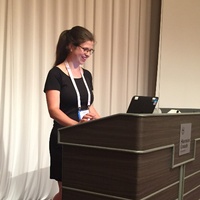
Kimberly Davis is an Instructor in the School of Engineering and Computing at Christopher Newport University (CNU). She holds a B.S. in Systems Engineering from the University of Virginia and an M.S. in Information Science from the University of North Carolina at Chapel Hill. With over 19 years of teaching experience, she instructs courses such as Database Management Systems, Multimedia and Web Publishing, and Introduction to Computing. Her research interests focus on digital accessibility for visually impaired users, API automation, low-code app development, and bridging technical skills with interdisciplinary requirements. Prof. Davis has extensive professional experience, including five years as a government consultant for Electronic Data Systems Corporation and over 20 years of independent consulting through her agency, SparkDawn Media. This firm provides graphic design, web development, photography, and videography services to diverse clients, including educational institutions, corporations, and non-profits. She has supported 29 athletic leagues, 74 restaurants, and 69 corporations. Her professional accomplishments include a 2023 presentation on the “Women in Science Panel” at Trible Library Theatre. Office hours are held online and in-person at Luter Hall, and she can be reached via her CNU email.
Dr. Annabel Latham is a Senior Lecturer in Computer Science at Manchester Metropolitan University within the Faculty of Science and Engineering’s Computing and Mathematics department. She holds a PhD in Artificial Intelligence, an MSc in Computing, a Postgraduate Certificate in Academic Practice, a CIM Diploma in Marketing, and a BSc(Hons) in Computation. As a Fellow of the Higher Education Academy (FHEA) and Senior Member of IEEE (SMIEEE), she contributes extensively to AI research and education. PhD in Artificial Intelligence MSc in Computing PGC Academic Practice CIM Diploma in Marketing BSc(Hons) Computation FHEA (2015) SMIEEE (2018) Research Interests include Artificial Intelligence in Education , Ethics of AI , and Computational Intelligence . She specializes in conversational agents, intelligent tutoring systems, and public trust in AI. Her work addresses fairness, accountability, and accessibility in AI-driven education, leveraging technologies like large language models and fuzzy logic. Research Outputs span 15 years, with a focus on explainable AI, educational applications of conversational agents, and ethical frameworks. Recent work (2024-2025) explores postdigital citizen science, trustworthy AI implementation, and XAI usability for non-specialists. 2023 IEEE Region 8 Outstanding Women in Engineering Volunteer Award 2019 IEEE Region 8 Outstanding Women in Engineering Affinity Group of the Year 2018 Outstanding Peer Reviewer, Elsevier: Computers & Education Senior Member IEEE (2018) FHEA (2015) Teaching and Supervision includes undergraduate Databases, postgraduate units in Information Systems and AI Ethics. She supervises MSc and PhD students in areas like explainability-aware machine learning, data responsibility, and AI trustworthiness. Her grants involve collaborations with international funding bodies such as NAFOSTED (Vietnam) and Croatia’s National Council for Science. Labs and Groups include the Computational Intelligence Lab, Machine Intelligence research group, and the Data and AI Ethics research group, where she co-leads initiatives on ethical AI in education.
Mohsen Farid is a Senior Lecturer in Data Science at the College of Science and Engineering. His research spans interdisciplinary areas including artificial intelligence, machine learning, neurotechnology, and healthcare analytics. He has contributed to advancements in genomics data management, video authentication, and neurotechnological solutions for mental health conditions like PTSD. His work frequently integrates computational methods with real-world applications in healthcare and cybersecurity. Key research outputs include studies on storage-optimized genomics systems (2024), neurotechnological interventions for PTSD (2023), and deep learning analyses of histopathology images (2021). His earlier contributions include gait recognition systems (2018) and semantic mapping of legal arguments (2015). Farid’s publications reflect a strong focus on applied data science and its societal impact, particularly in healthcare, security, and biomedical engineering. While no specific awards or grants are explicitly mentioned, his extensive publication record highlights sustained contributions to interdisciplinary data-driven research. His articles often address challenges in data management, pattern recognition, and ethical applications of AI.
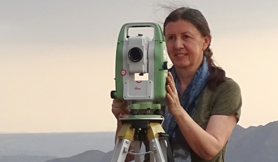
Christiane Richter is a Laboratory Engineer at the Faculty of Spatial Information, HTW Dresden, specializing in remote sensing, photogrammetry, and cultural heritage conservation. She leads the NascaGIS project, digitizing the UNESCO World Heritage Nasca Lines. Her work integrates GIS, astronomical analysis, and archaeological research to preserve ancient Peruvian geoglyphs. She co-authored over 50 publications and presented at international conferences like CIPA and ISPRS. Richter also serves as President of the 'Dr. Maria Reiche' association, promoting Nasca's cultural heritage. Her recent projects include documenting ancient aqueducts in Peru using UAVs and GPS. She holds an M.Sc. in Geoinformatics and has collaborated with institutions like TU Prague and UNESCO. Affiliations: HTW Dresden, TU Prague, UNESCO projects Education: M.Sc. Geoinformatics (University of Salzburg), Diploma in Surveying (HTW Dresden) Key Projects: NascaGIS, Nasca Aqueducts Survey, DAI Erbil Project Research Interests: Combining geospatial technologies with archaeology to solve mysteries of ancient landscapes. Recent focus on 3D modeling of geoglyphs and analyzing Nasca's irrigation systems.
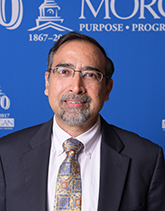
Dr. Sanjay Bapna is an Interim Associate Dean and Professor in the Graves School of Business at Morgan State University, leading the Department of Information Science & Systems. He holds a B.Tech. in Chemical Engineering from IIT Kanpur (1981), an MBA from the University of Iowa (1987), and a Ph.D. in Management Information Systems from the same institution (1992). His research focuses on Business Intelligence, Data Mining, Analytics, Computer Security, and Economic Modeling. He has secured grants from the Department of Transportation and pioneered work in freight industry economic analysis, cybersecurity deterrence, and insider threat modeling. Awards include the 2011 Best Paper Award and multiple recognition from National Decision Sciences Institute and International Association of Computer Information Systems. Recent publications span predictive modeling in healthcare, freight economics, and cybersecurity strategies. He has developed frameworks for CRM analytics, GIS-based crash analysis, and privacy-preserving data mining techniques. Prof. Bapna’s work emphasizes practical applications of technology in transportation safety, STEM diversity initiatives, and organizational trust dynamics. His contributions bridge academia and industry through impactful research in logistics, data systems, and policy-driven solutions.
Dr. Kinga Lipskoch is a Distinguished Lecturer of Computer Science at the School of Computer Science & Engineering, Constructor University Bremen. She holds a Ph.D. in Computer Science from Carl von Ossietzky University of Oldenburg (2008–2012), a Master's in Computer Science from Transilvania University of Brașov (2005–2006), and a Diploma in Mathematics and Computer Science from the same institution (2001–2005). Her professional experience includes postdoctoral research at Jacobs University Bremen and visiting lectureships at Hamburg University of Applied Sciences and Transilvania University of Brașov. Her research focuses on distributed systems, data management, probabilistic algorithms, and big data analytics in earth sciences. Key areas include probabilistic quorum systems for improving data consistency and operation availability, array analytics for geospatial data, and algorithm design for optimization problems. She has also contributed to software engineering projects, such as text parsing tools for bilingual dictionaries and desktop applications for institutional resource management. Her work bridges theoretical computer science with practical applications, addressing challenges in distributed computing, environmental data analysis, and educational software development.
Stefano Odorico is a Lecturer at the Limerick School of Art and Design , Department of Digital Arts and Media. His research focuses on interactive documentary practices, polyphonic narratives, and participatory storytelling methods. His work addresses themes such as urban spaces, ecomedia, and the intersection of digital technologies with ethical storytelling. Odorico’s academic contributions span over two decades, with a strong emphasis on the evolution of documentary forms. His research explores how interactive media can foster collaborative, audience-driven narratives that challenge traditional linear storytelling. Key areas include the aesthetics of interactive documentaries, the role of polyphony in creating multivocal narratives, and the ethical dimensions of participatory filmmaking. His recent work highlights trends towards immersive spatial storytelling (e.g., urban studies case studies), ecomedia’s potential in environmental communication, and the theoretical underpinnings of interactive epistemology. These studies often combine practice-based research with critical analysis, bridging academic inquiry and creative production. While no explicit grants or awards are listed, his prolific publication record reflects sustained engagement with international conferences and academic discourse. His work contributes to UN Sustainable Development Goals (SDGs) related to climate action, social justice, and cultural preservation through innovative documentary practices.
Francisco Javier Carreras Riudavets is an Associate Professor at the Department of Computer Science and Systems, University of La Laguna. His research focuses on natural language processing, computational linguistics, and the development of specialized software tools for Spanish text analysis. He leads projects like the TIP toolkit, including Estilometría TIP and FreeConj-TIP, which address morphological analysis, syntactic disambiguation, and lexical processing. His work integrates XML-based dictionaries, syntactic tree analysis, and tools for parliamentary text retrieval (DiSeCan). He collaborates with interdisciplinary teams in digital humanities and education, contributing to projects such as Excerpta Search and SententiApp for Latin texts preservation. His teaching innovations include virtual programming labs and concept mapping in computer science education.
Dr. Kathryn Allan is a clinician and epidemiologist affiliated with the University of Glasgow under the School of Veterinary Medicine . She graduated as a veterinarian from the Royal (Dick) School of Veterinary Studies, Edinburgh (2008), and completed an intercalated BSc in Veterinary Pathology at the Royal Veterinary College (2005). Her career spans clinical practice in the UK, research in East Africa, and postdoctoral work on zoonotic diseases. Education : DVM, Royal (Dick) School of Veterinary Studies, Edinburgh (2008) BSc (Intercalated), Royal Veterinary College (2005) PhD, University of Glasgow (2016) Kathryn's research focuses on zoonotic diseases at the human-animal interface, particularly leptospirosis , Q fever , and Rift Valley fever in East Africa. Her work employs multidisciplinary approaches within a One Health framework to reduce disease burdens in marginalized communities. Recent projects include evaluating interventions for livestock abortions in Tanzania and sustainable control measures for cerebral coenurosis. Her publication trends emphasize epidemiological modeling , pathogen detection , and zoonotic risk analysis , with frequent collaborations across veterinary sciences , public health , and virology . She has secured grants from the Wellcome Trust , Hannah Dairy Research Foundation , and the Academy of Medical Sciences to investigate zoonotic diseases in Scotland and Tanzania. Current projects include marine mammal pathology with the Sea-Changers grant, analyzing Coxiella burnetii in dairy cattle, and operationalizing One Health interventions in Tanzania. She collaborates with institutions like the Royal Society of Tropical Medicine and Hygiene and contributes to conservation medicine via strandings data analysis.