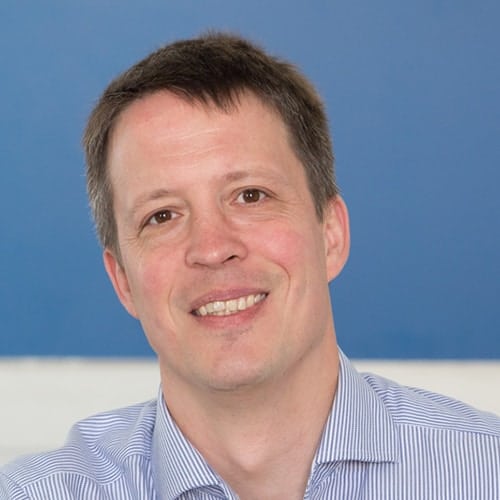
Mark D. Scherz is an Associate Professor at the Natural History Museum of Denmark, University of Copenhagen. His work focuses on evolutionary biology, taxonomy, and herpetofauna of Madagascar, integrating molecular and morphological approaches. ERC Starting Grant (GEMINI) for vertebrate miniaturization genomics Co-PI on DFG Taxon-OMICS grant Develops integrative taxonomic methods using micro-CT and museomics Research Interests : Specializes in the evolutionary dynamics of giant pseudo-island systems like Madagascar, investigating macroevolution, convergent evolution, and speciation. Key projects include: Phylogenetic analysis of microhylid and mantellid frogs Comparative osteology of miniaturized vertebrates Biofluorescence mechanisms in geckos and chameleons Biogeographic patterns in Malagasy reptiles/amphibians Publication Trends : Recent work emphasizes cross-disciplinary approaches (2025: skull morphology in snakes; 2024: amphibian genomics) 2021 studies on fluorescence and miniaturization Long-term taxonomic revisions of amphibians (2019-2024) Scientific Awards : ERC Starting Grant (2025) DFG Priority Programme participant (Taxon-OMICS) Collaborations : Works closely with Miguel Vences (Technical University of Braunschweig) and Frank Glaw (Bavarian State Collection of Zoology), focusing on Malagasy amphibians and reptiles.
Henrik Palmer Olsen is a Professor of Jurisprudence at the Faculty of Law, University of Copenhagen (UCPH), where he has been a central figure since earning his Cand.jur. in 1993. He is a co-founder and member of the Centre of Excellence for International Courts and Governance (iCourts), a leading research center in global legal studies. His academic leadership includes serving as Associate Dean for Research and Head of the PhD School at UCPH. Education: Dr.jur. (2005), Faculty of Law, University of Copenhagen PhD (1997), Faculty of Law, University of Copenhagen MA in Socio-Legal Studies (1994), University of Sheffield Cand.jur. (1993), Faculty of Law, University of Copenhagen Henrik Palmer Olsen's research lies at the intersection of legal philosophy, human rights, and international courts, with a growing emphasis on data science applied to legal analysis. His work explores the theoretical foundations of law, judicial legitimacy, and the methodological evolution of legal scholarship. He has pioneered the integration of quantitative methods—such as citation network analysis and corpus linguistics—into doctrinal legal studies, bridging traditional and computational approaches. His recent publications reflect a consistent trajectory in analyzing international courts, legal diplomacy, and legal methodology. Works like 'Can quantitative methods complement doctrinal legal studies?' and 'Providing Legal Pincite Recommendations using Language Representations' illustrate his innovative approach, combining jurisprudence with AI and data-driven legal research. This positions him at the forefront of the digital transformation in legal science. Scientific Engagement: Speaker, Regulating “AI” in the EU: The “Artificial Intelligence Act” (2021) Speaker, EURECO Distinguished Lecture Series (2010) Lecturer, Bristol Law School Annual Jurisprudence Lecture (2010) Olsen has held major research management roles, including co-founding the Center for Studies in Legal Culture and leading the PhD school at UCPH. He has secured recognition through extensive research output and collaborations across Europe. His work is referenced in academic databases, Mendeley, and multiple Wikipedia pages, indicating broad scholarly impact. He is actively involved in shaping legal education, particularly through his textbook on legal methodology. He is associated with research environments such as the Nordic Asylum Law & Data Lab and maintains strong international networks, especially in EU legal studies and global mobility law. His multilingual abilities (Danish, English, French) support his transnational academic engagement.
Alvaro Torralba is an Associate Professor in the Department of Computer Science at Aalborg University, Denmark, affiliated with the Technical Faculty of IT and Design. His research focuses on symbolic search, heuristic functions, and planning algorithms within artificial intelligence and machine learning. Notable projects include the ConAn initiative exploring contrastive analysis for state-space exploration. He has contributed extensively to classical planning, probabilistic planning, and automated planning competitions, earning awards such as the First Prize in the Agile Track of the 10th International Planning Competition (IPC’23). His work often bridges theoretical advancements with practical applications, including game-based network update synthesis and believable non-player character development. Research outputs include over 60 publications since 2011, with a focus on optimizing search algorithms and enhancing planning efficiency through techniques like operator-potential heuristics and bidirectional search strategies. His scientific contributions span algorithmic innovation, verification methodologies, and large-scale abstraction evaluation. Collaborations and datasets include foundational work on PDDL generators and pattern databases, with open-access resources available via Zenodo. As a program committee member and award-winning researcher, Torralba actively contributes to advancing the frontiers of AI planning and decision-making systems.
Tara Maria Boland is a Postdoc in the Department of Physics at the Technical University of Denmark, specializing in Computational Atomic-scale Materials Design. She maintains an active research profile with significant contributions to materials science infrastructure. Her research spans critical areas of modern computational science: Computational Materials Science and Atomic-scale Modeling Materials Discovery and Design Database Integration and Data Exchange Systems API Development for Scientific Applications 2D Materials and Heterostructures Machine Learning Applications in Materials Science Boland's publication record reveals a dual focus on fundamental materials research and practical computational tools. Her work on the OPTIMADE API has established new standards for materials data exchange, while her contributions to GPAW provide essential infrastructure for electronic structure calculations. The research demonstrates strong international collaboration across 10+ institutions with notable media coverage. As part of DTU Physics' Computational Atomic-scale Materials Design group, Boland collaborates extensively on projects advancing computational methodologies for materials science, with particular emphasis on creating accessible research infrastructure for the global community.
David Jakobsen is an Associate Professor in the Department of Communication and Psychology at Aalborg University, Faculty of Social Sciences and Humanities. His work bridges logic, philosophy, and digital technology, with a focus on tense logic and its applications in artificial intelligence and critical thinking. He is affiliated with several research groups, including the Purposeful Technology Lab, The Logic of Time and Modality, Tid, Eksistens og Naturforbundethed, and InDiMedia (Centre for Interactive Digital Media & Experience Design). His research interests include tense logic, the philosophy of time, Arthur Norman Prior’s legacy, metaphysics, philosophical theology, and the use of generative AI in education and reasoning. Jakobsen co-leads the Arthur Norman Prior Archive, preserving and analyzing the work of the foundational figure in tense logic. Recent publications show a strong trend toward integrating AI with human reasoning, particularly in educational contexts, examining how systems can support critical thinking. His work spans formal logic, philosophy, theology, and digital learning environments, reflecting a deeply interdisciplinary approach. Scientific Awards: Best Paper Award (25 Nov 2020) – shared with Peter Øhrstrøm, Thomas Ploug, Stine Thorvaldsen, and Ulrik Sandborg-Petersen He has been involved in research projects such as 'Educational and Entrepreneurial co-operation in Future City' (2021–2023) and 'Building Educational Co-operation in Smart City' (2018–2019), focusing on innovation in education and smart urban development. Jakobsen has advised and collaborated on educational initiatives, though no formal students are listed. He has organized and presented at academic conferences and contributed to public discourse through media engagement on topics including technology, religion, and societal development. He is active in multiple labs and research centers, particularly those exploring digital media, time logic, and human-centered technology.
Axel Polleres is a full professor in the area of 'Data and Knowledge Engineering' at the Vienna University of Economics and Business (WU Wien) and a faculty member at the Complexity Science Hub (CSH) in Vienna, a position he has held since January 2017. His work bridges academic research and real-world applications in semantic technologies, knowledge graphs, and data governance. His research interests lie at the intersection of semantic web technologies, knowledge engineering, and data management. Focused on querying and reasoning over ontologies, logic programming, and rule-based systems, he explores how structured data can be effectively managed, validated, and integrated—especially through standards like SPARQL and SHACL. His work extends to applications in open data, legal data, biomedical informatics, and socio-environmental challenges such as climate and public health. The most recent publications highlight a growing trend toward practical and societal applications of knowledge graphs, including climate risk assessment, crisis response, healthcare accessibility, and open data governance. These works combine technical rigor in semantic modeling with impactful real-world use cases, particularly in European and Austrian contexts. Axel Polleres has been actively involved in international standardization, notably as co-chair of the W3C SPARQL Working Group, and serves on the editorial boards of the Semantic Web Journal and Journal of Web Semantics . He has contributed to numerous European and national research projects and has published over 100 articles in top-tier journals and conferences. He advises and collaborates with researchers across disciplines and institutions, contributing to interdisciplinary teams working on complex societal challenges. His work is supported by significant research grants, though specific funding sources are not detailed in the provided text. He leads and participates in research groups focused on semantic technologies, knowledge graphs, and data-driven policy.
Sidharth Jayachandran is a Research Fellow at the Novo Nordisk Foundation Center for Biosustainability under Technical University of Denmark (DTU) , specializing in the DTU Microbes Initiative and Yeast Natural Products department. His academic career includes a PhD (2022–2025) focused on engineering Yarrowia lipolytica for plant triterpenoid production. His research interests span Natural Products , Advanced Biofuels , Biosynthetic Gene Clusters , Polyketide Synthases , and Terpenoids . Recent publications highlight his work in bioinformatics-driven curation of biosynthetic pathways, microbial engineering for sustainable bioproducts, and heterologous expression systems. Notable collaborations include partnerships with Pablo Cruz-Morales , Jay Keasling , and Irina Borodina . His work contributes to UN Sustainable Development Goals (SDGs), particularly Responsible Consumption and Production and Climate Action , through innovations in biofuel and bioproduct sustainability.
Petra Hermankova serves as an Assistant Professor in Classical Archaeology at Aarhus University's School of Culture and Society, where she also contributes to the Social Resilience Lab. Her academic appointment is active with ongoing projects through 2025 and recent publications in 2025 confirm her current faculty status. Her research focuses on digital epigraphy and the application of computational methods to ancient inscriptions. She employs text mining, machine learning, and social network analysis to study inscription functions across Graeco-Roman societies, economic history patterns, and labor specialization. Her work emphasizes FAIR and Open Science principles in archaeological data management, particularly through leadership in the Epigraphy.info initiative which develops international standards for digital epigraphy. Hermankova's publication trends reveal increasing engagement with computational approaches to ancient social networks and epigraphic big data , with recent work integrating SPARQL querying, RDF modeling, and network visualization techniques. Her research bridges traditional archaeological methods with cutting-edge digital humanities tools, focusing on Mediterranean communities from Thrace to the Roman Empire. She actively participates in major collaborative projects including The Past Social Networks Project (Carlsberg Foundation, 2022-2025), PPAP: Perachora Peninsula Archaeological Project (2019-2024), and SDAM: Small data - Big Challenges (2019-2023). Hermankova regularly organizes international workshops through Epigraphy.info and teaches practical courses in digital epigraphy methodology.
Kristian Barrett is an Assistant Professor at the Technical University of Denmark , affiliated with the Department of Biotechnology and Biomedicine . His work focuses on enzyme technology, fungal biotechnology, and bioinformatics-driven enzyme discovery. Research Interests : Fungal enzymes, carbohydrate-active enzyme (CAZyme) diversity, bioinformatics tools for enzyme classification, solid-state fermentation, and sustainable biorefinery applications. Publications highlight studies on GH5, GH12, GH20, and GH29 enzyme families, fungal secretomes, and computational approaches like CUPP for functional annotation. Supervision : Involved in advising PhD projects on topics including methionine synthesis, lignin-carbohydrate interactions, and fungal enzyme applications in plant foods.
Panagiotis Tampakis is an Associate Professor at the Department of Mathematics and Computer Science, University of Southern Denmark. His research focuses on Big Data Analytics, Mobility Data Analysis, and Predictive Modeling with applications in fields such as maritime surveillance, sports analytics, and healthcare informatics. He is actively involved in developing scalable algorithms for trajectory clustering, spatiotemporal data mining, and distributed systems. His work emphasizes practical solutions through platforms like i4sea for maritime activity monitoring and Pythia for distributed trajectory prediction. He has collaborated internationally on mobility data projects and earned the SSTD 2021 Best Paper Award for innovative spatial-keyword indexing techniques. Tampakis also supervises student projects integrating machine learning with real-world problems in finance, sports, and journalism. Key research themes include predictive analytics for traffic patterns, outlier detection in traffic flows, and analyzing passing sequences in football to predict goal-scoring opportunities. His publications span trajectory clustering, spatial-keyword query optimization, and explainable AI in journalism. Awards: SSTD 2021 Best Paper Award Key Projects: i4sea maritime platform, Pythia trajectory prediction framework, RoadRunner big data processing framework Collaborations: Active in global mobility data communities, with contributions to BMDA initiatives
Christiane Berger is an Associate Professor at Aalborg University's Department of Architecture, Design and Media Technology within the Technical Faculty of IT and Design. Her research focuses on occupant-centric building design, building performance simulation, and indoor environmental quality, particularly through initiatives like IEA-EBC Annex 79. She leads or participates in multiple projects, including collaborations with C.F. Møller Architects and the International Energy Agency on human-centric buildings and climate resilience. Her work integrates sustainability, digital transformation, and resilience against disruptive events. Key projects include Joint Collaboration on 'Integrated Design of High-Performance Buildings' (2025–) IEA EBC - Annex 95 (2024–2029) ActRes: Agency for Resilience (2023–2025) Research emphasizes occupant behavior modeling, energy efficiency, and multi-domain environmental standards. Awards include the 2023 Building and Environment Best Paper Award and 2021 IBPSA Outstanding Young Contributor Award. Her teaching involves cross-semester collaborations on sustainability and universal design. Labs/teams include the Centre for Sustainable and Digital Transformation and Human Building Interaction initiatives. Over 70+ publications (2019–2025) address thermal comfort, energy performance, agent-based modeling, and occupant-centric standards.
Amélie Desvars-Larrive is an Associate Professor in Infection Epidemiology at the University of Veterinary Medicine Vienna and a Faculty Member at the Complexity Science Hub (CSH) in Vienna, Austria. Her work bridges veterinary medicine, public health, and data science, with a strong emphasis on the One Health approach to understanding zoonotic and emerging infectious diseases. She holds a Doctor of Veterinary Medicine from the National Veterinary School of Toulouse, France, with a specialization in tropical diseases and epidemiology, and earned her PhD in epidemiology from the University of Saint-Denis, La Réunion, in 2013. Her professional journey includes eight years as a field epidemiologist and veterinary research engineer in the Indian Ocean region, focusing on livestock and wildlife diseases. She completed postdoctoral research at Umeå University, Sweden, on tularemia modeling, followed by work at the University of Veterinary Medicine Vienna on urban brown rats and their role in zoonotic disease transmission and antimicrobial resistance. Her research interests include infectious disease epidemiology, zoonotic diseases, veterinary public health, disease modeling, antimicrobial resistance, and the application of data science to animal and human health. She has led and contributed to major open data initiatives, such as the SARS-ANI dataset on SARS-CoV-2 in animals and the CSH’s global dataset on governmental pandemic responses. The most recent articles highlight a strong trend in One Health research, integrating veterinary, environmental, and public health data. Key themes include zoonotic pathogen surveillance (e.g., Leptospira, SARS-CoV-2, E. coli), network modeling of animal trade, biosecurity assessments, and policy analysis of national One Health strategies. The work spans diverse systems—from urban rats in Vienna to dairy cows in Rwanda—demonstrating a global and interdisciplinary approach to disease prevention. Scientific Awards and Recognition: Her work on national One Health strategic plans was featured as an Editors' monthly favorite on the Cell Press Sustainability Hub. Her research on SARS-CoV-2 in animals has been widely covered in international media, including the San Francisco Chronicle and Kurier. She co-developed the CSH’s COVID-19 Control Strategies List (CCCSL), one of the largest datasets of governmental pandemic interventions. Advising and Grants: While specific advisees are not listed, she collaborates extensively with multidisciplinary teams across institutions. She has secured funding for data-driven projects in One Health, including those supported by the Complexity Science Hub. Her work on SARS-ANI and zoonotic web visualization reflects strong grant-supported research initiatives. She actively mentors early-career researchers, as seen from her involvement in the CSH PostDoc Program. Labs and Research Teams: She is a key member of the Health Across Species research group at the Complexity Science Hub, which focuses on zoonotic disease dynamics. She also leads research within the Unit of Conservation Medicine and the Institute of Animal Hygiene and Veterinary Public Health at the University of Veterinary Medicine Vienna. Her team employs data science, network analysis, and field epidemiology to study urban wildlife, livestock, and pathogen transmission.
Henrik Holbech is an Associate Professor in Ecotoxicology at the University of Southern Denmark 's Department of Biology. With over 124 research outputs, his work focuses on developing OECD test guidelines for identifying endocrine disrupting chemicals (EDCs) using fish and invertebrate models, particularly Danio rerio (zebrafish). He coordinates the EU Horizon 2020 ERGO project (€5.99M) and leads multiple Nordic Council-funded initiatives on mollusc endocrinology. As chair of the OECD Mollusc Expert Group and member of the ECHA Endocrine Disrupter Expert Group , he bridges human health and environmental toxicology through adverse outcome pathway (AOP) research. Research Contributions: Developed and validated Fish Sexual Development Test (FSDT) protocols (OECD TG 230/210/229) Pioneered mollusc-based EDC testing for aquatic invertebrates Lead author of OECD validation reports Contributor to 40+ international technical meetings Created ELISA methods for vitellogenin detection in fish Investigated ballast water treatment technologies (UV/cavitation/ozonation) Explored thyroid hormone disruption mechanisms in aquatic species Collaboration Network: Active in EU Tender projects with University of Heidelberg, University of Antwerp; Nordic Council partnerships (NordUTTE) with Norway/Sweden; Danish EPA collaborations (5.2 Mio DKK total). Key institutions: DHI Hoersholm, Fraunhofer, University of Antwerp.
Srinivasa Raghavendra Bhuvan Gummidi is an Assistant Professor at the Department of Green Technology (IGT) within the University of Southern Denmark . His research focuses on Circular Economy , Building Stock Modeling , and Environmental Impact Assessment through advanced Geographical Information Systems (GIS) and Deep Learning techniques. Recent work includes high-precision building material identification and spatiotemporal tracking of urban material stocks. Research Keywords : Algorithms for Geographical Information Systems, Optimization Algorithms, Building Stock Modeling, Circular Economy, Deep Learning, Environmental Impact Assessment His peer-reviewed publications (2025–2015) span topics from urban material sustainability to spatial crowdsourcing systems . He teaches Geographic Information Systems for Engineering Sustainability (2024) and collaborates internationally on urban development and resource management projects.
Jacob Lunding is a Research Fellow at the Department of Organization, Copenhagen Business School (CBS), School of Business. His work centers on elite networks, power structures, and historical sociology within Danish and international contexts. His research focuses on social network analysis of power elites , examining continuity and change in corporate, civil society, and scientific elites through longitudinal studies. Key interests include elite reproduction mechanisms , career hub dynamics , and the interplay between historical legacies and contemporary power structures , particularly in Denmark and Switzerland. His methodology combines prosopography, network analysis, and Bourdieusian field theory. His recent publications reveal strong trends in comparative elite studies using the World Elite Database (WED), with emphasis on cross-national variations in economic elites and the evolution of core-periphery structures in corporate networks. Work on Danish civil society elites since 1910 demonstrates exceptional attention to historical continuity. Lunding actively contributes to major collaborative projects including Longitudinal Elite Networks (LONGLINKS) and the World Elite Database initiative. His research has been supported through institutional partnerships with Aarhus University's Department of Political Science.