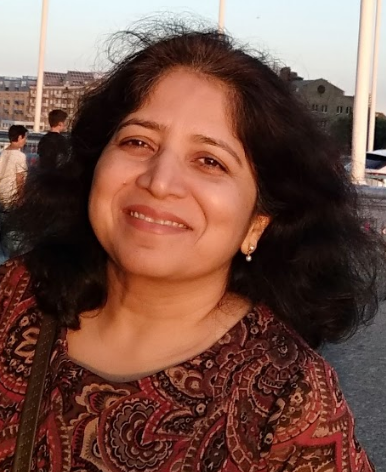
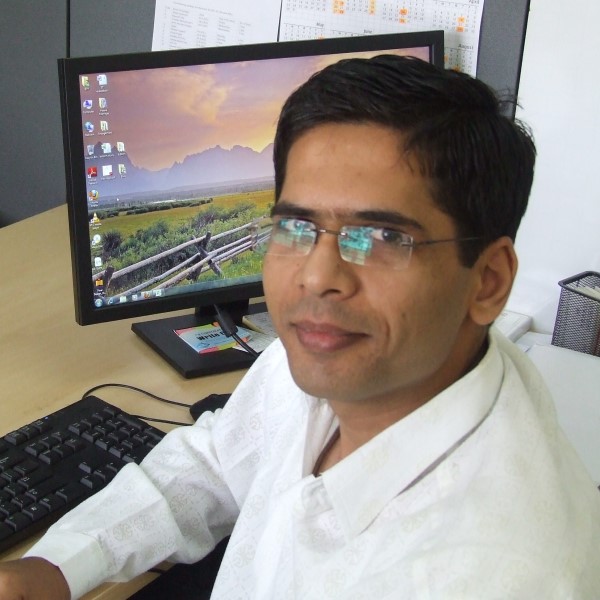
Sunita Sarawagi is a Professor at Computer Science and Engineering , IIT Bombay, and a member of AI Labs@CSE . She is also associated with the Center for Machine Intelligence and Data Science (CMInDS), which she founded in 2020. Education: PhD in Computer Science from UC Berkeley (Thesis: Query Processing in Tertiary Memory Databases), BTech in Computer Science from IIT Kharagpur Research Interests span machine learning , data analytics , graphical models , and structured learning , with applications in text segmentation, sequence modeling, domain adaptation, and human-in-the-loop systems. Her publications reveal a strong focus on integrating data mining with database systems , temporal data analysis , and information extraction using probabilistic methods. Professional Activities include serving on the IEEE John Von Neumann Medal committee (2017-), VLDB 2011 Research Track Co-chair , and multiple program committee roles at top conferences like ICML, KDD, and SIGMOD. Labs & Teams : Leads the SS Lab , a research group focused on probabilistic graphical models, sequence modeling, and data integration techniques.
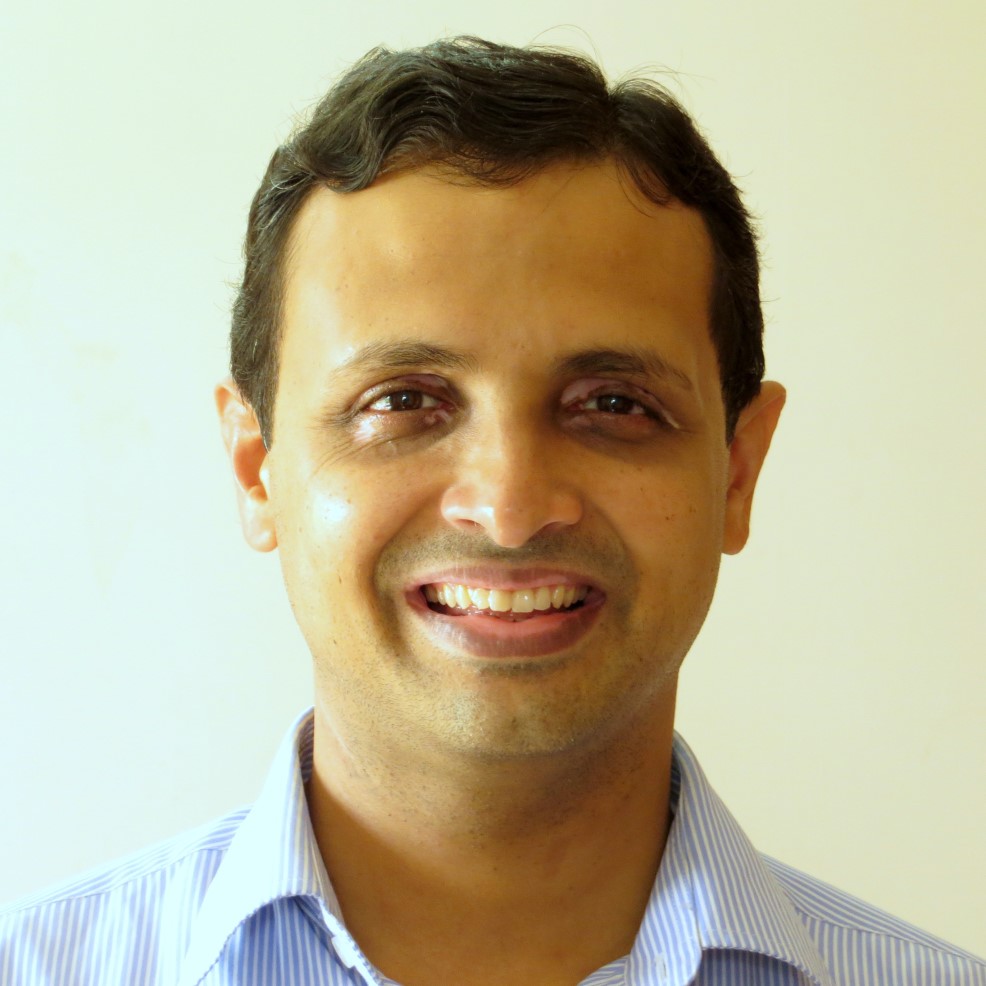
Vineeth N Balasubramanian is a Professor in the Department of Computer Science & Engineering at the Indian Institute of Technology Hyderabad, with affiliate faculty status in the Department of Artificial Intelligence. His research focuses on the intersection of deep learning, machine learning, and computer vision, emphasizing explainability, robustness, and real-world applications. He leads Lab 1055, which investigates problems such as Explainable and robust AI/ML systems Lifelong learning in evolving environments Multimodal vision-language models Applications in agriculture, autonomous navigation, and human behavior analysis His recent work includes causal reasoning in transformers, vision-language model capabilities, and drone-based object detection. Funded by organizations like Google, Microsoft, Intel, and DST, he has received multiple awards including the World's Top 2% Scientists (2022-23), INSA/INAE Fellowships, and Best Paper recognitions. Lab 1055 collaborates with institutions like CMU, UBC, and Monash University, contributing to cutting-edge advancements in AI.
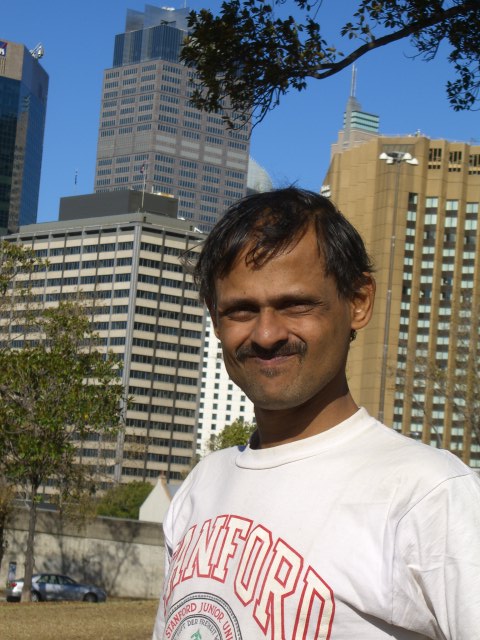
Sharat Chandran is a Professor in the Department of Computer Science and Engineering at the Indian Institute of Technology Bombay (IIT Bombay), where he has been actively engaged in teaching and research for several decades. His office is located in Room KR102 (also known as A202) in the Rekhi Building on the IIT Campus in Mumbai, India. His primary research interests span two major areas in computing: Computer Graphics and Computer Vision . He has extensively worked in these fields with his students and research staff, producing various publications, talks, and research projects over the years. His current teaching focus includes Math for Visual Computing (CS 740), a course designed for postgraduate students new to the IIT system who may have some apprehension about mathematics. Professor Chandran has supervised numerous PhD students whose work covers diverse topics including 3D modeling, efficient computing with tomographic measurements, vision for drones, cancer prognosis, hierarchical visibility, projector-camera systems, arterial pulse analysis, and optimization algorithms for motion factorization. His teaching portfolio is extensive, having offered courses such as Basic Freshman Programming, Software Systems, Parallel Programming Paradigms, Graphics I & II, Multimedia Systems, Computer Vision, Digital Image Processing, Algorithms, and Spatial Data Structures. He has held multiple administrative and service roles at departmental, institutional, and external levels. Departmental roles include PhD Faculty Advisor, Awards Committee Chair, Faculty Search Chair, and Web Team Chair. At the institutional level, he served as Founding PMRF Coordinator, Head of the Application Software Centre, and IIT Research Fellowship Initiative Coordinator. Externally, he has coordinated the DST India Digital Heritage Project and served as Program Co-Chair for conferences like Mysore Park Vision Conference and ICVGIP. Professor Chandran is actively involved in campus community activities including Sanskriti @ IITB, Taekwando @ IITB, and serves as Secretary for Kendriya Vidyalaya PTA. His office hours are from 12:30 PM to 1:00 PM on Monday, Tuesday, and Thursday, and he emphasizes using Piazza rather than email for student communications.
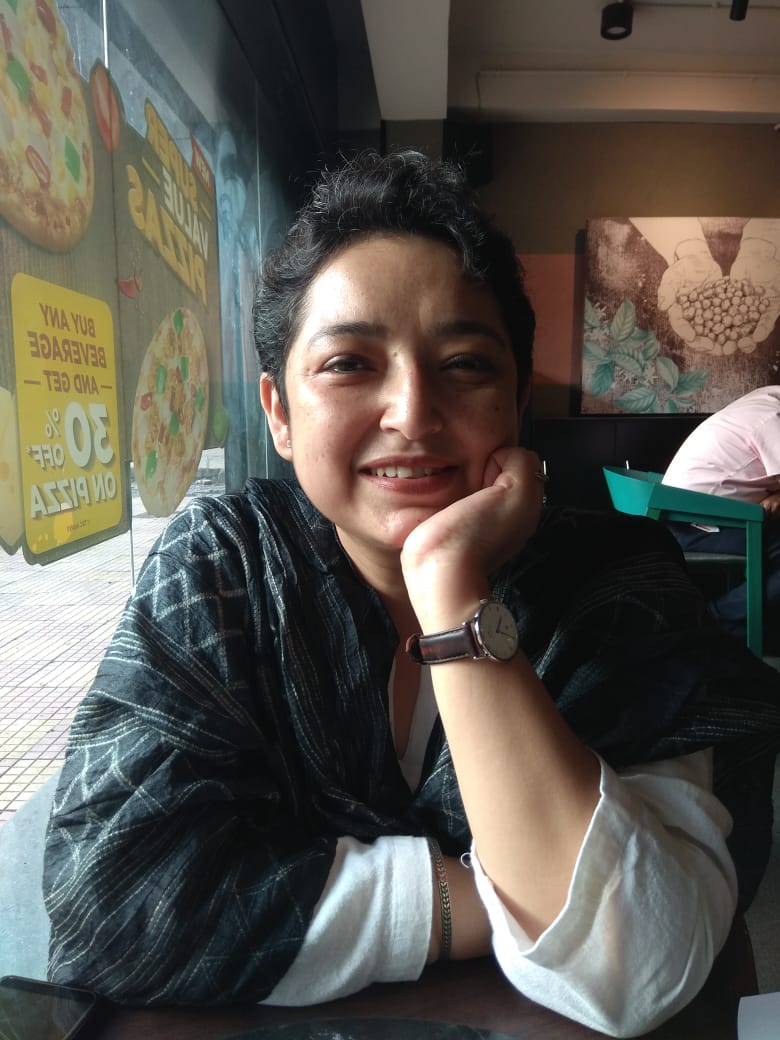
Soumya Dutta is an Assistant Professor in the Department of Computer Science and Engineering at the Indian Institute of Technology Kanpur (IITK), where he leads the INSIGHT: Intelligent Scientific and Visual Computing of Big Data Research Group. He joined IIT Kanpur in October 2022 after working as a Scientist II at Los Alamos National Laboratory (LANL) from July 2019 to August 2022, and previously as a Postdoctoral Research Associate at LANL from June 2018 to July 2019. His educational background includes a Ph.D. and M.S. in Computer Science and Engineering from The Ohio State University (2011-2018), where he was part of the GRAVITY research group, and a B.Tech. in Electronics and Communication Engineering from West Bengal University of Technology, India (2005-2009). Research Interests: Dr. Dutta's research focuses on the intersection of machine learning, visual computing, big data, and high-performance computing. His primary research areas include Machine Learning for Visual Computing and Image Analysis, Big Data Visualization and Analytics, Data Science and HPC, Machine Learning for Scientific Computing, and Explainability and Interpretability of AI Models. His work addresses various big data characteristics including the 5 Vs: Volume, Velocity, Variety, Veracity, and Value. He develops techniques that make complex machine learning models more interpretable and explainable, enabling their effective adoption in real-life applications across scientific domains, social media, IoT, healthcare, and industry applications. Dr. Dutta's research group has secured multiple funded projects including: DAVi: An Intelligent Data Analytics and Visualization Framework (funded by ISRO), Intelligent Visual Computing of Extreme-scale Data for Accelerating Scientific Discovery (IIT Kanpur Initiation Grant), Enabling Interactive Big Data Analytics and Visualization at Exascale (SERB), Development of AI-Enabled National Portal for Efficient Search of Missing People (C3iHub), and Proactive and Generalized Deepfake Defense Mechanisms (C3iHub). Best Reviewer, Honorary Mention Award for IEEE Transactions on Visualization & Computer Graphics (TVCG), 2021 Best Paper Award at ISAV 2021, co-located with Supercomputing (SC) LAAP Award at Los Alamos National Laboratory, 2021 Best Paper Award at TopoInVis 2019 Best Paper Award at ISAV 2018, co-located with Supercomputing (SC) Best Poster Award in 12th Annual CSE Student Poster Exhibition, The Ohio State University, 2018 Best Poster Award in 11th Annual CSE Student Poster Exhibition, The Ohio State University, 2017 Best Paper Honorable Mention Award at IEEE Visualization Conference (IEEE VIS) 2016 Dr. Dutta actively mentors a large group of students including Ph.D., M.Tech., and B.Tech. students. His current Ph.D. students include Shanu Saklani, Sankhadeep Bhowmick, Ananya Chaturvedi, Arpita Santra, Anubhav Dixit (co-supervised), and Robin Shah. He has supervised numerous M.Tech. students with thesis topics ranging from uncertainty-aware neural networks to deepfake detection. Dr. Dutta currently teaches courses including CS360 - Introduction to Computer Graphics and CS661 - Big Data Visual Analytics. The INSIGHT research group collaborates internationally with researchers from Meta, Oak Ridge National Laboratory, and National Taiwan Normal University. The group's work focuses on building machine learning and data science-based solutions to analyze large-scale multifaceted data in a scalable way, enabling interactive and interpretable analytics of complex data from scientific simulations, social media, IoT, healthcare, and other application domains.
Dr. Shatarupa Thakurta Roy is an Associate Professor in the Department of Humanities and Social Sciences at the Indian Institute of Technology Kanpur (IIT Kanpur). She teaches courses in Art Appreciation, Design Theory, Visual Communication, and History of Art, and collaborates with IIT Kanpur's Design Programme. She holds a Ph.D. in Design from IIT Guwahati (2014), an M.F.A. (1999), and a B.F.A. (1997) from Kala Bhavana, Visva Bharati Santiniketan. Her research explores Visual Culture , Indian Folk and Minor Art , Graphic Design , and Design Theory , with fieldwork focusing on narrative folk paintings across Eastern India. She emphasizes cultural sustainability, visual storytelling, and interdisciplinary design methodologies. Her publications (2011–2022) span art theory, data visualization, HCI, and cultural preservation, reflecting trends in cross-disciplinary innovation , social impact design , and digital heritage conservation . She frequently integrates cognitive psychology, new materialism, and postcolonial perspectives. Awards & Honors: Best Paper Award, NaCoMM 2011 National Scholarship Scheme, Government of India (1997–1998) Mentorship Award for 'Toycathon 2021' (designing educational board game 'CheMystery') Advising & Grants: She has supervised 15+ Ph.D. and 35+ M.Des. theses. Funded projects include an MHRD grant (2016) for assistive interfaces for dyslexic children and a Doordarshan collaboration (2022) on sustainable farming documentaries. Administration: She has served as Warden, DPGC Convener, and lab in-charge at IIT Kanpur. She also edits academic journals and chairs conferences on art and design.
Subhajit Dutta is an Associate Professor in the Department of Mathematics and Statistics at the Indian Institute of Technology Kanpur. He has established himself as a notable researcher in specialized statistical methodologies with publications in top-tier statistical journals. Dr. Dutta completed his PhD in Statistics from the Indian Statistical Institute (ISI), Kolkata in 2013 under the supervision of Prof. Probal Chaudhuri. His academic journey includes an M.Sc. in Statistics from IIT Kanpur (2007) and a B.Sc. in Statistics from Presidency College, University of Calcutta (2005). He also pursued post-doctoral research at KAUST with Prof. Marc G. Genton. His research focuses on advanced statistical methodologies, particularly in Discriminant Analysis, Inference based on Data Depth, Characterization of Multivariate Distributions, and Classification of Sequence Data. His work bridges theoretical statistics with practical applications, developing robust methods for complex data analysis problems across various scientific domains. Dr. Dutta's publication record shows consistent progression from foundational properties of statistical depth functions to practical applications in classification and sequence analysis, demonstrating both theoretical depth and practical relevance in his scholarly contributions. As a faculty member at IIT Kanpur, one of India's premier technical institutions, Dr. Dutta contributes to both teaching and research in the Department of Mathematics and Statistics, helping to advance statistical science education and methodology development.
Nishchal K. Verma is a Professor at the Department of Electrical Engineering, Indian Institute of Technology Kanpur. He holds a PhD from IIT Delhi (2007), an M.Tech from IIT Roorkee (2003), and a B.Tech from DEI Agra (1996). His postdoctoral research includes work at the University of Tennessee (2009) and Louisiana Tech University (2008). Specialization: Fuzzy Logic, Health Monitoring, Intelligent Informatics Current Research Interests: Intelligent Data Mining, Computer Vision, Smart Grids, Biomedical Applications His research focuses on Fuzzy Systems , Machine Learning , and Health Monitoring with applications to power systems, biomedical data, and wireless sensor networks. He has developed technologies like the Transducers and Instrumentation Virtual Laboratory and Brain Computer Interface Laboratory , emphasizing predictive modeling and fault diagnosis. Key sponsored projects include DST-funded Fuzzy Rule-Based Image Prediction and DRDO-supported Visual Surveillance Systems . His work spans 15+ years of interdisciplinary publications in journals and conferences. Scientific Awards : Devendra Shukla Young Faculty Research Fellowship (2013-16) He has served as Associate Editor for journals and Chairman of IEEE chapters, with leadership roles in academic administration at IIT Kanpur.
Dootika Vats is an Associate Professor in the Department of Mathematics & Statistics at Indian Institute of Technology Kanpur (IIT Kanpur). She earned her PhD in Statistics from the University of Minnesota, Twin-Cities, and her research focuses on advancing Monte Carlo and Bayesian computational methods, especially Markov chain Monte Carlo diagnostics. Education: PhD, Statistics, University of Minnesota, Twin-Cities, Feb 2017 MS, Statistics, University of Minnesota, Twin-Cities, Nov 2016 MS, Statistics, Rutgers University, New Brunswick, May 2012 BA (honors), Mathematics, University of Delhi, Lady Shri Ram College, May 2010 Research Interests: Her work lies at the intersection of computational statistics and Bayesian inference, with core emphases on: Markov chain Monte Carlo (MCMC) methodology Monte Carlo variance estimation and output analysis Bayesian computation and diagnostics Geometric ergodicity and convergence rates of MCMC algorithms Recent Publications Trend: Across her recent articles and preprints, Dr. Vats has consistently tackled open problems in MCMC output analysis, introducing new diagnostics, optimal batch-size selection, and visualization tools that directly impact practical Bayesian computation. Her contributions bridge theoretical rigor—such as proving strong consistency of spectral variance estimators—with immediately applicable software and graphical methods. Awards & Honors: Director’s Award, University of Minnesota School of Statistics, 2016 Graduate Research Partnership Program Fellowship, Summer 2016 Louise T. Dosdall Fellowship for Women in STEM, 2016–2017 School of Statistics Alumni Fellowship, 2015–2016 Martin–Buehler Fellowship in Statistics, Fall 2015 Bernard W. Lindgren Graduate Student Teaching Award, Spring 2014 Lynn Lin Fellowship in Statistics, Summer 2014 Teaching & Mentoring: At IIT Kanpur she continues to teach and mentor within the statistics curriculum. Earlier, at the University of Minnesota, she served as Instructor for STAT 3011 and as a teaching assistant across multiple undergraduate and graduate courses; at Rutgers University she was a part-time lecturer in calculus and pre-calculus. Labs & Collaboration: While no specific lab is named, her research is computational and collaborative; she has worked with James M. Flegal, Galin L. Jones, and other leading MCMC methodologists, and her Google Summer of Code participation demonstrates engagement with the open-source statistics community.
Abhinava Tripathi is an Assistant Professor in the Department of Management Sciences at Indian Institute of Technology Kanpur (IIT Kanpur), where he joined in August 2022. He previously served as an Assistant Professor at IIT Roorkee from July 2020 to July 2022. His academic journey includes a PhD in Finance and Accounting from IIM Lucknow (2017-2020), an MBA from IIM Kozhikode (2011), and a B-Tech in Chemical Engineering from IIT Roorkee (2008). Before transitioning to academia, he gained substantial industry experience as Manager at ICICI Bank, Credit Analyst at ICRA, and Deputy Manager at SBI Capital Markets. PhD, Finance and Accounting, IIM Lucknow (2017-2020) MBA, Finance and Accounting, IIM Kozhikode (2011) B-Tech, Chemical Engineering, IIT Roorkee (2008) Dr. Tripathi's research focuses on financial markets, market microstructure, liquidity, and market efficiency, with particular emphasis on banking, corporate finance, investment management, and quantitative finance applications. His work bridges theoretical finance with practical market applications, exploring how market structures affect price formation and information dissemination. He has made significant contributions to understanding liquidity patterns in both traditional and cryptocurrency markets, as well as examining market efficiency during extreme events like the COVID-19 pandemic. His recent publications demonstrate a strong focus on market microstructure, with particular attention to liquidity commonality across different market conditions and asset classes. His research employs advanced econometric techniques to analyze market behavior during normal and stressed periods, with applications to both developed and emerging markets. Dr. Tripathi has published in prestigious journals including Energy Economics (A*), Australian Journal of Management (A), Applied Economics (A), and Finance Research Letters (A). Advisory to National Stock Exchange of India (NSE) on course development and training programs (2021-present) Advisory to Uttarakhand Government on project/consultancy matters (2020-present) Reviewer for Finance Research Letters, Journal of Behavioral Experimental Finance, and International Review of Economics & Finance Dr. Tripathi supervises multiple PhD students working on diverse topics including market efficiency in carbon markets, ESG funds, cryptocurrency markets, and banking sector dynamics. He has led several sponsored research projects including financial viability assessment for the Kalpasar Project (Gujarat Government), transaction advisory for Uttarakhand Sugars, and Ease of Doing Business study for Ministry of Corporate Affairs. His teaching portfolio includes Security Analysis, Portfolio Management, Algorithmic Trading, and Modern Financial Markets across various institutions including IIT Kanpur, IIT Roorkee, and IIM Shillong.
Subhra Sankar Dhar is an Associate Professor in the Department of Mathematics and Statistics at the Indian Institute of Technology Kanpur (IIT Kanpur). He has held academic positions at Presidency University and the University of Cambridge, and his expertise lies in non-parametric and robust statistical methods. Education: PhD in Statistics, Indian Statistical Institute, Kolkata (2012) M.Sc. in Statistics, University of Calcutta (2005) B.Sc. (Hons.) in Statistics, Presidency College, Kolkata (2003) Research Interests: His primary research focuses on multivariate quantiles and ranks , data depth , measures of association , and isotonic regression . Secondary interests include likelihood-based inference , Kaplan-Meier estimation , cluster analysis , and missing data analysis . Publications: His recent work spans robust multivariate analysis, non-parametric testing, and robust estimation techniques, reflecting a deep commitment to advancing statistical theory and methodology. Awards & Fellowships: CSIR-UGC Junior Research Fellowship (2005) ISI Kolkata Junior Research Fellowship (2005) Post-doctoral Fellowship, University of Cambridge (2011–2012) Advising & Service: He has supervised numerous master’s projects and is currently supervising PhD students. He has served as a referee for top-tier journals and has been the convenor of STAMATICS, a departmental student group, since 2013. He is also a member of the Scholarship & Prizes Committee and the Seminar & Faculty Search Committee at IIT Kanpur.
Mohammad Arshad Rahman is an Associate Professor in the Department of Economic Sciences at IIT Kanpur. His research spans Bayesian econometrics, quantile regression, machine learning, and applied econometrics. He has held positions at Zayed University and University of California, Irvine, and currently teaches econometrics and finance courses. Education: Ph.D. Economics, University of California, Irvine (2013) M.S. Statistics, UC Irvine (2011) M.A. Economics, UC Irvine (2009) M.A. Economics, Delhi School of Economics (2006) B.Sc. Economics Hons., St. Xavier's College, Kolkata (2004) Research focuses on developing Bayesian methods for econometric problems, with applications in energy economics, finance, and social policy. Research areas include: Bayesian inference techniques, quantile regression models, machine learning applications in economics, discrete choice modeling, and time series analysis. Awards and Honors: Social Science Merit Fellowship Multiple Summer Research Fellowships All India Post-Graduate Scholarship Analyst Accolade Award
Ketan P. Detroja is an Associate Professor in the Department of Electrical Engineering at Indian Institute of Technology Hyderabad . With a Ph.D. from IIT Bombay (2006) and a specialization in Multivariable Control, Distributed State Estimation, and AI/ML for Control Applications , his research focuses on ensuring fault-tolerant and economical operation of microgrids , developing distributed Kalman filtering techniques , and applying machine learning to process monitoring and control . Education: B.E., D. D. Institute of Technology, Gujarat, India Ph.D., IIT Bombay, 2006 Research Interests span Advanced Process Control, Fault Detection and Diagnosis, Cooperative Control, Microgrid Optimization and Control , and Hardware-Software Design for Control Systems . His work addresses challenges in data-driven process monitoring , distributed state estimation , and machine learning-based controller design , particularly for large-scale systems. Scientific Contributions include innovative approaches to inverse-free Kalman filters , reinforcement learning-based PI controllers , and data reduction algorithms for fault diagnosis. His publications reflect a focus on control theory, optimization, and machine learning integration , with applications in power systems, wind energy, and fault diagnostics . Scientific Awards: Best Paper Award at ADCONIP - 2011 Best Paper Award at DYCOPS-2013 Advising has been a significant part of his career, with supervision of Ph.D. students working on topics like fault detection in induction motors , microgrid scheduling , and adaptive control using fuzzy logic . His M.Tech students have explored areas such as visual object tracking, battery SOC estimation, and wind farm control , many of whom are now in prominent roles across academia and industry.
Suyash P. Awate serves as the Asha and Keshav Bhide Chair Professor in the Department of Computer Science and Engineering at the Indian Institute of Technology (IIT) Bombay, Mumbai, India. His research spans medical image computing, machine learning, image analysis, computer vision, and statistical modeling and inference. His work focuses on developing novel computational methods for medical image analysis, reconstruction, and quality enhancement. Prof. Awate's research interests center on medical image computing, where he develops advanced machine learning techniques for medical image reconstruction, segmentation, and quality enhancement. His work addresses critical challenges in medical imaging such as low-dose PET/CT imaging, uncertainty quantification in segmentation, robustness to out-of-distribution data, and accelerated MRI/fMRI acquisition. He has pioneered methods combining variational inference, expectation maximization, and deep learning to improve medical image quality while reducing radiation exposure and scan times. His research has significant clinical applications in neuroimaging, tumor analysis, and brain function mapping. His recent publications demonstrate a strong trend toward integrating deep learning with classical statistical methods, particularly focusing on uncertainty-aware models for medical image analysis. His work consistently addresses the challenge of robustness in medical imaging, developing methods that maintain performance even with degraded input data or distribution shifts. A significant portion of his research targets clinical applications, particularly in neuroimaging and oncology, with emphasis on practical implementation for real-world medical settings. Prof. Awate actively mentors PhD, MTech, and BTech students at IIT Bombay. His current PhD students include Vatsala Sharma (awarded Microsoft Research India PhD Award), Jimut Bahan Pal (CMInDS Fellow, Prime Minister's Research Fellow), Tejomay Padole (TCS Research Fellow), Subhankar Nag, and Koustav Pal. He also guides MTech/MS students Soumya Mukherjee, Jay Gorakhiya, and Russel Abreo, along with BTech student Varshith Anumalasetty. He teaches several courses including CS 736: Medical Image Computing (inaugurated in 2014), CS 663: Fundamentals of Digital Image Processing, CS 215: Data Analysis and Interpretation, CS 740: Mathematics for Visual Computing, and CS 101: Computer Programming and Utilization. His laboratory focuses on developing computational methods for medical image analysis, with particular emphasis on uncertainty quantification, robust deep learning for medical imaging, and accelerated acquisition techniques. The research group maintains strong collaborations with medical institutions to ensure clinical relevance of their computational methods.
Preeti Malakar is an Assistant Professor in the Department of Computer Science and Engineering at the Indian Institute of Technology Kanpur. She leads the Scalable Parallel Computing Laboratory (SParCL) and previously held positions as a postdoc and Assistant Computer Scientist at Argonne National Laboratory (USA) and was a Visiting Affiliate at Lawrence Berkeley National Laboratory (USA). She completed her PhD from the Indian Institute of Science Bangalore under Prof. Vijay Natarajan and Prof. Sathish Vadhiyar. Her research focuses on high-performance computing systems, parallel I/O optimization, in-situ analysis, and scientific visualization. Key areas include job scheduling, communication optimization for MPI applications, machine learning for performance prediction, and adaptive frameworks for large-scale simulations. Her work integrates HPC with climate modeling and extreme weather prediction. Recent publications emphasize job scheduling with SLURM, deep learning for climate applications, in-situ visualization, and auto-tuning of parallel I/O parameters. Her research consistently targets optimization of HPC systems for scientific domains. Awards: Best Paper Award, EduHiPC 2019 TCPP Best Paper Award, HiPC 2009 She actively advises students in HPC research, with alumni pursuing careers at NVIDIA, Microsoft, Apple, and SAP Labs. Her lab (SParCL) hosts internships and winter schools, including the ACM Winter School on HPC at IIT Kanpur.
K R Guruprasad is an Associate Professor in the Department of Mechanical Engineering at the Indian Institute of Technology Kanpur (IIT Kanpur). With a PhD in Aerospace Engineering from the Indian Institute of Science (IISc) Bangalore, he has established himself as a leading researcher in robotics, motion planning, and multi-robot systems. His research interests span a wide range of topics in robotics including Robotics-Mechanics and Control, Motion Planning, Multi Robots Systems, Cooperative Control, Exo-Skeleton Control, and Voronoi Partition applications. His work particularly focuses on UAV/Drones motion planning, mobile manipulation, and artificial intelligence applications in robotics. His research integrates theoretical foundations with practical implementations, evidenced by his numerous publications in high-impact journals. Prof. Guruprasad's scholarly contributions include a book titled 'Robotics: Mechanics and Control' (PHI, 2019) and several edited volumes. His publication record shows consistent output with an h-index of 11, i10 index of 14, and 382 citations according to Scopus data. His recent work demonstrates strong focus on multi-robot coverage algorithms, UAV applications, and distributed control systems. Among his recognitions are a best presentation award at the IISc-IBM Research Workshop (2008) and a best paper award finalist at DARS 2014. His research has practical applications in search and rescue operations, landmine detection, and autonomous exploration. Prof. Guruprasad maintains active collaborations with researchers globally and has contributed significantly to advancing robotics research in India through his work at IIT Kanpur's Mechanical Engineering department.