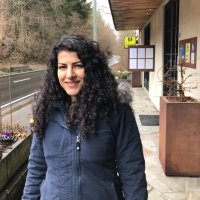
Mitra Baratchi is an Associate Professor at the Leiden Institute of Advanced Computer Science (LIACS) , Leiden University. She leads the Spatio-temporal data Analysis and Reasoning (STAR) research group, co-leads the Automated Design of Algorithms (ADA) group, and founded the Special Interest Group on Spatio-Temporal Data Mining (SIG-SDTM) . PhD from University of Twente (Mobility Data) Master’s/Bachelor’s in Computer Engineering, Iran Research Interests focus on automated pattern extraction from spatio-temporal data across urban, environmental, and industrial domains. Key applications include: Automated Machine Learning (AutoML) for Earth Observations Time-Series Forecasting for public health (e.g., pandemic modeling) Urban Mobility Optimization with ESA, Honda, and municipalities Reliable Vehicular Communication Systems Smart Garments for Health Risk Detection Geocast Protocols for Internet-wide Communication Grant Highlights include €120K NWO-Aspasia, €2.9M Marie Skłodowska-Curie, €350K NWO-KLEIN, and €135K Center for BOLD Cities funding. She has supervised 12 PhD students and 4 current Master’s students since 2011, with notable best paper award at WWIC'16. Teaching includes Machine Learning (2020-present) and Urban Computing (2018-present) at Leiden, plus past courses in Data Visualization, Software Engineering, and Research Methods.
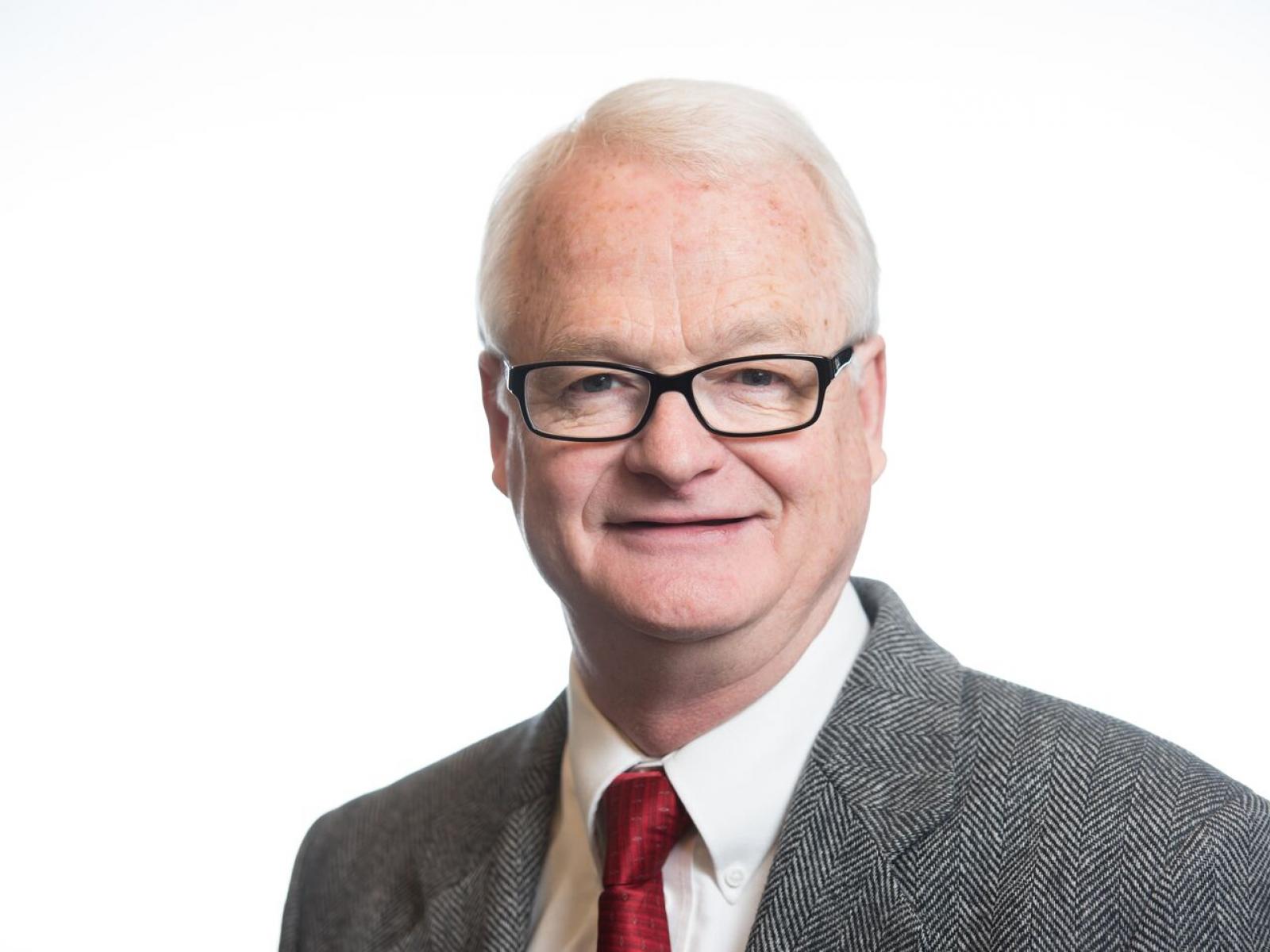
Samuel A. Bryan serves as a Lab Fellow and Chemist at Pacific Northwest National Laboratory (PNNL), where he pioneers spectroelectrochemical sensor development for measuring chemical species in highly complex nuclear systems. His innovations have resolved critical Department of Energy safety issues, particularly regarding ferrocyanide concentration determination in nuclear waste and hydrogen flammability in Hanford waste tanks. Dr. Bryan earned his B.S. in Chemistry from Boise State University (1979), followed by M.S. and Ph.D. degrees in Inorganic Chemistry from Washington State University (1983, 1985). His educational background established the foundation for his expertise in complex chemical systems analysis. His research focuses on real-time spectroscopic monitoring methodologies for nuclear applications. Key contributions include developing the first-ever luminescence detection from technetium complexes, creating sensors for nuclear waste analysis, and establishing predictive models for hydrogen gas generation that continue to inform Hanford Waste Treatment Plant safety designs 25 years later. His work bridges fundamental chemistry with practical nuclear engineering solutions. Analysis of his recent publications reveals strong emphasis on multi-modal spectroscopy (Raman, UV-Visible, NIR) combined with chemometric analysis for nuclear applications. His research spans from fundamental sensor development to practical implementation in nuclear fuel recycling, waste treatment, and safeguards verification. Fellow of the American Chemical Society Chair of Richland Section of the ACS (1998 and 2004) Fitzner-Eberhardt Award for Outstanding Contributions to Science and Engineering Education PNNL Laboratory Director's award (2005) ACS ChemLuminary Award for Outstanding Performance by Richland Section (2004) Dr. Bryan's technical leadership extends to mentoring junior scientists and contributing to national initiatives in nuclear safeguards. His current research focuses on microfluidic sensor systems, multi-modal spectroscopy approaches, and advanced data analysis techniques for nuclear applications, continuing to address critical challenges in nuclear waste management and national security.
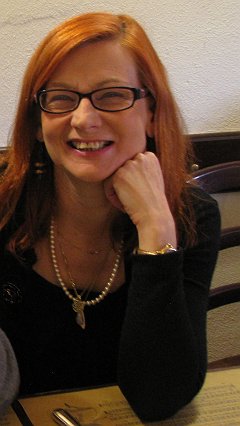
Elena Zucca is an Associate Professor in the Department of Computer Science, Bioengineering, Robotics and Systems Engineering (DIBRIS) at the University of Genoa, Italy. She has a strong research focus on programming languages, particularly in the areas of type systems, formal semantics, and coinduction. Her work bridges theoretical foundations with practical implementations, as evidenced by her publications on topics like Featherweight Java, corecursion, and soundness proofs for programming language features. Her research interests span the theoretical and practical aspects of programming languages. She investigates the formal semantics of programming constructs, particularly focusing on the boundaries between finite and infinite computations. Her work on coinduction and corecursion explores how to safely handle infinite data structures and computations. She has made significant contributions to understanding soundness in programming language features, especially in relation to resource-aware semantics. Her research often combines theoretical foundations with practical implementations, as seen in her work on Featherweight Java extensions and effect systems. Analysis of her recent publications reveals a consistent focus on advanced type systems and semantics. Her work explores the theoretical boundaries of programming language features while maintaining practical relevance. A recurring theme is the relationship between finite and infinite computations, with particular attention to soundness guarantees. Her research has evolved from foundational work on lambda calculus and object-oriented programming toward more specialized topics like graded types, coeffects, and resource-aware semantics. Elena Zucca has been actively involved in the programming languages research community, serving on program committees for major conferences including SPLASH, ECOOP, and POPL. She has mentored students through doctoral courses on Declarative Programming and (Co)Induction. Her research has been supported through participation in various academic programs, including the SEPL research program mentioned in her course materials. She teaches a diverse range of courses at the University of Genoa, from undergraduate to doctoral levels. Her teaching portfolio includes Automata Theory and Computability, Algorithms Analysis and Design, Principles and Paradigms of Programming Languages, and specialized doctoral courses on Declarative Programming and (Co)Induction. Her courses often reflect her research interests, covering theoretical foundations of programming languages, formal methods, and advanced programming paradigms.
Eric Leclercq is a researcher at the University of Burgundy, affiliated with the LE2I Lab in Dijon, France. His work spans database systems, social network analysis, and biomedical data integration. He has contributed extensively to polystore systems, tensor decompositions, and category theory applications in data modeling. Fields of Interest : Database Systems, Data Mining, Social Network Analysis, Big Data Analytics, Semantic Web Leclercq's recent research focuses on formal frameworks for data lakes using category theory, multi-level tensor decomposition for social network stratification, and schema migration in multi-model systems. He has published in venues like CAiSE, IDEAS, and RCIS. His collaborations include Annabelle Gillet, Marinette Savonnet, and Nadine Cullot. Notable works include Lambda+ architecture for data processing, polarization analysis in social networks, and tools for tweet collection and biomedical data integration.
Martin Theobald is a Professor in the Department of Computer Science at the University of Luxembourg's Faculty of Science, Technology and Communications. Previously affiliated with University of Ulm, Germany, his research spans database systems, information retrieval, and knowledge extraction with over 120 publications since 2002. His work bridges theoretical database foundations with practical applications in large-scale data processing. His research focuses on: Probabilistic and uncertain database systems Stream processing frameworks (notably the AIR architecture) Knowledge extraction from heterogeneous data sources Integration of machine learning with database systems Efficient query processing for structured and semi-structured data Recent publications demonstrate an evolving research trajectory toward real-time data stream processing with machine learning integration. His work on the AIR (Asynchronous Iterative Routing) framework and its extensions (TensAIR, OPTWIN) addresses critical challenges in concept drift detection, neural network training on streaming data, and efficient resource utilization. These contributions sit at the intersection of database systems, distributed computing, and machine learning, with applications in knowledge graph construction and question answering systems. Martin Theobald has mentored numerous researchers including Mauro Dalle Lucca Tosi, Alessandro Temperoni, and Vinu E. Venugopal, who have become active contributors to the database community. His collaborative network spans institutions across Europe, with frequent partnerships with researchers from University of Ulm, Max Planck Institute, and other European universities. His laboratory work focuses on developing scalable systems for processing evolving data streams, with particular emphasis on creating lightweight architectures that maintain high performance while minimizing resource consumption. Current projects involve integrating knowledge graphs with real-time analytics and developing adaptive systems that can handle concept drift in streaming environments.
Dr. Hannes Hemmerle is a post-doctoral researcher at Martin Luther University Halle-Wittenberg's Applied Geology department, focusing on subsurface thermal dynamics and climate change impacts. He holds a PhD from the same institution (2023) and previously worked as a Research Associate at Ingolstadt University of Applied Sciences (2018-2019). His research integrates numerical modeling, field measurements, and remote sensing to address critical questions about groundwater warming, subsurface urban heat islands, and anthropogenic heat emissions' environmental consequences. Education: B.Sc. in Sedimentary Geology (University of Freiburg, 2015) and M.Sc. in Applied Geology (University of Erlangen-Nürnberg, 2017) Affiliations: Member of Prof. Peter Bayer's research group, contributing to projects on urban geothermal energy and climate adaptation Research interests emphasize linking thermal subsurface processes to global environmental challenges, with a focus on sustainable energy solutions and ecosystem preservation. His work bridges geoscience and engineering to advance understanding of subsurface systems under anthropogenic pressures. Publications highlight innovative approaches to modeling groundwater temperature trends, assessing heat pollution from urban infrastructure, and leveraging subsurface heat for renewable energy. Recent work includes analyzing thermal impacts of underground car parks and predicting groundwater warming in Saxony-Anhalt. Collaborations include international projects on Mediterranean hydrology and urban climate resilience, supported by interdisciplinary partnerships across Europe.
Tobias Meuser is a Researcher at the Multimedia Communications Lab of Technische Universität Darmstadt, leading the "Adaptive Communication Systems" group since 2020. He holds a PhD (2019) focused on vehicular network data management and has been a central figure in the third phase of the Collaborative Research Center (CRC) MAKI as a principal investigator in subproject B1. His work emphasizes resilient 5G networks, edge AI, and distributed systems. Education: B.Sc. Business Informatics (Fernuniversität Hagen) M.Sc. Informatics (TU Darmstadt) Research Interests: Resilience in 5G and beyond Edge AI and distributed machine learning Information assessment in vehicular networks Collaborative perception systems Hardware acceleration for network functions Key Projects: Principal Investigator in CRC MAKI's B1 (Monitoring and Analysis) Collaborations with Opel (cooperative maneuvering) and Deutsche Bahn (5G resilience) Labs/Teams: Head of Adaptive Communication Systems group at Multimedia Communications Lab Member of Distributed Sensing Systems group (2016–2020)
Salman Zubair Toor is a researcher at Uppsala University, Sweden, specializing in distributed computing, federated learning, and cloud/edge infrastructure optimization. His work spans resource scheduling, data streaming, and secure anomaly detection.
Dr. Franz Hölker is a Senior Scientist and Research Group Leader at the Leibniz-Institute of Freshwater Ecology and Inland Fisheries (IGB Berlin) and holds the position of Associate Professor (Privatdozent) in Zoology at the Department of Biology, Chemistry and Pharmacy, Freie Universität Berlin. Since 2022, he has served as Programme Area Speaker for 'Aquatic Biodiversity in the Anthropocene' at IGB Berlin, leading research on ecological responses to anthropogenic pressures. Leibniz-Institute of Freshwater Ecology and Inland Fisheries (IGB Berlin): Senior Scientist, Research Group Leader since 2008 Freie Universität Berlin: Associate Professor (Privatdozent) for Zoology since 2009 2012-2017: Deputy Head of Department Ecohydrology, IGB Dr. Hölker earned his Diploma in Biology from the University of Hamburg in 1992, completed his doctorate there in 1999 on fish bioenergetics in eutrophic lakes, and achieved his Habilitation at Humboldt-Universität zu Berlin in 2007 with research bridging ecology, behavior, physiology, and modeling in aquatic food webs. Dr. Hölker's research primarily focuses on freshwater ecology with particular expertise in light pollution, ecophysiology, night ecology, ecological modeling, and citizen science. His work investigates how artificial light at night (ALAN) affects aquatic ecosystems, including impacts on fish physiology, insect behavior, and broader ecological community dynamics. He has pioneered research on the ecological consequences of skyglow and developed methodologies for measuring and assessing ecological light pollution. His research group at IGB Berlin employs a combination of field measurements, laboratory experiments, and modeling approaches to understand how light pollution alters species interactions, community composition, and ecosystem functioning in aquatic environments. His extensive publication record demonstrates a consistent focus on understanding anthropogenic impacts on freshwater systems. Recent work shows increasing emphasis on interdisciplinary approaches, combining ecological field studies with modeling techniques to address complex environmental challenges. His research spans from organism-level physiological responses to ecosystem-level consequences of light pollution, with growing attention to conservation applications and citizen science engagement. The trend in his publications reveals expanding scope from fish ecology to broader ecosystem impacts, with increasing international collaboration and policy relevance. Dr. Hölker has led significant research projects examining the impacts of artificial light at night on freshwater ecosystems, often involving international collaborations across Europe. His work has contributed to policy discussions on sustainable lighting practices through participation in projects like the 'White Paper Citizen Science Strategy 2030 for Germany' and collaborations with lighting professionals to develop ecologically sustainable outdoor lighting guidelines. He leads a research team investigating the ecological impacts of light pollution, with particular focus on how artificial lighting affects nocturnal processes in freshwater ecosystems. His group has developed innovative methodologies for measuring ecological light pollution and has conducted extensive field and laboratory studies to document the impacts of different light spectra and intensities on aquatic organisms. The team's work has significant implications for conservation biology, particularly regarding the protection of nocturnal biodiversity in increasingly illuminated landscapes.
Zoi Kaoudi is a researcher at the IT University of Copenhagen , specializing in Data Management , Knowledge Graphs , and Machine Learning . Her work focuses on cross-platform data processing, query optimization, and scalable systems for graph analytics. She has published extensively in venues like SIGMOD , VLDB , and ISWC , with recent contributions to Apache Wayang , DORIAN , and Space-Efficient Graph Algorithms . Her research bridges theoretical advancements with practical frameworks for data science pipelines. Collaborations include Volker Markl, Jorge-Arnulfo Quiané-Ruiz, and Ioana Manolescu. She has explored topics such as Parameter Servers , Knowledge Graph Embeddings , and RDF Data Management in the cloud. Her work emphasizes open science and system integration.
Dr. Holger Eichelberger is part of the Academic Staff in the Software Systems Engineering (SSE) department at the University of Hildesheim's Institute of Computer Science. He is affiliated with Faculty 4: Mathematics, Natural Sciences, Economics and Computer Science. His roles include membership in the Managing Committee of the Institute of Computer Science and the Committee for Student Scholarships. He has extensive experience in model-based software development, Industry 4.0 platforms, and performance engineering. Research Interests: Software Engineering for adaptive systems, Asset Administration Shells (AAS), IIoT platforms, MLOps, container orchestration, and open-source tools like EASy-Producer and SPASS-meter. His work focuses on bridging research and industrial needs, particularly in smart manufacturing and edge computing. Publications highlight contributions to IIoT platform analysis, AI integration in Industry 4.0, and performance benchmarking of communication protocols. He has organized conferences like ICPE and SSP and reviewed for top journals such as IEEE Transactions on Software Engineering. Key projects include the IIP-Ecosphere platform and contributions to standards like AAS. Collaborations involve institutions like the University of the West Indies and industry partners through funded projects like BMBF AI-Lab HAISEM. His research emphasizes reproducibility, interoperability, and scalable solutions for industrial challenges.
Fabio Persia is a Professor at the University of Naples Federico II with an extensive publication record spanning 15 years (2009-2025), demonstrating continuous academic engagement. His research portfolio spans multiple institutions through collaborations with over 70 co-authors, most notably Daniela D'Auria (43 publications), Mouzhi Ge (17), and Giovanni Pilato (14). Dr. Persia's research interests focus on the intersection of semantic computing, event processing, and practical applications. His work evolved from foundational contributions to multimedia recommender systems (2013) to developing the ISEQL interval-based surveillance event query language (2016), and most recently to healthcare AI applications. He has pioneered complex event processing frameworks for video surveillance, created multi-agent systems for epilepsy detection (PredictMed-epilepsy), and explored social sensing for personalized routing during the pandemic. His recent work increasingly integrates large language models with healthcare monitoring systems, reflecting current AI trends. Analysis of his publication trends since 2020 reveals a strong healthcare focus (65% of recent work), particularly in patient monitoring architectures, clinical decision support, and medical AI integration. His publications demonstrate consistent methodological rigor across domains, often combining semantic computing with real-time event processing to address practical challenges in healthcare and social computing contexts. Dr. Persia has served as guest editor for six special issues in the International Journal of Semantic Computing (2023-2025) covering Robotic Computing, Transdisciplinary AI, and Multimedia Computing, confirming his leadership in these research communities. His editorial roles complement his extensive publication record, which includes 25 journal articles and 76 conference papers. His collaborative research includes significant projects with Stefania Costantini on patient monitoring systems, with Mouzhi Ge on multimedia recommenders, and with Sven Helmer on interval joins and event detection. While specific grant information isn't detailed in publications, his sustained output suggests successful funding from multiple sources. His current research trajectory indicates growing emphasis on LLM integration in medical contexts and context-aware systems for public health applications.
Hans-Arno Jacobsen is a Professor at Technische Universität München (Faculty of Computer Science, Germany) and the University of Toronto (Department of Electrical and Computer Engineering, Canada). His research spans distributed systems, blockchain technology, and machine learning for energy systems. Research Interests : Blockchain consensus algorithms, federated learning, graph neural networks, quantum computing applications, and energy-efficient distributed systems. Publication Trends : Recent work focuses on decentralized consensus in blockchains, energy-aware language model inferencing, quantum chemistry simulations, and graph neural network scalability. Collaborations : Regularly works with Ruben Mayer, Shashank Motepalli, and Gengrui Zhang on blockchain and machine learning projects.
Tilmann Rabl is a Professor affiliated with the Hasso Plattner Institute (HPI) at the University of Potsdam, Germany. His research focuses on database systems, distributed computing, and scalable data processing. He leads projects exploring serverless cloud infrastructure, stream processing, and machine learning integration with databases. Key areas of research include optimizing GPU-based data processing, developing benchmarks like TPCx-IoT and TPCx-AI, and advancing techniques for distributed systems, including RDMA and NVLink-based architectures. His work emphasizes practical systems, such as Skyrise (serverless data processing), Rhino (distributed state management), and PROTEUS (scalable machine learning). Rabl has contributed to foundational tools like BlockJoin for matrix partitioning and has explored performance trade-offs in persistent memory and CXL device memory. His collaborative projects address challenges in real-time data analytics, sensor data coherence, and interoperable data science workflows.
Artem Barger is a researcher specializing in blockchain technology, distributed systems, and database optimization. With affiliations primarily in blockchain development and academic research, he has contributed extensively to Hyperledger Fabric enhancements and decentralized information systems. Research Interests Optimizing state databases for blockchain platforms Byzantine Fault Tolerance in distributed networks Permissioned blockchain architectures Tokenization of real-world assets AI applications in soft skills evaluation Recent Publications Barger's work focuses on improving blockchain scalability and security through techniques like certification blocks, Patricia Merkle tries, and verifiable randomness. He has also explored tokenization applications in charity and energy sectors.