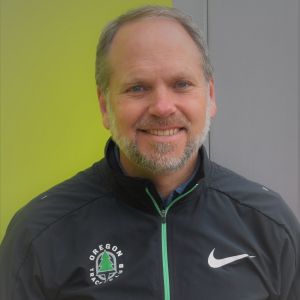
Kira McEntireمشاهده پروفایل
استادیار
Kira McEntire is an Assistant Professor in the Biology & Chemistry Department at Queens University of Charlotte, within the College of Arts & Sciences. She previously served as a Visiting Assistant Professor at Trinity University and completed her Ph.D. at the University of Georgia's Warnell School of Forestry and Natural Resources. Education: Ph.D., Wildlife Ecology, University of Georgia B.A., Biology and Environmental Studies, Southwestern University Dr. McEntire is broadly interested in behavioral ecology, conservation, and the integration of physiology and behavior with population and landscape ecology. She is particularly passionate about using agent-based modeling (ABM) to explore complex biological systems, with a focus on reptiles and amphibians. Her research investigates individual variability, phenotypic polymorphisms, and the impacts of environmental factors like temperature on development and behavior, especially in salamanders. Her recent publications reflect a strong interdisciplinary trend, combining ecophysiological data with computational modeling to understand species responses to climate change and habitat alteration. Themes across her work include conservation applications, mechanistic modeling, and collaborative science aimed at integrating modeling into broader ecological research. Scientific Awards: Outstanding Teaching Assistant Dr. McEntire is deeply committed to pedagogy, employing best teaching practices and game-based learning. She mentors students in research, particularly in projects involving behavioral ecology and modeling. Her collaborations span multiple institutions and disciplines, including work on sustainability in rural India and mathematical modeling in biological systems. She has contributed to projects involving wild turkeys, anoles, gopher frogs, and various salamander species. She is actively involved in the scientific community, serving as an Associate Editor for Southeastern Naturalist , and maintains a robust research network with over 50 co-authors and significant citation impact.