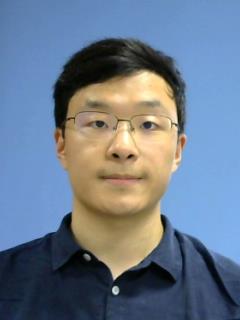
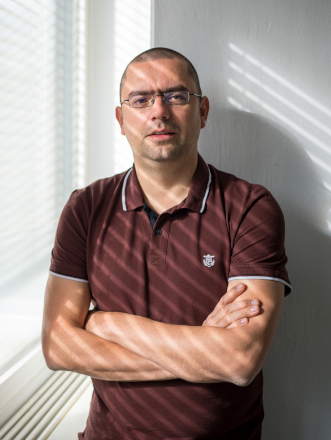
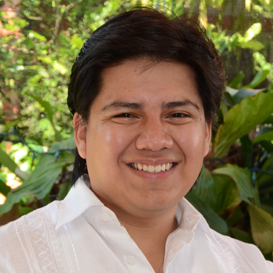
Clay Spinuzzi is a Professor in the Department of Rhetoric and Writing at the University of Texas at Austin, affiliated with the College of Liberal Arts. He earned his Ph.D. from Iowa State University in 1999. Education: Ph.D., Iowa State University (1999) His research spans activity theory, genre theory, actor-network theory, workplace studies, qualitative research, and entrepreneurship. He focuses on how individuals coordinate and collaborate in work environments, often analyzing communication practices in startups, coworking spaces, and rural communities. Recent work includes studying the Business Model Canvas in entrepreneurship, 5D Frameworks for community barriers, and Material Engagement Theory in historical contexts. His publications emphasize methodological innovations like fractional objects and project assemblages. He teaches graduate courses such as Designing Text Ecologies and Writing for Entrepreneurs in both the Department of Rhetoric and Writing and the Human Dimensions of Organizations MA program. His blog ( spinuzzi.blogspot.com ) frequently reviews interdisciplinary literature in sociology, cognitive archaeology, and workplace communication.
Zhongxin Liu is an Assistant Professor at the College of Computer Science and Technology , Zhejiang University , China. He earned his Ph.D. from the same institution in 2021. His research focuses on Intelligent Software Engineering (AI4SE) , leveraging software "big data" to improve code understanding, generation, and security through machine learning techniques. Published in top-tier venues: TSE, TOSEM, ICSE, FSE, ASE, ISSTA Active in academic service: Reviewer for TSE, TOSEM, ASEJ, etc. Visiting Professor at University of Stuttgart (2024-2025) His recent work explores Large Language Models (LLMs) for code intelligence, security hardening, and vulnerability detection. Papers emphasize cross-domain applications, zero-shot learning, and API/code dependency analysis. Scientific awards include: ACM SIGSOFT Distinguished Paper Awards (ASE 2018, 2019, 2020; ISSTA 2025) Zhejiang University Qizhen Scholar (2021) CCF TCSE Doctoral Dissertation Award (2023) Recruiting undergraduate interns, graduate students (MS/Ph.D.), and postdocs for code intelligence research. Contact: liu_zx@zju.edu.cn .
Vinkle Srivastav is a Research Scientist (Chargé de recherche R&D) at the CAMMA group, a collaborative research team between IHU Strasbourg and the University of Strasbourg, where he focuses on advancing surgical data science through novel computer vision and machine learning approaches. His work bridges the gap between clinical practice and artificial intelligence, developing methods for surgical video analysis, 3D medical imaging, and surgical workflow understanding. Education PhD in Computer Science (2018-2021) from University of Strasbourg, France. Thesis: "Unsupervised Domain Adaptation Approaches for Person Localization in the Operating Rooms." Master of Science in Computer Science (2014-2017) from Indian Institute of Technology, Delhi, India. Thesis: "Computerized evaluation of neurosurgery skills using image processing and computer vision techniques." Bachelor of Technology in Electronics and Communication (2007-2011) from Punjab Technical University, Jalandhar, India. Research Interests Vinkle's research spans surgical data science, with particular focus on multi-modal learning approaches for surgical computer vision. His work addresses fundamental challenges in medical AI including domain adaptation, self-supervised learning, and privacy preservation in clinical environments. He develops methods for 3D medical image analysis, multi-view human pose estimation in operating rooms, and surgical activity recognition. His recent work emphasizes multi-modal pretraining frameworks that leverage both visual and textual information to improve surgical workflow understanding. He also investigates scientific simulation techniques, particularly for therapeutic ultrasound applications, where physics-aware deep learning models can accelerate computational processes while maintaining accuracy. Publication Trends Vinkle's recent publications demonstrate a strong trajectory toward multi-modal surgical AI systems that integrate vision, language, and physics-based modeling. His work increasingly focuses on few-shot and zero-shot adaptation techniques to address the data scarcity problem in surgical AI. The publications reveal a progression from basic pose estimation to holistic surgical scene understanding, incorporating team communication analysis and surgical safety protocols. Scientific Awards IPCAI 2024 Best paper award (co-author) IPCAI 2019 Runner-up award in the bench-to-bedside category (co-author) Joint winner for the best paper award in the machine learning for CAI track, IPCAI 2025 Advising and Grants Vinkle actively mentors multiple PhD students and research interns at various levels, supervising thesis work on topics including large-scale multi-modality learning, holistic surgical scene analysis, and self-supervised video representation learning. He serves as Co-PI on two ITI-HealthTech projects: one focused on multi-modality learning for 3D medical imaging (2023), and another on physics-aware deep-learning approaches for therapeutic ultrasound simulation (2024). Laboratories and Teams Vinkle is a key member of the CAMMA research group at IHU Strasbourg, a collaborative team focused on computer-assisted medical modeling and analytics. He co-organizes the Surgical Data Science Summer School, an interdisciplinary program that brings together clinicians and computer scientists to develop AI-driven solutions with clinical impact. His work involves close collaboration with surgical teams at University Hospitals of Strasbourg and international partners including Johns Hopkins University and Technical University of Munich.
Konstantin Yuryevich Degtyarev is an Associate Professor at the Department of Software Engineering within the Faculty of Computer Science at the National Research University Higher School of Economics (HSE) in Moscow. He has been working at HSE since 2008 and has accumulated 29 years of scientific and teaching experience. His office is located at AUK "Pokrovsky Boulevard", Pokrovsky blvd, 11, office S919, where he holds consultations on Mondays, Thursdays, and Fridays during Module 1. 1995: Candidate of Technical Sciences from Moscow State University of Instrument Engineering and Computer Science, specialty 05.13.01 "System Analysis, Management and Information Processing" Postgraduate study at Moscow State University of Instrument Engineering and Computer Science (1986) Specialty: Moscow Institute of Electronic Engineering, Faculty of Applied Mathematics, specialty "Applied Mathematics", qualification "Engineer-mathematician" Professor Degtyarev's research focuses on systems theory and mathematical modeling, with particular emphasis on fuzzy logic and soft computing applications in systems analysis. His work explores cognitive approaches to structural analysis, verbal calculations, perceptions in systems analysis, F-geometry in modeling and decision making, interval calculations, Z-numbers (according to L.A. Zadeh), and fuzzy time series in forecasting. He also has significant expertise in programming in C/C++ and approaches to teaching programming courses. His research bridges theoretical foundations with practical applications in software engineering and decision support systems. Analysis of Professor Degtyarev's publication history reveals a consistent focus on fuzzy logic applications across multiple domains. His work demonstrates an evolutionary path from foundational theoretical work on polyhedral dynamics and Q-analysis to more applied research involving Z-numbers, fuzzy time series, and fuzzy logic applications in software engineering, e-commerce reputation systems, and metro positioning services. A notable trend is the increasing application of fuzzy methodologies to practical software engineering problems, particularly in the areas of linguistic summarization, decision support, and uncertainty modeling. Gratitude from HSE University (May 2024) Gratitude from the Department of Software Engineering, HSE (November 2023) Certificate of honor from the Faculty of Computer Science of HSE (September 2019) Gratitude from the First Vice-Rector of HSE (January 2018) Best Teacher award (2024, 2011-2020) Winner of the competition for the best article in the journal 'Proceedings of the ISP RAS' for 2019 Professor Degtyarev has supervised numerous bachelor's and master's theses, primarily focusing on fuzzy logic applications, Z-numbers, linguistic summarization, and decision support systems. His students have developed various software implementations related to fuzzy modeling, time series forecasting, and expert assessment aggregation. He has also contributed significantly to educational development, creating teaching materials for courses in programming, fuzzy systems, and applied system analysis. His involvement in curriculum development includes certified assessment materials for the discipline "Fundamentals of Informatics and Programming". As a member of IEEE (since 1999) and ACM (2005-2014), Professor Degtyarev participates in various professional activities including serving as a reviewer for prestigious journals such as "Fuzzy Sets and Systems" and "IEEE Transactions on Fuzzy Systems". He has also been involved in international conferences as a program committee member and section chair for several International Conferences on Soft Computing.
Teresa Cristina de Freitas Gonçalves is an Associate Professor at the Department of Informatics, School of Sciences and Technology, University of Évora, where she has been employed since 1999. She serves as an integrated researcher at the ALGORITMI research centre and is the Director of the VISTA Lab (Video, Image, Speech and text Analysis Lab), the unit of the ALGORITMI research centre at University of Évora. Her leadership roles include Director of the Master programme in Informatics Engineering and deputy Director of both the Master programme in Artificial Intelligence and Data Science and the Doctoral program in Computer Science. She earned her PhD in Computer Science from University of Évora and a MSc degree in Informatics Engineering from New University of Lisbon. Her academic journey at University of Évora has included significant leadership positions including Head of the Computer Science Department (2011-2015), Director of the Bachelor programme in Informatics Engineering (2016-2021), and Deputy Director roles for various undergraduate and graduate programs. Dr. Gonçalves' research focuses on intelligent systems, particularly Machine Learning approaches, with substantial contributions in evolutionary algorithms, information extraction and retrieval, and supervised learning across multiple data modalities including tabular data, text (in both Portuguese and English), and images (medical and satellite). Her work bridges theoretical advances with practical applications in healthcare, remote sensing, and natural language processing. She has successfully supervised 6 doctoral theses, 19 master theses, and 3 postdocs, and currently mentors 5 doctoral and 6 master students from diverse international backgrounds including Bangladesh, Cabo Verde, Nepal, Philippines, India, Sri Lanka, China, Mongolia, and Portugal. Her publication record includes over 100 scientific articles indexed by Scopus with 640 citations and an h-index of 12, demonstrating significant international impact with 56% of her work involving international collaboration. Her recent research shows a strong trend toward applying advanced machine learning techniques to healthcare applications, information retrieval systems, and remote sensing analysis, with particular emphasis on transformer networks, learning-to-rank methodologies, and multimodal data analysis. Dr. Gonçalves has made substantial contributions to the academic community through her service as a reviewer for over 50 articles in prestigious international journals and conferences, and as chair for major international conferences including IDEAL 2023, PROPOR 2020, SKIMA 2017 and 2018, and CLEF 2016. She serves on the board of APRP (Associação Portuguesa de reconhecimento de Padrões) and as a jury member for APRP prizes for best MSc and PhD theses. Her current research portfolio includes coordination of the Horizon Europe MSCA Staff Exchange HarmonicAI project and local coordination of WP6 in the NewSpace Portugal mobilising agenda. She is also actively involved in numerous other international research initiatives including Interreg VI-B Sudoe SenforFire, PRR CANTE, La Caixa INCOME, Erasmus+ KA220-HED REDINEST, Interreg POCTEP TID4AGRO, and ATTRACT DIH projects. Previously, she led the FCT AI in the Public Administration SNS24.Scout.IA project and coordinated the FEDER R&D NIIAA project. As Director of the VISTA Lab, Dr. Gonçalves leads a dynamic research team focused on video, image, speech, and text analysis. The lab serves as the Évora hub of the ALGORITMI research centre and has established strong international collaborations. Under her leadership, the VISTA Lab has developed innovative approaches in medical image analysis, natural language processing for Portuguese, and satellite image classification, with applications spanning healthcare, environmental monitoring, and public administration.
Sven Apel is Professor of Computer Science at Saarland University, where he holds the Chair of Software Engineering and directs the Saarbrücken Graduate School of Computer Science within the Saarland Informatics Campus. His research aims to advance software engineering into an era of intensive automation by developing methods, tools, and theories for building efficient, reliable, and maintainable software systems, with a strong emphasis on the human factor and interdisciplinary inquiry. His primary research interests include software variability and configuration, AI-based program generation and optimization, socio-technical software analysis, and the application of empirical and neurophysiological methods to study program comprehension. He actively collaborates with industry partners such as Siemens AG, Bosch Engineering, and Airbus Helicopters to apply his research in real-world contexts. His recent publications demonstrate a strong trend towards integrating artificial intelligence and neurocognitive methods into software engineering, focusing on configurable systems, performance modeling, debugging processes, and the scientific validity of empirical studies. His work spans top venues like ICSE, FSE, ASE, and IEEE TSE. ERC Advanced Grant “Brains On Code” ASE Fellow ACM Distinguished Member Hugo Junkers Award for Research and Innovation Heisenberg Professorship (DFG) Emmy-Noether Fellowship (DFG) Best Doctoral Dissertation Awards (University of Magdeburg, Ernst-Denert Foundation, 2007) Most Influential Paper Awards (SPLC'19, ICPC'22, GPCE'23) ACM SIGSOFT Distinguished Paper Awards (ICSE'15, ICSE'21) Best Paper Awards (SPLC'11, Modularity'15, Academy of Management'18) Distinguished Reviewer Awards (ASE'18, ICSE'24, FSE'24) Sven Apel has secured significant research funding, including an ERC Advanced Grant (€2.5M) and multiple DFG grants as Principal Investigator and Project Leader. He has advised numerous PhD and Master’s students and is actively involved in the academic community through program committees for major conferences like ICSE, FSE, and ASE. His work is conducted within a collaborative environment that includes close partnerships with researchers at the Max Planck Institute for Informatics and other institutions within the Saarland Informatics Campus.
Oliver Karras is a researcher, data scientist, and lecturer at the Data Science and Digital Libraries research group at TIB – Leibniz Information Centre for Science and Technology. He holds a BSc, MSc, and PhD in Computer Science from Leibniz University Hannover. His research focuses on FAIR scientific knowledge, Open Research Knowledge Graph (ORKG), and national research infrastructure projects like NFDI-4Ing and FAIR-DS. He is a member of the German Informatics Society (GI) and spokesperson of the Requirements Engineering (RE) group, contributing to conferences and journals as a reviewer. Previously, he was a research associate and PhD student in the Software Engineering group at Leibniz University, leading the DFG project ViViReq on video integration in requirements engineering. His research interests include Data Science, AI, Knowledge Representation, Software Engineering, Requirements Engineering, Empirical Research, and Open Science. He has published over 60 papers in these areas, with notable contributions to knowledge graphs, FAIR data, and reproducibility frameworks. His work emphasizes organizing scientific knowledge for accessibility and collaboration across disciplines. He is actively involved in initiatives like the ORKG, promoting sustainable literature reviews and open science practices. His professional contributions extend to tool development, such as OntoAligner for ontology alignment and SciKGTeX for semantic annotation in LaTeX. Oliver Karras collaborates with institutions like Leibniz University, contributing to the NFDI consortium and energy research projects. His expertise bridges technical innovation and academic rigor, addressing challenges in knowledge management and reproducibility. His current roles include advancing TIB’s research infrastructure and fostering interdisciplinary collaboration through knowledge graph applications.
Juan F. Sequeda is the Principal Scientist and Head of the AI Lab at data.world, with a PhD in Computer Science from the University of Texas at Austin. He co-founded Capsenta, a spin-off from his research on semantic data virtualization. His work bridges academia and industry through roles in the Property Graph Schema Working Group, LDBC Graph Query Languages task force, and W3C standards editing. Education : PhD in Computer Science (2015) from University of Texas at Austin His research focuses on Knowledge Graphs, Semantic Web, and Ontology-Based Data Integration. He develops technologies for graph data management and semantic query processing, with applications in constitutional data analysis (Constitute.org) and enterprise data virtualization (Ultrawrap, Gra.fo, G-CORE). Recent publications analyze composable graph query languages (G-CORE, 2018) and optimize SPARQL execution on relational data (Ultrawrap, 2013). Awards include NSF Graduate Fellowship (2010-2013), ISWC2014 Best Student Paper, and 2015 Institute for Applied Informatics Best Transfer Project. Scientific Awards : NSF Graduate Research Fellowship (2010-2013) 2nd Place, 2013 Semantic Web Challenge Best Student Research Paper, ISWC2014 2015 Best Transfer and Innovation Project (Institute for Applied Informatics) UT Graduate Diversity Fellowship (2008-2009) National Instruments Scholarship (2007-2008) Intel Foundation Fellowship (2007) He actively contributes to program committees (ISWC, ESWC, WWW) and workshop organization (COLD, AMW2018 General Chair). Contact: juan@data.world (work), juanfederico@gmail.com (personal).
Professor Kewen Wang is a faculty member in the School of Information and Communication Technology at Griffith University , where he has been actively working in computational logic, knowledge representation, and their applications in artificial intelligence for over 30 years. His research has led to the development of novel logics, computer languages, and systems for knowledge representation and reasoning. Broad research areas: Computational Logic, Knowledge Representation, Artificial Intelligence, Programming, Knowledge Graphs, Explainable AI, Ontology Reasoning, Rule Learning Key contributions: RLvLR (scalable rule learner for KGs), TyRuLe (typed rule learning), Drewer (Datalog+- query engine), ALBERT+CCR (CommonsenseQA model), auction design algorithms His research has been widely cited in top venues like Artificial Intelligence , JAIR , ACM Transactions on Computational Logic , and conferences AAAI (Area Chair 2022-2025), IJCAI , KR . He has secured six ARC Grants (five Discovery, one Linkage) and smaller grants from NICTA, CSIRO, and Griffith University. Editorial roles: Area Chair for AAAI (2022-2025), Associate Editor for Journal of Web Semantics , TGDK Supervision: Has supervised over 15 PhD students including Hong Wu, Peng Xiao, and Pouya Omran Teaching: Courses in Intelligent Systems, Data Structures, Discrete Mathematics, and Robotics
Sebastián Ferrada is an Assistant Professor at the Data & Artificial Intelligence Initiative of Universidad de Chile. He also serves as Young Researcher at the Institute for Foundational Research on Data (IMFD) and Collaborating Researcher at the National Center for Artificial Intelligence Research (CENIA). His research focuses on Knowledge Graphs, with special emphasis on extraction, management, and applications for querying, browsing, and AI systems. His academic background includes: PhD in Computer Science (2021), Universidad de Chile MSc in Computer Science (2017), Universidad de Chile BEng in Computer Science (2017), Universidad de Chile Sebastián's research explores several key areas: Multimedia Databases with applications to Wikimedia Commons images Graph Databases and Knowledge Graphs construction Federated Data Management across heterogeneous RDF sources SPARQL query extensions for similarity-based operations Graph data management and compression techniques His recent publications demonstrate strong trends in knowledge graph construction, similarity-based querying, and efficient graph data management. These works combine theoretical advancements with practical implementations in real-world systems like IMGpedia and MillenniumDB. Scientific achievements include: Best Paper Award at CoopIS 2023 Best Demonstration Award runner-up at SIGMOD/PODS 2024 Best Student Paper (Resources Track) and Best Poster at ISWC 2017 First prize in CLEI 2017 for his Master's thesis Sebastián currently leads the Fondecyt project on graph data management and contributes to the U-Inicia project on AI processes in graph databases. He serves on the editorial board of Transactions on Graph Data and Knowledge.
Bjorn Ross is a Lecturer in Computational Social Science at the School of Informatics, University of Edinburgh. He is affiliated with the Institute for Language, Cognition and Computation and actively contributes to the Computational Social Science research area. He serves as Director of the SMASH research group and is part of the management team for the Centre for Doctoral Training in Natural Language Processing (CDT in NLP). Education: PhD, 2019, University of Duisburg-Essen MSc in Computer Science, 2016, University of Münster Exchange year, 2014–2015, University of Strasbourg BSc in Information Systems, 2013, University of Münster His research focuses on computational methods for analyzing social media, particularly using natural language processing, social network analysis, and agent-based modeling. Key interests include misinformation, hate speech, social bots, and the ethical implications of automated systems. He emphasizes fairness, bias, and data ethics in AI applications. His recent publications span topics such as queerphobic bias in sentiment analysis, explainable hate speech detection, temporal generalizability in misinformation models, and cross-lingual bias amplification. These works appear in leading venues including ACL, ICWSM, Social Science Computer Review, and Big Data & Society, reflecting a strong interdisciplinary focus bridging computer science, social science, and ethics. Scientific Awards: Best Paper Award, Electronic Government track, HICSS 2018 Ross supervises multiple PhD students and welcomes new applicants. He has also contributed to software tools and web-based platforms for argument analysis and counterspeech. He is an Associate Editor for Business & Information Systems Engineering and a member of AIS, ACL, and ACM. His teaching includes courses on Text Technologies for Data Science and digital persuasion. He leads the SMASH group, which focuses on social media analytics and societal challenges, and collaborates extensively within the CDT in NLP and the Institute for Language, Cognition and Computation.
Emek Demir serves as an Associate Professor in the Department of Molecular and Medical Genetics at Oregon Health & Science University's School of Medicine, where he directs the Computational Biology program at the Brenden-Colson Center for Pancreatic Care. His academic journey includes a Ph.D. in Computer Engineering from Bilkent University (2005) under Ugur Dogrusoz and postdoctoral training with Chris Sander at Memorial Sloan Kettering Cancer Center's Computational Biology Center. Dr. Demir's research centers on Pathway Informatics, integrating detailed biological pathway information with omic data to solve cancer biology problems. His work spans pathway curation, visualization, NLP, data standardization, machine learning, and mechanistic simulation. He pioneered the BioPAX pathway data standard and developed Pathway Commons—the largest process-level pathway database with over 2 million interactions and 400,000 detailed human reactions. His publication record demonstrates consistent innovation in computational oncology, with recent work focusing on transcription factor activity prediction, spatial tumor mapping, and causal network analysis. Key contributions include algorithms for detecting altered cancer sub-networks, identifying transcription factor modulators, and inferring active networks from proteomic data. His research bridges computational methods with clinical applications in leukemia, prostate cancer, and glioblastoma. Recipient of leadership roles in major NIH-funded initiatives Principal developer of Pathway Commons and BioPAX standards Extensive collaborations with Memorial Sloan Kettering and OHSU clinical departments Dr. Demir directs a computational biology program focused on translating pathway knowledge into clinical insights for pancreatic cancer, with ongoing projects in spatial omics, multi-dimensional tumor atlases, and antiviral nanomaterial applications.
Elizabeth Leisy Stosich serves as Associate Professor and Associate Chair of the Division of Educational Leadership, Administration, and Policy at Fordham University's Graduate School of Education. Since joining the faculty in 2017, her research examines collaborative leadership practices that strengthen educational equity and student learning opportunities across district, school, and teacher levels, with particular focus on high-poverty urban contexts and ambitious academic standards implementation. Her educational background includes advanced degrees from Harvard University: Ed.D. in Education Policy, Leadership, and Instructional Practice Ed.M. in Education Policy and Management M.A. in Teaching and Multiple Subjects (University of San Francisco) B.A. in Spanish and Portuguese (UC Berkeley) Stosich's research centers on education policy, school/district leadership, teacher professional development, and research-practice partnerships. She investigates how leaders create coherence among complex policies like Common Core standards and accountability systems, emphasizing collaborative structures that enable educators to improve instructional practices. Her work consistently addresses equity challenges in resource-constrained urban schools through frameworks like the Internal Coherence Framework. Analysis of her 15 most recent publications reveals persistent themes: leadership practices that bridge policy expectations with classroom realities, the critical role of social networks in policy implementation, and strategies for building sustainable improvement capacity. Her scholarship demonstrates methodological diversity including social network analysis, design-based implementation research, and qualitative case studies, predominantly focused on urban educational settings where equity considerations drive leadership decisions. Her significant scholarly recognition includes: 2022 AERA Division A Emerging Scholar Award 2016 AERA Leadership for School Improvement SIG Dissertation of the Year Award Stosich teaches courses including Community of Inquiry, Implementation Research, Leading Instructional Improvement, and Urban Education. Prior to Fordham, she served as a research fellow at Stanford's Center for Opportunity Policy in Education and taught elementary school in Oakland. Her co-authored book "The Internal Coherence Framework" is widely adopted in leadership programs, reflecting her commitment to bridging research and practice through ongoing partnerships with school districts. Her current work extends through research-practice partnerships where she collaborates with districts to implement leadership frameworks that foster organizational coherence, strengthen instructional systems, and develop sustainable capacity for continuous improvement in diverse educational settings.
Lai Ma is Associate Professor at the School of Information and Communication Studies, University College Dublin (UCD), where she also serves as Director of Research (2022–2025) and previously directed the MLIS and GradDipLIS programmes. She holds a PhD in Information Science from Indiana University Bloomington and a BSc(Econ) from The Chinese University of Hong Kong. Her work bridges philosophy, information science, and science policy. PhD, Information Science, Indiana University Bloomington MLIS, Indiana University Bloomington BSc(Econ), The Chinese University of Hong Kong Her research centers on the epistemology of information and knowledge production, with a focus on open research, scholarly communication, research evaluation, and research infrastructure. Influenced by critical social theory, philosophy of language, and STS, she investigates issues of epistemic injustice, bibliodiversity, and the political economy of academic publishing. A major theme is the critique of metrics and platformisation in research. Her recent publications reveal a strong trend toward analyzing the structural inequalities in global knowledge production, especially through the lens of open access models, citation practices, and research assessment. She critically examines how commercial interests and dominant platforms shape what counts as knowledge, often marginalizing voices from the global periphery. Best Paper Meta Reviewer Award Teaching Excellence Award Best Paper Reviewer Award Lai Ma leads the ERC Consolidator Grant project Sustainable and Collaborative Research Information for Bibliodiverse Ecosystems (SCRiBe) (2025–2030) and has secured other grants on open research culture. She actively mentors PhD students and has coordinated key modules such as Digital Libraries , Scholarly Communication , and Research and Practice in LIS . She serves on editorial boards and review panels for major journals and funding bodies, and has held leadership roles in ASIS&T and the Library Association of Ireland. She is affiliated with the UCD Geary Institute for Public Policy and contributes to policy discussions on research evaluation, ethics, and open science. Her work emphasizes the need for community-governed, equitable, and sustainable research infrastructures.
Sebastian Angel is an Associate Professor and Chair of Undergraduate Curriculum in the Department of Computer and Information Science at the University of Pennsylvania . He leads research in systems, security, privacy, and networking, with a focus on privacy-preserving systems, accountability in online services, consistency in distributed systems, and next-generation operating systems. Research Areas: Systems, Security, Privacy, Networking, Distributed Systems, Operating Systems Labs & Teams: Distributed Systems Laboratory, Security and Privacy Laboratory, Warren Center for Network and Data Sciences Education: Ph.D. in Computer Science from the University of Texas at Austin (2018), ACM SIGOPS Dennis M. Ritchie Dissertation Award, Bert Kay Best Dissertation Award Recent Publications (2025–2022) span serverless computing, zero-knowledge proofs, distributed transactions, privacy-preserving ad tech, and verifiable execution. His 2025 work includes serverless workflow optimization and structural logic verification, while 2024 focuses on caching frameworks and stateful serverless. Earlier 2023–2022 projects include secure federated learning, confidential cloud services, and private information retrieval. Scientific Awards: NSF CAREER Award (2021) JPMorgan Faculty Award (2021) ACM SIGOPS Dennis M. Ritchie Dissertation Award (2018) Bert Kay Best Dissertation Award (2018) ACM SIGMOD Research Highlights Award (2024) VLDB 2024 Best Paper Award Nominee Advising: Current PhD Students: Elizabeth Margolin, Jess Woods, Yuxuan Zhang Current Masters Students: Felix Adena, Sydnie Shea Cohen Alumni: Eleftherios Ioannidis (2025), Yiping Ma (2025), Haoran Zhang (2024), Ke Zhong (2024), Selin Butun (2025), Martin Sander (2025), Seungmin Han (2024), Andrew Beams (2022), Yifeng Mao (2021), Varad Deshpande (2020) Current Courses: CIS 4510/5510: Computer and Network Security (Fall 2025). He also organizes conferences like S&P, OSDI, SOSP, PETS, and EuroSys.