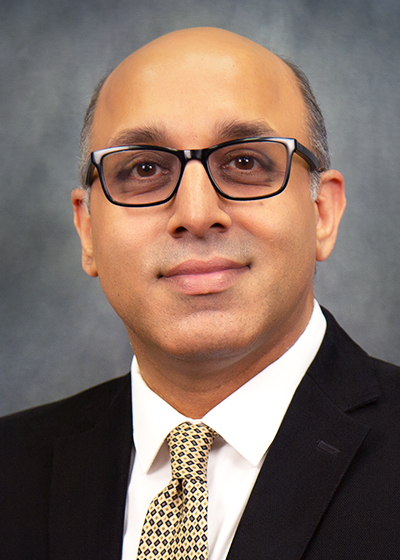
Prof. Dr. Oya Beyan is a Professor at the University of Cologne's Institute for Biomedical Informatics and a Core Scientist at the Center for Data and Simulation Science. Her research focuses on enabling FAIR (Findable, Accessible, Interoperable, Reusable) data management, distributed analytics on sensitive medical data, and data-driven innovations in healthcare. She leads projects like the PADME platform for federated machine learning and privacy-preserving analytics. Key areas include biomedical informatics, semantic web technologies, clinical decision support systems, and ethical challenges in data science. Research Interests: FAIR Data Principles & Infrastructure Privacy-Preserving Distributed Learning Explainable AI in Healthcare Semantic Interoperability Medical Data Integration Ethical & Social Implications of Data Use Notable Contributions: Development of the Personal Health Train framework for decentralized medical data analysis Leadership in EU-funded initiatives like NFDI4Health and Medical Informatics Collaborations Pioneering work on federated learning applications in oncology and rare disease research Lab & Affiliations: Prof. Beyan's work is anchored in the Institute for Biomedical Informatics and the Center for Data and Simulation Science, fostering interdisciplinary collaboration between computational science and medical research.
Gregory S. Miller is Ernst & Young Professor of Accounting at the University of Michigan's Ross School of Business. His research examines financial communication mechanisms, specifically how corporate managers convey firm information to external stakeholders and how market structures influence communication effectiveness. Professor Miller maintains editorial roles at leading journals including The Accounting Review and Journal of Accounting and Economics. Research concentrations include: Information flow dynamics in financial markets Managerial communication strategies Impact of disclosure regulations on market efficiency Investor relations and shareholder activism Cross-cultural aspects of financial disclosure Publications appear in top-tier journals including The Accounting Review, Journal of Accounting and Economics, and Journal of Accounting Research. His practitioner-oriented work has been featured in Harvard Business Review and Investor Relations Quarterly. Educational credentials include PhD from University of Michigan (1998) and BS in Accounting from Miami University (1990). Professional experience includes four years as auditor at Arthur Andersen.
Danilo Bzdok is an Associate Professor in the Department of Biomedical Engineering at McGill University’s Faculty of Medicine and a Canada CIFAR AI Chair at Mila – Quebec Artificial Intelligence Institute. He holds dual expertise in systems neuroscience and machine learning, with two doctoral degrees: one in neuroscience from Forschungszentrum Jülich (Germany) and another in computer science (machine learning statistics) from INRIA–Saclay and Neurospin (France). His research bridges computational neuroscience and AI, focusing on understanding human intelligence through neuroimaging and biomedical data. Education: PhDs in Neuroscience (Jülich) and Computer Science (INRIA/Neurospin). Postdoctoral training at Harvard Medical School. Current affiliations include McGill University and Mila. Research interests span computational biology, deep learning, LLMs, and their applications in neuroimaging, precision medicine, and neurodegenerative diseases. Over 150+ peer-reviewed publications, with recent work on LLMs in autism diagnostics, brain network modeling, and social neuroscience. Key Awards: Canada CIFAR AI Chair. Lab focuses on interdisciplinary projects like AI4Science, neuroimaging analysis, and AI ethics. Supervises a dynamic team of PhD/Master’s students and postdocs. Collaborations include clinical institutions and industry partners through Mila’s Applied Research programs.
Dr. Pinon Hermida Victor is a Researcher at the Institute of Electronic Structure and Laser (IESL) under the Foundation for Research and Technology – Hellas (FORTH). He holds a PhD in Physics from the University of A Coruña (2011) and has conducted extensive research on Laser-Induced Breakdown Spectroscopy (LIBS), focusing on femtosecond lasers, double-pulse configurations, and applications in material analysis, archaeology, and environmental science. His career includes roles at Applied Photonics Ltd (UK) as Senior Applications Scientist (2014-2020) and postdoctoral fellowships at FORTH-IESL through the Marie Curie ATLAS program (2006-2008). Research interests span LIBS methodology development, optical fiber systems for high-power lasers, and software for spectral analysis. Notable contributions include portable LIBS instrument design and radiation-resistant optical components for nuclear facilities. Awards include the 2008 LIBS Contest and the 2011 Premio Extraordinario de Doctorado. Recent work focuses on applying LIBS to archaeological mollusc shell analysis for climate and environmental studies. He collaborates internationally on LIBS quantification challenges and instrument durability in harsh environments. Education: PhD in Physics (2011), University of A Coruña; Diploma in Physics (2001), University of Santiago de Compostela Key Roles: Senior Applications Scientist (Applied Photonics), Marie Curie Fellow (FORTH-IESL), Researcher (Laboratory of Industrial Applications of Lasers) Lab Affiliations: IESL-FORTH and University of A Coruña laser labs
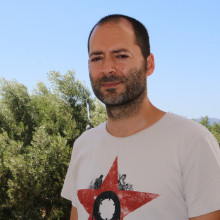
Mike Papadakis is an Associate Professor at the University of Luxembourg's Interdisciplinary Centre for Security, Reliability and Trust (SnT), where he leads the SerVal research group. His research focuses on software engineering, software security, and artificial intelligence. He holds a PhD in Software Testing and Verification from Athens University of Economics and Business, with an MSc and BSc from the same institution. His research explores mutation testing, machine learning applications in software development, and test optimization. Recent publications demonstrate a strong emphasis on AI robustness, flaky test analysis, and automated debugging techniques. Notable achievements include the IEEE TCSE Rising Star Award (2020) and 12 additional research awards. He has published over 100 peer-reviewed articles and delivered more than 30 invited talks globally.
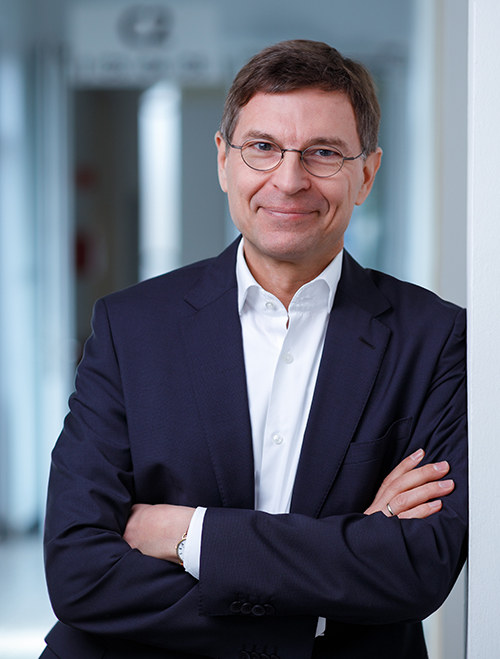
Prof. Stefan Wrobel is a Professor of Computer Science at the University of Bonn and Director of the Fraunhofer Institute for Intelligent Analysis and Information Systems (IAIS). He holds leadership roles, including Co-Director of the Lamarr Institute for Machine Learning and Artificial Intelligence and Managing Director of the Bonn-Aachen International Center for Information Technology (b-it). His research focuses on AI, machine learning, and big data applications in industry and society. He earned his PhD from the University of Dortmund and has held academic positions at Magdeburg University and Berlin Technical University. Active in national/international AI initiatives, he chairs the Fraunhofer Strategic Research Field on Artificial Intelligence and co-leads the Machine Learning Rhine-Ruhr (ML2R) Competence Center. Education: Master's (Georgia Tech), PhD (University of Dortmund). Research emphasizes intelligent algorithms, data analysis, and AI ethics. Awarded GI-Fellow (2022) and honored by the German Computer Science Society for contributions to AI history. Key roles include Editorial Board member of Machine Learning journals and advisory roles in AI ethics and certification. Scientific contributions span over 100 publications in machine learning, data mining, and visual analytics. Advised numerous PhD students on topics like graph mining and trustworthy AI. Leadership in institutions like Fraunhofer Technology Hub for Machine Learning and the German Computer Science Society's Special Interest Group on Knowledge Discovery.
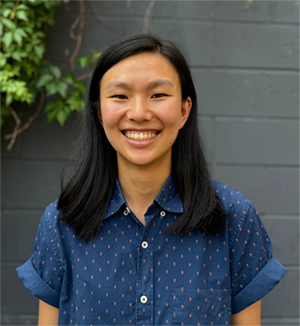
Zhiru Sun is an Associate Professor at the University of Southern Denmark, affiliated with the Department of Design, Media and Educational Science. Their research focuses on the intersection of education, humanities, and data science, with expertise in Learning Analytics (LA), Digital Humanities (DH), and AI applications in education and humanities. Sun holds a Ph.D. in Educational Technology from The Ohio State University (2011–2015), alongside advanced degrees in Applied Statistics and Cultural Foundations of Technology. Key research interests include student motivation and performance analysis, historical data mining in DH, and human-centered AI in education. They have received notable awards such as the Outstanding Proposal Award (2021) and the Loadman Outstanding Dissertation Award (2016). Sun leads projects like 'Empowering Humanities Education with Deep Learning' and 'Flipped Classroom Design for Self-Regulation.' Their work spans collaborative learning algorithms, flipped classroom efficacy, and generative AI policy analysis in education. Educations: Ph.D. in Educational Technology, M.Sc. in Applied Statistics, and M.Sc. in Cultural Foundations (all from The Ohio State University) Key Projects: FREI: The Danish Family Revolution, DH Visualization Tools Teaching: Courses include Digital Humanities, Data Science, and Web-mediated Communication Recent publications address learner empowerment in online environments, negotiation skills in collaborative games, and group formation algorithms for optimal learning outcomes.
Zhe He is a Full Professor at Florida State University (FSU), leading the eHealth Lab in the School of Information (iSchool) within the College of Communication & Information. He holds courtesy appointments in the Department of Behavioral Sciences and Social Medicine (College of Medicine), Department of Computer Science, and Department of Statistics. His research focuses on biomedical informatics, AI, and big data analytics, aiming to improve population health and advance biomedical research through informatics applications. He directs the Institute for Successful Longevity and co-leads the Biostatistics, Informatics, and Research Design Program (BIRD) of the UF-FSU Clinical and Translational Science Award. Education: Postdoctoral training at Columbia University (2015), PhD in Computer Science from NJIT (2014), MS from Columbia University (2009), and BE from Beijing University of Posts and Telecommunications (2007). Research Interests: Clinical trial generalizability, ontology quality assurance, consumer health informatics, and AI in medicine. His work bridges biomedical terminologies, patient engagement, and healthcare equity, with a focus on older adults and underserved populations. Grants & Funding: Over $21.9M in grants from NIH (NLM, NIA, NIMH), AHRQ, Amazon, NVIDIA, and Eli Lilly. Active grants include projects on medical marijuana effects, AI-driven clinical training, HIV prevention, and lab result interpretation tools for older adults. Awards & Honors: 2022 Lois Lunin Award (ASIS&T), FAMIA (2022), two AMIA Distinguished Paper Awards, and recognition for interdisciplinary research. Promoted to Full Professor in 2025 after early tenure as Associate Professor (2020). Labs & Teams: Directs the eHealth Lab and collaborates with跨学科 teams in the OneFlorida Data Trust, UF-FSU Clinical and Translational Science Award, and the National Center for Biotechnology Information (during sabbatical).
Karan Ahuja is the Lisa Wissner-Slivka & Benjamin Slivka Assistant Professor of Computer Science at Northwestern University, directing the Sensing, Perception, Interactive Computing & Experiences (SPICE) Lab. He earned his Ph.D. in Human-Computer Interaction from Carnegie Mellon University (2023) and a B.Tech. in Computer Science (2017). His research focuses on creating technologies that sense and understand human behavior, with applications in mobile health, extended reality, and natural user interfaces. Key projects include LemurDx for ADHD diagnosis, EITPose for wearable hand pose tracking, and MobilePoser for full-body pose estimation via consumer IMUs. Awards include Forbes 30 Under 30 (2024), MIT 35 Innovators Under 35 Asia Pacific, and ACM SIGCHI's Outstanding Dissertation Award. He has worked at Google, Apple, Microsoft Research, Meta Reality Labs, and IBM Research. His lab emphasizes real-world deployments, with technologies licensed and integrated into products used by millions. Prospective students are invited to join his lab at Northwestern via a dedicated application form. Research spans embedded systems, computer vision, and on-device ML, with a focus on impactful applications in healthcare and XR.
Angelina Wang is an incoming Assistant Professor at Cornell Tech and the Department of Information Science at Cornell University, starting Fall 2025. Her research focuses on responsible AI, particularly machine learning fairness and algorithmic bias. She holds a Ph.D. in Computer Science from Princeton University and a B.S. in Electrical Engineering and Computer Science from UC Berkeley. Current postdoctoral work at Stanford’s HAI and RegLab explores sociotechnical challenges in AI deployment. Her research addresses fairness evaluation in generative AI, societal impacts of AI systems, and ethical trade-offs in algorithm design. Notable awards include the NSF GRFP, Siebel Scholarship, and Microsoft AI & Society Fellowship. Her work bridges technical and social dimensions of AI, emphasizing human-centered evaluation and interdisciplinary collaboration. Recent publications span medical AI applications (e.g., Alzheimer’s subphenotypes, corticosteroid treatment efficacy) and foundational fairness research. She advocates for proactive ethical considerations in technical work, citing examples like surveillance risks in facial recognition and dataset biases in computer vision. Angelina advises prospective PhD students in Cornell’s Information Science program and collaborates on projects like SciDaSynth for scientific knowledge synthesis. Her advocacy includes challenging fairness impossibility theorems and promoting algorithmic pluralism in auditing practices.
Felix Gomez Marmol is an Associate Professor at the University of Murcia's Faculty of Informatics, Department of Information and Communication Engineering. His research focuses on cybersecurity, artificial intelligence, network security, and IoT security. He holds a PhD in Computer Science from the University of Murcia (2010), supervised by Dr. Gregorio Martínez Pérez. Key research interests include adaptive intrusion detection systems, dark web analysis, and AI-driven cybersecurity frameworks. He leads the Intelligent Systems and Telematics research group and previously contributed to the Sistemas Inteligentes group. His work emphasizes practical applications such as the SCORPION Cyber Range platform for cybersecurity training and gamification. Recent projects involve detecting hate networks on social media, optimizing malware defense using transfer learning, and developing SIEM systems for IoT environments. His contributions span technical papers on cybersecurity education, ethical hacking fundamentals, and blockchain-based security solutions. Prof. Gomez Marmol has collaborated on initiatives like the COBRA framework for simulating advanced persistent threats (APTs) and the COnVIDa dashboard for pandemic-related data analysis. His research bridges theoretical advancements with real-world cybersecurity challenges.
Shahram Rahimi is a Professor and Department Head in the Department of Computer Science at the University of Alabama, College of Engineering. He concurrently holds an Adjunct Professor position at Mississippi State University. His research spans computational intelligence, machine learning, healthcare AI, cybersecurity, and quantum computing. He leads the PATENT Lab, focusing on predictive analytics, decision support systems, and AI-driven healthcare solutions. His educational background includes a Ph.D. in Computer Science. Key research areas include multi-agent systems, generative models, and predictive maintenance. He has served as an editor for journals like Scalable Computing: Practice and Experience and Informatica . Rahimi’s recent work emphasizes secure MLOps, quantum algorithms, and patient-centric medical systems. His publications address challenges in explainable AI, anomaly detection, and healthcare informatics. He actively contributes to conferences and journals in AI, cybersecurity, and computational intelligence. Editorial Roles: Scalable Computing, Engineering Letters, Informatica Labs: Predictive Analytics & Technology Integration (PATENT) Lab Key Focus Areas: Healthcare AI, Quantum Computing, Cybersecurity, Explainable Machine Learning
Asad Abdi is a Lecturer in Computer Science at the College of Science and Engineering. His research focuses on deep learning, data mining, and artificial intelligence , with applications in traffic analysis, educational technology, and maritime logistics. He has published extensively on topics like social media-based traffic forecasting, fake news detection, and vessel arrival prediction. Abdi’s work bridges theoretical advancements in machine learning with practical challenges in domains such as transportation systems and education. He has explored hybrid approaches combining deep learning models with linguistic knowledge and knowledge graphs to address real-world problems. Notable contributions include frameworks for feedback analysis in hybrid classrooms and fusion-based prediction models for vessel arrival times. His recent articles highlight trends in leveraging large language models and multi-feature fusion techniques for tasks like opinion summarization and aspect extraction. Abdi’s research often emphasizes interdisciplinary collaboration, integrating insights from computer science, transportation engineering, and educational psychology. While no formal awards or grants are explicitly listed, his publication record demonstrates sustained contributions to applied AI and data-driven solutions across multiple sectors.
Prof. Dr. Ahmet ÖZMEN is a Professor at Sakarya University's Faculty of Computer and Information Sciences, Department of Software Engineering. He has held various administrative positions including Head of the Software Engineering Department (2019-2028) and Director of the Computer Research and Application Center (2019-2022). With extensive experience in academia since 1991, he has made significant contributions to computer vision, traffic monitoring systems, and sensor technologies. Sakarya University: Professor (2019-present), Associate Professor (2011-2019) Dumlupınar University: Assistant Professor (2001-2011), Research Assistant (2000-2001, 1993-1998) Istanbul Technical University: Research Assistant (1991-1993) Prof. ÖZMEN's research spans computer vision applications for traffic monitoring, indoor air quality systems, parallel computing, and sensor technologies. His work bridges theoretical computer science with practical engineering applications, particularly in developing vision-based systems for nighttime vehicle detection, traffic flow monitoring, and environmental sensing. His interdisciplinary approach combines machine learning, image processing, and embedded systems to solve real-world problems in transportation and environmental monitoring. His publication record shows a clear evolution from parallel and distributed systems in his early career to computer vision and sensor applications in recent years. The majority of his recent work focuses on traffic monitoring systems using computer vision techniques, particularly for nighttime conditions, and indoor air quality monitoring systems using sensor networks. His research demonstrates strong industry and societal relevance, with applications in smart transportation, environmental protection, and educational technology. TÜBİTAK Publication Awards (2006, 2008, 2009, 2010) Physical implementation award from TÜBİDER (2008) Microsoft Certified Professional Certificate (2005) YÖK overseas study scholarships (1993, 1998) Elginkan graduate scholarships (1990, 1991) Prof. ÖZMEN has supervised numerous graduate students across multiple institutions, with a focus on practical engineering problems. His research has been supported by various projects including TÜBİTAK projects, institutional research grants, and industry collaborations. He has led significant research initiatives in traffic monitoring systems, indoor air quality monitoring, and educational technology platforms. His administrative leadership has included directing research centers and shaping curriculum development in software engineering. His work has involved establishing research teams focused on computer vision applications, sensor network development, and educational technology. These teams have produced numerous publications, developed practical systems, and trained the next generation of computer engineers. Current research directions include advanced traffic monitoring systems using deep learning and multi-camera setups for urban planning applications.
Christian Newman is an Associate Professor in the Department of Software Engineering at the Golisano College of Computing and Information Sciences, Rochester Institute of Technology (RIT). He serves as the Graduate Program Director and has expertise in software engineering methodologies, refactoring techniques, and source code analysis. His research focuses on improving code quality, developer practices, and automated documentation. Education: Newman holds a BS, MS, and Ph.D. from Kent State University. His academic background aligns with his current research in software engineering and empirical studies. Research Interests: His work emphasizes identifier naming standards, technical debt management, refactoring strategies, and code reuse. He explores how developers perceive and implement refactoring tools, as well as the role of large language models (LLMs) in programming education and code generation. Publications: Newman's recent work includes studies on identifier semantics, part-of-speech tagging for code analysis, and the performance of LLMs in introductory programming tasks. His research often combines empirical studies with tool development, such as SATDBailiff for technical debt tracking and TSDetect for test smell detection. Teaching & Advising: He teaches courses like SWEN-250 (Personal Software Engineering), SWEN-331 (Engineering Secure Software), and graduate-level thesis supervision. His courses emphasize secure development, software design principles, and team-based projects. Tools & Contributions: Newman has developed tools like srcSlice (static slicing), srcType (type resolution), and SCALAR (identifier analysis). These tools support software evolution, code comprehension, and empirical research in the field.