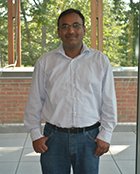
Praveen Tripathi is a Research Assistant Professor in the Department of Computer Science at Stony Brook University. His research focuses on Machine Learning, Data Mining, Spatio-Temporal Data Analysis, and Time Series Data Analysis. He has contributed to trajectory analysis frameworks, recommendation systems with temporal influence, and optimization algorithms. While his biography section is not detailed here, his work emphasizes practical applications of spatio-temporal data and multi-objective optimization. Awards are listed in the menu but specific details are not provided in the text. His publications span cybersecurity, trajectory analysis, and financial market dynamics, reflecting a strong interdisciplinary approach. No advising or grant information is explicitly mentioned in the provided content.
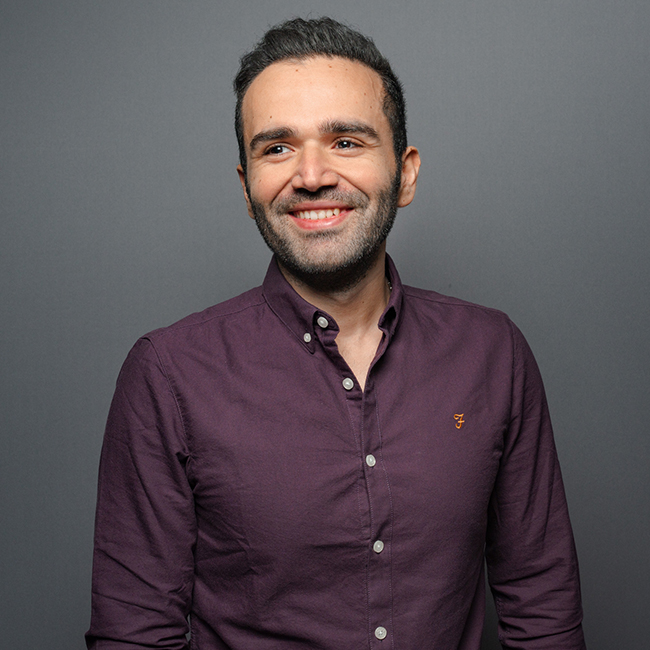
Daniel McKenzie is an Assistant Professor in the Department of Applied Mathematics and Statistics at the Colorado School of Mines. His research focuses on derivative-free optimization, implicit neural networks, and geometric methods in data science. He holds a B.Sc.(hons) and M.Sc. in Mathematics from the University of Cape Town (2010, 2014) and a PhD in Mathematics from the University of Georgia (2019). B.Sc.(hons): Mathematics and Applied Mathematics, University of Cape Town, 2010 M.Sc.: Mathematics, University of Cape Town, 2014 PhD: Mathematics, University of Georgia, 2019 His research explores the intersection of optimization theory and machine learning, with applications in spatial data modeling, geometric data analysis, and high-dimensional clustering. Recent work emphasizes curvature-aware algorithms, comparison-based optimization, and implicit network architectures like LatticeVision. His methods address challenges in non-stationary spatial data and convex game equilibria prediction. Key contributions include Fermat distance metrics for clustering, Jacobian-Free Backpropagation (JFB) for implicit networks, and zeroth-order algorithms for black-box optimization. While no scientific awards are listed, his publications reflect a strong focus on advancing optimization techniques for modern data science problems. No specific grants or advising roles are detailed in the provided text. His work bridges computational mathematics and applied AI, with potential applications in robotics, spatial statistics, and algorithmic game theory.
Licong Cui, Ph.D., is an Associate Professor at the McWilliams School of Biomedical Informatics, University of Texas Health Science Center at Houston (UTHealth). She is also affiliated with the Center for Translational AI Excellence and Applications in Medicine (TEAM-AI) and the Texas Institute for Restorative Neurotechnologies (TIRN). Her research focuses on developing informatics methods to address biomedical data challenges, with expertise in ontologies, neuroinformatics, big data analytics, and clinical text mining. Dr. Cui has authored over 100 peer-reviewed publications and secured grants from NIH and NSF. Her work emphasizes ontology quality assurance, large language model applications in healthcare, and data integration frameworks. Notable contributions include developing the VaxBot-HPV chatbot for vaccine communication and advancing seizure frequency extraction methodologies using LLMs. Her honors include the 2022 AMIA New Investigator Award and 2021 NSF CAREER Award. Current projects involve enhancing NIH Common Data Elements with AI tools and improving EHR-based cohort querying through ontology-driven approaches. She collaborates on initiatives like the National Sleep Research Resource and Vaccine Ontology harmonization efforts.
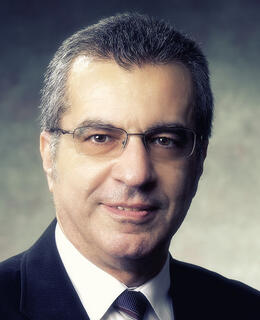
Dr. Sina Pournouri is a Lecturer in Cyber Security at Sheffield Hallam University, having joined in 2019. His research explores cybersecurity, information security management, and data mining. Recent publications focus on threat prediction during the COVID-19 pandemic, vulnerability assessments of drone systems, space governance frameworks, and automated penetration testing using AI. His scholarly work demonstrates consistent focus on cybersecurity analytics, with articles applying classification techniques for attacker profiling and malware prediction. Research spans both technical security mechanisms and policy implications, particularly in crisis contexts.
Prof. Catherine De Wolf is an Assistant Professor at ETH Zurich's Department of Civil, Environmental and Geomatic Engineering and Deputy Head of the Institute of Construction and Infrastructure Management. She leads the Chair of Circular Engineering for Architecture (CEA), an interdisciplinary lab focused on automating building material reuse through digital innovation. Her work bridges academia, government, and industry, exemplified by partnerships with institutions like the Centre Pompidou and initiatives like Anku and the Digital Circular Economy (DiCE) Lab. She is also a faculty member at ETH Zurich's AI Center and collaborates with EMPA's Urban Energy Systems Lab. Her roles include Chair of the Design++ Advisory Board and PI in the National Centre of Competence in Research on Digital Fabrication (DFAB). Education: Catherine holds a PhD in Building Technology from MIT, with prior studies in Civil Engineering and Architecture at VUB and ULB. She has additional training in documentary filmmaking and postdoctoral research at the University of Cambridge and EPFL's Structural Xploration Lab, funded by Marie Sklodowska-Curie and Swiss Excellence scholarships. Research Interests: Her work centers on digital tools for circular construction, including blockchain-based material passports, AI-driven design, and automated deconstruction planning. Key areas include: Material reuse and lifecycle analysis Building Information Modeling (BIM) applications Decentralized data networks in construction Carbon reduction in structural systems Interdisciplinary collaboration across engineering, architecture, and computer science Awards: Marie Sklodowska-Curie Postdoctoral Fellowship (European Commission) Swiss Excellence Scholarship Advising & Grants: Catherine has overseen projects funded by EU initiatives and industry partnerships. Her research group actively collaborates with firms like Arup and Thornton Tomasetti through initiatives such as the Structural Engineers 2050 Commitment. She advises on policy frameworks like the EU's Level(s) sustainability standard. Labs & Teams: Her CEA lab operates with 20+ researchers and has pioneered tools like the '5D Digital Circular Workflow.' The lab's work is showcased in real-world projects such as the Centre Pompidou material reuse case study.
Dr Miao Xu is a Research Fellow at the University of Queensland (UQ), affiliated with the School of Electrical Engineering and Computer Science within the Faculty of Engineering, Architecture and Information Technology. She holds an Australian Research Council DECRA Fellowship (ARC DECRA), recognizing her early-career research excellence. Her research focuses on machine learning, data science, and time series analysis, with applications in healthcare, materials science, and algorithmic fairness. Dr Xu's work addresses challenges in noisy label handling, unlearning mechanisms, and adaptive modeling for irregular data. Education: She earned a Doctor of Philosophy (PhD) from Nanjing University. She is actively involved in supervising research and contributes to the Centre for Enterprise AI at UQ. Research Interests: Dr Xu’s expertise spans machine learning , time series analysis , deep learning , and unsupervised learning . Her recent work emphasizes robust learning with noisy or incomplete labels, model unlearning, and applications in alloy design and medical informatics. She explores methods like instance-attention GNNs for irregular time series and confidence-guided techniques for adversarial attack detection. Publications: Her recent work includes advancements in GNN-based time series modeling, bias mitigation in text classification, and active learning for alloy design. Key themes include improving generalization, reducing algorithmic bias, and enhancing model transparency. Awards: Her ARC DECRA fellowship (202X–202X) supports her research on data-driven methodologies. Supervision & Grants: Available for PhD supervision in machine learning and data science. Her grants include funding for projects in unlearning mechanisms and spatiotemporal modeling. Labs/Teams: Affiliated with the Centre for Enterprise AI at UQ, collaborating on enterprise-scale AI applications and interdisciplinary research.
Professor Budiman Minasny is a leading academic in soil-landscape modeling at the University of Sydney, affiliated with the School of Life and Environmental Sciences. He holds roles as Theme Leader of Soil, Carbon, and Water at the Sydney Institute of Agriculture and is a member of the Net Zero Institute, China Studies Centre, and Sydney Southeast Asia Centre. His expertise spans digital soil mapping, climate change mitigation, and soil security. Minasny has over 160 international publications and has pioneered methodologies in spectral soil analysis and peatland assessment. He earned his undergraduate degree from Universitas Sumatera Utara and advanced degrees in soil science from the University of Sydney. Research interests include soil carbon dynamics, peatland management, and the integration of AI/remote sensing in soil science. Awards include the Australian Research Council’s QEII and Future Fellowships, and recognition as a Web of Science Highly Cited Researcher (2019). Current projects focus on soil carbon auditing, real-time soil moisture monitoring, and global peatland mapping. Minasny leads multidisciplinary teams addressing climate resilience, with grants from institutions like the National Soil Carbon Innovation Challenge and Australia-India Strategic Research Fund. Awards: QEII Fellowship, Future Fellowship, Highly Cited Researcher 2019 Grants: Includes initiatives on soil carbon platforms, continental-scale soil assessments, and viral diversity studies. His work bridges environmental science and policy, advocating for soil security frameworks to balance agricultural productivity with ecological preservation.
Dr. Carlo Cavicchia is an Assistant Professor of Statistics at the Econometric Institute, Erasmus School of Economics, Erasmus University Rotterdam. He holds a PhD in Methodological Statistics from La Sapienza University of Rome and has held roles such as Research Fellow at UnitelmaSapienza University and Consultant for NGOs in Zanzibar. His research focuses on latent variable models, composite indicators, and unsupervised classification, with applications in environmental policy, sports analytics, and teacher job satisfaction. Cavicchia teaches statistics and data science courses at undergraduate and graduate levels and actively contributes to academic communities through journal reviewing, conference organizing, and editorial roles. Education: PhD in Methodological Statistics (La Sapienza University of Rome, 2020) MSc in Statistics and Decision Sciences (La Sapienza University of Rome, 2016) BSc in Statistics (La Sapienza University of Rome, 2013) Dutch University Teaching Qualification (BKO, 2022) Research Interests: Cavicchia’s work emphasizes hierarchical models, non-parametric statistics, and data science applications. He develops methodologies for composite indicators, including ultrametric Gaussian mixture models and disjoint principal component analysis. His research bridges theoretical advancements with real-world problems, such as waste management in Italian municipalities and ranking European football teams using composite metrics. Grants & Awards: 2024: IFCS Chikio Hayashi Award 2023: ESE Starter Grant (€300,000) 2017: Research Grant for Junior Researchers (€1,270) 2016: PhD Scholarship, La Sapienza University Academic Engagement: Cavicchia serves as IASC Data Analysis Competition Officer (2023–2025), co-edits the ISI Magazine , and organizes conferences like DSSV 2020 and DSSV-ECDA 2021. He is an elected member of the International Statistical Institute and contributes to SVQS’s Sustainability initiatives. Labs & Teams: He co-organizes the Econometrics internal seminars at Erasmus University and collaborates with researchers at University of Naples Federico II on hierarchical models and convex clustering.
Mattias Villani is Professor of Statistics at Stockholm University, specializing in Bayesian statistics and machine learning. He obtained his PhD in Statistics from Stockholm University in 2000 and has held positions at Sveriges Riksbank and Linköping University. Villani develops computationally efficient Bayesian methods for inference, prediction and decision-making with flexible probabilistic models. Research Interests: His work spans Bayesian computation (MCMC, HMC, variational inference), machine learning (Gaussian processes, mixture models), and applications in neuroimaging, transportation, and econometrics. Research focuses on scalable Bayesian methods for large datasets and complex models. Publication Focus: Recent articles concentrate on Bayesian neuroimaging analysis, transportation network modeling, and efficient MCMC algorithms. Methodological innovations in subsampling techniques for large-scale Bayesian computation represent a significant research trend. Student Advising: Supervises PhD students in statistical methodology development and applications. Current research groups focus on spatiotemporal modeling, locally stationary processes, and neuroimaging statistics.
Dora Erdos is a Senior Lecturer and Director of Undergraduate Studies in the Department of Computer Science at Boston University. She specializes in algorithmic challenges, data mining, and combinatorial optimization with a focus on network-based problems. Her work bridges theoretical computer science and practical applications in education technology and network analysis. Education: PhD in Computer Science, Boston University (2015) MSc in Pure Mathematics, Eotvos University (Advisor: Andras Frank) Postdoctoral Research at Brown University's Raphael Lab (Advisor: Ben Raphael) Research Interests: Erdos investigates algorithms for network analysis, including centrality measures, graph reconstruction, and optimization problems in educational systems. She develops scalable methods for tensor factorization and content placement in navigational networks. Her work often integrates combinatorial approaches with real-world applications. Professional Roles: As Director of Undergraduate Studies, Erdos oversees academic advising and curriculum development. She emphasizes student accessibility, maintaining office hours and encouraging direct communication via email (edori@bu.edu). Recent Research Trends: Her publications (2011–2017) focus on network-centric problems such as centrality evaluation frameworks, boolean tensor decomposition, and team formation algorithms for educational scheduling. These contributions highlight her dual expertise in theoretical algorithm design and applied educational technology.
Steve Marron is the Amos Hawley Distinguished Professor of Statistics and Operations Research at the University of North Carolina at Chapel Hill (UNC-CH). He holds a joint appointment in the School of Data Science and Society and is a professor in the Department of Biostatistics at the Gillings School of Global Public Health. Additionally, he serves as an adjunct professor in the Department of Computer Science within the College of Arts & Sciences. His research focuses on statistics, data science, and machine learning, with a particular emphasis on integrating diverse data types such as genomics, imaging, and demographic data. Education: Marron earned an AA from Orange Coast College (1974), BS from University of California, Davis (1977), and PhD from UCLA (1982). He has held faculty positions at UNC-CH since 1982 and Cornell University (2001-2002). His honors include Fellowships from the Institute of Mathematical Statistics and American Statistical Association, and he is a top-cited mathematician (1991-2001). Research interests include object-oriented data analysis, high-dimensional data methods (HDLSS), visualization techniques like SiZer, and statistical methodology for imaging and genomics. Notable contributions include Distance-Weighted Discrimination (DWD), Principal Nested Spheres, and JIVE for data integration. His work has applications in cancer genomics, medical imaging, and bioinformatics. Awards and recognitions include the Amos Hawley Professorship, S. N. Roy Memorial Lectureship, and Saw Swee Hock Visiting Professorship. Marron has advised numerous students and collaborated on NIH-funded grants, including studies on cancer genomics and imaging. His lab focuses on developing statistical tools for complex, multi-source data analysis.
Behrouz Far is a Professor at the University of Calgary’s Schulich School of Engineering, Department of Electrical and Software Engineering. He holds a PhD in Artificial Intelligence from Chiba University, Japan (1990) and degrees from the University of Teheran including a B.S. in Electrical Engineering (1983) and M.S. in Electrical Engineering (1986). His research focuses on AI applications in medical imaging, software engineering, transportation systems, and data mining. He has contributed to advancements in fundus image analysis, deep learning models for disease detection, and intelligent traffic management systems. Dr. Far has received notable awards such as the 2017 SSE Achievement Award and the AITF-AMA Tier-2 Chair in Smart Multimodal Transportation Systems (2013). His work bridges theoretical AI with practical healthcare solutions, including tools like LETTA for traffic management systems and methodologies for detecting ocular lesions using CNNs. He teaches courses on software testing, reliability engineering, and agent-based systems. His publications highlight contributions to medical diagnostics (e.g., choroidal nevi classification), transportation optimization (e.g., real-time traffic signal control), and machine learning explainability. Collaborative research includes projects on biopotentiostat biosensors for SARS-CoV-2 detection and data mining for cancer patient stratification.
Milica Orlandic is an Associate Professor in the Department of Electronic Systems at NTNU. She holds an MSc from the University of Montenegro (2009) and a PhD from NTNU (2015). Her research focuses on hyperspectral imaging, remote sensing, FPGA-based systems, and embedded computing for aerospace applications. She is actively involved in the HYPSO CubeSat mission, developing onboard processing systems for Earth observation. Education: MSc in Electrical Engineering, University of Montenegro (2009) PhD in Electronics, NTNU (2015) Research Interests: Her work spans hyperspectral data processing , including compression, anomaly detection, and onboard computing for satellites. She also explores reconfigurable hardware (FPGAs) for real-time signal processing, cyber-physical systems, and spaceborne sensor systems. Publications Trends: Recent work emphasizes lightweight machine learning for anomaly detection, FPGA acceleration of hyperspectral compression (CCSDS 123), and algorithm co-design for CubeSat missions. Key contributions include robust onboard processing frameworks for HYPSO-1 and adaptive hardware-software systems. Advising & Teams: She supervises a dynamic team of over 40 PhD and MSc students working on FPGA implementations, satellite systems, and hyperspectral algorithms. Notable collaborations include the HYPSO CubeSat project, which aims to deliver high-resolution Earth observation data with low latency. Labs & Infrastructure: Her research leverages NTNU’s facilities for embedded systems prototyping, FPGA development, and CubeSat payload testing. The HYPSO mission integrates her team’s hardware-software co-design innovations for space applications.
Dan S. Wallach is a Professor of Computer Science and Electrical and Computer Engineering at Rice University, and a Program Manager at DARPA's Information Innovation Office since June 2023. He holds a PhD (1999) and MA (1995) from Princeton University, and a BS (1993) from UC Berkeley. His research focuses on cybersecurity, electronic voting systems, and mobile security. He directed the NSF-funded ACCURATE Center (2005-2011), led the STAR-Vote project, and advised U.S. election security policies including testifying before state and federal committees. He also served on the Air Force Science Advisory Board (2011-2015), USENIX Board (2011-2013), and IEEE Technical Guidelines Committee (2019-2023). Recent work includes developing ElectionGuard cryptographic tools for verifiable elections and analyzing cyber warfare in Ukraine. His 15+ years of teaching include courses like Introduction to Program Design and Election Systems Technologies. Publications span secure voting protocols, smartphone security, and election auditing. Collaborations include Microsoft and VotingWorks on cryptographic voting systems like ElectionGuard and Arlo-CVR-Encryption.
Yubai Yuan is an Assistant Professor of Statistics at the Pennsylvania State University, affiliated with the Department of Statistics within the Eberly College of Science. He holds a PhD from the University of Illinois Urbana-Champaign (2020) and completed postdoctoral research at UC Irvine. His research focuses on network science, causal inference, and statistical machine learning, with applications to neuroscience and social systems. Notable awards include the 2022 NSF-Simons Center Fellow Award and the 2019 ASA Student Paper Award. Education: PhD in Statistics (UIUC, 2020), MS in Statistics (Sun Yat-sen University, 2016), BS in Mathematics (Shandong University, 2012). Research interests span complex network analysis, optimal transport, active learning, and mediation analysis. Current projects include de-confounding causal inference and hypergraph modeling. Teaching includes courses on probability theory and statistical modeling at Penn State. Advises PhD students Yuanchen Wu (active learning on graphs) and Siyu Huang (latent network structures). Collaborates with the Center for Social Data Analytics and organizes workshops in statistical network science. Publications emphasize methodological advancements in network analysis, causal pathways, and data integration. Recent work addresses disaster response via social media data and neuronal activity analysis using optimal transport frameworks.