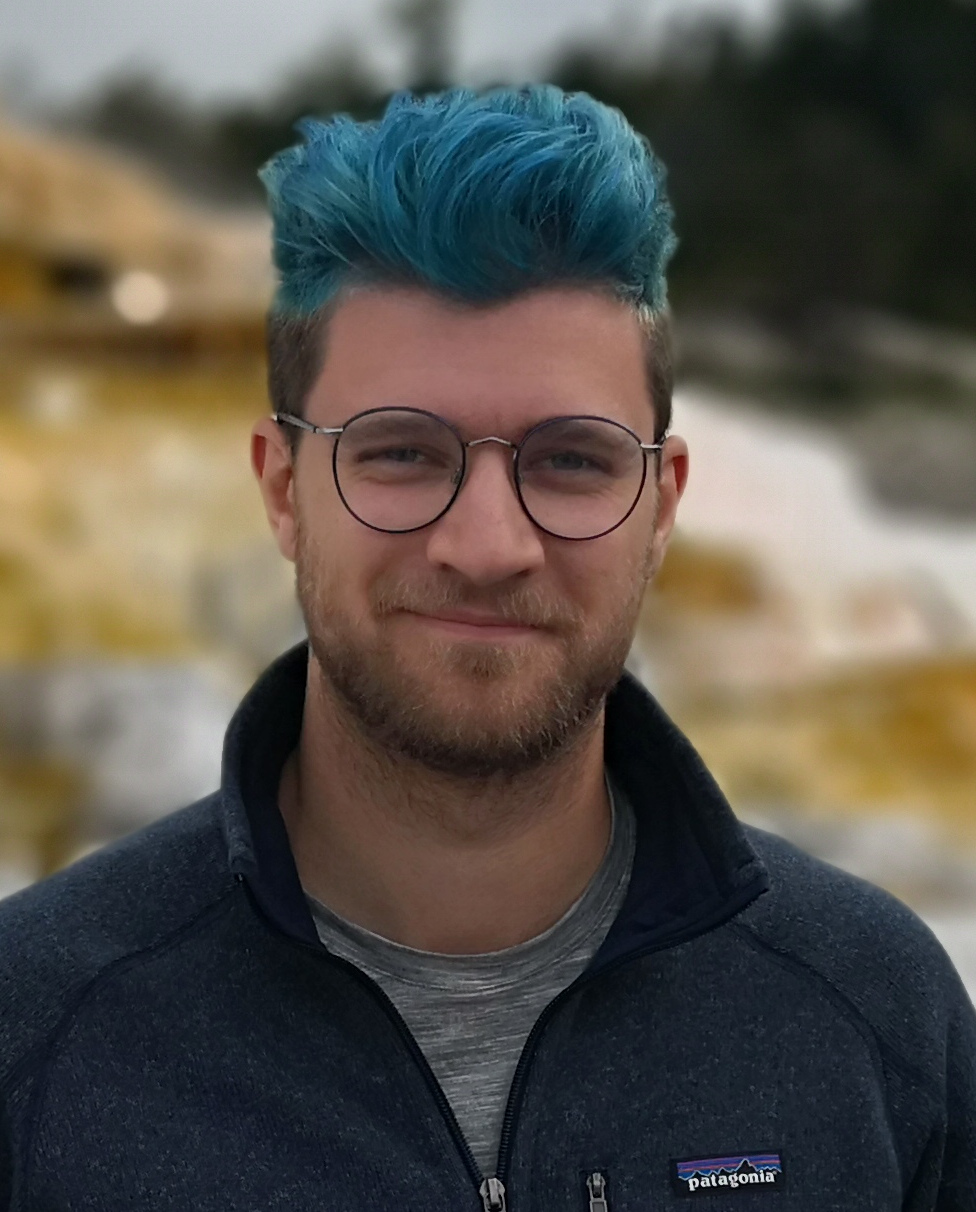
Nikolai Østgaard is a Professor in Space Physics at the Department of Physics and Technology , University of Bergen. His research focuses on high-energy atmospheric phenomena, particularly terrestrial gamma-ray flashes (TGFs), elves, and lightning physics, utilizing space-based observations from instruments like ASIM and Fermi. Email: nikolai.ostgaard@uib.no Location: Allegt 55, Bergen, Norway Research Highlights: Østgaard investigates the electromagnetic coupling between thunderstorms and space, including radiation mechanisms, lightning discharge dynamics, and space weather impacts. His recent work examines flickering gamma-ray flashes as transitional phenomena between gamma glows and TGFs, and corona discharge parameterizations in thunderclouds. Recent Publications: His 2024-2025 studies span gamma-ray emissions from tropical thunderstorms, optical diagnostics of lightning discharges, and new weak TGF populations detected at aircraft altitudes. These articles analyze electromagnetic storm coupling, radiation transport models, and multi-sensor correlation techniques.
Jonas Gahr Sturtzel Lunde is a Research Fellow at the Institute of Theoretical Astrophysics, University of Oslo, within the Faculty of Mathematics and Natural Sciences. He holds a Master's in Computational Science: Astrophysics and a Bachelor's in Physics, Astronomy, and Meteorology, both from the University of Oslo. His research focuses on cosmology, line intensity mapping, cosmic microwave background (CMB) analysis, and high-performance computing. He contributes to the CMB&CO group and the COMAP experiment, which explores molecular gas distribution and CMB signals. His work involves analyzing data from the COMAP Pathfinder, developing methodologies for CMB experiments, and collaborating on projects like COSMOGLOBE. Notable research areas include spinning dust emission studies, CO power spectrum analysis, and improving data processing techniques. Lunde has taught as a teaching assistant in courses like Astrophysics and Computational Physics.
Trygve Christian Eftestøl is a Professor of Information Technology at the Department of Electrical Engineering and Computer Science, University of Stavanger. His academic background includes a PhD in signal processing from NTNU and an M.Sc. in Electrical and Computer Engineering from HiS, Stavanger. He is a senior member of IEEE and serves on the board of the Cognitive Lab at UiS since 2025. Educations: PhD in Signal Processing (NTNU/HiS, 2000) M.Sc. in Electrical and Computer Engineering (HiS, Stavanger) Research Interests: His work focuses on biomedical data analysis, including resuscitation, cardiac science, waveform analysis (ECG, thorax impedance), and MRI for myocardial injury. He is involved in multidisciplinary projects such as digital pathology, newborn resuscitation, sports medicine, neurogenerative diseases, and prostate cancer imaging. He co-founded the Biomedical Data Analysis Laboratory (BMDLab) and serves as its deputy leader since 2020. Articles Trends: Recent publications emphasize machine learning applications in healthcare (e.g., EEG-based neurodegenerative disorder classification, MRI segmentation for myocardial injury), predictive models for cardiac arrest outcomes, and AI-driven solutions in oncology and pathology. His work bridges signal/image processing with clinical needs, addressing challenges in resuscitation, cardiology, and diagnostic accuracy. Awards/Grants: No specific awards listed, but his leadership roles and research contributions highlight sustained academic and clinical impact. Advising & Labs: Supervises/co-supervises PhD projects in areas like human activity recognition and prostate cancer detection. Active in BMDLab, collaborating nationally and internationally on biomedical data analysis.
Hasan Ogul is an Associate Professor at the Department of Computer Science and Communication, Østfold University College. His research focuses on computational intelligence applied to health informatics, bioinformatics, text mining, and sensor data processing. He has held academic roles including a previous professorship at Baskent University's Department of Computer Engineering and a postdoc at Aalto University. His work spans interdisciplinary projects like AI4AfL (Artificial Intelligence for Assessment for Learning) and contributions to machine learning applications in medical diagnostics and bioinformatics. He is the author of multiple peer-reviewed articles and conference proceedings, with a strong emphasis on generative models, sensor data analysis, and computational biology. Education: PhD from Middle East Technical University (Turkey), postdoc at Helsinki University of Technology/Aalto University. Current courses include Digitalisation and Society (PhD level) and Evolutionary Computation (Master's level). Key Projects: AI4AfL aims to enhance learning through AI-driven assessment tools. His research groups focus on machine learning and its societal applications. He has contributed to conferences like IEEE SAMI and CBMS, showcasing work on infection prediction, microRNA targeting, and speech recognition systems. Publications: Over 30 peer-reviewed articles since 2018, covering topics from protein structure prediction to lecture video segmentation and breast cancer drug development. His work frequently appears in journals like Expert Systems with Applications, IEEE Access, and Sensors.
Fatemeh Asadikhoeini serves as a PhD Research Fellow at the University of Inland Norway, specifically within the Department of Biotechnology under the Faculty of Applied Ecology, Agricultural Sciences and Biotechnology. She is based at the Hamar campus and is actively engaged in research activities through her affiliation with Research Group B3 - Bioinformatics, Biodiscovery & Biorefinery. Her research interests center around bioinformatics and biotechnology applications, with particular focus on biodiscovery and biorefinery processes. As a PhD research fellow, she contributes to advancing knowledge in computational biology and molecular analysis within the Norwegian academic research landscape. Her work appears to bridge computational approaches with biological applications, likely focusing on sustainable bioprocesses and data-driven biological discovery. Dr. Asadikhoeini is part of Research Group B3, which suggests her work involves interdisciplinary approaches combining computational methods with biological systems analysis. The group's focus on bioinformatics, biodiscovery, and biorefinery indicates her research likely contributes to sustainable biotechnology solutions and data-intensive biological research.
Ernst Gunnar Gran is Associate Professor at the Department of Information Security and Communication Technology at the Norwegian University of Science and Technology (NTNU), where he heads the communication technology discipline. He also holds an adjunct research scientist position at Simula Research Laboratory, where he headed the Cloud department until December 2016. His research spans high performance computing (HPC), HPC interconnection networks, enterprise data centre networks, cloud computing, and data-intensive processing in multi-clouds. He serves as the Scientific Leader of Communication Technologies in the RCN-funded infrastructure project eX3 (Experimental Infrastructure for Exploration of Exascale Computing) and has significant experience with both RCN-funded and EU-funded research projects, including the H2020 project Melodic (Multi-cloud Execution-ware for Large-scale Optimised Data-Intensive Computing). Gran received his M.Sc. and Ph.D. degrees in computer science from the Department of Informatics, University of Oslo, in 2007 and 2014, respectively. Both theses focused on different aspects of resource management in high performance interconnection networks. He previously headed the RCN-funded project ERAC (Efficient and Robust Architecture for Big Data Clouds) and led the design, implementation, and deployment of the multi-homed IP-based research testbed NorNet Core. Gran also has several years of experience as a system administrator and scientific programmer. His research interests center on the intersection of high performance computing and networking, with particular focus on anomaly detection in time series data, HPC interconnection networks, network virtualization, and cloud computing infrastructure. His work demonstrates a consistent evolution from fundamental networking research to applied solutions for modern computing challenges, particularly in IoT security and smart home applications. His recent publications show a strong emphasis on developing lightweight, real-time anomaly detection systems using deep learning techniques. Analysis of his publication trends reveals a clear progression from traditional HPC networking research toward time series anomaly detection applications, particularly for IoT systems. His 15 most recent publications show dual focus areas: approximately 60% concentrate on anomaly detection methods for time series data (particularly for IoT applications), while the remaining 40% maintain his foundational work in HPC networking, virtualization, and cloud infrastructure. This evolution demonstrates his ability to adapt core networking expertise to emerging application domains while maintaining technical depth. While no specific scientific awards are mentioned in the provided text, Gran's leadership roles in significant research projects (eX3, Melodic, ERAC) indicate recognition of his research capabilities within the academic and research funding communities. His position as Scientific Leader of Communication Technologies in the RCN-funded eX3 project further demonstrates his standing in the Norwegian research community. Gran's teaching responsibilities include serving as course coordinator for DCSG1006 Data Communication and Networks, DCSG2001 Interconnected Networks and Network Security, and Networks: Administration, Programming and Security. His research leadership extends to significant grant-funded projects, including the RCN-funded eX3 infrastructure project and the EU H2020 Melodic project. His previous leadership of the ERAC project and the NorNet Core research testbed demonstrates sustained ability to secure and manage substantial research funding. His laboratory and team affiliations include the Department of Information Security and Communication Technology at NTNU, where he heads the communication technology discipline, and Simula Research Laboratory, where he maintains an adjunct position. The NorNet Core research testbed, which he led the development of, represents a significant infrastructure contribution to the networking research community. His current work with the eX3 project suggests ongoing involvement in experimental infrastructure for exascale computing exploration.
Associate Professor Tiago M. D. Pereira is affiliated with the Rosseland Centre for Solar Physics at the Institute of Theoretical Astrophysics, University of Oslo, where he conducts interdisciplinary research bridging computational simulations, observational solar physics, and advanced data analysis to decode stellar phenomena through spectral radiation. Dr. Pereira's educational background includes: PhD from Australian National University (ANU) in 2009, specializing in 3D radiative transfer and spectral line formation in solar simulations. His research pioneers the integration of magnetised plasma simulations with multi-dimensional radiative transfer models and spectral imaging observations of the solar atmosphere. He develops high-performance algorithms for efficient radiative transfer computation and visualization of massive datasets, enabling precise interpretation of solar observations to unravel stellar dynamics. This work addresses the computationally intensive challenge of spectral line formation while advancing methodologies for next-generation solar missions. His scientific recognitions include: NASA Postdoctoral Fellowship Dr. Pereira actively supervises computational projects, including applying deep learning to solar observation interpretation, and has contributed to NASA's IRIS mission as an early science team member. His collaborative work synthesizes data from multiple space and ground-based observatories to study solar atmospheric dynamics, though specific grant details are not documented in the source text. He operates within the Rosseland Centre for Solar Physics framework at the University of Oslo, currently developing a dedicated research group focused on solar physics and computational astrophysics methodologies.