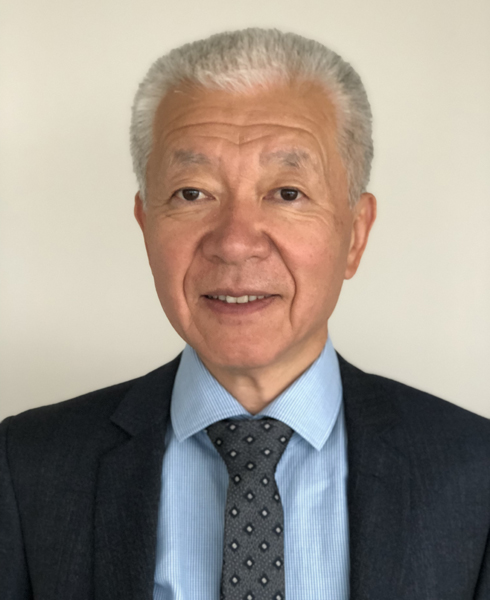
Zhang Yi-Cheng is a Full Professor of Theoretical Physics at the University of Fribourg, Switzerland, since 1992. His academic career includes visiting professorships at Nordita (Denmark) and INFN (Italy), and postdoctoral research at Brookhaven National Lab (USA). He specializes in interdisciplinary fields such as Econophysics , Statistical physics , and Complex network sciences , focusing on applications in financial markets, social systems, and global trade networks. His research explores topics like market dynamics, network structures, and algorithmic ranking systems. Notable awards include the 2011 Honorary Director of the Complexity Sciences Research Center and recognition as a 2011 Chinese '1000 Talents' awardee . His work bridges physics-based methodologies with socio-economic systems, addressing challenges in information-driven economies and networked societies. Zhang has contributed to influential studies on ranking algorithms, percolation theory in networks, and the interplay between economic complexity and trade. His interdisciplinary approach has led to advancements in understanding systemic risks, market inefficiencies, and the role of information in shaping global economic interactions.
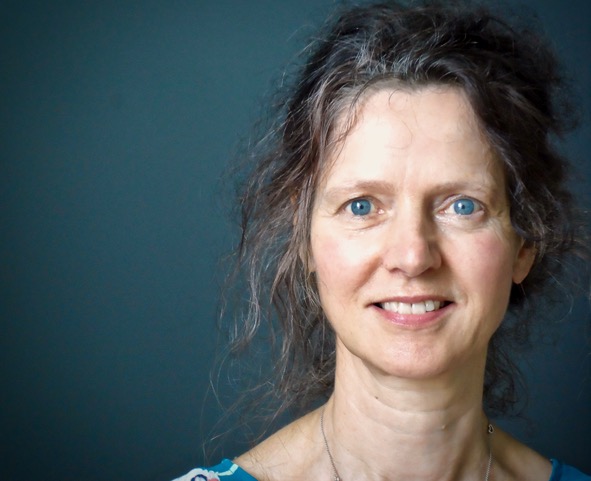
Sara van de Geer is a Full Professor at the Seminar for Statistics within the Department of Mathematics at ETH Zürich since 2005. She previously held academic positions at the University of Leiden, Université Paul Sabatier (Toulouse), and others. She earned a Master's (1982) and Ph.D. (1987) in Mathematics from Leiden University. Her research focuses on high-dimensional statistics, empirical processes, and mathematical foundations of machine learning. Van de Geer has received prestigious recognitions including the Van Wijngaarden Award (2016), Knight in the Order of Orange-Nassau (2015), and membership in Leopoldina (2013). She served as President of the Bernoulli Society (2015–2017) and Chair of the Seminar for Statistics at ETH Zürich. Her contributions include landmark works on statistical learning theory and high-dimensional inference, with key publications in top journals like Annals of Statistics and SIAM/ASA Journal on Uncertainty Quantification. Her academic leadership includes organizing Saint Flour Lectures, Wald Lectures (2016), and delivering plenary lectures globally. Her research bridges theoretical statistics with applied methodologies, emphasizing rigorous mathematical frameworks for modern data analysis challenges.
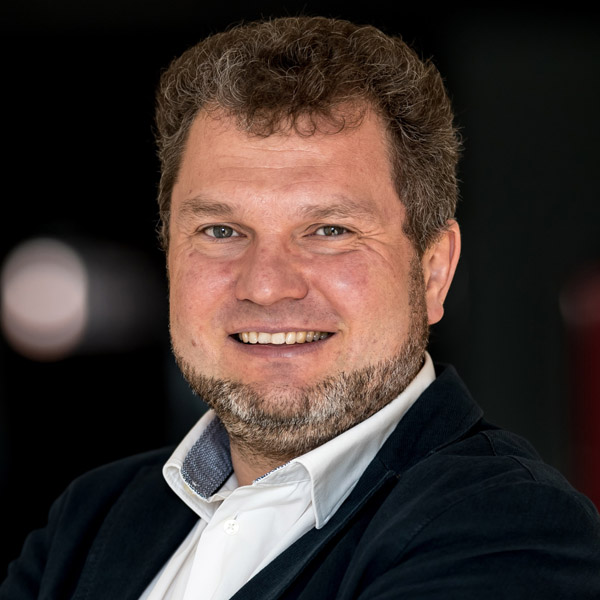
Rafał Weron is a Full Professor at Wrocław University of Science and Technology, where he has held leadership roles since 2015, including Head of the Department of Operations Research and Business Intelligence and Chairman of the Scientific Discipline Council for Management and Quality Sciences. His expertise spans electricity price forecasting, computational economics, and risk management, with significant contributions to probabilistic forecasting methods. As a globally recognized scholar, he has received prestigious awards such as the Hugo Steinhaus Prize (2018) and the Tao Hong Award (2017). Key Affiliations : Wrocław University of Science and Technology; Polish Academy of Sciences (Statistics and Econometrics Committee); Polish Mathematical Society. Research Trends: Weron's work focuses on electricity price forecasting, leveraging machine learning and statistical models to enhance accuracy and reliability. His publications emphasize probabilistic forecasting frameworks, quantile regression, and hybrid modeling techniques, reflecting a commitment to methodological rigor and practical applications in energy markets. Scientific Awards: Top 1% globally ranked economist (IDEAS/RePEc, 2013-2022) World's Top 2% Most Widely Cited Scientist (2019-2021) 'Hugo Steinhaus' Prize (2018) Tao Hong Award (2017) Emerald Citation of Excellence (2017) Minister of Science & Higher Education Prize (2016) Commission of National Education Medal (2016)
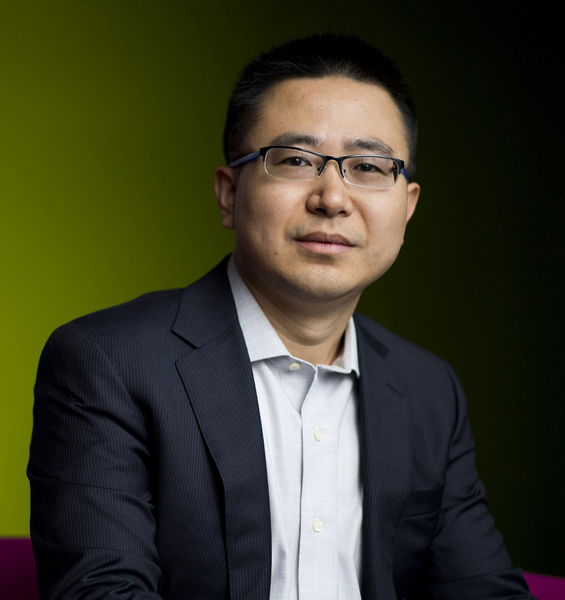
Yun Fu is a Distinguished Professor at Northeastern University, affiliated with the College of Engineering and Khoury College of Computer Science. He holds tenure in Electrical and Computer Engineering (ECE). His roles include Professor, Senior Vice President at Shiseido Americas, founder of Giaran (acquired by Shiseido), and co-founder of TVision Insights. He earned his Ph.D. from the University of Illinois at Urbana-Champaign. His research focuses on artificial intelligence, computer vision, machine learning, and data mining. Key achievements include over 500 publications, 50+ patents, and prestigious awards like IEEE Fellow, OSA Fellow, and AAIA Fellow. He leads the SMILE Lab, exploring AI applications in vision, robotics, and healthcare. Notable entrepreneurship includes AI-driven ventures in cosmetics and media analytics. Research interests emphasize AI-driven solutions for computer vision challenges, including anomaly detection, trajectory prediction, and multimodal learning. His work bridges academia and industry, with impactful contributions to both fields.
Alex X. Liu is a Professor in the Department of Computer Science & Engineering at Michigan State University (2016-2022), currently serving as Chief Information Security Officer and President of Midea Software Engineering Institute. His academic career includes roles as Associate Professor (2012-2016) and Assistant Professor (2006-2012) at the same institution. He holds a Ph.D. and M.S. in Computer Science from The University of Texas at Austin, and a B.S. in Computer Science from Jilin University, China. Education Ph.D. in Computer Science (UT Austin, 2006) M.S. in Computer Science (UT Austin, 2002) B.S. in Computer Science (Jilin University, 1996) Liu's research focuses on Dependable computing , Networking algorithms , Cloud computing , Mobile computing , Privacy computing , and Computer/network security . His work spans secure systems, network protocols, and resource optimization in distributed environments. Recent publications address quantum neural networks , microservices autoscaling , RFID tag recognition , network traffic classification , and hybrid physical-layer authentication , demonstrating expertise at the intersection of AI and network security. Key trends include deep learning applications for cloud systems and robust security protocols. Scientific Awards IET Fellow (2021) IEEE Fellow (2019) ACM Distinguished Scientist (2019) Withrow Distinguished Scholar Awards (Senior 2019, Junior 2011) NSF CAREER Award (2009) IEEE & IFIP William C. Carter Award (2004)
Wilfried Gansterer is a Professor at the Faculty of Computer Science, University of Vienna, leading the Theory and Applications of Algorithms research group. His work focuses on numerical algorithms, distributed computing, and machine learning, with notable contributions to graph neural networks and fault-tolerant systems. Active in projects such as Algorithmic Data Science for Computational Drug Discovery (2020–2028) and REPEAL (Resilience vs. Performance in Numerical Linear Algebra, 2016–2020). Research Interests: Dr. Gansterer’s expertise spans graph neural networks, matrix compression, adversarial defense mechanisms, and high-performance computing. His work addresses challenges in efficient computation, resilience against node failures, and optimizing distributed systems. Projects : Algorithmic Data Science for Computational Drug Discovery (2020–2028) REPEAL: Resilience vs. Performance in Numerical Linear Algebra (2016–2020) Verteiltes Rechnen (Distributed Computing, 2007–2014) Awards : 2023 Best Paper Award for work on Crossfire: An Elastic Defense Framework for Graph Neural Networks. Labs/Teams : Directs the Theory and Applications of Algorithms group, focusing on algorithmic innovation in distributed and high-performance computing environments.
Josef Eitzinger is a full Professor at the University of Natural Resources and Life Sciences, Vienna (BOKU), affiliated with the Institute of Meteorology and Climatology. His research bridges agricultural meteorology, climate change impacts, and sustainable farming systems. He holds a Dr.nat.techn. degree and completed postdoctoral work at Colorado State University. His research focuses on: Agricultural meteorology and microclimatology Climate change impacts on crop production and water resources Drought monitoring and forecasting systems Agrivoltaics and renewable energy integration in agriculture Recent publications (2023-2025) emphasize climate risk modeling, soil moisture dynamics, agrivoltaic design, and sustainable land management. Trends show strong integration of remote sensing, machine learning, and cross-disciplinary approaches to address agricultural resilience. Awards & Honors: Austrian Sustainability Award 2018 WMO Award as RA VI expert team leader (2014) Klimaschutzpreis (2002) Pöttinger Preis (2001) He leads 67+ projects including EU initiatives like CropShift (climate-driven crop shifts) and Machine Learning ET Estimation . His team develops tools like the Agricultural Risk Information System (ARIS) for real-time agrometeorological forecasting. At BOKU's Institute of Meteorology and Climatology, he oversees micrometeorological field studies and collaborates with European research networks on climate adaptation strategies.
Robert Peharz is an Assistant Professor at Graz University of Technology, where he leads research at the Institute of Machine Learning and Neural Computation. His work focuses on probabilistic machine learning, with particular emphasis on tractable probabilistic models, causality, and neurosymbolic AI. Education and Career PhD from TU Graz (Austria) in 2015 Postdoc at Medical University of Graz Postdoc and Marie-Curie Individual Fellow at University of Cambridge (2017-2019) Assistant Professor at Eindhoven University of Technology (2019-2021) Current: Assistant Professor at Graz University of Technology Research Interests Peharz's research spans multiple areas of artificial intelligence with a focus on making probabilistic reasoning both theoretically sound and practically efficient. His work addresses fundamental challenges in tractable probabilistic inference and learning, probabilistic circuits as a unified framework for deep generative models, Bayesian causal inference, and neurosymbolic AI combining sub-symbolic and symbolic approaches. His research has applications in cybersecurity, healthcare, and energy systems. Research Projects VENTUS (2024-present): Physics-informed, probabilistic and causal machine learning for wind energy systems NEO DNA (2023-present): DNA-based data storage systems using computer vision and probabilistic ML VanillaFlow (2023-present): AI-guided development of novel vanillin-based molecules for redox flow batteries Bilateral AI : Cluster of Excellence focused on Broad AI combining sub-symbolic and symbolic AI approaches Awards and Recognition Finalist for TUG's Excellent Teaching Award (2023) for all 3 of his courses Marie-Curie Individual Fellow at University of Cambridge Academic Service Peharz is actively involved in the academic community through conference organization and reviewing: Area Chair: UAI (2022), ECML/PKDD (2022) Senior Committee Member: UAI (2021), IJCAI (2019, 2020) Reviewer for major conferences including ICML, NeurIPS, AAAI, IJCAI-ECAI Teaching and Mentorship Peharz supervises multiple PhD students working on diverse projects at the intersection of machine learning, causality, and neurosymbolic AI. His current advisees include Sepideh Adamiat, Irina Dobrianski, Johannes Exenberger, Giacomo Di Gobbi, Tim d'Hondt, Christian Toth, and Thomas Wedenig. Previous students include Alvaro Correia, Martin Trapp, and David Montalvan.
Richard English is currently Professor of Politics at Queen’s University Belfast (QUB) and serves as Director of the Senator George Mitchell Institute. He held leadership roles including Pro Vice-Chancellor for Internationalisation and Engagement (2016–2021) and Wardlaw Professor of Politics at the University of St Andrews (2011–2016). His research focuses on radicalism, political violence, nationalism, and Irish/British politics. A Fellow of the British Academy and recipient of the Royal Irish Academy Gold Medal (2019), he has authored influential works such as Armed Struggle: The History of the IRA and Irish Freedom: The History of Nationalism in Ireland . Research Trends: His recent publications (2022–2025) address energy systems, building simulations, and sustainable urban infrastructure, with keywords spanning Building Simulation , Sustainable Energy , and Smart Grids . Subfields include District Heating , Thermal Modeling , and Machine Learning in Energy Management . Honors: CBE (2018) Gold Medal, Royal Irish Academy (2019) Fellow, British Academy (2009) Ewart-Biggs Memorial Prize (2007)
Torsten Hoefler is a Full Professor of Computer Science at ETH Zurich, Switzerland, with an adjunct appointment in Electrical Engineering. He previously held roles at the National Center for Supercomputing Applications (University of Illinois at Urbana-Champaign) and Indiana University. Full Professor of Computer Science, ETH Zurich (2020–present) Adjunct Professor of Electrical Engineering, ETH Zurich (2020–present) Member at Large, ACM SIGHPC Executive Committee (2013–present) Leadership roles in the MPI Forum and Blue Waters project His research focuses on performance-centric system design , with emphasis on scalable networking, parallel programming models, and performance modeling. Key contributions include the Slim Fly network topology, Data-Centric Python framework, and innovations in parallel graph computations and RDMA-based systems. Recent publications span topics like LLM training networks , quantization geometry , chiplet interconnects , and AI-driven climate modeling , reflecting his interdisciplinary approach combining HPC, AI, and hardware-software co-design. ACM Gordon Bell Prize (2019) ERC Consolidator Grant (2020) IEEE TCSC Award for Excellence (2019) SIAM SIAG/SC Junior Scientist Prize (2012) Latsis Prize of ETH Zurich (2015) He has received multiple best paper awards at top conferences (SC10, SC13, SC14, SC19, IPDPS'15, HPDC'15, OOPSLA'16) and contributed to MPI-3 standardization.
Bernhard Rinner is a Professor at the Institute of Networked and Embedded Systems within the Faculty of Technical Sciences at Alpen-Adria-Universität Klagenfurt. He is a member of the university Senate and serves as Prodekan (Deputy Dean). His research spans robotics, embedded systems, sensor networks, and privacy-aware computing , with a focus on resource-efficient designs for drones, autonomous systems, and IoT applications. Email: Bernhard.Rinner@aau.at Phone: +43 463 2700 3671 Office: B02.1.62, Lakesidepark Haus B02, Klagenfurt, Austria Research Interests include: Self-aware autonomous systems for adaptive mission planning and anomaly detection Resource-efficient embedded AI for drones and camera networks Secure IoT applications with privacy-preserving visual data processing Multi-agent coordination in confined environments and 3D navigation Dynamic sensor calibration for low-cost wireless networks Publications reflect trends in drone networks, self-aware computing, and privacy-aware sensing , emphasizing lightweight architectures, distributed coordination, and energy-efficient designs. Many recent works focus on binary neural networks, decentralized re-identification, and adaptive sensor reconfiguration .
Rupert Wimmer is a Professor at the Institute of Wood Technology and Renewable Resources of the University of Natural Resources and Life Sciences, Vienna. He serves as an Editorial Board Member for journals like Frontiers in Chemistry and Wood and Fiber Science , and has been a Review Editor for ISRN Forestry (2009–2018). His work bridges wood science , renewable materials , and dendrochronology , with a focus on 3D-printed bio-composites , triboelectric wood processing , and climate reconstruction . His research spans Biocomposites: Innovations in lignin-based materials , wood-plastic composites , and fully recyclable wall systems . Wood Technology: Studies on surface activation , mechanical properties , and dust reduction during machining. Dendrochronology: Climate history analysis via tree rings and wood chemistry . The most recent articles explore circular economy in construction, electrostatic wood treatment , and drought proxies , reflecting his interdisciplinary approach. Awards include Rudolf Sallinger S&B Innovation Award nominations (2018, 2019) German Study Prize for Wood Materials Research (2010) Fellow of the International Academy of Wood Science (2005) He has supervised over 74 theses, including Roman Myna (2025) on innovative dust reduction and Raphaela Hellmayr (2024) on wood-based circular bioeconomy . Grants from EU , FFG , and Fonds zur Förderung der wissenschaftlichen Forschung fund his work. Collaborations span institutions in Australia, Germany, and the Czech Republic.
Günter Klambauer is a Professor at the Institute for Machine Learning , Johannes Kepler University Linz, and leads the LIT Artificial Intelligence Lab in Austria. His research bridges artificial intelligence with life sciences , focusing on deep learning applications in retinal imaging , drug discovery , and hydrological modeling . Affiliation: JKU Institute for Machine Learning & LIT Artificial Intelligence Lab Key Research Areas: Medical Imaging AI, Biological Sequence Modeling, Generative Models for Molecules, Time-Series Forecasting His recent publications highlight extended LSTM architectures (xLSTM) for biological sequence modeling, contrastive learning in retinal imaging, and in-context learning for low-data drug discovery. He has pioneered frameworks like TiRex for zero-shot forecasting and LaM-SLidE for spatial dynamical systems. Scientific Awards: Austrian Life Science Award (2012) Award of Excellence (2014) ELLIS Society Scholar (2020) Director, ELLIS Machine Learning for Molecules Discovery Program (2023) Professor Klambauer collaborates extensively on AI-driven biomedical projects , including retinal image analysis and antibody design, while advancing foundational neural network architectures for diverse domains from healthcare to climate modeling.
Werner Goebl is a Professor of Music Acoustics and Head of the Department of Music Acoustics – Wiener Klangstil (IWK) at the University of Music and Performing Arts Vienna (mdw) in Vienna, Austria. He leads research in music performance science, acoustics, and technology, with a particular focus on piano performance mechanics and ensemble coordination dynamics. His research spans multiple interconnected domains: Music Acoustics and the 'Wiener Klangstil' (Viennese Sound Style) Piano performance techniques and finger movement efficiency Ensemble synchronization and coordination in musical groups Motion capture analysis of musical performance Digital musicology and music encoding standards Human-computer interaction in music performance Recent publications reveal a strategic shift toward digital musicology and web-based tools for music analysis, particularly through the mei-friend project for Music Encoding Initiative (MEI). His work increasingly combines traditional music acoustics with cutting-edge digital humanities approaches, focusing on ensemble coordination, body motion in performance, and creating accessible digital resources for music scholarship. The TROMPA project (Towards Richer Online Music Public-domain Archives) represents a major European collaboration to enhance access to music resources. Dr. Goebl's research has been supported by significant funding including: Austrian Science Fund (FWF) projects including 'Achieving Togetherness in Ensemble Performance' (P32642, 2020-2023) H2020 Research and Innovation Action 'TROMPA' with a budget over 3M€ (2018-2021) Multiple previous FWF projects on ensemble synchronization and piano performance Erwin-Schrödinger Fellowship at McGill University (2006-2008) He leads the Department of Music Acoustics – Wiener Klangstil (IWK) which houses several specialized laboratories: Acoustic Laboratory with anechoic room Slow Motion Lab Performance Science Lab CEUS Computer Wing with Motion Capture and Eye tracking network
Uwe Schichler is a Professor at the Institute of High Voltage Engineering and System Management at TU Graz. His research focuses on high voltage engineering, partial discharge monitoring, and the integration of renewable energy into power systems. He leads projects on MVDC cable systems, insulation materials, and grid modernization. His work bridges academic research with industrial applications, including contributions to CIGRE standards and eco-friendly alternative gases for gas-insulated systems. Research interests include high-voltage insulation materials (e.g., XLPE cables, 3D printed insulators), DC grid technologies, and advanced diagnostics for power equipment. He explores novel sensors for dynamic line rating and machine learning applications in partial discharge classification. His team investigates innovative propulsion systems like ionic wind for aircraft and addresses environmental challenges in power systems. Recent publications emphasize standardization of high-voltage testing, DC system qualification, and corona noise reduction in overhead lines. He collaborates with industry partners on projects like MVDC battery storage systems and hybrid AC/DC grids. His work supports the energy transition through improved grid efficiency and sustainability.