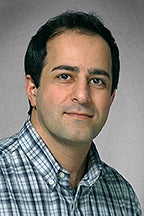
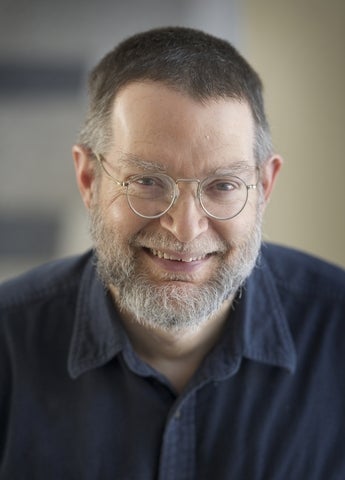
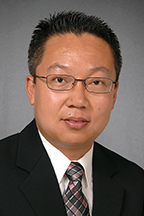
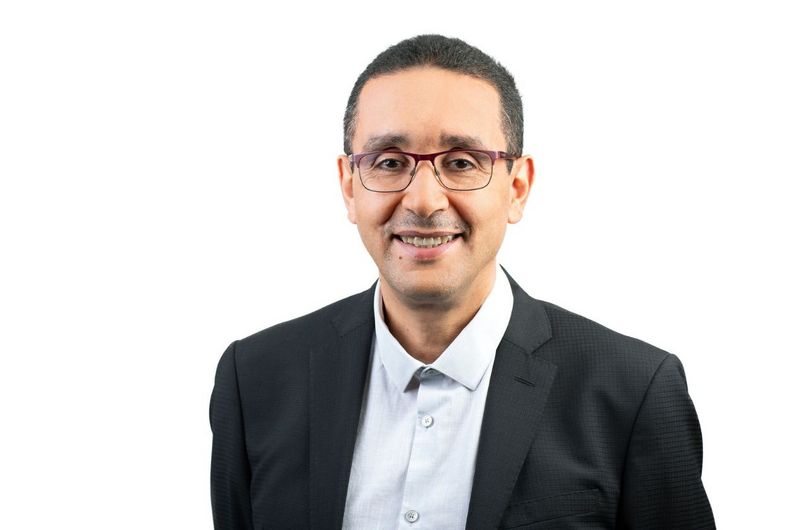
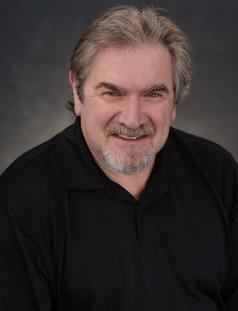
Yuying Li is a Professor at the University of Waterloo's Cheriton School of Computer Science. Research focuses on computational optimization algorithms for finance, including neural network approaches for leverage-constrained portfolios, benchmark outperformance strategies, and inflation-regime asset allocation. Holds a BSc from Sichuan University (1982), MMath (1985) and PhD (1988) from Waterloo. Her work bridges continuous optimization, machine learning, and financial engineering. Recent publications develop neural alternatives to dynamic programming for portfolio management, with applications to ETF leverage, decumulation strategies, and high-inflation environments. Methodological innovations address computational scalability and regime-specific modeling.
Stan Dimitrov is a Professor in the Department of Management Sciences at the University of Waterloo, Canada, and Director of the Business Data Analytics Lab. He holds a PhD in Industrial and Operations Engineering from the University of Michigan (2010). His research focuses on the intersection of operations research and information systems, with expertise in sustainable operations management, business analytics, mechanism design, prediction markets, game theory, nonlinear optimization, and network design. He has secured funding from NSERC, SSHRC, Mitacs, and the University of Waterloo. Education: PhD in Industrial and Operations Engineering, University of Michigan (2010) MEng in Industrial and Operations Engineering, University of Michigan (2006) BSc in Computer Science, University of Michigan (2004) Research interests include addressing industry challenges in pricing, process improvement, and customer relationship management. His work spans theoretical contributions (e.g., game theory, optimization) and applied domains such as wildfire management, circular economy policies, and mental health impacts of digital financial tools. Recent studies analyze pandemic-driven consumer behavior shifts and the role of AI in dynamic pricing. He has received prestigious awards including the 2021 Canadian Operational Research Society Eldon Gunn Service Award and the 2018 Faculty of Engineering Distinguished Performance Award. His teaching portfolio includes advanced courses on scheduling, game theory, and data analytics, with a focus on graduate and professional development programs. Advising and grants: Dimitrov actively supervises graduate students and holds Sole-Supervisory Privilege Status at Waterloo. His funded projects investigate topics like wildfire budgeting, circular economy subsidies, and eco-innovation licensing. Labs/Teams: Leads the Business Data Analytics Lab, which develops data-driven solutions for organizational challenges. Collaborates on interdisciplinary initiatives in sustainable operations and emergency network resilience.
Kaan Inal is a Professor at the Department of Mechanical and Mechatronics Engineering, University of Waterloo. He holds roles in faculty administration and is a full-time academic staff member. His research focuses on computational mechanics, materials science, and the integration of machine learning with engineering simulations. His work addresses challenges in crystal plasticity modeling, metallurgical processes, and microstructure characterization. Key areas of research include the development of advanced finite element methods for polycrystalline materials, thermal-mechanical modeling of alloys, and AI-driven approaches for material characterization and process optimization. He leads the Computational Mechanics Research Group, exploring innovations in composite materials, fatigue analysis, and additive manufacturing. His publications (2022–2025) highlight trends in data-driven modeling, phase-field simulations, and machine learning applications for predicting material behavior. These studies emphasize texture evolution, dynamic recrystallization, and microstructural analysis in metals and composites. No specific scientific awards are listed, but his contributions have advanced numerical methods in materials engineering. Advising and grant activities are integral to his role, though specific student names or grant details are not provided in the text. His work bridges theoretical mechanics with practical industrial applications, contributing to lightweight materials for automotive and aerospace sectors.
Behrad Khamesee is a Professor in the Department of Mechanical and Mechatronics Engineering at the University of Waterloo, Canada. He is a full-time faculty member leading the Maglev Microrobotics Laboratory, specializing in magnetic levitation systems, microrobotics, and their applications in manufacturing and biomedical fields. His work integrates mechatronics, control systems, and advanced materials to develop innovative solutions for precision motion, non-destructive testing, and smart manufacturing. Research Interests: Magnetic Levitation Systems and Microrobotics Additive Manufacturing and Quality Assurance Control Systems for Industrial Automation Energy Harvesting via Nanogenerators Bio-Medical Robotics and Surgical Applications Key Projects: His lab has developed platforms like MagFloor and MagTable for flexible manufacturing, and pioneered the use of magnetic levitation in precision tasks such as additive manufacturing defect detection. Recent work emphasizes AI-driven control systems and modular magnetic levitation architectures. Labs/Teams: Director of the Maglev Microrobotics Laboratory, focusing on interdisciplinary projects involving robotics, materials science, and automation.
David Yevick is a Professor at the University of Waterloo, affiliated with the Photonics and Atomic, Molecular, & Optical Physics research group. He leads the Advanced Optical Systems Lab and specializes in integrating machine learning with photonics, nonlinear optics, and quantum systems. His work spans optical communication systems, fiber nonlinearity mitigation, and quantum state analysis. Research interests include applying neural networks and deep learning to optical device performance prediction, material science simulations, and signal processing. Recent trends in his publications focus on combining ML techniques with optical systems, such as using random forests for CNT TFET analysis and variational autoencoders for phase transition modeling. His lab explores cutting-edge topics like self-phase modulation compensation in WDM systems and entropy-regulated data balancing. The Advanced Optical Systems Lab also develops novel photonic crystal designs and fiber compensation algorithms.
Chen Sun is an Adjunct Assistant Professor at the Department of Data and Systems Engineering, The University of Hong Kong. His research focuses on compiler testing, program analysis, static binary taint analysis, and software engineering methodologies. Notable areas include leveraging large language models (LLMs) for compiler testing baselines, probabilistic delta debugging, and enhancing program reduction techniques across multiple languages. Recent work addresses ransomware defense mechanisms, fuzzing countermeasures, and database management system (DBMS) bug discovery through configuration transformations. Research interests span compiler optimization, fault localization, cybersecurity, and algorithmic efficiency. His publications from 2023-2025 highlight trends in combining AI with traditional software engineering challenges, such as improving type inference for Java code and developing syntax-guided program reduction frameworks. Articles frequently address practical security concerns like protecting embedded devices from protocol fuzzing and mitigating memory leaks through sanitizer-based localization. No scientific awards are explicitly mentioned. Advising and grants sections remain underdeveloped in available data. Current affiliations emphasize academic-industrial collaboration through adjunct roles focused on cutting-edge software reliability and security research.
Mihaela Vlasea is an Associate Professor at the University of Waterloo, specializing in additive manufacturing (AM) and materials science. Her research focuses on advancing AM processes such as laser powder bed fusion (LPBF), electron beam powder bed fusion (EB-PBF), and binder jetting. She explores topics including microstructural evolution, process optimization, material characterization, and defect detection using machine learning and advanced testing techniques. Her work addresses challenges in AM such as surface roughness prediction, pore formation, and mechanical property enhancement through data-driven frameworks. She also investigates novel applications like auxetic structures in orthopaedics and lightweight functional materials. Key areas of interest include the interplay between process parameters, material properties, and final component performance. Dr. Vlasea’s research often employs nondestructive evaluation methods (e.g., phased array ultrasonic testing) and computational modeling to improve AM process control and part quality. Her contributions span both metallic and ceramic materials, with a focus on industrial applications in aerospace, automotive, and biomedical fields. She leads the Multi-Scale Additive Manufacturing Lab , where she develops innovative AM methodologies for complex architectures and functional materials. Her work bridges fundamental materials science with applied manufacturing engineering, emphasizing sustainability and cost-effective solutions for AM processes.
Mary Wells is the Dean of Engineering and a Professor of Mechanical and Mechatronics Engineering at the University of Waterloo. She holds the professional designation of PEng (Professional Engineer). Her work spans interdisciplinary research in materials science, metallurgy, and STEM education equity, with a focus on advancing sustainable manufacturing processes and addressing systemic barriers in STEM fields. Her research interests include the microstructural evolution of metallic alloys under thermal-mechanical processing, particularly aluminum and magnesium alloys, as well as the intersectional factors influencing gender disparities in STEM education and career pathways. She has pioneered studies on crystallographic texture development in extrusion processes and the optimization of brazing technologies for automotive applications. Her recent publications highlight trends in: 1) advancing material processing techniques for lightweight alloys; 2) addressing structural inequities in high school physics enrollment and STEM career aspirations; 3) integrating interdisciplinary pedagogy in materials engineering education. Her work frequently bridges fundamental materials science with practical industrial applications, emphasizing sustainability and inclusivity. As Dean of Engineering, she leads strategic initiatives to enhance academic excellence, student success, and institutional impact. Her administrative roles are complemented by a strong record of collaborative research with industry and government partners.
John Wen is a Professor and Columbiad Space Research Chair for In-Situ Resource Utilization & Stewardship at the University of Waterloo's Department of Mechanical and Mechatronics Engineering. He is cross-appointed to the Chemical Engineering department and directs the Laboratory for Emerging Energy Research (LEER). As CSME Technical Committee Chair on Microtechnology and Nanotechnology, he focuses on nanotechnology-driven energy solutions, combustion science, and sustainable energy systems. Education: Ph.D. (2005), Mechanical Engineering, University of Toronto M.Eng. (2002), Mechanical Engineering, University of Toronto B.Eng. (1992), Power Engineering, Harbin Engineering University NSERC Postdoctoral Fellow (2007), MIT Research Interests: Dr. Wen's work spans nanomaterial synthesis, biofuel combustion, CO2 capture, and in-situ resource utilization. His lab develops advanced energy devices like nanotube-based electrodes and nanothermites for propulsion and energy storage. Recent work includes lunar regolith processing for space applications and green hydrogen production. Publications Trends: His 2023–2025 articles emphasize nanoenergetic materials (e.g., Al-based composites), in-situ resource utilization, and CO2 conversion. Key themes include combustion optimization, material interfaces, and sustainable energy systems. Awards: Early Researcher Award NSERC Discovery Accelerate Supplement Advising & Labs: As SSPS (Sole-Supervisory Privilege Status) supervisor, he mentors graduate students in energy research. LEER focuses on nanotechnology, combustion, and space resource innovation. Industrial collaborations include Pratt & Whitney Canada and MAN B&W Diesel. Teaching: Recent courses include Advanced Engineering Thermodynamics (ME 750) and Heat Transfer (ME 353).
Houari Sahraoui is a Full Professor and Vice Dean of Planning and Infrastructure at the Faculty of Arts and Sciences, University of Montreal, where he also previously served as Department Director from 2013 to 2017. He leads the GEODES research group (Groupe de recherche sur les systèmes ouverts et distribués et l'expérimentation dans les logiciels) and has been actively supervising graduate students and conducting research in software engineering since at least 2000. Dr. Sahraoui's research focuses on automated software engineering , with particular emphasis on model transformations learning from examples using evolutionary approaches. His work spans reverse engineering (comprehension) and reengineering (refactoring, migration to component-based software), utilizing static and dynamic analysis techniques. He also investigates visualization of large sets of multidimensional data for software comprehension and maintenance. His research integrates artificial intelligence approaches to enhance various phases of the software development lifecycle. His recent publications demonstrate a strong trend toward integrating large language models and artificial intelligence with traditional software engineering practices. The research spans code review automation, model-driven engineering, microservices identification, and digital twins for applications like vertical farming. Many publications focus on improving automation through techniques like parameter-efficient fine-tuning, knowledge distillation, and social diversity metrics. Dr. Sahraoui was named a Fellow of Automated Software Engineering in 2023, an honor recognizing his significant and sustained contributions to the ASE community, both scientifically and professionally. This prestigious title is awarded by the IEEE/ACM International Conference Steering Committee. Dr. Sahraoui has supervised over 50 Master's and PhD students throughout his career, with recent supervision focusing on AI-assisted software engineering, code review automation, and model-driven approaches. His research has been supported by multiple grants from the Natural Sciences and Engineering Research Council of Canada (NSERC), MITACS, and industry partners, with projects spanning from 2000 to projected completion in 2031. He leads the GEODES research group (Groupe de recherche sur les systèmes ouverts et distribués et l'expérimentation dans les logiciels) which focuses on open and distributed systems and software experimentation. His current projects include 'Improving automation and assistance for software engineering tasks with generative AI' (2025-2031) and work on digital twins for vertical farming.
Eugene Belilovsky is an Associate Professor at the University of Montreal's Department of Computer Science and Operational Research and an Assistant Professor at Concordia University's Department of Computer Science and Software Engineering. He is also an Associate Member of Mila – Quebec Institute for Artificial Intelligence. His research focuses on computer vision, deep learning, and their applications in areas like continual learning and few-shot learning at the intersection of vision and natural language processing. Belilovsky's expertise includes distributed systems, federated learning, and optimization. His work addresses challenges in model generalization, spurious correlations, and efficient training strategies. He has advised numerous graduate students, including Charles-Étienne Joseph, Medric B. Djeafea Sonwa, Gwendolyne Legate, and Irene Tenison. His recent publications highlight contributions to federated learning, continual pre-training, and fairness in AI systems. Notable work includes optimizing distributed learning protocols and mitigating forgetting in evolving data streams. Belilovsky's research also explores clinical applications, such as diagnosing hepatic steatosis using ultrasound imaging through deep learning techniques. He collaborates with institutions like Mila and the DIRO department, advancing interdisciplinary projects in AI-driven healthcare, robotics, and language modeling.
Bernard Grodzinski is a retired Professor and Adjunct Professor in Plant Agriculture at the University of Guelph. He specializes in plant physiology, particularly photosynthesis and carbon partitioning, with a focus on applications in controlled environments like space agriculture and commercial greenhouses. His research integrates plant biology, environmental science, and engineering to optimize plant productivity. Dr. Grodzinski holds a Ph.D. from York University and is affiliated with the SALSA (Space and Life Support Agriculture) team, collaborating with NASA’s Kennedy Space Centre and the European Space Agency (ESA). His work addresses challenges in sealed environments, including CO₂ scrubbing, O₂ production, and water purification using plants as bioregenerative systems. Key research themes include: (1) Photosynthetic efficiency under varied light conditions, (2) Non-invasive disease detection via gas exchange profiling, and (3) LED lighting optimization for crop production. He has pioneered methods to quantify carbon export and growth using whole-plant gas exchange analysis. Recent publications emphasize LED spectral effects on tomato and cucumber yields, circadian rhythm entrainment, and thylakoid structure-function relationships. His interdisciplinary approach bridges plant biology with aerospace and agricultural engineering. Dr. Grodzinski has led grants exploring light interception strategies, hydroponic disease control, and plant stress responses. The SALSA team’s work supports both space missions and terrestrial greenhouse industries through sustainable crop systems. He is a co-developer of the Leafweb dataset and has contributed to advancements in 3D plant phenotyping using computer vision. His legacy includes over 150 peer-reviewed publications and innovations in controlled environment agriculture.
Graham W. Taylor is a Professor at the University of Guelph , holding the Canada Research Chair in Machine Learning and Canada CIFAR AI Chair . He leads the Machine Learning Research Group and serves as Academic Director at NextAI , with affiliations to the Vector Institute for Artificial Intelligence . PhD in Computer Science from University of Toronto (2009) Postdoc at Courant Institute, New York University (2010-2012) His research focuses on deep learning with emphasis on human-centred AI systems , generative modeling , graph representation learning , and sequential decision making . Applied projects leverage computer vision to address biodiversity loss , leading to datasets like BIOSCAN-5M and BIOSCAN-1M. Recent work explores state space models , transformers , and token clustering in vision transformers. Key scientific contributions recognized through Canada's Top 40 under 40 (2018) and Canada CIFAR AI Chair (2019). His group has received NSERC and OGS funding, with students winning awards like the Michael Smith Foreign Study Supplement and NSF + NSERC grant for biodiversity projects. Former students include PhD graduates like Angus Galloway , Boris Knyazev , and Kristina Kupferschmidt , alongside Master’s students such as Rylee Thompson , Sara El-Shawa , and Mahmoud Gamal . Current advisees include PhD student Kristina Kupferschmidt and Master’s students Tiancheng Gao and Mohamed Mostafa . Co-founder of Deep Biologics Current advisor to 17+ students and postdocs Formerly at Google Brain (2018-2019)
Fantahun M. Defersha is a Full Professor in the Department of Mechanical and Industrial Engineering at the University of Guelph, Ontario, Canada. He holds a PhD in Mechanical Engineering from Concordia University (2006) and has over 28 years of academic experience, including roles as Area Head in Mechanical Engineering. His research focuses on manufacturing systems optimization, cellular manufacturing, supply chain modeling, meta-heuristics, and parallel computing applications. Education: B.Sc. Mechanical Engineering (1995), Addis Ababa University MEng. Mechanical Engineering (2000), University of Roorkee (IIT Roorkee) PhD Mechanical Engineering (2006), Concordia University Research Interests: Manufacturing system analysis, flexible/cellular manufacturing systems, reconfigurable manufacturing systems, supply chain optimization, meta-heuristics, parallel computing, and additive manufacturing sustainability. His work integrates computational methods like genetic algorithms and machine learning to solve complex industrial problems. Publications: Over 50 peer-reviewed journal articles, emphasizing sustainable manufacturing, optimization algorithms, and industrial systems. Recent work includes hybrid machine learning approaches for additive manufacturing and cloud-based digital twin systems. Honors: Campaign for a New Millennium Graduate Scholarship (2004–2005) Concordia University International Tuition Fees Remission Award (2004–2005) Concordia University Graduate Fellowship (2004–2005) Teaching & Advising: Taught over 25 courses, including Optimization in Engineering, Discrete Event Simulation, and Manufacturing Systems Design. Actively advises graduate students in mechanical and industrial engineering. Current research funding includes NSERC grants for Industry 4.0 integration and digital twin technologies. Labs/Teams: Leads research on smart manufacturing systems, digital twins, and sustainable production processes through collaborations with industry partners like AVL Manufacturing Inc.
Professor Peter Loock is a faculty member in the Department of Chemistry at the University of Victoria (UVic), serving as Dean of Science on leave. He holds a Dipl-Ing from the Technical University of Darmstadt and a PhD from UVic, with additional roles as a P.Eng and Visiting Fellow at the Steacie Institute (NRC Canada). His research focuses on spectroscopic instrument design, fiber optics, chemical sensors, and micro-optical resonators through the Loock Laser Lab. Recent innovations include fiber-optic strain sensors, neural network-driven flame emission analysis, and Hadamard-transform fluorescence imaging systems. The lab actively recruits graduate students and postdocs in physical chemistry and molecular/materials physics. Teaching interests span physical chemistry and spectroscopy, with courses in general chemistry, quantum chemistry, molecular spectroscopy, and materials characterization. Notable research milestones include long-range strain sensing over 75 km of fiber, cover articles in Analytical Chemistry, and contributions to instrument design for industrial and fundamental optics applications. The group emphasizes interdisciplinary collaboration and practical sensor development for fields like environmental monitoring and materials science. Current activities include hiring initiatives, participation in conferences like CLEO Europe, and educational outreach such as Science Rendezvous workshops. No specific awards are listed for Professor Loock, but the group's work reflects sustained innovation in optical technologies and analytical methods.