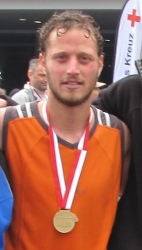
Sonja Strunz is a researcher at the Department of Systems Biology and Bioinformatics, affiliated with the Faculty of Computer Science and Electrical Engineering at the University of Rostock. Her work focuses on radiation biodosimetry and biomarker discovery through transcriptomic analysis of radiation-exposed human peripheral blood lymphocytes. Doctorate in Computer Science (2007-2014), University of Rostock Masters in Bioinformatics (2000-2007), University of Tübingen (inferred) Her research investigates radiation-induced transcriptional changes, dose-dependent gene expression patterns, and development of computational frameworks for radiation dose prediction. She has contributed to understanding radiation's effects on apoptosis, DNA damage, and cell-cycle regulation through bioinformatic analysis. Analysis of her publications reveals expertise in radiation biology, transcriptomics, and systems modeling. Her work combines p-value/fold-change methods with network approaches to identify robust gene signatures for dose estimation and develops computational workflows for molecular biodosimetry applications. She maintains collaborations with institutions including Forschungszentrum Jülich and University Medical Center Hamburg-Eppendorf, supported by funding from Germany's Federal Ministry for Education and Research (BMBF) and Federal Ministry for the Environment.
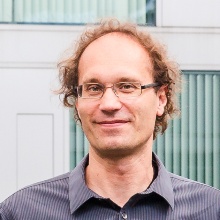
Dr. Stefan Endler is an Academic Councillor at the Institute of Computer Science, Johannes Gutenberg University Mainz, where he has held various roles including Research Associate and Academic Council member since 2006. His work bridges computer science and sports science, focusing on sports informatics, modeling/simulations for training impact analysis, and software engineering (design patterns). Educational Background: Bachelor of Science (2006): Model-based training planning with GPS data at Johannes Gutenberg University Mainz Bachelor of Science (2008): Attacker models and attack detection in mobile ad-hoc networks at TU Darmstadt Doctorate (2013): Adaptation of the PerPot metamodel for endurance-oriented running optimization at Mainz University Research Interests: Development of simulation models for athletic performance optimization Application of design patterns in software engineering for sports technology Integration of sensor data (e.g., smartwatches) for real-time training analysis Teaching Contributions: Extensive teaching experience across 15+ years, including courses on software development, design patterns, and computer engineering. Notable roles include lecture leadership for Design Patterns (2014–2021) and programming fundamentals. Awards: 2018 Teaching Award from Johannes Gutenberg University recognizing excellence in academic instruction. Advisory Work: Supervised 45+ theses (2014–2020) across computer science and sports science disciplines. Maintained active involvement in thesis supervision and academic council governance. Collaborative Efforts: Cross-disciplinary work with the Institute of Sports Science, contributing to biomechanical studies and training methodology research.
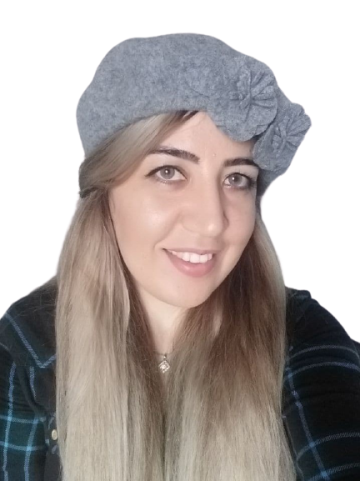
Prof. Daniel Weiskopf is a Professor at the University of Stuttgart's Faculty of Computer Science, Electrical Engineering and Information Technology, affiliated with the Institute of Parallel and Distributed Systems. His research focuses on visualization techniques, eye tracking, and human-computer interaction, with applications in virtual/augmented reality (VR/AR), data analysis, and uncertainty modeling. He has contributed to advancements in scientific visualization, including ML-driven flow visualization, energy-efficient rendering, and gaze-aware interfaces. His work emphasizes empirical methodologies, such as eye-tracking studies for evaluating visualization literacy and collaborative learning in AR environments. Research interests include: Scientific Visualization and Uncertainty Representation Eye Tracking Methodologies and Human Factors VR/AR Systems and Immersive Analytics Machine Learning Applications in Visualization Recent publications highlight trends in optimizing visualization performance, improving data interpretation through gaze-aware systems, and integrating advanced visualization into gaming and engineering contexts. His work bridges computational methods with user-centric design principles. He leads efforts in the Institute of Parallel and Distributed Systems , collaborating on tools like Gazealytics for exploratory gaze analysis and mint for VR visualization integration. No awards or grants are explicitly listed in the provided information.
Prof. Hao Yan is a Professor at the 2nd Physics Institute of the University of Stuttgart, affiliated with Faculty 08. He has been honored with the Humboldt Research Award and is recognized as an International Partner by the Baden-Württemberg Stiftung. His research focuses on advanced control systems, including model predictive control (MPC), stochastic control, optimization, and DNA nanotechnology. Yan's work integrates machine learning and robust methodologies to address challenges in dynamic systems and power electronics. His research interests span control theory applications in electrical engineering, with a particular emphasis on grid-forming converters, frequency stability, and energy systems. He also explores the intersection of nanotechnology and control systems. Recent publications (2018–2025) highlight trends in stochastic MPC, distributionally robust optimization, and learning-based control strategies. Notable contributions include work on tube MPC, intermittent observation handling, and discounted probabilistic constraints in uncertain environments. His research bridges theoretical advancements with practical applications in smart grids and adaptive control systems. Prof. Yan has received prestigious awards including the Humboldt Research Award and international partnerships supporting his research in top-tier institutions. His work is disseminated through leading journals and conferences in control systems and electrical engineering.
Mateus Souza is an Assistant Professor in Theoretical Public Economics at the Department of Economics, University of Mannheim, since September 2023. He previously held a postdoctoral researcher position at the EnergyEcoLab at Universidad Carlos III de Madrid and earned his Ph.D. in Applied Economics from the University of Illinois at Urbana-Champaign in 2020. His research focuses on energy and environmental economics , integrating econometric tools and machine learning for causal inference. Key areas include incentives for energy-efficient technologies, behavioral energy conservation, air pollution's health and economic impacts, and sustainable urban mobility. He is affiliated with the CESifo Research Network (Energy and Climate Economics) and the CRC TR 224 EPoS (B07: Policies for Sustainability). His recent work emphasizes heterogeneous treatment effects, data-driven targeting in energy efficiency, and pollution-induced health risks. Current projects analyze the welfare implications of car-sharing and the distributional impacts of energy crises. His publications explore empirical challenges in energy retrofitting, agricultural fires' health effects, and behavioral interventions without monetary incentives.
Syn Schmitt is a Professor of Computational Biophysics and Biorobotics and Director of the Institute for Modelling and Simulation of Biomechanical Systems at the University of Stuttgart. Their research focuses on biomechanical systems, biorobotics, and musculoskeletal modeling, with applications in robotics, human motion analysis, and safety engineering. Schmitt leads interdisciplinary projects combining computational models with experimental validation, including studies on wearable actuators, bipedal locomotion, and human body simulations in accident scenarios. Key work includes developing muscle-driven biorobotic systems (e.g., ATARO arm), energy-conserving spinal models, and gaze-guided human motion prediction frameworks. Their contributions bridge biological plausibility with engineering solutions, addressing challenges in prosthetics, robotics, and automotive safety. Education: Advanced degrees in biomechanics and robotics (details not explicitly stated in text). Grants/Awards: Not explicitly mentioned in provided content. Teams/Labs: Leads the Institute for Modelling and Simulation of Biomechanical Systems, collaborating with researchers in robotics, biomechanics, and computational neuroscience. Research Interests: Musculoskeletal modeling, biorobotic systems, human motion prediction, reinforcement learning applications in biomechanics, and computational methods for injury prevention. Schmitt’s work emphasizes integrating biological principles into engineered systems, as seen in projects like bioinspired morphological development for bipedal robots and neuromuscular control strategies.
Alexander Kraus is a Researcher and Ph.D. candidate in the Data and Web Science Group at the School of Business Informatics and Mathematics of the University of Mannheim. Supervised by Prof. Dr. Han van der Aa, his research focuses on Process Mining and system-state analytics of business processes. He has taught multiple courses, including Process Management & Analytics (2021–2022), Process Mining & Analytics (2020), and tutorials in Analysis, Operations Management, and Linear Algebra (2013–2017). His work contributes to advancing tools like CDLG for generating event logs with concept drifts and explores multi-perspective process dynamics analysis. A member of the Data and Web Science Group, his research bridges computer science and business process optimization, emphasizing data-driven methodologies to enhance decision-making and resilience in dynamic systems.
Daria Szafran is a researcher at the School of Social Sciences, University of Mannheim, focusing on interdisciplinary studies at the intersection of computational modeling, migration dynamics, and public health. Her work combines quantitative and qualitative approaches to analyze complex social phenomena. Current research areas include: Algorithmic refugee matching and smart city integration Perceptions of Muslim immigration in Germany E-cigarette addiction mechanisms and public health implications Ethical considerations in automated decision-making systems Her recent publications emphasize computational social science methods, with peer-reviewed articles on agent-based modeling and analysis of online user communities. She employs mixed-methods frameworks including focus group discussions and netnographic analyses. Geographic and demographic factors in social cohesion are recurring themes across her work, particularly examining how projected population changes influence perceptions of migration backgrounds in Germany.
Nahid Jamshidi is a Researcher at the Institute of Mathematics within the Faculty of Natural Sciences II (Chemistry, Physics and Mathematics) at Martin Luther University Halle-Wittenberg, specializing in applied stochastics with emphasis on numerical methods for stochastic systems. Her research focuses on: Stochastic Differential Equations driven by fractional Brownian motion Numerical analysis of stiff and unstable systems Model order reduction techniques including Gramian-based and sampling methods Convergence and stability analysis of Euler, Milstein, and exponential integrators Computational challenges in high-dimensional stochastic modeling Long-range dependence phenomena in fractional noise processes Analysis of her 7 publications (2017-2024) reveals consistent advancement in numerical schemes for fractional SDEs, with recent work (2023-2024) addressing exponential integrators for stiff systems and empirical Gramian applications. Her research bridges theoretical stochastic analysis with practical computational solutions for complex noise-driven dynamics. No scientific awards are documented in available sources. The provided information contains no records of student supervision, grant funding, laboratory affiliations, or research team memberships.
Marko Tkalcic is a Professor affiliated with the University of Primorska, Slovenia, with a former affiliation at the Free University of Bolzano/Bozen, Italy. His research focuses on recommender systems, user modeling, and affective computing, particularly in the context of music, multimedia, and human-computer interaction. He has contributed to over 118 publications since 2008, spanning journals, conferences, and workshops. His work emphasizes ethical AI, transparency in adaptive systems, and the integration of psychological theories into computational models. Key research areas include hybrid music recommendation systems, emotion and personality-driven recommendations, and the societal impact of AI. Tkalcic has organized and chaired multiple workshops, including HUMANIZE (Transparency in Adaptive Systems) and EMPIRE (Emotions and Personality in Personalized Systems). His recent studies explore eudaimonic/hedonic characteristics in media content and the prediction of user preferences using machine learning. He collaborates extensively with institutions like the University of Trento, TU Wien, and Tilburg University, reflecting his global academic network. Tkalcic’s publications address challenges in algorithmic fairness, user-centric design, and interdisciplinary applications of recommendation technologies. His work bridges computational methods with cognitive and social sciences, aiming to enhance human-centered digital experiences.
Peter Struss is a Professor at the Technical University of Munich (TUM), affiliated with the TUM School of Computation, Information and Technology. He holds the academic title of Prof. Dr. rer. nat. habil. and is part of the Department of Computer Science 16, specifically the Chair of Computer Science Applications in Medicine led by Prof. Navab. His research focuses on interdisciplinary applications of computer science in medical fields, including healthcare technology, medical informatics, and AI-driven solutions for biomedical challenges. His professional contact information includes an office located at TUINI16, Boltzmannstr. 3/III in Garching bei München. While no specific awards or publications are listed here, his affiliation with the medical computer science chair suggests expertise in computational methods for medical diagnostics, imaging, or patient data analysis. Further details on his educational background, grants, or advising activities are not provided in the source text.
Dr. Anna Żyłka is a researcher at the Department of Advanced Computational Methods, Faculty of Science and Technology, Jan Dlugosz University in Czestochowa, Poland. Her work focuses on fluidization, chemical looping combustion, and computational modeling of thermal processes. Fluidization techniques in energy systems Process simulation for emission reduction Reaction kinetics in combustion Her recent publications highlight advancements in CFD-DEM coupling for fluidized beds, CO2 capture optimization , and eco-friendly desalination systems . Collaborative efforts with co-authors like Jaroslaw Krzywanski and Karolina Grabowska underscore her interdisciplinary approach.
Katrin Herweg is a Research Scientist at the Institute of Imaging and Computer Vision (Chair of Imaging and Image Processing), RWTH Aachen University, Germany. She has been actively contributing to the advancement of high-resolution, time-of-flight positron emission tomography (PET) detector technologies since 2019. Her work is deeply rooted in the Department of Physics of Molecular Imaging Systems at the Institute for Experimental Molecular Imaging, and she continues her research in detector development with a strong focus on scintillator physics and photodetection systems. Master of Science in Physics, RWTH Aachen University (2017–2020), Focus: Experimental Particle Physics Bachelor of Science in Physics, RWTH Aachen University (2014–2017) Katrin's research centers on the development of PET detectors with ultra-high timing resolution. She investigates fast and ultra-fast light emission mechanisms in scintillator materials such as CsZnCl₃, LYSO:Ce,Ca, and BaF₂ through experimental measurements and simulations. Her work aims to push the boundaries of time-of-flight PET and CT by enabling sub-100 ps timing precision, which enhances image quality and quantification in nuclear medicine. She also explores novel photodetector technologies like μSiPMs and digital-analog SiPMs (DIGILOG) to overcome limitations of traditional materials like BGO. The recent publications highlight a consistent trend in advancing PET detector performance through innovations in scintillator characterization, ASIC-based readouts (e.g., TOFPET2c), high-frequency SiPM electronics, and modular, scalable detector designs with depth-of-interaction capability. Her work bridges fundamental physics with practical medical imaging applications, particularly in scatter rejection, organ-dedicated imaging, and axial field-of-view expansion. Scientific Awards: 3rd Place, IEEE Nuclear Science Symposium Student Paper Award (November 2023) Katrin has supervised multiple bachelor's theses on topics including deep learning-based position estimation in PET detectors, optical coupling materials, and scintillator coatings. She has served as an exercise and laboratory course instructor in nuclear medicine physics for both M.Sc. Biomedical Engineering and B.Sc. Electrical Engineering students. While no direct grant information is listed, her extensive publication record in high-impact journals and conferences suggests active participation in funded research projects. She collaborates closely with Prof. Volkmar Schulz and Dr. Stefan Gundacker, key figures in molecular imaging at RWTH Aachen. Katrin is a member of the research team at the Chair of Imaging and Image Processing (LFB), which focuses on advanced imaging systems, detector development, and image reconstruction algorithms. The team is part of a larger ecosystem at RWTH Aachen dedicated to experimental molecular imaging and biomedical engineering, contributing to platforms like Hyperion III for PET/MRI research.
Ambra Tamina Jacqueline Ottersbach is a researcher and teaching associate in the Department of German Studies/Linguistics at the University of Siegen, Faculty I. She works under the Chair of German Studies/Linguistics led by Prof. Dr. Petra M. Vogel, contributing to both research and academic instruction. Her research focuses on onomastics , particularly the linguistic structure and cultural motivations behind naming practices for birds and technical devices. She employs comparative and descriptive methods in German and cross-linguistically, especially in German-Swedish contexts. Her work intersects with syntax , phonology , and dialectology , as evidenced by her involvement in the "Dialect Atlas of Central West Germany" (DMW) project. The two most recent publications reflect a strong thematic trend in creative naming and anthropomorphization in language, analyzing pet-like names for machines and symbolic motifs in avian nomenclature. These works fall within broader domains of cultural linguistics and lexical innovation . Member, Society for German Language (GfdS) Member, QVM Commission of Faculty I, University of Siegen (since December 2023) Member, Examination Board for German Studies, University of Siegen (since April 2025) She has taught courses in Syntax and Phonology & Graphematics across multiple semesters, demonstrating active engagement in academic mentoring and curriculum delivery. Her role includes supervising student groups and contributing to academic governance. Ambra Ottersbach has been consistently involved in the "Dialect Atlas of Central West Germany" (DMW) project, indicating sustained collaboration in empirical linguistic research. Her work environment emphasizes interdisciplinary and data-driven approaches to German linguistics.
Prof. Dr. Matthias Grabmair is a Professor of Legal Tech at the TUM School of Computation, Information and Technology, part of the Technische Universität München (TUM). His research focuses on advancing computational methods for legal analysis, particularly leveraging natural language processing (NLP) to enhance legal document summarization, judgment prediction, and AI-driven legal systems. He leads the JUSMOD organization and has contributed to datasets like ECtHR-PCR for precedent understanding. Key research areas include automated legal reporting (e.g., LexGenie), cross-jurisdictional analysis, and ethical AI applications in privacy policies (PrivaT5). His work emphasizes improving judicial decision-making transparency through models like Hiculr for rhetorical role labeling and Chronoslex for temporal generalization. Prof. Grabmair also explores adversarial robustness in legal AI systems and transfer learning across legal domains. Publications span 2005–2025, with recent emphasis on generative AI for legal texts, explainable AI in judgment prediction, and curriculum learning for legal document analysis. His research bridges computational methods with legal practice, addressing challenges in fairness, reliability, and scalability of AI applications in law.