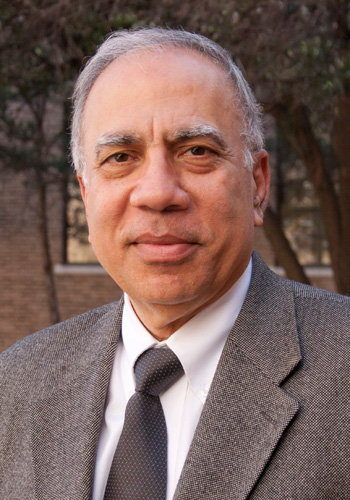
Dr. Mohamed Soliman is the William C. Miller Endowed Professor at the University of Houston’s Cullen College of Engineering, Department of Petroleum Engineering. He holds a Ph.D. in Petroleum Engineering from Stanford University, complemented by an M.S. and B.S. from Stanford and Cairo University respectively. His research focuses on hydraulic fracturing of unconventional reservoirs, waterless fracturing using shock waves, and advanced numerical simulation techniques. He has authored over 250 technical papers and holds 35 patents, with notable works on shale gas transport, dead oil viscosity modeling, and plasma stimulation technologies. Dr. Soliman is a Distinguished Member of the Society of Petroleum Engineers (SPE) and a Fellow of the National Academy of Inventors. He has received the Gulf Coast 2020 Distinguished Achievement Award for Petroleum Engineering Research. His work bridges theoretical models with practical applications, such as the development of machine learning tools for reservoir analysis and innovative methods for fracture closure detection using wavelet transforms. His teaching spans core petroleum engineering courses including PETR 1111 (Introduction to Petroleum Engineering), advanced production operations (PETR 6372), and well completion stimulation (PETR 5397). He actively mentors graduate students, with current advisees Ibrahim Eltaleb, M. Awad, and Fatmir Likframa. His research group collaborates on projects funded by industry and government agencies, focusing on topics like microwave-assisted heavy oil recovery and geothermal reservoir characterization. Dr. Soliman’s lab develops cutting-edge tools for analyzing fracturing pressure data and interwell connectivity through signal processing. Key collaborations involve experimental validation with institutions like the University of Houston’s Advanced Energy Research Laboratory. His recent work emphasizes sustainable energy solutions, including critiques of carbon capture limitations and innovative plasma-based stimulation techniques to enhance reservoir permeability without water use.