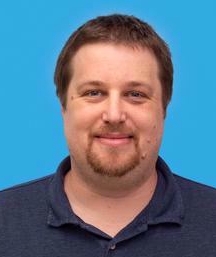
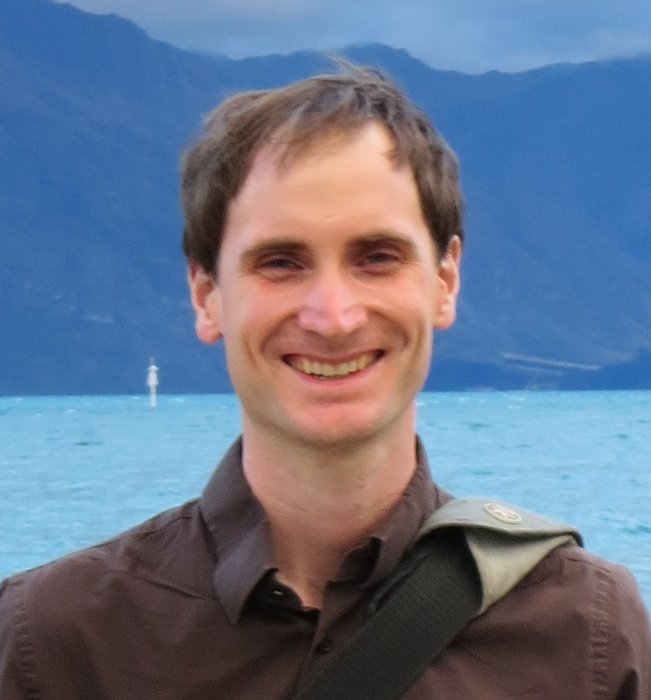
Shane Halse is an Assistant Professor at the University of Cincinnati in the School of Information Technology , specializing in crisis response and social media technologies for emergency communication. PhD in Information Science and Technologies, Pennsylvania State University (2019) MSE in Software Engineering, Pennsylvania State University (2014) BSP in Psychology and BSEE in Electrical Engineering, University of Central Florida (2008, 2011) His research focuses on enhancing emergency responders' decision-making through social media data analysis , trust detection , and information filtering during disasters. He has contributed to frameworks for multimedia emergency protocols and hyperlocal data collection . Recent publications analyze crisis social media dynamics (e.g., retweetability, trust metrics, sensor data integration), reflecting his expertise in sociotechnical systems for disaster management. Grants include collaborations with the National Science Foundation and Texas Tech University on Next-Generation 911 training and technology. Key contributions appear in journals like Information, Communication & Society and conferences such as ISCRAM and Hawaii International Conference on System Sciences .
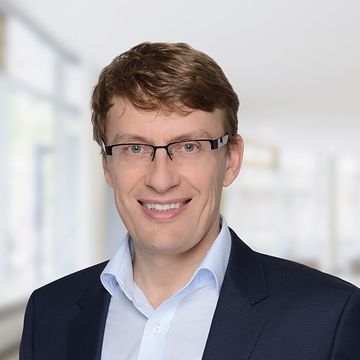
Prof. Klaus Adam is a leading economist holding dual professorships at the University of Mannheim and University College London (UCL, on leave). He specializes in macroeconomics with a focus on monetary and fiscal policy design, learning mechanisms in economic expectations, and their applications to asset pricing and business cycle dynamics. His research has significant policy relevance, particularly regarding inflation targeting and central bank strategies. Adam earned his Ph.D. in Economics from the European University Institute, Florence (2001). His career includes former roles at the University of Oxford’s Nuffield College and the European Central Bank. He currently serves as a Research Professor at the Deutsche Bundesbank, member of the German Ministry of Finance’s Academic Advisory Board, and Scientific Chair of the Euro Area Business Cycle Network (EABCN). His research interests encompass: Monetary policy frameworks and inflation targeting Fiscal policy interactions and sovereign debt dynamics Expectations formation and its impact on asset prices Business cycle fluctuations and macroeconomic stability Adam has been recognized with prestigious roles including Research Fellowships at the CEPR and CFS, and membership in the Heidelberg Academy of Sciences. His recent work emphasizes bridging theoretical insights with practical policy design, particularly in addressing challenges posed by low inflation environments and falling natural interest rates.
Jian Li is an Assistant Professor of Data Science in the Department of Applied Mathematics and Statistics and Computer Science at Stony Brook University, part of the College of Engineering and Applied Sciences. He is affiliated with the AI Innovation Institute (AI3) and the Institute for Advanced Computational Science (IACS). His research focuses on Reinforcement Learning, Federated Learning, Stochastic Optimization, and Trustworthy AI systems, with applications in wireless networks and edge computing. Previously, he held positions at SUNY-Binghamton and the University of Massachusetts Amherst. Dr. Li holds a Ph.D. in Computer Engineering from Texas A&M University (2016) and a B.E. from Shanghai Jiao Tong University (2012). His work has garnered prestigious awards, including the NSF CAREER Award (2024), NSF CISE CRII Award (2021), and multiple best-paper recognitions. He actively mentors students, including Shufan Wang and Adebayo Braimah, who have achieved notable academic accolades. His research explores theoretical advancements in RL and systems security, with grants from NSF, ARO, and DOE. Recent activities include organizing workshops at ACM SIGMETRICS 2025 and serving as an Area Chair for NeurIPS 2025. He leads the DIENS Lab, focusing on AI-driven systems and large-scale networked intelligence.
Karthik Srinivasan is an Assistant Professor in the Analytics, Information, and Operations Academic Area at the University of Kansas School of Business. He holds a Ph.D. in Management Information Systems from the University of Arizona, an M.Mgt. in Business Analytics from the Indian Institute of Science, and a B.E. from Mumbai University. His research focuses on interpretable machine learning, explanatory modeling, text mining for business applications, and healthcare information systems. He develops methods to enhance transparency in AI systems and applies data science to healthcare, finance, and retail contexts. Recent work includes predictive modeling for incomplete data, graph-based retail analytics, and analyzing pandemic impacts on stock markets and public health. His publications span journals like MIS Quarterly, Decision Support Systems, and Nature Digital Medicine. He also contributes open-source tools like TextRegress and MoreThanSentiments for advanced text analysis. Teaching responsibilities include undergraduate and graduate-level data management courses. His research emphasizes practical applications in business and public health, leveraging interdisciplinary approaches to address real-world challenges.
Dr. Qianwen (Vivian) Guo is an Assistant Professor in the Department of Civil and Environmental Engineering at the FAMU-FSU College of Engineering. Her research focuses on optimizing transportation systems, particularly in public transit, shared mobility, and infrastructure resilience. She holds a joint Ph.D. in Civil Engineering from Cornell University and Management Science and Engineering from Huazhong University of Science and Technology. Dr. Guo's work spans interdisciplinary areas including quantum computing applications in transportation, disaster evacuation planning using autonomous vehicles, and equity-aware transit policies. She has received funding from NSF, FDOT, and USDOT, and leads the FAMU-FSU ITE student chapter. Her research has been recognized by the Society of Asian Scientists & Engineers in 2021. Education: Ph.D., Joint Program: Civil Engineering (Cornell University) Ph.D., Management Science and Engineering (Huazhong University) M.S., Transportation Engineering (Huazhong University) B.S., Transportation Engineering (Southwest Jiaotong University) Her recent publications emphasize quantum-driven frameworks for transportation resilience, machine learning for safety analysis, and real-time transit optimization strategies. Dr. Guo collaborates actively on projects addressing demand uncertainty, sustainable policies, and equitable infrastructure investments.
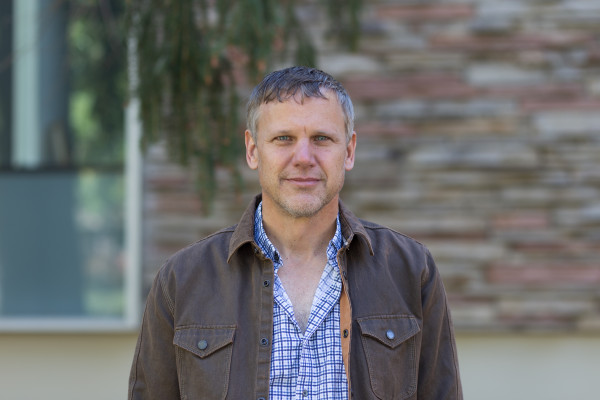
Professor Martin Shields is a faculty member in the Department of Economics at Colorado State University (CSU), serving as the Director of Undergraduate Studies. He holds a PhD from the University of Wisconsin-Madison. His research focuses on regional economic growth, labor market outcomes, and the economic impacts of natural hazards and policy interventions. Shields specializes in modeling the effects of renewable energy transitions, disaster resilience strategies, and socioeconomic policy. His teaching includes courses such as Intermediate Microeconomics, Labor Economics, and Regional Economics. He has conducted influential studies on the economic implications of 100% renewable energy transitions (e.g., LA100 and PR100 projects) and has evaluated disaster mitigation strategies in regions like Puerto Rico and Utah. His work integrates engineering, environmental science, and economic modeling to address real-world challenges. Shields' research spans climate adaptation, infrastructure resilience, and energy policy. Notable projects include analyzing the economic impacts of improved weather forecasting systems (e.g., HRRR model) and assessing the effects of financial relief delays on disaster recovery. His interdisciplinary approach bridges economic theory with practical policy design, emphasizing equity and sustainability. While no formal awards are listed, his contributions to regional economic analysis and policy are widely recognized. Shields collaborates with government agencies, academic institutions, and community organizations to inform evidence-based decision-making. His advisory and grant activities, while not explicitly detailed, are implied through his extensive research portfolio and leadership roles.
Andy Purvis is a Professor at Imperial College London's Department of Life Sciences (Silwood Park) with a part-time affiliation at the Natural History Museum. His research focuses on biodiversity science, integrating macroevolutionary patterns with global change impacts. Key projects include the PREDICTS initiative modeling biodiversity responses to human activities and the 'Descent into the Icehouse' study on planktonic foraminifera evolution during climate shifts. He leads a lab exploring phylogenetic diversity, ecosystem service vulnerability, and species distribution dynamics. Collaborations span institutions like UNEP-WCMC and Microsoft Research. His work bridges theory and practice, informing conservation policy through tools like the Living Planet Index. Over 20 students have been mentored across NERC and EU-funded programs. Research spans macroevolution, climate change, and functional biodiversity, with outputs in journals like Science and Ecology . Education and training opportunities include the MRes in Biodiversity Informatics & Genomics at Silwood Park, emphasizing programming, genomics, and spatial analysis. Current grants include NERC funding for soil biodiversity-ecosystem function linkages. His lab's interdisciplinary approach addresses pressing challenges in biodiversity monitoring and ecosystem resilience.
Christophe Mues is a Professor of Data Science and Information Systems at the University of Southampton's Department of Decision Analytics and Risk. He specializes in credit scoring, consumer credit risk modeling, and predictive analytics, focusing on applications like loan default prediction and debt collection optimization. His work integrates advanced statistical methods and machine learning techniques to address challenges in financial risk assessment. Previously, he held a research position at KU Leuven (Belgium), where he earned his Doctorate in Applied Economics. Since joining the University of Southampton in 2004, he has led the Information Systems & Business Analytics section and contributed to organizing the biennial Credit Scoring and Credit Control conference. His teaching spans data-driven decision-making and business analytics. Key research interests include credit risk modeling for consumers and SMEs, leveraging non-traditional data sources with deep learning, ensuring fair credit scoring models, and optimizing debt recovery strategies. He currently supervises PhD students in Business Studies & Management, focusing on topics like AI-driven credit scoring and financial risk evaluation. His publications span journals like European Journal of Operational Research and International Journal of Forecasting , emphasizing methodological advancements in credit risk assessment and financial decision-making. He actively participates in interdisciplinary collaborations to bridge operational research, data science, and financial regulation.
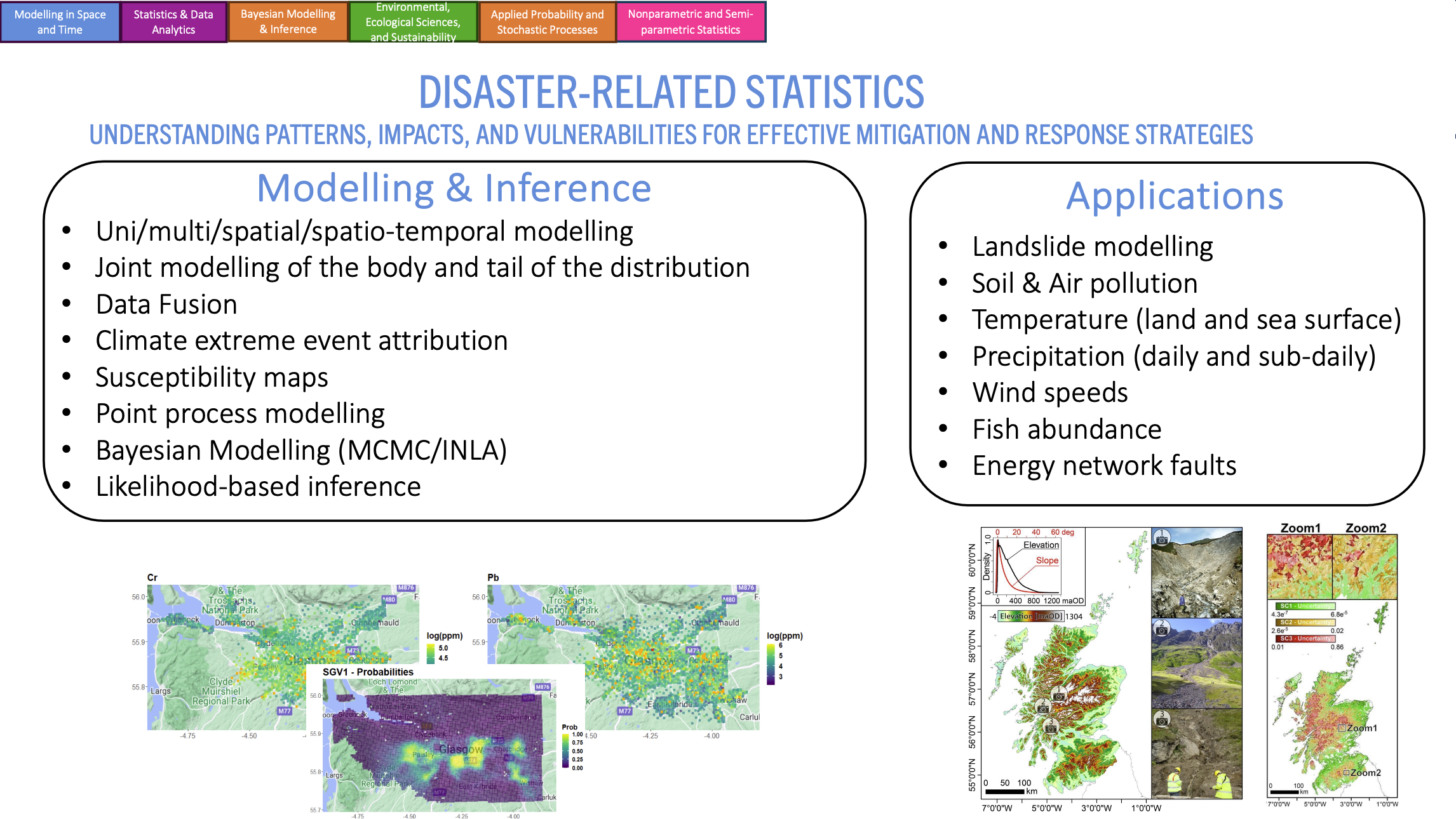
Dr. Daniela Castro Camilo is a Senior Lecturer in Statistics at the University of Glasgow's School of Mathematics & Statistics. Her research focuses on extreme value theory applied to environmental hazards, including landslides, climate extremes, and risk assessment. She leads projects like the Mitigating Landslides Impacts in Scotland (MLIS) and Geostatistical Binary Models for Extremes (GEOBEx) , funded by the Scottish Government and EPSRC. She collaborates with institutions such as the British Geological Survey and the Met Office. Her work bridges statistical methodology and environmental applications, with notable contributions to landslide hazard modeling and spatial extremes. She actively participates in international conferences and organizes events like the ESS-sponsored session at the 2024 RSS Conference. She is a core member of GLE²N (Glasgow-Edinburgh Extremes Network), fostering interdisciplinary research in statistical risk analysis. Recent projects include developing probabilistic forecasting tools for weather-driven faults in electricity networks and advancing Bayesian methods for extreme event prediction. Her research emphasizes practical solutions for resilience to environmental disasters, combining cutting-edge statistical techniques with real-world data challenges.
Edwin P. Gerber is a Professor of Mathematics and Atmosphere/Ocean Science at New York University’s Courant Institute of Mathematical Sciences. He holds joint affiliations with the Department of Environmental Studies and the Center for Data Science. His research focuses on understanding climate variability and dynamics, particularly the role of stratosphere-troposphere interactions and simplified climate models. Gerber earned his Ph.D. in Applied and Computational Mathematics from Princeton University (2006), following an M.A. (2002) and B.S. in Mathematics and Chemistry from the University of the South (2000). His work bridges theory and Earth System models, investigating topics like the Brewer-Dobson Circulation, sudden stratospheric warmings, and ozone layer dynamics. Key achievements include the DynVarMIP initiative for CMIP6 and contributions to gravity wave parameterization. Gerber has received awards such as the Friedrich Wilhelm Bessel Research Award (2021) and Hertz Foundation Fellowship (2000-2005). His research has been supported by grants from NSF, NASA, and international collaborations. Gerber’s lab explores machine learning applications in climate modeling, including data-driven parameterization of gravity waves. He serves as Associate Editor for the Quarterly Journal of the Royal Meteorological Society and has led initiatives like the SPARC Reanalysis Intercomparison Project (S-RIP). His recent studies address tropical teleconnections, stratospheric ozone responses to global warming, and extreme event predictability. Gerber’s teaching includes courses on atmospheric dynamics, climate change, and differential equations. He emphasizes interdisciplinary approaches, integrating theory, computation, and observational data to advance climate science understanding.
Associate Professor Ben Sparrow is affiliated with the University of Adelaide's School of Biological Sciences within the Faculty of Sciences, Engineering and Technology. He leads the TERN Ecosystem Surveillance program, focusing on environmental monitoring methodologies and data standardization. His work emphasizes integrating remote sensing technologies with ecological data to improve biodiversity tracking and policy development. Ben has extensive experience in grant-funded research, including leadership roles in TERN's AusPlots and Eco-informatics initiatives, and has contributed to projects like the Global Drylands Assessment with the UN FAO. He collaborates with stakeholders to address socio-ecological challenges in environmental management and has advised Honours students on topics related to natural resource management and ecological data analysis. Research Interests : Ben's research centers on environmental surveillance, ecological monitoring standardization, remote sensing applications, citizen science integration, and understanding climate change impacts on Australian flora. He advocates for adaptable protocols that balance national data consistency with regional autonomy, ensuring ecological data supports both science and policy. His work includes developing open-access datasets (e.g., deadtrees.earth) and advancing tools like the ausplotsR package for vegetation analysis. Grants & Funding : Recent grants include $2.1M from NCRIS/TERN (2018), a $484,770 Citizen Science Grant for the Wild Orchid Watch project, and UN FAO funding ($20,000 USD) for global drylands research. He has also secured funding for LiDAR and photogrammetry initiatives, vegetation mapping projects, and cross-disciplinary research efforts. Professional Activities : Ben actively participates in committees such as the Enabling ecosystem surveillance working group (Ecosystem Science Council) and the Drylands Working Group (UN FAO). He co-chaired the 15th Australasian Remote Sensing and Photogrammetry Conference and contributes to global initiatives like the sPlot dataset project. His work bridges ecological science with practical policy applications, emphasizing reflexivity and communication in socio-ecological systems. Labs/Teams : Ben is part of the Terrestrial Ecosystem Research Network (TERN) team at the University of Adelaide's Waite campus, leading the Ecosystem Surveillance unit. He collaborates with the AusPlots Rangelands program and the Eco-informatics group to develop continental-scale ecological monitoring infrastructure.
Joannes Westerink is the Joseph and Nona Ahearn Professor in Computational Science and Engineering at the University of Notre Dame's College of Engineering. He holds concurrent faculty titles in the Departments of Aerospace and Mechanical Engineering, Earth Sciences, Computer Science and Engineering, and other disciplines. His research focuses on computational fluid dynamics, tidal hydrodynamics, and hurricane storm surge prediction. He earned his Ph.D. from MIT in 1984, followed by M.S. and B.S. degrees in Civil Engineering from SUNY Buffalo. Key research interests include finite element methods, coastal circulation modeling, and geophysical turbulence. In 2025, he was awarded the International Coastal Engineering Award for his contributions to storm surge forecasting and coastal hazard mitigation. Westerink leads the Computational Hydraulics Laboratory, advancing numerical models like STOFS (Surge and Tide Operational Forecast System) for global water level predictions. His recent work integrates AI-driven nudging techniques and machine learning to enhance model accuracy, with applications in disaster risk assessment and climate adaptation.
Matthew Dzieciuch is a Researcher at the Institute of Geophysics and Planetary Physics, part of the Scripps Institution of Oceanography at the University of California San Diego. His work focuses on ocean acoustic tomography and climate monitoring through ocean acoustics. He holds degrees from the University of Michigan (B.S., M.S., PhD) and has contributed to major Arctic and global ocean acoustics research initiatives. Key research areas include acoustic propagation in polar regions, Arctic climate change impacts, and the integration of acoustic networks into ocean observing systems. He has led and participated in large-scale experiments like CANAPE (Canada Basin Acoustic Propagation Experiment) and CAATEX (Coordinated Arctic Acoustic Thermometry Experiment), focusing on tomographic arrays, glider-based acoustics, and long-range acoustic measurements. His publications emphasize acoustic travel-time analysis, sea ice dynamics, and the interplay between environmental conditions and sound transmission. Dzieciuch collaborates with institutions globally to advance acoustic-based oceanography and climate monitoring, leveraging autonomous platforms like gliders and buoyancy-driven vehicles.
Jesper Ellerbæk Nielsen is an Associate Professor in the Department of the Built Environment at Aalborg University, Faculty of Engineering and Science. He is affiliated with the Division of Civil and Environmental Engineering and the Urban Hydrology Research Group, focusing on urban stormwater systems, weather radar applications, and sustainable urban drainage. His research interests include urban hydrology, stormwater management, weather radar rainfall estimation, remote sensing, flood prediction, and real-time hydrological modeling. His work integrates engineering, environmental science, and data-driven approaches to improve urban resilience to extreme weather events. The recent publications reflect a strong trend in utilizing weather radar data, remote sensing, and opportunistic sensor networks to enhance rainfall estimation, stormwater modeling, and flood forecasting in urban environments. His interdisciplinary research spans civil engineering, atmospheric science, and urban planning, with a focus on practical applications for sustainable infrastructure. Prize (2 mentioned, specific names not provided) Nielsen collaborates widely with researchers in hydrology and environmental engineering, particularly with S. Thorndahl and M. R. Rasmussen. His work has been applied in projects involving real-time monitoring, software sensors, and validation of remote sensing technologies. While no specific grants are listed, his involvement in multiple research outputs suggests active project funding. He is involved in the Urban Hydrology Research Group, where his team works on advancing methods for urban stormwater monitoring, modeling, and control, contributing to smarter and more resilient urban water systems.
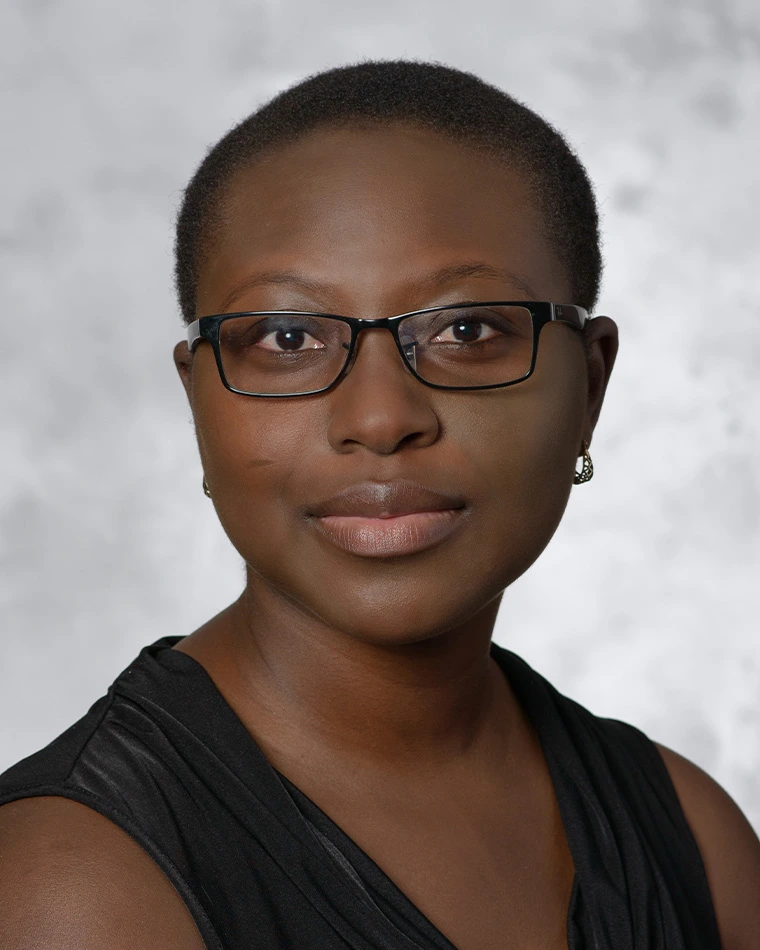
Dr. Angelina Anani is an Associate Professor in the Department of Mining & Geological Engineering at the University of Arizona, College of Engineering. She is also a member of the Graduate Faculty and actively contributes to research and teaching in mining systems optimization, mine planning, and sustainable mining practices. Education: PhD in Mining Engineering, Missouri University of Science and Technology, Rolla, Missouri, United States BS in Mining Engineering (Summa cum laude), Missouri University of Science and Technology, Rolla, Missouri, United States Research Interests: Dr. Anani's research spans a broad spectrum of mining engineering challenges, focusing on modeling and optimization of mining systems , mine planning and production scheduling , and sustainable mining system design . She investigates mine equipment reliability , tunneling and underground works , and energy and water efficiency . A significant portion of her recent work integrates machine learning and data-driven approaches into mine safety and planning, including 3D/4D/VR applications and digital twin systems . Her interdisciplinary approach also includes ethnographic research in mining communities and supply chain management in the mining sector. Publications Trends: Her recent publications reflect a strong shift toward intelligent systems in mining, with increasing focus on machine learning for safety, process mining for maintenance, and digital twin deployment. She combines traditional optimization techniques like discrete event simulation with modern AI to solve complex mining challenges, particularly in underground and transition mines. Scientific Awards: Freeport-McMoRan, Inc. Career Development Grant Society for Mining, Metallurgy and Exploration, Fall 2022 Faculty Core Advising and Grants: Dr. Anani supervises graduate research through MNE 900 (Research), MNE 910 (Thesis), and MNE 920 (Dissertation) courses. She has secured external funding such as the Freeport-McMoRan Career Development Grant, supporting her innovative work in mine optimization and safety. While current students are not listed, her active supervision load indicates ongoing mentorship of master’s and PhD candidates. Labs and Teams: She is actively involved with the San Xavier Underground Mine Laboratory, where she contributes to monitoring systems and digital twin development. Her collaborative work with researchers from Chile and Ghana highlights her international engagement. She is also affiliated with professional societies including the Society of Mining, Metallurgy and Exploration (SME), Society of Mining Professors, and Women in Mining (WIM), contributing to both technical and diversity initiatives in the field.