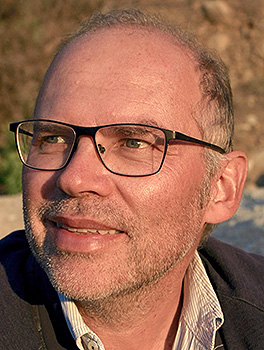
Prof. Willy Tinner is a leading academic at the University of Bern, serving as Head of the Paleoecology section and Vice Executive Director within the Institute of Plant Sciences. His research focuses on reconstructing past environmental changes through pollen analysis, vegetation dynamics, and human-ecosystem interactions. Tinner's work integrates paleoecological data with climatology, archaeology, and conservation biology to understand long-term ecological processes. His expertise spans Holocene climate impacts, Neolithic land use patterns, and biodiversity conservation challenges in alpine and Mediterranean ecosystems. Notable research includes studies on Fagus-Quercus forest coexistence in Italy, Abies alba climatic adaptations, and human-driven vegetation changes across Europe. Tinner collaborates internationally, contributing to projects in Greece, Ukraine, and the Balkans. He has published extensively on topics such as fire regimes, lake sediment archives, and the ecological consequences of ancient agricultural practices. His leadership positions reflect his role in shaping Switzerland's ecological research priorities through institutions like WSL Cadenazzo.
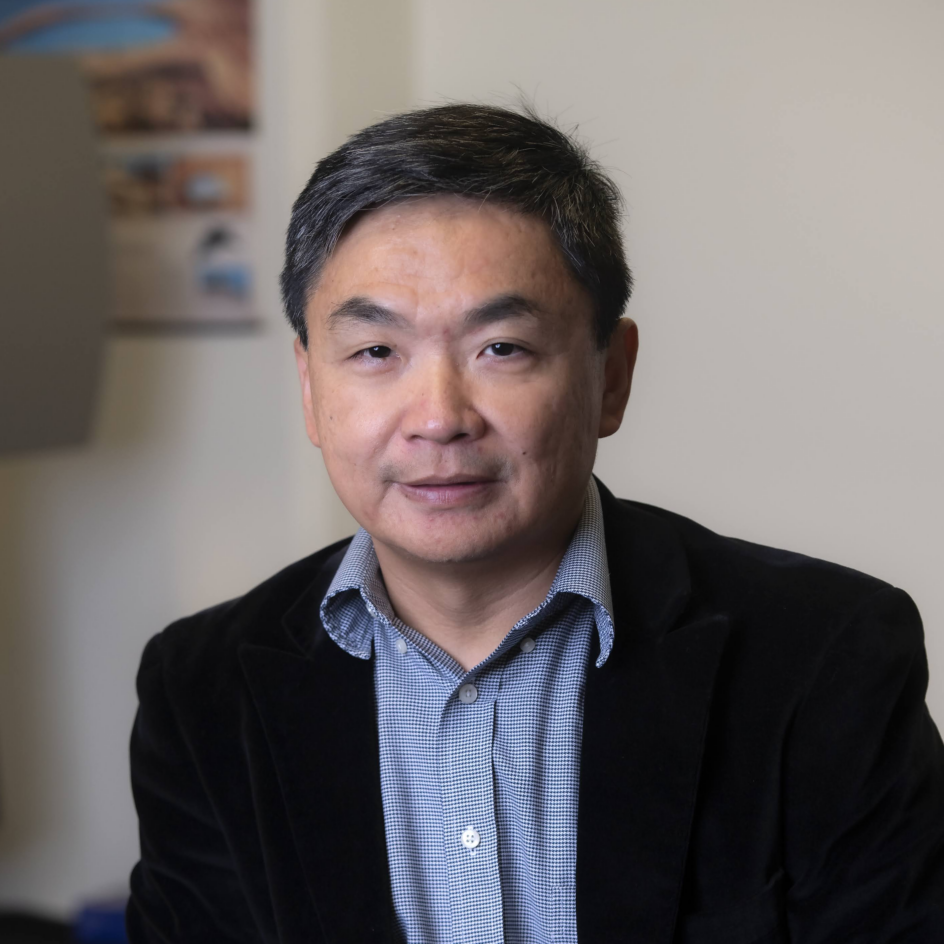
Chen Li is a Professor in the Department of Computer Science at the University of California, Irvine (UCI), affiliated with the Donald Bren School of Information and Computer Sciences (ICS). He holds a Ph.D. from Stanford University and bachelor's and master's degrees from Tsinghua University. His research focuses on data management, including databases, query optimization, machine learning systems, and open-source tools like AsterixDB and Texera. He has received prestigious awards such as the NSF CAREER Award and IEEE Fellow recognition. Li is also a board member of the VLDB Endowment and the former Faculty Director of UCI's ICS Master of Computer Science Program. Education: Ph.D., Computer Science, Stanford University M.S. and B.S., Computer Science, Tsinghua University Research interests span next-generation databases, approximate query processing, and AI-driven data analytics. Notable contributions include the Texera system for collaborative data science workflows and the Apache AsterixDB project. He has led NIH-funded initiatives in diabetes research and pandemic prediction, emphasizing real-world applications of data science. Professional roles include PC co-chair of VLDB 2015, General Co-chair of SIGMOD 2027, and a visiting research scientist at Google. His awards highlight his impact in both academia and industry. Advising and mentoring are central to his career, with a focus on graduate education. He has pioneered outreach programs like DS4ALL to teach high-school students data science using Texera.
Mary Silber is a Professor in the Department of Statistics and the College at the University of Chicago, and serves on the Executive Committee of the Committee on Computational and Applied Mathematics (CCAM). Her research focuses on dynamical systems and bifurcation theory, with applications to climate science, ecological dynamics, and pattern formation. She investigates tipping points in climate systems and self-organized vegetation patterns in drylands, exploring mathematical mechanisms behind abrupt transitions and noise-driven instability. Her work bridges theoretical mathematics with real-world phenomena, including Arctic sea ice melt processes and feedback mechanisms in ecosystems. Notable grants include a $50M interdisciplinary initiative between Northwestern and UChicago for life sciences data science and a collaborative Institute for Foundational Data Science. Silber’s contributions span bifurcation theory, spatio-temporal chaos, and control of unstable dynamical systems, with a focus on symmetry-breaking and model reduction techniques. Her recent research emphasizes resilience in dryland ecosystems under climate variability and the role of percolation thresholds in Arctic melt pond dynamics. Despite no formal student listings, her work is supported by interdisciplinary collaborations and federal grants in applied mathematics and environmental science.
Kelly Arnold is an Associate Professor in the Department of Biomedical Engineering at the University of Michigan. Her research integrates systems engineering principles with immunology to investigate variability in immune responses across infection, vaccination, and injury, with a focus on computational modeling and clinical translation. Research Focus Systems-level immune response modeling Vaccination and antibody functionality Vaginal microbiome-host interactions Chronic lung disease progression Computational serology and proteomics Recent Work Her 2025 studies examine SARS-CoV-2 vaccination responses in cancer patients and computational frameworks for vaginal probiotics. Earlier works (2024-2007) span COPD progression, lupus fibrosis, HIV susceptibility, and tissue engineering for fertility preservation. Methodologies include proteomic profiling, network modeling, and microfluidic systems.
Prof. Dr. André Bardow is a Full Professor in Energy and Process Systems Engineering at ETH Zurich , leading research at the intersection of thermodynamics, machine learning, and sustainable energy systems. Previously, he held professorships at RWTH Aachen University (2010-2020) and TU Delft (2007-2010). He also served as part-time director at Forschungszentrum Jülich (2017-2022) and visiting professor at UC Santa Barbara (2015/16). His work focuses on energy systems optimization , computer-aided molecular design , and CO2 capture & utilization . PhD from RWTH Aachen University Current ETH Zurich affiliation Former roles at RWTH Aachen, TU Delft, Jülich Research Center His research integrates machine learning with thermodynamic modeling to optimize processes like crystallization and electrochemical cooling . Recent publications demonstrate advancements in solvent design, CO2 transport LCA, and ORC working fluid optimization. He chairs the VDI Technical Committee for Thermodynamics (2016-2024) and has received multiple awards including the Covestro Science Award and Arnold-Eucken-Award . Current projects address carbon circular economies , electrified chemical production , and AI-driven process optimization . His lab at ETH Zurich develops cutting-edge technologies like ML-CAMPD frameworks for sustainable separation processes and photoacid-based CO2 capture systems. Funding from the H2020 Systemic Expansion of Circular Ecosystems (grant 101036854) supports these initiatives. 2024 Clarivate Highly Cited Researcher 2022 Inaugural Lecture: "To sustainability and beyond: A computer-animated story on energy & chemicals" Recipient of multiple teaching and research excellence awards
Dr. Eli Strauss is a behavioral ecologist and Assistant Professor in the Department of Integrative Biology at Michigan State University , where he is establishing a lab focused on the evolution and ecology of social behavior. He co-directs the Mara Hyena Project , a long-term study of hyena behavior and ecology in Kenya. His research spans dominance hierarchies, longitudinal studies of animal societies, and computational methods for analyzing social dynamics. He has developed tools like the DynaRankR R package for inferring longitudinal dominance hierarchies and DomArchive for compiling dominance data. His work addresses challenges such as mismatched timescales in behavioral studies and demographic drivers of hierarchy dynamics, often using spotted hyenas as a model species. Dr. Strauss is currently recruiting lab members for graduate student, postdoc, and technical roles, with lab establishment planned for late 2025–Fall 2026. His publications reflect interdisciplinary interests in behavioral ecology, animal societies, and data-driven approaches to understanding dominance and social networks.
Reed Maxwell is the William and Edna Macaleer Professor of Engineering and Applied Science in the Department of Civil and Environmental Engineering and the High Meadows Environmental Institute at Princeton University. He serves as Director of the Integrated Groundwater Modeling Center (IGWMC) and leads a research group comprising graduate students, postdoctoral researchers, and staff. His academic appointments include concurrent roles in both the School of Engineering and Applied Science and the High Meadows Environmental Institute. Maxwell's research focuses on understanding connections within the hydrologic cycle and how they relate to water quantity and quality under anthropogenic stresses. His work centers on hard problems in hydrology including groundwater, evapotranspiration and snow. His research group uses integrated hydrologic modeling, field observations, and remote sensing products to study terrestrial freshwater systems. Key research areas include surface water and the terrestrial hydrologic cycle; interactions of the land-surface, surface water and groundwater; and human health risk assessment. Maxwell has authored more than 185 peer-reviewed journal articles with an H-Index of 66 and over 19,000 citations. His recent work emphasizes machine learning applications in hydrology, continental-scale modeling, and physically rigorous scenario generation through projects like HydroFrame and HydroGEN. He teaches courses including CEE 306/ENV 318 Hydrology: Water and Climate and CEE 586/ENV 586 Physical Hydrology. 2020 Distinguished Henry Darcy Lecturer American Geophysical Union Fellow (2019) 2018 Boussinesq Lecturer Belle van Zuylen Chair (visiting), University of Utrecht 2017 School of Mines Research Award recipient Maxwell has mentored 17 PhD students and 20 MS thesis students throughout his career. His current research group includes multiple postdocs, research software engineers, and graduate students working on projects spanning continental-scale hydrologic modeling, groundwater-stream interactions, and machine learning applications in hydrology. The IGWMC maintains an active education and outreach program including STEM fairs, school visits, and digital educational tools like the HydroFrame Education Team's virtual sandtank aquifer model.
Réka Albert is a Distinguished Professor of Physics at Pennsylvania State University, affiliated with the Eberly College of Science. Her research focuses on the application of network science to biological systems, including signal transduction networks, ecological interactions, and cancer systems biology. She holds editorial roles at npj Systems Biology and Applications , IET Systems Biology , and Bulletin of Mathematical Biology . Education: Ph.D. in Physics from the University of Notre Dame (2001), M.S. and B.S. from Babeș-Bolyai University, Romania (1995-1996). Research Interests: Modeling complex systems using network theory; Boolean network analysis of biological pathways; ecological community dynamics; systems-level understanding of disease mechanisms (e.g., cancer, AML). Her work bridges theoretical physics, computational biology, and experimental data to predict system behavior and therapeutic strategies. Awards: External member of the Hungarian Academy of Sciences (2016), APS Maria Goeppert-Mayer Award (2011), NSF CAREER Award (2007), and Alfred P. Sloan Fellowship (2004). Grants/Support: NSF awards (MCB 1715826, IIS 1814405), ARO MURI on hyperuniform systems, and collaborations with biologists like Sarah Assmann (plant signaling) and Katriona Shea (ecology). Labs/Teams: Leads a multidisciplinary research group at Penn State, mentoring over 20 PhD alumni and current students like Eli Newby and Fatemeh Nasrollahi. Active in developing tools like pystablemotifs for Boolean network analysis.
Margarita Boenig-Liptsin is a tenure-track Assistant Professor of Ethics, Technology and Society at ETH Zurich's Department of Humanities, Social and Political Sciences, a position she has held since September 2022. Trained in Science, Technology and Society with dual PhDs from Harvard University (History of Science) and Université Paris-Sorbonne (Philosophy), she brings interdisciplinary expertise to examining the relationship between technology, power, democracy, and ethics. Her research spans several interconnected areas focusing on transformations to human identity and citizenship in relation to information technologies across time and cultures. She investigates the social and political aspects of digital technologies, identity and selfhood in technological societies, ethics of technology, and comparative cultures of innovation. Her work uniquely bridges historical analysis with contemporary ethical concerns, examining how concepts like human dignity evolve alongside technological developments from punch cards to AI governance frameworks. Her recent publications (2023-2025) reveal a strong focus on AI ethics, data justice, and the philosophical implications of algorithmic systems. These works demonstrate her consistent interest in how technology shapes democratic processes, citizenship, and ethical frameworks. Her research shows progression from historical studies of computer literacy programs to contemporary analyses of generative AI's impact on knowledge production and everyday ethics. Her scientific recognition includes: NSF funding for her collaborative project on Silicon Valley's innovation imaginary Mozilla Foundation Responsible Computer Science Challenge grant (2018-2021) Academic Data Science Alliance support (2020-2022) Sorbonne Université's Paris IAS Chair on 'Major Changes' (2021-2022) At ETH Zurich, she leads research and teaching initiatives that build connections between engineering and social sciences. Previously at UC Berkeley, she directed the Human Contexts and Ethics Program, developing the Human Contexts and Ethics component for data science education. Her work consistently emphasizes translating social science theory for diverse audiences and connecting scholarly work to community needs in Zurich, Switzerland, and Europe. She teaches courses including 'Artificial Intelligence and Human Values' and 'Research in Ethics, Technology and Society' for the Fall 2025 semester.
Dr. Adrian Müller is a Researcher at the University of Bern's Tourism Research Unit (CRED-T) within the Center for Regional Economic Development (CRED). His work focuses on sustainable aviation, decarbonization of business travel, and the intersection of climate strategies with organizational practices. He holds a scientific role in advancing research on travel behavior, policy implications, and alternative modes of transportation. Research interests include sustainable aviation fuel adoption, post-pandemic travel trends, and the misalignment between corporate climate goals and actual travel practices. His studies explore behavioral economics aspects of travel decisions, including social norms in rail business travel and decision-making autonomy among travelers. Key articles highlight themes like decarbonization challenges in knowledge-intensive industries, preferences for sustainable aviation fuels, and the shift toward video conferencing post-COVID-19. Müller’s research often bridges environmental science, transportation economics, and policy analysis, emphasizing actionable solutions for reducing aviation’s ecological footprint. He is affiliated with the Economic Institute at the University of Bern and contributes to initiatives like the Oeschger Center for Climate Change Research. No scientific awards are explicitly listed, but his work reflects engagement with cutting-edge climate and travel research.
Benjamin Mako Hill is an Associate Professor in the University of Washington Department of Communication and an Adjunct Associate Professor in Human-Centered Design & Engineering , the Paul G. Allen School of Computer Science & Engineering , and the Information School at UW. He is a Faculty Associate at the Berkman Klein Center for Internet and Society at Harvard University and a Fellow at the Center for Information Technology Policy at Princeton University during the 2023–2024 academic year. Educational Background : PhD in an interdepartmental program at Massachusetts Institute of Technology (MIT) , involving the MIT Sloan School of Management and the MIT Media Lab , advised by Eric von Hippel, Yochai Benkler, Tom Malone, and Mitch Resnick. MS in Media Arts and Sciences from MIT. B.A. in Technological and Legal History from Hampshire College . Research Interests span peer production, online communities, collective action, cooperation, learning, and computer-mediated communication. His work explores how communication and information technologies shape social outcomes in collaborative environments like Wikipedia and Linux, focusing on governance, moderation, anonymity, and educational platforms such as Scratch. Article Trends : His publications analyze peer production dynamics, privacy in open collaboration, and computational thinking in youth. Topics include underproduction in open source software, algorithmic fairness, taboo knowledge production, and legitimate peripheral participation in online communities. Methodologies combine big data, quasi-experimental, and comparative analyses. Scientific Awards : Dordick Award for Best Dissertation (2013). CHI '22 Best Paper Honorable Mention (2022). CSCW '18 Best Paper Honorable Mention (2018). CHI '17 Best Paper Honorable Mention (2017). CSCW '13 Best Paper Award (2013). CHI '11 Best Paper Honorable Mention (2011). Advising and Grants : He co-founded the Community Data Science Collective and collaborates with researchers like Aaron Shaw. Grants include multiple National Science Foundation awards for studies on digital knowledge commons, anonymous participation, and collaborative success, as well as a Sloan Foundation grant for modeling underproduction in peer production. Labs and Teams : He leads the Community Data Science Collective , an interdisciplinary research group studying online communities, and contributes to open-source projects like Debian and Ubuntu . He actively edits Wikimedia projects and participates in the Cascadia Wikimedians User Group .
Prof. Martin Messner is a University Professor at the University of Innsbruck, leading the Controlling Institute within the Department of Organization and Learning. His work focuses on management accounting, performance measurement, and the intersection of accounting practices with organizational behavior. He holds editorial leadership roles, including Editor-in-Chief of Accounting, Organizations and Society (2021–present) and previously served on the Management Accounting Research editorial board (2015–2019). Prior to his current position, he was an Assistant Professor at HEC Paris (2006–2011). Research Interests: His research explores performance measurement systems, ethics in management control, and the evolving roles of accounting in organizational narratives and governance. He investigates topics like algorithmic decision-making, narrative reporting, and entrepreneurial governance structures. Professional Activities: Member of the European Accounting Association’s Publications Committee Co-organizer of the MASOP Workshops (2008–2023) His publications span academic journals and edited volumes, addressing themes such as zero-based budgeting, data scientist identities, and the ethical implications of control systems. He actively bridges theoretical and practical accounting issues through interdisciplinary collaboration.
Mary Lanzerotti is a Collegiate Assistant Professor in the Bradley Department of Electrical and Computer Engineering at Virginia Tech. She specializes in signal processing, control systems, and medical evacuation technology. Her research focuses on hoist stabilization for MEDEVAC rescues, RF signal estimation, and material science involving liquid films. She is also deeply involved in educational initiatives, including hybrid course development and student advising strategies. Education: A.B. summa cum laude from Harvard College (1989), M. Phil. from the University of Cambridge (1991), M.S. and Ph.D. from Cornell University (1994–1997). Research Interests: Signal processing algorithms, mechanical stabilization of hoist systems, quantum computing verification, and integrated circuits design. Recent work includes gyroscopic data-driven control systems and multi-tier RF signal estimation methods. Service Roles: Member of faculty search committees, assessment committees, and the Graduate Honor System panel. Active in institutional accreditation and curriculum modernization efforts. Labs/Teams: Collaborates with interdisciplinary teams on projects involving aerospace rescue systems, laser material interaction studies, and microelectronics verification.
Devis Tuia serves as Associate Professor at the Swiss Federal Institute of Technology Lausanne (EPFL), holding appointments in the Institute of Environmental Engineering (IIE) within the School of Architecture, Civil and Environmental Engineering (ENAC). He leads the Environmental Computational Science and Earth Observation Laboratory (ECEO) since 2020 and contributes to EPFL's Doctoral Program in Civil and Environmental Engineering. His academic journey began in Lausanne with studies at UNIL and EPFL, culminating in a PhD in remote sensing from UNIL. Postdoctoral research followed at institutions in Valencia, Boulder, and EPFL, focusing on machine learning model adaptation. He progressed from Research Assistant Professor at University of Zurich to Associate and Full Professor at Wageningen University before joining EPFL. Tuia's research bridges Earth observation with artificial intelligence, specializing in interpretable deep learning for environmental applications. His lab develops algorithms for making remote sensing accessible, with particular emphasis on digital wildlife conservation through automated censuses using drone and satellite imagery. Current projects tackle the 'black box' problem in environmental modeling while advancing spatial intelligence for sustainable urban development. His 2023-2025 publication portfolio reveals three dominant trends: (1) species distribution modeling using incomplete observations, (2) multimodal fusion of satellite/drone data with textual descriptions, and (3) interpretable AI frameworks for environmental decision-making. This work consistently addresses real-world challenges like wildfire forecasting and biodiversity monitoring. As an educator, Tuia supervises 12 current PhD students and has graduated 4 former EPFL doctoral candidates. His teaching portfolio includes Frontiers of Deep Learning for Engineers , Sensing and Spatial Modeling for Earth Observation , and Image Processing for Earth Observation courses. The ECEO laboratory maintains active collaborations with ESA-NASA initiatives and conservation organizations globally.
Jim Hall is a Professor of Climate and Environmental Risk at the University of Oxford's School of Geography and the Environment, and serves as Director of Research there. He is also a Visiting Fellow at Linacre College and holds leadership roles including Chair of the Science Advisory Committee at IIASA, and Expert Advisor to the UK's National Infrastructure Commission. His work focuses on systemic risk analysis, infrastructure resilience, and policy implications of climate change adaptation. Prof Hall has pioneered methodologies like the National Infrastructure Systems Model (NISMOD) and chairs the Data and Analytics Facility for National Infrastructure (DAFNI). His research spans flood risk management, energy systems decarbonization, and transboundary water resource conflicts in regions such as the Eastern Nile Basin and the Caribbean. Key research areas include robust decision making under uncertainty, info-gap theory applications, and integrated assessments of human-environmental systems. He has contributed to major international assessments, including the IPCC's Fourth Assessment Report, and developed frameworks for multi-hazard stress testing of infrastructure networks. Scientific Awards: George Stephenson Medal (2001), Prince Sultan Prize for Water (2018), Royal Academy of Engineering Fellowship (2010) His advising and grants work includes mentoring a DPhil student Erin Canning and leading projects like MARIUS and ENHANCE. He has also developed innovative modeling tools for coastal erosion prediction and probabilistic assessments of global shipping fuel transitions. Prof Hall’s research groups actively engage in interdisciplinary projects, including the Oxford Martin Programme on Resource Stewardship and the UK Infrastructure Transitions Research Consortium. His work emphasizes bridging scientific analysis with actionable policy solutions for climate adaptation.