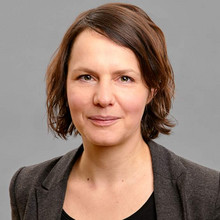
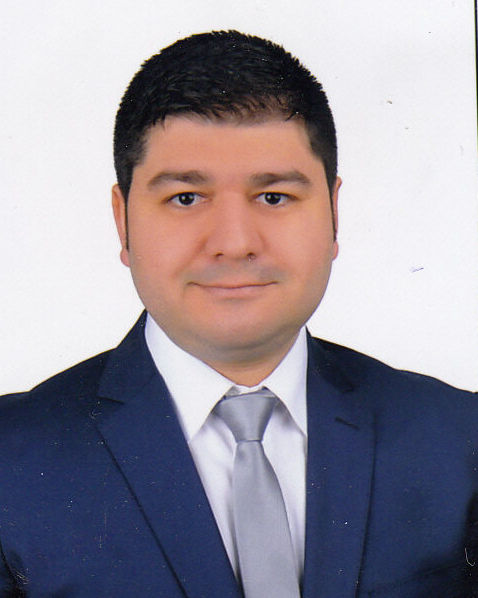
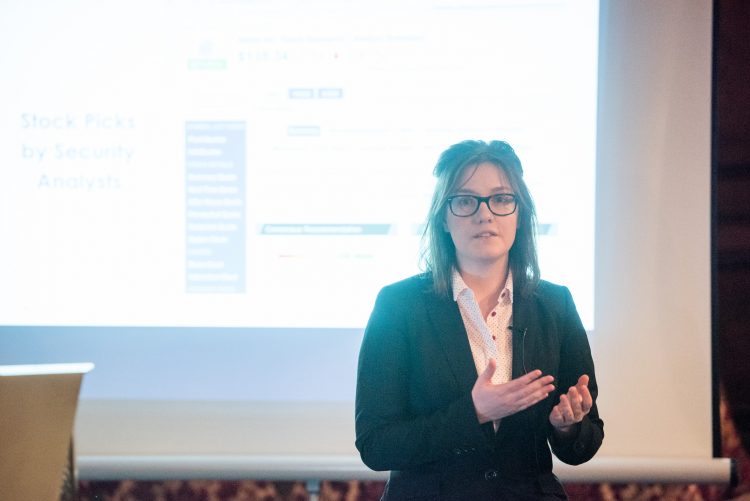
Prof. Dr. Poldi Kuhl is a Professor of Educational Psychology at Leuphana University , Lüneburg, since 2021. Affiliated with the Institute of Psychology in Education (IPE) and the Center for Empirical Research on Language and Education (ERLE) , Kuhl specializes in educational psychology, developmental psychology, and inclusive education. Their research focuses on data-driven decision-making, digital learning platforms, academic language demands, and teacher professional development. Education: Diploma in Psychology (2003) and PhD in Philosophy (2008) from Freie Universität Berlin. Kuhl’s recent work examines how academic language features affect learning outcomes, digital data utilization in primary education, and mental health literacy among teachers. Their publications span topics from virtual reality training tools to inclusive teaching strategies in mathematics. Kuhl’s career includes leadership roles at the Research Data Center (FDZ) at the Institute for Quality Improvement in Education (IQB) and a Junior Professorship at Leuphana University. They have collaborated with institutions like the Universitat Oberta de Catalunya and the Max Planck Institute for Human Development .
Prof. Dr. Christina Raasch is Professor of Digital Economy at Kühne Logistics University (KLU) and holds a joint appointment with the Kiel Institute for the World Economy (IfW) . Since 2017 she has led research and teaching on how digitalization reshapes innovation processes, enterprise crowdfunding, and customer-driven disruptive innovation. Education Habilitation (Dr. habil.) in Business Administration, Hamburg University of Technology (TUHH), 2012 PhD in Management, University of Erlangen-Nuremberg, 2006 MSc (lic. oec.) in Economics & Management, University of St. Gallen (HSG), 2002 Visiting Researcher, MIT Sloan School of Management, 2010-2012 Research Interests Prof. Raasch’s work centers on digital transformation of innovation . She investigates how firms leverage digital technologies—ranging from AI to crowdfunding platforms—to enhance idea generation, evaluation, and implementation. Core themes include: Open & User Innovation: understanding when and how users become valuable innovators inside and outside firms. Disruptive Innovation Dynamics: analyzing whether disruptive ideas stem from users or producers under varying environmental conditions. Enterprise Crowdfunding: designing decentralized decision-making systems that mitigate hierarchy-induced biases. Publication Trends Her 70+ publications reveal a systematic exploration of demand-side innovation . Early work modeled welfare impacts of user innovation; recent studies use large-scale field data from Siemens and other multinationals to uncover cognitive and social biases in idea evaluation. A consistent thread is bridging micro-level behavioral insights with macro-level policy and strategy implications. Scientific Awards & Honors Fellow of the Open and User Innovation (OUI) Society Host of the 2023 OUI Conference at KLU Research Funding & Industry Collaboration Current grants exceed €2 million and include: FabCity-Citizen Extension (2025-2026) – decentralized urban innovation funded by the German Federal Ministry of Education and Research. EvaluationShirking (2024-2026) – idea evaluation biases in collaboration with a global industrial manufacturer. Idea Evaluation in Democratized Innovation (2019-2023) – DFG-funded project on enterprise crowdfunding design. Labs, Teams & Knowledge Transfer Prof. Raasch leads the Open & User Innovation Research Group at KLU, supervising doctoral researchers and managing industry partnerships with firms in automotive, high-tech, and logistics sectors. She regularly contributes to policy panels and media outlets such as Harvard Business Manager and Springer Professional .
İBRAHİM HALİL EFENDİOĞLU is an Associate Professor at Gaziantep University's Faculty of Economics and Administration, Department of Business Administration. Previously, he served as a Lecturer at Gaziantep University's Presidency, Department of Informatics from 2016 to 2023. His academic journey includes a Doctorate in Business Administration from Hasan Kalyoncu University (2015-2019), a Master's in Computer Education from Gazi University (2006-2008), and a Bachelor's in Computer Engineering from Mersin University (2000-2004). His primary research interests focus on the intersection of marketing and emerging digital technologies. EFENDİOĞLU's work spans digital marketing, artificial intelligence applications in marketing, Metaverse marketing, blockchain technology, and NFT marketing. His research demonstrates how these emerging technologies are reshaping consumer behavior and marketing strategies in both Turkish and global contexts. His recent publications (2023-2024) reveal a strong trend toward examining cutting-edge digital marketing phenomena. His work covers diverse areas including AI-powered marketing, Metaverse consumer behavior, cryptocurrency adoption, and NFT market dynamics. These publications appear in both Turkish and international journals, demonstrating his ability to contribute to scholarly discourse across linguistic boundaries. 2024 Kamu UBYT Programı Araştırmacı Teşvik Ödülü (TÜBİTAK) Yayın Teşvik Ödülü 3rd. Best Paper Award (International Islamic Marketing Association, 2023) EFENDİOĞLU has supervised graduate students, including NİHAL BÜLBÜL's thesis on social media marketing activities and their impact on purchase intention. His teaching responsibilities span undergraduate, graduate, and associate degree levels, covering courses in electronic commerce, marketing principles, digital marketing, and information technologies. He has also participated in numerous research projects related to digital marketing, Metaverse applications, and e-commerce education. His interdisciplinary background in computer engineering and business administration uniquely positions him to analyze the technological and behavioral aspects of digital marketing phenomena. This dual expertise is evident in his research that bridges technical understanding of emerging platforms with consumer behavior insights.
Michael Henderson serves as a Lecturer at Monash University within the School of Curriculum, Teaching and Inclusive Education. His academic profile reflects deep engagement with contemporary educational challenges through research spanning adult learning, digital technologies, and pedagogical innovation. His research interests encompass: Adult and Vocational Education Higher Education Systems Educational Technology Integration Feedback Literacy and Assessment Practices Digital Literacy for Marginalized Populations Artificial Intelligence in Learning Environments Creativity in Educational Contexts Henderson investigates how generative AI transforms feedback mechanisms, with emphasis on student perceptions of AI-generated versus teacher feedback. His work critically examines digital empowerment frameworks for refugee and migrant learners, addressing systemic barriers in technology access. Recent publications reveal growing focus on decolonizing creativity research, ethical AI implementation in Australian policy contexts, and play-based digital safety education for young children. This trajectory demonstrates consistent attention to equity, cultural responsiveness, and practical applications of emerging technologies in diverse educational settings. His scientific recognition includes: Dean's Award for Programs that Enhance Learning (2019) Henderson currently leads the international research project "Active Learning about Academic Publishing through Collaborative Online International Learning" (2024-2025), examining cross-cultural academic skill development. His upcoming presentation at the 2025 Australian Association for Research in Education Conference will address collaborative learning frameworks. Though specific student mentoring details are unavailable, his project leadership suggests active involvement in guiding emerging researchers through international collaborations focused on educational technology and publishing practices.
Junzhao Ma is a Senior Lecturer in the Department of Marketing at Monash University. He holds a BA in Economics from Yale University and a PhD in Marketing from the Kellogg School of Management, Northwestern University. Previously, he worked as a marketing analyst at Capital One Financial Corporation and JP Morgan and Co. Education: BA Economics (Yale University), PhD Marketing (Kellogg School, Northwestern University) His research focuses on technology adoption, e-commerce, real estate, and media's social impact, employing novel methodologies and data sources. He has contributed to journals like Journal of Retailing , International Journal of Research in Marketing , and Journal of Business Ethics . His work aligns with UN Sustainable Development Goals related to reduced inequalities and responsible consumption. Recent research highlights include studies on service robot anthropomorphism (2023), sex robots acceptance (2022), and media-driven consumption trends (2020). He has received Dean's Letters for Teaching Excellence in 2020 and 2021. Scientific Awards: Dean's Letter for Teaching Excellence (2020, 2021) Junzhao actively engages in academic service, including peer reviews for Asia Pacific Journal of Marketing and Logistics and presentations at the INFORMS Marketing Science Conference and Australian & New Zealand Marketing Academy Conference. He has served as Chief Investigator in projects like "Bridging the Intention-Behaviour Gap in the Australian Tourism Industry" (2022-2024) and "eBabies: Forecast and Implications for Society" (2020-2021).
Alexandre Kohlhas is a University of Oxford Associate Professor in the Department of Economics and a William R Miller Fellow at St Edmund Hall . Previously an Assistant Professor at Stockholm University's Institute for International Economic Studies, his research bridges macroeconomics , monetary policy , and information economics with a focus on expectation formation and uncertainty. Doctorate from Pembroke College, University of Cambridge His work explores economic uncertainty and information asymmetry , analyzing how heterogeneous expectations and asymmetric attention shape macroeconomic outcomes. Recent publications examine data-driven macroeconomic modeling , wealth heterogeneity , and higher-order beliefs in monetary policy contexts. Key research trends include expectation formation in uncertain environments, monetary transmission mechanisms , and information aggregation in markets. His 14 most recent articles demonstrate consistent engagement with theoretical and applied macroeconomics through behavioral and informational lenses. William R Miller Fellow Tutorial Fellow in Economics Governing Body Fellow Reach Alexandre via email for academic collaboration or supervision inquiries.
Valerio Pascucci is a Professor at the University of Utah's School of Computing and a DOE Laboratory Fellow at Pacific Northwest National Laboratory. He directs the Center for Extreme Data Management Analysis and Visualization (CEDMAV) and previously led projects at Lawrence Livermore National Laboratory and University of Texas at Austin. PhD in Computer Science (Purdue University, 2000) MSc in Electrical Engineering (University 'La Sapienza', Rome, 1993) As a pioneer in Big Data Management , Scientific Visualization , and Computational Topology , his work connects topological methods with progressive algorithms to enable interactive exploration of petascale datasets. His research spans climate modeling , neuroscience , materials science , and precision agriculture , focusing on multi-resolution techniques and geometric compression . Recent publications show specialization in web-based visualization and AI-driven analytics for climate data, with emphasis on equity in data access and FAIR data principles . His ViSUS project enables real-time data streaming from supercomputers to desktops, while NAPA explores GPU-based architectures for streaming algorithms. Scientific Awards : Best Paper Award, IEEE Pacific Visualization 2011 Best Application Paper Award, IEEE VIS 2006 DOE Laboratory Fellow He advises numerous graduate students and leads collaborations across national laboratories , universities , and industry . Funded by NSF Grant #2127548 , he develops technologies for exascale computing and geospatial intelligence .
Alton Russell is an Assistant Professor at the Department of Epidemiology, Biostatistics and Occupational Health, Faculty of Medicine and Health Sciences, McGill University. He serves as an Affiliate Investigator at the Research Institute of the McGill University Health Centre (RI-MUHC) and is affiliated with the Quantitative Life Sciences program. His research focuses on data-driven decision modeling to optimize healthcare resource allocation through methods in decision analysis, simulation, health economics, and machine learning. PhD in Management Science and Engineering (2021), Stanford University MSc in Management Science and Engineering (2018), Stanford University BSc in Industrial Engineering (Health Systems concentration) and Interdisciplinary Studies (Global Health and Sustainability concentration) (2014), North Carolina State University Russell's research program develops advanced models for blood safety, pediatric kidney disease management, opioid crisis interventions, and infectious disease surveillance. His lab (D3Mod) integrates individual-level data with machine learning and Bayesian statistics to address heterogeneity in patient populations and policy impacts. His work emphasizes open science practices, with publications and code archived via DOIs. Current research themes include personalized donor risk assessment, emergency service optimization, and harmonization of serosurveillance data. Russell teaches advanced decision modeling (EPIB 676) and economic evaluation of health programs (PPHS 528) at McGill.
Erin Strumpf is a Full Professor jointly appointed in the Department of Economics and the Department of Epidemiology, Biostatistics and Occupational Health at McGill University. She is a founding member of McGill’s Public Policy and Population Health Observatory (3PO) and holds the distinguished William Dawson Scholar title. Her work bridges economics and population health, focusing on evaluating health and social policies through rigorous causal inference methods. Education: PhD in Health Policy and Economics, Harvard University BA, Smith College Research Interests: Prof. Strumpf’s research agenda centers on the impacts of health policies on health care delivery, population health outcomes, and health inequalities. She employs quasi-experimental designs and large-scale administrative data to assess interventions such as cancer screening programs, primary care reforms, and paid family leave policies. Her work spans multiple jurisdictions, including Canada, the United States, and France, and actively informs policymakers at provincial and national levels. Her recent projects include evaluating the cost-effectiveness of population-based cancer screening guidelines, assessing the health system impacts of integrated primary care in Quebec, and exploring how paid family leave policies reduce infant respiratory infections and promote equity. She is also a key contributor to the Canadian Institutes of Health Research’s Drug Safety and Effectiveness Network. Scientific Awards & Honors: William Dawson Scholar, McGill University Chercheur-boursier Junior 1 & 2, Fonds de Recherche du Québec – Santé Collaborations & Funding: Prof. Strumpf collaborates extensively with ministries of health and finance across Canadian provinces and with international agencies. She leads multidisciplinary teams that leverage rich administrative health data to generate actionable evidence for decision-makers. Her research is primarily aligned with the Centre on Population Dynamics’ Social and Economic Determinants of Health axis, and intersects with the Aging axis. Affiliations & Labs: She is affiliated with McGill’s Department of Equity, Ethics, and Policy, Family Medicine Department, Department of Oncology, and the Centre on Population Dynamics. Previously (2019-2022), she was an affiliated researcher with the cancer unit at l’Institut national d’excellence en santé et en services sociaux (INESSS).
Maria Leonilde Rocha Varela is an Associate Professor with Habilitation at the School of Engineering, University of Minho, Portugal, where she also serves as a Senior Researcher at the Algoritmi Research Centre. She has been an integrated member of the Algoritmi Research Centre since 2012 and works in the Department of Production and Systems. Dr. Varela earned her degree in Production Engineering from the University of Minho in 1994, completed a Master's in Computer Integrated Production at DPS-UMinho in 1999, and received her Ph.D. in Production and Systems from the University of Minho in 2007. Her primary research focuses on Manufacturing Management, particularly Production Planning, Control and Optimization, and Collaborative Paradigms, Networks and Decision Making Models. She maintains extensive international collaborations with institutions worldwide including the National Institute of Industrial Engineering, VSB-Technick Univerzita Ostrava, University of Belgrade, and others. Her research spans Web Applications and Services for supporting Engineering and Production Management, with increasing emphasis on Artificial Intelligence, Robotic Process Automation, and Industry 4.0/5.0 applications. She has made significant contributions to scheduling algorithms, optimization techniques, and decision support systems for manufacturing environments. Analysis of her recent publications reveals a strong trend toward integrating Artificial Intelligence with traditional manufacturing processes, particularly in Robotic Process Automation applications. Her research increasingly focuses on sustainable manufacturing practices, with numerous publications addressing energy efficiency, environmental sustainability, and resource optimization. There is a clear emphasis on multi-objective optimization approaches to solve complex manufacturing problems, particularly in distributed job shop scheduling. Her work demonstrates an evolution from traditional production planning methods to more advanced AI-driven approaches for Industry 4.0 and 5.0 environments. Dr. Varela has held significant academic leadership roles, currently serving as the director of the master's course in Engineering and Quality Management at DPS-UMinho. She previously coordinated the industrial management and systems subgroup from 2012 to 2021 and was part of the steering committee for the master's course in systems engineering between 2016 and 2019. She has successfully supervised more than 70 MSc projects, with over 15 currently ongoing, focusing on Production and Systems Engineering. Her supervision encompasses collaborative management models, traditional decision approaches, and web-based platforms incorporating AI techniques. She coordinates research projects including 2 concluded Ph.D. projects and 6 ongoing ones. She collaborates as a research member in several R&D projects with national and international industrial enterprises and institutions, and in international Erasmus projects. Dr. Varela is an active participant in the academic community, serving on editorial boards of several international journals and as a member of organizing and scientific committees for numerous international conferences. She is a member of several prestigious research networks including the Euro Working Group of Decision Support Systems (EWG-DSS), Institute of Electrical and Electronics Engineers (IEEE), Industrial Engineering Network, and the Institute of Industrial and Systems Engineers (IISE).
Lakshmi Balasubramanyan is an Associate Professor in the Department of Banking & Finance at Case Western Reserve University's Weatherhead School of Management, joining in 2017. She holds a PhD and MS from Penn State University in quantitative banking analytics, alongside BA/MA degrees from the National University of Singapore. Specializes in AI integration in commercial banking Focuses on credit/operational risk modeling Expert in regulatory frameworks (Dodd-Frank Act) Active media commentator on financial trends Her research bridges traditional banking practices with emerging technologies, particularly through RegTech and FinTech innovations. Key contributions include analyzing bank balance sheet dynamics under liquidity regulations and developing entropy-based approaches to risk heterogeneity. Recent publications explore causal relationships between risk oversight and bank stability, syndicated loan market information asymmetry, and credit market feedback mechanisms. Current projects involve NSF-funded AI-enabled financial ecosystems. Recipient of two CSWEP Research Fellowships Multiple teaching award nominations (2020-2023) 2021 Weatherhead Intramural Grant recipient 2019 UCITE NORD Grant awardee Active in institutional service as Faculty Senate Committee member and Women in Finance advisor. Collaborates with Federal Reserve institutions on banking supervision research.
Dustin D. French, PhD, serves as Professor in Ophthalmology and Medical Social Sciences (Determinants of Health) at Northwestern University's Feinberg School of Medicine. His dual appointments bridge clinical ophthalmology with population health research, focusing on healthcare system optimization through economic and policy analyses. Dr. French's educational foundation includes: PhD from The Ohio State University (2001) His research program centers on health economics and outcomes research , with signature expertise in: Comparative and cost-effectiveness methodologies Health informatics and big data applications Health services research and policy evaluation Addressing health disparities in diabetic eye care and rural communities Recent publications reveal a strategic focus on AI-driven clinical decision support and resource optimization, with 2025 studies examining glaucoma identification algorithms, nursing home quality metrics, microhematuria diagnostic pathways, and pediatric obesity interventions. Dr. French's scholarly impact is recognized through prestigious awards: International Society for Pharmacoepidemiology Outstanding Reviewer Award (2016, 2010) Department of Veterans Affairs Distinguished Service Award (2016) International Society for Pharmacoepidemiology Distinguished Article Award (2006) His leadership in health services research extends to mentorship and grant-funded initiatives targeting healthcare quality improvement, particularly in diabetic eye care access for minority populations. Institutional affiliations include the Center for Diabetes and Metabolism, IPHAM's Center for Health Services & Outcomes Research, and NUCATS, where he contributes to translational research infrastructure.
Heidi Aarum Hansen is an Associate Professor at the Department of Welfare, Management and Organisation, Oslo Metropolitan University. She holds a PhD in Social Work with extensive practical experience in child welfare. Her research focuses on child welfare practices, digitalization challenges, children’s rights, and social media’s impact on social work. Education: PhD in Social Work. Research interests include competence development in child welfare, digital transformation of welfare services, and methods for teaching practical social work. Current projects explore how children's social media usage challenges traditional social work practices. Key research areas span child welfare policy analysis, family contact preservation strategies, and judicial decision-making processes involving children. Her work emphasizes ethical considerations in digital age practices and improving communication in high-conflict cases. Affiliated with the Social Work Research Group and Psychosocial Work Research Group. Active in publishing Nordic Social Work Research and Children and Youth Services Review. No awards explicitly listed, though her work demonstrates significant contributions to child welfare scholarship. Teaches courses related to child welfare practice and digitalization impacts. Advising activities not detailed here. Research focuses on developing practical frameworks for integrating digital tools while maintaining ethical standards in social work.
Silverio Juan Martinez Fernandez is a Professor at the Universitat Politècnica de Catalunya (UPC) , affiliated with the Barcelona School of Informatics (FIB) and the Department of Service and Information Systems Engineering . He is a core member of the inSSIDE and GESSI research groups. His expertise spans Empirical Software Engineering , Green AI , MLOps , and Software Analytics . Education: Bachelor's in Computer Engineering PhD from UPC in Software Engineering Master's in Computing Research Interests: Focuses on sustainable AI practices, energy-efficient ML systems, and MLOps education. He investigates architectural design for green AI, energy labeling tools for ML models, and agile software development methodologies. His work bridges theoretical research and industrial applications, emphasizing data-driven decision-making. Grants & Collaborations: Leads projects like Green AI-Based Systems Architecture and Q-Rapids , funded by national and EU programs. Collaborates with institutions like Softeam and industry partners to apply software analytics in real-world scenarios. Labs & Teams: Coordinates the inSSIDE group, focusing on integrated software and data engineering. Active in organizing conferences like GREENS and ESEM , and co-develops tools like Skuld for technical debt management.
Yue Li is the Leonard Case Jr. Professor in the Department of Civil and Environmental Engineering at Case Western Reserve University. He specializes in resilient and sustainable infrastructure systems, focusing on structural reliability, probabilistic design, and climate change adaptation. His research addresses risk assessment for infrastructure under extreme events, including earthquakes, hurricanes, and climate impacts. Education: PhD in Civil Engineering, Georgia Institute of Technology, 2005 Research Interests: Dr. Li’s work integrates advanced statistical methods and data-driven approaches to enhance infrastructure resilience. Key areas include: Probabilistic modeling of structural systems Risk-informed decision-making for multi-hazard mitigation Climate change impacts on material durability and performance Asset management and lifecycle cost analysis Notable Contributions: His recent publications emphasize data-driven resilience metrics for water systems and seismic risk assessment for bridges. He has pioneered frameworks for evaluating infrastructure vulnerability under climate change, including corrosion effects and extreme weather adaptation. Awards: ABSE Outstanding Paper Award (2023) Case School of Engineering Teaching Award (2020) Nomination for John S. Diekhoff Award (2019) Leadership Roles: Dr. Li serves as Section Editor for the ASCE Journal of Structural Engineering and chairs multiple technical committees on safety and reliability. He leads initiatives to standardize multi-hazard design practices and resilience evaluation methodologies.