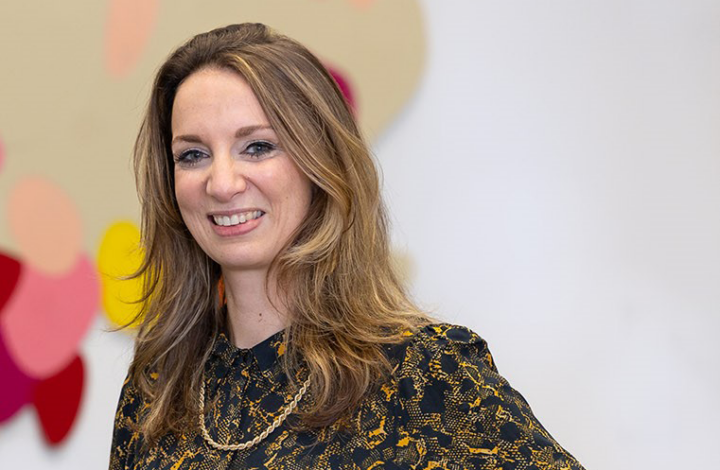
Dr. Barbara Montagne is a Lecturer in the Faculty of Social and Behavioural Sciences at Utrecht University , affiliated with the Experimental Psychology department. Her work bridges psychology and computer science, focusing on facial emotion recognition, social cognition, and digital mental health interventions. Her research spans clinical populations (stroke survivors, OCD, psychosis, Korsakoff syndrome) and tech-driven applications (LLMs in mHealth, gamified systems). Recent studies examine LLM-generated treatment goals, social touch deficits, and crisis dynamics modeling. She collaborates with institutions like the Helmholtz Institute and ACM conferences. Doctoral thesis on facial expressions in psychiatric/neurological disorders (2005) Key areas: emotion perception, mental health technology, social cognition Her 2024-2025 work highlights mHealth gamification, personalized psychiatry, and trauma impacts on borderline disorder. Despite no listed awards, her 29+ peer-reviewed outputs and Mendeley readers indicate significant academic impact.
Ondrej Rokos is an Assistant Professor in the Mechanics of Materials section at Eindhoven University of Technology (TU/e), Department of Mechanical Engineering. He is actively involved in research and teaching related to multiscale materials modeling, with a focus on computational mechanics, metamaterials, and homogenization techniques. He leads Group Rokos and is affiliated with the Institute for Complex Molecular Systems (ICMS). PhD in Civil Engineering (2014) from Czech Technical University in Prague Postdoctoral positions at CTU Prague and TU/e Visiting researcher at TU/e (2015) and University of Luxembourg (2016) His research centers on understanding multiscale physical phenomena in materials engineering to enable optimal material design. Key areas include: Homogenization and quasicontinuum methods for discrete microstructures Machine learning integration in surrogate modeling Stochastic structural dynamics and experimental-computational frameworks Mechanical metamaterials with pattern transformation capabilities Recent publications emphasize the application of machine learning (e.g., symmetric positive definite convolutional networks) and advanced homogenization techniques (e.g., similarity-equivariant graph neural networks) to optimize metamaterials. Notable trends include: Development of data-driven models for modular structures Geometrical parameterization of elastomeric metamaterials Active stiffness control in pneumatic systems Extended quasicontinuum methodologies for heterogeneous systems He teaches courses in: Computer Aided Engineering Solid Mechanics Machine Learning for Multi-Physics Modeling and Design Research is conducted within the Mechanics of Materials group, with affiliations to ICMS and collaborations across institutions.
Zerrin Yumak is an Assistant Professor at the Department of Information and Computing Sciences, Faculty of Science, Utrecht University, specializing in virtual humans and social robotics. She leads Task 3.2: Embodiment and Physical Interaction in the RAGE project. Her research focuses on Social and emotional behavior analysis for virtual characters Machine learning applications in motion capture data Constrained motion graph search algorithms Lip-sync and gesture animation generation Real-time multimodal interaction systems Notable projects include the Virtual Human Controller asset for Unity 3D, integrated with BiP Media and Randstad applications. Recent work spans 2025: SemGes for semantics-aware gesture generation 2024: ProbTalk3D emotion-controllable facial animation 2023: Diffusion model-based facial animation (Facediffuser) 2020: Music-driven expressive gesture generation She contributes to workshops like GENEA (2021-2022) and MASSXR (2025), advancing non-verbal behavior modeling for embodied agents.
Theo Salet serves as Dean and Full Professor of Structural Design/Concrete Structures at the Department of the Built Environment (Eindhoven University of Technology). He pioneered research integrating design and construction in concrete through computational models like 'Parametric Design Tools' and 'Numerical Concrete' for advanced finite element analysis. Current affiliations: 3D Concrete Printing group, EAISI High Tech Systems, Built Environment department Research focus: 3D printing of functional construction materials, self-sensing concrete with embedded nanomaterials, Industry 4.0 applications in construction His recent publications analyze: (1) data-driven approaches to 3D concrete printing process monitoring (2025), (2) electrical conductivity modeling of carbon nanotube-cementitious materials (2024), and (3) real-time residence time measurement in concrete processing (2024). Research is supported by grants from the Dutch Research Council (NWO) and Saint-Gobain Weber Beamix. Key contributions include developing: (1) domain knowledge-enhanced sensor systems for moisture/heat monitoring in additive manufacturing, (2) analytical models for nanocomposite conductivity validation, and (3) experimental frameworks for improving 3D-printed concrete robustness. His lab operates a proprietary 3D concrete printer for structural applications and reinforcement embedding research.
Esther van Kleef is an Assistant Professor at the University Medical Centre Utrecht and a technical consultant for the World Health Organisation (WHO) on global surveillance of antimicrobial resistance (AMR). She is affiliated with the Oxford Nuffield Department of Medicine and focuses on interdisciplinary research to enhance public health responses to emerging infectious diseases through data science. Her research integrates mathematical modeling and surveillance data to analyze AMR transmission dynamics and evaluate infection prevention strategies . She works across high-income and low- to middle-income countries, with projects spanning Europe, Africa, and global health contexts. Recent publications highlight her expertise in AMR surveillance , outbreak analytics (including LLM applications), and behavioral interventions for antibiotic use reduction. She specializes in merging conventional and innovative data sources for policy-driven public health solutions.
Dengpeng Huang is an Assistant Professor specializing in Artificial Intelligence and Robotics within the field of Elastomer Technology and Engineering . His work bridges computational modeling with advanced materials, focusing on applications in smart materials and mechanical systems. Research Interests: Development of AI-driven models for predicting elastomer properties Multiscale analysis of rubber composites Electromechanical coupling in dielectric elastomer actuators Meshfree methods for metal cutting and chip formation Ultra-precision polishing of optical surfaces Recent Trends: His 2024–2025 publications emphasize data-driven modeling of rubber's viscoelastic behavior, multiscale analysis of composites, and CNN-based approaches for material characterization. Earlier work (2014–2022) explores tool path optimization, beam modeling, and computational machining. Scientific Recognition: Holds an h-index of 5 according to Scopus citations, with recognition as an AI and robotics expert in the service industry. Advising & Collaboration: Collaborates with researchers like Anna Blume, Evgeny Karaseva, and Tim Bor on elastomer composites. Supervised at least one academic work, though specific students are not named in the provided data. Labs & Teams: Affiliated with simulation and robotics teams in the smart materials sector, likely within an advanced materials or mechanical engineering research group.
Dr. Saber Darmoul is an Associate Professor specializing in Systems Engineering and Multidisciplinary Design. His research bridges artificial intelligence with industrial applications, focusing on cyber-physical production systems, operational resilience, and smart transportation. He actively explores knowledge representation, reinforcement learning, and agent-based modeling to address complex system challenges. Key Research Interests: Operational resilience, AI in manufacturing, multi-agent systems, smart mobility Technical Expertise: Ontology modeling, simulation platforms, immune-inspired control architectures His recent publications (2025-2019) demonstrate a consistent focus on integrating artificial immune systems into control architectures for transportation and manufacturing. Notable trends include: Development of knowledge-based systems for dynamic reconfiguration Application of multi-criteria decision frameworks in production environments Advancing predictive maintenance strategies through distributed systems Exploring 6G system-of-systems engineering While no explicit awards or student advisement information appears in available records, his 15 most recent publications reflect sustained academic productivity and evolving focus from foundational control systems (2017-2019) to advanced applications in Industry 4.0 (2020-2025).
Sebastian Thiede is a Full Professor specializing in Manufacturing Systems , with extensive research contributions to Smart Industry , Sustainable Manufacturing , and Human-Centered Production . His work bridges advanced technologies like Machine Learning , Simulation , and Artificial Intelligence with industrial applications, addressing critical challenges in Circular Economy , Energy Efficiency , and Factory Decarbonization . Research focuses on Battery Manufacturing , Edge Computing , and Real-Time Locating Systems (RTLS) . Key methodologies include Digital Twinning , Surrogate Modeling , and Data-Driven Process Optimization . Recent publications highlight trends in Autonomous Sensor Data Analysis (2025), Cyber-Physical Architectures for reconfigurable systems, and Circular Transition Methodologies for manufacturing. His work often integrates Human Factors with Smart Automation , emphasizing environmental and economic impacts.
Christoph Brune is a Full Professor at the University of Twente , affiliated with the Digital Society Institute and TechMed Centre . His research bridges Artificial Intelligence , Deep Learning , and Medical Imaging with applications in Robotics and Computational Fluid Dynamics . Keywords: Machine Learning , Network Analysis , Optimal Transport , Medical Image Segmentation Research Trends : Recent publications focus on physics-informed neural networks , equivariant learning for vascular modeling, and operator learning for PDE-constrained problems. His work emphasizes geometric deep learning , implicit neural representations , and robust AI for clinical settings. Scientific Awards : CMI-NEN seed-money award (2022) for medical imaging innovation Collaborative Networks : Active in graph neural networks , optimal transport , and Barron space theory . Key collaborations include Zenodo dataset contributions and ArXiv preprints with multidisciplinary teams in AI, medicine, and engineering.
Bojana Rosic is a Full Professor specializing in Applied Mechanics & Data Analysis. Her research spans Artificial Intelligence, Machine Learning, Robotics, and Uncertainty Quantification, with a focus on integrating computational methods into mechanical systems and materials science. Key Research Areas: Machine Learning, Uncertainty Quantification, Robotics, Soft and Compliant Mechanisms, Materials Simulation. Recent Work: Contributions to neural network-based constitutive modeling for anisotropic materials, real-time control systems for robotic manipulators, and uncertainty quantification techniques using Polynomial Chaos Expansion. Collaborations: Active in interdisciplinary research with applications in energy, sustainability, and biomedical engineering. Her work emphasizes practical implementations of AI in mechanical engineering, including autonomous systems and collaborative robots (cobots). While no specific awards or educational background are detailed here, her extensive research output (68 publications) highlights her leadership in computational methods and machine learning integration.
Ahmed Elazab serves as an Associate Researcher at Shenzhen University's School of Biomedical Engineering since January 2021, following a Postdoctoral Research Fellowship at the same institution from January 2018 to April 2020. He holds a Ph.D. in Pattern Recognition and Intelligent Systems from the Shenzhen Institutes of Advanced Technology, University of Chinese Academy of Sciences (2017). Education Ph.D. in Pattern Recognition and Intelligent Systems, Shenzhen Institutes of Advanced Technology, University of Chinese Academy of Sciences, China (2017) Research Focus Dr. Elazab's work centers on machine learning and deep learning applications in biomedical contexts, with specialized expertise in medical image analysis , brain anatomy analysis , and computer-aided diagnosis . His research integrates computer vision, bioinformatics, and data science to develop AI-driven solutions for complex medical challenges including neurodegenerative diseases and infectious outbreaks. Publication Trends Analysis of his recent publications (2020-2023) reveals a concentrated focus on deep learning for medical diagnostics, particularly in Alzheimer's disease staging from MRI data and COVID-19 detection from X-ray images. His work consistently incorporates domain-specific knowledge into neural architectures, with growing emphasis on generative models for medical image segmentation and vaccine development. Cross-cutting themes include handling multi-modal biomedical data and addressing real-world clinical constraints. Scientific Recognition Active Academic Editor for PeerJ Computer Science with 1,600 contribution points Reviewer for prestigious international journals across computer science and biomedical domains Author/co-author of over 80 peer-reviewed publications Academic Engagement Dr. Elazab maintains significant scholarly involvement through editorial work at PeerJ Computer Science, where he has handled manuscripts on deep learning applications in medical imaging since 2020. His extensive publication record demonstrates consistent research productivity, though specific grant funding or student supervision details are not documented in available sources. He contributes to multiple subject areas including Artificial Intelligence, Bioinformatics, and Computational Biology. Research Environment As part of Shenzhen University's School of Biomedical Engineering, Dr. Elazab operates within a multidisciplinary research ecosystem focused on AI-driven medical solutions. His work intersects with ongoing initiatives in medical image computing and computational diagnostics, leveraging institutional resources for biomedical data analysis without specified laboratory affiliations.
Iris Walraven serves as Associate Professor of Cancer Epidemiology at Radboud University Medical Center, Radboud University, and holds a 2025-2026 L’Oréal-UNESCO For Women in Science Fellowship for her CLEAR-study project developing explainable AI to enhance shared decision-making for lung cancer patients with low health literacy. Her research integrates cancer epidemiology with human-centered AI design, focusing on translating complex medical information into accessible patient communication. She emphasizes co-creation with patients to develop relatable explanations for AI-driven treatment recommendations, ensuring patient perspectives shape decision-support tools while addressing health literacy barriers in oncology care. Publication analysis reveals consistent focus on patient-reported outcomes across cancer types, with methodological innovation in symptom monitoring tools (Delphi procedures, PRO-CTCAE adaptation) and clinical validation through trials like SYMPRO-Lung. Her work bridges macro-level healthcare systems, meso-level clinical implementation, and micro-level patient experiences in oncology. Scientific recognition includes: L’Oréal-UNESCO For Women in Science Fellowship The text specifies no student advisees or additional grants beyond the UNESCO fellowship. No laboratory or research team structures are described, though her collaborative publications indicate multi-institutional oncology research networks.