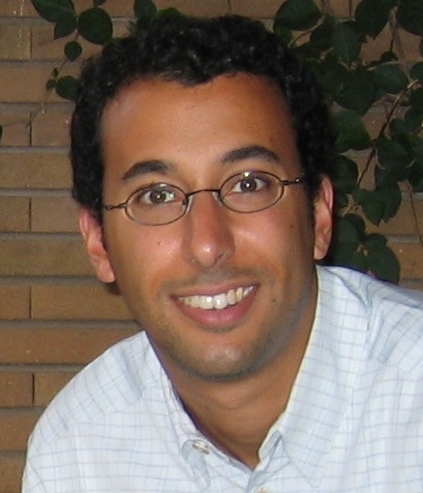
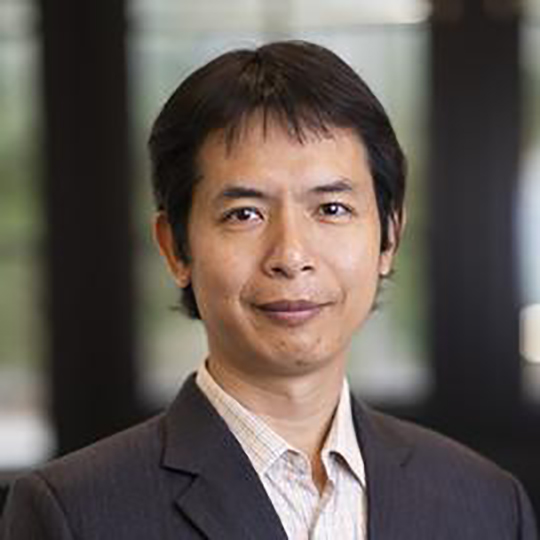
Qiang Zhu is a Professor in the Department of Computer and Information Science at the University of Michigan-Dearborn, holding the William E. Stirton Professorship (2017–2024). He founded the Data Science/Management Research Laboratory and is affiliated with the Michigan Institute for Data Science (MIDAS). His research spans data science, data management, and machine learning. Ph.D., University of Waterloo M.S., McMaster University M.Eng., Southeast University B.S., Southeast University Research focuses on advanced data indexing, query optimization, and AI-driven data management, with applications in genomics, network systems, and education. His work integrates machine learning with database systems for scalable solutions. Recent publications include topics in federated learning fairness, digital twin middleware, project-based CS education, and genome data indexing. Scientific contributions recognized through awards like the Wilkes Award (2008), ACM Distinguished Scientist (2013), and Springer Nature Editor of Distinction (2025). 2013–2018: Department Chair NSF, IBM, and Ford grants Over 250 conference committee roles He directs the Data Science/Management Research Lab, focusing on collaborative projects in genome analytics and smart computing infrastructures.
Nathan Garland is a Lecturer in Applied Mathematics and Physics at Griffith University, Australia. He is affiliated with the Queensland Quantum and Advanced Technologies Research Institute (QUATRI) and the Centre for Quantum Dynamics. Prior to joining Griffith, Garland conducted postdoctoral research at Los Alamos National Laboratory and served as sessional teaching staff at James Cook University. Education: PhD in Electrical and Electronic Engineering and Mathematics from James Cook University B.Eng (Hons) and B.Sc in Electrical and Electronic Engineering and Mathematics from James Cook University His research focuses on computational plasma modeling, with applications in low-temperature plasmas, tokamak fusion, electron transport in liquids, and deep learning integration for plasma simulations. He combines advanced numerical methods with experimental validation to address challenges in energy systems and plasma medicine. Recent publications highlight trends in plasma physics, machine learning-driven cross-section determination, and electron transport across gas-liquid interfaces. Garland contributes to fusion energy discourse through media appearances and peer review roles in journals like Plasma Sources Science and Technology and European Physical Journal D . Grants: Quantum Mechanics: The Missing Link? - $1.2M LANL LDRD grant (2019-2021) Digitally Disrupted Demos - $7.5K Griffith Sciences grant (2022) Supervision: Principal Supervisor for PhD project 'Better Modelling of Solvents' Associate Supervisor for PhD projects on landscape evolution modeling and non-equilibrium electron scattering Collaborations: Member of Tokamak Disruption Simulation (TDS) SciDAC Center IAEA Fusion Energy Conference Program Committee member
Assoc Prof Henry Nguyen is an Associate Professor at Griffith University's School of Information and Communication Technology, with expertise in data integration, data quality, recommender systems, and big data visualization. He directs the Responsible Big Data Lab and has secured over $3.5M in funding since 2015 from ARC, DFAT, and industry partners. PhD & Master's from EPFL, Switzerland ARC DECRA Award (2020) His research focuses on privacy-preserving AI for social data , IoT , and satellite analytics , with over 200 publications in top venues like SIGMOD, KDD, and IEEE TKDE. Recent work spans federated learning , graph neural networks , and secure AI systems . Article trends highlight 2024-2025 publications on: Federated recommendation security On-device AI optimization Privacy-preserving explainable AI Graph condensation techniques LLM-powered risk analysis Cloud-edge collaboration Scientific contributions include ARC DECRA Award 2020 Multiple senior PC roles in A* conferences Citations in International AI Safety Report 2025 Henry Nguyen supervises 12 active PhD/MSc students and has directed 8 completed doctoral theses . His funded projects include collaborations with Ubitech , KARI , and CSIRO , focusing on Australia-Korea partnerships and responsible AI development.
Kathleen R. McKeown is the Henry and Gertrude Rothschild Professor of Computer Science at Columbia University and the Founding Director of Columbia's Data Science Institute (2012-2017). She has been a faculty member since 1982 and served as Department Chair (1998-2003) and Vice Dean for Research in the School of Engineering and Applied Science. Her research focuses on natural language processing , text summarization , natural language generation , and social media analysis . Current projects include neural methods for extractive/abstractive summarization, electricity usage message generation via reinforcement learning, and social media sentiment analysis in low-resource languages like Uyghur. She leads the Columbia NLP Group and developed the long-running Newsblaster system (2001-present) for automated news tracking and multi-document summarization. Key scientific awards include NSF Presidential Young Investigator (1985) NSF Faculty Award for Women (1991) AAAI Fellow (1994) ACM Fellow (2003) ACL Founding Fellow (2012) Columbia Great Teacher Award (2010) Anita Borg Woman of Vision Award (2010) She has held leadership roles in major academic organizations: President of the Association for Computational Linguistics (1992), Vice President (1991), Secretary-Treasurer (1995-1997), and board member of the Computing Research Association with secretary role.
Cao Haishan is an Associate Professor at Tsinghua University, affiliated with the Department of Energy and Power Engineering in the School of Mechanical Engineering. His research focuses on cryogenic cooling systems, high heat flux thermal management, and the physics of amorphous ice formation and phase transitions. He leads a research group supported by the National Natural Science Foundation of China and industry partners including Huawei, Midea, and Lenovo. Ph.D., Mechanical Engineering, University of Twente, 2013 M.Sc., Chemical Engineering, Dalian Institute of Chemical Physics, Chinese Academy of Sciences, 2009 B.Sc., Chemical Engineering, Zhejiang University, 2006 Dr. Cao's research spans three major areas: cryogenic cooling (including micro cryocoolers and sorption systems), high heat flux electronic cooling (especially with non-condensable gases), and the formation and transformation of amorphous water ice. His work combines theoretical modeling, computational simulation, and experimental validation, often at micro and nano scales. He applies principles from thermodynamics, fluid dynamics, and materials science to solve engineering challenges in refrigeration and thermal control. The recent publications reflect a strong trend toward interdisciplinary research, integrating machine learning for heat transfer prediction, computational screening of MOFs for cryogenic switches, and fundamental studies of ice nucleation on various substrates. The articles span journals in physics, engineering, materials, and applied thermal sciences, indicating broad impact across multiple domains. Notable scientific awards include: Gustav and Ingrid Klipping Award (2016) Cryogenics Best Paper Award (2017) Annual Teaching Excellence Award, Tsinghua University (2023) Excellent Supervisor Award, Tsinghua University (2024) Multiple First Prize Advisor awards in national student contests on energy saving Dr. Cao has been principal investigator on several grants, including projects funded by the National Natural Science Foundation of China on amorphous ice lifetime and micro-cryocooling for semiconductor chips. He has also led industry-university collaborations with Huawei, Midea, and Lenovo. He advises graduate students and leads a research team focused on next-generation cooling technologies. He serves on editorial boards for Journal of Refrigeration , Vacuum and Cryogenics , and Energies , and has chaired sessions at major international conferences such as ICEC-ICMC and ACTS. His research group operates within the Institute of Thermophysics at Tsinghua University, leveraging facilities in the Lee Shau Kee Science and Technology Building. The team collaborates with national laboratories and international institutions, particularly maintaining ties with the University of Twente. Current efforts are directed toward ultra-low vibration cooling, efficient separation of non-condensable gases, and extending the stability of amorphous ice for cryobiological applications.
Jianlin Xia is a Professor of Mathematics at Purdue University, with a courtesy appointment in the Department of Computer Science. He joined the university in 2014. Xia holds a Ph.D. in Applied Mathematics from the University of California, Berkeley (2006). His research focuses on numerical linear algebra, fast algorithms for structured matrices, and their applications in computational science and engineering. His work addresses challenges in solving large-scale linear systems, eigenvalue problems, and partial differential equations (PDEs) using innovative methods like fast multipole techniques, hierarchical structures, and randomized algorithms. Key areas of research include: Design and analysis of fast algorithms for structured matrices (e.g., hierarchical, semiseparable, Cauchy matrices) Efficient direct and iterative solvers for PDEs, especially Helmholtz equations in seismic modeling Stability and robustness of numerical methods in high-performance computing Applications in wave propagation, inverse problems, and machine learning Xia’s contributions include advancements in low-rank approximations, divide-and-conquer eigenvalue decomposition, and scalable preconditioning techniques. His work emphasizes both theoretical analysis and practical implementation, often leveraging parallel computing architectures. Contact: xiaj@purdue.edu .
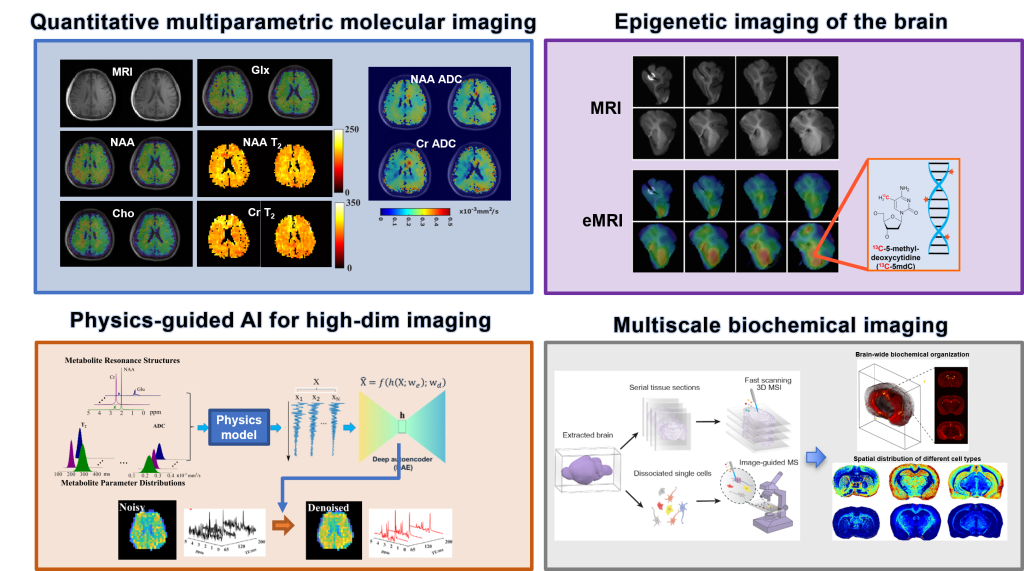
Fan Lam is an Associate Professor in the Department of Bioengineering at the University of Illinois Urbana-Champaign (UIUC), affiliated with the Grainger College of Engineering. He also directs the MS in Biomedical Image Computing (MS-BIC) program. His primary research focuses on developing advanced imaging techniques such as biomedical imaging, MRI, molecular imaging, and image reconstruction to study brain function and diseases. Lam holds a Ph.D. in Electrical and Computer Engineering from UIUC (2015), an M.S. in the same field from UIUC (2011), and a B.S. in Biomedical Engineering from Tsinghua University (2008). He is affiliated with multiple institutes, including the Carle-Illinois College of Medicine, the Carl R. Woese Institute for Genomic Biology, and the Beckman Institute for Advanced Science and Technology. Lam serves as a journal editor for Frontiers in Physics , Medical Physics , and IEEE Transactions on Medical Imaging . His work bridges engineering and neuroscience, with grants from NIH and other agencies supporting Alzheimer’s research and imaging innovations. Research highlights include epigenetic MRI, high-resolution volumetric MRI, and integrating AI with imaging methods. Lam’s team collaborates across disciplines to address challenges in medical imaging and brain mapping. His lab, the Quantitative Multiscale Imaging Group, develops tools for molecular and biochemical analysis of the brain.
Prof. Indranil Gupta (Indy) is a Professor of Computer Science at the University of Illinois at Urbana-Champaign, affiliated with the Beckman Institute and ECE department. His research focuses on distributed systems, including cloud computing, IoT, and machine learning systems. He leads the Distributed Protocols Research Group (DPRG) and collaborates with industry to improve production systems. Indy is an IEEE Fellow, ACM Distinguished Scientist, and recipient of the NSF CAREER Award and multiple Best Paper Awards. Education: PhD in Computer Science from Cornell University (2004), B.Tech from IIT Madras (1998). Industry experience includes roles at Google, Microsoft Research, and IBM Research. Teaching: Teaches CS 425 (Distributed Systems), CS 525 (Advanced Distributed Systems), and a Coursera MOOC with 250K+ enrollments. Known for innovative teaching methods, including music-based CS education. Awards: Over a dozen awards including Best Paper recognitions at IC2E, CCGrid, and ICAC. His students have won NSF Fellowships, Rising Stars in EECS, and Microsoft Dissertation Grants. Service: Served as General Chair of ACM PODC 2007, PC co-chair for multiple conferences, and editorial board member for IEEE TCC and ACM TAAS. Hosts the podcast 'Immigrant Computer Scientists.' Research Impact: Contributions include fault-tolerant protocols (e.g., Zeno, SWIM), distributed ML systems, and cloud resource management techniques used by major tech companies.
Kevin F. Kelly is an Associate Professor in the Department of Electrical and Computer Engineering at Rice University. He was formerly the Chair of the Applied Physics Program and is affiliated with the Smalley-Curl Institute. Additionally, he has been a member of the Penn State Center for Nanoscale Science and the Mid-Infrared Technologies for Health and the Environment (MIRTHE) Center at Princeton University. Dr. Kelly co-founded Inview Technology Corporation as its Chief Scientist, focusing on commercializing compressive imaging technologies. He has also consulted for the Baker Institute for Public Policy regarding photovoltaics and taught courses in anthropology and history at Rice. Dr. Kelly holds a B.S. in Engineering Physics from the Colorado School of Mines (1993), followed by an M.S. (1996) and Ph.D. (1999) in Applied Physics from Rice University. His postdoctoral work included fellowships at the Institute for Materials Research in Sendai, Japan, and the Chemistry Department at Penn State University. His research interests span Optics and Photonics, Imaging and Spectroscopy at the nanoscale, and the role of mathematics in image acquisition. He develops Scanning Probe Microscopy techniques and studies Electronic Materials such as graphene and topological insulators. A major focus is Compressive Hyperspectral Imaging systems, including single-pixel camera innovations and advanced microscopy methods. He also pioneers molecular machines like the Nanocar and investigates charge transport in polymer photovoltaics. Over recent years, his work emphasizes interdisciplinary applications, such as integrating compressive sensing with neural networks for machine vision and exploring technological disaster analysis through history courses. His contributions have been recognized with awards like the IEEE Fellow (2022) and Technology Review’s Top 10 Emerging Technologies (2007). In addition to academic roles, Dr. Kelly has co-founded Inview Technology and contributed to grants and collaborations through his involvement in the MIRTHE Center and other institutes. While no formal advisees are listed, his teaching includes courses on nanotechnology since 2009 and he actively engages in policy consultations for photovoltaic commercialization. His lab at Rice and collaborations with the Smalley-Curl Institute drive advancements in nanotechnology and imaging, with a particular emphasis on practical applications of compressive sensing and molecular-scale devices.
Youssef Marzouk is a Professor of Aeronautics and Astronautics at MIT, serving as co-director of the MIT Center for Computational Engineering and director of the Aerospace Computational Design Laboratory. His research focuses on integrating physical modeling with statistical inference, emphasizing Bayesian computation, uncertainty quantification, and optimal experimental design. He holds a SB, SM, and PhD from MIT and has been recognized with prestigious awards including the DOE Early Career Award and the Junior Bose Teaching Prize. Education: PhD in Aeronautics and Astronautics, MIT SM in Aeronautics and Astronautics, MIT SB in Aeronautics and Astronautics, MIT Research Interests: Uncertainty Quantification techniques for complex systems Bayesian computational methods and inverse problem solutions Optimal experimental design strategies Interdisciplinary applications in geophysics, environmental science, and engineering Awards: 2022: Report to the President, Center for Computational Science and Engineering 2021: Bayesian Inference Software Framework (hIPPYlib-MUQ) 2012: MIT School of Engineering Junior Bose Award 2010: DOE Early Career Research Award Labs & Leadership: Aerospace Computational Design Laboratory (Director) MIT Center for Computational Engineering (Co-Director) Editorial Board roles: SIAM Journal on Scientific Computing, Advances in Computational Mathematics
Ngoc Cuong Nguyen is a Principal Research Scientist in the Department of Aeronautics and Astronautics at MIT and a member of the MIT Center for Computational Engineering. His research focuses on computational mechanics, numerical simulation, and advanced numerical methods such as hybridizable discontinuous Galerkin (HDG) methods for multi-scale and multi-physics problems. Education: PhD in High Performance Computation for Engineered Systems (2005), National University of Singapore BEng in Aeronautical Engineering (2001), Ho Chi Minh City University of Technology Research Interests: Computational Mechanics, Molecular Mechanics, Nanophotonics Numerical Simulation & Optimization, Scientific Computing, Machine Learning Reduced Basis Methods, High-Order Methods (e.g., HDG), Uncertainty Quantification Key Projects: Development of HDG methods for fluid dynamics, structural mechanics, and electromagnetics Plasmonic nanostructure simulations using quantum hydrodynamic models Space weather modeling via GPU-accelerated HDG approaches Optimization of photonic crystals and nanostructured materials Large-eddy simulation (LES) of hypersonic flows and buffet phenomena Labs & Teams: Active contributor to the MIT Center for Computational Engineering, leading projects in numerical methods, computational fluid dynamics, and interdisciplinary applications of advanced simulation techniques.
Fardina Alam is a Lecturer in the Department of Computer Science at the University of Maryland, College Park. She holds a Ph.D. from George Mason University (2023), where she specialized in Structural Bioinformatics and Machine Learning. Her academic rank reflects UMD's Professional Track Faculty, equivalent to an Assistant Professor of Teaching. Dr. Alam's research focuses on deep learning applications in protein structure prediction, generative AI, and ethical data practices. She has contributed to projects funded by an NSF FET Grant (#1900061) and published in journals like Biomolecules. Awards include the 2023 Outstanding Dissertation Award and 2022 Editor's Choice Article recognition. Education: Ph.D. (Computer Science, George Mason, 2023); M.S. (Computer Science, George Mason, 2019); B.S. (Computer Science and Engineering, Military Institute of Science and Technology, Bangladesh, 2013). Her teaching emphasizes data science ethics and interdisciplinary applications, including a new course for UMD's Data Science minor. Professional roles include Associate Guest Editor at Bioinformatics Advances (2024), Faculty Advisor to the Bangladeshi Graduate Student Association, and Program Co-Chair for the ACM-BCB Computational Structural Bioinformatics Workshop (2023). Research Interests: Structural Bioinformatics, Generative AI, Responsible AI Ethics, Deep Learning, Machine Learning, and Data Science. Her work bridges computational biology and AI, with a focus on equitable data practices and protein structure analysis. Recent projects address challenges in generating physically-realistic protein structures and improving question-answering systems through equitable data strategies. Awards: Recipient of the 2023 Outstanding Dissertation Award (George Mason University), 2023 Best Paper Award, and 2022 Biomolecules Editor's Choice Article. These accolades highlight contributions to protein structure prediction and bioinformatics methodology. Advising & Grants: NSF FET Grant #1900061 supported her computational biology research. She advises the Nobanno graduate student group and chairs workshops in her field. Her teaching and research aim to promote inclusivity, particularly for underrepresented groups in STEM. Labs/Teams: Active contributor to the Computational Biology Lab at George Mason University and collaborates with UMD's interdisciplinary teams on data ethics and AI applications. Her work aligns with UMD's vision for data-driven education and innovation.
Tudor Dumitras is an Affiliate Associate Professor at the University of Maryland, College Park, holding appointments in the Department of Electrical and Computer Engineering (ECE) and the Department of Computer Science (CS). He is affiliated with The Maryland Cyber Security Center (MC2), where he leads research initiatives in cybersecurity and cryptography. His work focuses on malware detection, system security, and analyzing real-world vulnerabilities like the Heartbleed bug. Dumitras has collaborated with institutions such as Northeastern and Stanford Universities on critical security challenges, including SSL certificate reissuance and revocation strategies. His research interests span machine learning applications in cybersecurity, network security protocols, and adversarial attack mitigation. Notable contributions include developing automated tools for vulnerability exploitation prediction (SCAVY) and investigating the robustness of machine learning models against adversarial examples. Dumitras advises PhD students Simge Tekin and Kamala Varma, focusing on advancing cybersecurity through data-driven approaches. Key projects include analyzing software adoption patterns, studying zero-day attacks, and improving PKI security. His work often bridges academic research with industry practices, leveraging big data from sources like Symantec's WINE system. Dumitras has published extensively on topics ranging from malware behavior analysis to hardware fault attacks on neural networks.
Dr. Salim Bouzerdoum is a Senior Professor of Computer Engineering at the University of Wollongong (UOW), affiliated with the School of Electrical, Computer & Telecommunications Engineering. He holds a Ph.D. and M.Sc. in Electrical Engineering from the University of Washington. His roles include former Associate Dean for Research (2007–2013) and Head of School (2004–2006). He has served on the Australian Research Council panels and held visiting professorships globally. Education: Ph.D. in Electrical & Computer Engineering, University of Washington, Seattle, USA M.Sc. in Electrical Engineering, University of Washington, Seattle, USA Research Interests: His work focuses on Artificial Intelligence , Machine Learning , and Signal & Image Processing , with applications in radar imaging, computer vision, and smart sensors. Key areas include neural networks, object detection/tracking, and compressive sensing. Recent projects include assistive navigation tools for vision-impaired individuals and underwater mine detection via sonar imaging. Grants & Funding: He leads or co-leads over 30 funded projects, including: AI-based SAR Satellite Imaging System for Oceanic Waves (AGO, 2024–2025) A portable AI-guided navigation tool for vision-impaired people (KONEKSI, 2024–2026) Deep Learning for Vessel Surveillance using Satellite Imagery (NSW Space Research Network, 2022–2023) Teaching & Supervision: With 30+ years of experience, he has supervised 38 Ph.D. and 22 master’s students, mentored 12 early-career researchers, and delivered courses like Applied Data Analytics and Neural Networks . Current supervision includes projects on deep learning for obstacle detection and semantic segmentation. Awards: Eureka Prize (2011) for Defence Science ARC College of Experts Member (2009–2011) Multiple Vice-Chancellor Research Awards (1998–1999)
Professor Dollas Apostolos serves as a Professor in the School of Electrical and Computer Engineering at the Technical University of Crete (TUC), where he has held leadership roles such as Department Chairman. He directs the Microprocessor and Hardware Laboratory, focusing on reconfigurable computing, embedded systems, and high-performance digital systems. His work emphasizes rapid prototyping and real-world implementation of computational solutions. Education: Ph.D., Computer Science, University of Illinois at Urbana-Champaign (1987) M.Sc., Computer Science, University of Illinois at Urbana-Champaign (1984) B.Sc., Computer Science, University of Illinois at Urbana-Champaign (1982) Research Interests: Reconfigurable computing architectures FPGA-based acceleration for bioinformatics and genomics Embedded systems and real-time processing Hardware-software co-design for high-performance computing His research bridges theoretical innovation with practical applications, such as FPGA implementations for genome assembly and aquaculture monitoring systems. Publications: Recent work highlights FPGA-based solutions for bioinformatics (e.g., genome assembly acceleration), real-time embedded systems (e.g., fish cage net monitoring), and scalable data processing frameworks. His articles often explore the intersection of FPGA technology with computational biology, embedded vision, and distributed systems. Awards and Affiliations: Senior Member, IEEE and IEEE Computer Society Recipient of IEEE Computer Society Golden Core and Meritorious Service Awards Twice honored with the University of Illinois Teaching Excellence Award He is a co-founder of IEEE conferences like FCCM and RSP, reflecting his leadership in the reconfigurable computing community. Teaching and Labs: Teaches courses on computer architecture, logic design, and VLSI design. The Microprocessor and Hardware Lab under his direction drives advancements in FPGA-based systems, with projects ranging from bioinformatics hardware accelerators to embedded vision systems.