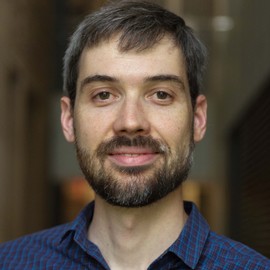
Andrew Guess is an Associate Professor of Politics and Public Affairs at Princeton University's Woodrow Wilson School of Public and International Affairs. He employs quantitative and computational methods to study digital media's impact on political dynamics, including polarization, misinformation, and algorithmic effects. Research Interests: Digital media and politics, computational social science, misinformation, political polarization, survey methodology Key Collaborations: Co-editor of the Journal of Quantitative Description: Digital Media , with Kevin Munger and Eszter Hargittai Publication Trends: His work analyzes social media algorithms (e.g., Facebook/Instagram feed effects), misinformation prevalence and correction (including election-related content), and methodological innovations using digital trace data. Articles demonstrate cross-platform analysis, behavioral tracking, and experimental approaches to media literacy interventions. Academic Contributions: Guess has developed frameworks for measuring online media diets, tested algorithmic impacts on political exposure, and investigated structural factors in digital misinformation spread. His research frequently involves large-scale behavioral experiments and partnerships with institutions like the Harvard Kennedy School and NYU Center for Data Science.
S. Yaser Samadi is an Associate Professor in the Department of Mathematics at the School of Mathematical and Statistical Sciences, Southern Illinois University Carbondale. He holds a Ph.D. in Statistics from the University of Georgia (2014) and maintains an active research program in advanced statistical methodologies. Education: Ph.D. in Statistics, University of Georgia, 2014 Research Interests: Dr. Samadi specializes in multivariate time series analysis, high-dimensional statistical inference, and tensor data analysis. His work addresses critical challenges in big data, symbolic data, and dimension reduction for time series through Bayesian analysis and sequential methods for dependent and independent data, yielding robust models for complex data structures. Publication Trends: His recent publications (2014-2023) emphasize time series analysis, dimension reduction, and innovative approaches for interval-valued and matrix-valued data. Key contributions include envelope models for vector autoregression, copula-based count data modeling, and sequential analysis techniques, bridging theoretical statistics with econometrics and data science applications. Scientific Awards: Outstanding Teacher of the Year, School of Mathematical and Statistical Sciences (2021) Advising: Dr. Samadi has mentored four Ph.D. students to completion: Rukayya Ibrahim (Assistant Professor, Penn State Harrisburg), Wiranthe Herath (Assistant Professor, Drake University), Tharindu De Alwis (Postdoctoral Fellow, WPI), and Hadi Safari Katesari (Teaching Assistant Professor, Stevens Institute of Technology). His Master's students Samira Zaroudi (CUNY) and Reginald Ziedzor (Amplify) have also achieved notable career placements.
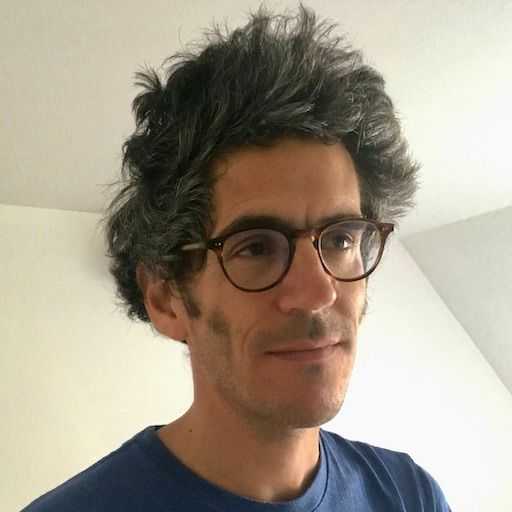
Thomas Chaney is a Professor of Economics at the University of Southern California (USC), holding the John Elliott Chair in Economics. He is affiliated with Sciences Po’s Department of Economics and leads the ERC Project HTMG. His research focuses on International Trade, Networks, and Finance, with notable contributions to historical trade dynamics and modern financial constraints. Chaney is a CEPR and CESifo Research Fellow, reflecting his academic standing. Research Interests: Chaney’s work bridges historical and contemporary economic phenomena, analyzing trade networks, collateral constraints in corporate finance, and the impact of migration on innovation and urban development. His research often employs innovative methodologies, such as combining archaeological data with economic models to study ancient trade systems. Articles Trends: Recent work examines Bronze Age trade networks, modern corporate investment dynamics, and the role of real estate collateral. His 2024 articles explore ancient trade’s end and contemporary empathy’s economic implications, showcasing interdisciplinary approaches. Earlier papers like Trade, Merchants, and the Lost Cities of the Bronze Age (2019) exemplify his historical focus. Grants & Awards: Chaney leads the ERC-funded HTMG project and holds prestigious fellowships. His work has been published in top journals and spans empirical trade analysis, financial economics, and historical methods. Labs/Teams: Active in USC’s Economics Department and collaborates with global institutions like Sciences Po and the Bank for International Settlements (BIS). His research group integrates economists, historians, and data scientists for interdisciplinary projects.
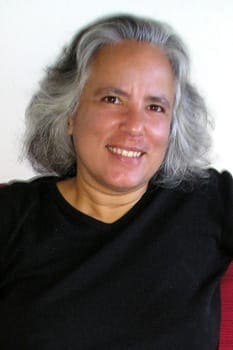
Beverly J. Silver is a Professor in the Department of Sociology at Johns Hopkins University and Director of the Arrighi Center for Global Studies. She holds a PhD in Sociology from SUNY Binghamton. Her research focuses on historical capitalism, global inequality, labor movements, and social conflict, employing comparative and world-historical methodologies. She examines how these phenomena interact across time and space, particularly in the context of globalization and geopolitical shifts. Key research interests include the dynamics of labor unrest, the evolution of social protest, and the role of hegemonic power structures in shaping global economic and political systems. Her work emphasizes long-term historical frameworks to identify recurring patterns and novel developments in contemporary globalization processes. Her publications analyze global social protest trends, the limits of US hegemony, and the interplay between economic crises and social conflict. She has contributed significantly to understanding labor movements' trajectories, especially in the automobile industry and emerging economies like China. Recent work explores the acceleration of social history and the implications of crises in global capitalism. Award-winning scholar (no explicit awards listed), her research spans over three decades, with a focus on the sociology of global systems. She advises no listed students and her grants/awards remain unspecified. She leads the Arrighi Center, fostering interdisciplinary global studies research.
Antonia Holzapfel is a doctoral researcher at the Institute for Data Science in Mechanical Engineering (DSME) of RWTH Aachen University. Supervised by Prof. Sebastian Trimpe, her work focuses on safe and explainable machine learning (XAI) for robotics and time-series modeling, with applications in mechanical engineering and medical technology. Bachelor's in Mechanical Engineering (Design Engineering specialization) Master's in General Mechanical Engineering (Simulation Technology and Medical Technology specializations) Her research addresses safety in learning processes , including Bayesian optimization for quadcopters and concept extraction for model interpretability. Her Friedrich-Wilhelm Award -winning thesis (2024) explored safe online learning in time-varying environments, presented at the L4DC conference. She contributes to DFG-funded projects on data-driven process modeling in forming technology. Key scientific contributions include: Advancing safe Bayesian optimization for autonomous systems Developing explainable AI methods for time-series analysis Improving model robustness through internal representation patterns Scientific awards: Friedrich-Wilhelm Award for outstanding Master's thesis (2024) Antonia's work bridges machine learning safety with practical applications in robotics and industrial processes.
Dr. Amin Sakzad is an Associate Professor in the Department of Software Systems & Cybersecurity at Monash University's Faculty of Information Technology. His research focuses on lattice-based cryptography, wireless communications, and post-quantum security protocols. He holds a PhD in Applied Mathematics from Amirkabir University of Technology (2011) and has held academic roles at Carleton University and Monash since 2012. Dr. Sakzad’s expertise spans lattice coding theory, MIMO systems, and privacy-preserving technologies for genomic databases and blockchain applications. He leads multiple ARC-funded projects, including work on secure databases (SRDBMS) and post-quantum cryptographic primitives for FinTech and energy sectors. His research has been recognized through awards such as the FIT Dean’s Award for Teaching Excellence (2021). Key collaborations include projects on blockchain security (CollinStar Lab), genomic data privacy, and energy market cybersecurity. His work addresses UN SDGs through contributions to quality education (SDG 4) and industry innovation (SDG 9). Recent publications highlight advancements in lattice-based cryptography (e.g., CRYSTALS-Kyber variants), privacy-preserving energy trading, and secure blockchain protocols like FPPW watchtower systems. His research bridges theoretical cryptography with practical implementations in embedded systems and 5G telecommunications. Grants: 16 active/completed projects including $1.2M in ARC funding Advising: Supervising PhD projects on lattice applications in post-quantum crypto and blockchain Labs: Core member of Monash’s Software Defined Telecommunications (SDT) Lab and CollinStar Lab
Georgia Zellou is an Associate Professor in the Department of Linguistics at the University of California, Davis, where she co-directs the Phonetics Lab and conducts award-winning research at the intersection of phonetics, speech perception, and human-AI interaction. Her work investigates how phonetic detail is cognitively represented through variations in speech production, with significant contributions to understanding speech alignment with voice assistants, face-masked speech intelligibility, and cross-linguistic perception of synthetic voices. Her academic credentials include a Ph.D. in Linguistics from the University of Colorado at Boulder (2012), an M.A. in Linguistics from Stony Brook University (2007), and a B.A. in Linguistics & Anthropology from the University of Florida (2005, Cum Laude, Phi Beta Kappa). Ph.D., Linguistics, University of Colorado at Boulder (2012) M.A., Linguistics, Stony Brook University (2007) B.A., Linguistics & Anthropology, University of Florida (2005) Professor Zellou's research program centers on laboratory phonology approaches to real-world communication challenges, examining how acoustic-phonetic details influence speech perception across contexts. Her studies span speech alignment with voice-AI systems (e.g., Amazon Alexa), sociophonetic variation in bilingual speech, and the cognitive mechanisms underlying perceptual compensation for coarticulation. She employs experimental methods including eye-tracking, acoustic analysis, and perceptual testing to uncover how phonetic variation functions pragmatically in human communication and human-machine interaction. Analysis of her 15 most recent publications (2023-2025) reveals three dominant research trajectories: (1) human-AI voice interaction dynamics, including prosodic alignment and social evaluation of TTS voices; (2) intelligibility optimization in challenging contexts (face masks, clear speech for diverse listeners); and (3) cross-linguistic phonetic variation in vowelless words and consonant clusters. These works consistently bridge theoretical phonology with applied speech technology, demonstrating how fine-grained phonetic detail influences communication effectiveness in both human-human and human-machine contexts. Her scientific recognition includes: Fulbright Scholar (2022) for research in France Chancellor’s Award for Excellence in Undergraduate Mentoring (2019) Fellow of the Linguistic Society of America (2020) Amazon Faculty Research Award (2019) for Alexa-related speech studies Dean’s Fellow designation at UC Davis (2020-2023) Professor Zellou maintains an active mentoring practice recognized with the Chancellor’s Award, supervising undergraduate researchers in the Phonetics Lab while teaching core linguistics courses from introductory to advanced graduate levels. Her research program is supported by competitive grants including NSF funding, Amazon Research Awards, and UC Davis internal grants (Hellman Foundation, ISS Junior Faculty Grant), reflecting the translational value of her work for speech technology development. She has co-directed major initiatives including the 2019 LSA Linguistic Institute. The Phonetics Lab she co-leads serves as a hub for experimental phonetics research, focusing on speech production-perception relationships through projects investigating vocal accommodation to voice assistants, nasal coarticulation dynamics, and cross-linguistic prosody. Current collaborations with industry partners aim to implement human speech adaptation principles into voice assistant design to enhance naturalness and engagement.
Hadi Esmaeilzadeh is an Associate Professor at the University of California, San Diego in the Department of Computer Science and Engineering . He leads the Alternative Computing Technologies (ACT) Laboratory and serves as Associate Director of the Center for Machine Integrated Computing and Security (MICS) . Previously, he was an Assistant Professor at Georgia Institute of Technology. Ph.D., Computer Science and Engineering, University of Washington (2013) Research focuses on computer architecture , machine learning acceleration , and approximate computing His work has produced 15+ publications spanning IEEE Micro Top Picks , CACM Research Highlights , and ISCA . Key projects include: Tabla : Cross-stack ML acceleration framework DnnWeaver : Open-source DNN acceleration platform Major honors include: IEEE TCCA Young Computer Architect Award ISCA Hall of Fame Qualcomm Innovation Fellowship Georgia Tech PURA Award Teaching roles: CSE 141: Introduction to Computer Architecture CSE 240D: Accelerator Design for Deep Learning CSE 240A: Principles of Computer Architecture
Juan Zhai is an Assistant Professor in the Manning College of Information and Computer Sciences (CICS) at the University of Massachusetts Amherst. She co-directs the Laboratory for Advanced Software Engineering Research (LASER) and is a member of the UMass NLP group. Her research advances software engineering through automated techniques for building high-quality systems with emphasis on behavioral specifications, AI safety, and trustworthy AI. Her work addresses the fundamental challenge of aligning software behavior with intended specifications through two main directions: automated specification synthesis (translating natural language comments to formal specifications via tools like C2S and LLMCup) and defect detection/repair (developing frameworks for AI system testing, bias mitigation, and training diagnostics). Her vision integrates these into end-to-end assurance systems that continuously validate, repair, and audit evolving software in dynamic environments. Recent publications (2024-2025) reveal dominant trends at the software engineering/AI intersection: formal specification synthesis for IoT and code generation, comment maintenance using LLMs, deep learning framework testing (DevMuT, Citadel), bias detection in LLMs, and automated training repair (AutoTrainer, DREAM). These contributions appear in top venues including ICSE, FSE, ASE, ISSTA, and ACL. Professor Zhai currently advises PhD student Gehao Zhang (focusing on Software Engineering and AI Safety) and actively recruits new PhD/Master's students. Her LASER lab develops practical tools for specification inference, LLM-driven synthesis, and trustworthy AI, while collaborating with the UMass NLP group on language-centric software analysis. The LASER lab, co-directed by Zhai, pioneers techniques for behavioral specification enforcement across traditional and AI-powered systems. Key projects include CPC for bidirectional code-comment analysis, ModelMeta for deep learning framework testing, and frameworks for bias mitigation across the ML lifecycle. The lab emphasizes practical, scalable tools that enhance correctness, robustness, and fairness in critical AI applications.
Dr. Christopher M. Wolverton is a Professor of Materials Science and Engineering at Northwestern University , where he leads the Wolverton Research Group . His work focuses on computational materials science with applications in energy sustainability , particularly in batteries , hydrogen storage , and thermoelectrics . PhD in Physics from University of California, Berkeley BS in Physics (summa cum laude) from University of Texas, Austin His research leverages first-principles quantum mechanical simulations and machine learning to enable virtual materials synthesis before laboratory testing. The group specializes in hybrid computational methods integrating Density Functional Theory (DFT) , Monte Carlo simulations , and phase-field microstructural models . The article portfolio shows leadership in energy storage materials , with recent work on data-driven nanoparticle facet control , mixed-anion semiconductors , and machine learning-accelerated discovery . Publications span top journals including Nature Energy , Nature Materials , and Science . 2006 Ford Motor Company Technical Achievement Award 2005 Ford Patent & Publication Awards 2003 Ford Environmental/Physical Sciences Recognition As advisor to PhD candidates Zhenpeng Yao , Shiqiang Hao , and Shane Patel , he fosters interdisciplinary research connecting materials informatics with experimental validation . The group maintains active collaborations with Argonne National Lab and MIT/Harvard teams.
Lee Yong Lim is a Professor of Pharmaceutics at The University of Western Australia (UWA), leading the Laboratory for Drug Delivery. She specializes in innovative drug delivery systems, particularly for pediatric populations and marine aquaculture. Her work focuses on overcoming medication challenges for children through taste-masked formulations and stable drug-loaded scaffolds for ear diseases. She has secured over $4.5 million in research grants from diverse funding bodies. Education: BSc (Pharmacy) Hons, National University of Singapore PhD, University of Manchester Research: Her team developed a patented chocolate-based formulation for bitter drugs and conducts pediatric trials. Collaborations include WA hospitals for safe compounded medicines and international projects in nanotechnology. Key research areas include pediatric medicinal products, veterinary drug delivery, and sustainable drug formulations aligned with UN SDGs. Grants & Funding: Major supporters include NHMRC, ARC, Telethon, and industry partnerships. Current active grants focus on pre-procedural chewables for children and perioperative analytics. Labs/Teams: Heads the Laboratory for Drug Delivery and collaborates with the Centre for Optimisation of Medicines and Institute for Paediatric Perioperative Excellence.
Ivan C. Christov is an Associate Professor of Mechanical Engineering at Purdue University's School of Mechanical Engineering in West Lafayette, Indiana. His research focuses on fluid dynamics, non-Newtonian fluid mechanics, and multiphase processes, with applications in biomedical engineering, micro/nanotechnology, and advanced materials. He leads the Transport: Modeling, Numerics & Theory laboratory. Education: Ph.D., Northwestern University, 2011 M.S., Northwestern University, 2008 M.S., Texas A&M University, 2007 S.B., Massachusetts Institute of Technology, 2005 Research Interests: Soft hydraulics, computational science, scientific machine learning, nonlinear waves, and fluid-structure interactions. His work spans theoretical modeling, numerical simulation, and experimental validation in complex fluid systems. Publications: Recent work includes studies on flow-rate pressure-drop relations in deformable microchannels, physics-informed neural networks for particle dynamics, and fluid-structure interaction in cerebral aneurysms. Themes include microfluidics, elastohydrodynamics, and rheological characterization of soft materials. Awards: Fulbright U.S. Scholar (2022) Outstanding Engineering Instructor (multiple recognitions) Richard P. Feynman Distinguished Postdoctoral Fellowship (2013) Labs/Teams: Directs the Transport laboratory at Purdue, focusing on interdisciplinary research in fluid mechanics and computational methods. Collaborates on biomedical fluid dynamics and advanced materials characterization.
Prof. Hans van Lint is a Professor of Traffic Simulation and Computing at Delft University of Technology (TU Delft), where he holds the Anthony van Leeuwenhoek Chair since 2013. He is affiliated with the Department of Transport & Planning within the Faculty of Civil Engineering and Geosciences. His research focuses on the intersection of traffic flow theory, data analytics, and traffic simulation, with applications in estimating and predicting traffic states in networks. He has supervised numerous PhD students and contributed to valorization projects translating research into practical solutions. Van Lint earned his MSc in Civil Engineering in 1997 and returned to TU Delft for his PhD, which he completed in 2004 on 'Freeway Travel Time Prediction.' He has held roles including Assistant Professor (until 2009), Associate Professor, and has served as Director of Education for the MSc Transport, Infrastructure and Logistics program from 2010–2016. His research interests include traffic simulation frameworks, data assimilation techniques, and the development of tools for traffic state estimation. He has authored influential papers on topics such as microscopic traffic modeling, congestion pattern analysis, and macroscopic fundamental diagrams. His work emphasizes bridging theoretical models with real-world applications, enhancing traffic management and infrastructure planning. Van Lint teaches courses like 'Transport & Planning' and 'Interdisciplinary Fundamentals,' reflecting his commitment to both research and education. He actively contributes to TU Delft's labs, including the Traffic Dynamics, Modelling and Control Lab, advancing interdisciplinary approaches to mobility challenges.
Daniel M.G. Raff is an Associate Professor of Management at the Wharton School of the University of Pennsylvania, where he has been affiliated since 1994. His research bridges business history and strategy, focusing on urban history, public policy, and historical demography. PhD, Massachusetts Institute of Technology, 1987 BPhil, Oxford University, 1978 MPA, Princeton University, 1976 BA, New College, 1973 Raff’s work explores the historical evolution of business institutions, with recent publications analyzing topics such as pre-modern Chinese real estate markets , industrial routines , and strategic risk management . His research often employs archival data and interdisciplinary methodologies. His publications span business history, economic performance, and transactional engineering, reflecting trends in historical demography , corporate strategy , and market evolution . Raff has also contributed to academic leadership as a Trustee of the Business History Conference and Chair of committees at the Economic History Association. Daniel Raff actively engages in teaching courses like Value Creation & Val Cap and Deals: Econ Struc Trans , emphasizing critical historical thinking in strategic business analysis. He is affiliated with institutions such as the National Bureau of Economic Research and the Wharton Financial Institutions Center.
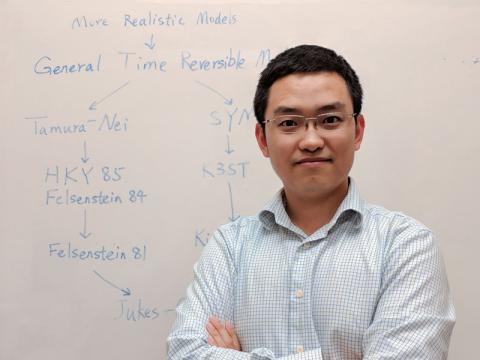
Xiang Ji is an Assistant Professor in the Department of Mathematics at Tulane University, affiliated with the School of Science & Engineering. His research focuses on statistical phylogenetics, computational biology, and bioinformatics, particularly in viral evolution and genomic epidemiology. He collaborates with Dr. Wu-Min Deng on cancer biology research from a bioinformatics perspective. Education: Ph.D., 2017: Bioinformatics and Statistics (Co-Major), North Carolina State University M.S., 2013: Material Science and Engineering, North Carolina State University B.S., 2011: Economics (Double Major) and Physics, Peking University Research Interests: Dr. Ji develops statistical models and computational tools for phylogenetic analysis, including scalable algorithms for large-scale genomic data. His work spans viral evolution, zoonotic disease surveillance, and parallel computing libraries for Bayesian inference. He emphasizes practical implementations such as Torchtree and TreeFlow . Articles Trends: Recent publications emphasize viral evolution dynamics (e.g., SARS-CoV-2, avian influenza), genomic surveillance strategies, and computational methods for phylogenetic inference. His work often bridges statistical theory with real-world applications in public health and epidemiology. Advising & Grants: While specific grant details are not listed, his active research program indicates involvement in funding initiatives related to computational biology and viral evolution. He teaches advanced courses in data analysis, linear models, and probability theory. Labs & Teams: Collaborates with Tulane’s Cancer Biology group and maintains partnerships with institutions globally, focusing on genomic epidemiology and phylogenetic software development.