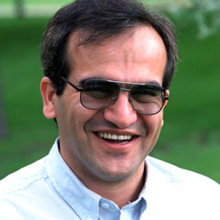
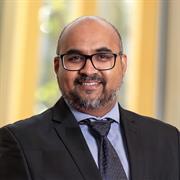
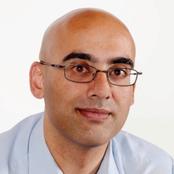
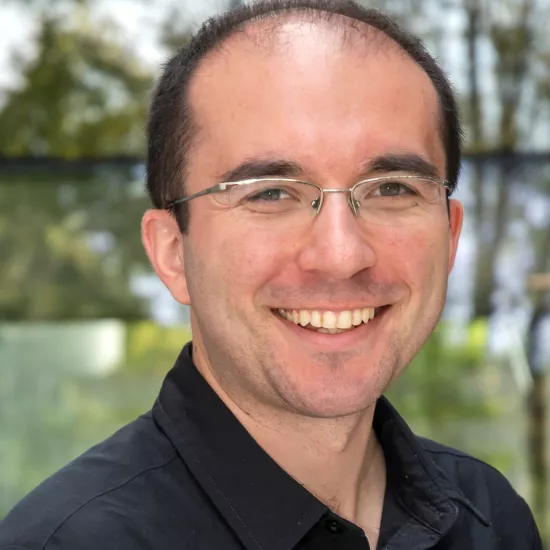
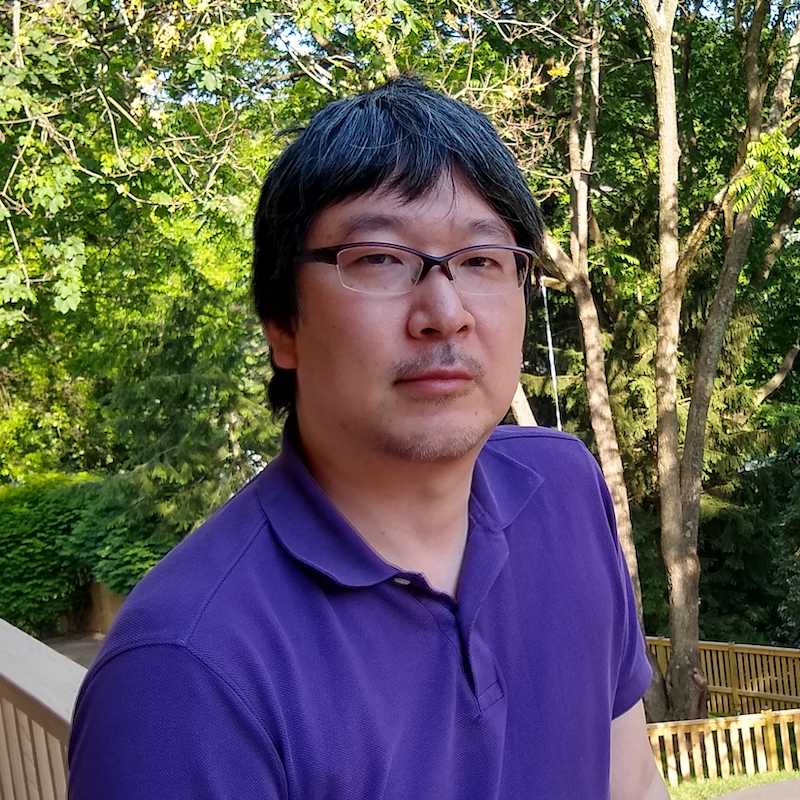
Masoud Asgharian is a Professor in the Department of Mathematics and Statistics at McGill University. His research focuses on survival analysis, changepoint problems, nonparametric Bayesian methods, and data envelopment analysis. He has contributed to influential studies on dementia survival rates, censored data methodologies, and statistical efficiency measures. His work bridges biostatistics and operations research, with applications in public health and medical sciences. Key contributions include methodologies for prevalent cohort survival analysis, input relaxation efficiency measures in stochastic DEA, and causal inference techniques. Asgharian has collaborated extensively with researchers in epidemiology and biomedical engineering, as evidenced by his co-authored publications on topics ranging from tooth enamel properties to low-precision neural network quantization. His research has been published in high-impact journals such as New England Journal of Medicine , Journal of the American Statistical Association , and Biometrics . Current affiliations include leadership roles in statistical research at McGill, with ongoing projects in computational statistics and healthcare analytics.
Andrew Rice is a Professor of Computer Science at the University of Cambridge's Department of Computer Science and Technology, and holds the Hassabis Fellowship in Computer Science. He is also the Director of Studies in Computer Science at Queens' College. His research focuses on programming languages, software engineering, and machine learning applications in software development. He leads projects like Isaac Computer Science and ALTA (Automated Language Teaching and Assessment), advancing adaptive learning technologies. His work includes static analysis tools such as Error Prone at Google, energy efficiency studies in computing infrastructure, and contributions to the Computing for the Future of the Planet initiative. His teaching emphasizes practical skill development through flipped classrooms and video lectures, earning him the 2014 Pilkington Prize for teaching excellence. He has held visiting roles at Google and collaborated on energy consumption research for mobile devices and data centers. His research spans systems, networking, and natural language processing, with a strong focus on applying computational methods to real-world challenges. Key Projects: Isaac Physics/Computer Science, ALTA, Error Prone Static Analysis Research Themes: Programming Languages, Machine Learning, Energy Efficiency Awards: Pilkington Prize (2014)
Associate Professor Lasantha Meegahapola is a Deputy Head of Department (Teaching & Learning) at RMIT University's School of Engineering in Melbourne, Australia. He holds an IEEE Senior Membership and serves as an Associate Editor for several prestigious journals, including IEEE Transactions on Power Systems and IET Renewable Power Generation. His research focuses on Power System Stability with Renewable Integration, Microgrid Control, and Smart Grid Technologies, addressing challenges like voltage stability, inverter-based grid dynamics, and renewable energy penetration. He has supervised 16 PhD students to completion and published over 200 articles. Key contributions include identifying stability issues in microgrids and advancing grid-forming inverter control strategies. His work aligns with UN Sustainable Development Goals 7 (Clean Energy), 9 (Infrastructure), and 13 (Climate Action). He is actively involved in IEEE committees, including the PSDP Task Force on Microgrid Stability. Teaching roles include Programme Manager for the Bachelor of Electrical Engineering (HK) and Subject Coordinator for Power System Analysis and Control courses. Collaborations span industry and international research institutions, emphasizing real-world applications of his research in power systems and renewable energy integration.
Alexandros G. Dimakis is a Professor at the University of California, Berkeley's Department of Electrical Engineering and Computer Sciences (EECS), College of Engineering. He is also Co-Director of the National AI Institute for Foundations of Machine Learning and Co-Founder of BespokeLabs.ai. PhD (2008) and Diploma (2003) in Electrical Engineering His research focuses on Generative AI , Information Theory , and Machine Learning . Recent work includes advancements in diffusion models, compressed sensing, and causal inference. His publications (150+) emphasize inverse problems, neural network verification, and generative model optimization. Recent publications highlight trends in Diffusion Models for inverse problems, Language Model Scaling , and 3D-Aware Generative Systems . Collaborative projects span biomedical applications, large-scale dataset curation (Datacomp-LM), and parameter-efficient model fine-tuning. Scientific Awards : IEEE Fellow (2022) James Massey Award (2018) NSF CAREER Award (2011) Google Research Faculty Award Best Paper awards at UAI workshops Eli Jury Dissertation Award (UC Berkeley) He advises PhD students in generative modeling, compressed sensing, and information theory. His research group collaborates with institutions like MIT, NYU, and IBM Research. Former students hold positions at Google, Amazon, and academic institutions like Purdue University.
Gordon Geoffrey J. is a Professor at Carnegie Mellon University, specializing in Machine Learning , Artificial Intelligence , and Computer Science . His research spans Reinforcement Learning , Domain Adaptation , Graph-based Planning , and Relational Learning , with significant contributions to Adversarial Learning , Deep Learning Dynamics , and Mobile Sensor Networks . He has pioneered algorithms like ARA* and Anytime Dynamic A* for efficient planning under constraints. Key research areas: Transfer Learning , Bayesian Knowledge Tracing , Multi-agent Systems , Database Optimization His work has been cited thousands of times across foundational topics in AI and robotics, demonstrating sustained impact in algorithm design and applications to complex systems.
Associate Professor Jiwon Kim is a leading researcher in Transport Engineering at the University of Queensland's School of Civil Engineering. She serves as Director of Higher Degree by Research and was a DECRA Fellow from 2019-2022. Holding degrees from Korea University and Northwestern University, she specializes in AI/ML applications for transportation systems. PhD, Northwestern University BS & MS, Korea University Her research focuses on Artificial Intelligence and Machine Learning applications in transportation, including: Deep learning for traffic management Reinforcement learning in mixed traffic environments Multi-agent systems for urban mobility optimization Spatiotemporal trajectory analysis Recent publications demonstrate expertise in: Eco-driving strategies Traffic incident prediction Queue length estimation Crash risk modeling Scientific recognition includes: ARC DECRA Fellowship (2019-2022) She supervises doctoral students in: Transportation data analytics Autonomous vehicle systems Intelligent traffic management Current projects explore real-time traffic monitoring, synthetic mobility data generation, and connected vehicle technologies.
Christopher S. Tang is a UCLA Distinguished Professor and Edward W. Carter Chair in Business Administration at the Anderson School of Management , where he researches global supply chain management with a focus on social innovation in developing countries . He also serves as Senior Associate Dean for Global Initiatives and Faculty Director of the Center for Global Management . Education: Ph.D. in Management Science (1985, Yale University) M.Phil. in Administrative Science (1983, Yale University) M.A. in Statistics (1983, Yale University) B.Sc. in Mathematics (First Class Honors, 1981, King’s College, University of London) His research explores the intersection of corporate responsibility and supply chain innovation , addressing topics like microfinancing , mobile platforms for developing economies , direct agricultural procurement , and disaster response logistics . He emphasizes visibility, integrity, and agility in uncertain environments. Recent work highlights AI adoption benefits for supply chains , strategies to reduce forced labor risks , and policy impacts on ride-sharing platforms . His research bridges operations management and social justice , advocating for environmental stewardship alongside business growth. Scientific Awards: Salzberg Medallion (2017) Lifetime Fellow, INFORMS (2011) Responsible Research in Management Award (2017) Teaching Excellence Award (multiple years, UCLA-NUS) Dean’s Excellent Service Award (2014) As an influential adviser and consultant , Tang has worked with Amazon, HP, IBM, Nestlé, GKN , and Accenture . He has taught at Stanford University, UC Berkeley, Hong Kong University of Science and Technology , and served as visiting professor at Cambridge University and the Institute of Advanced Study at HKUST .
Quoc Thong Le Gia is an Associate Professor in the School of Mathematics & Statistics at the University of New South Wales (UNSW), Sydney. He holds a PhD in Mathematics from Texas A&M University (2003), an MS in Mathematics from Texas A&M University (2000), and a BSc in Mathematics and Computer Science from UNSW (1998). His research focuses on Numerical Analysis , Approximation Theory , Partial Differential Equations , and Stochastic Processes , with particular expertise in problems on spherical domains. His work bridges theoretical mathematics with practical applications in computational science, data science, and machine learning. Le Gia's recent publications demonstrate a strong focus on numerical methods for PDEs on spheres, stochastic analysis, and machine learning applications. His work shows consistent progression from theoretical foundations to practical implementations, with increasing interdisciplinary applications in recent years. L. F. Guseman Prize in Mathematics, Texas A&M University (2003) As a dedicated academic mentor, Le Gia has supervised numerous PhD, Master's, and Honours students across computational mathematics and data science topics. He has secured significant research funding through ARC Discovery Projects including DP220101811 (2022-2024) and DP180100506 (2018-2020). Professionally, he serves as External Associate Editor for Frontiers in Applied Mathematics and Statistics , Secretary for ANZIAM's Computational Mathematics Group, and Co-chair of Mathematics of Computation and Optimisation (AustMS Special Interest Group).
Anil Madhavapeddy serves as Professor of Planetary Computing at the University of Cambridge's Department of Computer Science and Technology and directs the Cambridge Centre for Carbon Credits (4C). A Fellow of Pembroke College, he integrates systems research with environmental conservation through the Computer Laboratory's Environment and Energy Group. His career spans industry leadership (NetApp, Citrix, Intel), academic appointments (Cambridge, Imperial, UCLA), and entrepreneurial ventures (XenSource, Unikernel Systems, Docker). Madhavapeddy earned his PhD at Cambridge's Computer Laboratory in 2006. His research bridges computational systems and planetary-scale environmental challenges, with deep expertise in open-source development (OCaml, Xen, Docker, OpenBSD) and technology strategy advising for organizations including Zededa, Tezos Foundation, and Tarides. His work centers on environmental computing and climate informatics, leveraging distributed systems and functional programming to develop sensing infrastructure for conservation. Recent projects focus on carbon credit systems, AI-driven biodiversity monitoring, and sustainable computing architectures that minimize ecological footprints while maximizing analytical capability. Analysis of his 2025 publications reveals a concentrated effort on AI-integrated conservation tools, privacy-preserving carbon accounting, and energy-efficient computing. Key themes include spatial networking for ecological data, LLM-enhanced evidence retrieval in conservation science, and novel metrics for extinction risk assessment—demonstrating computational innovation applied to urgent planetary boundaries. No scientific awards were documented in the source material. Madhavapeddy advises multiple technology firms on strategic development while leading the Cambridge Centre for Carbon Credits, though specific grant funding details remain unreported. He actively contributes to the Environment and Energy Group at Cambridge's Computer Laboratory and directs the interdisciplinary Cambridge Centre for Carbon Credits (4C). His open-source leadership spans critical infrastructure projects including OCaml, Xen, and Docker, fostering collaborative development communities that underpin modern cloud and container technologies.
Univ.-Prof. Torsten Möller, PhD is a Professor at the University of Vienna and serves as Head of the Research Group Visualization and Data Analysis and Head of the Research Network Data Science. His work spans data visualization, visual analytics, and human-computer interaction, with a focus on biomedical, environmental, and societal data applications. Academic rank: Professor Research group: Visualization and Data Analysis Network: Data Science Email: torsten.moeller@univie.ac.at Research interests include: Visual data analysis for complex systems Interdisciplinary applications in climate science and medicine Human-computer interaction in data exploration Image processing and computer graphics Recent publication trends show expertise in: Visualizing climate change and pandemic data Multi-volumetric and network analysis Algorithmic transparency and user-centered design Interdisciplinary collaborations (e.g., astrophysics, medical imaging) Statistical and uncertainty visualization Design frameworks for visualization recommendation Teaching includes courses in: Computer graphics and visualization Image processing and analysis Human-computer interaction Data analysis projects Doctoral research seminars
Florian Shkurti is an Assistant Professor in the Department of Computer Science at the University of Toronto Mississauga (UTM), affiliated with the UofT Robotics Institute, Vector Institute, and Acceleration Consortium. His research focuses on robotics, machine learning, and computer vision, emphasizing safe and effective autonomous systems in dynamic environments. He directs the Robot Vision and Learning (RVL) lab, exploring areas like environmental monitoring, autonomous navigation, and mobile manipulation. Research Interests: His work spans robotics, machine learning, and computer vision. Key areas include robot perception, planning under uncertainty, safe exploration, imitation learning, and applications in field robotics, autonomous vehicles, and chemistry lab automation. He develops methods enabling robots to perceive, reason, and act safely in collaboration with humans. Publications: Recent work includes advancements in safe multitask learning, interactive crowd navigation, and diffusion models for trajectory planning. His research bridges theoretical foundations with real-world applications in environmental science and autonomous systems. Affiliations: Faculty Member, UofT Robotics Institute; Faculty Affiliate, Vector Institute; Faculty Member, Acceleration Consortium. He also holds positions at UTM's Mathematical & Computational Sciences department. Teaching: Courses include Imitation Learning for Robotics, Neural Networks, and Mobile Robotics. He emphasizes hands-on experience with autonomous systems through projects involving RC cars and simulation tools. Labs & Teams: Leads the RVL lab, collaborating on projects like RoboCulture (automated biological experimentation) and SICNav (safe crowd navigation systems). The lab focuses on cross-disciplinary robotics solutions for real-world challenges.
Nick Koudas is a Professor in the Department of Computer Science at the University of Toronto, specializing in large-scale data management, data systems, and applied machine learning. His research integrates machine learning techniques into scalable data platforms to enhance the analysis of massive datasets. He holds a PhD from the University of Toronto, an MSc from the University of Maryland, and a Bachelor's degree from the University of Patras. Education: PhD, University of Toronto MSc, University of Maryland at College Park Bachelor's degree, University of Patras, Greece Research Interests: Relational Deep Dive (ReDD): Natural language query execution over unstructured documents Streaming Video Queries (SVQ): Interactive query processing for video streams Reliable Text-to-SQL: Generating accurate SQL queries with human-in-the-loop assistance Machine Learning Integration in Data Systems Publications: Focus on video analytics, query processing, and reliable natural language interfaces. Notable works include optimizing video queries, declarative frameworks for temporal constraints, and abstention-based SQL generation. Awards: Inventor of the Year (1st Prize), University of Toronto (2011) Best Paper Awards at international conferences Entrepreneurship & Advising: Co-founder of Sysomos (Meltwater Group), Aislelabs (Constellation Software), and Workorb Advisor to mapintent and ktau Labs & Teams: Leads research groups developing systems like ReDD and SVQ, emphasizing collaboration between academia and industry.
Shinji Watanabe is an Associate Professor at Carnegie Mellon University's Language Technologies Institute and a Courtesy Professor in the Electrical and Computer Engineering department. He holds a Ph.D. (Dr. Eng.) from Waseda University, Japan, and has held research roles at NTT Communication Science Laboratories, Mitsubishi Electric Research Laboratories (MERL), and Johns Hopkins University. His research focuses on automatic speech recognition, speech enhancement, and machine learning for speech processing. Watanabe has published over 300 peer-reviewed papers and received the Best Paper Award at IEEE ASRU 2019. His work emphasizes robust speech processing in challenging environments, multilingual models, and neural audio codecs. He leads the ESPnet toolkit development for end-to-end speech processing systems and contributes to technical committees like IEEE SLTC and APSIPA SLA. Recent research trends include streaming speech systems, universal speech enhancement (URGENT challenges), and fusion of discrete speech units with self-supervised representations. He explores scalable speech foundation models through benchmarks like ML-SUPERB 2.0 and investigates cross-modal audio-visual processing in challenges like MISP 2025. Education : B.S., M.S., Ph.D. (Waseda University) Affiliations : CMU Language Technologies Institute, CMU ECE, Former roles at MERL and Johns Hopkins Key Projects : ESPnet, OpenWhisper-Style Models, URGENT Challenge Frameworks
Nancy Pollard is a Professor at Carnegie Mellon University, affiliated with both the Robotics Institute and the Computer Science Department. Her research focuses on understanding physical interaction with the environment through robotics and computer graphics, particularly in areas like dexterous manipulation, human motion analysis, and soft robotics. She explores how human examples can inform robot control policies and create natural-looking animations. Her work bridges robotics and graphics to solve challenges such as optimizing motion for humanoid robots and improving the realism of animated hands. Key projects include developing fast physically plausible motion techniques, studying hand motion complexity, and creating intuitive tools for modeling hand-object interactions. She also investigates the physical correctness thresholds in graphics and the design of affordable soft robotic hands for real-world applications like agriculture. Recent publications highlight advancements in motion retargeting for anthropomorphic manipulations, co-optimization of soft robotic hand design and control, and frameworks for sensor placement in soft hands. Her research emphasizes human-inspired approaches to robotics and the application of biomechanical insights to improve robotic dexterity. Pollard advises students such as Arjun Lakshmipathy and collaborates on projects involving both academic and industrial applications. Her work has been supported by grants focused on robotics design and simulation-based manipulation capture.
Prof. Dennis Komm is an Associate Professor at ETH Zurich's Department of Computer Science, leading the group for Algorithms and Didactics. He chairs the Center for Computer Science Education (ABZ) and serves on committees such as the Swiss Maturity Board (Schweizerische Maturitätskommission) and the STEM Commission of the Swiss Academies. Previously, he held roles at RWTH Aachen University (Master's, 2008), ETH Zurich (PhD, 2012), University of Zurich (external lecturer, 2014–2020), and PH Graubünden (including department head and professor of 'Fachdidaktik Informatik'). Education: He completed a Master's in Computer Science at RWTH Aachen (2008), a PhD at ETH Zurich (2012), and studies in Information Technology at Queensland University of Technology (2006). His academic journey includes visiting roles at King's College, Stanford, and Comenius University. He has taught extensively across institutions, emphasizing Python and LOGO-based approaches for beginners. Research focuses on algorithm design, approximation algorithms, reoptimization, and advice complexity in theoretical CS. His work in education explores computational thinking, programming pedagogy (especially for K–12), and interdisciplinary approaches (e.g., robotics in math). Recent trends in his articles highlight advancements in online algorithms, optimization under dynamic conditions, and initiatives to integrate CS into Swiss school curricula sustainably. He actively promotes CS education through platforms like WebTigerPython and collaborates on projects such as CyberQuest and MINTerlink. His outreach includes organizing conferences (e.g., STIU 2025) and workshops on programming and cybersecurity for teachers and students. Despite no listed scientific awards, his contributions to education and theoretical CS are recognized through editorial roles in journals like Informatics in Education and contributions to the TigerJython Group. Grant-related advising includes co-supervising doctoral theses on robotics, USOs, and programming didactics. He advocates for equitable educational opportunities via the Passerelle exam and the Swiss Beaver Competition. His team's work spans teacher training, didactic certifications, and bridging university-school collaborations through initiatives like MINTerlink. Labs and teams: Head of ABZ (ETH's CS education center), collaborator with the Computational Robotics Lab, and part of the TigerJython Group. He also co-organizes the Colloquium on Mathematics, Computer Science, and Education with ETH's Mathematics Department.