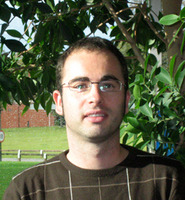
Rakesh Ravi is a Teaching Assistant Professor in the Department of Business Management at North Carolina State University's Poole College of Management. His expertise includes data analytics, machine learning applications in business, and information systems development. Research and teaching focus spans unstructured text analysis, database systems, software development methodologies, and data visualization techniques for business intelligence. His work bridges information technology and business analytics domains.
Jason Allaire is an Associate Professor in the Department of Psychology at North Carolina State University’s College of Humanities and Social Sciences. His research focuses on aging and cognition, health disparities, intraindividual variability, and unconventional interests like bee wrangling. He is affiliated with the Lifespan Developmental Psychology faculty group and maintains an office in Poe Hall 718. His work examines cognitive aging processes in African American populations, emphasizing socioeconomic factors, health disparities, and daily fluctuations in cognitive performance. Notable contributions include studies on the impact of social support on physical health outcomes, the role of vascular risk factors in cognitive decline, and the application of video games for cognitive training in older adults. Recent publications (2018–2024) highlight themes such as area deprivation index effects on health, within-person coupling of affect and leisure activities, and the neural mechanisms underlying cognitive reserve. He collaborates across disciplines, integrating epidemiology, psychology, and technology to address aging-related challenges. No awards were explicitly listed in the provided texts, though his prolific research output indicates significant scholarly engagement. Dr. Allaire’s advising and grant activities remain unspecified in the data, but his research spans institutions like the Baltimore Study of Black Aging. He is reachable at jason_allaire@ncsu.edu and resides at 106 Caldwell Hall, Raleigh, NC.
Johnny Snyder is a Professor of Computer Information Systems at Colorado Mesa University in the College of Business. He also serves as the Study Abroad Coordinator, leveraging his international teaching experience in Mexico and the Philippines to support student global engagement. Educational Background: PhD, University of New Mexico MA, University of New Mexico MS, Nova Southeastern University BA, Fort Lewis College His research focuses on information systems, business analytics, data modeling, and pedagogical challenges in technology education. He explores information literacy , data visualization , and ethical concerns in analytics , often from a cross-cultural perspective. His teaching emphasizes real-world applications and evolving technologies. Recent publications demonstrate a strong trend toward public health informatics , where he applies geospatial and predictive modeling to diseases like West Nile Virus and Dengue. His earlier work centers on student behavior in information systems education , including major selection and online learning evaluation. Scientific Recognition: Six Sigma Black Belt Finalist, GoCode Colorado Competition Snyder is an active scholar and educator who integrates professional certifications and practical experience into his teaching. He has collaborated on research assessing educational technology and student engagement, and his international experiences have enriched both his scholarship and advising. Though no formal grants are listed, his applied research and competition participation suggest project-based funding and institutional support. He teaches dynamic courses in computer information systems and analytics, encouraging student input on emerging technologies. His sabbatical at the University of the Philippines and teaching in Mexico highlight his commitment to global education and cross-cultural academic collaboration.
Elena Candellone is a PhD Candidate in Network Science at Utrecht University , with a visiting scholar experience at Indiana University (2024). Her work bridges computational social science and network analysis , focusing on signed networks , community detection , and social media dynamics Education : MSc in Physics of Complex Systems , Politecnico di Torino (2020–2022) BSc in Physics , Università degli Studi di Torino (2017–2020) Elena’s research explores the characteristics of the vegetable oil debate on social media , sentiment analysis of sustainability issues , and mechanisms driving viral events . She contributes to interdisciplinary discussions on complex systems and network modeling . Her most recent work presented at ODISSEI 2024 , CCS 2024 , and NetSci 2024 focuses on community detection in signed networks , co-voting patterns , and parameter sensitivity in network analysis . She is actively involved in organizing network science workshops , including the WiNS Collabathon and CCS Warm-Up 2024 . Scientific Awards : AccelNet-MultiNet Fellowship As a Teaching Assistant at Utrecht University since 2022, she supports courses in Advanced Research Methods , Network Science Summer School , and Data Wrangling . Earlier, she taught Physics Laboratory 1 at Università degli Studi di Torino (2018–2020).
Ihab Francis Ilyas is a Professor at the University of Waterloo , affiliated with the Cheriton School of Computer Science . He currently holds the Thomson Reuters Research Chair in Data Quality and is on leave while serving as a Distinguished Engineer, Proactive Intelligence at Apple Inc. . He has co-founded two successful startups— Inductiv (acquired by Apple) and Tamr —and is a Fellow of the Royal Society of Canada , IEEE Fellow , and ACM Fellow . Research Interests : AI for Data Quality and Curation Knowledge Graphs Large-Scale Data Integration Information Extraction Managing Uncertain Data Data Cleaning Error Detection and Repair Probabilistic and Uncertain Data Management Scientific Awards and Recognitions : C.C. Gotlieb Computer Award, 2024 IEEE Fellow, 2021 ACM Fellow, 2020 NSERC-Thomson Reuters Industrial Research Chair, 2018 Google Faculty Award, 2014 Ontario Early Researcher Award, 2008 IBM CAS Faculty Fellow, 2006–2010 Taha Hussein Medal (Egyptian Ministry of Education), 1990 Leadership and Service : Board of Trustees, VLDB Endowment (2016–2021) Vice Chair, ACM SIGMOD (2016–2021) Co-founder, Inductiv (acquired by Apple) and Tamr Co-author of the leading text Data Cleaning (ACM Books) Lead developer of the HoloClean open-source data repair system Contributor to Saga , a next-generation knowledge construction platform at Apple Publications and Trends : His recent research focuses on AI-driven data cleaning, knowledge graph construction, and scalable data integration systems. Collaborative works span probabilistic inference, differentially private data synthesis, error detection, and HTAP workloads. His publications appear in top venues like SIGMOD , VLDB , and ICDE .
Dr Simon Troup is a Principal Enterprise Fellow at the University of Southampton Business School , focusing on banking, finance, and fintech. His expertise spans fintech platforms, data architecture, and quantitative research, with a strong emphasis on innovation and enterprise development.
Krista Lagus is a Professor at the Faculty of Social Sciences of the University of Helsinki, where she leads the Centre for Social Data Science (CSDS). Her work bridges artificial intelligence, natural language processing, and social sciences to analyze digital communication, societal trends, and cognitive modeling. PhD in Computer and Information Sciences, Aalto University (2000) Co-founder and Director of CSDS (2019) Academy Research Fellow at Finnish Academy of Sciences (2006-2012) Key projects: WEBSOM, Citizen Mindscapes, Morfessor Her research spans digital social science , machine learning , and cognitive modeling , with recent focus on sentiment analysis, survey data wrangling, and emotional dynamics in social media. Publications appear in journals like IEEE Transactions on Neural Networks , Cognitive Science , and Human Brain Mapping . She has received awards such as the Best paper award at DHN 2020 and serves as a reviewer for grants and academic appointments, including the ERC Cog SH3 panel (2021). Lagus supervises doctoral students and teaches in the Contemporary Societies Master's Programme .
AnHai Doan is the Vilas Distinguished Achievement Professor and Gurindar S. Sohi Professor in the Department of Computer Sciences at the University of Wisconsin-Madison. He leads research in data integration, entity matching, and data science, focusing on end-to-end systems like Magellan. His work integrates machine learning, scalable data management, and human-in-the-loop approaches. Education details are not explicitly provided in the text but his academic roles suggest advanced degrees in computer science. Research interests include data cleaning, entity matching, and cloud/crowd services. He co-founded GreenBay Technologies (acquired by Informatica) and contributed to the School of Computer, Data, and Information Sciences at UW-Madison. Key awards include the ACM Doctoral Dissertation Award (2003) and NSF CAREER Award (2004). He teaches data science courses (CS 638 DS, CS 774) and served on strategic initiatives for UW-Madison’s computing growth. His service includes roles on SIGMOD’s advisory board and co-chairing SIGMOD-2020.
Dr. Yusdiel Torres-Cambas is a Postdoctoral Researcher at the Leibniz Institute of Freshwater Ecology and Inland Fisheries (IGB) in Berlin, supported by the Alexander von Humboldt Foundation. He holds a PhD in Biology from the Universidad de La Habana, Cuba, and previously served as a lecturer at Universidad de Oriente. His research focuses on freshwater ecology, combining geocomputation, phylogenetic analysis, and ecological modeling to address biodiversity conservation challenges. Key research areas include spatial conservation prioritization, species distribution modeling, and the systematics of Odonata (dragonflies and damselflies). Notable projects include developing the GeoFRESH platform for freshwater geospatial data, contributing to the global EPTO database of aquatic insects, and leading conservation prioritization efforts in Cuba. He has also co-developed the hydrographr R package for hydrographic data processing. His work bridges computational tools with field-based studies, emphasizing open-source software applications in ecological research. Awards include the prestigious Humboldt Postdoctoral Fellowship. Projects such as DANUBE4all highlight his engagement in transboundary ecosystem restoration and citizen science initiatives. Education: PhD in Biology (201?), Universidad de La Habana, Cuba Professional Roles: Postdoc (IGB), Lecturer (Universidad de Oriente) Key Skills: Geocomputation, Species Distribution Modelling, Phylogenetic Analysis Current Projects: GeoFRESH, DANUBE4all, Freshwater Conservation in Cuba His research outputs span freshwater biodiversity databases, spatial conservation strategies, and taxonomic studies of Cuban endemic species. Collaborations include international teams working on aquatic macroinvertebrates and global biodiversity informatics.
Ernesto Jimenez-Ruiz is a Researcher at the University of Oslo affiliated with the Centre for Scalable Data Access (SIRIUS) and Logic and Intelligent Data group. He holds a PhD in Computer Science from University Jaume I of Castellon and specializes in semantic technologies and ontology engineering. His research spans bio-medical information processing, ontology reuse/alignment, and semantic web technologies for data analytics. Current projects include Artificial Intelligence for Data Analytics (AIDA) at The Alan Turing Institute, where he serves as Senior Research Associate. Recent publications (2024-2025) focus on neurosymbolic AI systems, knowledge graph construction from tabular data, and ontology alignment techniques. His work demonstrates strong emphasis on practical applications of semantic technologies. Dr. Jimenez-Ruiz has developed several tools including LogMap for ontology matching and BootOX for relational-to-ontology mapping. He teaches Semantic Technologies (INF3580/INF4580) and supervises PhD students in ecotoxicological effect prediction using knowledge graphs.
Dr Pedro Sampaio is a Senior Lecturer in Information Systems and Data Science at the University of Manchester. He holds a PhD in Computer Science from the same institution. His roles include academic partnership with IBM/UK for joint teaching initiatives and Programme Committee membership in over 10 international conferences. Education: Doctor of Philosophy (Computer Science), University of Manchester. Research interests span Digital Platforms, Industry 4.0, AI in Production, Supply Chain Management, and Data Science. His work contributes to UN SDGs through Sustainable Futures and Digital Futures initiatives. Recent publications focus on SME collaboration in global supply chains, data wrangling workflows, and ontology-driven process management. Key awards include the BAM2018 Best Developmental Paper Award and EMCIS 2019 Best Paper Award. His research has been funded by the European Commission, Innovate UK, and Brazilian research councils (CNPq, FAPESP). He has supervised 12 PhD students and led projects across telecom, banking, and IT sectors in multiple countries. Collaborations include IBM UK and academic institutions globally. He co-developed datasets like Supply Chain Team Formation Model and Call-for-tenders Synthetic Data, available via Mendeley.
Mark Isken is an Associate Professor of Management Information Systems at Oakland University's School of Business Administration. He holds a Ph.D. in Industrial & Operations Engineering from the University of Michigan. His research focuses on simulation and optimization modeling of healthcare systems, business analytics, ecological/environmental analytics, and open source software development. He has published extensively in journals like Annals of Operations Research, IEEE Transactions on Systems, Man and Cybernetics, and Health Care Management Science. Teaching specialties include business analytics, statistics, information systems, and healthcare operations management. He develops open educational resources and maintains a personal website with teaching materials. Notable awards include the 2020 OU Teaching Excellence Award and the 2016 Order of the Plume. Before academia, he worked as an operations researcher at William Beaumont Hospital and Henry Ford Health System. His software contributions include the 'hillmaker' Python package for occupancy analysis and SimPy-based healthcare simulation models. Active in open source communities, he maintains repositories on GitHub for projects like healthcare workflow modeling and environmental data analysis. Engaged in collaborative research with organizations like the CELLDEX Consortium and the University of Michigan's ecology programs.
Eugene Wu is a Professor affiliated with Columbia University, specializing in database systems, data management, and visualization. His work bridges theoretical foundations with practical applications, focusing on systems that empower users through interactive analysis and human-in-the-loop processes. Key contributions include Smoke (lineage tracking), AlphaClean (automated data cleaning), and PI2 (interactive visualization generation). He has also explored privacy-preserving data systems (Saibot) and leveraging large language models (LLMs) for tasks like table profiling (Cocoon) and prompt development. Education: PhD from MIT in Computer Science Research spans database theory, visualization frameworks, and machine learning integration. Recent work emphasizes data quality (SPADE), privacy in distributed markets, and scalable training data debugging. He actively contributes to conferences like SIGMOD, CIDR, and VLDB, often chairing workshops on human-in-the-loop analytics. Articles focus on system design, theoretical advancements, and LLM applications in data management. Awards and recognition include sustained innovation in data systems and visualization. Advises on projects blending databases with emerging technologies like LLMs and decentralized data markets.
Tamara Munzner is a Professor at the University of British Columbia (UBC), previously affiliated with Stanford University's Graphics Group. Her research focuses on information visualization, computer graphics, and data analysis, with notable contributions to graph visualization, dimensionality reduction techniques, and interactive visualization tools for complex datasets. Her work bridges theoretical foundations and practical applications, emphasizing user-centered design principles. Key areas include developing visual analytics methods for data exploration, improving visualization literacy, and creating tools for domain-specific challenges such as genomics and environmental science. She has authored influential textbooks like Visualization Analysis and Design and pioneered frameworks for visualization evaluation. Award-winning publications span journals like IEEE Transactions on Visualization and Computer Graphics, addressing topics from multi-table data wrangling to pediatric pain management interventions via visualization. Her projects often involve interdisciplinary collaboration, integrating insights from HCI, machine learning, and domain sciences.
Christian Kästner is a Professor at Carnegie Mellon University , actively contributing to software engineering, machine learning systems, and open-source software research. He serves on numerous conference committees, including the OOPSLA Review Committee (2025), ICSE Research Track (2024), and ESEC/FSE Program Committee. Research Interests His work focuses on: Integrating machine learning into production systems Open-source dependency management and security Automated program repair and performance modeling Collaboration challenges in ML-enabled systems Software engineering education for AI/ML Conference Contributions Christian has authored and reviewed papers on topics spanning supply chain security, notebook tooling, and system-wide ML engineering. Notably: Keynote: From Models to Systems at CAIN 2024 Research on LLM integration, dependency abandonment, and fairness analysis Committee roles in ICSE, ESEC/FSE, ASE, and SPLASH