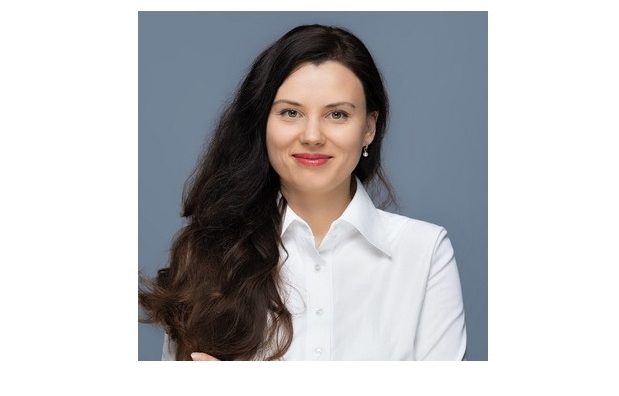
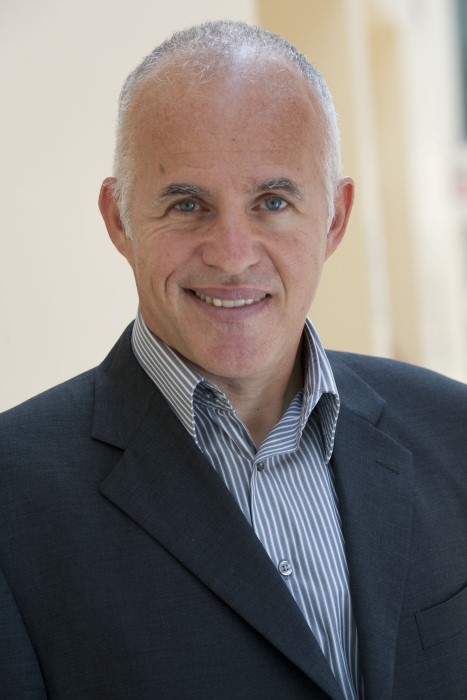
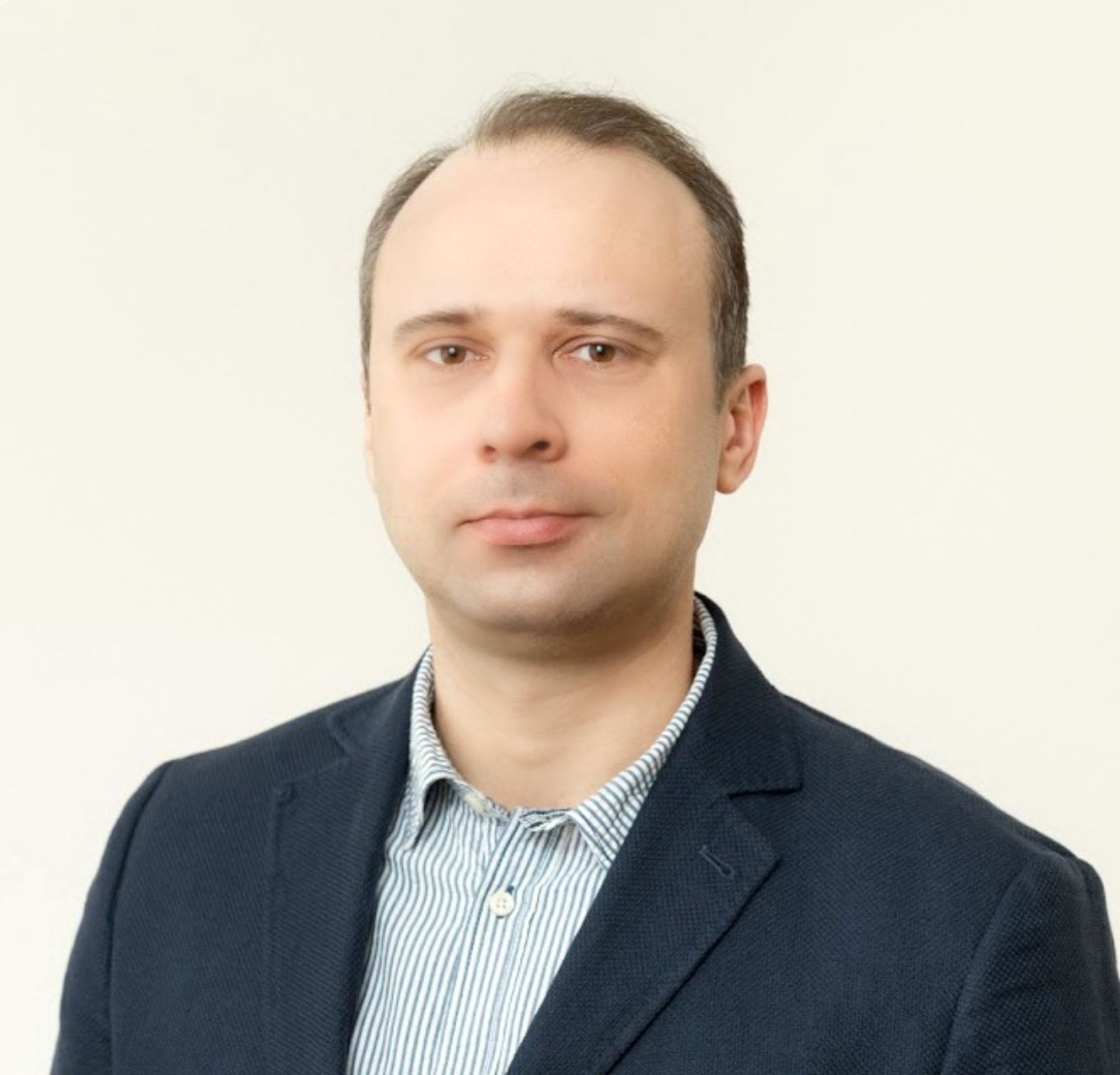
Katažyna Bogdzevič is a Professor at Mykolas Romeris University (MRU) Law School, specializing in Private International Law , European Law , Human Rights , and Environmental Law . She leads the MRU Human Rights LAB and contributes to the Environmental Management Research LAB, focusing on legal frameworks for ecosystem services, climate change mitigation, and stakeholder engagement. Key Research Themes: Integration of Private International Law with Environmental Law , analysis of legal conflicts in nature-based solutions, and name rights under international human rights conventions. Policy Engagement: Serves as advisor to Lithuania's Minister of Justice Ewelina Dobrowolska , emphasizing knowledge transfer to legislative and judicial practices. Email: roffice@mruni.eu
Dr. Olga Kurasova is a Professor and Senior Researcher at Vilnius University's Institute of Data Science and Digital Technologies, where she leads research in the Cognitive Computing Group. Her work focuses on developing advanced computational methods for real-world applications. Her primary research explores machine learning paradigms including deep learning for cybersecurity (keystroke dynamics, adversarial attacks), medical image analysis (pancreatic cancer detection), industrial monitoring, and explainable AI. She maintains strong collaborations across disciplines, particularly in healthcare and security domains. Analysis of her recent publications (2023-2025) reveals three dominant themes: (1) Advanced biometric authentication systems using behavioral analysis and deep learning, (2) Medical AI applications focusing on pancreatic cancer detection through CT image analysis, and (3) Theoretical advancements in explainable AI methodologies for high-stakes domains. Significant scientific recognition includes: 2021 Lithuanian Science Prize for the cycle 'From Data Science to Artificial Intelligence Technologies' 2024 Vilnius University Rector's Science Prize She has led multiple national research projects, including a 2024-2027 LMT-funded initiative on 'adversarial machine learning for cybersecurity' and coordinated interdisciplinary teams for projects on cognitive computing capabilities and optimal data mining solutions. She directs research within the Cognitive Computing Group, focusing on developing intelligent systems for data analysis, visualization, and decision support across healthcare, cybersecurity, and industrial applications.
Prof. Dr. Audronė Jakaitienė is a Senior Researcher and Group Leader at the Interdisciplinary Statistical Research Group of Vilnius University’s Institute of Data Science and Digital Technologies. She supervises doctoral students in Computer Science Engineering (T 007) and Informatics (N 009) , focusing on topics like machine learning in neuro-oncology and genetic variation analysis. Her research spans education systems benchmarking, biomedical statistics, and big data applications in healthcare. Education : Ph.D. in Economics (2010), Vilnius University Teaching : Courses in Nonlinear Statistical Models (Doctoral), Biostatistics (Medicine), and Multivariate Statistics with R (Master’s) Her recent work examines multimorbidity patterns , COVID-19 modeling , and educational effectiveness through international collaborations like the European Joint Program on Rare Diseases and eduBEST project. She employs advanced statistical methods (R packages, DEA, PCA) for analyzing large-scale datasets. Scientific Awards European Social Fund (2018-2022) - EFECTAS project Research Council of Lithuania (2015-2017) - Education System Modeling European Social Fund (2011-2014) - LITGEN project She has advised 4 doctoral students and contributed to 30+ publications, including studies on hypertrophic cardiomyopathy , educational equity , and prediabetes monitoring . Her methodological expertise includes data envelopment analysis and multidimensional scaling.
Darius Plikynas is a Senior Researcher at the Smart Technologies Research Group within the Institute of Data Science and Digital Technologies at Vilnius University . His research integrates computational intelligence methods with agent-based simulation to model cognitive and social processes. Position: Senior Researcher, Chief Researcher in the Project Address: Akademijos St. 4, room 224, Vilnius Contact: +370 5 210 9333, +370 620 95101 Email: darius.plikynas@mif.vu.lt Personal page: http://www.dariusplikynas.eu Dr. Plikynas' research spans interdisciplinary domains including neuroscience, physics methods, complexity theory, and distributed cognitive systems. He led the 2017–2019 project "Development of a metric, conceptual and simulation model of the social impact of cultural processes" under the LMT Research Group Funding Program. His recent publications (2016–2025) reflect trends in combining machine learning with social science questions (fake news analysis, propaganda detection) and agent-based modeling of cultural/social capital dynamics. Key collaborations include Leonidas Sakalauskas, Rimvydas Laužikas, and Arunas Miliauskas. Scientific supervision includes doctoral students: Andrius Budrionis (University of Tromsø, Norway) Ieva Rizgelienė (PhD topic: "Propaganda detection and classification in social media using hybrid deep learning") He also serves as an expert at Vilnius University and has contributed to projects involving: 2D financial market visualization Neural oscillation-based cognitive modeling Indoor navigation for blind individuals Cultural participation impact on social capital
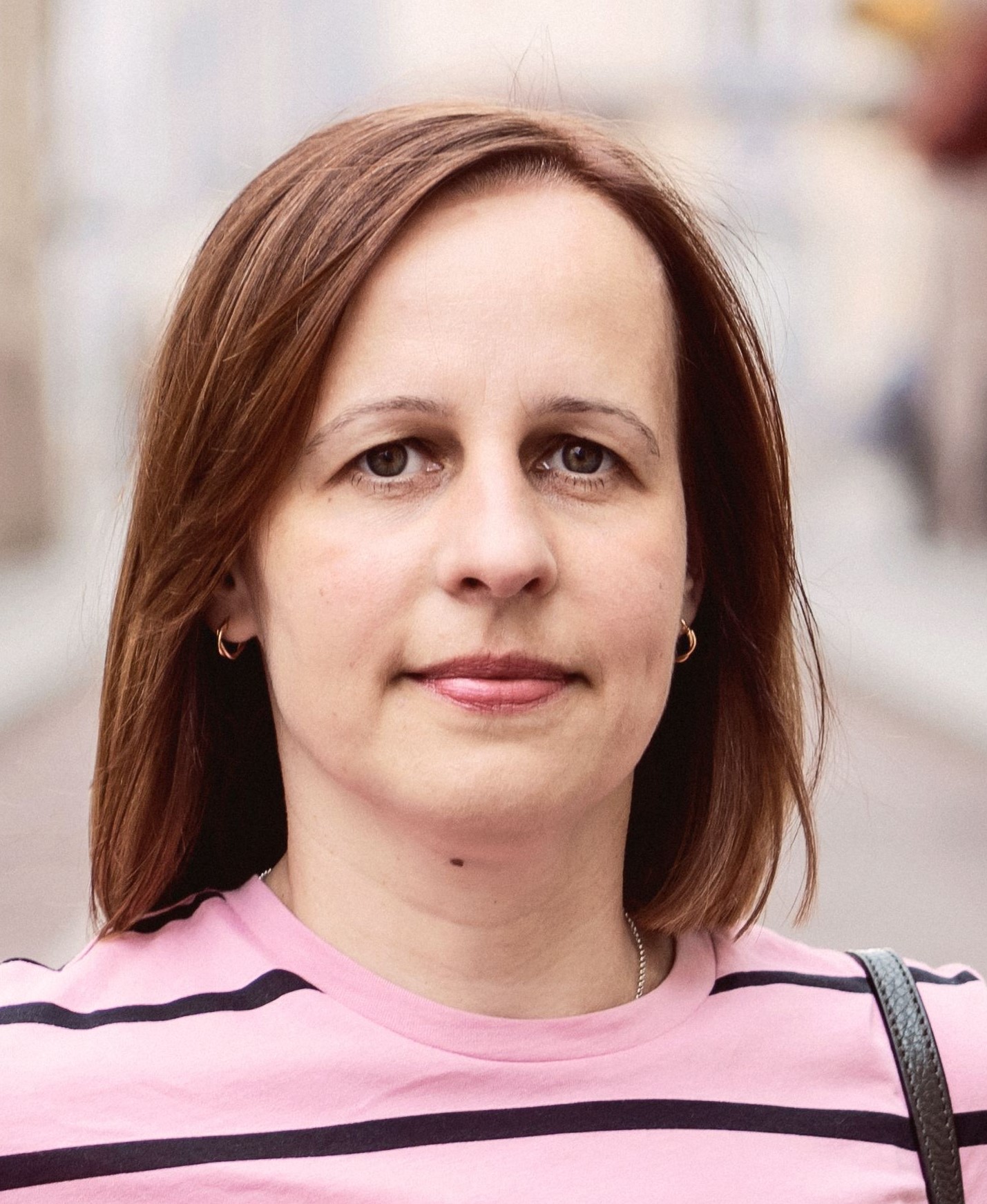
Berta Tilmantaitė is an Associate Professor of Partnership at the Faculty of Communication, affiliated with the Department of Book, Media and Publishing Studies. Her academic qualifications include a Master's degree in Multimedia Journalism (2011, Beijing Foreign Studies University) and a Bachelor's degree in Journalism (2009, Vilnius University). She teaches courses such as Multimedia Expression , Multimedia Storytelling , and Journalism for undergraduate programs in Visual and Audio Expression and Multimedia Expression. Her research interests align with her department's focus on media, publishing, and digital cultures. She actively contributes to academic activities, including participation in editorial boards and scientific conferences, though specific projects or awards are not detailed in the provided texts. Teaching qualifications include advancements in pedagogical methods, though specifics remain unspecified. No scientific awards, grants, or recent publications are listed in the available data. Her professional activities extend to cultural and creative sectors, though further details are omitted.
ISM University of Management and EconomicsLithuania
Paulius Rauba is a Visiting Lecturer at ISM University of Management and Economics and a PhD candidate in Machine Learning at the University of Cambridge. He holds a BSc from ISM and an MSc from the University of Oxford, where he is also an Oxford Shirley Scholar. His research focuses on fundamental machine learning, model evaluation, robustness, and quantitative social science. He teaches courses in Econometrics, Data Science, and Elements of Artificial Intelligence. Paulius leads Gauss, a company specializing in deploying machine learning models, and has advised the European Commission on AI systems. His work spans academia, industry, and international organizations, emphasizing data-driven solutions for business and social challenges. Education: BSc, ISM University of Management and Economics MSc, University of Oxford His research explores model robustness, AI applications in healthcare, and conflict analysis through statistical and neural methods. Recent articles address topics like self-healing ML frameworks and context-aware model testing. Paulius is committed to advancing AI ethics and practical deployment. Awards: Oxford Shirley Scholar As a leader in Gauss, he bridges academic innovation with industry needs, focusing on scalable AI solutions. His advisory roles and grants underscore his interdisciplinary impact.
Rimantas Plungė is a Professor at the Department of Contemporary Arts, Faculty of Arts, Vytautas Magnus University. His academic career spans over a decade, with significant contributions to media education and digital art research. Doctor of Sciences (2010) Professor (2020) Department of Contemporary Arts Faculty of Arts Plungė's research focuses on interdisciplinary art and media education , particularly how computer animation and artificial intelligence transform artistic creation. His work bridges digital culture with traditional media, exploring the evolution of visual storytelling in contemporary films and documentaries. His students' recent theses demonstrate applications of AI in filmmaking, data visualization in photography, and experimental documentary techniques. The research trends highlight digital humanities and ethical implications of technology in art. Plungė supervises advisees across diverse media projects, including: Dovydas Bučas - Documentary narrative authenticity Kajus Jurevičius - AI-algorithm collaboration in video art Ugnė Lisauskaitė - AI portrayal in cinema His work continues to shape modern media culture and creative education in Lithuania.
Dr. Vytautas Čyras serves as an Associate Professor at Vilnius University's Faculty of Mathematics and Informatics, specifically within the Institute of Computer Science and Department of Software Engineering. With over three decades of academic experience since 1984, he bridges computer science and legal theory through groundbreaking interdisciplinary research. Education: Master's in Applied Mathematics (Computer Science) from Vilnius University (1979) Doctorate from Moscow State University's Faculty of Computational Mathematics and Cybernetics (1985) Second Master's in Law from Vilnius University and German Law Centre (2007) Dr. Čyras' research spans legal informatics, information systems, and computer science. His primary focus includes artificial intelligence and law, regulatory compliance, legal requirements, and pioneering work in legal visualization. His Structural Blanks approach to programming with recurrences demonstrates deep expertise in both foundational computer science and legal applications. His research explores how visual and multisensory approaches can transform legal reasoning and compliance in digital environments. His publication trajectory reveals an evolution from technical computer science topics toward sophisticated legal informatics applications. Recent work emphasizes multisensory legal machines, legal visualization frameworks, and the integration of AI with legal reasoning systems. He has made significant contributions to understanding how legal norms can be transformed into operational rules for virtual environments and digital governance systems. Professional Activities: Active participant and organizer of major legal informatics conferences including IRIS, Baltic DB&IS, and EGOVIS Contributor to European Framework Programme projects including VirtualLife and SKY-Scanner Longstanding member of the Lithuanian Computer Society and its Intellectics Section Dr. Čyras teaches courses including Artificial Intelligence, Knowledge Representation, and Human-Computer Interaction. His interdisciplinary background enables him to bridge theoretical legal concepts with practical applications in regulatory compliance systems and legal technology development.
ISM University of Management and EconomicsLithuania
Dr. Gurram Gopal serves as an Industry Professor at Illinois Institute of Technology and a Visiting Professor at ISM. He has held roles as a strategy consultant, manager at ZS Associates, and supply chain executive at Tellabs. His research focuses on business strategy, supply chain optimization, sustainability, and corporate social responsibility. He has published over 50 papers and presented globally at conferences like PRME. Dr. Gopal has received prestigious honors including the Fulbright Scholar Award (2011-2012) and selection as a Fulbright Specialist Candidate (2013-2018). He teaches courses in operations management, supply chain analytics, and global business processes. His work integrates technology applications with ethical business practices, emphasizing innovation in process management and B2B marketing. Notable contributions include studies on blockchain in humanitarian logistics, AI adoption in retail, and sustainable marketing's impact on customer loyalty. He leads educational initiatives in Ireland, India, and Turkey, advocating for global supply chain resilience and data synchronization strategies.
Reda Adomaitienė is an Assistant Professor at the Gender Studies Centre , part of the Faculty of Communication at Vilnius University . Her research focuses on gender studies, sociology of gender, and intersections with science/culture. She actively engages in projects like municipal gender equality communication and academic integration challenges. Key roles include project leadership in career competency development and sociocultural research for the Alytus City Theater. Member of Alytaus mokslininkų asociacija (since 2021) and Lithuanian Sociological Society (since 2010) Supervised student research on career choice factors and gendered habits Organized/coordinated conferences like Gender studies and activism 2022 and training programs Publications emphasize gender equality in local governance and academic institutional frameworks. Expert contributions include equality advisory roles (2020–2021) and pedagogical trainings in motivational education and data visualization.
Prof. Konstantinos Dallas is the Head of the Department of Digital Cultures and Communication at Vilnius University's Faculty of Communication. He holds a DPhil in Classical Archaeology from the University of Oxford (1987), with a thesis on costume analysis in Attic grave stelae. His research focuses on digital memory, socio-technical infrastructures, and semiotic practices in social media. Currently leading projects like 'Integrative Digital Memory for Communities,' he explores cultural identity formation through digital platforms. Research interests include cultural heritage representation, social media analytics, and interdisciplinary methodologies. He co-authored key works on museum quality evaluation via social media and digital archival frameworks. His work bridges archaeology's traditional methods with modern digital humanities approaches. Recent publications emphasize digital memory curation, contested heritage discourse analysis, and ontology development for social media practices. He participated in editorial roles for journals like Information & Media and co-organized conferences on populism in media. Active in academic governance, he sits on dissertation committees and contributes to communication education through courses on research design.
Georgios Sakellariou is a Lecturer at the Department of Contemporary Arts within the Faculty of Arts at Vytautas Magnus University , where he supervises bachelor's theses in music production and audiovisual art. He has guided 10 students between 2023-2025 on projects ranging from genre fusion to technological experimentation. Department: Contemporary Arts University: Vytautas Magnus University Supervision Focus: Electronic music, cultural identity, and technology His research interests center on interdisciplinary music production , particularly the integration of traditional cultural elements with modern electronic techniques . This includes: Lithuanian folk music in reggae contexts Digital sampling in hip-hop Hauntological sound design Vinyl as contemporary art medium Biodata sonification for plant music Key trends in his students' recent work (2023-2025) show cross-genre experimentation , DIY production methods , and technology-driven artistic expression . While no specific awards are mentioned in available data, his supervision reflects engagement with multisensory art installations and experimental electronic composition .
Viktor Medvedev is an Associate Professor and Senior Researcher at Vilnius University's Institute of Data Science and Digital Technologies, where he serves as Project Lead Researcher in the Blockchain and Quantum Technologies Group. His work focuses on the intersection of machine learning, data visualization, and cybersecurity applications. Dr. Medvedev earned his Doctor of Science in Computer Science Engineering in 2007 from Vilnius Gediminas Technical University and the Institute of Mathematics and Informatics. His doctoral research centered on 'Research on the application of feedforward neural networks for multidimensional data visualization,' establishing the foundation for his continued work in data analysis and visualization techniques. His research interests span machine learning , deep learning , data visualization , and cybersecurity applications . Specifically, he has made significant contributions to keystroke dynamics authentication , behavioral biometrics , dimensionality reduction techniques , and medical data analysis . His work often bridges theoretical computer science with practical applications in security and healthcare domains. Dr. Medvedev's publication record demonstrates a consistent trajectory of research excellence, with recent work focusing on advanced authentication systems using deep learning, pancreatic cancer detection through machine learning, and innovative approaches to data visualization. His research shows a clear evolution from foundational work in neural networks for data visualization to contemporary applications in cybersecurity and medical diagnostics. ICAISC'06 - Best Presentation Award (The 8th International Conference on Artificial Intelligence and Soft Computing) ICANNGA 2007 - Best Young Researcher Paper Award in Neural Networks DAMSS 2021, 2022, 2023 - Best Poster Awards As a Project Lead Researcher in the Blockchain and Quantum Technologies Group, Dr. Medvedev oversees research initiatives that combine cutting-edge technologies with practical applications. His work in cybersecurity has particular relevance to critical infrastructure protection, where insider threat detection using behavioral biometrics represents a significant contribution to the field.
Linas Aidokas is a Researcher at the Artificial Intelligence Laboratory within the Institute of Data Science and Digital Technologies at Vilnius University . His work focuses on humanoid robots, robotics, and human-robot interaction, particularly in educational and assistive contexts. Education: Not explicitly mentioned in the text. Research Interests: Linas specializes in humanoid robots and robotics, with a strong emphasis on their applications in education and therapy. His research also explores human-robot interaction, including communication control systems using the Lithuanian language. Additionally, he investigates data visualization techniques to address cognitive biases like exponential growth bias. Recent Publications: His 2024 studies examine humanoid robots' potential for autism therapy and Lithuanian language integration in robot interaction systems. Earlier 2023 works focus on exponential growth bias in data visualization and educational interventions to mitigate it. Other Activities: Linas served as a judge for the VILIPO competition and participated in the Science Popularization Festival "Spaceship Earth" from 2021 to 2022. Contact: Reach him at Akademijos St. 4, 621, Vilnius, or via phone at +370 69 34 8901.
Prof. Dr. (HP) Saulius Gudas is an Affiliated Professor in the Cybersocial Systems Engineering Group of the Institute of Data Science and Digital Technologies at Vilnius University . His office is located at Akademijos St. 4, room 603, Vilnius, Lithuania. Education & Background: While explicit degrees are not listed in the provided source, his long-standing professorship and extensive publication record spanning over a decade indicate advanced doctoral training and senior academic status. Research Interests: Prof. Gudas focuses on the intersection of software engineering, enterprise modelling, and knowledge-based systems . Core themes include: Causal knowledge modelling to enhance agile enterprise application development. Model-driven approaches for ensuring business-IT alignment. Deep knowledge-based evaluation and interoperability of enterprise applications. Quality modelling of web services and financial process mining. Publication Trends: Across the most recent works (2017–2024), a clear trajectory emerges from foundational enterprise modelling and interoperability assessment toward leveraging causal models and data analytics to improve agile development processes, service quality, and financial anomaly detection. Doctoral Supervision & Training: Prof. Gudas has successfully supervised the following PhD projects: Andrius Valatavičius – “Assessment of application program interoperability using autonomous computing technologies” (defended 2019). Mindaugas Jusis – “Research on synchronization methods for autonomous port loading processes” (2016–2020). Karolis Noreika – “Evaluation of the application development process using an improved Agile project management method” (2019–2023). Laboratory & Team Involvement: As a senior member of the Cybersocial Systems Engineering Group, he contributes to interdisciplinary projects that integrate software engineering methodologies with socio-technical system analysis within the larger Institute of Data Science and Digital Technologies.