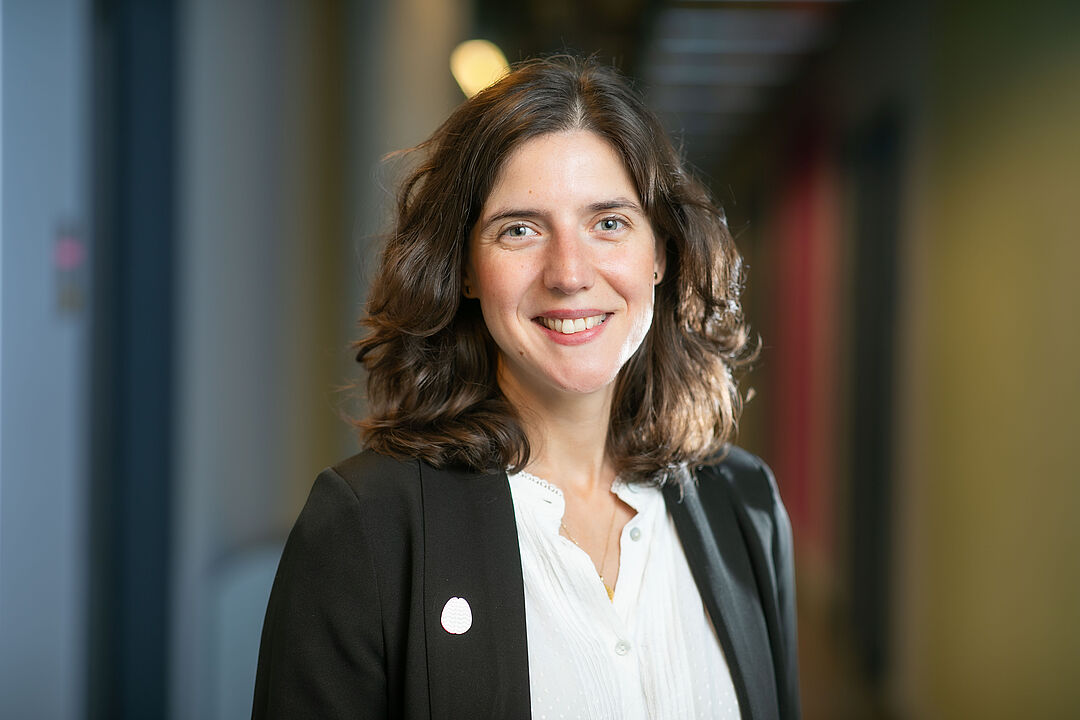
Jeremy Blackburn is an Associate Professor in the Department of Computer Science at Binghamton University. He co-founded the International Data-driven Research for Advanced Modeling and Analysis Lab ( iDRAMA Lab ) and leads its Binghamton satellite. His research focuses on large-scale measurement and analysis of social media, particularly the behavior of malicious actors and disinformation campaigns.
Prof. Dr. Andrea Sick is Professor of Cultural and Media History/Theory at the University of the Arts Bremen (HfK Bremen) where she leads the Digital Media study program. She founded the Binational Artistic PhD Program, collaborating with institutions including Leiden University, University of Groningen, and University of Gothenburg. Her research explores intersections between technology, art, and cultural production through both academic and curatorial work. Education includes studies in German Studies, Political Science, Cultural Studies, and Art History at Heidelberg, Bremen, and Hamburg universities, culminating in a 2001 PhD from Universität Hamburg on cartographic knowledge systems. She co-directs the art-science project thealit Frauen.Kultur.Labor , producing exhibitions, conferences, and publications. Research focuses span: Technological media's impact on artistic production Art-biology-information technology intersections Performance art history/theory Queer Studies frameworks Artistic research methodologies Generative AI in cultural analysis Her work critically examines how digital tools transform cultural documentation and archival practices. Recent projects include: Latent Museums (AI analysis of museum collections) The Dynamic Archive (ongoing digital archiving project) Re Capitulating.Queer (2024-2026 curatorial project) Administrative roles include: Dean of Art and Design (2012-2018) Co-Rector for Research & International Affairs (2018-2023) Lead of Binational Artistic PhD Program (since 2022) Awards include the Heinrich-Böll-Stiftung doctoral scholarship (1998-2001). She mentors 12+ PhD students in artistic research, including projects on sonic archaeology, queer archives, and decolonial practices.
David W. Hogg is Professor of Physics and Data Science in the Center for Cosmology and Particle Physics in the Department of Physics at New York University. He serves as Senior Research Scientist in the Astronomical Data Group in the Center for Computational Astrophysics of the Flatiron Institute and maintains an affiliation with the Max-Planck-Institut für Astronomie in Heidelberg. His primary research focuses on observational cosmology, particularly approaches that use galaxies to infer physical properties of the Universe. He also conducts significant research on stellar kinematics in the Milky Way and the measurement and discovery of exoplanets. Across all domains, Hogg develops engineering systems and statistical methodologies that enable large-scale astrophysical projects for both his research group and the broader community. Recent work demonstrates expertise in robust statistical methods, particularly dimensionality reduction techniques like Robust-HMF. His research bridges theoretical statistics with practical applications in major astronomical surveys including Gaia, SDSS-V, and SPHEREx. He frequently explores connections between Bayesian and frequentist approaches to astronomical data analysis, with recent work on nuisance parameter integration, anomaly detection, and robust matrix factorization. Research supported by NYU, NASA, NSF, Moore Foundation, Sloan Foundation Additional support from Max Planck Society, Humboldt Foundation, ERC, Simons Foundation Hogg is actively involved in major astronomical projects including Astrometry.net, Gaia, and SDSS, with long-term comprehensive goals of analyzing all galaxies, stars, and astronomical images. His work emphasizes open science principles, reproducible research practices, and the development of publicly accessible tools for the astronomical community.
Yen-Chi Chen is an Associate Professor in the Department of Statistics at the University of Washington. He also holds positions as a Data Science Fellow at the UW eScience Institute and as a co-investigator and statistician at the National Alzheimer's Coordinating Center. His academic career spans multiple interdisciplinary fields including statistics, data science, and astrostatistics. Chen's educational background includes a Ph.D. from Carnegie Mellon University, where he received prestigious awards including the Umesh K. Gavasakar Thesis Award (2017) and the William S. Dietrich II Presidential Ph.D. Fellowship Award (2015). His research focuses on nonparametric statistics, topological data analysis, missing data methodologies, cluster analysis, manifold learning, and applications in large-scale structure analysis and astrostatistics. Chen has made significant contributions to the development of statistical methods for analyzing cosmic web structures, GPS data, and causal inference with continuous treatments. His work bridges theoretical statistics with practical applications in astronomy, neuroscience, and public health. Analysis of his recent publications reveals a strong emphasis on developing novel statistical frameworks for complex data structures, particularly focusing on density-based methods, manifold learning, and approaches that address challenges in missing data and causal inference without standard assumptions. ASA Noether Early Career Scholar Award, American Statistical Association (2022) CAREER Award, National Science Foundation (2022-2027) Umesh K. Gavasakar Thesis Award, Carnegie Mellon University (2017) William S. Dietrich II Presidential Ph.D. Fellowship Award, Carnegie Mellon University (2015) Chen has advised numerous graduate students across multiple publications, with a focus on developing new statistical methodologies. His research has been supported by major funding agencies including the National Science Foundation and the National Institutes of Health. He is actively involved in several research groups including the UW Geometric Data Analysis Group, the UW Center for Statistics and the Social Sciences, and the National Alzheimer's Coordinating Center.
Prof. Dr. Julius Schöning is a Professor at the Faculty of Engineering and Computer Science , Osnabrück University of Applied Sciences. His research focuses on Artificial Intelligence , Human-Computer Interaction , and Computer Vision within agricultural contexts. 2019–Present: Professor, Hochschule Osnabrück 2018–2019: System Architect, ZF Friedrichshafen AG 2014–2018: Researcher, University of Osnabrück 2009–2013: Project Lead/System Engineer, CLAAS Harsewinkel Education: M.Sc. in Intelligent Embedded Microsystems (Freiburg), B.Eng. in Mechatronics (DHBW Stuttgart) His research spans smart agriculture , quantum NLP , and explainable AI systems , with recent work on vibrotactile warning systems, AI compliance frameworks, and hybrid dataset applications in farming. Publications emphasize interdisciplinary approaches bridging technology and agricultural practice . Scientific honors include: DAAD Stipendium for conference participation Best Paper Award (2018) IEEE GHTC Student Paper Contest Winner (2016) Sonderpreis für gute Lehre (2017) Finalist/Falling Walls Lab (2015)
Berit Greinke is an Assistant Professor of Wearable Computing at the Berlin University of the Arts (UdK) and the Einstein Center Digital Future (ECDF) since 2018, previously serving as a researcher at UdK's Design Research Lab and DFKI (2016-2018). Her academic foundation includes a PhD from Queen Mary University of London (2017), an MA from Central St Martins (2009), and a Diploma from Weissensee Academy of Art Berlin (2007). Her educational trajectory: PhD in Media and Arts Technology, Queen Mary University of London (2017) MA in Design for Textile Futures, Central St Martins College of Art and Design (2009) Diploma in Textile and Surface Design, Berlin Weissensee School of Art (2007) Greinke's research pioneers the convergence of craft, textile design, and digital technology, with core expertise in electronic textiles and smart materials. She investigates metamaterial-based 'metatextiles' for electromagnetic applications and explores transdisciplinary collaboration between designers and scientists, particularly regarding 'negative data' in creative and scientific workflows. Her current UdK work focuses on four interconnected domains: performing materials for expressive textile/fashion design; multi-modal sensing converting visual processes into haptic/audible experiences; micro-to-macro material design spanning nanostructures to final products; and transdisciplinary processes for technology-art-science collaboration. Analysis of her 2020-2025 publications reveals dominant trends in sustainable textile electronics, with emphasis on knitted/folded sensor structures, origami-inspired capacitive shape estimation, and social sustainability in e-textile communities. Her work uniquely bridges fundamental material science (e.g., textile metamaterials) with artistic applications (e.g., interactive orchestra garments) and industrial production challenges. Berit Greinke supervises PhD students including Giorgia Petri. Her junior professorship is co-financed by SAP under a public-private partnership model, supporting projects like WEAR (Wearable technologists engage with artists for responsible innovation) and STELEC (Sustainable Textile Electronics), which emphasize ethical co-design and industry-academia collaboration. She leads research within UdK's Institute for Product and Process Design and collaborates with the Design Research Lab (formerly part of Connected Textiles group), focusing on sustainable industrial production of electronic clothing and transdisciplinary innovation frameworks.
Mehrdad Salehi is a researcher at the Chair of Computer Science Applications in Medicine at the Technical University of Munich (TUM) . His work focuses on the intersection of computer science and medical imaging, with expertise in ultrasound technology, deep learning, and surgical navigation systems. Key research areas include sonification of medical data, 3D ultrasound reconstruction, and machine learning-based segmentation. He has contributed to innovative projects like PRO-TIP calibration phantoms and ColibriDoc autonomous docking systems. His publications highlight trends in acoustic feedback mechanisms, neural radiance fields for medical imaging, and real-time image analysis. He can be reached at mehrdad.salehi@tum.de .
Prof. Dr. Diamantis Panagiotopoulos is a Professor of Classical Archaeology at Heidelberg University's Institute of Classical Archaeology, serving as its Managing Director since 2012. His academic foundation includes a doctorate from Heidelberg University (1996) and a habilitation from Salzburg University (2003), both focused on Aegean Bronze Age archaeology. Panagiotopoulos's research explores Aegean Bronze Age societies, with emphasis on seal practices, iconography, cultural interactions, and archaeological landscapes. His work integrates theoretical frameworks with material culture analysis to examine Minoan-Mycenaean administration, transcultural exchanges in the Eastern Mediterranean, and heritage preservation strategies. His publications reflect a strong trajectory toward computational methods in archaeology and interdisciplinary approaches, with recent articles leveraging digital tools for seal analysis and landscape modeling. Earlier works established foundations in ritual studies and cross-cultural encounters. Awards include fellowships from the German Archaeological Institute (DAI), DAAD, and DFG, recognizing his contributions to Bronze Age archaeology. He directs excavations at Koumasa (Crete) and co-leads the Heidelberg Corpus of Minoan and Mycenaean Seals.
Carlos Enrique Palau is a prominent researcher in the field of Internet of Things (IoT), edge computing, and cyber-physical systems. His work focuses on interoperability, security, and scalability in distributed systems, particularly in industrial and smart city applications. He has contributed to frameworks for cloud-edge continuum integration, blockchain-based IoT solutions, and federated computing architectures. Key areas of research include: IoT interoperability and semantic frameworks Edge computing and distributed workload management Cybersecurity for IoT and critical infrastructure Smart port logistics and real-time data analytics Cognitive services in legacy port management systems His recent work explores: Data-as-a-Product frameworks for Industry 4.0/5.0 Autonomous workload scheduling in energy-efficient edge-cloud systems Deception mechanisms for IoT security Self-* capabilities in cloud-edge nodes Palau has collaborated extensively with institutions like Universitat Politècnica de València and international partners in projects funded by EU initiatives. His research addresses practical challenges in industrial IoT deployments, smart city infrastructure, and emergency management systems.
Andrea Stevenson Won is a researcher at Cornell University in the Department of Communication , focusing on virtual reality (VR), human-computer interaction, and social dynamics in immersive environments. Her work explores avatar embodiment , nonverbal behavior , and accessibility in VR for users with disabilities. Research Themes : Virtual embodiment and its psychological effects Accessibility solutions for blind and low-vision users in social VR Nonverbal communication analysis in immersive environments Pro-social behavior through VR interventions Collaborative VR systems and AI integration Recent Article Trends : 2024: Investigated avatar behavior transformation in mixed reality ( MRTransformer ), AI-guided accessibility tools, and nonverbal cue adaptations 2023-2022: Focused on educational VR applications, 360° video narratives, and longitudinal team dynamics 2021-2014: Pioneered avatar embodiment studies, anxiety detection via movement tracking, and homuncular flexibility in VR
Dr. Burkhard Maess is a Research Professor and Group Leader at the Max Planck Institute for Human Cognitive and Brain Sciences, leading the Methods and Development Group Brain Networks. His research focuses on auditory and language processing, signal analysis, and dynamic modeling of neuronal networks. He holds a Diploma in Physics (University of Leipzig, 1987) and a PhD in Physics (University of Leipzig, 1990). His career includes postdoctoral positions at the Academy of Sciences of the GDR and the Free University of Berlin before joining the MPI in 1995. Since 2000, he has led research groups on MEG/EEG signal analysis and cortical network dynamics. His work integrates advanced neuroimaging techniques like MEG and EEG to study sensory processing, neural network dynamics, and the effects of aging on auditory attention. Key contributions include developing high-resolution BEM-FMM methods for source localization and analyzing cross-frequency coupling in neuroscience data. His group also explores spinal cord electrophysiology and the neural underpinnings of perceptual decision-making. Dr. Maess’ research spans cognitive neuroscience, biomedical engineering, and computational modeling, with a focus on bridging empirical findings with theoretical frameworks in neuroscience.
Meeyoung Cha is a Professor at KAIST and Scientific Director of the Max Planck Institute for Security and Privacy (MPI-SP) in Bochum, Germany. Her research focuses on Data Science for Humanity, encompassing computational social science, misinformation dynamics, and human-machine interaction. She holds a PhD in Computer Science from KAIST (2008) and previously served as Chief Investigator at the Institute for Basic Science and Visiting Professor at Facebook. Her work addresses societal challenges such as poverty mapping, fraud detection, and AI ethics. Key achievements include best paper awards and recognition like the Hong Jin-Ki Creator Award (2024) and Test-of-Time Awards (ACM IMC 2022, AAAI ICWSM 2020). Research interests span AI ethics, social media analysis, and interdisciplinary applications of machine learning. Notable projects include modeling climate risks via satellite imagery and analyzing chatbot interactions' societal impacts. She leads the MPI-SP's Data Science for Humanity Group, mentoring over 20 students across PhD and postdoc programs. Education: PhD in Computer Science (KAIST, 2008) Affiliations: MPI-SP (Germany), KAIST Key Awards: Hong Jin-Ki Creator Award, Korean Young Information Scientist Award, Test-of-Time Awards Her publications bridge computational methods with societal issues, including climate modeling, protein engineering, and algorithmic fairness. Current projects explore geospatial AI for economic development and ethical AI design frameworks.
Prof. Dr. Harald Reiterer is a leading researcher in Human-Computer Interaction at the University of Konstanz, where he has served as Professor since 2009. His academic journey includes a Ph.D. (1991) and habilitation (1995) from the University of Vienna, followed by roles including Senior Researcher at Fraunhofer FIT and Associate Professor at Konstanz. He currently holds multiple leadership roles: Dean of the Faculty of Sciences , Senator of Section 1 , and Consulting Dean . Ph.D. in Computer Science (University of Vienna, 1991) Venia Legendi (Habilitation) in HCI (University of Vienna, 1995) His research focuses on: Interaction Design for mixed reality environments Information Visualization in immersive contexts Hybrid User Interfaces combining physical and virtual elements 3D Object Manipulation in handheld AR Behavioral Analytics through mHealth interventions Recent work explores: Avatar representation in Augmented Reality (2024) Node selection efficiency in Virtual Reality (2024) Peripheral vision toolkits for Head-Mounted Displays (2023) Hybrid interface optimization for Mixed Reality (2023) Smartphone AR extensions for Spatial Memory (2023) Key scientific contributions: Landeslehrpreis 2021 for interdisciplinary exhibition design Development of Colibri cross-reality toolkit (2023) Foundational work on Re-locations for remote collaboration (2022) He leads numerous projects including: SMARTACT (Smart Mobility, 2015-2023) SFB TRR 161 (2009-2027) on XR interface measurement Blended Library (2011-2015) for future library design
Dr. Gaël Kermarrec is a researcher at the Boundary Layer Meteorology Group , part of the Institute of Meteorology and Climatology within the Faculty of Mathematics and Physics at Leibniz University Hannover . His work focuses on atmospheric turbulence, GNSS applications, and remote sensing for environmental monitoring. Boundary layer meteorology Turbulence theory GNSS signal processing Terrestrial laser scanning Climate change impacts Geodetic time series analysis His research integrates advanced mathematical models like LR B-splines and Matérn covariance with large eddy simulations to study: Atmospheric turbulence effects on optical/GNSS signals Hydrospheric mass loading Deformation analysis of terrain/port infrastructure Climatic sea-level changes Machine learning for remote sensing The 15 most recent articles (2025-2023) demonstrate his focus on: GNSS-based turbulence detection AI-enhanced climate mapping Advanced surface approximation techniques Multi-sensor data fusion Stochastic modeling of geodetic observations Environmental impacts on optical measurements He has developed tools like the Klimascanner QGIS plugin for urban climate resilience and contributes to: Understanding atmospheric scale lengths Improving TLS/GNSS deformation monitoring Analyzing hydrospheric changes Wavefront modeling Ionospheric corrections
Fatma Deniz is a Full Professor (W3) of Computer Science at Technische Universität Berlin, supported by the Berlin Equal Opportunities Program. She leads the Chair of Language and Communication in Biological and Artificial Systems, and is a member of the Berlin Bernstein Center for Computational Neuroscience. Her roles include membership in TU Berlin's Executive Board and the Berlin University Alliance Steering Committee. She holds a Ph.D. (Dr. rer. nat.) from TU Berlin and a Diploma in Computer Science from Technische Universität München, with research training at Caltech and postdoctoral work at UC Berkeley. Her research focuses on understanding neural mechanisms of language processing, integrating computational neuroscience, cognitive science, and artificial intelligence. Key areas include semantic representation dynamics, cross-modal neural alignment, and language learning in bilingual contexts. She has pioneered studies showing the brain's invariant semantic processing across reading and listening modalities. Her grants include an ERC Starting Grant (2023-2028) for studying language learning shifts and a NSF-BMBF CRCNS grant on bilingual representations. She co-edited The Practice of Reproducible Research: Case Studies in Data Science (UC Press, 2017) and contributed to foundational work on reproducible data science methodologies. She has advised projects in neuroimaging, AI ethics, and computational linguistics, and collaborates with institutions like UCSF and the German Academic Exchange Service. Her lab explores neural correlates of language through fMRI, MEG, and machine learning techniques.