Dr. Maryam Safari is a Senior Lecturer at RMIT University in the School of Accounting , Department of Accounting, Info Sys & Supply Chain. Specializes in accounting, corporate governance, ethics, and qualitative research Focuses on social capital, technology impact, and accountability frameworks Her research spans: Corporate Governance : Board effectiveness, ASX compliance, remuneration structures Accountability : Multinational corporate responsibility, post-disaster reforms Education : ICT integration in curricula, learner engagement dynamics Sustainability : Environmental disclosures, GRI standards Recent publications examine: Gender equality implementation challenges Digital transformation in accounting education Voluntary disclosure practices during crises Scientific awards include: 2025 Wiley Top Cited Article Award for work in Accounting & Finance Professional roles: Chair, Accounting History Special Interest Group (AFAANZ) Chair, RMIT Women Researchers’ Network Editor, Issues in Accounting Education journal Open to Masters Research and PhD student supervision .
Dr. Clara Bradbury-Rance is a Senior Lecturer in Gender and Sexuality Studies at King's College London's Department of Interdisciplinary Humanities, within the Faculty of Arts & Humanities. She holds a BA in Film Studies (University of Exeter), an MRes in Sexuality and Gender Studies (University of Exeter), and a PhD in Screen Studies (University of Manchester). Her research focuses on LGBTQ+ film and media, queer theory, and feminist pedagogy, with a particular emphasis on lesbian representation, queer masculinity, and digital media's impact on queer taste. Her notable works include the monograph Lesbian Cinema after Queer Theory (2019) and contributions to journals like Feminist Media Studies and Camera Obscura . She has been awarded a Senior Fellowship of the Higher Education Academy (2023) and sits on the editorial boards of MAI: Feminism and Visual Culture and the Screening Sex book series. Her teaching includes modules on queer screen cultures and feminist pedagogy across BA and MA programs at King's. Clara collaborates with institutions like the British Film Institute, BFI Flare, and international festivals such as the Mexico Women's Film Festival. Her current projects include a semi-autobiographical study on queer screen cultures and a BFI Classic analysis of Céline Sciamma’s Portrait of a Lady on Fire . She also leads interdisciplinary PhD workshops through Queer@King’s, fostering queer and trans studies across disciplines.
Dr. Shawn Day serves as Head of Department and Lecturer in Digital Humanities at the Department of Geography, University College Cork (UCC), Ireland. He holds a PhD in Cultural Geography from UCC and an MA in History from the University of Guelph. His interdisciplinary research spans Cultural Geography of Irish Craft Beer, 19th Century Economic History, Spatial Humanities, and the History of Health and Medicine. He has pioneered digital humanities projects like the Digital Humanities Observatory (DHO) and contributed to global initiatives such as the Dariah Project and NeDiMAH. Education: PhD Cultural Geography, UCC (2024) MA History, University of Guelph (2004) BA Management Economics, University of Guelph (1988) Research focuses on spatial humanities methodologies (GIS, statistical modeling) applied to Victorian public mental hospitals and Canadian economic history. He has co-authored key works on DH infrastructure and led projects like the 1871/1891 Canadian census databases. His work bridges academic scholarship with entrepreneurial ventures, including founding software companies in Canada. Professional roles include Director of the European Health Futures Forum and Open Knowledge Foundation Ireland, and Coordinator of the Canadian Network for Economic History. He actively collaborates with institutions like Trinity College Dublin and the Royal Irish Academy.
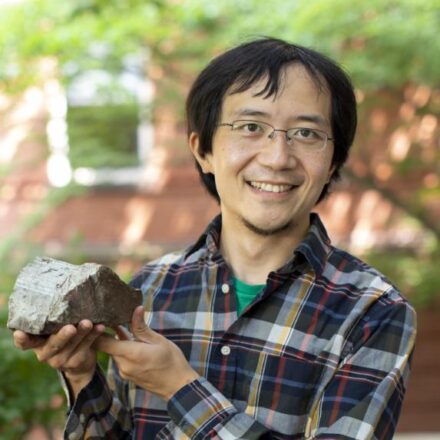
Roger Fu is a Professor of Earth and Planetary Sciences at Harvard University, leading the Paleomagnetics Lab since 2017. He holds a PhD in planetary sciences from MIT and specializes in paleomagnetism, studying planetary magnetism, tectonic reconstructions, and early Earth history. His research integrates geodynamical modeling with advanced tools like the quantum diamond microscope (QDM), enabling high-resolution magnetic imaging of geological samples. Education: BS from Harvard University (2009, Earth and Planetary Sciences & Astrophysics), PhD from MIT (planetary sciences). Post-PhD research included living with the Mapuche people of Chile to study traditional astronomy. His work focuses on Earth's geodynamo, Martian crustal magnetism, and the solar nebula's magnetic fields. Research interests span planetary formation, early Earth dynamics, and the application of QDM technology to study magnetic minerals. Notable contributions include detecting early plate motions and a reversing geodynamo by 3.5 Ga, and analyzing Martian meteorite magnetism to infer crustal cooling processes. His articles emphasize interdisciplinary approaches, linking paleomagnetic data with geodynamic models to address questions about planetary interiors and climate history. The QDM has been pivotal in visualizing magnetic mineral distributions, enhancing confidence in paleomagnetic interpretations. Labs/Teams: Director of Harvard's Paleomagnetics Lab. Collaborates with applied physics groups to advance QDM technology. Research group includes the Fu Group and the QDM development team.
Hugo Ledoux is an academic affiliated with the Faculty of Architecture and the Built Environment at Delft University of Technology, specializing in Urban Data Science. His research focuses on 3D geospatial modeling, including CityGML standards, terrain analysis, and automated reconstruction of urban structures. He has contributed to projects like the DeltaDTM coastal terrain model and the cjdb database solution for CityGML. Education: Not explicitly detailed in text, but inferred through academic roles and publications. Research interests emphasize 3D geoinformation systems, remote sensing applications, and urban data science. His work addresses challenges in 3D city models, building reconstruction, and geospatial validation tools like Val3dity. Recent efforts include improving global terrain models using ICESat-2 and GEDI lidar data. Publications span automated building reconstruction workflows, terrain accuracy assessments, and semantic-guided facade modeling. Awards include the Best Presentation at 3DGeoInfo 2020 and the U.V. Helava Award for Best Paper in 2011. Ledoux has supervised 4 academic works and actively participates in conferences, editorial activities, and open-source software development for geospatial applications. Labs/Teams: Involved in TU Delft’s 3D geoinformation research, contributing to tools like 3dfier and CityJSON for 3D data interoperability.
Dr. Steven Rousso-Schindler is an Associate Professor of Anthropology at California State University, Long Beach (CSULB). He specializes in visual anthropology and the anthropology of the Middle East, with a focus on national narrative theory and the impact of geopolitical structures on cultural practices. His research in Palestine/Israel analyzes how media and historical narratives shape social identity, particularly regarding the Israel apartheid wall's effects on Palestinian communities. He has produced numerous ethnographic and documentary films exploring environmental activism, green architecture, and cultural transformations in China and the U.S. Education: Ph.D. in Anthropology, University of Southern California (2007) M.A.V.A. in Visual Anthropology, University of Southern California (1999) B.A. in Anthropology, University of Maryland (1993) Research Interests: Visual anthropology and ethnographic film production National narrative theory and Middle East politics Demographic studies and medical anthropology Environmental advocacy and sustainable living Cultural dynamics in rural China and the U.S. Film and Academic Contributions: His work spans documentary films screened internationally (e.g., PBS, Society for Visual Anthropology Festival) and peer-reviewed articles on topics like algorithmic fairness, Israeli population politics, and marriage practices in rural China. Notable films include At Street Level (2016), which won the Impact Doc Awards, and Our Mother’s Recipe (2003), broadcast nationally on PBS. Awards and Recognition: Award of Recognition, Impact Doc Awards (2017) Teaching and Mentorship: Dr. Rousso-Schindler teaches courses such as Ethnographic Film Production and directs student fieldwork. Though no advisees are listed, his mentorship is evident through collaborative film projects and academic publications. Labs/Teams: His research involves interdisciplinary teams, including collaborations with filmmakers and anthropologists in China and the Middle East, though no formal lab names are specified.
Francesco Ragusa is a Research Fellow at the University of Catania, Italy, holding an Industrial Doctorate in Computer Science (2021). He spent part of his PhD at the University of Hertfordshire, UK. His work focuses on First Person (Egocentric) Vision, including Human-Object Interaction, Industrial Applications, and Augmented Reality. He co-founded NEXT VISION s.r.l., an academic spin-off from the University of Catania since 2021. Key projects include the MECCANO dataset for industrial human-object interactions and the EGO-EXO4D initiative analyzing skilled human activity from multi-perspective views. Research interests span Computer Vision, Pattern Recognition, and Machine Learning. He contributed to seminal datasets like MECCANO and ENIGMA-51, advancing understanding of human behavior in industrial settings. His work emphasizes practical applications, such as wearable assistive systems and visual navigation solutions. Ragusa has delivered tutorials at major conferences (e.g., ICIAP, VISIGRAPP) on First Person Vision’s history, challenges, and trends. He actively promotes industrial collaborations and has secured grants including PNRR MUR (Code E63C22001940006) and EU funding under Next Generation EU. His teaching and professional activities include organizing workshops on egocentric vision for AI-driven assistants and industrial safety systems. Current research directions involve multimodal synthetic data utilization, gaze-based interaction analysis, and cross-modal fusion for human-robot collaboration.
Julien Perret is a senior researcher at the National Institute of Geographic and Forest Information (IGN) in France, affiliated with the LASTIG laboratory and STRUDEL research team. His work spans geographical information science, urban dynamics, and historical cartography. Current Affiliation: National Institute of Geographic and Forest Information (IGN) Research Team: LASTIG, STRUDEL Academic Rank: Senior Researcher (Directeur de Recherche) Education Habilitation (HDR) in Geographical Information Science, Université Paris-Est (2016) PhD in Computer Science, Université Rennes 1 (2006) Engineering Degree in Computer Science, INSA Rennes (2002) Research Interests Perret's research focuses on urban dynamics through computational approaches, including agent-based modeling and 3D urban simulation . He investigates historical cartographic data like the Napoleonic land registry and Cassini Carte de France to understand long-term urban evolution. His work integrates geospatial data with epidemiological modeling using digital twins, particularly for pandemic simulations. Scientific Contributions Key publications include: 2025: Building change models for urban densification studies 2024: Historical map vectorization benchmarks 2017: Scalable point cloud management systems 2015: 3D analysis of urban regulation impact 2005: Procedural geometry modeling with FL-systems Advising and Collaborations Perret has supervised multiple PhD students and collaborated on projects like SoDUCo (1789-1950 Paris urban dynamics) and iSpace&Time (4D GIS for city modeling). He contributes to open-source GIS tools like GeOxygene .
Sam Goree is an assistant professor of computer science at Stonehill College, specializing in the intersection of computer vision, human-computer interaction, and digital humanities. His work critically examines how AI systems evaluate aesthetic quality and human-centered aspects of AI, with particular focus on subjectivity in machine learning models and evaluation methodologies. PhD in Informatics from Indiana University's Luddy School of Informatics, Computing and Engineering Goree's research explores aesthetic phenomenon problems in computer vision, particularly image aesthetic quality assessment. He investigates how subjective human perceptions of beauty and aesthetics can be modeled and evaluated in AI systems, challenging traditional approaches that assume a universal standard of beauty. His work draws from feminist theory, philosophy of science, and media archaeology to develop more human-centered evaluation methods for AI systems. Goree is particularly interested in how subjectivity manifests in both data and models, and how this affects algorithmic bias. His recent publications reveal a strong trend toward human-centered evaluation of AI systems, with increasing focus on subjectivity, personalization, and philosophical foundations of aesthetics in computer vision. Goree's work bridges technical computer vision research with critical humanities perspectives, examining how historical contexts shape current AI practices. He has developed novel evaluation frameworks that incorporate qualitative human feedback, moving beyond traditional quantitative metrics to better understand how AI systems interact with human perception and values. Goree actively engages with teaching challenges in the era of generative AI, developing pedagogical approaches that help students develop critical thinking skills while navigating new AI tools. His teaching philosophy emphasizes maintaining human-centered learning experiences even as AI transforms educational landscapes. He advocates for assignments that require contextual understanding and creativity, which are difficult for AI to replicate. His research is organized around understanding the "aesthetic gap" - the difference between information extractable from image pixels and the feelings images evoke in humans. Goree's lab explores how to build more transparent and accountable AI systems that acknowledge their subjective nature rather than claiming false objectivity.
Lars Gustaf Andersson is a Professor and Manager of Research and Research Education at the Film Studies department within the Centre for Languages and Literature at Lund University. He has been active in academia since completing his doctoral dissertation in 1992, serving as Senior Lecturer and Reader in Film Studies from 2002, and was promoted to Professor in 2012. His educational background includes: PhD in Film Studies (1992) Professor Andersson's research focuses on experimental and alternative film practices, with particular expertise in Swedish experimental cinema, the cultural practices of immigrant film, and the aesthetics of unfinished works. His current research explores international and Swedish experimental filmmakers from the 1920s to the present, with special interest in 'the aesthetics and cultural contexts of the sketch and the unfinished art work.' He is planning a new project titled 'Momentary Life Worlds' and has participated in Advanced Study Groups at the Pufendorf Institute, including 'Artistic and educational processes in music and literary creation' and 'Creative Data Lab.' His recent scholarly output shows a strong trend toward interdisciplinary work bridging film studies, literary creation, and digital humanities. His publications span experimental film analysis, poetry, and creative writing, reflecting his dual roles in both Film Studies and the Creative Writing Program. The research demonstrates consistent engagement with avant-garde traditions, Scandinavian cinema, and the intersection of visual and literary arts. His professional recognition includes: Member of The Swedish Writer's Union Member of Swedish PEN Member of Writers for Democratic Action Member of The New Society of Letters at Lund Member of The Royal Society of Letters at Lund Member of the board of The Einar Hansen Research Fund Chairman of the board of Filmform Foundation Affiliated researcher at the Birgit Rausing Centre for Medical Humanities Professor Andersson has supervised nine doctoral dissertations as primary advisor and several others as assistant supervisor, spanning Film Studies, Swedish Didactics, and Practical Theology. His current research projects include 'Creative Data Lab' (2025-2026) and previously led projects such as 'The Cultural Practice of Immigrant Film' (2013-2015) and 'Between the lines. Poetry as knowledge' (2013-2019). He is actively involved with the Creative Data Lab research group and has participated in the Pufendorf Institute's Advanced Study Group on artistic and educational processes, reflecting his commitment to interdisciplinary collaboration between film studies, literary creation, and digital methodologies.
Amin Parsa is a Senior Lecturer at Halmstad University 's School of Education, Humanities and Social Sciences, holding a doctoral degree in Public International Law from Lund University. His interdisciplinary research bridges international law, sociology of law, and technology studies, focusing on digital/visual technologies in armed conflicts and border control, intersectional AI, and abolitionist politics. PhD in Public International Law, Lund University Senior Lecturer at Halmstad University (School of Education, Humanities and Social Sciences) Regional Editor, Retfærd: Nordic Journal of Law and Justice Research explores: Visual targeting systems in counterinsurgency Legal materiality of distinction principles Digital geopolitics of data flows Abolition of carceral systems Historical legacies of slavery in Swedish law Recent publications examine structural racism in policing, compulsory hijab jurisprudence, and AI's impact on legal practice. His work appears in journals like Retfærd and International Law and Technological Control . Affiliated with Halmstad's TRAINS Research Programme.
Gabriella Pataky serves as Associate Professor at the Department of Visual Education within the Faculty of Education at Eötvös Loránd University (ELTE), Budapest, while concurrently holding an external lecturer position at Moholy-Nagy University of Art and Design (MOME) since 2011 in the Design and Visual Arts Teacher MA programme. Her academic foundation includes Master’s studies at MOME and doctoral research at ELTE’s Doctoral School of Education, culminating in the dissertation “Object Creation and Design in the Visual Education of Children aged 6-12, in the Light of a Diagnostic Measurement”. This trajectory established her expertise in childhood visual development assessment. Her research pioneers built environment education and visual competence development through alternative pedagogical frameworks, with emphases on outdoor learning, international community art projects, and diagnostic measurement systems. Current work integrates CEFR_VL competency models to map 2D/3D skill progression in early childhood, while advancing European visual literacy standards through cross-border collaborations. Methodologically, she bridges historical analysis (e.g., comparing children’s drawing skills across 40 years) with practical classroom applications. Publications from 2013-2018 reveal consistent focus on kindergarten-to-primary visual arts education, featuring diagnostic tools for plastic arts development and built environment integration. Her scholarship demonstrates strong international orientation through German/Hungarian bilingual outputs and European framework contributions, while maintaining practical relevance for teacher training programmes. Key recognitions include: Knight’s Cross of the Hungarian Order of Merit (2020) Pro Educatione Artium Visualium Award (2012) Higher Education Visual Education College Award (2012) As Editor-in-Chief of InSEA IMAG magazine’s editorial art team, she shapes global discourse in art education while directing international community art projects for teacher development. Her leadership extends to conference organization and cross-cultural curriculum initiatives that connect Hungarian practices with European frameworks. Current projects emphasize outdoor pedagogy and built environment education through collaborative international networks, positioning visual competence development as central to holistic childhood education within community contexts.
Assoc. Prof. Peter Labanc, PhD is a medieval historian at the Department of History, Faculty of Arts, Trnava University , Slovakia. His research focuses on medieval nobility , church hierarchy , and prosopography with regional expertise in Spiš and medieval Hungary/Slovakia . 2007 Mgr., 2011 PhD, 2022 Assoc. Prof. from Trnava University 2010 Jagiellonian University study, 2018 Vatican Archives research Research Specialties He investigates medieval social structures , toponymy , and Digital Humanities applications in historical sciences. His work includes GIS mapping for historical analysis and TEI encoding of medieval documents. Recent publications examine ecclesiastical boundary formation (2022) and Medieval Latin paleography (2016). Scientific Awards Queen Hedwig Scholarship (2010) for Central/Eastern European researchers Grants Project leader for VEGA 1/0610/13: Spiš Provostry transition studies VEGA 1/0162/16: Medieval toponymy corpus KEGA 013TTU-4/2020: Digital Humanities curriculum development
Marion Tränkle is an active lecturer at the ArtScience Interfaculty of the Royal Academy of Art, The Hague (KABK), where she coaches students and develops courses on systems thinking and rule-based performance systems. She also serves as a Coach and Industrial Liaison at Eindhoven University of Technology's Department of Industrial Design since 2014, working with Professor Harm van Essen on 'social interactions with shared systems.' Her educational background spans multiple disciplines: PhD from Brunel University London (2012), MSc in Media Technology from Leiden University (2005), BA in Contemporary Dance from Amsterdam School of the Arts (2001), and an Engineer Diploma in Architecture from Technical University Berlin (1993). She has also completed specialized training in Software Engineering (2017/18) and Stage Lighting (2016). Tränkle's research interests center on the intersection of performance art, systems thinking, and technology. She creates work that deliberately negotiates 'the constructive tension between the carefully constructed and generative processes, between risk and responsibility, and between autonomous performance and human intervention.' Her practice integrates computational processes with live-performance, often using electronics, EEG data, and interactive systems to create immersive stage scenarios. She explores how simple rules can generate complex emergent behaviors, drawing from complexity science and computing principles. Her recent creative works demonstrate a consistent exploration of brain-computer interfaces, interactive light systems, and collaborative performance structures. Projects like (un)focussed and BLINK...and sync use EEG data to create real-time visual and auditory experiences, while ON TRACK and TAROT investigate mechanical systems and embodied symbolism through performance. 2nd Prize in the competition for short dance films on Internet 'webdans' (2001) Netherlands Foundation for Visual Arts, Design and Architecture Research/Travel Grant (2010) e-MobiLArt participant, funded EU CULTURE 2007 Programme (2008-09) Brunel University Doctoral Research Scholarship/fee waiver (2007-10) Tränkle actively collaborates with artists, designers, and engineers through collectives like NOW (with Ivo Bol and Roos van Berkel) and previously In Serial. She is a member of the BAU Committee for Amsterdam's independent performance scene. Her teaching philosophy emphasizes that 'making, learning, and teaching are reciprocal processes that flourish best in collaborative, and project-based environments,' which she implements through workshops, seminars, and interdisciplinary courses across multiple institutions in the Netherlands, Germany, and Canada.
Simone Marsi is a Research Fellow at University of Parma and Adjunct Professor of Contemporary Italian Culture at University of Urbino . Their work bridges literary historiography, contemporary Italian literature, and didactic innovation. PhD in Philological-Literary, Historical-Philosophical and Artistic Sciences from University of Parma Research explores contemporary Italian literature (with focus on authors like Rebora, Satta, Gadda), literary canon formation processes during Italy's unification, and literature-science-environment intersections . Recent publications examine spatial representation in visual-literary works, Dante's modern pedagogical adaptations, and fascist traces in educational materials. Current articles (2024-2022) reveal a trajectory through literary historiography , geocritical analysis , and ecocritical frameworks . Key trends include textbook evolution , gender studies in canon debates, and digital humanities approaches to memory.