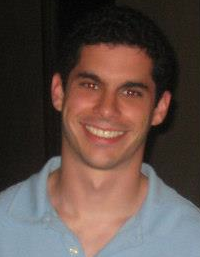
Justin Thaler is an Associate Professor in the Department of Computer Science at Georgetown University, researching algorithms and computational complexity with focus on probabilistic proof systems, verifiable computation, and streaming algorithms. Education: PhD Computer Science, Harvard University BS Computer Science and Mathematics, Yale University Research Interests: Develops protocols for verifying computations (including zero-knowledge proofs), analyzes the power of low-degree polynomials, and designs efficient streaming/sketching algorithms for large datasets. Publications: Research advances theoretical foundations of proof systems, with recent work on SNARKs, lookup arguments, and Fiat-Shamir security. Authored the monograph 'Proofs, Arguments, and Zero-Knowledge'. Advising & Labs: Advises PhD students in theoretical computer science. Contributes to open-source projects including DataSketches library of streaming algorithms. Currently on leave at a16z crypto research.
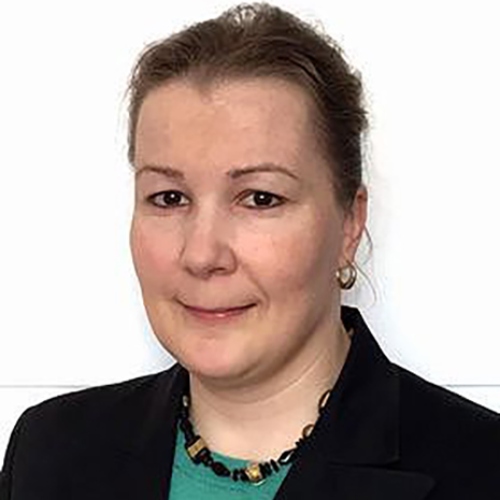
Olivier FARGES is a Senior Lecturer and HDR (Habilitation à Diriger des Recherches) holder at the University of Lorraine, affiliated with ENSGSI (École Nationale Supérieure de Géologie et Sciences Industrielles) within the Groupe INP. He serves as Director of Industrial Partnerships at ENSGSI and is part of the LEMTA Laboratory (CNRS-University of Lorraine), focusing on multiphysics and multiscale modeling of heat transfer in complex environments. His academic roles include teaching courses such as Heat and Mass Transfer, Fluid Mechanics, Scientific Computing Modeling, and Renewable Energy. Dr. FARGES holds a Ph.D. in Energy and New R&D (2014) and an Engineering degree in Energy Engineering (2010), both from the École de Mines Albi. His research emphasizes coupled conductive-radiative heat transfer in porous media, thermal property characterization of heterogeneous materials, and Monte Carlo-based computational methods for energy systems. He has contributed to advancements in photovoltaic system modeling, solar thermal power optimization, and urban climate studies. His work bridges theoretical and applied thermal engineering, with applications in sustainable energy systems, material science, and industrial partnerships. Key research themes include radiative transfer modeling, multiphysics simulation frameworks, and the development of innovative tools for thermal property measurement and energy performance assessment.
Tae Eun Kim is an Associate Professor in Maritime Safety Management at UiT The Arctic University of Norway, working within the Department of Technology and Security. Her research, teaching, and industrial collaboration focus on maritime safety and human factors, with particular expertise in maritime safety management, accident analysis, Maritime Autonomous Surface Ships (MASS), and human factors in maritime operations. Dr. Kim's research spans four interconnected domains: maritime safety management and leadership, maritime accident and casualty analysis, Maritime Autonomous Surface Ships (MASS), and human factors in maritime operations. She has developed assessment instruments like the Safety Leadership Self-Efficacy Scale (SLSES) and conducted STAMP-based causal analyses of maritime accidents. Her work on MASS addresses safety challenges in mixed navigational environments and examines leadership competencies for autonomous shipping operations. Her human factors research explores how technological advancements impact navigators' performance, crew dynamics, and safety outcomes, including gender parity issues in the maritime industry. Dr. Kim's publication record reveals a strong focus on the intersection of maritime safety, technology, and human performance. Her recent work increasingly addresses autonomous shipping technologies, with numerous publications on AI decision transparency, learning analytics in maritime simulator training, and multi-modal data analysis for nautical skill development. She has conducted systematic reviews on simulator training approaches and scenario design, contributing significantly to methodology development in maritime education and training. Her research demonstrates a clear trajectory toward integrating emerging technologies with traditional maritime safety practices as the industry transitions toward greater automation. Dr. Kim is actively involved in several significant research projects, including the i-MASTER EU Horizon Europe Research and Innovation Project, the REFRAME project, and the SPRICE project (Multidisciplinary approach for spray icing modelling). She is a member of both the Advanced Maritime Ship Operations research group and the Maritime Safety Science (MARSCI) Research Group, demonstrating her commitment to collaborative research in maritime safety science. Dr. Kim teaches several specialized courses at UiT, including SVF-3206 Safety Management and Accident Investigation, TEK-3014 Navigation Technology, MFA-2100 Maritime Digitalization, MFA-8010 Maritime HTO (Human-Technology-Organisation) and Innovation, and MFA-2018 Maritime Administration and Leadership. Her teaching portfolio reflects the interdisciplinary nature of her expertise, bridging engineering, safety science, and organizational behavior in maritime contexts.
Dr. Jana Uher is an Associate Professor of Transdisciplinary Research at the University of Greenwich's School of Human Sciences. She leads the Science Practice Hub (SciPHub) and serves on committees for the Centre for Research and Enterprise in Language (CREL). Her work focuses on epistemological and methodological foundations of measurement in psychology, addressing crises in replicability and validity. She has held roles at institutions like the London School of Economics and Free University Berlin, and contributed to cross-species personality research. Her research challenges psychometric assumptions and promotes interdisciplinary collaboration. Key roles include Associate Editor for Frontiers in Psychology and Quality & Quantity . Awards include recognition for teaching and supervision excellence. Her transdisciplinary philosophy-of-science paradigm integrates methodologies across disciplines, emphasizing rigorous data generation principles. Recent work critiques rating scales and advocates for transparent measurement practices to resolve psychology's replication crisis. Publications span over 80 articles and media engagements, addressing topics like behavioral inhibition in primates and individual differences across species. Teaching includes modules on personality psychology and research methods at Greenwich, LSE, and Berlin universities.
Yang Cheng is an Associate Professor at the Department of Materials and Production, Aalborg University, Denmark. He holds a PhD in Mechanical Engineering from the same institution (2011), focusing on manufacturing strategy and network dynamics. His research spans supply chain management, sustainability, and global operations, with a focus on integrating technology and environmental policies into manufacturing systems. He leads or participates in high-impact projects like MAASive (2024–2026) and the Sino-Danish Center Research Project (2011–present), addressing resilience in value networks and global operations innovation. Research Interests: Supply Chain Management & Integration Sustainability & Green Technologies Manufacturing Strategy & Networks Technology Policy & Digitalization Global Operations & Cross-Border Collaboration Recent Work Trends: Prof. Cheng's 2025 articles emphasize blockchain in sustainable supply chains, green technology investments under carbon policies, and digitalization's ethical implications. His 2024 research explores smart factories, EU battery regulations, and robotization in manufacturing. These studies blend quantitative models with case-based analysis to address real-world challenges. Awards: 2024 Emerald Literati Awards – Outstanding Reviewer Advising & Grants: As PI for multiple Global Operations Management PhD programs (2019–2025), he guides research on digital transformation and university-industry collaboration. His projects receive funding from Danish and international grants, focusing on innovation and resilience in manufacturing networks. Labs/Teams: Collaborates with the Center for Industrial Production at Aalborg University and engages in international partnerships through the Sino-Danish Center. Active editorial roles include Production Planning & Control and Journal of Manufacturing Technology Management .
Steven Livingston is the Founding Director of the Institute for Data, Democracy, and Politics (IDDP) and a Professor of Media and Public Affairs at George Washington University (GW). He has held leadership roles including Director of the Political Communication Program (1996–2002, 2004–2006) and Acting Director of the School of Media and Public Affairs (2004–2006). He founded the Public Diplomacy Institute (now the Institute for Public Diplomacy and Global Communication) in 2000. His research focuses on media/information technology’s role in governance, human rights, and global security, with notable work on the 'CNN Effect' and disinformation’s impact on democracy. Education: Ph.D. (Political Science, University of Washington, 1990), M.A., and B.A. from the University of South Florida (1984 and 1981). Professional milestones include a 2019 $5M grant for IDDP, a Goldsmith Award (Harvard), and Fulbright Scholarship (declined). Research interests span media-tech governance, political disinformation, international development, and security implications of technological advancement. His work examines how information systems shape policy in Africa, the Middle East, and post-conflict regions. Recent publications address disinformation’s erosion of democratic institutions and ICT’s role in African governance. Key grants and fellowships: $5M IDDP grant (2019), Ford Foundation-funded research (1992–1993), McCormick Tribune Foundation funding (1995), and multiple visiting roles at Harvard, Cambridge, and the Brookings Institution. Labs/teams: IDDP (founded 2019), Public Diplomacy Institute, and collaborative projects with NDU Press and the Carr Center for Human Rights Policy. His consulting spans UN agencies, governments, and NGOs on media strategies and public opinion dynamics.
Thomas S. Dee is the Barnett Family Professor at Stanford University's Graduate School of Education (GSE), a Research Associate at the National Bureau of Economic Research (NBER), a Senior Fellow at the Stanford Institute for Economic Policy Research (SIEPR), and a Senior Fellow (Joint) at the Hoover Institution. He serves as the Faculty Director of the John W. Gardner Center for Youth and Their Communities and holds multiple administrative appointments including Member of the Executive Committee of Stanford's Public Policy Program. Professor Dee's research focuses on the use of quantitative methods to inform contemporary issues of public policy and practice, with particular emphasis on education policy, economics of education, and program evaluation. His work spans critical areas including pandemic education effects, chronic absenteeism, school choice, educational equity, STEM education, and research methodology. He has made significant contributions to understanding how quantitative analysis can shape effective educational policy and practice. Dee's recent publications reveal a strong focus on pandemic-related educational disruptions, examining issues like chronic absenteeism, enrollment declines, and school reopening preferences. His research demonstrates expertise in quasi-experimental methods and has increasingly addressed questions of educational equity, particularly regarding underrepresented students in STEM fields. His 2025 work on Advanced Placement computer science shows how course design can broaden participation among female and minority students. Outstanding Public Communication of Education Research Award, American Educational Research Association (2024) Peter H. Rossi Award for Contributions to the Theory or Practice of Program Evaluation, Association for Public Policy Analysis and Management (2024) Research-Practice Partnership Award (co-recipient), California Educational Research Association (2023) Community Outcomes and Impact Award, International Association for Research on Service Learning and Community Engagement (2020) Raymond Vernon Memorial Award, Association for Public Policy Analysis and Management (2019) Raymond Vernon Memorial Award, Association for Public Policy Analysis and Management (2015) Professor Dee actively contributes to academic discourse through editorial roles on journals including the American Educational Research Journal and Education Finance and Policy. His teaching portfolio includes advanced courses in quantitative policy analysis and quasi-experimental research design, reflecting his methodological expertise. While specific grant information isn't detailed in the provided text, his extensive publication record and leadership roles suggest significant research funding support. As Faculty Director of the John W. Gardner Center for Youth and Their Communities, Dee leads initiatives connecting Stanford with community organizations to address youth development challenges. His work bridges academic research with practical community applications, emphasizing the importance of research-practice partnerships in creating meaningful educational change.
Robert Goodspeed is an Associate Professor of Urban and Regional Planning at the University of Michigan's Taubman College of Architecture and Urban Planning. His work bridges urban planning with information technologies, focusing on tools like GIS and sociotechnical systems to enhance planning processes and outcomes. Education: Ph.D. in Urban and Regional Planning, Massachusetts Institute of Technology M.C.P., University of Maryland B.A. in History, University of Michigan (dissertation on Detroit’s Gratiot Area Redevelopment Project) His research explores digital planning tools, smart cities, and collaborative practices. He leads initiatives like the Justice InDeed project addressing racial housing covenants and the Michigan Eviction Project analyzing eviction dynamics. Scientific Awards: Donald Schön Award for Excellence in Learning from Practice (2013) Planetizen Leading Thinker in Urban Planning and Technology Goodspeed teaches courses in scenario planning, negotiation techniques, and planning methods, with recent offerings including URP 526 (Scenario Planning) and URP 522 (Negotiation, Collaboration & Equitable Engagement).
David Danks is a Professor of Data Science, Philosophy, and Policy at the University of California, San Diego. His work bridges AI ethics, causal inference, and policy, focusing on governance frameworks for emerging technologies. He leads research on trustworthy AI systems, healthcare technology applications, and sociotechnical risks. Danks is affiliated with the DIVER Lab, exploring interdisciplinary approaches to AI's societal impact. His research spans causal discovery algorithms, ethical AI design, and the intersection of science and policy. Notable themes include mitigating bias in quantum machine learning, dynamic certification for autonomous systems, and addressing unforeseen technological harms. He has contributed to national AI policy through roles like the National Artificial Intelligence Advisory Committee. Publications emphasize ethical challenges in AI development, such as algorithmic fairness, epistemic utility, and moral responsibilities in dual-use technologies. His work frequently intersects with healthcare innovation, including personalized hemodynamic models for surgical risk reduction. While no formal awards or grants are listed, Danks' involvement in high-profile initiatives like the CCC Whitepaper on pandemic prevention underscores his leadership in translational ethics and policy.
Jordi McKenzie is an Associate Professor in the Department of Economics at Macquarie University. His research focuses on industrial organization, cultural economics, and digitization, with notable contributions to digital piracy, film industry economics, and generative AI in media. He holds degrees from the University of Sydney (PhD, MEc Hons) and the University of Tasmania (BEc Hons). Education: PhD in Economics, University of Sydney MEc (Hons) in Economics, University of Sydney BEc (Hons) in Economics, University of Tasmania Research interests include AI ethics in content creation, cultural trade patterns, and the economic impact of streaming services. His work has been published in journals like Poetics and Journal of Cultural Economics . He has contributed to policy discussions on digital piracy, music industry recovery post-pandemic, and author rights in AI-generated content. Recent projects include studying the transformation of data into trusted data products, digital piracy policy impacts, and subscription video on demand’s effect on legal/illegal consumption. He received the Mallen Lifetime Achievement Award in 2014 for contributions to film industry economics. McKenzie has engaged in media commentary on topics like Netflix’s viewing metrics, music collaboration impacts, and talent show biases. His research often bridges empirical evidence and policy implications, emphasizing the cultural and economic dimensions of digitization.
Dr. Richard Jiang is a Senior Lecturer (Associate Professor) at Lancaster University's School of Computing and Communications. His research focuses on Artificial Intelligence, Neurocomputing, Quantum AI, Privacy Computing, and Medical Computing. He has pioneered secure pattern recognition in encrypted domains and quantum neuromorphic computing. With over £1M in research grants from EPSRC and others, he has authored 100+ publications and supervised over 20 PhD students. Dr. Jiang's work includes the Face2Brain method for neurodegenerative assessment and explainable models for brain aging analysis. He contributes actively to academic committees, editorial boards, and conferences like the World Conference on eXplainable AI. His research spans ethical AI frameworks, quantum algorithms for medical imaging, and privacy-preserving biometric systems.
Joshua Loftus is a Professor of Statistics and Data Science at the London School of Economics (LSE), Department of Statistics. His research focuses on improving data science practices to reduce bias and enhance fairness in algorithms, particularly addressing social harms and scientific reproducibility. He develops methods for statistical inference post-model selection and uses causality to analyze algorithm fairness and interpretability. His work bridges high-dimensional statistics, causal inference, and ethical AI, with a strong emphasis on practical applications using R in data science education. Before joining LSE, Loftus earned his PhD in Statistics at Stanford University, served as a Research Fellow at the Alan Turing Institute (affiliated with the University of Cambridge), and was an Assistant Professor at New York University (2017–2020). His research interests extend to the societal implications of technology, advocating for systems that prioritize human values over technical efficiency. Key research themes include counterfactual fairness, causal reasoning in algorithmic systems, and disaggregated interventions to reduce inequality. His recent work explores temporal aspects of fairness, model-agnostic auditing, and the integration of ethical frameworks into machine learning pipelines. While no scientific awards are explicitly listed, his contributions to foundational AI ethics and statistical methodology are widely recognized in academic circles. Advising and grant details are not provided in the source text, but his leadership in interdisciplinary research collaborations, such as the Turing Institute affiliation, highlights active engagement in research networks. Loftus is part of the LSE’s vibrant data science community, contributing to both theoretical advancements and applied solutions for equitable technology deployment.
Blake Miller is an Assistant Professor of Computational Social Science in the Department of Methodology at the London School of Economics (LSE), affiliated with the Data Science Institute. Their research focuses on computational methods applied to political communication in authoritarian regimes, particularly China, and the intersection of social media with political violence and identity politics. They hold a PhD from the University of Michigan (2018) and conducted postdoctoral research at Dartmouth College. Key substantive areas include: China's surveillance-driven security state and information control mechanisms Political mobilization through moral outrage and outgroup targeting Technological adaptations in authoritarian governance Methodological expertise spans machine learning, text analysis, and fairness in AI applications. Their book project Platforms and Power examines how authoritarian states delegate censorship to private platforms. Teaching focuses on quantitative text analysis and machine learning in political contexts. Research outputs include influential work on: Censorship patterns during China's zero-COVID protests Moral-emotional triggers for violence support Evaluation of active learning algorithms for text labeling Blake's work has been featured in The Washington Post , China File , and the CSIS Pekingology Podcast. They maintain an active presence in interdisciplinary research communities.
Prof. Dr. Dr. Mark-Oliver Mackenrodt, LL.M. (NYU), is a Professor at the TUM School of Management, Technical University of Munich, focusing on digital economy law, competition law, and legal economics. He holds dual doctorates in law (Dr. iur.) and economics (Dr. rer. pol.), with additional qualifications from NYU Law School and Stern Business School. His professional experience includes roles at the Max Planck Institute for Innovation and Competition, Harvard University, the German Embassy in London, and the United Nations (UNCTAD). He is also an Affiliated Research Fellow at the Max Planck Institute. Education: Ludwig Maximilian University of Munich (Dr. iur.) NYU Law School (LL.M.) University of Würzburg University of Geneva Karlsruhe Institute of Technology (Dr. rer. pol.) His research explores digital markets, antitrust practices, platform regulation, and the intersection of law, economics, and innovation. Key themes include data-driven economies, transparency in commercial practices, and the legal frameworks governing digital goods. Key Awards: German National Academic Foundation Scholarship ERP Scholarship from the Federal Ministry of Economics Faculty Prize, Ludwig Maximilian University of Munich GRUR Research Funding (Society for the Protection of Industrial Property) Labs/Teams: Affiliated with the Max Planck Institute for Innovation and Competition, contributing to interdisciplinary research on innovation, competition, and intellectual property.
Sarah Ryan is an Associate Professor at the University of North Texas (UNT), specializing in Law Librarianship, Empirical Legal Research, and Social Science methodologies. Her work bridges legal practice, education, and interdisciplinary research, with a focus on statutory reform, veterans' law, and human subjects research ethics. She holds a J.D. from Quinnipiac University, a Ph.D. from Ohio University, and advanced degrees in Library Science and Public Affairs. Education: J.D., Quinnipiac University Ph.D., Ohio University M.L.S., Texas Woman's University M.A., Ohio University B.A., Capital University Her research interests include: Empirical legal methodologies for policy analysis Interdisciplinary approaches to energy and education equity Legal frameworks for end-of-life planning Ethical research practices in human subjects studies Recent publications highlight her work in big-data rhetoric, judicial authority under US legislation, and global energy-education linkages. She has contributed to debates on IRB processes, NGO activism, and pedagogical innovations in legal research training. No scientific awards are explicitly mentioned in the profile. Her advising and grant activities remain unspecified, though her extensive publication record suggests active involvement in collaborative research teams. Professional links include UNT’s FIS Profile.