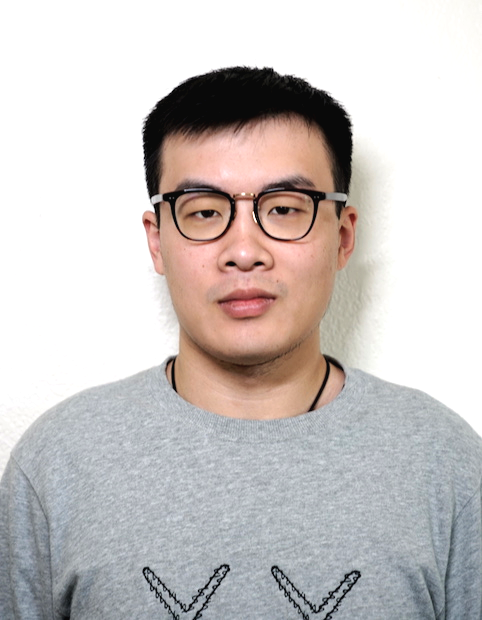
Xuanjun (Jason) Gong is an Assistant Professor in the Department of Communication and Journalism at Texas A&M University. His research program bridges computational modeling, media psychology, and neuroscience to investigate sequential media selection, information diffusion, and neural correlates of media engagement. He employs diverse methodologies including fMRI, behavioral experiments, and large-scale social media analysis. Gong's research focuses on the computational mechanisms of media choice, exploring how curiosity, mood, and cognitive processes shape decisions in dynamic media environments. His work formalizes theories like mood management and flow states using drift-diffusion models and network neuroscience approaches. Key themes include prediction of media behaviors, cross-platform information spread, and neurocognitive foundations of audience engagement. His publications demonstrate consistent emphasis on developing integrative frameworks that combine communication theory with computational rigor. Recent work advances understanding of time-dependent media selection, neural dynamics during flow experiences, and social media discourse patterns during exogenous events. Gong's research has been recognized with a Graduate Student Award (CNS21). Awards & Honors: Graduate Student Award, CNS21 (2021)
Chao Zhang is an Assistant Professor in Human-Centered AI at the Human-Technology Interaction group, Eindhoven University of Technology. His research bridges psychology and technology through data-driven methods and psychological theories, focusing on behavior change, AI-human dynamics, and trustworthy systems. MSc in Human-Technology Interaction (TU/e) PhD in Intelligent Systems (TU/e, 2019) Postdoc at Utrecht University Research interests span Human-Centered AI , Explainable AI , and Behavioral Data Science . Key contributions include: Integrating psychological principles with machine learning Modeling longitudinal behavioral data Developing interpretable AI systems for lifestyle interventions Investigating social characteristics in AI-driven environments Current work includes the ENFIELD project on Trustworthy Green AI. Scientific contributions appear in CHI Conference , arXiv , and International Journal of Social Robotics . Recognized with a TU/e PhD Thesis Award nomination in 2021.
Agneta Åkesson is a Professor of Epidemiology specializing in Nutrition and Toxicology at Karolinska Institutet's Institute of Environmental Medicine. She leads the Unit of Cardiovascular and Nutritional Epidemiology and co-leads the 'Epidemiology: Diet, contaminants and health' research group. Her work focuses on how diet, drinking water quality, and environmental contaminants influence chronic disease risk, particularly cardiovascular diseases, cancer, and metabolic disorders. She has held her professorship since 2015 and served as Deputy Head of Department from 2018–2022. Education: PhD (2000) and Master of Medical Science (2000) from Karolinska Institutet, with a Docent title awarded in 2007. Her research integrates cohort studies, biomarker analysis, and register data to explore environmental and nutritional exposures. Notable grants include projects on drinking water contaminants, PFAS health impacts, and noise pollution effects. She advises on national dietary guidelines and collaborates internationally on environmental health initiatives. Key research themes include acrylamide exposure in food, chlorination by-products in water, and the balance between nutritional benefits and toxin risks in fish consumption. Grants: Over SEK 10 million in funding for projects like 'Exposure to contaminants via food and drinking water' (2023–2025) and 'Drinking water and public health' (2021–2023). Her work has led to over 200 peer-reviewed articles, focusing on contaminants' cardiometabolic and carcinogenic effects. She mentors PhD students and postdocs, advancing translational research to inform public health policy.
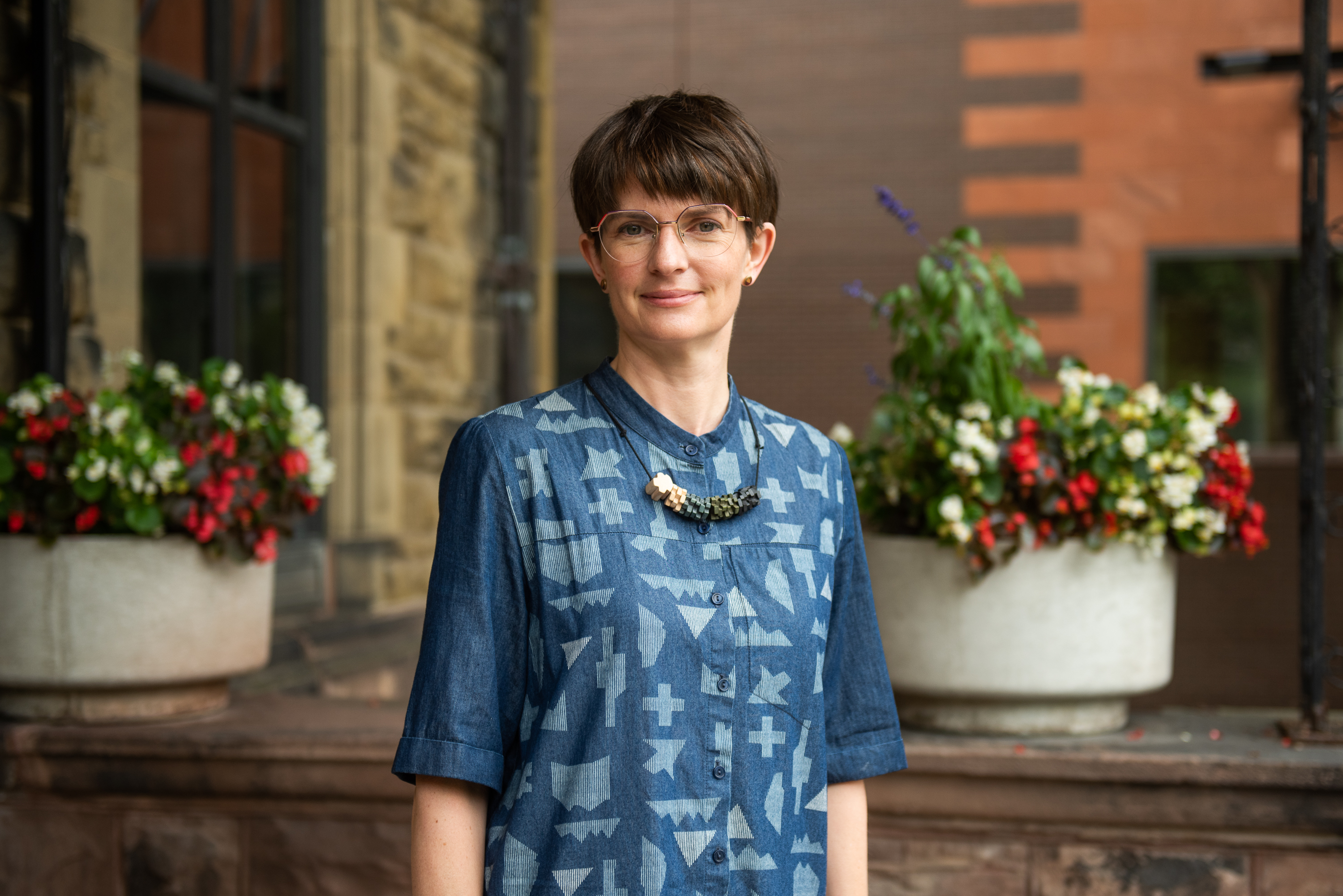
Dr. Jennifer Raso is an Assistant Professor at McGill University’s Faculty of Law, where she specializes in administrative law, socio-legal studies, and the intersection of technology with governance. Her research explores how algorithmic decision-making and data-driven systems impact procedural fairness and justice in public institutions. She holds a SJD from the University of Toronto and practiced law in Toronto before joining academia. Education: SJD, University of Toronto Faculty of Law (2018) LLB, University of Victoria Faculty of Law (2007) Research Interests: Administrative Law in Digital Contexts AI Governance and Ethical Implications Algorithmic Decision-Making in Social Assistance Her work has been funded by SSHRC and the Endeavour Fellowship. Recent publications address digital welfare systems, responsible AI, and bureaucratic accountability. She leads a SSHRC-funded project on the digital transformation of social assistance laws in Canada. Awards: 2018 Best English Article, Canadian Law and Society Association 2016 Richard Hart Prize, Cambridge Public Law Conference Professional Experience: Assistant Professor, University of Alberta Faculty of Law (2018–2022) Postdoctoral Fellow, UNSW Law (2017–2018) Legal Counsel, City of Toronto (2008–2012) Current Projects: Focus on digital governance frameworks, AI in administrative justice, and socio-legal analysis of front-line decision-making in welfare systems.
Nicole Wright, Ph.D., CPA, is an Associate Professor of Accounting and Cherry Bekaert Faculty Scholar at the James Madison University (JMU) College of Business. She holds a Ph.D. in Accounting from Virginia Tech (2014), an M.S. in Accounting and Information Systems from Virginia Tech (2013), and a B.B.A. from JMU (2002). Prior to academia, she worked as a Manager in PricewaterhouseCoopers' Assurance Business Advisory Services (2003-2010) and served as an Assistant Professor at Northeastern University (2014-2017). Her research focuses on auditing practices, corporate fraud, financial statement auditing, and ESG reporting. Notable contributions include studies on auditor judgment, fair value assessments, and the impact of technology on accounting education. She has been published in top journals like the Accounting Review and Auditing: A Journal of Practice and Theory . Awards: Kenneth R. Bartee Award for Teaching Innovation (2019), Deloitte Foundation Trueblood Seminar Co-chair (2016-2017), and Virginia Tech's 'Favorite Faculty!' Award (2012). Grants & Engagement: Her work bridges academic research with industry needs, including collaborations on audit committee dynamics and AI's role in accounting education. Dr. Wright actively contributes to professional development through her role in the Center of Audit Quality and her engagements with auditing standards bodies. Her teaching emphasizes experiential learning, integrating real-world auditing challenges into coursework.
Dr. CHENG Qiang serves as the Dean and Lee Kong Chian Chair Professor of Accounting at Singapore Management University's School of Accountancy. He joined SMU in 2011 as Associate Dean (Research) and has held leadership roles including President of the Chinese Accounting Professors' Association of North America. His academic journey includes degrees from Tsinghua University (BS, BE, MS) and a PhD in Accounting from the University of Wisconsin-Madison. Research focuses on voluntary disclosure, family ownership dynamics, corporate governance, and digitalization's impact on financial reporting. Key areas include ESG disclosure, tax aggressiveness in family firms, and analyst behavior's influence on corporate innovation. His work frequently explores how governance structures and executive incentives shape financial decisions. Publications emphasize empirical analyses in top journals like The Accounting Review and Journal of Financial Economics. Recent work addresses blockchain applications, AI's market impact, and environmental litigation spillovers. He has advised numerous doctoral candidates across SMU's DBA and PhD programs. Recognitions include SMU's Most Outstanding Faculty Awards (2013-2014) and the Lee Kuan Yew Fellowship. He currently serves on the AAA Research Committee and previously led ISCA's Research Committee. His career bridges academia and practice through editorial roles and industry engagement.
Dr Wencheng Yang is a Senior Lecturer in Computing at the School of Mathematics, Physics and Computing , University of Southern Queensland. He holds a PhD in Computing from UNSW, an MSc from Korea, and a BMgmt from Wuhan University of Technology. His research spans multiple domains including machine learning security , biometric authentication , privacy-preserving systems , and IoT applications . Education : BMgmt (Wuhan University of Technology), MSc (Korea), PhD (UNSW) Yang’s work emphasizes privacy and security in AI systems, particularly in biometric authentication (e.g., fingerprint, face, ECG) and IoT security. His recent publications focus on model inversion attacks , homomorphic encryption , and federated learning for healthcare applications. Key trends include secure face-swapping , Alzheimer’s disease prediction , and anti-forensic detection . His research has been cited 3378 times, with 1458 total downloads and 31 monthly views. While no explicit scientific awards are listed, his interdisciplinary work bridges computer science , healthcare , and cryptography . Current projects include privacy-preserving frameworks for implantable medical devices and military health systems .
Prof. Ramzi BENKRAIEM is a Full Professor and Head of Research at Audencia Business School, leading research partnerships and the Accounting, Management Control & Economics Department. He holds a PhD from Toulouse Graduate School of Management and an HDR from Western Brittany University. His research focuses on financial reporting, corporate governance, small business economics, and energy dynamics. He has extensive academic experience, including roles at IESEG School of Management and Montpellier Business School. Education: PhD in Management Sciences, Toulouse Graduate School of Management (2007) HDR (Research Supervision Qualification), IAE Brest (2011) Master in Management Sciences, IAE Toulouse (2003) Research interests span financial reporting governance, stock market reactions, small business financing challenges, energy economics, and environmental finance. He actively contributes to academic conferences and journals, including guest editor roles for special issues on small business financing and regression techniques in finance. His work bridges corporate finance, sustainability, and institutional investor behavior. He explores how climate policies, technological innovation, and governance structures influence financial markets and corporate decision-making. Recent studies highlight the intersection of green finance, carbon emissions, and global economic dynamics. Prof. BENKRAIEM serves on scientific boards for conferences like the HAEE Annual Conference and reviews for journals such as Energy Economics and Small Business Economics . His research addresses critical themes including tax avoidance, institutional investor heterogeneity, and the impact of digitalization on SME financing.
Marine BASTIEGE is an Assistant Professor in Economics, CSR, and Public Management at EM Normandie since 2022. She holds a PhD in Management Science from Université de La Rochelle (2022). Her research focuses on natural resource management conflicts, transnational corporate practices, and public authority interactions in Europe and Latin America, particularly in extractive industries and forestry sectors. She is an associate researcher at the Fondation Maison des Sciences de l'Homme (Paris). Her key research interests include energy transition governance, environmental due diligence frameworks, EU sustainability policies, and transnational corporate accountability. She has published extensively on topics like EU environmental regulations, deforestation control, and corporate social responsibility alignment with international standards. Bastiège has contributed to academic communications at conferences such as the AIMS and Colloque Politiques & Management Public. She co-authored entries in encyclopedias like Encyclopédie du management public and participated in policy-oriented projects like ClimatSup Business. Her work bridges public management with environmental and social sustainability challenges in a globalized context.
Prof. Dr. Ilker Birbil is a Professor of AI & Optimization Techniques for Business & Society at the University of Amsterdam (UvA), affiliated with the Amsterdam Business School's Business Analytics section. He previously held professorships at Erasmus University and Sabancı University, focusing on optimization and data science. His research interests include interpretable machine learning, data privacy, and optimization methods in decision-making. Education: PhD in Operations Research from North Carolina State University Postdoc at Erasmus Research Institute of Management (ERIM), Netherlands Research Interests: Optimization in data science, interpretable AI, privacy-preserving algorithms, and decision-making systems. Recent work focuses on differentially private optimization and meta-learning techniques like LESS. Key Achievements: Recipient of multiple teaching awards at Sabancı University Affiliated researcher at OPTIMAL (Optimization for and with Machine Learning) Organized workshops on ML for optimization and mathematics of ML Grants & Teams: Leads the UvA group on Optimization and Machine Learning at LNMB. Collaborates on projects blending OR and ML, including privacy-aware algorithms and revenue management systems. Labs/Teams: OPTIMAL, UvA Optimization Group, and interdisciplinary teams in data analytics.
Dr. Nughmana Mirza serves as a Lecturer in Sociological & Cultural Studies at the University of Glasgow, specializing in criminology with a focus on gender-based violence within South Asian communities. Her academic journey culminated in a PhD in Social Policy, MRes in Social Research, and MSc in Islamic and Middle Eastern History from the University of Edinburgh. Her educational background includes: PhD in Social Policy (University of Edinburgh) MRes in Social Research (University of Edinburgh) MSc in Islamic and Middle Eastern History (University of Edinburgh) Dr. Mirza's research explores the complex intersections of gender-based violence, kinship patterns, transnational migration, and criminal justice responses, with particular emphasis on South Asian women's experiences of family abuse in Scotland. Her work critically examines how micro- and macro-level contexts—including policy frameworks, cultural norms, and immigration policies—shape abuse experiences and help-seeking behaviors among marginalized populations. She investigates how South Asian women navigate abusive situations within specific cultural contexts, challenging mainstream conceptualizations of domestic abuse through intersectional analysis. Her recent publications demonstrate consistent focus on domestic abuse pathways, forced marriage interventions, methodological innovations in qualitative research, and the impact of structural inequalities on marginalized communities. The work shows progression from foundational studies on South Asian women's abuse experiences toward increasingly sophisticated analyses of systemic barriers and culturally responsive interventions. Dr. Mirza actively supervises postgraduate research, including Zarkou, Nafsika's work on Pakistani women mothering disabled children in Scotland. She has secured significant research funding including an ESRC/Scottish Government Studentship (2008) and Sociology Small Grants Competition award (2019). Her teaching portfolio includes convening and teaching 'Qualitative Research Methods' and 'Gender Relations (Contemporary Approaches to)' at postgraduate level. She maintains active professional engagements through: Gender Based Violence Forum (2018-present) Amina - The Muslims Women's Resource Centre (2018-present) Centre for Research on Families and Relationships as Associate Researcher (2018-present)
Yangming Li is a Research Fellow at the Department of Applied Mathematics and Theoretical Physics (DAMTP) at the University of Cambridge, affiliated with the Cambridge Image Analysis research group. His work bridges applied mathematics, theoretical physics, and machine learning, with a focus on developing innovative models for image analysis, generative processes, and natural language understanding. Research interests include Fourier Neural Operators, diffusion models, generative adversarial networks (GANs), and their applications in solving complex problems across scientific computing and data-driven domains. His recent contributions explore operator learning for PDEs, robust diffusion models under noisy conditions, and adversarial attacks in text watermarking systems. Publications highlight advancements in operator-based neural networks, risk-sensitive generative modeling, and domain-aware NLP frameworks. His methodologies emphasize mathematical rigor while addressing practical challenges like missing data and model expressivity limitations. Active collaborations span interdisciplinary teams at DAMTP and the broader University of Cambridge research community.
Scott Burris is a Professor of Law at Temple Law School and Professor in Temple's School of Public Health, where he directs the Center for Public Health Law Research. He has been a faculty member at Temple since 1991 and is internationally recognized for his pioneering work in public health law, particularly in legal epidemiology, policy surveillance, and the intersection of law with HIV/AIDS policy and substance abuse. Professor Burris received his J.D. from Yale Law School and his B.A. from Washington University in St. Louis. His career began during the early days of the HIV/AIDS epidemic, where he served as an attorney at the American Civil Liberties Union, lobbying and litigating on behalf of people with HIV. He edited the first systematic legal analysis of HIV in the United States, "AIDS and the Law: A Guide for the Public" (Yale University Press, 1987). Burris's research focuses on how law influences public health and health behavior, with particular emphasis on developing theory and methods for effective local health governance. His work spans international public health law, legal epidemiology, policy surveillance, substance abuse policy, and housing law. He has made significant contributions to understanding the impact of law on HIV prevention, opioid overdose prevention, and pandemic response. His recent work increasingly examines methodological rigor in legal epidemiology, the application of artificial intelligence to legal analysis, and the relationship between housing law and health equity. His extensive publication record includes over 200 books, book chapters, articles, and reports. Recent publications demonstrate his continued leadership in advancing the science of legal epidemiology, with particular attention to methodology, policy surveillance systems, and innovative applications of technology to legal analysis. American Public Health Association Law Section Lifetime Achievement Award (2014) Jay Healey Health Law Professors award (2018) Professor Burris has served as a consultant to numerous international organizations including the United Nations Development Programme, the World Health Organization, and the United Nations Office on Drugs and Crime. He founded the Public Health Law Research Program for the Robert Wood Johnson Foundation in 2009, which has supported over 80 empirical studies of the impact of law on health. His research has been funded by major organizations including the Robert Wood Johnson Foundation, the Open Society Institute, the National Institutes of Health, the Bill and Melinda Gates Foundation, and the Centers for Disease Control and Prevention. He is the founder of Legal Science, LLC, a private company dedicated to improving access to legal information and supporting policy surveillance practice. He also serves as an advisor to several international institutions including the Tsinghua University AIDS Institute, the Shanghai Academy of Social Sciences Research Center for HIV/AIDS Public Policy, and the Program in Bioethics at Monash University. His work bridges academic research, practical application, and policy development in the field of public health law.
Dr. Francine Laourou serves as a Lecturer in Accounting at the School of Economics, Finance and Accounting and holds a concurrent position as Professor at Cavalla International University. She accepts PhD students and is available for media commentary. Her research encompasses accounting technologies and financial systems, with focus areas including blockchain applications in supply chains, data mining in public sector accounting, forensic accounting for fraud detection, and entrepreneurial finance challenges in developing economies. Recent publications demonstrate evolving focus on regulatory impacts in Benin and Nigeria, with consistent exploration of technology-driven accounting solutions. Her work bridges theoretical frameworks with practical implementations in developing economies. Notable research includes blockchain-based transparency solutions, forensic accounting methodologies for public sector fraud detection, and analyses of entrepreneurial finance barriers in regulatory transitions.
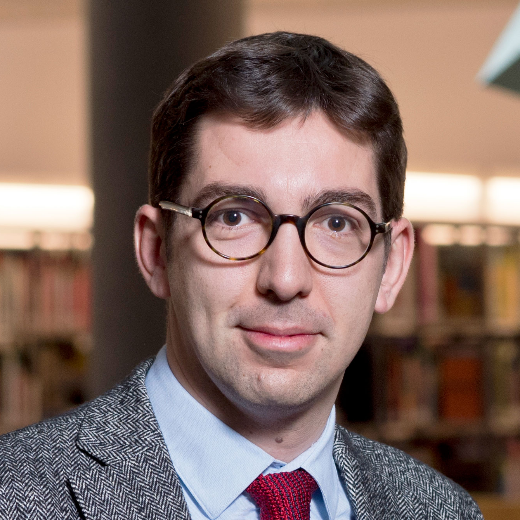
Nicola Dalla Via is a Tenured Associate Professor in Accounting at the Free University of Bozen-Bolzano, affiliated with the Faculty of Economics and Management. He holds a PhD in Business from Ca’ Foscari University of Venice and previously served as Assistant Professor at the Rotterdam School of Management, Erasmus University (until 2018). His research focuses on managerial accounting, sustainability accounting and assurance, and behavioral accounting. He has authored/co-authored publications in journals like Accounting, Organizations and Society , Auditing: A Journal of Practice & Theory , and Business Strategy and the Environment . His teaching includes courses such as Business Analytics and Data Visualization in the Master in Accounting and Finance program. His work explores topics such as sticky cost behavior, XBRL reporting innovations, and enterprise risk management frameworks, particularly in the context of Dutch corporate governance reforms. He has contributed to books on ERM and sustainability practices, emphasizing the interplay between regulatory environments and organizational accountability. His research bridges theoretical advancements with practical applications, addressing challenges in SMEs, non-financial reporting, and audit quality. Education: Bachelor’s Degree: University of Trento PhD: Ca’ Foscari University of Venice Professional Experience: Associate Professor, Free University of Bozen-Bolzano (current) Assistant Professor, Rotterdam School of Management (2013–2018) His publications span behavioral accounting experiments, XBRL implementation challenges, and the effects of regulatory frameworks on corporate practices. He actively engages with global debates on sustainability reporting standards and the application of technology in financial systems.