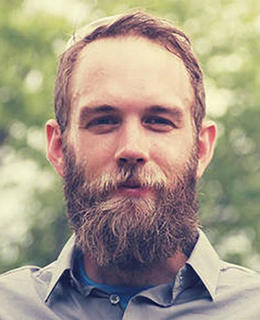
Wesley Willett is an Associate Professor in the Department of Computer Science at the University of Calgary, holding the NSERC CRC II Chair in Visual Analytics. His primary research focuses on information visualization, human-computer interaction, and new media applications. He leads the Data Experience Lab and Interactions Lab, exploring innovative methods for data representation and interaction in augmented/virtual reality environments. Education includes a B.S. in Computer Science from the University of Colorado (2006) and a Ph.D. in Computer Science from UC Berkeley (2012). His work bridges technical innovation with user-centered design principles, emphasizing ethical considerations in data visualization and inclusive representation. Key research contributions include: spatial visualization techniques for large environments, gesture-based interfaces for AR/VR, and physical data representations through projects like Cetonia (swarm robotics visualization) and Data Embroidery. His work has been recognized with Best Paper awards at CHI 2015 and Pervasive 2010. Current research emphasizes immersive analytics, wearable visualization systems, and demographically diverse anthropographics. He collaborates with urban designers, neurologists, and environmental scientists to apply visualization in diverse domains like epilepsy surgery planning and air quality monitoring.
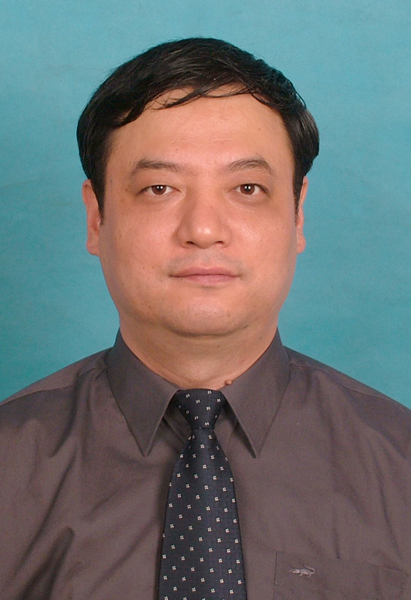
Abhinav Shrivastava is an Associate Professor in the Department of Computer Science at University of Maryland, College Park, with a joint appointment in the Institute of Advanced Computer Studies (UMIACS). Previously, he served as an Assistant Professor at the same institution from August 2018 to June 2024, and spent one year as a Visiting Research Scientist at Google Research from September 2017 to August 2018. His educational background includes: PhD in Robotics and Artificial Intelligence from Carnegie Mellon University (2017), advised by Abhinav Gupta, with thesis titled 'Discovering and Leveraging Visual Structure for Large-scale Recognition' MS in Artificial Intelligence from Carnegie Mellon University (2011), supervised by Alyosha Efros and Martial Hebert BTech in Computer Science and Engineering from Jaypee Institute of Information Technology (2010) Professor Shrivastava's research focuses on computer vision and machine learning, with particular expertise in object detection, image recognition, and neural representations. His work bridges theoretical advances with practical applications, exploring how visual systems can discover and leverage structure in large-scale recognition problems. He has made significant contributions to understanding the role of supervision in vision transformers, developing novel approaches for object-state composition recognition, and creating efficient neural representations for videos and 3D scenes. His research often addresses fundamental challenges in visual recognition, including handling novelty in open-world environments and improving the efficiency of visual systems. An analysis of his recent publications reveals a strong emphasis on neural representations, particularly for dynamic content like videos and 3D scenes. His work demonstrates increasing sophistication in handling open-world vision problems, with research spanning object discovery, localization, and representation learning. The publications show a clear progression toward more efficient and scalable models, with recent work focusing on model compression, sparse representations, and addressing the challenges of working with limited annotations. His scientific contributions have been recognized with several prestigious awards: Best Paper Award (Applications) at IEEE Winter Conference on Applications of Computer Vision (2020) Microsoft Research PhD Fellowship (2014-2016) Best Student Paper Award at IEEE Winter Conference on Applications of Computer Vision (2014) Outstanding Reviewer Award at IEEE CVPR (2015) Professor Shrivastava has successfully mentored numerous graduate students, many of whom have become prominent researchers in computer vision. His Amazon Research Awards (2020 and 2023) have supported innovative projects including 'The pursuit of knowledge: discovering and localizing new concepts using dual memory' and 'Audio-conditioned Diffusion Models for Generating Lip-synchronized Videos.' He has served as Area Chair for major conferences including ICCV, CVPR, and AAAI, demonstrating his leadership in the computer vision community. His research has attracted significant funding from both academic and industry sources, supporting his exploration of fundamental questions in visual recognition and representation learning.
Felix Xiaozhu Lin serves as Associate Professor and William Wulf Faculty Fellow in the Department of Computer Science at the University of Virginia's School of Engineering and Applied Science, where he directs the Computer Science Ph.D. Program and MCS/MS Program. Previously a tenured Associate Professor at Purdue University's School of Electrical and Computer Engineering, Lin joined UVA Engineering in August 2020 after completing his doctoral research at Rice University. His educational credentials include: Ph.D. in Computer Science, Rice University (2014) M.S. in Computer Science, Tsinghua University (2008) B.S. in Automation, Tsinghua University (2006) Lin's research centers on systems software at the intersection of operating systems, compilers, and computer architecture, with emphasis on accelerating and safeguarding software systems. His current projects target on-device large language models and speech processing for low-cost hardware ( Analysis of his recent publications reveals a strong trajectory in edge computing and efficient AI systems. His research demonstrates increasing focus on hardware-software co-design for autonomous devices, with significant contributions in video analytics for energy-constrained cameras, kernel virtualization for heterogeneous architectures, and stream processing frameworks leveraging emerging memory technologies. The work consistently addresses real-world constraints like power limitations and network intermittency while maintaining rigorous academic standards. His scientific recognition includes: National Science Foundation CAREER Award (2019) Google Faculty Research Award (2016) NSF CISE Research Initiation Initiative Award (2015) ACM ASPLOS Best Paper Award (2014) Lin leads the XSEL research group mentoring graduate and undergraduate students in systems software development. His educational initiatives include CS4414/CS6456, a modern operating systems course featuring Arm64 baremetal kernel development, multicore systems, trusted execution environments, and filesystem forensics. The course's experiential approach has received strong student feedback for its modern content and practical relevance. His group actively recruits for projects spanning on-device AI, hardware-accelerated speech processing, and next-generation OS development. Based in Charlottesville, Virginia, Lin's research benefits from UVA's proximity to Shenandoah National Park and collaborative opportunities within the university's vibrant computing ecosystem, including the 2024 LLM Workshop he co-organized with Professor Yangfeng Ji.
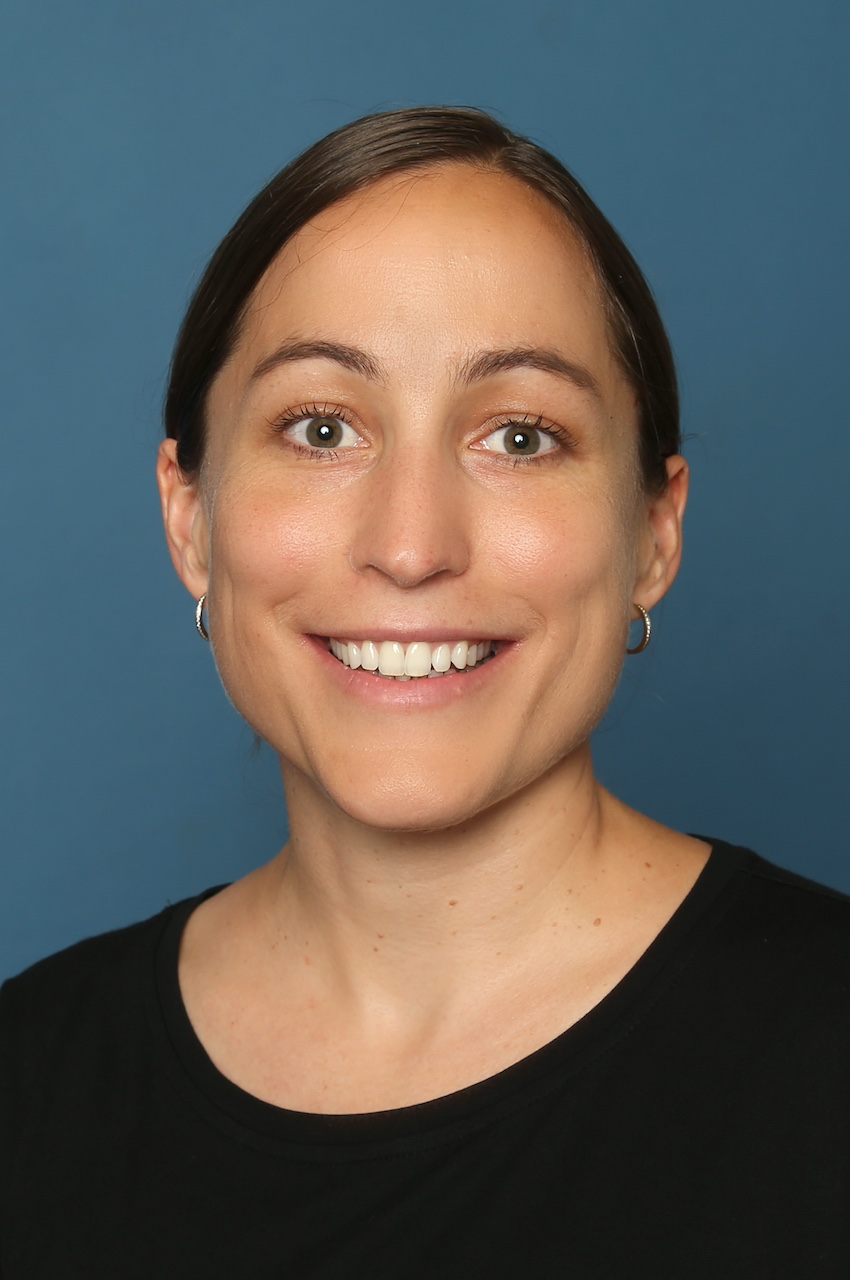
Prof. Maosong Sun is a Professor at the Department of Computer Science and Technology, Tsinghua University, China. He holds additional leadership roles including Executive Vice Dean of the Institute for Artificial Intelligence and Deputy Director of the National Engineering Laboratory for Cyberlearning and Intelligent Technology. His research focuses on natural language processing (NLP), artificial intelligence, machine learning, and computational education. He leads interdisciplinary projects in computational humanities, knowledge graphs, and MOOC platforms like XuetangX, which has over 58.8 million registered learners. Key contributions include pioneering work in Chinese NLP tools, poetry generation systems like Jiuge, and large-scale research initiatives funded by Chinese and Singaporean programs. Awards include the Tsinghua University Education Award (2019) and the National Outstanding Practitioner Award (2007). Established NLP and Computational Humanities & Social Sciences Lab (2008) Co-director of the Joint Research Center for Extreme Search (2011-present) Over 200 publications with 11,000+ citations (h-index 47)
Junier Oliva is an Assistant Professor in the Department of Computer Science at the University of North Carolina at Chapel Hill and Lead Faculty of the Master of Applied Data Science program. His research focuses on machine learning, artificial intelligence, and nonparametric statistics, particularly in high-dimensional density estimation, sequential modeling, and learning from complex/structured data. He holds a B.S., M.S., and Ph.D. in Computer Science from Carnegie Mellon University, with prior industry experience at Yahoo! and Uber ATG. Research Interests: Machine learning, artificial intelligence, nonparametric statistics, deep learning, statistical data mining, signal processing, kernel methods, and scalability. His work bridges machine and human learning via collective approaches, emphasizing simple yet flexible models for massive datasets. Awards/Grants: $592K AIM-AHEAD/NIH Grant for Human+AI Collaboration $594K NSF Grant for Scientific Discovery $500K NSF Grant for 'Machine Detectives' Project ACM BCB Best Paper Award (2022) for transparent single-cell classification work Labs/Teams: Director of the LUPA Lab, which develops machine learning techniques for holistic data understanding across domains like healthcare, earth science, and computer vision.
Olga Vechtomova is a Professor at the University of Waterloo, affiliated with the Information Systems research group and specializing in Search Engines and Natural Language Processing. Her work bridges computational creativity, multimodal systems, and AI-driven text generation. She leads projects like LyricJam , a real-time lyric generation system for live music, and explores applications in dynamic story generation, hate speech detection, and low-resource summarization. Her research emphasizes ethical AI, creative technologies, and leveraging large language models for diverse tasks. Research interests include natural language processing, machine learning, and multimodal interaction. Recent work focuses on artistic inspiration modeling, stylized text generation, and improving NLP efficiency through semi-supervised learning and distillation techniques. Her contributions span over 60 papers since 2000, with a strong emphasis on foundational NLP challenges and real-world applications. She collaborates on systems like Promptmix for model distillation and LyricJam sonic for music-audio lyric generation.
Tal Micah August is an Assistant Professor at the Siebel School of Computing and Data Science, University of Illinois. His research focuses on Natural Language Processing, Plain Language Summarization, and Human-Computer Interaction, emphasizing audience-adaptive communication and AI-driven educational tools. Key research interests include developing intelligent writing assistants, evaluating AI-generated summaries across audiences, and leveraging large language models for legal and mathematical education. He collaborates on projects involving user-centered design and curriculum-grounded AI assessment. His work has been presented at major conferences like CHI and EMNLP, addressing topics such as interactive writing systems, plain-language metrics, and educational storytelling. No specific grants or student advisees are listed in the provided materials. Research highlights include the MathFish framework for math reasoning evaluation and studies on audience-specific plain language generation.
Tengfei Ma is an Assistant Professor in the Department of Biomedical Informatics at Stony Brook University, with affiliations to Computer Science and Applied Mathematics & Statistics. He holds a Ph.D. from The University of Tokyo, M.S. from Peking University, and B.E. from Tsinghua University. Previously, he was a Research Scientist at IBM T.J. Watson Research Center. His research focuses on machine learning, natural language processing (NLP), and biomedical informatics, particularly deep graph learning, scalable graph methods, and healthcare applications. He has contributed to frameworks like EvolveGCN for dynamic graphs and IGB datasets for graph benchmarks. Key awards include ISWC 2021 Best Paper (Research Track) and IBM Outstanding Research Accomplishments (2019, 2022). His work bridges theory and practice, addressing challenges like over-dilution in GNNs and interpretable time series analysis. Collaborations span interdisciplinary areas, such as AI for wound monitoring and code summarization. He teaches BMI530: Software Development for Biomedical Informatics and is open to graduate students from CS, BMI, and AMS departments. Research highlights include: Deep Graph Learning: Scalability (FastGCN, IGB), dynamic graphs (EvolveGCN), and topology-enhanced GNNs. Healthcare: Models for EHR analysis, medication recommendation (GAMENet), and wearable wound monitoring. NLP: Document summarization, code summarization (CP-BCS), and commonsense generation via knowledge graph compression. Recent projects include AI tools like Influencer for promotional content creation and neural-symbolic models for interpretable time series analysis. His lab explores foundational AI for healthcare, code analysis, and graph systems.
Isabelle Augenstein is a Professor at the University of Copenhagen's Department of Computer Science, where she leads the Copenhagen Natural Language Understanding (CopeNLU) research group and the Natural Language Processing section. She became Denmark's youngest female full professor in 2022 and co-leads the Danish Pioneer Centre for Artificial Intelligence's Speech and Language collaboratory. ERC Starting Grant recipient DFF Sapere Aude Research Leader fellow Karen Spärck Jones Award winner Hartmann Diploma Prize recipient Her research focuses on fair and accountable NLP systems, with specific emphasis on explainability, factuality, bias detection, and social NLP. She investigates cultural biases in language models, develops frameworks for explainable fact checking, and explores uncertainty estimation in NLP systems. Recent publications demonstrate expertise in: Mechanistic analysis of cultural bias representations Context utilization techniques for LLMs Explainability metrics and attribution methods Cross-domain label adaptation Retrieval-augmented generation Fact checking uncertainty quantification Major scientific contributions include: Numerous EMNLP and ACL publications Foundational work on stance detection Development of fact checking benchmarks Multilingual model analysis AI ethics frameworks She supervises a team of researchers working on explainable AI and fact checking systems, with current projects including the ExplainYourself ERC-funded initiative on explainable fact checking. Her group recently presented multiple papers at EMNLP 2025 on topics spanning explainable AI and social NLP.
Sarah Ebling is a Full Professor of Language, Technology and Accessibility at the University of Zurich's Faculty of Arts and Social Sciences. She leads the Language, Technology and Accessibility research group within the Institute for Computational Linguistics. Her work focuses on computational linguistics applications for assistive technologies targeting disabilities such as hearing impairments, visual impairments, and cognitive disorders. Key areas include sign language technologies, automatic text simplification, and audio description systems. She directs the large-scale Swiss innovation project 'Inclusive Information and Communication Technologies' (2022-2026, CHF12 million budget) and collaborates on EU H2020 and SNSF Sinergia projects. Education: Holds a doctoral degree (summa cum laude, 2016) from the University of Zurich with research on automatic translation to Swiss German Sign Language. Completed studies in German Linguistics, Computational Linguistics, and English Linguistics at Universities of Zurich and Heidelberg, with research stays in Dublin, Chicago, and Rochester. Research emphasizes multimodal accessibility solutions, including sign language fluency assessment, gesture-based interaction, and AI-driven text adaptation. Current projects explore audio description translation systems (SwissADT), sign language corpus development (SwissSLi), and digital tools for comprehensibility assessment in simplified texts. Her work bridges computational linguistics with ethical considerations in assistive technology deployment. Grants and Leadership: Principal Investigator on major accessibility-focused grants, including the CHF12M Swiss innovation project. Supervises PhD candidates in areas like sign language assessment tools and text simplification algorithms. Active in international collaborations, publishing extensively in computational linguistics and accessibility journals/conferences. Technology Development: Created the 'DigiSpon' benchmark for language sample analysis and developed open-source tools for sign language translation baselines. Her team's innovations include the SignCLIP model connecting text and sign language via contrastive learning, and pose estimation frameworks for sign language recognition.
Howard Forman is a Professor of Radiology and Biomedical Imaging at Yale School of Medicine, with secondary appointments in Public Health (Health Policy), Management, and Economics. He is fully joint in the School of Management and holds affiliations with the Institute for Social and Policy Studies. He serves as Director of the MD/MBA Program, the Executive MBA Healthcare Focus Area, and the Health Care Management Program at the Yale School of Public Health. He is also the Faculty Director of Finance in the Department of Radiology and an active clinician at Yale New Haven Hospital’s Emergency Department, where he serves as deputy operational chief for Radiology. Professor, Radiology & Biomedical Imaging, Yale School of Medicine Professor, School of Management Professor, Economics Professor, Health Policy & Management Director, MD/MBA Program Director, Health Care Management Program (YSPH) Faculty Director of Finance, Radiology Department Dr. Forman’s research centers on health economics, healthcare policy, quality improvement, and radiology administration. His interests include healthcare financing, cost analysis, health systems reform, and the application of AI and large language models in radiology reporting. He has extensively studied patient access to imaging reports, clinician staffing, and end-of-life cancer care. His recent work explores how AI can improve reporting accuracy while addressing ethical concerns like racial bias. His recent publications reflect a strong trend in leveraging artificial intelligence to enhance radiology workflows and patient engagement, while maintaining a focus on equity and policy implications. Articles in Radiology , JAMA Network Open , and Clinical Imaging demonstrate his leadership at the intersection of medicine, technology, and policy. Healthcare Track Teaching Award – 2025, 2023, 2017 Regent's Award – 2019 Leah Lowenstein Award – 2019 Distinguished Student Mentoring Award – 2013 Fellow, Society for Advanced Body Imaging – 2003 Dr. Forman is a dedicated educator and mentor, having founded and led multiple interdisciplinary programs. He has been instrumental in shaping health policy curricula and promoting evidence-based public health communication. He co-hosts the popular Health & Veritas podcast with Harlan Krumholz, contributing to public discourse on healthcare. He has served on editorial boards for journals including American Journal of Roentgenology and Clinical Imaging , and is actively involved in professional societies such as the Radiologic Society of North America.
Christopher A. Baldassano is an Associate Professor in the Department of Psychology at Columbia University, maintaining offices in Schermerhorn Hall (370 for office, 312 for lab). Contact is available via email c.baldassano@columbia.edu or phone +1 212 854 1902 by appointment. Education Ph.D., Stanford University, 2015 Research Focus Dr. Baldassano leads the Dynamic Perception and Memory Lab investigating how humans process and recall complex real-world experiences through event segmentation, temporal/spatial structure modeling, and neural representation formation. His work integrates cognitive neuroscience with machine learning approaches to analyze fMRI data during narrative, movie, and virtual reality experiments. Key research themes include event cognition dynamics, memory summarization mechanisms, and how prior knowledge shapes mental representations of everyday experiences. Scientific Awards No awards or fellowships were documented in the provided materials. Advising and Grants While specific student advisees and grant details weren't listed, his lab structure implies active mentorship of graduate researchers in cognitive neuroscience methodologies. Funding likely supports fMRI experimentation and computational modeling infrastructure. Laboratory Operations The Dynamic Perception and Memory Lab employs functional MRI combined with data-driven machine learning techniques to model neural representation variations across stimuli and individuals. Current projects examine event boundaries in continuous experiences using ecologically valid paradigms like movies and virtual environments, with emphasis on how temporal/spatial world structures influence cognitive processing.
Eldan Cohen serves as an Assistant Professor of Industrial Engineering within the Department of Mechanical & Industrial Engineering at the University of Toronto's Faculty of Applied Science and Engineering. His academic journey includes a PhD from the same department followed by a postdoctoral fellowship in Computer Science at the University of Toronto and the Vector Institute for Artificial Intelligence. His educational background is detailed as follows: PhD in Mechanical & Industrial Engineering, University of Toronto Postdoctoral Fellowship in Computer Science, University of Toronto and Vector Institute for Artificial Intelligence Dr. Cohen's research centers on machine learning, deep learning, heuristic search, and optimization with strong emphasis on interpretable and human-compatible AI systems. His work bridges theoretical advancements with practical applications in healthcare (e.g., patient-physician interaction analysis, surgical safety diagnostics), automated planning, natural language processing, and software engineering. Recent projects develop interpretable clustering methods for medical data and optimization techniques for constrained sequence generation. Analysis of his 2023-2025 publications reveals a concentrated focus on healthcare AI applications, particularly using large language models for clinical text analysis and diagnostic support systems. Significant work also addresses interpretable machine learning for medical imaging, diverse plan selection in optimization, and constrained sequence generation in domains like vehicle routing. No major scientific awards or fellowships are documented in the available information. As an academic advisor, Dr. Cohen mentors graduate students in mechanical and industrial engineering, guiding research in optimization and machine learning. His OptiMaL research group fosters collaboration between computer science and industrial engineering to solve real-world decision-making challenges through human-centered AI approaches. The Optimization and Machine Learning (OptiMaL) research group, led by Dr. Cohen, serves as the primary hub for developing scalable, interpretable AI solutions for complex healthcare, planning, and engineering problems, with active projects in medical diagnostics and automated planning systems.
Dr. Yu Huang is an Assistant Professor in the Department of Computer Science at Vanderbilt University's School of Engineering, with a secondary appointment in the Department of Teaching and Learning at the Peabody School of Education. She is affiliated with the Institute for Software Integrated Systems, the Frist Center for Autism and Innovation, the Vanderbilt Lab for Immersive AI Translation (VALIANT), and the Vanderbilt LIVE Learning Innovation Incubator. Her academic journey began with a BS in Aerospace Engineering from Harbin Institute of Technology in China (2011), followed by an MS in Computer Engineering from the University of Virginia (2015), and culminated with a PhD in Computer Science and Engineering from the University of Michigan in 2021 under Professor Westley Weimer. Dr. Huang's research bridges human cognition and machine intelligence to enhance software development. Her work spans software, hardware, AI, medical imaging (fMRI/fNIRS), eye tracking, and mobile sensing through collaborations with Security, Education, Psychology, and Neuroscience researchers. She leads the MIND Lab (Mixed INtelligence Development for programming lab), investigating programming expertise formation, code comprehension processes, cognitive error patterns, and diversity in programming communities. Her innovative approach combines empirical human studies with AI model development to create more effective programming tools. Her recent publications reveal a growing emphasis on leveraging human attention data to improve code language models, analyzing cognitive biases in security contexts, and examining social factors in technical communication. The research shows strong interdisciplinary connections between neuroscience, psychology, and software engineering, with increasing applications of LLMs in developer tooling. Dr. Huang's work consistently demonstrates how understanding human cognition can inform better AI systems for programming tasks. Dr. Huang has received numerous prestigious recognitions including the 2025 ICPC Vaclav Rajlich Early Career Achievement Award and three ACM SIGSOFT Distinguished Paper Awards (ICSE 2019, FSE 2023, ICSE 2024). Her lab has earned the Best Presentation Award at GI2024, while her students have received the Richard Bennett/Dorothy Danforth Compton Prize scholarship and the C. F. Chen Best Paper award. She actively mentors a diverse team of graduate students (Yifan Zhang, Zach Karas, Zihan Fang, Yueke Zhang, Jiahao Zhang) and undergraduate researchers, with many former students advancing to top institutions (Stanford, Harvard, Duke, UC Berkeley) and organizations (NASA JPL). Her research is supported by a 4-year NSF grant, GitHub Tech for Social Good funding, and the Provost's Faculty Immersion Vanderbilt Grant, enabling comprehensive studies of human-AI collaboration in software engineering. The MIND Lab maintains a strong collaborative culture, frequently working with Professor Kevin Leach's research group and organizing retreats to locations like Radnor State Park and the Great Smoky Mountains. This environment fosters innovation at the intersection of human cognition and software engineering while supporting the professional development of emerging researchers in the field.
Dong Li is an Assistant Professor in the Department of Computer Science and Electrical Engineering (CSEE) at the University of Maryland, Baltimore County (UMBC). His research focuses on wireless sensing, mobile computing, wearable sensing, multi-modal sensing, and smart health, aiming to develop affordable and accessible technologies to address healthcare equity and environmental sustainability challenges. He holds a PhD from the Manning College of Information and Computer Sciences at the University of Massachusetts Amherst, an M.Eng. in Software Engineering from Shanghai Jiao Tong University, and a B.S. in Computer Science from the University of Electronic Science and Technology of China. His work has been published in prestigious venues such as MobiCom, SenSys, IPSN, UbiComp, and HotNets. Key research themes include anomaly detection via knowledge graphs, privacy prediction models for social networks, and interactive recommendation systems. His interdisciplinary approach integrates machine learning, data mining, and cybersecurity to tackle real-world problems in health and environmental sustainability. Dr. Li’s contributions span theoretical advancements and practical system development, with a focus on bridging the gap between cutting-edge research and societal impact. His recent publications highlight innovations in data stream processing, weak supervision frameworks, and privacy behavior analysis in online platforms.