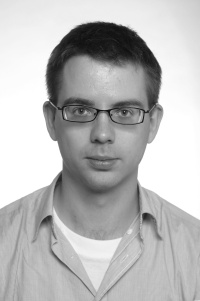
Oto Polouček is an Assistant Professor at the Institute of European Ethnology, Faculty of Arts, Masaryk University in Brno, Czech Republic. Born in 1990 in Brno, he has established himself as a prominent researcher specializing in ethnological studies of the Moravian countryside during late socialism and the post-socialist transformation period. Ph.D. in Ethnology, Masaryk University (2019) Mgr. in Ethnology, Masaryk University (2015) Mgr. in Oral History, Charles University in Prague (2015) Bc. in Ethnology, Masaryk University (2012) Dr. Polouček's research focuses on socio-cultural changes in Czech society during the second half of the 20th century, particularly examining forms of association and social life in the Moravian countryside. His work extensively utilizes oral history methodology to explore the period of so-called normalization and the post-socialist transformation. His research bridges ethnology, contemporary history, and rural studies, with particular attention to how communities maintained social structures under socialist regimes and adapted during political transitions. His recent publications demonstrate a consistent focus on the intersection of rural life, socialist policies, and cultural continuity. The articles reveal a methodological strength in combining ethnographic fieldwork with historical analysis, particularly through oral history interviews. His research spans multiple disciplines including ethnology, educational history, political history, and cultural studies, with particular emphasis on the Czechoslovak context during the late socialist period and its aftermath. Czech Ethnographic Society Award for 2020 (publication category) for the book Grandmothers on Big Beat: Social Life in the Moravian Countryside of Late Socialism 2nd place in the Czech Oral History Association competition for best student thesis (2015) As an educator, Dr. Polouček supervises final theses in ethnology and teaches courses including Analysis and Processing of Qualitative Data, The Socialist Period from an Ethnological Perspective, Interdisciplinary Study of the Contemporary Countryside, and Field Research I and II. His academic activities extend to international collaborations, with teaching stays at the University of Latvia (2024) and research stays at universities in Poland, Slovakia, and Lithuania. He serves as an editor for the Ethnographic Journal and is an active member of professional organizations including the Czech Ethnographic Society, Czech Oral History Association, and SIEF.