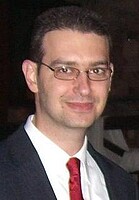
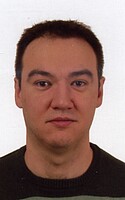
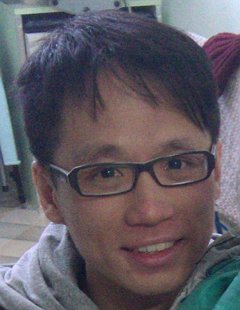
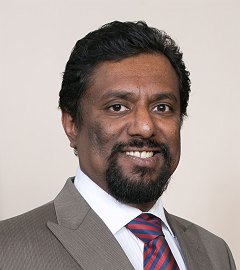
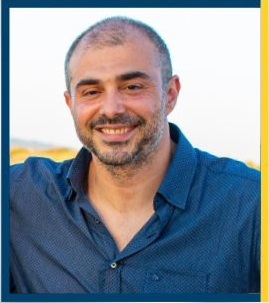
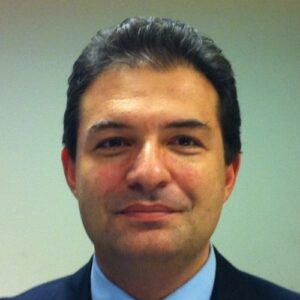
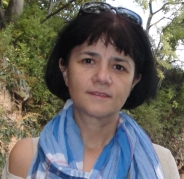
Athanasios Rontogiannis is an Associate Professor at the School of Electrical and Computer Engineering of the National Technical University of Athens (NTUA). He holds a PhD in Signal Processing from the National University of Athens (1997) and has held roles including Research Director at the National Observatory of Athens (2017–2021). His research focuses on signal processing, machine learning, and hyperspectral image analysis. Education: MEng (Electrical Engineering, NTUA, 1991), M.A.Sc. (University of Victoria, Canada, 1993), PhD (Signal Processing, National University of Athens, 1997). Research interests include adaptive algorithms, sparse representations, and tensor models. He has served on editorial boards of IEEE Transactions on Signal Processing and EURASIP journals, receiving an honorary distinction in 2020. He is a Senior Member of IEEE and affiliated with EURASIP and the Technical Chamber of Greece. Key contributions span hyperspectral unmixing, Bayesian algorithms, and space data exploitation. His work integrates machine learning for applications in space science and signal processing.
Yannis Theodoridis is a Professor at the Department of Informatics, University of Piraeus, leading the Information Systems Laboratory (InfoLab). He specializes in spatiotemporal databases, mobility analytics, and maritime data science. His research focuses on trajectory analysis, location-based services, and big data frameworks for transportation and maritime surveillance. Key projects include the MOD (Moving Objects Databases) initiative, the ARGOS framework for real-time trajectory prediction, and contributions to the HERMES trajectory database engine. He has advised 7 PhD students and co-authored numerous papers in IEEE and ACM venues. His work addresses challenges like vessel collision risk assessment, urban mobility optimization, and maritime event detection. He serves on the editorial board of the International Journal of Data Warehousing and Mining and contributes to conferences like PCI and ECML PKDD. His labs emphasize interdisciplinary approaches to mobility data science, integrating machine learning with domain-specific analytics.
Foundation for research and technology-hellasGreece
Kostas Magoutis is Professor and Chair of the Computer Science Department at the University of Crete , and a collaborating researcher at FORTH-ICS . His research focuses on scalable distributed systems, cloud computing, IoT, and quantum-enhanced control. Education and Career: Ph.D. in Computer Science, Harvard University (2003) Research Staff Member, IBM T. J. Watson Research Center (2003-2009) Assistant Professor (2014-2019, tenured 2017) and Associate Professor (2020-2024), University of Crete Professor and Chair, University of Crete (2024-present) Research Interests: His work spans distributed computer systems , cloud computing , scalable data stores and stream-processing engines , Internet of Things , and the emerging area of quantum-enhanced control . Representative projects include the H.F.R.I.-funded QUADS (2025-2028) on quantum-enhanced adaptive systems, STREAMSTORE (2020-2023) on elastic stream processing, SmartCityBus on IoT-driven public transport, and the EU FP7 PaaSage project on model-based cloud lifecycle management. Awards and Honors: Best Paper Awards: USENIX ATC 2002, USENIX BSDCon 2002, IEEE SRDS 2014 (Best Student Paper), IoT 2024 (Runner-up) Grand Challenge Audience Award, ACM DEBS 2022 Best Poster Award, ACM EuroSys 2022 EU Marie Curie IEF Fellow (2009-2011) Alexander S. Onassis Fellow (1994-1995) and J. William Fulbright Scholar (1993-1994) Students and Mentoring: He has supervised or co-supervised more than 30 Ph.D., M.Sc. and undergraduate students, including Antonis Papaioannou (Ph.D. 2021), Efthimios Papageorgiou (current Ph.D.), and numerous M.Sc. graduates now in industry and academia. Labs and Teams: At FORTH-ICS he leads activities within the Distributed Systems and Storage Laboratory, coordinating research on scalable storage, stream processing, and IoT data management. The lab collaborates closely with European and national initiatives, hosting visiting researchers and industry partners.
Ioannis Theodoridis is a Professor at the Department of Informatics, University of Piraeus, and Director of the Data Science Laboratory under the School of Information and Communication Technologies. His research focuses on data science, particularly large-scale data management and analysis, with applications in maritime informatics, spatiotemporal data, and mobility patterns. He holds editorial roles at ACM Computing Surveys and has contributed to numerous international conferences and journals. As a project leader in Horizon 2020 initiatives, he has coordinated research on data-driven solutions for maritime safety and urban mobility. He earned his Diploma (1990) and PhD (1996) in Electrical and Computer Engineering from the National Technical University of Athens (NTUA). His work includes developing scalable systems for maritime route forecasting (e.g., GMSA), frameworks for vessel trajectory prediction (e.g., VesselVision), and platforms like i4sea for fisheries monitoring. Contact: ytheod@unipi.gr .
Professor Dollas Apostolos serves as a Professor in the School of Electrical and Computer Engineering at the Technical University of Crete (TUC), where he has held leadership roles such as Department Chairman. He directs the Microprocessor and Hardware Laboratory, focusing on reconfigurable computing, embedded systems, and high-performance digital systems. His work emphasizes rapid prototyping and real-world implementation of computational solutions. Education: Ph.D., Computer Science, University of Illinois at Urbana-Champaign (1987) M.Sc., Computer Science, University of Illinois at Urbana-Champaign (1984) B.Sc., Computer Science, University of Illinois at Urbana-Champaign (1982) Research Interests: Reconfigurable computing architectures FPGA-based acceleration for bioinformatics and genomics Embedded systems and real-time processing Hardware-software co-design for high-performance computing His research bridges theoretical innovation with practical applications, such as FPGA implementations for genome assembly and aquaculture monitoring systems. Publications: Recent work highlights FPGA-based solutions for bioinformatics (e.g., genome assembly acceleration), real-time embedded systems (e.g., fish cage net monitoring), and scalable data processing frameworks. His articles often explore the intersection of FPGA technology with computational biology, embedded vision, and distributed systems. Awards and Affiliations: Senior Member, IEEE and IEEE Computer Society Recipient of IEEE Computer Society Golden Core and Meritorious Service Awards Twice honored with the University of Illinois Teaching Excellence Award He is a co-founder of IEEE conferences like FCCM and RSP, reflecting his leadership in the reconfigurable computing community. Teaching and Labs: Teaches courses on computer architecture, logic design, and VLSI design. The Microprocessor and Hardware Lab under his direction drives advancements in FPGA-based systems, with projects ranging from bioinformatics hardware accelerators to embedded vision systems.
Kostas Magoutis is Professor and Chair of the Computer Science Department at the University of Crete and collaborating researcher with FORTH-ICS. His research focuses on distributed systems, scalable data processing, IoT, and cloud computing, with projects including GreenInCities for urban regeneration and STREAMSTORE for stateful stream processing systems. Research interests include: Distributed computer systems architecture Elastic stream processing platforms Quantum-enhanced computing applications Multi-cloud application lifecycle management Recent publications demonstrate strong focus on federated data systems, quantum computing applications, and IoT-enhanced infrastructure, with consistent output in high-impact conferences and journals. Awards and distinctions: Multiple best paper awards from USENIX conferences Grand Challenge Audience Award at DEBS 2022 Marie Curie Fellowship and IBM Research awards Advises over 20 PhD and MSc students in distributed systems research. Leads multiple EU-funded projects and serves on program committees for top conferences including SOSP, EuroSys, and IEEE BigData. Directs research groups in distributed systems and cloud computing at FORTH-ICS.
Antonios Deligiannakis is a Professor at the School of Electronic and Computer Engineering of the Technical University of Crete, specializing in database systems and distributed data processing. His academic career includes a postdoctoral position at the National and Kapodistrian University of Athens (2006-2007) and a visiting researcher role at AT&T Labs-Research (2003). His educational background includes: PhD in Computer Science, University of Maryland, USA (2005) Master's Degree in Computer Science, University of Maryland, USA (2001) Diploma in Electrical and Computer Engineering, National Technical University of Athens (1999) Professor Deligiannakis's research spans Databases , Stream Processing , and Sensor Networks , with pioneering work in Approximate Query Evaluation for massive datasets and Complex Event Processing in distributed environments. His contributions enable efficient analytics in resource-constrained settings through techniques like synopses-based engines and windowed outlier detection. His 15 most recent publications (2020-2025) reveal a dominant focus on distributed streaming analytics, with recurring themes of cross-platform integration, federated learning, and extreme-scale interactive systems. Key innovations include the INFORE framework for interactive analytics, DAG* for IoT workflow optimization, and communication-efficient federated learning techniques—demonstrating consistent translation of theoretical advances into production-ready platforms. Scientific Awards: No specific awards were listed in the provided material. Information about advisees and research grants was not provided in available documentation, though his leadership in the Distributed Information Systems and Applications laboratory suggests active mentorship and project direction. He directs research in the Distributed Information Systems and Applications laboratory, developing systems for real-time analytics across domains including maritime surveillance, financial technology, and IoT platforms, with emphasis on scalability and fault tolerance in geo-distributed environments.
George N. Karystinos is currently a Professor and Dean of the School of Electrical and Computer Engineering at the Technical University of Crete , Greece. He joined TUC in 2005 and was promoted to full Professor in 2019. His academic journey began with a Ph.D. in Electrical Engineering from SUNY Buffalo (2003) and a Diploma in Computer Engineering and Science from the University of Patras (1997). Specialty: Communication theory, coding theory, adaptive signal processing Key research areas: Wireless communications, signal waveform design, L1-norm principal component analysis Leadership: Dean of School of ECE (2021–present) His work focuses on noncoherent detection for RFID/IoT systems and L1-norm PCA for robust signal processing. Recent publications explore power line communication and low-complexity sequence detection . Scientific Awards: 2003 IEEE Transactions on Neural Networks Outstanding Paper Award 2001 IEEE ICT Best Paper Award 2018 IEEE MOCAST Best Student Paper Award 2015 IEEE ICASSP Best Student Paper Award 2013 IEEE ISWCS Best Paper Award 2011 IEEE RFID-TA Second Best Student Paper Award He is affiliated with the Telecommunications Laboratory at TUC and has supervised award-winning research in wireless systems and signal processing.
National and Kapodistrian University of AthensGreece
Alvin Cheung is an Associate Professor in the Computer Science Division at UC Berkeley's EECS department. He is affiliated with the Data Systems and Foundations group, Programming Systems group, Sky Lab, and SLICE Lab, and serves as a faculty affiliate at the Berkeley Institute for Data Science. He advises the Data Science Discovery Program and provides technical guidance to industry partners. His research spans data management, programming languages, and scalable software systems, with emphasis on helping users process large datasets efficiently. Key innovations include verified lifting (applying formal methods and ML to infer program properties) and systems for optimizing database-backed applications and geospatial analytics. Recent work explores LLM-driven code optimization and transpilation techniques. His publications (2023-2025) show strong trends in ML-enhanced systems, verified compilation, and data management tools. Articles frequently integrate formal methods, program synthesis, and hardware-aware optimizations across domains like databases, distributed computing, and HCI. Scientific Awards: ACSIC Rock Star Award (2025) Dahl-Nygaard Junior Prize (2024) VLDB Early Career Research Contribution Award (2023) IEEE TCDE Rising Star Award (2020) Sloan Fellowship (2019) NSF CAREER Award (2017) 20+ additional honors Advising & Grants: He mentors PhD/MS students (e.g., Lily Liu at OpenAI, Chenglong Wang at Microsoft Research). Research is funded by: NSF DOE ONR ARO Intel Notable grants include ONR Young Investigator Award and ARO Early Career Program Award. Labs & Teams: Leads projects in Berkeley's Data Systems/Programming Systems groups and collaborates with Sky Lab/SLICE Lab. Manages labs focused on verified compilation (e.g., Tenspiler) and data infrastructure (e.g., Spatialyze).
National and Kapodistrian University of AthensGreece
Professor Saman Amarasinghe is a faculty member in the Department of Electrical Engineering and Computer Science at the Massachusetts Institute of Technology (MIT), where he leads the Commit compiler research group at MIT's Computer Science and Artificial Intelligence Laboratory (CSAIL). His research focuses on programming languages and compilers that maximize application performance on modern computing platforms, with a particular emphasis on high-performance domain-specific languages. Professor Amarasinghe received his bachelor's degree in electrical engineering and computer science from Cornell University in 1988, followed by master's and PhD degrees in electrical engineering from Stanford University in 1990 and 1997, respectively. He joined the MIT faculty as an assistant professor in 1997 and has since become a world leader in his field. Professor Amarasinghe's research interests span programming languages, compiler design, and high-performance computing, with a particular focus on domain-specific languages. His group has developed numerous influential languages and compilers including Halide, TACO, Simit, StreamIt, StreamJIT, PetaBricks, MILK, Cimple, and GraphIt, which deliver unprecedented performance for application domains such as image processing, stream computations, and graph analytics. He has also pioneered the application of machine learning for compiler optimizations, from Meta optimization in 2003 to the OpenTuner autotuner framework. Professor Amarasinghe's publication history reveals a consistent research trajectory toward creating specialized language and compiler solutions that address performance challenges in specific domains while hiding complexity from application developers. His recent work focuses heavily on sparse computing, tensor algebra, graph processing, and the integration of machine learning techniques into compiler technology, demonstrating his ability to identify and address emerging computational challenges. ACM Fellow (2019) As an educator, Professor Amarasinghe has developed the popular Performance Engineering of Software Systems (6.172) class with Professor Charles Leiserson and created innovative project-based courses including the Open Source Software Project Lab, the Open Source Entrepreneurship Lab, and the Bring Your Own Software Project Lab. He also serves as the faculty director of MIT Global Startup Labs, which has helped create more than 20 startups across 17 countries. His research has translated into practical applications through startups like Determina, Inc. (acquired by VMware), demonstrating the real-world impact of his academic work. Professor Amarasinghe co-led the Raw architecture project with Professor Anant Agarwal, which did pioneering work on scalable multicores. His entrepreneurial activities include founding Determina, Inc. based on computer security research from his MIT lab and co-founding Lanka Internet Services, Ltd., the first Internet Service Provider in Sri Lanka, showcasing his ability to bridge academic research with commercial applications.
Nikos Giatrakos is an Assistant Professor at the School of Electronic & Computer Engineering, Technical University of Crete, and a core member of the Software Technology and Network Applications Lab (SoftNet) . His work bridges Big Data systems, IoT, and advanced analytics, with a focus on real-time processing and scalable architectures. Previously, he served as a postdoctoral researcher at the same laboratory. Education PhD in Computer Science, University of Piraeus (2012) Postgraduate Diploma in Information Systems, Athens University of Economics and Business (2008) BSc in Computer Science, University of Piraeus (2006) Research Focus : Nikos specializes in software architectures for Big Data streaming, including Distributed Big Data Processing , Federated Machine Learning , Cloud-to-Edge Data Management , and Approximate Query Processing . His work has also advanced Complex Event Processing and Outlier Detection in decentralized environments. Scientific Contributions : His research has led to the DAG* workflow optimizer for IoT, the SuBiTO framework for real-time neural learning, and the INFORE approach for cross-platform analytics. He received the Best System Demonstration Award at ACM CIKM 2020 for INforE. Academic Leadership : Nikos teaches Object-Oriented Programming, Data Science, and Distributed Systems. He has supervised numerous European and national grants as Principal Investigator and served on program committees for top-tier conferences like SIGMOD, VLDB, and DEBS.
Konstantinos Tsagarakis is a Professor at the School of Production Engineering and Management, Technical University of Crete. His office is located at Δ5.107, DPEM Building (Δ5), 1st Floor, and he can be contacted via email at ktsagarakis@tuc.gr or by telephone at +302821037252. His research focuses on interdisciplinary sustainability solutions, with primary expertise in: Circular economy implementation and policy analysis Sustainable production systems and environmental management Renewable energy integration and prosumer models Data-driven approaches to sustainability using social media analytics Industry 4.0 applications for sustainable development Analysis of his recent publications reveals three dominant research streams: 1) Advanced data mining techniques applied to sustainability metrics across social media platforms, 2) Policy and institutional analysis of circular economy frameworks in various industrial sectors, and 3) Technological enablers (IoT, AI, cloud computing) for sustainable transformation. His work consistently demonstrates methodological innovation through mixed-methods approaches combining empirical analysis with computational techniques.
Dimitrios D. Vergados is a Professor in the Department of Informatics at the University of Piraeus, holding the UNESCO Chair in 'Creative Cities in Motion: Urban Sustainable Mobility and Utilization of Cultural Resources.' As an IEEE Senior Member, he specializes in wireless networks, computer networks, and advanced digital technologies, with a focus on 5G, IoT, and smart systems. His research spans telecommunications systems , cloud computing , machine learning for industrial applications , and digital cultural heritage preservation . Recent work explores vehicular networks, drone communication in 5G architectures, and privacy challenges in smart cities. He has contributed to energy optimization, security frameworks, and digital twin implementations for sustainability. Key trends in his publications include the intersection of 5G security , IoT , and machine learning in industrial and healthcare contexts, alongside digital heritage modeling for cultural preservation. His work bridges theoretical and applied domains in telecommunications and smart technologies. Scientific Awards IEEE Senior Member Vergados has served as a committee member, technical program committee member, and reviewer for international conferences and journals. He previously chaired the UNESCO Chair and participated in national and international evaluations, including roles at the Hellenic Telecommunications and Post Commission. His research emphasizes interdisciplinary applications of digital systems in mobility, healthcare, and cultural management.
Evaggelia Pitoura is a Professor in the Department of Computer Engineering and Informatics at the University of Ioannina, Greece, and a Lead Researcher at the Archimedes Research Unit, ATHENA Research Center. Her work spans data management, distributed systems, and mobile computing, with a strong focus on database personalization and diversity. Her research interests include data diversity, contextual preferences, XML data management, peer-to-peer systems, and mobile computing . She has pioneered work in result diversification, preference-aware querying, and distributed data indexing, publishing extensively in top venues such as PVLDB, ICDE, SIGMOD, and IEEE TPDS. The recent publications highlight a consistent trend in personalized, context-aware database systems , with emphasis on improving user experience through intelligent query processing, recommendation, and efficient data organization in distributed environments. Best Paper Award, SIGMOD 1999 Best Paper Award, PVLDB 2013 She has advised several PhD students, including Georgia Koloniari, Kostas Stefanidis, Marina Drosou, and Konstantinos Semertzidis, who now hold positions in academia and industry. She teaches courses in Databases and Information Retrieval and actively contributes to the academic community through program committee roles in major conferences like ICDE, VLDB, SIGMOD, and WWW. She leads the Distributed Management of Data Group , fostering innovation in scalable and intelligent data systems.
John Paparrizos is an Assistant Professor of Computer Science and Engineering at The Ohio State University's College of Engineering, where he directs The DATUM Lab (Data Analytics, Understanding, Mining, and Management Lab). He maintains an adjunct affiliation with the School of Informatics at Aristotle University of Thessaloniki. His research spans databases, data science, machine learning, and artificial intelligence , with focus areas including: Time-series analysis (clustering, anomaly detection) Scalable data mining for structured/unstructured data Adaptive algorithms for resource-constrained environments Foundational technologies for data-intensive applications His work addresses real-world challenges across relational, time-series, multimedia, text, graph, web, and IoT data domains. Notable recognition includes: 2025 ACM SIGMOD Test-of-Time Award for k-Shape time-series clustering 2023 IEEE TCDE Rising Star Award ACM SIGMOD Research Highlight Award NetApp Faculty Award His research has been featured in New York Times (front page), Washington Post , Forbes , and adopted by Fortune 500 companies (Exelon, Nokia) and the European Space Agency. He actively serves on program committees for premier conferences including ACM SIGMOD, VLDB, IEEE ICDE, ACM SIGKDD, and NeurIPS. His open-source tools have exceeded 100,000 downloads and are integrated into academic curricula at Brown, Columbia, Purdue, and University of Chicago.