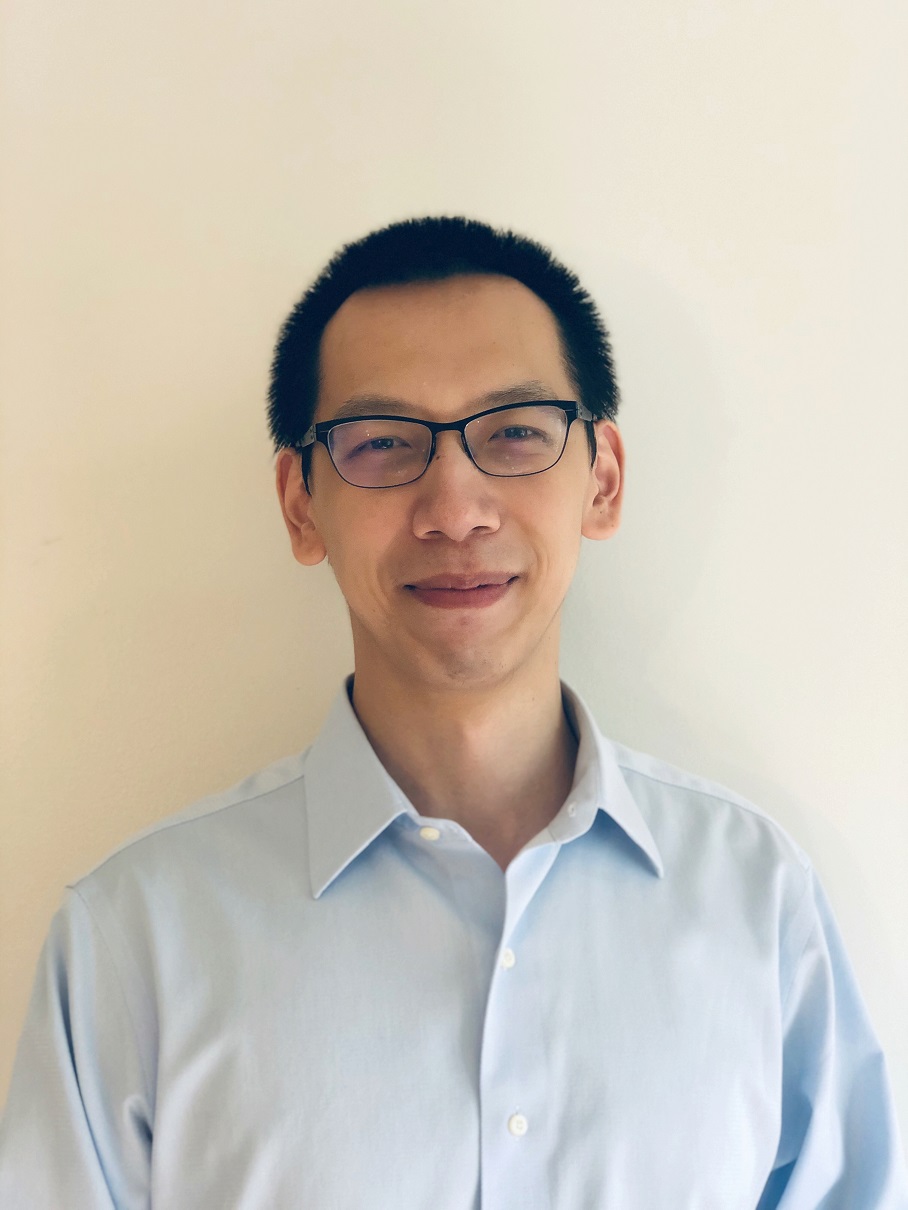
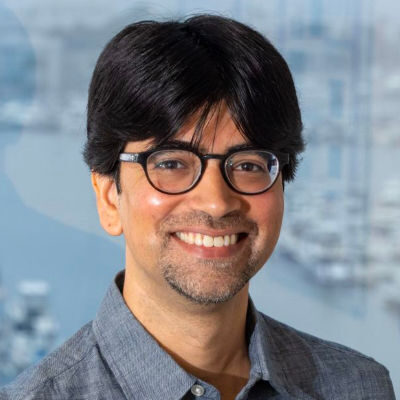
Xiaowei Jia is an Assistant Professor in the Department of Computer Science at the University of Pittsburgh. He holds a Ph.D. from the University of Minnesota (supervised by Prof. Vipin Kumar) and B.S./M.S. degrees from the University of Science and Technology of China (USTC) and SUNY Buffalo. His research focuses on integrating scientific theory with machine learning to address societal and environmental challenges, such as climate modeling, hydrology, and fairness in AI. Education: Ph.D., University of Minnesota (2020) M.S., State University of New York at Buffalo B.S., University of Science and Technology of China (USTC) Research Interests: Knowledge-Guided Machine Learning Spatiotemporal Data Mining Fairness in AI for Social Good Applications in Environmental Science and Healthcare Publications showcase his work on physics-integrated neural networks, spatiotemporal modeling (e.g., water temperature prediction), and fairness-aware algorithms. His work has been recognized with Best Paper awards at SIAM SDM (2022, 2023). Awards include the Best Applied Data Science Paper Award at SIAM SDM in 2022 and 2023. He teaches advanced machine learning courses, emphasizing theory integration with real-world applications.
Dr. Jay Pujara is a Research Associate Professor of Computer Science at the University of Southern California (USC) and Director of the Center on Knowledge Graphs. He is also a Principal Scientist at the Information Sciences Institute (ISI) and leads research teams in data science and AI. Ph.D., University of Maryland, College Park (2016) M.S. and B.S. in Computer Science, Carnegie Mellon University Research Interests include artificial intelligence, probabilistic models, knowledge graph construction, statistical relational learning, NLP, and streaming inference. His work focuses on scalable algorithms for big data and uncertainty modeling in dynamic environments. Recent Publications highlight advancements in knowledge graphs, LLM reasoning, and table understanding. Notable topics include non-verbal abstract reasoning , faithful conversational datasets , and KGQA re-ranking . Scientific Awards : SWSA Ten-Year Award (2023), Outstanding Paper (IUI 2019), Top Reviewer (NeurIPS 2018), Best Paper (SRL Workshop 2016) Advising & Grants : Mentored 12+ graduate students, including Ph.D. advisees on topics like causal modeling and neuro-symbolic tasks. Secured NSF funding for table understanding in paleoclimate studies.
Prof. Dr. Matthias Weidlich is a faculty member at Humboldt University of Berlin within the Institute of Computer Science under the Faculty of Mathematics and Natural Sciences . His research focuses on Process Mining , Complex Event Processing , and Data Privacy with applications in Business Process Management and Scientific Workflows . Research Interests: Business Process Management and Process Mining Complex Event Processing and Stream Data Analysis Data Privacy and Security in Process Systems Scientific Workflow Systems and User Behavior Heterogeneous Network Embeddings Algorithm Design and Optimization Recent Publications (2023-2025) demonstrate expertise in: Efficient stream processing techniques Privacy-preserving process mining frameworks Scientific workflow analysis tools Graph neural network applications Multi-modal data integration Adaptive querying systems Contact: Office: Unter den Linden 6, 10099 Berlin Phone: 030 2093-41277 Email: matthias.weidlich@hu-berlin.de Web: hu.berlin/data
Min Peng is a Professor at Wuhan University's School of Computer Science. His research focuses on artificial intelligence, machine learning, natural language processing, and knowledge graphs. He has collaborated extensively with institutions like Hefei University of Technology and the University of Chinese Academy of Sciences. His work bridges theoretical advancements in AI with practical applications in finance, social media analysis, and network optimization. Recent contributions include neural-symbolic reasoning frameworks, contrastive learning for knowledge graphs, and financial benchmarking with large language models. Research interests emphasize scalable machine learning models for complex reasoning tasks, explainable AI, and domain-specific applications in finance and social networks. Over 100 publications span venues like WWW, ACL, and NeurIPS, highlighting interdisciplinary impact. Notable projects include SymAgent (neural-symbolic agent frameworks), PIXIU (financial LLM benchmark), and DTC (commonsense machine comprehension). Key technical trends include integrating large language models with structured data, temporal knowledge graph reasoning, and transfer learning across domains. His work often addresses real-world challenges in data efficiency, interpretability, and cross-domain scalability. Current efforts explore financial LLMs, agent-based reasoning systems, and multimodal applications. While no specific grants or awards are listed in the provided data, his prolific publication record indicates sustained research excellence. Collaboration networks include teams in computer science, electrical engineering, and finance disciplines.
Prof. Dr.-Ing. Michael Möhring is a Professor of Data Science at Reutlingen University's Faculty of Informatics. He serves as Prodekan for the Herman Hollerith Zentrum (HHZ) and leads research in data analytics, Industry 4.0, and process mining. Previously, he held roles as an IT consultant, project manager at Bosch Group/BSH, and academic researcher. Education: Dr.-Ing. (PhD) in Business Informatics M.Sc. in Business Informatics B.Sc. in Business Informatics Research Interests: Focuses on leveraging structured/unstructured data for industrial applications, enterprise architecture management, digital twins integration, and AI-driven decision support. Specializes in bridging technical systems with organizational processes in manufacturing and service industries. Lab Affiliations: AI-Real Lab AIDA Future Mobility Lab Internet of Things Lab Virtual Reality Lab Articles Trends: Recent work emphasizes practical implementations of AI in production failure analysis (language models), energy optimization systems (HollerithEnergyML), and technical debt management in SMEs. Consistently explores data integration challenges across manufacturing, service ecosystems, and digital twin frameworks. Grants & Collaborations: Active in EU-funded projects like 5G-PreCiSe and bwHealthApp. Collaborates with industry partners on digital transformation initiatives through HHZ's applied research programs.
Dr. Milos Hauskrecht is a Professor of Computer Science at the University of Pittsburgh's School of Computing and Information. He holds a PhD from MIT (1997) and an M.Sc. from Slovak Technical University (1988). His research focuses on AI, machine learning, and data mining, with applications in medicine and finance. He leads projects in real-time clinical monitoring, anomaly detection, and time-series analysis of EHR data. He has advised numerous PhD and MS students, including notable alumni now at Amazon, DeepMind, and Microsoft. Research interests include reasoning under uncertainty, optimization, and AI-driven medical decision support. Current grants include NIH funding for AI in renal therapy and clinical monitoring. He has published widely in top venues like ICML, NeurIPS, and journals such as Artificial Intelligence in Medicine. His work on conditional outlier detection earned the Homer Warner Award (AMIA 2010). He teaches machine learning and advises on interdisciplinary AI projects.
Stefan Decker is a full University Professor (Universitätsprofessor) at RWTH Aachen University, Germany, where he heads the Chair of Information Systems and Databases (Informatik 5) within the Faculty of Mathematics, Computer Science and Natural Sciences. He is actively involved in teaching, research, and the supervision of numerous ongoing and completed doctoral, master’s, and bachelor theses. Education & Academic Background Doctorate (Dr. rer. pol.) – field of Information Systems or related (exact institution/year not stated in text). Appointed as University Professor and Chair of Information Systems and Databases at RWTH Aachen University. Research Interests Prof. Decker’s work lies at the intersection of databases, knowledge graphs, semantic web technologies, data science, and cybersecurity . He investigates architectures and algorithms for large-scale, privacy-preserving, decentralized data analytics , develops ontology-driven information systems , and explores the use of large language models (LLMs) for educational technology, anomaly detection, and incident-response playbooks. Additional focal areas include smart energy systems, mixed-reality learning environments, FAIR data principles, and federated machine learning . Scientific Contributions & Trends His recent publications (2022-2025) demonstrate a clear trend toward explainable AI, LLM-enhanced systems, secure data spaces, and semantic interoperability . Key contributions include novel anomaly-detection frameworks for encrypted power-grid communications, knowledge-graph-driven chatbots for higher-education support, and methodological advances in decentralized analytics and FAIR data sharing. These works are disseminated in top-tier venues such as AAAI, IEEE ISGT Europe, ESWC, IDEAL, and various Springer LNCS and IEEE Transactions. Supervision & Grants Doctoral Theses Advised: A. T. Neumann – “Chatbots as professional companions in large-scale community information systems” (2024) S. M. Welten – “Methods for practical data sharing and decentralized analytics” (2025) Master’s Theses Co-Advised: A. R. Küsters – “Object-centric process constraints using variable bindings” (2025) Additionally supervising more than 30 ongoing bachelor, master, and doctoral projects covering topics such as LLM-driven cybersecurity playbooks, knowledge-graph construction for German law, privacy-preserving analytics in smart grids, and mixed-reality learning agents. Principal investigator or senior researcher in large collaborative projects including NFDI4DS, WestAI, champI4.0ns and several EU/national initiatives on sovereign data spaces and AI services. Labs & Teams Prof. Decker leads the Information Systems & Databases (DBIS) Research Group . The group operates well-equipped laboratories for knowledge-graph engineering, mixed-reality applications, privacy-enhancing technologies, and secure distributed analytics . Current team size exceeds 30 researchers including PhD candidates, postdocs, and scientific programmers, supported by national and EU funding streams.
Raffi Khatchadourian is an Associate Professor in the Department of Computer Science at Hunter College and the Graduate Center of the City University of New York (CUNY). His research focuses on techniques for automated software evolution, particularly automated refactoring and source code recommendation systems, with the goal of easing the burden associated with evolving large and complex software through automated tools. He also conducts research on the automated analysis of Object-Oriented programs. Ph.D., Computer Science & Engineering, Ohio State University (2011) MS, Computer Science & Engineering, Ohio State University (2010) BS, Computer Science, Monmouth University (2004) Khatchadourian's research spans multiple areas of software engineering and programming languages, with particular emphasis on automated software evolution techniques. His work addresses critical challenges in refactoring legacy systems to modern language constructs, optimizing parallel processing in Java 8 streams, and addressing technical debt in machine learning systems. His recent research has expanded into deep learning program transformation, where he develops techniques to convert imperative deep learning code to more efficient graph execution models while ensuring safety. His approach combines static analysis, program transformation, and empirical validation to create practical tools that developers can integrate into their workflows. Analysis of Khatchadourian's recent publications reveals a strong focus on bridging the gap between theoretical program analysis and practical software engineering challenges. His work increasingly intersects with machine learning systems, examining both how to improve ML code through refactoring and how to ensure safety in deep learning frameworks. The research demonstrates consistent evolution from foundational work on Java language features toward more complex systems involving concurrency, deep learning, and automated program transformation. Distinguished Paper Award at SCAM '18 for work on Java 8 stream optimization EAPLS Best Paper Award at FASE '20 for study on Java 8 stream usage EAPLS Distinguished Paper Award at FASE '25 for Deep Learning refactoring work Best Paper Award nominee at IJCAI '24 for AI safety framework Khatchadourian actively mentors graduate and undergraduate students, with several advisees going on to successful academic and industry positions. His former Ph.D. student Tatiana Castro Vélez accepted a tenure-track Assistant Professor position at the University of Puerto Rico. He has supervised numerous master's theses and undergraduate research projects, often resulting in co-authored publications at top software engineering venues. His research has been supported by various grants, though specific funding details are not prominently featured in the available information. Through his work on tools like Fraglight for aspect-oriented programming and Hybridize Functions for deep learning refactoring, Khatchadourian has established a research group focused on practical program analysis and transformation. His lab develops Eclipse plugins and other IDE-integrated tools that help developers with automated refactoring, bug detection, and code optimization. The group maintains active collaborations with researchers at other institutions and contributes to open-source projects on GitHub.
Val Tannen is a Professor at the University of Pennsylvania, specializing in database systems, provenance analysis, and programming languages. His research focuses on data management, query languages, and systems like DBSP and ORCHESTRA. Collaborations include work with co-authors such as Zachary Ives, Susan Davidson, and Todd Green. Key research interests include provenance for databases, incremental view maintenance, and data integration. His work bridges theoretical foundations and practical applications in systems like DBSP for stream processing and ORCHESTRA for collaborative data sharing. Publications span provenance frameworks, query optimization, and distributed systems. While no awards are explicitly listed, his contributions to database theory and systems are widely recognized.
Prof. Dr. Reinhold Decker is a full professor of business administration with a focus on marketing and market research at Bielefeld University's Faculty of Economics, where he has been affiliated since 1997. He currently serves as the Rector's Representative for Cooperation with Business, BRIC, and Research Transfer (since October 2023), following previous roles as Vice Rector for Information Infrastructure and Business (2019-2023), Vice Rector for Information Management (2015-2019), and Vice Rector for Financial Affairs and Resources (2012-2015). He is also the Scientific Director of BI2000plus - Research Projects on the Region since 2005 and a member of the Bielefeld Graduate School of Economics and Management (BiGSEM). Decker earned his degree in industrial engineering with a focus on OR/Computer Science in 1988, received his doctorate in 1993, and completed his habilitation in 1997, all from the University of Karlsruhe (KIT). His academic career includes visiting professorships at the University of Vienna, Moscow Academy of Economics, University of Veliko Turnovo, Universidade NOVA de Lisboa, Université Paris III – Sorbonne Nouvelle, and the University of Maryland. His research focuses on the development and empirical testing of methods and models for acquiring and analyzing consumer data, particularly from social media, and data-driven, consumer-centric development of intelligent products and services. His work spans social media analysis, buyer behavior modeling, brand image analysis, web mining in marketing, and internet-based preference measurement. Decker's interdisciplinary approach bridges marketing, data science, and consumer behavior, with increasing emphasis on intelligent systems and digital transformation in marketing contexts. Analysis of his 15 most recent publications reveals a strong focus on emerging technologies in marketing, including augmented reality, voice assistants, and social media analytics. His research increasingly examines privacy concerns in the digital age, sustainability communication, and the integration of AI in consumer decision-making processes. The interdisciplinary nature of his work is evident in publications spanning marketing journals, data science publications, and technology-focused outlets. Member of the Scientific Council of the journal Argumenta Oeconomica Cracoviensia (since 2013) Associate Editor of the journal Behaviormetrika (since 2012) Member of the Editorial Board of the Springer series Studies in Classification, Data Analysis, and Knowledge Organization (since 2004) Vice President of the European Association for Data Science – EuADS (2018-2022) Decker has served on numerous editorial boards and scientific program committees, including for the International Federation of Classification Societies. His extensive reviewing work spans prestigious journals such as Journal of Business Research, Journal of Product Innovation Management, and Review of Managerial Science. His leadership extends to project management, including BiLinked (2025), Bielefeld 2000plus (2024), and Bielefelder DatenNarrative (2022). Decker has also edited multiple volumes and special issues on data analysis and marketing, demonstrating his commitment to advancing methodological approaches in business research. As Scientific Director of BI2000plus, Decker leads interdisciplinary research projects focused on regional development. His work bridges academia and industry through initiatives like the Bielefeld Center for Data Science (BiCDaS) and the Bielefeld Graduate School in Theoretical Sciences. His recent projects emphasize data narrative techniques, linking data analysis with effective communication strategies for diverse audiences.
Hajo A. Reijers is a Professor at the University of Utrecht, Netherlands, with a former affiliation at Vrije Universiteit Amsterdam. His research focuses on Business Process Management (BPM), Process Mining, and Robotic Process Automation (RPA), emphasizing practical applications in healthcare, organizational processes, and human-computer interaction. He contributes to developing tools like SWORD for detecting workarounds and DEUCE for auditing electronic health records. His work spans algorithm development for process discovery, predictive analytics, and optimization techniques. Key areas include analyzing event logs, modeling workplace behavior, and enhancing process transparency. Reijers collaborates extensively with industry partners, addressing challenges in process automation, employee acceptance of AI, and ethical monitoring. His contributions to conferences like BPM, CAiSE, and ICIS highlight interdisciplinary approaches, combining computer science with organizational studies. Notable projects include frameworks for task mining, reinforcement learning in care processes, and pattern recognition in government transparency assessments. Research initiatives often involve cross-disciplinary teams, exploring topics like workplace well-being through process mining, decision-making support systems, and overcoming barriers to BPM adoption. His work bridges theoretical advancements with real-world impact, influencing both academic discourse and practical business solutions.
Shueng-Han Gary Chan is a faculty member in the Department of Computer Science and Engineering at the Hong Kong University of Science and Technology (HKUST), within the College of Engineering. He is actively engaged in research and mentoring, with a strong publication record in mobile computing, indoor localization, and AI for pervasive systems. His research focuses on indoor localization using Wi-Fi, geomagnetic, and inertial signals , sensor fusion , crowd counting with deep learning , domain adaptation , and efficient mobile AI systems . His work bridges theoretical innovation with real-world deployment, as seen in systems for missing person search and indoor navigation. Recent publications (2023–2025) show a consistent trend toward self-supervised and domain-agnostic learning , efficient model design for mobile devices , and robust signal fusion in noisy environments . His team leverages transformer architectures, graph neural networks, and novel optimization techniques to solve real-world challenges in urban and indoor spaces. He has advised numerous graduate students, including Jierun Chen, Zhuoxuan Peng, and Tianlang He, who have contributed as first authors to joint publications. His collaborations span institutions and include work on large-scale system deployments and mobile AI. He leads a research group focused on mobile and pervasive computing , with projects involving IoT-based contact tracing, indoor navigation (e.g., DeepNavi, SiFu), and real-time localization systems. The team emphasizes practical deployment and system robustness.
Jan Pfister is a researcher at the Chair of Data Science (Informatik X) , affiliated with the Faculty of Mathematics and Computer Science at the University of Würzburg . Holding an M.Sc. in Computer Science from 2021, he contributes to the DMIR group while maintaining the BibSonomy platform. His work bridges Natural Language Processing and Deep Learning , with a focus on structured sentiment analysis and German language modeling. His research explores the integration of Large Language Models with Pointer Networks to extract fine-grained sentiment information. He has developed ModernGBERT , a German-only encoder model, and LLäMmlein , advancing NLP capabilities for the language. Pfister's recent publications highlight trends in encoder-decoder architectures, model-agnostic hallucination detection, and multi-label classification frameworks that refine LLM outputs. He has taught courses including Information Retrieval (SS '22), Text Mining (WS '23), and Selected Topics in Machine Learning (SS'21, WS '21, WS'24). His collaborative projects span medical informatics, human-AI interaction, and social media analysis, often involving interdisciplinary teams and real-world data.
Mario Baldi is a researcher affiliated with the Polytechnic University of Turin, Italy , with significant contributions to computer networking , distributed systems , and software-defined networking . Key research themes: network function virtualization , programmable dataplanes , time-driven scheduling , and traffic analysis . Recent work focuses on RDMA-enabled compute offloading (2023) and DNN inference in network data planes (2023). Longstanding expertise in multicast routing , voice/data packet efficiency , and XML-based protocol parsing (2000–2006). Collaboration network includes Yoram Ofek , Fulvio Risso , and Han Hee Song , with 99+ publications spanning 1994–2023.
Sandra Geisler is a Junior Professor for Data Stream Management and Analysis at the Department of Computer Science, RWTH Aachen University, a position she has held since September 2021. She is also the leader of the Digital Health Spaces group at the Fraunhofer Institute for Applied Information Technology (FIT) in St. Augustin, reflecting her dual expertise in academic research and applied digital health solutions. Bachelor/Master: Diploma in Computer Science, RWTH Aachen University (2008) PhD: Doctoral degree in Computer Science, RWTH Aachen University (2016) Her research focuses on data stream systems, real-time analytics, data quality, and their applications in digital health and industrial processes. She has made significant contributions to ontology-based data quality management, edge computing for stream processing, and FAIR data principles. Recent work explores the integration of large language models into data management workflows and the development of privacy-preserving platforms for industrial data exchange. Her recent publications demonstrate a strong trend in distributed and edge-based stream processing, interdisciplinary applications in healthcare and supply chains, and the use of AI for data discoverability and quality. Topics include in-network computing, simulation of edge queries, self-tonometry for glaucoma, and cross-company data sharing with privacy awareness. She has served as Associate Editor for the Data & Knowledge Engineering Journal (Elsevier), Public Relation Chair for QDB Workshop (VLDB 2016), and Workshop Chair for IMMoA and HIMoA workshops. She has also edited a special issue on Information Management in Mobile Applications in the Pervasive and Mobile Computing Journal. Geisler has supervised multiple theses on topics including LLM-based ontology integration, edge anomaly detection, and data ecosystem modeling. She has been actively involved in research grants and projects related to industrial data processing, digital health, and sustainable production. She teaches courses such as Data Stream Management and Analysis and Data Ecosystems Lab. She leads the Digital Health Spaces research group at Fraunhofer FIT, focusing on innovative solutions for health data management and patient-centric digital tools. Her work bridges computer science, healthcare, and industrial applications, promoting secure, efficient, and intelligent data ecosystems.