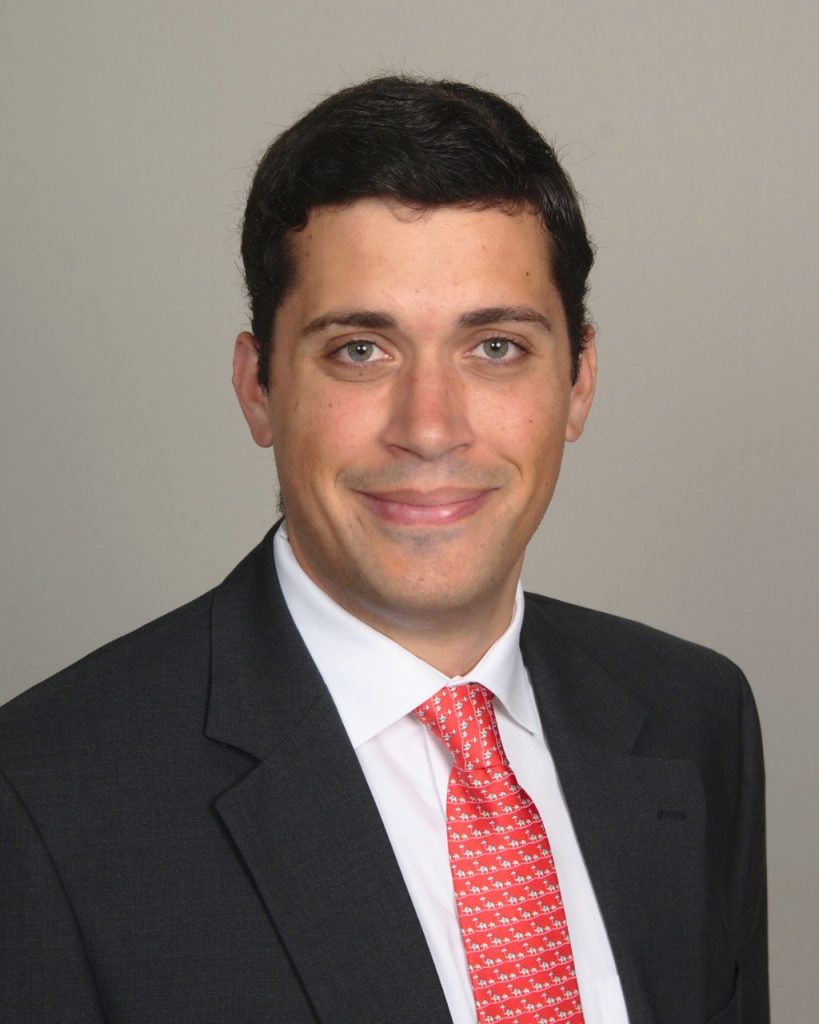
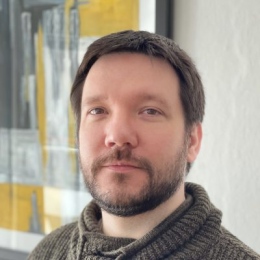
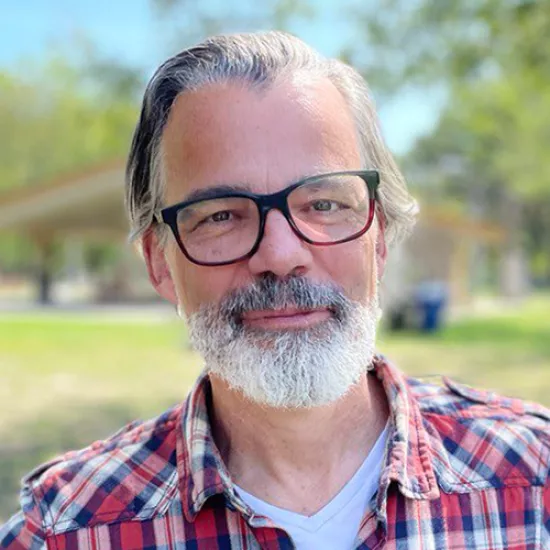
Bige Unluturk is an Assistant Professor in the Departments of Electrical and Computer Engineering and Biomedical Engineering at Michigan State University (MSU), with an affiliation at the Institute for Quantitative Health Science & Engineering. She holds a Ph.D. from Georgia Institute of Technology (2020), M.Sc. from Koç University (2013), and B.Sc. from Middle East Technical University (2011). Her research focuses on molecular communication, the Internet of Bio-NanoThings, and their applications in healthcare, including projects like the ARPA-E-funded 'Strong and CO2-Consuming Living Wood' initiative. Education: Ph.D., Electrical & Computer Engineering, Georgia Tech (2020) M.Sc., Electrical & Computer Engineering, Koç University (2013) B.Sc., Electrical & Electronics Engineering, METU (2011) Research Interests: Biologically inspired communication systems Molecular communication networks in biological systems Healthcare applications of bio-nano sensors Wireless communication protocols for biomedical devices Awards: Recipient of NSF Student Travel Grants, Georgia Tech’s Researcher of the Year Award, and Outstanding Graduate Teaching Awards. She has also been recognized as a METU valedictorian and TUBITAK Fellow. Labs & Collaborations: Leads the Unluturk Lab at MSU, collaborating with Purdue University on bio-engineered materials. Previously worked as a postdoc in Dr. Chris Contag’s Lab at IQ and conducted research at Aalto University and the University of Oslo.
Rob Basten is an Associate Professor in the Department of Industrial Engineering and Innovation Sciences at Eindhoven University of Technology (TU/e). He has been with TU/e since October 2014, initially as an Assistant Professor before being promoted. His work focuses on operations management and behavioral operations management, with particular expertise in maintenance, spare parts supply, and after-sales services for high-tech equipment. Basten's research is highly applied, often conducted in collaboration with industry partners such as ASML, NXP, Canon Production Printing, Marel Poultry, and the Ministry of Defence. Dr. Basten's educational background includes: Master's in Industrial Engineering and Management (2004) from University of Twente Master's in Computer Science (2005) from University of Twente PhD in Operations Management (2010) from University of Twente Rob Basten's research centers on improving after-sales services for high-tech equipment, with a focus on incorporating new technologies such as 3D printing and IoT. His work spans both analytical and empirical approaches, with increasing emphasis on behavioral operations management as human decision-makers interact with AI-based decision support systems. Basten investigates how to design and control after-sales service supply chains when spare parts can be 3D printed, and how to optimize maintenance policies for complex systems. His interdisciplinary research bridges operations management, maintenance engineering, and human behavior. Analysis of Basten's recent publications reveals a strong focus on the application of new technologies in after-sales services. Key trends include the integration of additive manufacturing in spare parts supply chains, condition-based and predictive maintenance driven by Industry 4.0 technologies, and the behavioral aspects of human-AI collaboration in maintenance decision-making. His work frequently addresses challenges in high-tech manufacturing contexts, particularly semiconductor equipment, with a growing emphasis on Industry 5.0 concepts that integrate human-centered approaches with advanced technologies. Dr. Basten has received recognition for his work, including: Finalist for the 2020 Daniel H. Wagner Prize for Excellence in Operations Research Practice ISIR Best Student Paper Award 2018 Rob Basten actively supervises numerous PhD students and has led several major research projects. He currently supervises nine PhD students including Maryam Azani, Ragnar Eggertsson, Bibi de Jong, Zhao Kang, Niccolò Maccarini, Aran Nasiri, Bas van Oudenhoven, İpek Tanıl, and Alireza Yazdani. He has successfully guided six PhD students to completion. Basten has been project leader and work package leader in significant research initiatives including ProSeLoNext (funded by NWO with industry co-funding), PrimaVera, SINTAS, and OCPROM projects. His research is consistently supported by both public funding agencies and industry partnerships, reflecting the practical relevance of his work. Basten is an active member of the Operations, Planning, Accounting & Control group at TU/e and contributes to the EAISI High Tech Systems initiative. He has organized key academic events including the first two editions of the Maintenance Research Day and the Behavioral Operations Conference 2019. His work connects academic research with industry practice through ongoing collaborations with leading high-tech companies, creating a dynamic research environment focused on solving real-world challenges in maintenance and service logistics.
Thomas N. Hubbard is the Elinor and H. Wendell Hobbs Professor of Management and Professor of Strategy at the Kellogg School of Management, Northwestern University. He currently serves as Faculty Director of the Masters in Management Program (2023-present) and has been a professor at Kellogg since 2005. Prior to Kellogg, he held positions at the University of Chicago GSB and UCLA, with a visiting professorship at Columbia GSB during 2004-05. He is also a research associate at the National Bureau of Economic Research. Hubbard earned his PhD in Economics from Stanford University (1996) and BA in Economics from Princeton University (1989) with High Honors. His academic leadership includes serving as Senior Associate Dean of Strategic Initiatives (2012-2016) and Chairman of the Department of Management and Strategy (2010-2012) at Kellogg. His research focuses on empirical industrial organization, examining how information problems affect firm and market organization. Key research streams include industry structure dynamics (analyzing hotel industry evolution and highway construction impacts), hierarchical organization and earnings inequality (using legal services data), specialization in legal services, and technology-organization relationships in trucking. His work combines theoretical modeling with rigorous empirical analysis to address fundamental questions about market structure and organizational form. Hubbard's research has evolved from earlier work on trucking industry organization to more recent studies on industry dynamics and hierarchical production. His publications consistently appear in top economics journals, reflecting the significance of his contributions to understanding how firms organize to solve information problems. Chair's Core Course Teaching Award (2023-24) Oliver E. Williamson Award for Best Paper in Law, Economics, and Organization Best Professor Award, Kellogg-HKUST EMBA Program Hubbard has advised numerous PhD students and collaborated extensively with researchers including Luis Garicano and George Baker. His work bridges theoretical organizational economics with detailed empirical analysis, making significant contributions to our understanding of how firms organize themselves to solve information problems and create value. He maintains an active research agenda exploring the intersection of industrial organization and organizational economics.
Ford Ramsey serves as an Associate Professor in the Department of Agricultural and Applied Economics at the University of Georgia's College of Agricultural and Environmental Sciences. Based at Conner Hall in Athens, Georgia, his research program addresses critical challenges in agricultural economics through advanced quantitative methods, with particular focus on risk management systems and market dynamics in food production sectors. Research Focus: Dr. Ramsey's scholarly work spans multiple interconnected domains: Econometric modeling of agricultural risk and insurance mechanisms Labor market volatility in meat processing and food manufacturing Climate change impacts on crop yield stability and adaptation strategies Historical analysis of agricultural market integration and price formation Bayesian statistical applications in yield forecasting and policy evaluation Regulatory impacts on livestock and grain market efficiency His methodological approach frequently combines traditional econometric techniques with machine learning innovations to analyze complex agricultural systems. Publication Trends: Examination of his 2023-2025 publications reveals three dominant research streams: (1) Climate-agriculture interactions, particularly warming effects on wheat production and adaptation through genetic diversity; (2) Supply chain resilience, with emphasis on labor dynamics during disruptions in food manufacturing; and (3) Crop insurance innovation, focusing on Bayesian forecast combination methods and historical weather integration. These strands consistently demonstrate policy relevance through analysis of regulatory impacts, market integration, and risk management solutions for agricultural producers. Professional Activities: While specific advising relationships and grant details aren't documented in available sources, Dr. Ramsey maintains active engagement through the Agricultural & Applied Economics department's research initiatives. His work connects with broader university efforts in agricultural risk management and food system analysis, as evidenced by departmental affiliations and publication themes.
Donald McMillan is an Associate Professor (Docent) in Human-Computer Interaction at Stockholm University's Department of Computer and Systems Sciences. He is a core member of the Stockholm Technology & Interaction Research (STIR) group, which brings together technologists and social scientists to research and build new digital technologies within the Human-Computer Interaction field. His research focuses on the adoption, adaptation, and use of novel technology in everyday settings, with particular emphasis on expanding the interactional repertoire of conversational interfaces. McMillan investigates how insights from fluid human-human communication can inform the development of better human-computer interaction paradigms through machine learning applications. His work often examines the contextual and social dimensions of technology use in real-world environments. Currently, McMillan serves as Principal Investigator for the Advanced Adaptive Intelligent Systems project, which develops new ways for robots and intelligent agents to understand and adapt to human collaborative work, and the Designing New Speech Interfaces with Ambient Audio project. He is also involved in the Implicit Interaction project. Previous projects include Autonomous Last Mile (developing Extended Reality experiences for human intervention in autonomous vehicle scenarios) and From Tracking to Hacking (exploring how people interact with technology to hack traditional sleep schedules). Advanced Adaptive Intelligent Systems: Developing adaptive interaction frameworks for intelligent systems Designing New Speech Interfaces with Ambient Audio: Expanding conversational capabilities through environmental audio analysis Implicit Interaction: Exploring subtle, background interaction paradigms Autonomous Last Mile: Creating XR experiences for human-robot collaboration scenarios From Tracking to Hacking: Investigating technology adaptation for non-normative sleep patterns His extensive publication record demonstrates deep expertise across multiple HCI domains, with recent work focusing on conversational interfaces, ethical AI considerations, gaze patterns in speech interaction, and contextual wearable technology use. McMillan's research methodology often combines empirical studies of real-world technology use with design implications for future systems, resulting in practical contributions to the field of Human-Computer Interaction.
John M. Rudd serves as a Professor of Marketing at Warwick Business School, University of Warwick. His academic profile demonstrates a remarkable interdisciplinary career spanning both environmental science and business management disciplines. With over 5,740 citations across his publications, Rudd has established significant scholarly impact in multiple fields. Rudd's research interests span two distinct domains. In environmental science, he has made substantial contributions to understanding mercury contamination in ecosystems, particularly focusing on methylmercury formation in freshwater systems, wetland contributions to mercury cycling, and greenhouse gas emissions from reservoirs. His business research centers on strategic planning, decision-making processes, and methodological issues in marketing research. This dual expertise suggests either a significant career transition or sustained collaborative work across disciplines. Analysis of Rudd's publication history reveals an interesting trajectory. Early work (1978-2000) focuses heavily on environmental science with empirical studies on mercury contamination, methane cycling, and greenhouse gas emissions. Later publications (2007-2014) shift toward business and marketing topics, particularly strategic decision-making and research methodology. The environmental papers demonstrate rigorous field measurements and ecosystem analysis, while the business publications engage with theoretical frameworks and organizational behavior. Despite the disciplinary shift, both research streams maintain rigorous methodological approaches and address significant real-world problems. Rudd's scholarly work has been highly influential, with several papers receiving hundreds of citations (notably the 2000 paper on reservoir greenhouse gases with 1,055 citations and the 1994 paper on wetlands as mercury sources with 677 citations). His ability to contribute meaningfully to such disparate fields represents an unusual academic trajectory that bridges natural sciences and business disciplines.
Thomas Kudraß serves as Professor for Database Systems at the Faculty of Computer Science, Mathematics and Natural Sciences (IMN) at Leipzig University of Applied Sciences (HTWK Leipzig). With over 25 years of academic and industry experience, he teaches courses including Database Basics, Database Application Programming, Data Warehousing, and Big Data Technologies. His leadership roles include Internship Coordinator for Computer Science since 2001, Member of the Academic Senate since 2011, and Contact person for the IMN faculty alumni association since 2005. Dr. Kudraß earned his Dipl.-Ing. in Computer Science from Technical University of Dresden (1985-1990) and completed his doctorate at Darmstadt University of Technology (1992-1997), where his dissertation received the prestigious Jos Schepens Memorial Award. Prior to academia, he worked as an Information Systems Architect at UBS AG Zurich and Database Specialist at Swiss Bank Corporation Basel. His research spans database technologies with focus on heterogeneous database integration, data quality, data privacy, and modern database concepts. Recent work explores cloud-native billing applications for 5G, NoSQL databases, and privacy-preserving record linkage techniques. His publication record shows continuous evolution from traditional database systems to contemporary challenges in big data and distributed systems. Jos Schepens Memorial Award for doctoral dissertation (1997) Active participation in German Informatics Society (GI) specialist groups Organizer of multiple database-related workshops and conferences Professor Kudraß has significantly contributed to academic governance as E-Learning Officer (2000-02), Faculty Council member (2009-12), and liaison lecturer for the German Society for Computer Science (2001-14). He has coordinated numerous student projects and served on program committees for major conferences including INFORMATIK 2017 and BTW series.
Sima Siami-Namini serves as a Lecturer at Johns Hopkins University, teaching in the MS in Applied Economics program with extensive experience in undergraduate and graduate instruction across economics, statistics, and finance disciplines. Her academic credentials include advanced interdisciplinary training: PhD in Applied Economics (minor: Statistics), Texas Tech University, 2020 Master's in Statistics, Texas Tech University, 2022 Master's in Artificial Intelligence (Machine Learning focus), University of North Texas, 2023 Her research program integrates macroeconomic theory with cutting-edge computational methods, specializing in monetary policy analysis, time series econometrics, and AI-driven forecasting. She bridges traditional economic modeling with machine learning applications, particularly in anomaly detection, data visualization, and large language model implementations for economic forecasting. Analysis of her publication trajectory (2020-2024) reveals three dominant research streams: (1) deep learning architectures (LSTM, TCN) for time series forecasting and anomaly detection, (2) monetary policy impacts on income inequality using FAVAR/SVECM models, and (3) natural language processing applications for Federal Reserve communication analysis. Her recent work increasingly incorporates large language models for domain-specific economic analysis and code generation. No documented scientific awards or major honors appear in the available records. She mentors students in the Applied Economics program with emphasis on quantitative research methods, though specific grant funding details remain undisclosed. Her teaching methodology incorporates experiential learning techniques adapted from digital forensics education frameworks. No dedicated research laboratories or institutional teams are referenced in the source materials.
Claudia Freire is a Postdoctoral Researcher at the Center for Communication and Culture Studies (CECC) at Catholic University of Lisbon . She holds a PhD in Communication Sciences from the University of São Paulo (2015) and has held roles at institutions including the University of São Paulo, Online University of Viçosa, and the National Council for Scientific and Technological Development (CNPq). Her work intersects with the UN Sustainable Development Goal for Quality Education. Education PhD in Communication Sciences, University of São Paulo (2015) Master's in Communication Sciences, University of São Paulo (2009) Bachelor's in Communication Sciences (Marketing), Pontifical Catholic University of Minas Gerais (1997) Bachelor's in Humanities and Arts, Federal University of Minas Gerais (1999) Her research focuses on epistemology , social media analytics , algorithms , and television fiction with a strong emphasis on data visualization and digital engagement. She has published extensively on topics like social media monitoring , fan communities , and transmedia storytelling . Claudia's publications highlight the evolution of social media monitoring techniques , algorithmic gatekeeping in digital platforms, and methodological approaches to television fiction . Her work bridges theoretical frameworks with practical tools for analyzing digital communication. Peer Review Reviewer for MATRIZes (2023) Reviewer for Conexión (2023) Claudia Freire contributes to academic discourse through peer review and media commentary, focusing on digital communication , civil diplomacy , and educational diversity . Her career spans roles in research, content production, and methodology development.
Moira Clark serves as Professor of Strategic Marketing at Henley Business School, University of Reading, where she founded and directs The Henley Centre for Customer Management. This research consortium develops joint initiatives between Henley and organizations seeking to advance knowledge of best practices in customer management. Her academic leadership spans over two decades since joining Henley from Cranfield School of Management in 2005. Professor Clark's research focuses on strategic customer management, with specializations in customer experience, customer centricity, customer service excellence, and the relationship between organizational culture and business performance. Her work examines critical linkages between employee behavior, customer retention, and service excellence across diverse industry contexts. She has published extensively in top journals including the Journal of Retailing, Journal of Business Research, and Academy of Marketing Science. Recent publications reveal evolving research trajectories toward digital transformation, metaverse applications, and cross-cultural customer engagement. Her 2025 work explores value co-creation frameworks and avatar social presence in virtual environments, while 2024-2023 research addresses tactile sensation in e-commerce, ethical online ethnography, and stakeholder journey mapping. This progression demonstrates increasing focus on technology-mediated customer relationships and methodological innovation. Professor Clark maintains significant industry engagement as a consultant for international companies, advisory board member, and keynote speaker at global conferences. She has extensive pre-academic experience including marketing directorship at an international health food manufacturer and marketing management at Dunhill International's toiletries subsidiary. She leads the Henley Centre for Customer Management, which conducts research on emerging trends in customer management, service excellence, and organizational climate. The Centre's recent projects include investigations into insight-driven customer relationships, emotion in complaint management, and workforce evolution due to technological advances.
Carl Driesener is an Associate Professor and Senior Marketing Scientist at the Ehrenberg-Bass Institute for Marketing Science, where he has worked for over 15 years. He leads the Institute’s in-house tracking capabilities and conducts bespoke market research across industries including packaged goods, financial services, IT, telecommunications, real estate, and the wine market in China. His research focuses on buyer behaviour, market modelling, and internet research, with a strong emphasis on empirical generalisations in marketing. Carl’s research interests centre on buyer behaviour , brand equity , mental availability , and the application of the NBD-Dirichlet model and Duplication of Purchase analysis. He investigates how brands compete, grow, and decline using rigorous empirical methods. His work explores brand image measurement, consumer loyalty, and the impact of media and nostalgia on purchasing decisions. He has made significant contributions to understanding how consumers perceive country-of-origin effects, particularly in the Chinese wine market. His recent publications (2018–2023) reflect a strong trend in cross-cultural consumer behaviour , marketing analytics , and empirical modelling . Themes include mental availability, brand loyalty across categories, ageism in branding, and the use of advanced statistical models like the Poisson log-normal and Dirichlet. His work frequently applies marketing laws to digital and cultural contexts, including music consumption and social media integration. Scientific Awards: Best Paper Award, International Symposium on Marketing (2007) Carl has not publicly listed advisees, but his extensive collaboration with leading marketing scientists such as Byron Sharp, Jenni Romaniuk, and Zorka Anesbury suggests active mentorship and team-based research. He has contributed to major projects on brand loyalty, market structure, and consumer repertoire analysis. While no specific grants are listed, his ongoing publication output and leadership in large-scale research initiatives indicate sustained funding and institutional support. He is a key contributor to the Ehrenberg-Bass Institute’s mission of advancing evidence-based marketing science. Carl is involved in a research team focused on marketing science , brand tracking , and consumer data analytics at the Ehrenberg-Bass Institute. This team applies mathematical models to real-world marketing problems, working with global clients and publishing in top academic journals. Their work is foundational to modern brand management and category growth strategies.
Steve Szigeti is an Associate Professor in the Teaching Stream and Program Director for Communication, Culture, Information & Technology (CCT) at the Institute for Communication, Culture, Information & Technology (ICCIT), University of Toronto Mississauga. He holds a Ph.D. and Master of Information from the University of Toronto’s Faculty of Information, an MA in English from Concordia University, and a BA in English Literature and History from the University of Toronto. His research focuses on game design, design thinking, pedagogy, human-computer interaction, data visualization, and academic integrity . He integrates innovative teaching practices with digital design, particularly through educational games and inclusive pedagogical frameworks. The recent publications reflect a strong interdisciplinary trend combining education, ethics, and technology . His work explores academic integrity through student attitudes, develops inclusive design pedagogy, and applies HCI principles to media analytics and labor education via gamification. Scientific Awards: UTM Teaching Excellence Award for Junior Faculty 2021-22 As a teaching-stream professor and program director, Steve Szigeti is deeply involved in curriculum development and instructional innovation. He teaches courses such as Business Research Methods, Principles in Game Design, Project Management, and UX and Board Game Design. While no formal students are listed, his mentoring role is evident through capstone projects and internship supervision. He leads initiatives in digital pedagogy and academic integrity, contributing to educational reform and inclusive design practices. He is associated with the Open Design Collaboratory and contributes to research on digital equity and ethical technology use in education.
Jing Li is an Assistant Professor at the Department of Computer Science in the Ying Wu College of Computing at New Jersey Institute of Technology. She holds a Ph.D. in Computer Science from Washington University in St. Louis (2017), advised by Chenyang Lu and Kunal Agrawal. Ph.D. in Computer Science, Washington University in St. Louis (2017) M.S. in Computer Science, Washington University in St. Louis (2014) B.S. in Computer Science, Harbin Institute of Technology, China (2011) Her research spans Real-Time Systems , Parallel Computing , Reinforcement Learning for System Design , and Scheduling Theory . Current projects include NSF-funded work on real-time systems with parallel resources and ARPA-E/IBM collaborations on reinforcement learning for converter design. Recent publications focus on AI-driven scheduling , parallel task optimization , and reinforcement learning applications in traffic control and circuit design. Key venues include AAAI, RTSS, PPoPP, and RTAS. Outstanding Achievement in Research (2022) Outstanding Paper Awards at RTSS (2018), RTAS (2016), ECRTS (2013) Turner Dissertation Award (2017) She advises graduate students in real-time systems and parallel computing, mentors NSF/ARPA-E projects, and leads professional services as TPC member and workshop organizer.
Tarleton Gillespie is an Adjunct Professor at Cornell University with joint appointments in the Department of Communication and Department of Information Science. He maintains a graduate field appointment in Science & Technology Studies while concurrently serving as Senior Principal Researcher at Microsoft Research New England. Gillespie earned his Ph.D. (2002) and M.A. (1997) in Communication from the University of California, San Diego, and a B.A. in English from Amherst College (1994). His research examines the sociotechnical dimensions of digital platforms, focusing on: Content moderation practices and platform governance Algorithmic systems shaping public discourse Generative AI's impact on representation and power dynamics Political controversies surrounding digital media infrastructures Gillespie's recent publications (2020-2025) demonstrate a strong focus on algorithmic governance challenges, with 73% examining content moderation systems and 67% analyzing AI's societal impacts. His work consistently addresses platform accountability, visibility politics, and the labor conditions underlying digital infrastructures. Awards & Honors: PROSE Award Finalist (2019) for Custodians of the Internet EURIAS Residential Research Fellowship (2012) SUNY Chancellor's Teaching Excellence Award (2011) Dual Outstanding Book Awards (2009) for Wired Shut Cornell Teaching Innovation Award (2008) As Principal Investigator, Gillespie leads research initiatives at Microsoft Research's Social Media Collective, examining platform governance frameworks. He maintains an active international speaking schedule, with recent keynotes addressing generative AI governance at institutions including Cornell University and University of Vermont.
Witold F. Krajewski is the Rose & Joseph Summers Chair in Water Resources Engineering and Professor in the Department of Civil and Environmental Engineering at the University of Iowa. He holds concurrent appointments as Faculty Research Engineer at IIHR—Hydroscience and Engineering, Iowa Flood Center, and Center for Global & Regional Environmental Research. His academic career at the University of Iowa spans over three decades since joining in 1987. PhD in Water Resources Systems (Warsaw University of Technology, 1980) MS in Environmental Engineering (Warsaw University of Technology, 1976) His research focuses on flood prediction , hydrology , hydrometeorology , radar and satellite remote sensing , and water resources systems . Current work examines radar-rainfall uncertainty impacts on streamflow simulation, ensemble data assimilation for streamflow forecasting, and flood inundation mapping using synthetic simulations. Recent research trends show strong emphasis on quantitative precipitation forecasting evaluation, distributed storage network management for flood mitigation, and advanced statistical assessment of national water models. His work integrates remote sensing technologies with hydrological modeling to improve flood forecasting capabilities. Scientific recognitions include: Fellow of American Geophysical Union Fellow of American Meteorological Society Leadership roles: Past-Chair of Consortium of Universities for the Advancement of Hydrologic Science, Inc., Past-Editor of Advances in Water Resources Prof. Krajewski actively contributes to hydrological education through web-based modeling frameworks and maintains affiliations with multiple research centers at the University of Iowa. His research involves extensive collaboration with NOAA and NASA's GPM mission for ground validation activities.