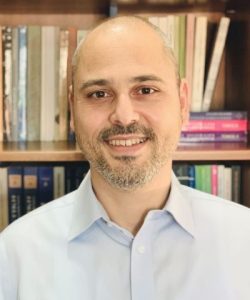
Stelios Timotheou is an Associate Professor at the Department of Electrical and Computer Engineering and faculty member at the KIOS Research and Innovation Center of Excellence, University of Cyprus. He holds a Dipl-Ing from National Technical University of Athens, and MSc/PhD from Imperial College London. His research focuses on developing real-time distributed methodologies using mathematical optimization, machine learning, and computational intelligence to enhance efficiency in critical infrastructure systems. Research interests center on data-driven decision making for urban mobility management, traffic control systems, and energy optimization. Key areas include: Intelligent UAV-based sensing for traffic monitoring Cooperative control algorithms for multi-agent systems Optimization of renewable energy integration Robust infrastructure protection strategies Recent publications demonstrate strong focus on traffic state estimation (76%), energy system optimization (16%), and UAV applications (8%). Awarded the Cyprus Research Award (2017) and ERC Consolidator Grant for URANUS project. Secured multiple research grants focusing on real-time control systems.
Panos K. Chrysanthis is a Professor of Computer Science at the University of Pittsburgh and an adjunct Professor at Carnegie-Mellon University and the University of Cyprus. He holds a BS in Physics with a Computer Science concentration from the University of Athens, Greece, and MS and PhD degrees in Computer and Information Sciences from the University of Massachusetts Amherst. He has been affiliated with the University of Pittsburgh since 1991, serving as Director of the Advanced Data Management Technologies (ADMT) Lab. His research focuses on database systems, mobile and pervasive data management, distributed computing, and real-time systems, with recent emphasis on data streams and energy-efficient data management for IoT and sensor networks. Chrysanthis has authored over 100 peer-reviewed publications, including a book on transaction processing and consistency in distributed databases. He has received the NSF CAREER Award (1995) and the University of Pittsburgh's Provost Award for Excellence in Mentoring (2015). He has held editorial roles at the VLDB Journal, IEEE TKDE, and DAPD, and has organized major conferences like ICDE and MDM. His work bridges theoretical database research with practical applications in urban informatics, healthcare, and sustainability. Chrysanthis has advised numerous students, contributed to grants focused on big data and healthcare analytics, and co-developed tools like the ADMT Lab's experimental platforms for urban mobility and congestion. He is a Senior Member of IEEE and an ACM Distinguished Scientist.
MSc. Sinem Alturjman is a Lecturer in the Department of Artificial Intelligence Engineering at Near East University's College of Engineering. Her academic work focuses on the intersection of artificial intelligence, blockchain technology, and internet of things (IoT) systems. Research areas include: Development of AI-powered learning facilitators and educational tools Integration of blockchain for secure IoT architectures Optimization of mobile cloud computing services Application of machine learning in cybersecurity frameworks 6G communication systems with intelligent routing protocols Recent publications demonstrate expertise in: AI-enhanced scheduling mechanisms Decentralized cloud-IoT architectures Reinforcement learning applications Smart healthcare systems with blockchain Energy-aware routing protocols for sensor networks
Assoc. Prof. Davut Solyali is the Vice Dean of the Faculty of Engineering at Eastern Mediterranean University (EMU), specializing in Electrical and Electronic Engineering. His academic career includes roles as faculty member and administrator with a focus on renewable energy systems, battery technologies, and smart manufacturing. Education: PhD in Renewable Energy (2007-2013), University of Bath MSc in Power Systems (2006-2007), University of Bath BEng in Electrical & Electronic Engineering (2001-2006), Eastern Mediterranean University Research Interests: Focus on battery storage systems for power grids, thermal management of electric vehicle batteries, machine learning applications in manufacturing processes, and wind energy resource assessment. His work bridges renewable energy integration with advanced manufacturing techniques, contributing to sustainable energy solutions and Industry 4.0 advancements. Publications: Recent work emphasizes battery thermal management systems, machine learning optimization of welding processes, and energy storage reviews. His 2022 review on electrochemical battery storage systems has been influential in grid optimization discussions. Awards: Received the EMU Publication Citation Award (2021) for scholarly contributions. Advising & Grants: Supervised multiple theses in energy systems and manufacturing. Engaged in interdisciplinary projects combining renewable energy with advanced thermal engineering solutions. Labs/Teams: Active in EMU's Energy Research Center and Electric Vehicle Development Center (EVDC), contributing to cutting-edge projects in sustainable transportation and grid technologies.
Pattichis Marios is an Associate Professor in the Department of Electrical and Computer Engineering and Radiology at the University of New Mexico (UNM). He directs the Image and Video Processing and Communications Lab (ivPCL) and serves on the board of the FPGA Mission Assurance Center (FMAC). His research focuses on biomedical image analysis, dynamically reconfigurable architectures, and educational technology for underrepresented student groups. Education: Ph.D. in Computer Engineering (UT Austin, 1998), dual bachelor's degrees in Mathematics and Computer Sciences (UT Austin, 1991). He has taught 15 courses across multiple universities and secured $15.9M in research funding from NSF, AFRL, and NIH. Research areas include CAD systems for medical imaging, explainable AI, and large-scale video analytics in clinical and educational settings. Developed AM-FM representations for image/video features and contributed to solar image analysis methodologies. Awards: EAMBES Fellow (2022), Harrison Faculty Excellence Award (2006), Best Paper Award (AIAI06), Teacher of the Year (UNM ECE). Current projects include the AOLME educational initiative and the DRASTIC adaptive video processing platform. He edits special issues in IEEE journals and Teachers College Record.
Devrim Aydın is an Assistant Professor at the Mechanical Engineering Department of the Engineering Faculty , Eastern Mediterranean University. He holds a PhD in Sustainable Energy Technology from the University of Nottingham (2016) and specializes in absorption materials, solar thermal systems, and thermochemical energy storage. Education: BSc (2011): Yildiz Technical University, Mechanical Engineering MSc (2013): Yildiz Technical University, Heat-Process Subdivision PhD (2016): University of Nottingham, Institute of Sustainable Energy Technology His research focuses on innovative composite materials for absorption/adsorption-based heating, cooling, and energy storage, with experimental and numerical expertise in thermal processes. Dr. Aydın has published over 30 papers on topics including: Thermochemical heat storage optimization Salt-impregnated matrices Solar-assisted energy systems Hygrothermal modeling Nano-composite material development Latent heat storage for green buildings He has contributed to projects funded by InnovateUK and serves as a reviewer for journals such as Energy and Renewable and Sustainable Energy Reviews .
Haris Volos is an Assistant Professor in the Department of Informatics at the University of Cyprus . He holds a Ph.D. in Computer Science from the University of Wisconsin-Madison (2012), following B.E.E. degrees from the National Technical University of Athens (2005). Before academia, he worked at Hewlett Packard Labs (2013–2018) and Google (2018–2019). His research focuses on Computer Architecture , Operating Systems , and Data Storage and Processing , with recent work on energy-efficient CPU architectures, disaggregated memory systems, and persistent memory frameworks. Education: B.E.E. (2005), National Technical University of Athens M.Sc. (2007), University of Wisconsin-Madison Ph.D. (2012), University of Wisconsin-Madison Key Research Themes: Energy-efficient CPU core idle-state architectures Disaggregated memory protection and replication Persistent memory systems and transactional memory Big data processing over hybrid memory tiers Recent Contributions: His work includes frameworks like Panthera for holistic memory management and AgileWatts for energy-proportional servers. He also pioneered systems like HOPS (Hands-off Persistence System) for persistent memory. Labs/Teams: Active in the university's informatics research clusters, focusing on hardware-software co-design and scalable data systems.
Dr. Elena Kakoulli is a Lecturer in Information Systems and Coordinator of the MSc in Information Systems and Digital Innovation at the University of Nicosia. She holds a Ph.D. in Computer Engineering from Cyprus University of Technology (2015), following a Master’s in Computer Science (2009) and B.Sc. (2007) from the University of Cyprus. Her research focuses on computer architecture, photonics-based interconnection networks, cybersecurity, and AI-driven educational technologies. Notable contributions include work on resilient NoC architectures, distributed storage systems (OctopusFS), and silicon photonics integration for high-performance computing. Dr. Kakoulli’s research interests span network-on-chip (NoC) design, IoT security, and adaptive learning frameworks. She has collaborated on projects such as distributed tiered storage for cluster computing with Dr. Herodotou. Recognitions include awards from the University of Cyprus and Marfin Laiki Bank Foundation for academic excellence during her postgraduate studies. She has also contributed to teaching roles as a Teaching Assistant at the University of Cyprus and lecturer at Ctl Eurocollege, covering courses like computer architecture, compilers, and operating systems. Her publications highlight advancements in cybersecurity models, AI-integrated education tools, and next-generation computing architectures. She actively participates in academic conferences, including the 21st European, Mediterranean, and Middle Eastern Conference on Information Systems (EMCIS 2024), and has served as a Technical Program Committee member.
Marios Georgiou is the Head of the PROTEAS Facility Operations at the Energy, Environment & Water Research Center (EEWRC) of the Cyprus Institute (CyI). He holds a PhD in Environmental and Atmospheric Sciences from CyI and has been a core member of the Energy and Renewables Group for eight years. His work focuses on the implementation of the CSP-DSW project, combining concentrated solar power with desalination technology. Prior to this role, he served as a postdoctoral researcher at CyI, focusing on thermal characterization and energy storage systems within the PROTEAS pilot plant. Education: Bachelor and Master of Science in Physics, National and Kapodistrian University of Athens, Greece. PhD in Environmental and Atmospheric Sciences, Cyprus Institute. Research Interests: Dr. Georgiou’s research emphasizes solar thermal desalination , concentrated solar power (CSP) , and energy storage systems . His work integrates experimental and theoretical approaches to optimize thermal performance, particularly in molten salt systems and receiver designs. He also explores the application of CSP in cogeneration for electricity and water production, addressing water scarcity and climate change mitigation in Cyprus and beyond. Articles and Contributions: His publications highlight advancements in CSP technologies, molten salt systems, and desalination processes. Recent work includes optimizing aiming strategies for heliostats and evaluating thermal losses in energy storage tanks. He has also contributed to EU collaborations, such as EU-SOLARIS, advancing CSP infrastructure research. Awards and Recognition: No scientific awards explicitly mentioned in the provided texts. Advising and Grants: Marios has mentored Master and Bachelor students in laboratory settings and contributed to securing joint research projects with European institutions and universities. His involvement in proposal preparation underscores his role in fostering international collaborations. Labs and Facilities: He leads the PROTEAS facility, a center for experimental research in CSP and desalination technologies, focusing on innovative solutions for sustainable energy and water systems.
Chryssis Georgiou is a Professor and Chair of the Department of Computer Science at the University of Cyprus. He holds a B.Sc. in Mathematics from the University of Cyprus (1998) and a Ph.D. in Computer Science and Engineering from the University of Connecticut (2003). His research focuses on Algorithms and Complexity, Parallel and Distributed Computing, and Fault-tolerance, with over 115 publications. He has served as General Chair of PODC 2015 and Chair of the Steering Committee of ACM PODC (2021-2024). His work is funded by the European Commission and the Cyprus Research and Innovation Foundation. Research interests span distributed systems, blockchain principles, and algorithmic mechanisms. He has led projects such as ESS-BFT (Byzantine Fault-Tolerant Blockchain) and COLLABORATE (fault-tolerant distributed storage). His advising includes numerous doctoral, master’s, and bachelor’s students in areas like machine learning and distributed systems. He co-authored books on Distributed Cooperative Computing and Blockchain systems. Notable roles include Editorial Board member of Information Processing Letters (2018-2023) and participation in EU-funded projects like AEOLUS and DELIS. His labs include the Research Laboratory for Foundations of Computing Systems and Theoretical Computer Science. Current projects involve fault-tolerant storage and machine learning applications in healthcare.
Valentina Vassallo is a Researcher at the Science & Technology in Archaeology and Culture Research Center (STARC) of The Cyprus Institute, where she serves as a Research Assistant in Digital Heritage. She is also a PhD candidate at the same institution, focusing on 3D digital approaches for archaeological artifact analysis. Her academic background includes two Master's degrees: one in Conservation of Cultural Heritage (Archaeology) and another in Conservation and Management of Cultural Heritage with a specialization in digital methodologies. Her research interests span data documentation, 3D digital acquisition, and semantic web technologies. She has conducted extensive work on 3D documentation pipelines, GIS applications for archaeological spatial analysis, and the development of ontologies for integrating multidisciplinary archaeological datasets. Notable projects include contributions to the New Swedish Cyprus Expedition excavations at Hala Sultan Tekke and the digital refitting of fragmented artifacts like the Palaikastro Kouros statue. Valentina's work emphasizes the FAIR principles for data management and the practical implementation of semantic frameworks to enhance knowledge communication in cultural heritage. Her research bridges traditional archaeological methods with cutting-edge digital tools, aiming to improve data interoperability and accessibility for both academic and public audiences. Her publications reflect a focus on 3D modeling’s role in artifact analysis, virtual reconstructions, and the integration of analytical and digital data. She has also explored topics such as metadata standardization for inscriptions and decision-making support systems in archaeology using natural language processing.
Constantinos Hadjistassou is a Professor at the Department of Engineering, School of Sciences and Engineering, University of Nicosia (Cyprus). He founded the Marine & Carbon Lab (www.carbonlab.eu) in 2016, focusing on marine environmental research and energy systems. His academic background includes a Master's from MIT, a Master of Science in Ocean Systems, and a DPhil in Engineering Science from the University of Oxford. Key Research Areas: Marine debris detection using AI, natural gas treatment/production, flow mechanics in porous media, offshore infrastructure reliability, decarbonization strategies, and microvascular oxygen transport modeling. Scientific Contributions: Pioneering work in subsea connector failure analysis, LNG processing, gas hydrate dynamics, and cybersecurity for offshore energy assets. External Roles: Program Chair for the Society of Petroleum Engineers International since 2021. His publications span marine engineering, energy systems, and biomedical applications, with a focus on computational modeling, deep learning, and environmental impact assessments. Recent projects include CyMIC (MIC Involvement in Damaged Water Pipes) as a collaborator.
Assoc. Prof. Sahand Daneshvar is a faculty member in the Department of Industrial Engineering at Eastern Mediterranean University (EMU). He holds a PhD in Mathematics (2002) from an unspecified institution, an MS in Applied Mathematics (1996), and a BA in Institutional Mathematics (1993). His research focuses on optimization techniques, particularly Data Envelopment Analysis (DEA), applied to diverse sectors such as healthcare, supply chain, and environmental sustainability. He is actively involved in teaching courses like IENG212/Modeling and Optimization, IENG314/Operations Research II, and graduate-level optimization modules. Education: PhD in Mathematics, 2002 MS in Applied Mathematics, 1996 BA in Institutional Mathematics, 1993 Research Interests: His work emphasizes DEA-based methodologies for efficiency evaluation, failure mode analysis (FMEA), and multi-criteria decision-making frameworks. Key areas include optimizing healthcare systems, green supply chains, and renewable energy policies. Recent studies explore applications in forex market forecasting using deep learning and spatiotemporal data analysis. Publications: Over 30 peer-reviewed articles highlight his contributions to operations research and industrial engineering. Notable trends include DEA model modifications for benchmarking, integrating smart FMEA for safety systems, and applying hybrid algorithms for energy storage optimization. Advising & Grants: Supervised 27+ theses (11 PhD/16 MS) on topics like DEA in healthcare efficiency, supply chain risk management, and forex prediction. Active in reviewing and editorial roles for academic journals. Labs/Teams: Engages in cross-disciplinary projects at EMU, focusing on optimization, sustainability, and industrial applications. Collaborates with international researchers on projects funded by EMU and external grants.
Demetris Zeinalipour is a Professor of Computer Science at the University of Cyprus, where he founded and directs the Data Management Systems Laboratory (DMSL). He holds a Ph.D. (2005) and M.Sc. (2003) in Computer Science and Engineering from the University of California - Riverside, CA, USA and a B.Sc. in Computer Science from the University of Cyprus (2000). His career includes research positions at Akamai Technologies, University of Athens (as a Marie-Curie Fellow), University of Pittsburgh, and the Max Planck Institute for Informatics (as a Humboldt Fellow). He is an ACM Distinguished Speaker (2017-2020), a Senior Member of ACM and IEEE, and serves on the editorial boards of ACM Transactions on Spatial Algorithms and Systems and Distributed and Parallel Databases. His primary research spans Data Management in Computer Systems and Networks, with expertise in Mobile, Sensor and Spatio-Temporal Data Management; Big Data Management in Parallel and Distributed Architectures; Network, Blockchain and Telco Data Management; Crowd, Web 2.0 and Indoor Data Management; Data Privacy Management; Data Management for Sustainability; and AI and Data Management. His work bridges theoretical foundations with practical applications, resulting in numerous systems including Anyplace Indoor Information Service, ChatUCY, GreenCap, EcoCharge, and Triabase. His research has evolved from early work in sensor networks to current focus on sustainable computing applications addressing climate change challenges. Professor Zeinalipour's publication record shows a strong trajectory toward sustainability-focused data management, with recent work on energy management for smart homes, electric vehicle charging, and solar self-consumption. His research integrates multiple disciplines including spatial databases, mobile computing, IoT systems, and blockchain technologies, with increasing emphasis on addressing real-world environmental challenges through computing solutions. Scientific Recognition IEEE ICDE'24 Outstanding Reviewer Award IEEE MDM'21 Best App Paper Award IEEE MDM'18 Best of MDM Award and Best Demo Award Humboldt Fellow (2016) ACM Distinguished Speaker (2017-2020) ACM and IEEE Senior Member status He has advised numerous PhD students and postdocs, many of whom have established successful careers in both academia and industry. His laboratory maintains strong industry connections and contributes to open-source development. Professor Zeinalipour is deeply committed to addressing real-world challenges through computing research, with recent work focusing on climate change mitigation and sustainable energy management solutions.
Panayiotis Christodoulou is a Visiting Lecturer of Computer Science at the Department of Computer Science, Neapolis University Pafos. He holds a PhD in Computer Engineering and Informatics from Cyprus University of Technology (CUT) and completed undergraduate and postgraduate studies at Manchester University (UK) and Frederick University (Cyprus). His research focuses on Recommender Systems, Blockchain technologies, IoT, and Smart Cities, with notable contributions to EU projects like DOSSIER-Cloud, SmartGov, and INNOLABS. Education Background: PhD in Computer Engineering and Informatics, Cyprus University of Technology (CUT) MEng in Engineering, Manchester University, UK MSc in [unspecified field], Frederick University, Cyprus Research Interests: His work spans blockchain applications in finance (e.g., Green Bonds), IoT data management, cybersecurity for decentralized systems, and educational robotics. He pioneered frameworks like DLMetaChain (IoT blockchain data lake) and Skillschain (blockchain-robotics education platform). His recent studies address greenwashing detection, smart city citizen perceptions, and pandemic-era healthcare data challenges. Professional Contributions: Panayiotis has managed multiple EU-funded projects, demonstrating expertise in project leadership and innovation. He is affiliated with CUT's Software Engineering and Intelligent Information Systems Research Lab, contributing to cutting-edge R&D in complex event processing and real-time recommendation systems. Labs & Teams: Active member of the Software Engineering and Intelligent Information Systems Research Lab at CUT, collaborating on projects integrating blockchain with IoT, AI, and educational technologies.