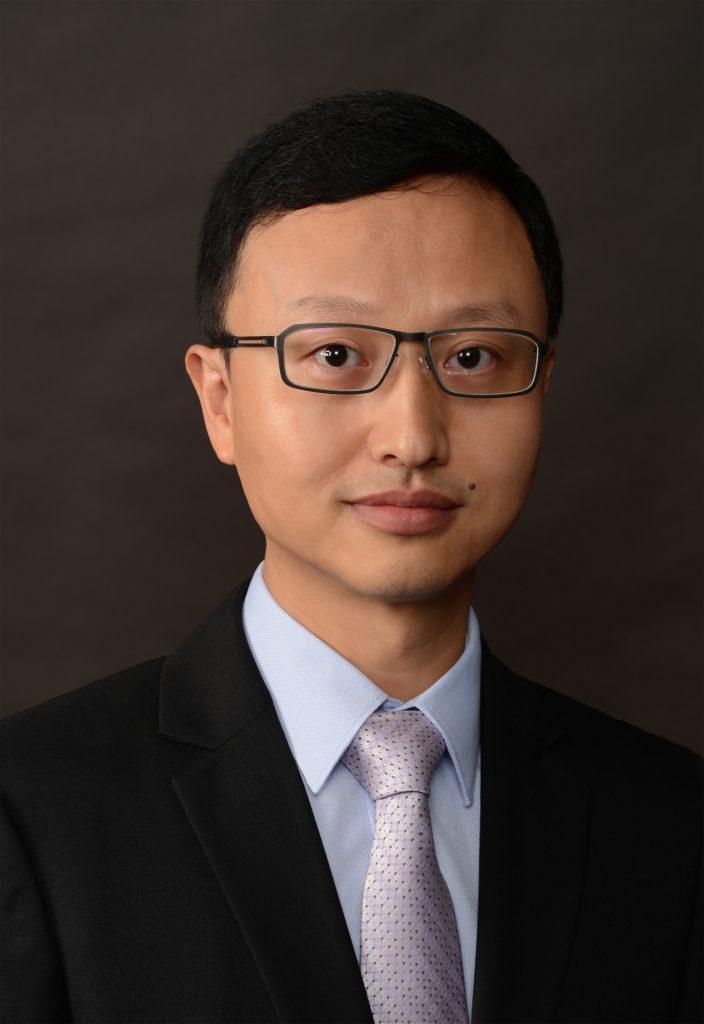
SHEN Lei is a researcher at the National University of Singapore (NUS), affiliated with the Department of Physics. With a PhD in Physics from NUS, he specializes in Multiscale Modeling and Simulation and Materials Informatics , leveraging machine learning and computational methods for advanced materials discovery. Research Focus: Density functional theory, molecular dynamics, finite element analysis, and data-driven design of materials. Teaching: Modules include Mechanics and Waves (PC1433), Applied Quantum Mechanics (PC2130B), and Mechanical Properties of Materials (ESP2109). His work spans spintronics, ferroelectricity, and energy storage materials, with recent publications on interatomic potentials, sliding heterostructures, and battery anodes. He has received the Teaching Commendation Award and declined the Lee Kuan Yew Postdoctoral Fellowship . Notable Trends: Recent articles emphasize machine learning in materials science, van der Waals heterostructures, quantum transport, and medical image analysis. Subfields include Rashba spin-orbit coupling, piezoelectric tensor modeling, and defect-informed neural networks. Scientific Awards: Teaching Commendation Award (AY15/16; AY16/17) Lee Kuan Yew Postdoctoral Fellowship (2014) (declined)
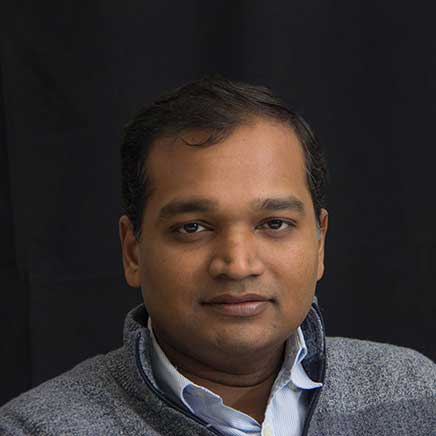
Dr. Raman Adaikkalavan is a Professor in the Department of Computer and Information Sciences at Indiana University South Bend (IUSB), and serves as Associate Vice Chancellor for Enrollment Management. He holds a Ph.D. in Computer Science and Engineering from the University of Texas at Arlington (2006), and has extensive academic leadership experience. His research focuses on information security (particularly IoT and Android), data streaming, and computer science education. Notable contributions include developing the IU Test web-based assessment tool and advancing secure data stream processing architectures. Education: B.E. (1999) from Bharathidasan University, M.S. and Ph.D. (2002/2006) from University of Texas at Arlington, with additional certificates in online teaching (2013). Research emphasizes practical applications like secure stream processing in cloud environments and improving pedagogical methods through active learning. His work has been supported by NSF grants and institutional funding. Awards include the IU Trustees' Teaching Award (2011) and recognition as a University Scholar (UT Arlington). He advises students on topics like secure data stream processing and software engineering. Collaborations include projects with Dr. Indrakshi Ray (Colorado State) and Dr. Sharma Chakravarthy (UT Arlington). His IU Test system aids in program assessment and accreditation reporting for ABET.
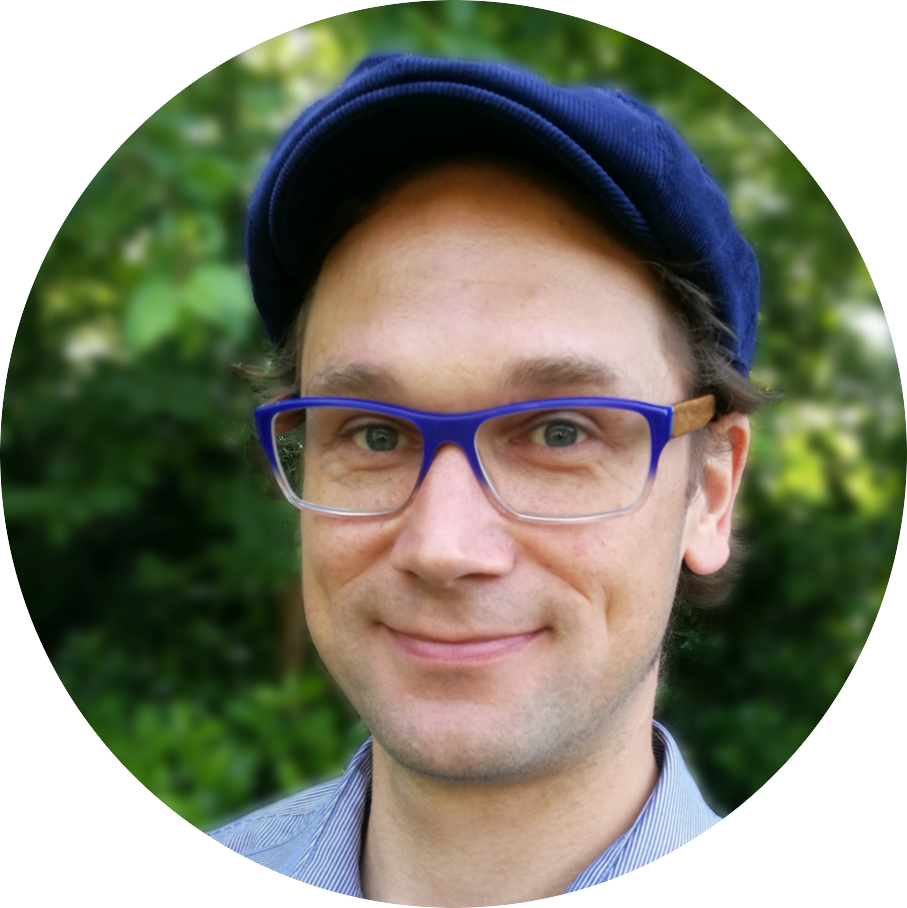
Robert Peharz is an Assistant Professor at Graz University of Technology, where he leads research at the Institute of Machine Learning and Neural Computation. His work focuses on probabilistic machine learning, with particular emphasis on tractable probabilistic models, causality, and neurosymbolic AI. Education and Career PhD from TU Graz (Austria) in 2015 Postdoc at Medical University of Graz Postdoc and Marie-Curie Individual Fellow at University of Cambridge (2017-2019) Assistant Professor at Eindhoven University of Technology (2019-2021) Current: Assistant Professor at Graz University of Technology Research Interests Peharz's research spans multiple areas of artificial intelligence with a focus on making probabilistic reasoning both theoretically sound and practically efficient. His work addresses fundamental challenges in tractable probabilistic inference and learning, probabilistic circuits as a unified framework for deep generative models, Bayesian causal inference, and neurosymbolic AI combining sub-symbolic and symbolic approaches. His research has applications in cybersecurity, healthcare, and energy systems. Research Projects VENTUS (2024-present): Physics-informed, probabilistic and causal machine learning for wind energy systems NEO DNA (2023-present): DNA-based data storage systems using computer vision and probabilistic ML VanillaFlow (2023-present): AI-guided development of novel vanillin-based molecules for redox flow batteries Bilateral AI : Cluster of Excellence focused on Broad AI combining sub-symbolic and symbolic AI approaches Awards and Recognition Finalist for TUG's Excellent Teaching Award (2023) for all 3 of his courses Marie-Curie Individual Fellow at University of Cambridge Academic Service Peharz is actively involved in the academic community through conference organization and reviewing: Area Chair: UAI (2022), ECML/PKDD (2022) Senior Committee Member: UAI (2021), IJCAI (2019, 2020) Reviewer for major conferences including ICML, NeurIPS, AAAI, IJCAI-ECAI Teaching and Mentorship Peharz supervises multiple PhD students working on diverse projects at the intersection of machine learning, causality, and neurosymbolic AI. His current advisees include Sepideh Adamiat, Irina Dobrianski, Johannes Exenberger, Giacomo Di Gobbi, Tim d'Hondt, Christian Toth, and Thomas Wedenig. Previous students include Alvaro Correia, Martin Trapp, and David Montalvan.
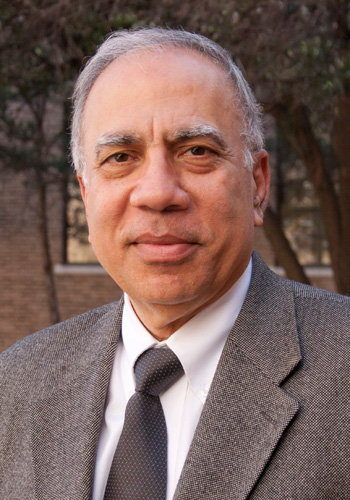
Liuba Shrira is a Professor of Computer Science at Brandeis University, affiliated with the Michtom School of Computer Science and the Benjamin and Mae Volen National Center for Complex Systems. Her research focuses on distributed systems, storage systems, blockchain technology, concurrent programming, and system architectures. She holds a Ph.D., M.S., and B.S. from the Technion – Israel Institute of Technology. Her work emphasizes reliable and highly available systems, including innovations in snapshot management, transactional memory, and adversarial cross-chain commerce. She has been recognized with awards such as the ACM Distinguished Scientist (2009), Lady Davis Fellowship (2010-2011), and a Best Paper Award (2020). Her research has been supported by grants from the National Science Foundation and other institutions. Recent publications highlight advancements in optimistic concurrency control, blockchain interoperability, and modular past-state systems. Shrira has also contributed to middleware design and distributed computing frameworks, with applications in both academic and industry settings.
Dr. Mohamed Soliman is the William C. Miller Endowed Professor at the University of Houston’s Cullen College of Engineering, Department of Petroleum Engineering. He holds a Ph.D. in Petroleum Engineering from Stanford University, complemented by an M.S. and B.S. from Stanford and Cairo University respectively. His research focuses on hydraulic fracturing of unconventional reservoirs, waterless fracturing using shock waves, and advanced numerical simulation techniques. He has authored over 250 technical papers and holds 35 patents, with notable works on shale gas transport, dead oil viscosity modeling, and plasma stimulation technologies. Dr. Soliman is a Distinguished Member of the Society of Petroleum Engineers (SPE) and a Fellow of the National Academy of Inventors. He has received the Gulf Coast 2020 Distinguished Achievement Award for Petroleum Engineering Research. His work bridges theoretical models with practical applications, such as the development of machine learning tools for reservoir analysis and innovative methods for fracture closure detection using wavelet transforms. His teaching spans core petroleum engineering courses including PETR 1111 (Introduction to Petroleum Engineering), advanced production operations (PETR 6372), and well completion stimulation (PETR 5397). He actively mentors graduate students, with current advisees Ibrahim Eltaleb, M. Awad, and Fatmir Likframa. His research group collaborates on projects funded by industry and government agencies, focusing on topics like microwave-assisted heavy oil recovery and geothermal reservoir characterization. Dr. Soliman’s lab develops cutting-edge tools for analyzing fracturing pressure data and interwell connectivity through signal processing. Key collaborations involve experimental validation with institutions like the University of Houston’s Advanced Energy Research Laboratory. His recent work emphasizes sustainable energy solutions, including critiques of carbon capture limitations and innovative plasma-based stimulation techniques to enhance reservoir permeability without water use.
Mohammad Sadoghi is a Professor at the University of California, Davis, with former affiliations at Purdue University, IBM T.J. Watson Research Center, and the University of Toronto. His research focuses on distributed systems, blockchain technologies, consensus protocols, and fault-tolerant computing. He has contributed extensively to transaction processing, stream processing architectures, and the integration of edge-cloud systems with blockchain frameworks. Current Affiliation: University of California, Davis Former Affiliations: Purdue University, IBM, University of Toronto Research Interests include consensus algorithms, Byzantine fault tolerance, distributed ledger technologies, and scalable data processing. He has pioneered systems like ResilientDB and ByShard, addressing challenges in global-scale distributed systems and blockchain fabrics. His work bridges theoretical foundations with practical implementations, emphasizing real-world applications in edge computing and hybrid cloud-edge environments. Key publications highlight advancements in consensus protocols, blockchain scalability, and fault-tolerant architectures. Recent trends in his work focus on concurrent consensus mechanisms, DAG-based systems, and secure geo-replication. Contributions span both academic publications and industry-oriented solutions, such as the Bedrock platform for BFT protocol analysis. Grants and advising roles are implied through his extensive research output, though specific grants are not detailed in the provided text. His collaborations include projects on self-curating databases (e.g., L-Store) and systems like SplitJoin for stream processing.
Masahiro Ryo is a Professor of Environmental Data Science at Brandenburg University of Technology (BTU) and leads the working group "Artificial Intelligence for Smart Agriculture" at the Leibniz Centre for Agricultural Landscape Research (ZALF). His research integrates machine learning with ecological systems to address global sustainability challenges, focusing on biodiversity, soil health, and AI-driven agricultural solutions. His work spans environmental data science, ecosystem services, and smart agriculture. Key themes include explainable AI for biodiversity monitoring, soil organic carbon prediction, and machine learning applications in ecological modeling. Recent publications highlight trends in environmental AI, with applications in yield mapping, fungal taxonomy, and global change ecology. He emphasizes the integration of ecological theory with deep learning to tackle small-data problems and improve model transferability. Contact: masahiroryo@gmail.com | Personal Website
Wenwen Wang is an Associate Professor in the School of Computing at the University of Georgia's Franklin College of Arts & Sciences. His research focuses on computer systems, compiler design, and embedded systems security. He holds a Ph.D. in Computer Science from the University of Chinese Academy of Sciences (2014). Education: Ph.D., Computer Science, University of Chinese Academy of Sciences, 2014 His research emphasizes dynamic binary translation, compiler optimization, and secure embedded systems. Notable contributions include frameworks like JavART (JIT compiler optimization) and BSan (memory error detection). He received the 2021 M. G. Michael Award for Sciences from the Franklin College. Wang has secured two NSF grants totaling $1.2 million, including CSR: Small grants for FALCON (2023–2027) and Modernizing Dynamic Binary Translation Systems (2023–2027). He advises three graduate students: Ruili Fang, Yage Hu, and Boyang Yi. His work addresses challenges in cross-architecture virtualization, GPU-based graph computing, and hardware-triggered security mechanisms. Recent projects include Liberator (GPU graph processing) and InvisiGuard (embedded device integrity).
Marco Spruit is a Professor of Advanced Data Science in Population Health at Leiden University, holding dual appointments at the Leiden University Medical Center (LUMC) and the Faculty of Science's Leiden Institute of Advanced Computer Science (LIACS). His research focuses on translational data science, integrating machine learning, natural language processing, and healthcare applications to bridge fundamental and applied research. He leads the Translational Data Science & AI Lab (TDS Lab), aiming to establish a national infrastructure for Dutch health data science. Education & Leadership: Spruit earned his PhD in computational linguistics from the University of Amsterdam. He has led numerous initiatives, including the Data Science strategy at Utrecht University and the Translational Data Science research theme at Leiden. His leadership style emphasizes mentorship and collaborative innovation. Grants & Collaborations: Key projects include UNCAN-Connect (€30M EU grant for cancer research), INSAFEDARE (synthetic data for regulatory decisions), and Phaeton (pandemic preparedness platform). He collaborates with institutions globally, including Universitas Gadjah Mada in Indonesia. Research Interests: Spruit specializes in federated learning, synthetic data generation, clinical NLP, and AI-driven healthcare solutions. His TDS Lab addresses challenges in data engineering, analytics, and eHealth implementation, with applications in mental health, diabetes management, and elderly care. Awards: He received the ALLC Bursary Award (2005) for computational linguistics research. His work emphasizes ethical AI and responsible data practices. Lab & Teams: The TDS Lab includes 1 assistant professor, 2 postdocs, 6 PhD students, and 4 external collaborators. Monthly meetings foster academic and social cohesion, with a focus on mentorship and innovation.
Hai (Helen) Li is a Professor and Clare Boothe Luce Associate Chair at Duke University's Electrical and Computer Engineering department. She was a TUM-IAS Hans Fischer Fellow (2017) hosted by Prof. Ulf Schlichtmann in the Neuromorphic Computing focus group. Education: B.S./M.S. from Tsinghua University, Ph.D. from Purdue University Positions: Qualcomm, Intel, Seagate, Polytechnic Institute of New York University, University of Pittsburgh Her research spans neuromorphic computing systems , machine learning acceleration , emerging memory technologies , and low-power circuits . Publications demonstrate expertise in ReRAM/memristor-based accelerators, sparse neural networks, and processing-in-memory architectures. Key contributions include cross-layer optimization frameworks and robust neuromorphic designs. Her awards include: 9 Best Paper Awards (ASPDAC, ICMLA, ISVLSI, etc.) NSF Career Award DARPA Young Faculty Award IEEE Fellow (2019) ACM Distinguished Member (2017) IEEE TCSDM Outstanding Leadership Award (2021)
Kyle Chard is a Research Professor in the Department of Computer Science at the University of Chicago and a researcher at Argonne National Laboratory. He holds a Ph.D. in Computer Science from Victoria University of Wellington (2011) and focuses on cloud computing, distributed systems, and high-performance computing. His work emphasizes scalable data management and automation in scientific research. Education: Ph.D., Computer Science, Victoria University of Wellington, 2011 BSc (Hons) and BSc in Computer Science and Mathematics, Victoria University of Wellington Research Interests: Kyle’s research bridges computational systems and scientific domains such as biology, earth science, and astrophysics. Key areas include distributed function serving (e.g., funcX), reproducible research (Whole Tale), and cost-aware cloud computing. His interdisciplinary approach addresses challenges in data-intensive computing and research automation. Publications: Over 150+ publications in top venues like IEEE/ACM conferences, focusing on workflow systems, distributed computing, and scientific data management. Recent work explores AI-driven workflows and exascale computing. Awards: IEEE TCHPC Early Career Award (2020) R&D100 Award (Globus Team, 2019) New Zealand Top Achiever Doctoral Scholarship Grants & Leadership: NSF-funded projects on distributed computing, reproducibility, and cloud infrastructure. Co-leads Globus Labs and the CERES Center for Unstoppable Computing. Community contributions include Parsl (parallel Python), DLHub (ML model serving), and funcX (function-as-a-service). Labs & Collaborations: Globus Labs: Data management and automation CERES Center: Resilient computing systems Collaborations with NASA, DOE, and NSF initiatives
Jennifer Tang is a Postdoctoral Associate at the Massachusetts Institute of Technology (MIT), holding dual appointments in the Institute for Data, Systems, and Society (IDSS) and the Laboratory for Information and Decision Systems (LIDS). She conducts her research under Professor Ali Jadbabaie, focusing on interdisciplinary problems at the intersection of information theory, network science, and social dynamics. Her position is temporary as she actively seeks a permanent academic role through the 2025 job market. Her academic credentials include: Ph.D. in Electrical Engineering and Computer Science from MIT, advised by Professor Yury Polyanskiy Bachelor of Science in Engineering (B.S.E.) in Electrical Engineering from Princeton University, with independent work supervised by Paul Cuff Dr. Tang's research program centers on theoretical and applied aspects of information theory, including channel capacity, quantization, and data compression. She investigates prediction and estimation in high-dimensional settings, data analytics for complex systems, and mathematical modeling of social dynamics and inference in multi-agent networks. Her work employs tools from statistics, optimization, and network theory to address challenges in communication, decision-making, and societal systems, with particular emphasis on opinion dynamics under social pressure and efficient representation of probability distributions. Analysis of her publication record reveals consistent contributions to information-theoretic limits, social network modeling, and compression techniques. Her works frequently appear in top venues like IEEE Transactions on Information Theory and major conferences (ISIT, CDC, ACC), demonstrating expertise in bridging theoretical foundations with real-world applications in networked systems and societal challenges. Her scientific achievements have been recognized with: Best Student Paper Award at IEEE International Symposium on Information Theory (ISIT) 2022 Best Student Paper Award at IEEE Machine Learning for Signal Processing (MLSP) 2022 Student Competition Winner at the Shannon Centennial Celebration Dr. Tang maintains an active teaching portfolio, having served as instructor for MIT 1.022: Introduction to Network Models (Spring 2025) and teaching assistant for multiple core courses including 6.008 (Introduction to Inference), 6.041/6.431 (Probabilistic Systems Analysis), 6.437 (Inference and Information), and 6.439 (Statistics, Computation and Applications). She also contributed to the MIT Women's Technology Program as a Mathematics Instructor during summer 2017. Her research is embedded within MIT's Laboratory for Information and Decision Systems (LIDS) and Institute for Data, Systems, and Society (IDSS), two premier interdisciplinary laboratories fostering collaboration on data-driven decision-making, societal challenges, and foundational theory in information and systems.
Dr. Fadi Ghaith is an Associate Professor in Mechanical Engineering at the School of Engineering and Physical Sciences (EPS) of Heriot-Watt University Dubai. He serves as the Head of the School and has previously held roles such as University Dean of Science and Engineering (2017–2020) and Director of Postgraduate Programmes (2022). His work bridges academia and industry, with a focus on sustainable energy systems and engineering education. Education: BSc, MS, PhD Dr. Ghaith’s research spans Sustainable Energy , Heat Transfer , and Fluid-Structure Interaction . He specializes in: Solar-powered cooling systems Solar desalination and greywater treatment Heat recovery in gas turbines and energy systems Engineering education pedagogy His publications highlight trends in integrating renewable energy with industrial and residential applications , emphasizing computational modeling and system design. Awards include the Senior Fellowship of the Higher Education Academy (SFHEA) and Fellow of the Institution of Mechanical Engineers (FIMechE) . He has led multidisciplinary projects exceeding $10 million in the oil and gas sector. Collaborations: He serves as an external reviewer, principal investigator, and conference chair. His recent external roles include Honorary Professor at Pontifical Catholic University of Rio de Janeiro (2024–2027).
Kasper Green Larsen is a Professor in the Department of Computer Science at Aarhus University. His research focuses on theoretical computer science, machine learning, algorithms, and data structures. He has made significant contributions to boosting algorithms, PAC learning theory, and computational geometry. His work often bridges algorithm design with complexity theory, addressing challenges in optimization, memory efficiency, and lower bounds analysis. Key research areas include: Algorithmic Learning Theory (e.g., boosting, bagging, and PAC learners) Data Structure Design (e.g., invertible Bloom tables, succinct representations) Computational Complexity (e.g., lower bounds for dynamic and oblivious algorithms) Geometric Algorithms (e.g., hierarchical searching, range queries) Recent publications emphasize foundational advancements in learning theory (e.g., optimal weak-to-strong learning) and data efficiency (e.g., memory-reduced Bloom filters). His work frequently appears in top conferences like IJCAI, ICALP, and SODA, reflecting rigorous theoretical contributions with practical implications.
Dr. Magdy Salama is a Professor in the Department of Electrical and Computer Engineering at the University of Waterloo, with dual professional engineering registrations in Ontario and Egypt. His research focuses on power systems, smart grid technologies, renewable energy integration, and medical imaging. He holds over 460 publications, including 215 journal articles, and has developed specialized labs in areas like Power Quality and Ultrasound Imaging. Recognized in the 1991 National Encyclopedia of Egyptian Scientists, he also teaches courses such as ECE 192, 390, and 462, emphasizing engineering economics and design. Education: PhD, Electrical Engineering, University of Waterloo (1977) MSc, Electrical Engineering, Cairo University (1973) BSc, Electrical Engineering, Cairo University (1971) Research Interests: Power quality and distribution system automation Smart grid and renewable energy analysis Medical image processing (e.g., sleep staging, neuromodulation) Electric energy storage and fault detection Asset management and risk analysis Labs & Innovation: He leads labs in Power Quality, Electric Vehicle Power Electronics, Ultrasound Imaging, and Sleep Staging. His patents include high-voltage power supplies for automotive and aerospace applications. Awards: Listed in the 1991 National Encyclopedia for Distinguished Egyptian Men of Science . Teaching & Grants: Recently taught courses like Distribution System Engineering (ECE 6606PD) and Electric Safety Design (ECE 6616PD). His work spans academic-industrial partnerships, though specific grants are not detailed in the text.