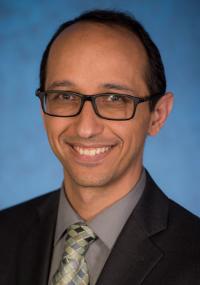
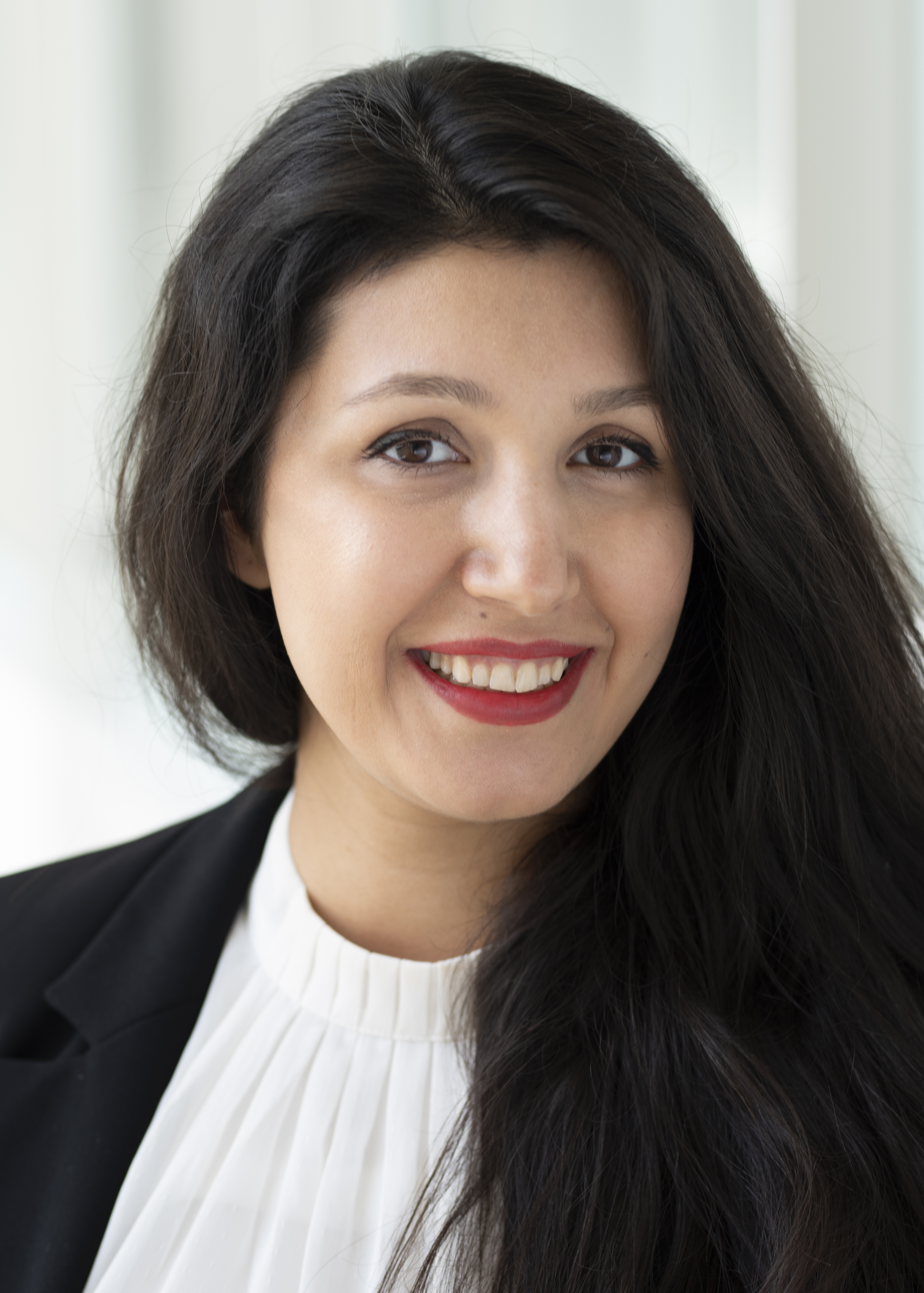
Kambiz Ghazinour is a Professor and Chair of the Department of Cybersecurity at SUNY Canton, where he directs the Advanced Information Security and Privacy (AISP) Lab. He holds a PhD in Computer Science from the University of Calgary (2012) and a Postdoctoral Fellowship from the University of Ottawa and Children's Hospital of Eastern Ontario (2014). Previously, he served as an Assistant Professor at Kent State University (2015-2019) and earned a Master's in High Performance Scientific Computing from the University of New Brunswick (2007). Research Focus: Data Security and Privacy, Privacy Enhancing Technologies, Usable Security, Healthcare Systems, and Social Media. Key Projects: DigitalPASS—patented simulation-based privacy education tool for social media safety. His recent publications span Cybersecurity , Deep Learning , and Health Informatics , including works on cryptocurrency price prediction, Alzheimer's detection via eye tracking, and privacy-preserving surveillance. He has received multiple teaching awards such as the Best Teaching Award at the University of Calgary (2008). Faculty Recognition Award, Kent State University (2015, 2016) University Teaching Certificate (2009) Dr. Ghazinour's teaching portfolio includes graduate courses in Data Mining, Digital Forensics, Cryptography, and undergraduate instruction in cybersecurity fundamentals and programming.
Golnoosh Farnadi is an Assistant Professor at McGill University's School of Computer Science and an Adjunct Professor at the University of Montréal. She serves as a Visiting Faculty Researcher at Google, a Core Academic Member at MILA (Quebec Institute for Learning Algorithms), and holds a prestigious Canada CIFAR AI Chair. Farnadi co-directs McGill's Collaborative for AI & Society (McCAIS) and founded the EQUAL Lab (EQuity & EQuality Using AI and Learning algorithms), which focuses on advancing algorithmic fairness and responsible AI. Her educational background includes a Ph.D. in Computer Science from KU Leuven and Ghent University (2017), with postdoctoral research at the University of Montreal/MILA (2018-2020) and the University of California, Santa Cruz (2017-2018). During her doctoral studies, she was a visiting scholar at UCLA, University of Washington, Tsinghua University, and Microsoft Research. Dr. Farnadi's research centers on developing mathematical tools and algorithms for fairness-aware machine learning systems. Her work addresses bias and discrimination in AI decision-making across critical domains including healthcare, criminal justice, financial services, and social media. She has pioneered approaches to ensure fairness in deep learning models, particularly in sequential decision-making under uncertainty. Her research bridges theoretical foundations with practical applications, examining how AI systems can be designed to promote equity while maintaining performance. Analysis of her recent publications reveals a strong focus on practical implementations of fairness mechanisms across diverse AI applications. Her work spans technical domains from generative models and large language models to recommender systems and healthcare optimization. A unifying theme is the development of mathematically rigorous frameworks that balance performance with fairness considerations, with increasing attention to cultural diversity in multilingual AI systems and privacy-preserving fairness approaches. Google Scholar Award (2021) Facebook Research Award (2021) Rising Stars in AI Ethics (2021) Google Award for Inclusion Research (2023) WAI Responsible AI Leader of the Year Finalist (2023) 100 Brilliant Women in AI Ethics (2023) Canada CIFAR AI Chair Dr. Farnadi advises numerous doctoral and master's students across McGill University, University of Montréal, and MILA, with research focusing on fairness, privacy, and responsible AI. Her EQUAL Lab brings together researchers from computer science, social sciences, and policy domains to address systemic challenges in AI ethics. She has secured significant research funding from Google and other major organizations to support her work on fairness-aware AI systems, with applications spanning healthcare, social media safety, and public policy. The EQUAL Lab serves as a hub for interdisciplinary research on algorithmic fairness, bringing together computer scientists, social scientists, and policy experts. The lab's work spans theoretical foundations of fairness metrics, practical implementations in real-world systems, and policy recommendations for responsible AI deployment. Current projects include developing frameworks for fair kidney exchange programs, mitigating cultural stereotypes in multilingual language models, and creating privacy-preserving approaches for detecting online harms while protecting user data.
Xiaohui Yu is a Professor and Graduate Program Director in the School of Information Technology at York University. He holds a BSc from Nanjing University, an MPhil from the Chinese University of Hong Kong, and a PhD from the University of Toronto. His research focuses on the intersection of data management and machine learning, including ML-based database systems, large-scale machine learning, and spatio-temporal data analysis in contexts like intelligent transportation systems and social networks. Supported by grants from NSERC and industry partners, his work has been published in top venues such as SIGMOD, VLDB, and TKDE. He serves as an Associate Editor for journals like IEEE TKDE and ACM TKDD, and actively participates in conference program committees. Education: BSc (Nanjing University), MPhil (Chinese University of Hong Kong), PhD (University of Toronto). Research Interests: Big data management, database systems, machine learning, spatio-temporal data analytics, and video query processing. Recent articles emphasize ML-driven database components, efficient video query optimization, and scalable algorithms for large-scale data. His work addresses challenges in query processing, indexing, and real-time systems. Service: Serves on editorial boards (e.g., Information Systems), and chairs/workshops (e.g., Symposium on Data Markets). Active in program committees for SIGMOD, ICDE, and other leading conferences. Advising & Grants: Directs graduate programs and leads research groups. Collaborates with industry on data marketplaces and AI model integration. No specific student names listed, but actively recruits PhD/Master’s candidates.
Chee-Wooi Ten is a tenured Professor in the Department of Electrical and Computer Engineering at Michigan Technological University, where he has served since 2010 and achieved tenure in 2016. He concurrently holds an Affiliated Professor appointment in Applied Computing and directs both the PSERC Site and ICC CPS Center. His institutional roles emphasize cyber-physical security integration within power infrastructure. His educational background includes: PhD in Electrical Engineering from University College Dublin (2009) MSc in Electrical Engineering from Iowa State University (2001) BSc in Electrical Engineering from Iowa State University (1999) Ten's research pioneers cyber-informed security engineering strategies for bulk power systems, focusing on quantifying rare events through system risk models and data science. His work bridges power grid interactions with robotics and transportation systems to advance decarbonization and electrification. Key methodologies include validating cyber-physical security frameworks against steady-state and dynamic grid approaches, with emphasis on attack/defense combinatorics and smart home technologies. This transdisciplinary approach supports the fourth industrial revolution's resilience requirements. His publication trends reveal strong focus on risk-aggregated substation testbeds using generative adversarial networks, cyber insurance models for power systems, and cascading failure analysis from switching attacks. Recent works increasingly integrate machine learning with physics-based modeling to address cybersecurity threats in inverter-based resource integration and distribution emergency operations. Ten has secured over $6.5M in active funding including: $2M DOE grant (MTU portion $105,000) for CyDERMS Center on DERs/Microgrids cybersecurity $704,409 CyManII award for secure digitalization in smart manufacturing $1.05M DOE ARPA-E grant for decarbonized freight transportation modeling NSF CyberCorps Scholarship for Service program ($3.38M) His grants consistently address risk management through data-driven and physics-based modeling, with industry partnerships through PSERC and utility collaborations. As ICC CPS Center Director, he leads research on cyber-physical security testbeds and coordinates the PSERC Summer Transformation School. His team develops validation frameworks for NERC CIP compliance while addressing practical pain points in OT cybersecurity for grid operators.
Brandon Reagen is an Assistant Professor in the Department of Electrical and Computer Engineering at New York University's Tandon School of Engineering, with affiliations in Computer Science, the Center for Advanced Technology in Telecommunications (CATT), and the NYU Center for Cybersecurity (CCS). He holds a PhD in Computer Science from Harvard (2018) and undergraduate degrees in Computer Systems Engineering and Applied Mathematics from the University of Massachusetts, Amherst (2012). His research focuses on computer architecture, hardware acceleration for deep learning and privacy-preserving computation, and VLSI design. He pioneered efficient deep learning accelerator designs through unsafe optimizations and contributed to benchmarking frameworks like Aladdin and MachSuite. His work spans privacy-preserving machine learning, secure computing systems, and hardware-software co-design for cryptographic protocols. Key achievements include the NSF CAREER Award (2024) and Siebel Scholar recognition (2018). His research centers on advancing secure computing through innovations like zero-knowledge proof accelerators (e.g., zkSpeed), fully homomorphic encryption frameworks (Orion), and entropy-guided privacy techniques for large language models. He leads interdisciplinary efforts at CATT and CCS to bridge hardware design and cybersecurity challenges. Reagen's contributions include over 50 publications in top-tier conferences (e.g., ISCA, ASPLOS, MLSys) and industry collaborations at Facebook AI. His work emphasizes practical solutions for encrypted computation efficiency, privacy-preserving inference, and scalable secure systems.
Dr. Arnab Bhattacharya is a Professor in the Department of Computer Science and Engineering at the Indian Institute of Technology (IIT) Kanpur since December 2020. He previously served as Associate Professor (2014–2020) and Assistant Professor (2007–2014) at IIT Kanpur. Education: PhD in Computer Science (2007), University of California, Santa Barbara MS in Computer Science (2007), University of California, Santa Barbara Bachelor of Computer Science and Engineering (2001), Jadavpur University Research Focus spans Databases , Data Mining , Information Retrieval , and Artificial Intelligence . His work emphasizes graph analytics , skyline queries , probabilistic data , and knowledge graph management . Article Trends reveal expertise in graph neural networks , trajectory-aware systems , statistical significance in databases , and legal/medical data mining . His methodologies often integrate chi-square statistics , approximate indexing , and provenance tracking . Scientific Awards: IBM Faculty Research Award Yahoo! Faculty Research and Engagement Program Award Best Paper at COMAD 2011 Best Student Paper at COMAD 2010 Top-Five Student Paper at ICDM 2005 ICDM Student Travel Award sponsored by IBM Contact: Office RM 409, Department of Computer Science and Engineering, IIT Kanpur Email: arnabb@iitk.ac.in | Phone: +91-512-259-7650
Professor Jun Zhang is a leading academic in cybersecurity at Swinburne University, Australia, where he directs the Cybersecurity Lab. He has been honored as Australia's top cybersecurity researcher and instrumental in establishing Swinburne as a globally recognized cybersecurity research institution. His work includes high-impact papers and multi-million-dollar R&D projects, culminating in awards like the 2021 'Top Cybersecurity Research Institution' accolade. As course director of the Bachelor of Cyber Security, he pioneered an industry-driven teaching model with Deloitte and CSIRO, significantly boosting course enrollment. His collaborations extend to Adobe's Curriculum Innovation Program and the Australian P-TECH initiative, promoting STEM education and cybersecurity awareness. He supervises doctoral candidates and leads grants focused on AI-driven cybersecurity, smart home security, and blockchain-based edge computing. His research spans vulnerability detection, GAN forensics, IoT security, and privacy preservation in OSNs. Research interests include cybersecurity fundamentals, data science applications, and distributed systems. Notable achievements include the PTFix framework for Java vulnerabilities, the IoTFuzz smart home testing system, and CTI mining methodologies. Awards reflect his mid-career research excellence and industry partnerships. His grants with CSIRO and defense organizations emphasize real-world impact, addressing challenges from malware detection to adversarial machine learning. The Cybersecurity Lab and collaborative projects like Artchain demonstrate his commitment to bridging academia and industry. Professional activities include supervising over 20 HDR students and securing grants totaling millions. His work on blockchain-based edge storage (CSEdge) and SDCCP congestion control highlights innovation in networking. Future directions include advancing AI for design collaboration with CSIRO and enhancing privacy in smart energy technologies. His contributions span technical, educational, and community outreach domains, positioning him as a pivotal figure in cybersecurity's evolution.
Faez Ahmed is an Associate Professor at the Department of Mechanical Engineering, Massachusetts Institute of Technology (MIT), where he serves as the Doherty Chair in Ocean Utilization. He leads the Design Computation and Digital Engineering (DeCoDE) Lab, focusing on integrating machine learning and optimization with engineering design to enhance human-AI collaboration and accelerate design processes. Ph.D., Mechanical Engineering, University of Maryland College Park (2019) B.Tech.-M.Tech., Mechanical Engineering, Indian Institute of Technology Kanpur (2012) His research interests include generative design methodologies, AI-driven optimization techniques, and the development of algorithms that facilitate collaboration between human designers and artificial intelligence systems. This interdisciplinary work spans applications in automotive design , ship hull synthesis , and wind turbine optimization , with a strong emphasis on creating open-source tools and datasets for the engineering community. Recent publications demonstrate his lab's leadership in fields such as 3D CAD generation , multimodal design datasets , and constraint-aware generative models . These works often address challenges in design space exploration , performance prediction , and data-driven design frameworks . Scientific Awards NSF CAREER Award (2025) ASME Young Investigator Award (2024) Google Research Scholar Award (2024) 3M Non-Tenured Faculty Award (2022) University of Maryland Alumni Research Award (2022) Faez Ahmed's lab has trained numerous Ph.D. candidates and postdoctoral researchers, fostering a collaborative research environment that bridges mechanical engineering , artificial intelligence , and computational methods . The DeCoDE Lab actively engages with industry partners and academic institutions, contributing to large-scale datasets and benchmarks that power the next generation of engineering design research.
Anna Levina is an Assistant Professor for Computational Neuroscience at the University of Tübingen , affiliated with the Department of Computer Science under the Faculty of Science. Her research focuses on the self-organization of neuronal activity, critical dynamics in neural networks, and the excitation/inhibition balance in cortical circuits. Current positions: Assistant Professor (since 2018), Group Leader (2017-2018), Equality Officer (Computer Science) Previous roles: IST Fellow (2015-2017), Associated Researcher (2011-2015), Postdoc/PI (2011-2015), Postdoc (2008-2011) Her research integrates mathematical modeling , statistical physics , and computational neuroscience to study criticality phenomena, neural avalanches, and adaptive network dynamics. Key interests include: Self-organized criticality in neural systems Excitation/Inhibition balance mechanisms Network topology and dynamics Timescale analysis in neural processing Stochastic modeling of neural activity Recent publications reveal trends in understanding critical dynamics across biological and artificial networks, with applications to memory systems, sensorimotor integration, and disease modeling. She has received recognition as an IST Fellow .
Stella Yu is a Professor specializing in computer vision, machine learning, and AI applications across medical imaging, robotics, and wildlife recognition. She emphasizes adaptive advising tailored to individual student strengths, with regular one-on-one and group meetings to discuss research progress and paper presentations. Yu's research group focuses on unsupervised learning, deep learning workflows, and interdisciplinary applications such as MRI reconstruction, meibography analysis, and aerial wildlife monitoring. Her work bridges theoretical advancements with practical tools like DeepInPy for inverse problems. She strongly advocates for teaching experience through GSI roles and ensures students have conference funding to present findings at top venues. Education Expectations: Regular literature review, lab presence for junior students, and clear authorship protocols. Key Research Themes: Feature learning, medical AI, computational optics, and wildlife population surveys. Her lab promotes a collaborative environment with structured feedback loops, emphasizing both technical rigor and creative problem-solving. Current projects include BatVision for 3D spatial navigation using audio signals, and AI-driven solutions for dry eye diagnosis and building information modeling.
Aaron Smith is an Associate Professor in the Department of Mathematics and Statistics at the University of Ottawa, affiliated with the Faculty of Science. He holds a PhD from Stanford University. His research focuses on applied probability, computational statistics, Monte Carlo methods, and Markov chains, with an emphasis on advancing theoretical understanding and practical applications of these methodologies. Dr. Smith's work includes contributions to community detection algorithms, Markov chain mixing times, and synthetic health data generation. His recent publications explore topics such as nonstandard Dirichlet form representations, perturbation analysis of MCMC algorithms, and sparse Bayesian multidimensional scaling. He advises students in applied probability and has supervised postdoctoral researchers in related fields. His research interests span a wide range of topics, including stochastic processes, statistical inference, and algorithm design. He is particularly known for his analysis of convergence rates in Markov chains and the development of efficient sampling techniques for complex models. His interdisciplinary work bridges theoretical mathematics and practical computational challenges in data science and healthcare. Dr. Smith collaborates on projects involving synthetic data frameworks for privacy-preserving applications and has contributed to foundational work on mixing times and perturbation effects in stochastic systems.
Dr. Kanchana Thilakarathna is a Senior Lecturer in Distributed Computing at the University of Sydney's School of Computer Science, and a member of the Centre for Distributed and High Performance Computing. They hold a PhD from the University of New South Wales (UNSW) and a B.Sc. Eng (Hons) from the University of Moratuwa, Sri Lanka. Prior to academia, they worked as a Research Scientist at CSIRO/Data61 and had industry experience as a Mobile Radio Network Engineer. Research Interests : Dr. Thilakarathna focuses on cybersecurity, privacy in mobile and IoT systems, mixed reality privacy, and distributed computing platforms. Their work emphasizes user-centric solutions like the Yalut social media app, which enables decentralized data sharing. Key themes include privacy-preserving techniques, edge computing, and secure federated learning frameworks. Recent Work : Recent articles (2023–2025) explore machine unlearning for large language models, federated learning security, and IoT network slicing using P4 programmability. Their work on synthetic video traffic generation (VideoTrain++) and drone detection (DronePrint) demonstrates cross-disciplinary innovation. Awards : Malcolm Chaikin Prize (2015), Meta Research Awards (2020/2022), and Heidelberg Laureate Fellowship (2019). Grants : ARC Research Hub for Future Digital Manufacturing (2024), NSW Defence Innovation Network Projects (2024/2021), and Facebook Research Awards (2022/2020). Students : Advising 4 current PhD students on topics like wireless trust establishment and machine unlearning. Labs/Teams : Part of the Centre for Distributed and High Performance Computing and Sydney Nano Institute.
Aaron J. Elmore is an Associate Professor in the Department of Computer Science and the College of the University of Chicago. His research focuses on cloud computing, databases, and distributed systems, with an emphasis on resource-efficient database execution and collaborative analytics. PhD in Computer Science from University of California, Santa Barbara MS in Computer Science from University of Chicago Research interests include: Elastic databases and multitenancy (Database-as-a-Service) Resource-efficient systems (CrocodileDB, DenseStore, EdgeTSD) Database versioning (Datahub, Decible, OrpheusDB) Data discovery (DataSwamp, Relic) Recent publications highlight advancements in cloud-native query execution, dynamic compression frameworks, and time-series anomaly detection. His work often bridges systems design with practical data science applications. Scientific awards include: NSF CAREER Award (2021) Multiple Google and Intel research grants ACM SIGMOD Best Demo Honorable Mention Aaron has advised multiple PhD students including Jun Hyuk Chang and Riki Otaki, with former advisees now at institutions like MIT, Harvard, and UC Berkeley. He leads the ChiDATA research group and collaborates with Systems Group and CERES Center.
Henry Hoffmann is a Professor and Liew Family Chair in the Department of Computer Science at the University of Chicago. His research focuses on self-aware computing systems that adapt to meet goals like power efficiency, performance, and security. He leads the SEEC project and has contributed to advancements in computer architecture, embedded systems, and quantum computing. Hoffmann received the PECASE (2019), DOE Early Career Award (2015), and was inducted into the Samsung Hall of Fame for discovering vulnerabilities in SmartTVs. He holds a PhD from MIT (2013) and has co-founded Config Dynamics (2019). His work bridges control theory, machine learning, and traditional computer systems to create adaptive solutions for modern computing challenges. Education: PhD in Electrical Engineering and Computer Science from MIT (2013), SM (2003), and B.S. (1999) with highest honors from UNC Chapel Hill. Professional experience includes roles at Tilera Corporation and MIT Lincoln Laboratory. Research Interests: Self-aware systems, adaptive resource management, quantum computing optimization, and cybersecurity. His SEEC framework enables systems to autonomously adapt to constraints like energy and performance. Recent work explores applying adaptive techniques to AI/ML models for energy-efficient inference and security. Awards: Over $19M in research funding, 100+ publications, and leadership roles in NSF Expedition EPiQC (quantum computing). Named Chair of UChicago CS Department (2023-2024). Labs/Teams: Systems Group, EPiQC (quantum computing), and CERES (unstoppable computing systems). Current students include Jerry Ding and Ryien Hosseini. Notable alumni include Yi Ding (now faculty at Purdue) and Nikita Mishra.
Constantine (Costa) Samaras is the Trustee Professor of Civil and Environmental Engineering and Director of the Wilton E. Scott Institute for Energy Innovation at Carnegie Mellon University. He is also affiliated with the Department of Engineering and Public Policy and holds a courtesy appointment in the Heinz College of Information Systems and Public Policy. Director, Scott Institute for Energy Innovation Trustee Professor, Civil and Environmental Engineering Affiliated Faculty, Engineering and Public Policy Courtesy Faculty, Heinz College of Information Systems and Public Policy His research focuses on systems engineering approaches to climate resilience , clean energy transitions , and infrastructure security . Key areas include: Transportation electrification and automation Climate adaptation for infrastructure Energy policy under uncertainty AI impacts on energy systems Equity in decarbonization National security implications of energy Costa Samaras co-authored 15 recent studies spanning energy burden analysis, climate hazard indices, AI training energy optimization, and nature-based infrastructure solutions. His work emphasizes transdisciplinary collaboration between engineering, policy, and climate science. Notable scientific recognition includes being named Professor of the Year by the Pittsburgh Section of the American Society of Civil Engineers in 2018. He has led significant policy engagements including White House service (2021-2024) as Principal Assistant Director for Energy and Chief Advisor for Clean Energy Transition. Current affiliations include: Founder/Director, Center for Engineering and Resilience for Climate Adaptation Founder/Director, Power Sector Carbon Index Former Senior Researcher, RAND Corporation (2009-2014) Former Adjunct Senior Analyst, RAND Corporation (2014-2021)