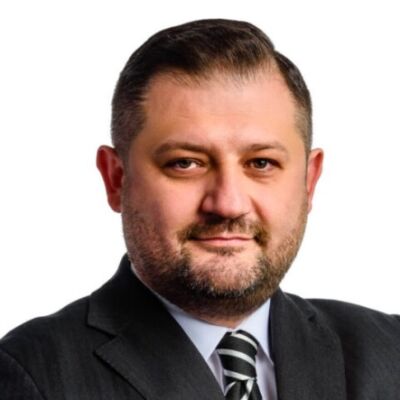
Răzvan Sandu ENOIU is a Professor at the Department of Motor Performance, Faculty of Physical Education and Mountain Sports, Transilvania University of Brașov. His work focuses on sport training methodologies, physical education innovation, and the integration of technology in athletic performance analysis. He is affiliated with the university’s research initiatives and has contributed to interdisciplinary studies bridging sports science with educational technology. Research Interests: Sport training programming and periodization Applications of wearable sensors and modern technology in sports Optimization of athletic performance through data-driven approaches Impact of extracurricular activities on motor skills development His publications explore topics such as Alpine skiing performance analysis, vital sign monitoring in athletics, and the sociological effects of technology during the pandemic. Recent work includes advancements in javelin throwing biomechanics and balance training methodologies using Bosu balls. Professor ENOIU collaborates with international journals and contributes to conferences on sports science and child development.
Sergiu Nisioi is an Associate Professor at the Faculty of Mathematics and Computer Science, University of Bucharest, with expertise in computational linguistics, machine translation, and text simplification. He bridges cognitive science with NLP through eye-tracking and EEG research, while also exploring sound art and digital autonomy via initiatives like HYPHA.ro. Current projects include PN-IV-P2-2.1-TE-2023-2007 (text complexity/readability), Legal Document Processing , and Europarl Dialectal Corpora Research spans computational psycholinguistics , LSTM-based translation models , and algorithmic composition for sound art His work integrates interdisciplinary methodologies, combining EEG signal processing for architecture data with the University of Architecture, and DSP for ecological projects at chlorophylla.live.
Andang Sunarto is an Associate Professor affiliated with the State Islamic Institute (IAIN) Bengkulu, Indonesia and the Lepage Research Institute, Slovakia . His work bridges Numerical Analysis , Computational Mathematics , and Algorithm Design with applications in Robotics , Image Processing , and Sharia-Compliant Systems . Research Focus: Fractional Calculus, Nonlinear PDEs, GPU-Accelerated Algorithms Collaborations: International institutions including Union of Czech Mathematicians and Physicists and University of Prešov His recent publications (2021–2025) emphasize Iterative Methods for solving Time-Fractional Diffusion Equations and Porous Medium Models . He also explores Digital Islamic Education and Halal Tourism Development . Despite no listed awards, his work spans diverse domains like Mobile Banking Evaluation , Environmental Pollution Analysis , and Ethnobotanical Applications . Andang actively designs EdTech tools (e.g., Wordwall-based modules) and contributes to computational methods in Climate Modeling and Nonlinear Diffusion .
Ciprian Bogdan Chirila is a Senior Lecturer at the University Politehnica of Timisoara (Faculty of Automation and Computer Science, Computing and Information Technology Department) and also teaches at Ioan Slavici University . His career spans over two decades, with roles in teaching, research, and software development. Education : PhD in Computer Science (2010, University Politehnica Timisoara & University Nice-Sophia Antipolis) Master's in Computer Science & Software Engineering (2002) Engineer Diploma in Automation & Computer Science (2001) Analyst-Programmer Diploma (1996) Research Interests : His work focuses on reverse inheritance for software reusability, generative learning objects for education, and software quality assessment using code metrics. He explores interdisciplinary applications in healthcare, mathematics education, and industrial IT services. Article Trends : Recent publications emphasize adaptive e-learning frameworks , gamification in education , and model-driven development . Key themes include automated assessment , dynamic content generation , and integration of standards like SCORM and xAPI . Scientific Awards : Microsoft Award, Student Scientific Communications Session (2001) Award, Student Scientific Communications Session (2002) Third Place, Mechanics and Robotics Contest (1998) Fourth Place, Traian Lalescu Mathematics Contest (1998) Teaching & Development : He has led laboratory sessions and lectures in Data Structures , Compiler Design , Operating Systems , and Heuristic Methods . He organizes programming contests and develops centralized materials management software as a volunteer engineer.
Professor Andriy Volodymyrovych Karpenko is a Doctor of Economic Sciences and Professor at the Department of Economics and Customs within the Faculty of Business Technologies and Economics at National University 'Zaporizhzhia Polytechnic'. With over 14 years of academic experience since 2010, he has established himself as a prominent scholar in innovation economics, human capital development, and customs policy. Faculty of Business Technologies and Economics, National University 'Zaporizhzhia Polytechnic' Department of Economics and Customs Director of the Public Organization 'Zaporizhzhia Cluster Engineering - Automation - Mechanical Engineering' since 2020 Deputy Editor-in-Chief of the electronic periodical 'Management and Business' Member of multiple editorial boards of economic journals Professor Karpenko's research interests span innovations and innovation ecosystems, national and regional economy, economics and enterprise management, human capital and human development, and customs affairs. His work demonstrates a consistent focus on Ukraine's economic development through innovation, human capital investment, and cluster-based economic strategies, with particular emphasis on the impact of digital transformation and global challenges on Ukraine's economic landscape. His extensive publication record includes 354 scientific works, with 30 published internationally (7 in Scopus and Web of Science-indexed journals), 94 in Ukrainian professional periodicals, 27 in monographs (including one sole-authored monograph), and 203 conference theses. Recent publications (2020-2024) reveal a strong focus on Ukraine's economic resilience during wartime, cluster development strategies, human capital measurement, and innovation ecosystem management. Letter of thanks from Zaporizhzhia Regional State Administration (2012) Honorary certificates from Zaporizhzhia National Technical University (2013, 2015, 2018) Letter of thanks from Ministry of Education and Science of Ukraine (2020) Letters of thanks and Certificate of Honor from Zaporizhzhia Regional authorities and Ministry of Education (2023) Professor Karpenko actively participates in advising and grant activities, having led multiple research projects since 2014. He currently serves as the responsible executor of research topics at the Department of Economics and Customs at National University 'Zaporizhzhia Polytechnic', focusing on sustainable development of business ecosystems. His work with the Zaporizhzhia Cluster 'IAM' demonstrates strong engagement with practical applications of his research in regional economic development. His academic leadership extends to various councils and government structures, including the Coordination Council for SME Development of Zaporizhzhia City Council and the Council of Entrepreneurs of Zaporizhzhia Region, where he contributes expertise on economic policy and business development strategies.
Maria Magdalena BÂRSAN is a Lecturer at the Department of Law within the Faculty of Law at Transilvania University of Brașov. Her research focuses on criminal law, criminology, environmental law, and public international law. She contributes to academic discourse through publications analyzing topics such as organized crime, legal reforms in criminal justice, and cybercrime prosecution. Her work spans comparative legal studies, juvenile justice systems, and digital forensic legal frameworks. Key publications include analyses of minors' criminal liability under new regulations and judicial approaches to computer fraud. Her research also explores theoretical and practical aspects of legal retention rights and comparative perspectives on self-defense regulations. Dr. BÂRSAN's work bridges theoretical legal scholarship with practical applications in criminal justice systems. She is affiliated with the Transilvania University and actively publishes in peer-reviewed journals such as Bulletin of the Transilvania University of Brașov and AGORA International Journal of Juridical Sciences .
Prof. Victor Grigoras is a faculty member at the Technical University of Iași, holding the rank of Professor. He specializes in electrical engineering and computer science, focusing on signal processing, parallel architectures, and nonlinear dynamics in power systems. His research interests include smart grid technologies, renewable energy integration, and data-driven methodologies for grid optimization. He teaches courses such as 'Semnale, Circuite și Sisteme' and 'Algoritmi și Structuri Paralele de Calcul.' His research spans over 15 recent articles (2021–2025), emphasizing advancements in smart grid automation, machine learning applications in voltage quality analysis, and optimal power flow solutions for renewable integration. Notable trends include SCADA system improvements, energy storage strategies for prosumer grids, and IoT-based energy management. His work addresses challenges in grid reliability, power quality, and future urban grid resilience under high EV adoption scenarios. Prof. Grigoras has contributed to frameworks for electric vehicle charging station placement, hydropower plant optimization via data mining, and demand response mechanisms using smart metering. His methodologies often combine clustering techniques with fuzzy logic or metaheuristic algorithms to solve complex grid problems.
Cristian Bușu is a Professor at the Bucharest University of Economic Studies, affiliated with the Bucharest Business School (BBS). He holds a PhD and is actively involved in academic and executive education programs. His professional activities focus on business leadership, strategic management, and emerging technologies. Notable contributions include the Fintech Report series (2022-2023), analyzing trends in financial technology, and involvement in initiatives like the Data Science International Summer School and Declarative AI projects. He contributes to conferences such as the ARBE Future Economy Summit and Global Fashion Conference, highlighting interdisciplinary interests in economic systems and innovation. His educational outreach includes designing programs like the MBA and Executive MBA tracks in Energy, Creative Industries, and Business Intelligence. No awards or grants are explicitly mentioned in the provided text, though his role as a faculty member suggests ongoing academic engagement.
Dr. Paula Bulieris is a Recognized Researcher (R2) at the National Institute for Research and Development in Isotopic and Molecular Technologies (INCDTIM) in Cluj-Napoca, Romania. She works in the Department of Isotopic and Molecular Technologies, focusing on the Molecular and Biomolecular Technologies research team. Education: MSc in Cellular and Molecular Biology (1998) from Babeș-Bolyai University, Romania PhD in Biology (2007) from Konstanz University, Germany Her research spans protein biochemistry, structural biology, and biophysics, with expertise in protein folding, bacterial flagellum structure, and biochemical/biophysical characterization of biomolecules. Recent work includes biomedical applications of dendrimers and nanopores, antimicrobial peptide functionalization, and phycobiliprotein-based photosensitive materials. Notable Projects: TehnoBioMed (2018–2021): Developing micro/nanostructured biomedical technologies POC 18/2016 (2016–2021): Enhancing bioeconomics knowledge transfer capacity Key Expertise: Protein folding and membrane insertion mechanisms Antimicrobial surface functionalization Dendrimer-based drug delivery systems Coherent optics diagnostics Phycobiliprotein applications She has contributed to technologies like nano-ELISA, high-resolution OCT imaging, and antimicrobial biofilm prevention systems. Her lab work involves crystallization, spectroscopy, and fluorescence quenching techniques.
Leonard Gabriel MITU is a Lecturer at the Department of Product Design, Mechatronics and Environment , part of the Faculty of Product Design and Environment at the Technical University of Brașov. His research focuses on biomaterials, mechatronic systems, and advanced manufacturing techniques. He is particularly active in developing biocomposite materials for orthopedic prosthetics and exploring applications in MEMS (Microelectromechanical Systems). His work integrates interdisciplinary approaches, combining materials science, mechanical engineering, and biomedical applications. Dr. MITU’s research interests include the characterization of biomaterials like hydroxyapatite and polymers (e.g., PLA), optimization of composite reinforcement using glass and carbon fibers, and the development of lightweight prosthetic solutions. He has contributed to studies on manufacturing processes such as photolithography for MEMS and microfabrication techniques. His recent work emphasizes nano and micro-scale manufacturing methods in mechanical engineering, alongside systemic analysis of material behavior in medical devices. His publications span over 20 years, with a focus on biomaterials, composite testing methods, and biomedical applications. Notable contributions include studies on hybrid biocomposites for orthopedics and vibration analysis in renewable energy systems. He has collaborated on projects funded by institutional grants and maintains an active research profile in biomaterials and mechatronics. His address is located at Building C, Room CI 14, 1 Universității Str, Brașov, Romania.
Dr. Onet-Marian Zsuzsanna is a Lecturer in the Department of Computer Science at Babes-Bolyai University in Cluj-Napoca, Romania. Her research focuses on applying machine learning techniques to software engineering challenges, particularly software defect prediction and restructuring. Academic Rank: Lecturer Affiliation: Babes-Bolyai University Department: Computer Science Email: zsuzsanna.onet@ubbcluj.ro Research Interests : Dr. Marian specializes in developing machine learning models (clustering, association rules, reinforcement learning) for software defect detection, package-level restructuring, and test order optimization. She also explores applications of Formal Concept Analysis in text summarization and music pattern discovery. Recent Publications highlight her work in source-code embeddings, unsupervised learning for software analysis, and comparative studies of online/traditional learning environments. Her methods often integrate domain-specific metrics and AI-driven optimization. Contact : zsuzsanna.onet@ubbcluj.ro | Office: Teodor Mihaly street, Room 440
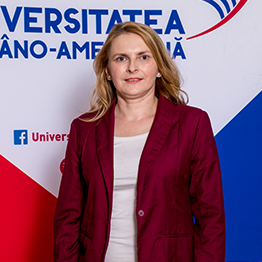
Lavinia Stănică Justina is a university lecturer at the Faculty of Managerial Informatics, Romanian-American University (URA), with 18 years of teaching experience in software programming and e-learning domains. Holding a PhD in Cybernetics and Economic Statistics since 2011, she teaches courses in Romanian and English at both bachelor's and master's degree programs. Her research focuses on ICT's role in innovation, educational technologies, and data analysis for energy consumption, with over 30 publications and multiple coordinated research projects. Faculty: Managerial Informatics University: Romanian-American University Academic Rank: Lecturer Teaching Experience: 18 years PhD: Cybernetics and Economic Statistics (2011) Her research interests include: e-Learning systems and technology integration Artificial Intelligence applications in education ICT's impact on innovation performance Mathematical content modeling Energy consumption data analysis Internet of Things implementations Fractal techniques in imaging Recent publications highlight trends in: Comparative innovation-ICT readiness analysis AI education accessibility Smart energy systems Competitive programming metrics Neural network energy forecasting IoT cloud solutions Modular educational software As Erasmus coordinator since 2013 and Institutional Erasmus Coordinator since 2020, she actively promotes internationalization efforts and academic collaboration with partner universities across Europe.
Professor Hakim Al-Samoui is a distinguished faculty member in the Department of Civil Engineering at the Faculty of Engineering, University of Tripoli. He has served at the university since 2003, obtaining the rank of Professor in 2005 and receiving a promotion to job grade 16 in 2022 (effective from January 1, 2017). His academic career spans over three decades with significant contributions to concrete technology research and education. Bachelor's degree from University of Tripoli (1988) Master's degree from University of Gdansk, Poland (1990) PhD from University of Gdansk, Poland (1996) Worked at University of Gdansk (1996-2002) Professor Al-Samoui specializes in concrete technology with particular expertise in two-stage concrete pouring, concrete durability, fabric formwork, concrete recycling, pozzolanic materials, and concrete mix design. His research bridges theoretical advancements with practical applications in construction engineering. He has published over eighty research papers in distinguished journals and presented at numerous international conferences worldwide, establishing himself as a leading expert in specialized concrete technologies. His recent publications demonstrate a clear trajectory toward sustainable construction materials, advanced concrete technologies, and computational approaches to material science. The research spans traditional concrete innovations while increasingly focusing on eco-friendly alternatives, waste material utilization, and cutting-edge technologies like 3D printing and machine learning applications in construction materials. Scientific Recognition: Fellowship from American Concrete Institute (2020) - first Libyan to receive this honor Active member of American Concrete Institute committees since approximately 1999 External evaluator for leading journals including Construction and Building Materials, American Concrete Institute publications, and American Society of Civil Engineering journals Professor Al-Samoui has supervised six Master's theses at University of Tripoli and served as advisor for graduate students from Gdansk Technical University (Poland), Tehran University (Iran), and Dublin Institute of Technology (Ireland). He has also acted as an external examiner for numerous Master's and PhD theses across multiple universities in Libya, Lebanon, Iraq, and India. His extensive international collaborations include research visits to Columbia University, University of South Carolina, Munich University, and Gdansk University of Technology. Through his active participation in international conferences across more than 20 countries and his role on scientific committees, Professor Al-Samoui maintains a robust research network that spans the global concrete technology community. His recent activities in 2023-2024 demonstrate continued research productivity and academic engagement.
Călin-Adrian POPA is a Full Professor at the Department of Computer and Software Engineering, Politehnica University of Timişoara. He holds a Ph.D. in Computer Science and Information Technology (2015) from Politehnica University Timişoara, and additional degrees in Mathematics from West University of Timişoara (B.Sc. 2013, M.Sc. 2015). His research focuses on artificial intelligence, machine learning, and neural networks, with specializations in complex-valued systems (octonion, quaternion, Clifford algebra), stability analysis, and synchronization of neural networks. He has been awarded the 'Profesor Bologna' Distinction (2017). Research interests include: Advanced neural network architectures Deep learning for computer vision Fractional-order systems Nonlinear dynamics and control Applications in robotics and astrophysics His publications span 2014–2025, emphasizing theoretical contributions to neural networks and practical applications in computer vision and robotics. He supervises a large cohort of PhD students in AI-related fields.
Dr. Popa Adriana Paula is an Established Researcher (R3) at the National Institute for Research and Development of Isotopic and Molecular Technologies (INCDTIM) in Cluj-Napoca, Romania. She is affiliated with the Department of Materials, Energy and Advanced Technologies and leads research within the Nanocomposite Materials with Adjustable Properties team. With a PhD in Physics from Joseph Fourier University, France (2004), and an MSc from Babeș-Bolyai University, Romania (2000), she has over 18 years of research experience. Institution: National Institute for Research and Development of Isotopic and Molecular Technologies (INCDTIM) Department: Materials, Energy and Advanced Technologies Research Team: Nanocomposite Materials with Adjustable Properties Email: adriana.popa@itim-cj.ro Web of Science ID: K-1643-2014 Her research focuses on advanced materials, particularly in the domains of nanomaterials, electron spin resonance, photocatalysis, magnetic properties, and environmental applications. Key areas include diluted magnetic semiconductors, core-shell nanoparticles, oxide glasses, spintronics, and photocatalytic water decontamination. She has coordinated and contributed as a key expert to multiple national R&D projects funded under programs such as PN-II, PN-III, CEEX, and CERES, demonstrating sustained engagement in cutting-edge scientific inquiry. Dr. Popa has played leadership roles in significant projects, including coordinating research on magnetic nanowires and oxidic glasses, and serving as a key expert in projects related to permanent magnets, solar energy conversion, and nanometrology. Her work bridges fundamental materials science with practical applications in energy, environment, and electronics. The absence of recent publication data or student supervision details in the provided text limits a full assessment of her academic output, but her long-standing project involvement and technical leadership indicate a high level of expertise and contribution to her field. Project Leadership: Coordinator of projects on magnetic nanowires and transition ions in oxide glasses. Expert Roles: Key expert in projects on spintronics, nanomagnetic materials, photocatalytic membranes, and rare-earth-free magnets. She maintains active participation in the scientific community through peer-review activities for international programs and contributes to enhancing research infrastructure, such as the electron spin resonance laboratory at INCDTIM. Her work supports technological transfer and innovation, particularly in the context of Romania’s research and development goals.