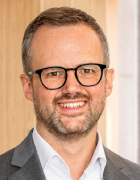
Prof. Magnus Fröhling is a Full Professor of Circular Economy and Sustainability Assessment at the Technical University of Munich (TUM), leading the Chair of Circular Economy and Sustainability Assessment at TUM Campus Straubing. He holds a doctorate and habilitation from the Karlsruhe Institute of Technology (KIT), specializing in material flow analysis and resource efficiency. His career includes roles as a professor at TU Bergakademie Freiberg before joining TUM in 2018. Fröhling’s research focuses on quantitative approaches for circular economy systems, including industrial value chains, built environments, and bioeconomy. He co-leads the TUM Mission Network Circular Economy, an interdisciplinary platform for research and innovation. **Education:** Bachelor/Master in Industrial Engineering, Karlsruhe University (TH) PhD in Industrial Engineering (2005), Karlsruhe University Habilitation in Business Administration (2011), KIT **Research Interests:** Circular economy concepts for automotive industry, buildings, and energy systems; sustainability assessment in bioeconomy; policy instruments for resource efficiency. His work emphasizes lifecycle analysis and closed-loop systems. **Awards:** TUM Sustainability Award (2021) and recognition for groundbreaking research on sustainability in industrial biotechnology (2020). **Advising & Grants:** Leads research initiatives like CirculaTUM, focusing on interdisciplinary collaboration. His work integrates policy analysis, technological innovation, and industrial ecology to advance sustainability goals. **Labs/Teams:** Active in TUM’s Green Fuel Center and SynBioFoundry@TUM, promoting sustainable energy and biotechnology solutions.
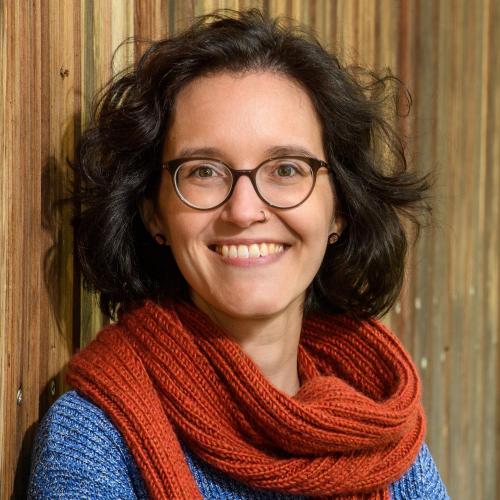
Dr. Stephanie Spahr is a Research Group Leader at the Leibniz Institute of Freshwater Ecology and Inland Fisheries (IGB) in Berlin, Germany, where she leads the Organic Contaminants research group within the Department of Ecohydrology and Biogeochemistry. Previously, she served as a Junior Research Group Leader at the University of Tübingen's Center for Applied Geoscience (2019-2021) and as a Postdoctoral Researcher at Stanford University's Department of Civil and Environmental Engineering (2016-2019). Dr. Spahr earned her PhD in Environmental Chemistry from the Swiss Federal Institute of Technology Lausanne (EPFL) and the Swiss Federal Institute of Aquatic Science and Technology (Eawag) in 2016. Her doctoral research focused on the formation of N-nitrosodimethylamine during water disinfection with chloramine. She completed her MSc in Geoecology at the University of Tübingen in 2012, with thesis work on carbon and nitrogen isotope analysis of benzotriazoles conducted at Eawag, and her BSc in Geoecology/Ecosystem Management at the same institution in 2010. Dr. Spahr's research focuses on trace organic contaminants in aquatic systems, with particular expertise in transformation processes of contaminants in natural and engineered systems, advanced oxidation processes for water treatment, urban blue-green infrastructure, and compound-specific isotope analysis. Her work bridges environmental chemistry, engineering, and ecology to address water quality challenges in urban and natural water systems. She employs advanced analytical techniques to track contaminant sources and transformation pathways, with a strong emphasis on practical applications for water treatment and environmental protection. Her recent publications demonstrate a strong focus on biochar-based water treatment technologies, particularly for stormwater management. She investigates how biochar amendments can remove trace organic contaminants from urban runoff, with recent work examining persulfate activation mechanisms, the role of chloride in reactive species formation, and the performance of engineered media filters under dynamic conditions. Her research also extends to understanding contaminant transport in rivers, the ecological impacts of pollutants, and developing analytical methods for environmental monitoring. The interdisciplinary nature of her work connects chemical processes with ecological outcomes. Outstanding Review Paper Award 2023 in Environmental Science: Water Research & Technology Selected for the Falling Walls Female Science Talents Intensive Track 2023 Selected mentee in the Leibniz Mentoring Programme 2022-2023 Best poster award (1st prize) at the Wasser 2022 of the Water Chemistry Society Selected fellow in the Postdoc Academy for Transformational Leadership 2020-2022 (Robert Bosch Stiftung) Selected fellow in the Athene Program for early female career researchers at the University of Tübingen, 2020-2021 As a Research Group Leader, Dr. Spahr supervises multiple research projects including 'POllution in UrbaN ponds, eco-evolutionary Dynamics, and Ecosystem Resilience (POUNDER)', 'Dynamic hyporheic zone', 'NYMPHE', and the 'Incident-related special investigation programme for the environmental disaster in the Oder River'. She serves on the Executive Board of the German Water Chemistry Society and heads its Expert Committee on 'Oxidative Processes'. Her collaborative work spans numerous institutions across Germany and internationally, addressing critical water quality challenges through interdisciplinary approaches. Dr. Spahr leads the Organic Contaminants research group at IGB Berlin, which focuses on understanding the fate and treatment of organic pollutants in water systems. Her team employs advanced analytical techniques including compound-specific isotope analysis to track contaminant sources and transformation pathways. The group collaborates extensively with other departments at IGB and with international partners on projects addressing urban water challenges and ecological impacts of pollution. Current research emphasizes innovative water treatment technologies, particularly biochar-based systems for stormwater management, and investigating the complex interactions between contaminants, aquatic ecosystems, and human activities.
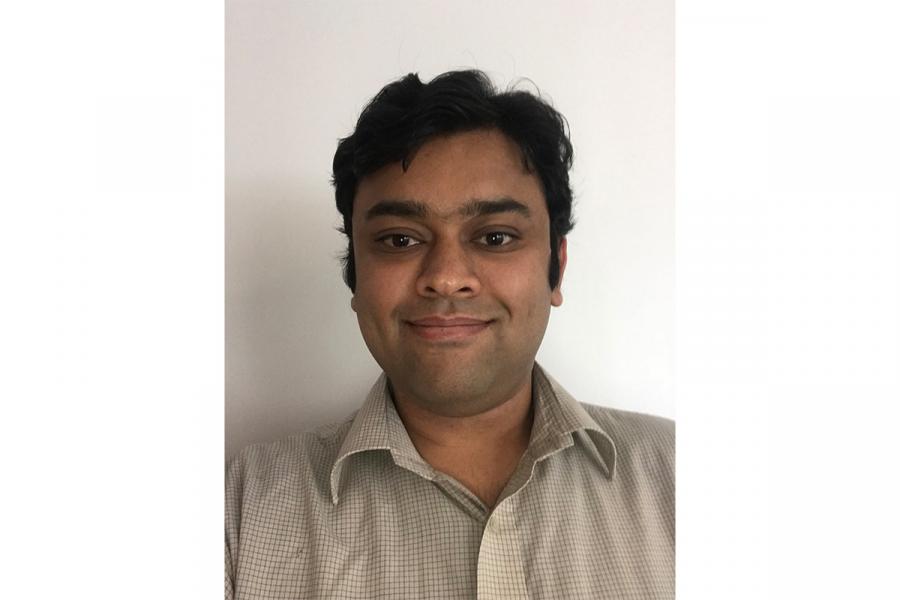
Hamid Mansoor is an Assistant Professor in the Department of Computer Science at the University of Manitoba. He holds a PhD in Computer Science from Worcester Polytechnic Institute under Prof. Emmanuel Agu, and was part of the DARPA-funded WASH project. His research focuses on data visualization, digital health, and smartphone-based behavioral analysis. He previously served as a Postdoctoral Fellow at the VIXI Lab, University of Victoria, Canada, under Prof. Miguel Nacenta. Education: PhD in Computer Science, Worcester Polytechnic Institute Research Interests: Interactive data visualization frameworks for health monitoring Mobile and ubiquitous computing for behavioral analysis Smartphone-sensed human behavior and health informatics Visual representation of text-based and sensor data Publications highlight trends in visual analytics for healthcare, including tools like ARGUS and INPHOVIS for detecting bio-behavioral disruptions and smartphone-based phenotyping. His work integrates machine learning with visualization to address challenges in health data interpretation. Awards: Best short paper honorable mention (EuroVis 2020) His contributions span academic collaborations in health informatics and mobile computing, with a focus on bridging theory and practical applications in healthcare technology.
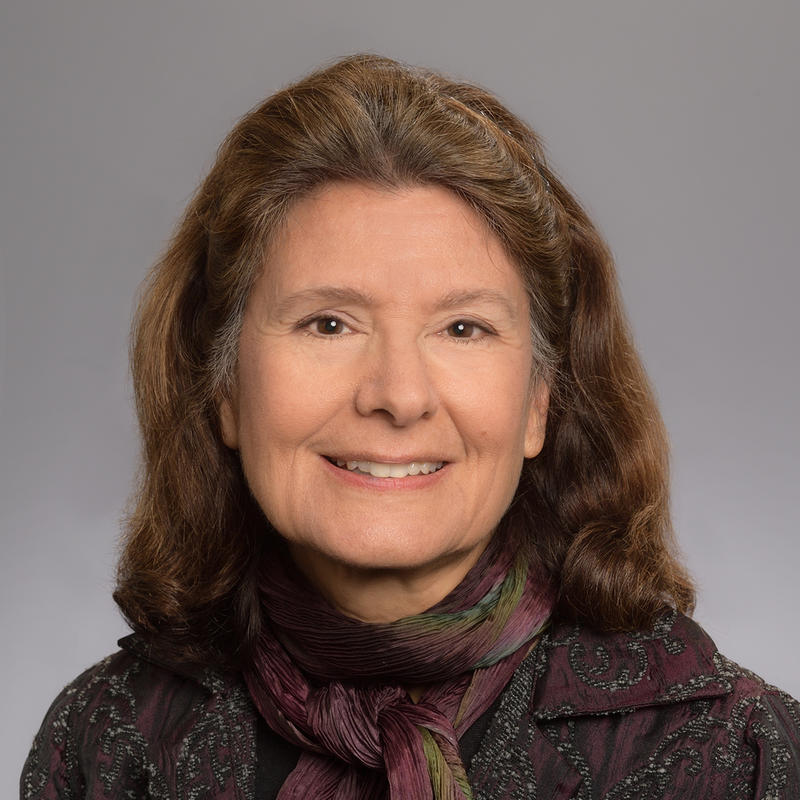
Christopher P. Higgins serves as Professor and AMAX Distinguished Chair in the Department of Civil and Environmental Engineering at the Colorado School of Mines, a position he attained in 2025 following his 2022 designation as University Distinguished Professor. Joining Mines in 2009, he leads critical research on environmental contaminants with emphasis on poly- and perfluoroalkyl substances (PFASs) in natural and engineered systems. His educational foundation includes: PhD in Civil and Environmental Engineering from Stanford University (2007) MS in Civil and Environmental Engineering from Stanford University (2002) AB in Chemistry from Harvard University (1998) Dr. Higgins' research program investigates chemical fate and transport mechanisms, particularly PFAS movement through soils and water, human exposure pathways, and remediation technologies. His work integrates field studies, laboratory experiments, and mathematical modeling to address: PFAS leaching dynamics in vadose zones Advanced treatment methods for contaminated media Exposure assessment via water, food, and indoor environments Environmental risk characterization at contaminated sites His recent publications demonstrate increasing focus on analytical method development, source identification, and destruction technologies for ultrashort-chain PFAS compounds. Notable recognitions include: ASCE Huber Prize for Civil Engineering Research (2019) SERDP Environmental Restoration Project of the Year (2020) Honorary Professorship at The University of Queensland, Australia His research program has secured substantial funding from NSF, NIH, EPA, USDA, and DoD, supporting interdisciplinary collaborations and graduate student mentorship. Current initiatives emphasize translating laboratory findings to field applications through partnerships with regulatory agencies and industry stakeholders. Dr. Higgins directs the Center for Environmental Risk Assessment and co-leads the PFAS@Mines Initiative, which coordinates campus-wide research on PFAS contamination through integrated experimental, computational, and policy-focused approaches.
John Rowan is a Professor of Physical Geography and Director of the UNESCO Centre for Water Law, Policy & Science at the University of Dundee. His roles include advancing sustainable development, particularly SDG6 (water and sanitation), and leading interdisciplinary initiatives. Previously, he served as Vice Principal for Research and inaugural Dean of the School of Social Sciences. His research focuses on environmental change, climate impacts on water resources, and policy-driven solutions, with global collaborations in Bangladesh, India, and Kenya. He has held advisory roles in Scottish Government’s Centres of Expertise and chairs UNESCO’s UK International Hydrological Committee. Research Interests: Environmental change, climate-water-food nexus, river basin management, sediment dynamics, and policy integration. His work bridges academic and applied domains, emphasizing governance and sustainable practices. Key projects include enhancing water security under climate uncertainty, developing risk frameworks for drinking water, and addressing the water-food-energy nexus. Publications: Over 111 articles, focusing on climate adaptation, water resource vulnerabilities, and ecohydrological modeling. Recent highlights include studies on the Karakoram Anomaly’s hydrological tipping points and frameworks for climate-resilient water safety plans. Awards: Gold Engage Watermark Award (2020), United Nations Risk Award (2019). Projects span international collaborations and policy advisory roles. He has supervised 12 students and led over 33 research projects, including the Hydro Nation Scholars Programme. Labs/Teams: UNESCO Centre for Water Law, Policy & Science; Centre for Environmental Change and Human Resilience (CECHR), collaborating with the James Hutton Institute. Active in global forums like the UNFCCC Climate Assembly and World Water Forum.
Dr. Anne-Marie Nicol is an Associate Professor of Professional Practice in Health Sciences at Simon Fraser University. Her multidisciplinary research spans health communication, toxicology, social marketing, risk perception, and risk assessment, with emphasis on environmental and occupational health exposures. She leads CAREX Canada, a national carcinogen surveillance program, and has developed public health campaigns including Wash with Care and Tick Talk. Her work focuses on translating scientific information about carcinogens to policymakers and cancer prevention stakeholders. She teaches Human Health Risk Assessment, Toxicology for Public Health, and Health Communication. Her research has been funded by CIHR, Michael Smith Foundation, and Canadian Cancer Society. Current projects include studies on radon exposure, infodemic communication strategies, and community resilience to wildfire smoke. She holds a BA from SFU, MES from York University, and PhD from UBC.
Drew Cameron is an Assistant Professor of Public Health (Health Policy) at the Yale School of Public Health, affiliated with the Department of Health Policy and Management and the Center for Methods in Implementation and Prevention Science (CMIPS). His research focuses on health economics, evaluating health and development programs in resource-poor and low- to middle-income country contexts. Education: PhD in Health Policy, University of California, Berkeley MA in International Development, American University School of International Service BA in International Political Economy, University of Puget Sound His work examines targeted subsidies, behavioral 'nudges,' and cost-effectiveness methods addressing healthcare access constraints. Key areas include child growth, water sanitation, HIV/AIDS, carceral health, and rural development. Recent publications highlight implementation strategies for HIV-hypertension integration, pandemic preparedness, and cost analysis frameworks. Notable Research Trends: 2025-2024: U.S. HIV workforce strengthening, Ugandan HIV-hypertension costs, and Alaska vaccine behavior analyses 2023-2019: Water delivery experiments in India, VMMC cost modeling, TB treatment economics, and HIV intervention cost repositories 2018-2014: Urban land titling impacts, healthcare quality policy in Brazil, and structural violence in pharmaceutical triage
Dr. Shauna C. Henley is a Senior Agent and Affiliate Agent in the Department of Nutrition & Food Science at the University of Maryland , affiliated with the College of Agriculture and Natural Resources . She specializes in food safety education , nutrition , and consumer behavior research , with a focus on improving safe food handling practices across the supply chain. Dr. Henley earned her B.S. in Biology from Muhlenberg College, an M.S. in Nutrition & Food Science from the University of Vermont, and a Ph.D. in Biology with a concentration in Human Nutrition from Drexel University. Her research spans food safety education , behavioral interventions , and community-based extension programs , including workshops on boiling-water-bath canning and FSMA compliance for farmers and food entrepreneurs. Her 15 most recent publications (2017-2025) address critical food safety issues, including home canning practices , Salmonella prevention , and consumer education strategies . She has received recognition such as the University of Maryland Extension Excellence Award (2025) and the Best in Class award from the Association for Communication Excellence (2025) for ProduceTRAINer.org. Dr. Henley has secured multiple grants, including a USDA-FSOP grant for food safety training and a McCormick Science Institute grant for herb and spice safety research. She leads initiatives like the Food Safety Action Team and contributes to national food safety campaigns , such as the widely recognized ' Don't Wash Your Chicken! ' project.
Christine Moe is a Professor and the Eugene J. Gangarosa Chair in Safe Water and Sanitation at Emory University’s Rollins School of Public Health. Her primary appointment is in the Hubert Department of Global Health, with joint roles in Environmental Health and Epidemiology. She holds a PhD from the University of North Carolina and has conducted postdoctoral research at the CDC. Moe’s research focuses on environmental transmission of pathogens, particularly noroviruses and waterborne diseases, with fieldwork in over 30 countries. Her work includes studies on sanitation systems, water quality, and wastewater surveillance. She directs Emory’s Center for Global Safe Water, emphasizing global health equity. Awards include the prestigious Eugene J. Gangarosa Chair. Her contributions span lab-based viral studies and community-level interventions to improve water and sanitation in low-resource settings. Education: PhD in Environmental Sciences (UNC-Chapel Hill), MS in Environmental Science (UNC), BA in Biology (Swarthmore College). Research Interests: Environmental health, waterborne pathogens, norovirus transmission, and global sanitation infrastructure. She has pioneered wastewater-based epidemiology to monitor disease outbreaks and assess public health risks in healthcare and urban environments.
Dr. Lucia D'Ambruoso is a Senior Lecturer at the Institute of Applied Health Sciences, School of Medicine, Medical Sciences and Nutrition, University of Aberdeen. She is based at the Aberdeen Centre for Health Data Science and leads international research on health systems, participatory methods, and verbal autopsy. She holds honorary and visiting positions at the University of the Witwatersrand (South Africa), Umeå University (Sweden), and Stellenbosch University, and serves on multiple international research and policy committees. PhD in Public Health, University of Aberdeen (2011) MSc in Public Health and Health Services Research, University of Aberdeen (2003) BSc (Hons) in Pharmacology, University of Aberdeen (1997) Her research focuses on health policy and systems, social determinants of health, and participatory action research, especially in sub-Saharan Africa and South Asia. She uses qualitative and mixed methods to understand how health systems can be made more equitable and responsive through community engagement, inter-sectoral action, and innovative data systems like verbal autopsy. Her recent publications demonstrate a strong focus on community-led health research, digital health platforms for emergency care, school-based mental health, and mortality data systems. She leads major NIHR and GCRF-funded programmes in South Africa and Rwanda, aiming to strengthen primary care and injury response systems through participatory methods. Scientific Awards: University of Aberdeen Interdisciplinary Research Award (2024) University of Aberdeen Outstanding Research Award (2024) Fellow, Stellenbosch Institute of Advanced Study (2025) Fellow, Royal Society for Public Health (2021) Fellow, Higher Education Academy (2017) Dr. D'Ambruoso teaches across global health, health policy, and research methods at both undergraduate and postgraduate levels. She supervises PhD students and is Deputy Director of the Centre for Global Development at the University of Aberdeen. She is actively involved in community engagement through NHS Grampian and serves on the editorial board of Global Health Action and the Steering Committee of the Politics of Health Group. Her research is supported by NIHR, MRC, Wellcome Trust, and international philanthropies. She leads the Verbal Autopsy with Participatory Action Research (VAPAR) initiative, which connects communities, researchers, and policymakers to generate actionable evidence on health equity. Her team works closely with the Agincourt HDSS in South Africa and has developed innovative tools for community health worker training and data collection.
Dr. Md. Tahmidul Islam Molla is an Assistant Professor of Practice and Director of Undergraduate Studies in the Department of Computer Science at Marquette University. He specializes in wearable technology, pervasive computing, human-computer interaction, and data science. Previously, he held a Postdoctoral Researcher position at Cornell University and earned his Ph.D. from the University of Minnesota in 2020. His teaching roles include instructing core and advanced courses in computer science, data science, and embedded systems. He leads the NSF S-STEM project at Marquette, providing scholarships for low-income graduate students transitioning into computing careers. Courses taught include COSC 1000, COSC 2100, COSC 4290/5290, COSC 5500, COSC 6500, and COSC 6510. Research interests focus on wearable systems, soft/flexible electronics, and on-skin interfaces. His work explores manufacturing techniques for e-textiles and user experience in thermal microclimate control. Collaborative projects include the development of SkinKit and WovenProbe for prototyping on-skin interfaces. Dr. Islam’s research has led to innovations in e-textile fabrication, including surface-mount methods and laundering-resistant designs. He actively contributes to conferences like ACM International Symposium on Wearable Computers and ACM Designing Interactive Systems.
Professor Deborah Loxton is a leading academic at the University of Newcastle , serving as Director of the Centre for Women's Health Research (CWHR) and the Australian Longitudinal Study on Women's Health (ALSWH) . Her work bridges quantitative and qualitative research in women's health, with a focus on reproductive health, domestic violence impacts, and social determinants of wellbeing. PhD in Health (University of New England, 2003) Bachelor of Psychology (Honours, University of New England) Loxton’s research examines lifelong health impacts of trauma, particularly domestic violence, and maternal/infant health disparities. She has pioneered the WWOMB program to reduce global maternal mortality and co-authored the #EndGenderBias survey report on healthcare discrimination. Her recent publications address topics like intimate partner violence in twin studies, contraceptive use among women with chronic diseases, and WASH services in Nepal. Awards include the CAPHIA Team Award (2015) and University of Newcastle Faculty Research Award (2008) . Secured over $50 million in grant funding Collaborated with WHO, USA Academy of Violence and Abuse, and Korean Women’s Development Institute She leads the HMRI Women’s Health Program , focusing on violence prevention, maternal health, and healthy aging. Her work has shaped Australia’s National Women’s Health Strategy and National Plan to End Violence policy.
Niamh Nic Daeid is Professor of Forensic Science and Director of the Leverhulme Research Centre for Forensic Science (LRCFS) at the University of Dundee, leading the £15m Just Tech Institute for Innovation. She holds fellowships with the Royal Society of Edinburgh, Royal Society of Chemistry, and multiple forensic science bodies while serving on committees for INTERPOL, the International Criminal Court, and the United Nations. Her research focuses on forensic chemistry applications in prison drug analysis, explosives detection, and fire investigation. Recent work emphasizes science communication, particularly using comics to improve juror comprehension of forensic testimony. She leads major projects including Clarus (bias prevention in digital forensics) and the Smart Digital Forensic Advisor initiative. Nic Daeid's publications span forensic methodology development, from quantum dots for fingerprint detection to machine learning for footwear impression analysis. Her team's 2025 research includes prison drug studies using seized Scottish evidence and advanced cartridge case imaging techniques. European Network of Forensic Science Institutes Distinguished Forensic Scientist award (2018) Royal Society of Edinburgh Senior Medal for Public Engagement Peter Ganci Award for fire investigation services Gold Engage Watermark for Public Engagement (2019) Best Short Paper Award, International Conference on eXtended Reality (2022) She supervises 13 research students and early-career academics across forensic chemistry, digital forensics, and science communication projects. Current grants include the Leverhulme Trust's £10m LRCFS (2016-2026), UK government's Tay Cities Regional Deal funding, and Dundee City Council's VR/5G initiative. Her team maintains active collaborations with Scottish prisons, international forensic networks, and law enforcement agencies.
Professor Donna Marshall is a Full Professor and Vice-Principal for Research & Innovation at the College of Business, University College Dublin (UCD). She serves as the Executive Director of the UCD Earth Institute: People, Work, Society initiative and is a multi-award-winning Sustainable Supply Chain scholar. Professor Marshall is ranked among the top supply chain researchers globally, with over one hundred research outputs in prestigious journals including MIT Sloan Management Review, Journal of Business Ethics, and Production and Operations Management. Her educational background includes a BSc and PhD from the University of Bath, UK. Professor Marshall has extensive experience in academic leadership, having served as Head (Vice Principal) of Research, Innovation and Impact for the UCD College of Business from September 2018 to June 2021. Professor Marshall's research focuses on sustainable supply chains, with particular emphasis on climate crisis response, ethical sourcing, supply chain transparency, and the bio-circular economy. She is passionate about bringing systemic change to broken supply chains and addressing the world's biggest crises of climate chaos and exploitation of people and planet. Her current research projects include sustainable supply chains in fashion with Fashion's Responsible Supply Chain Hub (FReSCH), sustainable bio-circular economy initiatives, and transparency in complex supply chains including controversial industries. She has secured research funding with multiple national and international teams amounting to over €30 million. Her recent publications reveal a strong trend toward examining power dynamics, justice issues, and transparency in supply chains, particularly in the fashion industry. She has also made significant contributions to understanding issue-washing (including greenwashing and biowashing) and developing frameworks for sustainable biocircularity. Her work increasingly focuses on just transitions and ensuring that sustainability efforts authentically address social and environmental challenges rather than merely creating the appearance of progress. Harold E. Fearon Award for Best Paper in Journal of Supply Chain Management (2014) Nevi Healthcare Best Paper Award Runner up at IPSERA Conference (2015) Multiple teaching awards for her innovative approaches to supply chain education Former President of the International Purchasing and Supply Education and Research Association (IPSERA) Professor Marshall has extensive teaching experience across undergraduate, Masters, and PhD levels. She created and directed the QS-world ranked UCD MSc in Supply Chain Management, which evolved into the MSc in Sustainable Supply Chain Management in 2023. She serves on the editorial boards of multiple high-ranking journals and provides pro bono advisory services to international organizations, companies, NGOs, and government bodies. Her teaching philosophy emphasizes individualized learning, inclusivity, and life-long learning, with a focus on creating safe, encouraging environments for her diverse international student body. She leads several research teams and initiatives including Fashion's Responsible Supply Chain Hub (FReSCH) and works closely with industry partners to translate research into practical applications for more sustainable and just supply chains.
Corinne Wallace is an Adjunct Assistant Professor in the Department of Civil Engineering at McMaster University , with research expertise at the intersection of water security, climate change, public health, and gender equity. Her work spans both technical engineering analysis and community-engaged studies, particularly focusing on marginalized populations in Canada, East Africa, and South America. Dr. Wallace's research interests include: Water-Health Nexus Climate Change Impacts on Disease Gender Equity in Water Access Indigenous Water Governance Mosquito-Borne Disease Modeling Rainwater Harvesting Systems Her publication trends show increasing focus on climate-health interactions (2025), gender-water linkages (2024), and machine learning applications for water quality analysis (2025). She employs mixed-methods approaches and works closely with First Nations communities and international development organizations. Dr. Wallace utilizes art-science communication strategies like the Virtual Water Gallery to transform water and climate knowledge dissemination. Her recent work explores EDI (Equity, Diversity, Inclusion) implementation in large research networks and conceptual frameworks for climate-water equity.