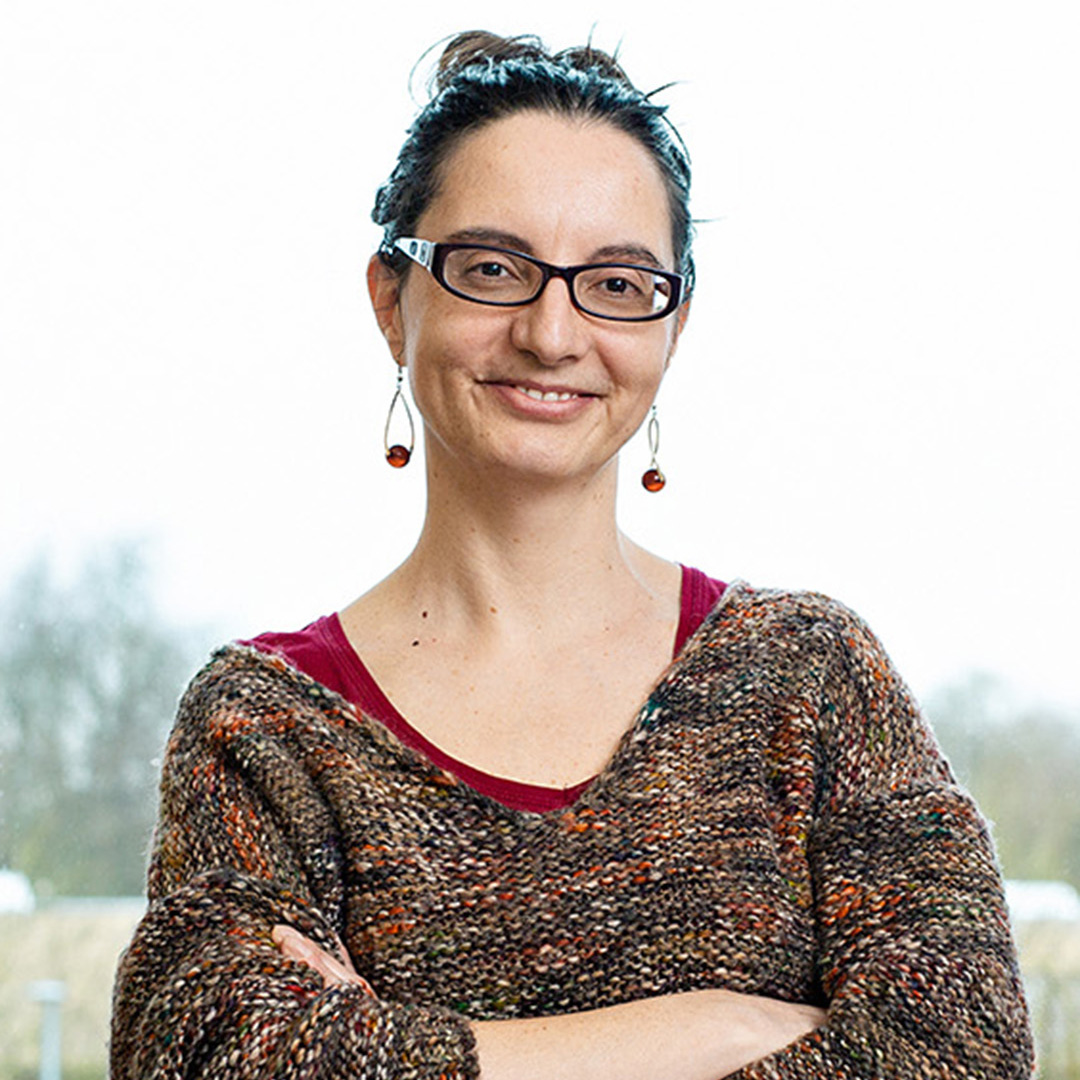
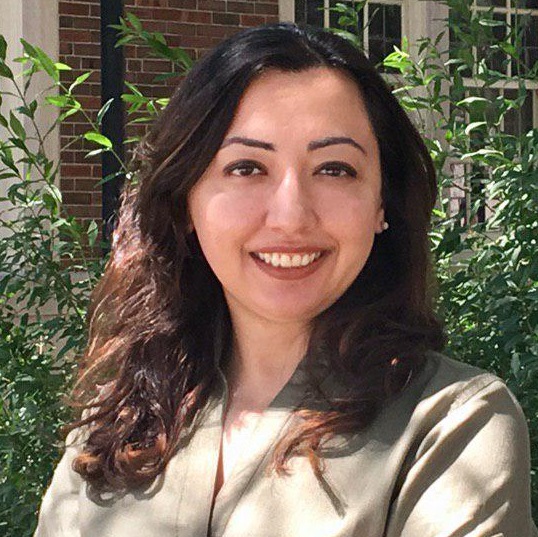
Cecilia Mascolo is a Professor of Mobile Systems at the University of Cambridge , specifically in the Department of Computer Science and Technology . She co-directs the Centre for Mobile, Wearable System and Augmented Intelligence and is a Fellow of Jesus College, Cambridge . Her research focuses on mobile systems , machine learning for mobile health , and earable technology . She has been awarded prestigious grants such as the ERC Advanced Research Grant (2019-2025) and the EPSRC Open Research Fellowship (2025-2030). Currently on sabbatical at Harvard University , her work bridges systems and machine learning for health applications. Education: PhD in Computer Science from the University of Bologna, Italy. Previous Affiliation: Faculty at University College London before 2008. Her research spans mobile and wearable systems for health and behavior monitoring, focusing on on-device machine learning , uncertainty-aware models , and audio-based diagnostics . Key areas include federated learning , edge computing , and respiratory disease progression analysis via wearables. She explores earable technology for physiological monitoring, gait analysis, and even toothbrushing tracking using in-ear sensors. Her recent publications highlight advancements in earable-based health monitoring , including heart rate estimation , respiratory rate detection , and ECG analysis using machine learning. She emphasizes longitudinal health data from consumer devices, advocating for scalable diagnostics beyond traditional clinical standards. Scientific Awards: ERC Advanced Research Grant EPSRC Open Research Fellowship Best Paper Award - IEEE Percom 10-Year Impact Award - ACM Ubicomp Computer Laboratory Ring Hall of Fame Best Paper Award Student: Andrea Ferlini - ACM SIGMOBILE Doctoral Dissertation Runner-up She leads the Mobile Systems Research Laboratory , mentoring a team of 15 researchers (postdocs and PhD students), and has graduated over 25 PhD students. Her teaching includes Mobile Health courses at the University of Cambridge, and she serves as Director of Studies for Computer Science at Jesus College.
Christine Eckert is a Professor of Marketing Analytics at the TUM School of Management (Technische Universität München). She holds a doctorate in economics from Goethe University Frankfurt am Main and has previously held academic positions at University of Technology Sydney and EBS University of Business and Law. Education: Mathematics (Johannes Gutenberg University Mainz, Christian-Albrechts University Kiel); Economics (Goethe University Frankfurt am Main) Her research focuses on quantitative modeling of market participants' decisions, spanning consumer financial behavior, strategic innovation decisions, and corporate social responsibility. She also explores methodological advancements in management research, particularly causal inference techniques. Notable contributions include serving as co-editor for Big Data and Business Analytics (Journal of Business Research) and receiving an Australian Research Council Discovery Grant (2019-2021). Her work has been recognized with the Center for Financial Planning's Best Paper Award (2021). Key journals: Journal of the Academy of Marketing Science, Journal of Management, Journal of Marketing Research She contributes to academic governance through roles like Panel Member for New Zealand's Performance Based Research Fund (2018) and advisory board membership with Super Consumers Australia (since 2022).
Brandon M. Stewart is an Associate Professor of Sociology at Princeton University with extensive interdisciplinary affiliations. He serves as Director of the Statistics Core at the Office of Population Research and maintains formal connections with the Politics Department, Princeton Institute for Computational Science and Engineering, Center for Information Technology Policy, and Center for the Digital Humanities. Stewart holds editorial leadership as Co-Editor-in-Chief of Political Analysis and Associate Editor at Sociological Methods & Research . His educational background includes: Ph.D. in Government from Harvard University (2015) Master's degree in Statistics from Harvard University (2014) Stewart's research pioneers innovative quantitative methods for social science applications, specializing in automated text analysis and modeling complex heterogeneity in regression. His methodological frameworks enable researchers to uncover hidden structures in large datasets that were previously too costly or impossible to analyze. While his recent work has focused on using newspaper archives to study propaganda mechanisms in contemporary China, his tools are deliberately designed for broad applicability across diverse domains including education, human trafficking, forced migration, international relations, constitutional law, and psychology. His publication record demonstrates consistent innovation at the intersection of statistics, machine learning, and social inquiry. Stewart's work shows a clear trajectory from foundational methodological development to practical implementation across numerous substantive areas, with recurring themes of enhancing causal inference with textual data, developing robust topic modeling techniques, and creating accessible computational tools for social scientists. Stewart's scholarly excellence has been recognized through multiple prestigious awards: 2024 Leo Goodman (Early Career) Award from the Methodology Section of the American Sociological Association 2023 Emerging Scholar Award from the Political Methodology Society Edward R Chase Dissertation Prize Gosnell Prize for Excellence in Political Methodology Political Analysis Editor's Choice Award Recognition for Excellence in Mentoring Graduate Students As a mentor, Stewart has guided several successful graduate students to faculty positions at institutions including UCLA and Georgetown. His collaborative approach is evident in numerous multi-author projects spanning disciplines from political science to computational linguistics. His leadership extends to the Sociology Statistics Reading Group, which he founded to foster interdisciplinary methodological exchange, and his summer methods camp that trains social scientists in advanced quantitative techniques.
Henrik Hansen is a Professor and Head of Department at the Department of Economics , University of Copenhagen , where he has held various academic and administrative roles since 1995. He is associated with the Development Economics Research Group (DERG) and affiliated with the Copenhagen Center for Disaster Research (COPE) network. Education : MSc in Economics (1991) and PhD in Economics (1995) from University of Copenhagen. His research focuses on development economics , with emphasis on development aid effectiveness , applied econometrics , and education research . He has conducted extensive fieldwork in Myanmar and Vietnam , analyzing enterprise surveys, household data, and policy impacts. Recent publications highlight productivity in manufacturing sectors, gender wage gaps, and credit access determinants. He teaches "Applied Research Methods" in the Global Development program and supervises development economics and applied econometrics students. Professional roles include editorial positions at Review of Development Economics and Asia & The Pacific Policy Studies , alongside advisory work for Statistics Denmark and Vietnamese Academy of Social Sciences . He has organized international conferences and contributed to 25+ media discussions on topics like corruption in Africa and development financing .
Seth Koven is the G.E. Lessing Distinguished Professor of History and Poetics at Rutgers University since 2017. He holds a Ph.D. in History from Harvard University and has been affiliated with Rutgers since 2006. His research spans gender, social, economic, and cultural history of Europe (1750–present), with a focus on modern Britain, its empire, women's history, and the history of sexuality. His work explores intersections of ethics, altruism, and social welfare, exemplified in Slumming: Social and Sexual Politics in Victorian London (2004, 2006) and The Match Girl and the Heiress (2014, 2016), which won the Stansky Prize and NAVSA Best Book awards. His current projects, including Conscience Wars , examine the history of humanitarianism, anti-humanitarianism, and conscientious objection in the British Empire. Recent publications analyze race, religion, and vaccination resistance in Natal, conscience and Christianity in 19th-century India, and passive resistance movements across the British Empire. He co-directed the Mellon-funded "Ethical Subjects" research project (2015-17) and directs the Rutgers British Studies Center, supporting interdisciplinary scholarship and graduate initiatives. Scientific Awards : Guggenheim Fellowship (2021), Stansky Prize (2015), Sonya Rudikoff Prize (2004), Veritas Award (2004). Supervision : Supervises Ph.D. students (18th–20th centuries) and collaborates with scholars like Judith Surkis and Thomas Laqueur. Grants : Multiple NEH Fellowships, Spencer Fellow, Whiting Fellow, and Mellon Foundation funding.
Christoph Stadtfeld is Associate Professor of Social Networks at ETH Zurich's Department of Humanities, Social and Political Sciences and co-director of the ETH Social Networks Lab. His research examines social network dynamics, focusing on tie formation processes, network effects on individuals, and advanced statistical methodologies for longitudinal network analysis. Education: PhD from Karlsruhe Institute of Technology (2011) Postdoctoral researcher and Marie-Curie fellow at University of Groningen, University of Lugano, and MIT Media Lab (2011-2014) His work bridges sociology, statistics, and computer science to address fundamental questions about how social structures evolve and influence behavior. Key interests include relational event modeling, co-evolution of networks and attributes, and applications in mental health, political polarization, and scientific collaboration. He develops innovative methods for analyzing dynamic networks using cutting-edge computational approaches. Recent publications reveal strong emphasis on methodological rigor in temporal network analysis, with significant contributions to relational event modeling and dynamic network actor frameworks. His work increasingly addresses societal challenges including political polarization, mental health impacts of social isolation, and innovation dynamics in healthcare. Scientific awards: Raymond Boudon Award of the European Academy of Sociology (2017) Freeman Award of the International Network for Social Network Analysis (2021) As co-director of the ETH Social Networks Lab, Stadtfeld leads interdisciplinary research teams developing novel network methodologies. His work has been supported by prestigious fellowships including Marie-Curie funding, and he actively mentors graduate students in network science methodology and applications across diverse domains. The ETH Social Networks Lab serves as a hub for advancing network theory and methodology, with ongoing projects examining student networks during crises, scientific collaboration dynamics, and innovation ecosystems through the lens of network science.
Anthony Man-Cho So is a Professor in the Department of Systems Engineering and Engineering Management at The Chinese University of Hong Kong (CUHK). He currently serves as Dean of the Graduate School and Deputy Master of Morningside College . With a BSE from Princeton University and a PhD in Computer Science from Stanford University, his career at CUHK began in 2007. Academic Leadership: Dean, Graduate School (2023–present); Deputy Master, Morningside College (2019–present) Education: BSE (Princeton), MSc/PhD (Stanford) His research focuses on optimization theory and its interdisciplinary applications in computational geometry, machine learning, signal processing, and statistics. Key projects include non-convex optimization for wireless networks, robust graph learning, and decentralized learning algorithms. His publications span high-impact journals like Mathematical Programming , SIAM Journal on Optimization , and conferences such as NeurIPS and ICML . Recent work emphasizes dynamic regret analysis , low-rank matrix recovery , and stochastic beamforming . He has authored over 50 refereed papers and a monograph on semidefinite programming. Awards include IEEE Fellow (2023), CUHK Research Excellence Award (2016–17), and multiple IEEE/INFORMS best paper and teaching accolades. He has served on editorial boards of journals like Mathematical Programming and SIAM Journal on Optimization , and as Lead Guest Editor for IEEE Signal Processing Magazine . Teaching roles include courses on optimization, discrete mathematics, and machine learning. Scientific Awards IEEE Fellow (2023) CUHK Outstanding Fellow (2019) Multiple IEEE/INFORMS Best Paper Awards (2010–2022) IEEE/UGC Teaching Awards (2008–2022) His methodology integrates theoretical rigor with practical applications, particularly in wireless communication systems, sensor networks, and financial engineering. Collaborations span institutions in Hong Kong, mainland China, and the U.S., reflecting a global academic influence.
Dr. Friedrich Götz is an Associate Professor of Psychology in the Department of Psychology at the University of British Columbia (Faculty of Arts). His research focuses on geographical psychology, exploring the causes and consequences of regional personality differences through an interdisciplinary Big Data approach. PhD, University of Cambridge (UK), 2021 MPhil, University of Cambridge (UK), 2017 BSc, University of Konstanz (Germany), 2016 Dr. Götz’s work bridges social and personality psychology with behavioral science, examining topics like mobility, migration, wanderlust, courage, and entrepreneurship. He co-developed large-scale survey studies with TIME Magazine, attracting over 3 million participants. His research often involves experience sampling methods and open science. His recent publications emphasize geographical psychology, personality-environment interactions, and methodological advancements. Articles span 2020–2025, with key themes including regional personality differences, misinformation susceptibility, and the psychological impact of environmental features. Rising Star Award (Association for Psychological Science), 2025 SAGE Emerging Scholar Award (Society for Personality and Social Psychology), 2025 Top 40 under 40 – Germany (CAPITAL Magazine), 2024 President’s New Researcher Award (Canadian Psychological Association), 2024 Best Dissertation Prize (German Psychological Society), 2021 Leading Scholar (Green College), 2021 Dr. Götz teaches undergraduate and graduate courses, including Personality Psychology and Contemporary Conceptual Issues in Personality, with a focus on geographical dimensions. He is based in the Personality and Geographical Ambiance (PANGEA) Lab, which prioritizes inclusivity and collaboration in studying person-environment interactions.
Christopher Kruegel is a Professor in the Department of Computer Science at the University of California, Santa Barbara (UCSB), where he conducts research in systems security. He is affiliated with the International Secure Systems Lab (iSecLab) and was a co-founder of Lastline, Inc., which was acquired by VMware in 2020. His work focuses on creating practical security solutions that address real-world problems through system building and experimental validation. Professor Kruegel's research spans multiple areas of computer security including malware analysis, web security, network security, and vulnerability analysis. His work often involves developing systems that analyze programs for malicious behavior, scanning web applications for vulnerabilities, and improving privacy on social networks. He has made significant contributions to firmware security, smart contract analysis, and mobile security through his extensive publication record. His 15 most recent publications (2022-2023) demonstrate a strong focus on practical security solutions across diverse domains including firmware security (Shimware, Fuzzware), blockchain and smart contract security (Confusum Contractum, NFT security), mobile security (TEEzz, Columbus), and vulnerability detection techniques (Actor, Toss a Fault to Your Witcher). His research shows consistent innovation in security tools and methodologies with several papers receiving distinguished awards. Fellow of the Institute of Electrical and Electronics Engineers Outstanding Graduate Mentor Award, UCSB Academic Senate Distinguished Artifact Award for Fuzzware paper Distinguished Paper Award for Ramblr paper Best Student Paper Award for Detecting Spammers On Social Networks Professor Kruegel has advised numerous graduate students and collaborated extensively with researchers at UCSB and beyond. His work has been funded by various research grants supporting his security research initiatives. He is actively involved in the International Secure Systems Lab, which focuses on practical security solutions for real-world problems.
Dr. Xiaofeng Qian is an Associate Professor in the Department of Materials Science & Engineering at Texas A&M University, with joint appointments in Physics and Astronomy, and Electrical & Computer Engineering. His research focuses on materials theory , quantum materials design , and high-throughput computational discovery , particularly for 2D materials and energy applications . Educational Background: Ph.D., Nuclear Science and Engineering, Massachusetts Institute of Technology (2008) B.S., Engineering Physics, Tsinghua University (2001) Research spans first-principles electronic structure methods , nonlinear optical responses , and multiscale modeling of electronic, thermal, and ionic transport. Key areas include quantum spin Hall effect , ferroelectric switching , and machine learning for materials prediction . Notable Awards: Dean of Engineering Excellence Award (2024) Engineering Genesis Multidisciplinary Award (2024) AZZ Faculty Fellow (2021) NSF CAREER Award (2018) Manson Benedict Fellowship (2006) Actively recruiting PhD, MS, and UG researchers with backgrounds in physics, materials science, or computational methods. Collaborates extensively on hybrid AI-materials projects and topological device concepts .
Iona Cheng is a Professor in the Department of Epidemiology and Biostatistics at the University of California, San Francisco (UCSF), where she conducts groundbreaking research in cancer epidemiology. She serves as co-Investigator of the SEER Greater Bay Area Cancer Registry and is Principal Investigator of multiple NIH- and foundation-funded projects examining genetics, lifestyle factors, and neighborhood characteristics in relation to cancer risk. Dr. Cheng has developed an extensive research program focused on racial/ethnic differences in cancer risk and leads population-based cancer surveillance studies that document variations in cancer incidence and mortality patterns across diverse racial and ethnic groups. University of California, Davis, BS, 1990–1994, Physiology Yale University, MPH, 1999–2001, Chronic Disease Epidemiology University of Southern California, PhD, 2001–2005, Epidemiology University of California, San Francisco, Postdoc, 2006–2008, Genetic and Molecular Epidemiology Dr. Cheng's research spans multiple disciplines within cancer epidemiology, with particular emphasis on understanding how environmental exposures, genetic factors, and social determinants interact to influence cancer risk and outcomes across different racial and ethnic populations. Her work frequently examines the impact of air pollution, endocrine-disrupting chemicals, and neighborhood characteristics on cancer development and survival. She has made significant contributions to understanding cancer disparities among Asian American, Native Hawaiian, and Pacific Islander populations, bringing attention to the unique cancer risks and outcomes within these understudied groups. Her research often leverages the Multiethnic Cohort Study, one of the largest prospective studies of cancer incidence and mortality across diverse racial/ethnic populations. Analysis of Dr. Cheng's recent publications reveals a consistent focus on environmental and social determinants of cancer risk across multiple organ sites. Her work demonstrates a sophisticated integration of epidemiological methods with environmental exposure assessment, genetic analysis, and health disparities research. Many of her studies examine the intersection of environmental exposures and racial/ethnic disparities in cancer outcomes, particularly regarding breast cancer, lung cancer, and other malignancies. She has published extensively on the impact of air pollution on cancer risk and survival, as well as the effects of endocrine-disrupting chemicals like bisphenol A, parabens, and phthalates. American Association for Cancer Research Scholar-in-Training Award (2007) National Institutes of Health Loan Repayment Award (2007) National Institutes of Health Loan Repayment Renewal Award (2009) American Association for Cancer Research Faculty Scholar Award (2011) National Institutes of Health Loan Repayment Renewal Award (2011) National Institutes of Health Loan Repayment Renewal Award (2013) American Journal of Epidemiology/Society of Epidemiology Research Top 10 manuscripts (2014) Cancer Prevention Institute of California Mentoring Award (2015) American Society of Human Genetics Top poster As Principal Investigator of multiple NIH-funded projects, Dr. Cheng oversees substantial research grants focused on cancer epidemiology and health disparities. Her work often involves large interdisciplinary collaborations with researchers across multiple institutions, including the Multiethnic Cohort Study which follows over 200,000 participants from diverse racial/ethnic backgrounds. She has demonstrated leadership in mentoring junior researchers, particularly those from underrepresented backgrounds in science, as evidenced by her Cancer Prevention Institute of California Mentoring Award. Her research program integrates data from cancer registries, electronic health records, and geospatial information to provide comprehensive insights into cancer patterns and risk factors. Dr. Cheng's research is closely connected to the UCSF Helen Diller Family Comprehensive Cancer Center and leverages collaborations with Lawrence Berkeley National Laboratory, which provides advanced technological resources for cancer research. Her work benefits from access to extensive cohort data, sophisticated exposure assessment methods, and interdisciplinary expertise in genetics, environmental science, and computational biology available through these institutional partnerships. She frequently collaborates with researchers studying the genetic and environmental determinants of cancer across multiple organ systems, contributing to a more comprehensive understanding of cancer etiology and prevention strategies.
James Anderson is an Assistant Professor in the Department of Electrical Engineering at Columbia University, with affiliations to the Data Science Institute (DSI) and multiple research centers including the Computing Systems for Data-Driven Science and Foundations of Data Science. Prior to Columbia, he was a Senior Research Scientist at Caltech’s Computing + Mathematical Sciences division (2016–2019) and held a Junior Research Fellowship at the University of Oxford’s Department of Engineering Science (pre-2012). He earned his DPhil (PhD) in Engineering Science from Oxford in 2012. His research focuses on optimal/robust control theory, mathematical programming, data privacy, and cyber-physical systems, with applications in smart grids, systems biology, and power systems. Recent work emphasizes energy storage strategies, distributed control algorithms, and cybersecurity in critical infrastructure. His publications span advanced control methodologies (e.g., reinforcement learning for LQR problems), energy market dynamics, and resilient system designs. Notable contributions include frameworks for decision-focused energy storage arbitrage and defenses against false data attacks in power grids. He actively collaborates on federated learning approaches for distributed systems and has pioneered techniques for system-level synthesis in cyber-physical architectures. Anderson’s affiliations include the Data Science Institute (DSI) and specialized centers focused on data-driven science and energy systems. His work bridges theoretical control advancements with real-world applications in energy and healthcare.
Ye Zhisheng is the Dean’s Chair and Associate Professor in the Department of Industrial Systems Engineering & Management at the National University of Singapore (NUS). His research focuses on reliability engineering, inventory control, emergency response systems, and statistical modeling. He holds a PhD in Industrial and Systems Engineering from NUS, along with a BEng in Material Science and Engineering and a BEco in Economics from Tsinghua University. His work emphasizes practical applications in mission-critical systems, predictive maintenance, and data-driven decision-making. Current research initiatives include optimal maintenance policies for manufacturing systems, degradation analysis of bearings, and federated learning approaches for battery lifecycle prediction. He has pioneered methods for integrating physics-informed neural networks into prognostics and health management (PHM) systems. Key technical contributions span advanced statistical methodologies like sieve estimation for survival data, phase-type distributions modeling, and condition-based maintenance optimization. His interdisciplinary approach bridges operations research, mechanical engineering, and computer science to address complex reliability challenges. Recent projects include resilient consensus-based power grid management and contamination source identification frameworks. Notable collaborations involve developing intelligent cross-domain fault diagnosis systems using transformer networks and advancing the Internet of Federated Things (IoFT) for distributed data analytics. His work has been applied in aerospace, telecommunication infrastructure, and medical emergency response systems.
Dr. Jannah Baker is a Research Fellow at the Sydney School of Public Health, University of Sydney. She holds a PhD in Statistics specializing in Bayesian spatiotemporal modelling of chronic diseases, alongside dual postgraduate diplomas in Public Health and Statistics. Her clinical background includes five years as a practicing physician. Her research focuses on cancer prevention (breast, endometrial, melanoma), spatiotemporal disease modeling, health economics, and clinical trial design. She has led projects on sepsis detection systems, diabetes management, and surgical outcomes analysis. Notable contributions include a seminal systematic review on fertility-sparing endometrial cancer treatments referenced in international guidelines. Jannah has attracted $6M+ in collaborative funding and oversees grants such as the 2023 NHMRC-funded ROADMAP trial and a Department of Health-funded study on pediatric sepsis management. Her work spans 50+ peer-reviewed articles across journals like Journal of Medical Internet Research and PLOS One . Professional activities include clinical trials statistics, health economics analysis, and implementation science lectures. She has mentored multiple research teams and maintains an ORCID profile (0000-0002-2208-6584).
Zohreh Sharafi is an Assistant Professor of Software Engineering in the Department of Computer and Software Engineering (GIGL) at Polytechnique Montréal. Previously, she served as a Senior Research Fellow in the Department of Electrical and Computer Engineering at the University of Michigan, Ann Arbor, where she worked with Dr. Westley Weimer and was awarded the prestigious NSERC Postdoctoral Fellowship. Prior to her academic career, she worked as a software engineer at Morgan Stanley, contributing to the firm's electronic trading platform and serving as principal architect of SURF, a market data simulator. Her educational background includes a Ph.D. in Computer Engineering from École polytechnique de Montréal under the supervision of Dr. Giuliano Antoniol and Dr. Yann-Gaël Guéhéneuc, a Master of Applied Science in Software Engineering from Concordia University, and a Bachelor of Computer Engineering from the University of Tehran. Dr. Sharafi leads the SENSE Lab, a multidisciplinary software engineering research laboratory focused on understanding problem-solving strategies developers use during software development, with particular attention to human factors such as gender and native language. Her research combines human-centric design with experimental methodologies, investigating cognitive processes involved in software development using biometric measures including eye tracking and neuroimaging. Current active projects include evaluating trustworthiness perceptions of software artifacts and studying the role of creativity in software engineering tasks. She has made significant contributions to understanding how gender influences program comprehension and code review processes. Her publication record demonstrates a strong focus on empirical methods in software engineering, particularly eye tracking and neuroimaging techniques to study developer cognition. Her work spans program comprehension, code review, requirements engineering, and the impact of human factors on software development processes. She has developed methodological frameworks for conducting eye tracking studies in software engineering and has made notable contributions to understanding how visualization techniques affect software development tasks. NSERC Postdoctoral Fellowship NSERC Discovery Grant Program and Launch Supplements (Sep 2024-Sep 2029) IVADO Startup & Operation Fund (Jan 2022-Jan 2023) Scholarship for Doctoral Studies from Fonds de Recherche du Quebec Distinguished Reviewer Awards from IEEE ICPC 2020 and ACM FSE 2024 Dr. Sharafi actively mentors students including Mahta Amini (PhD Candidate, IVADO Scientifique en résidence 2024 Laureate), Cameron Cherif (PhD Candidate), Sara Yabesi (Master's Student), and Anthonia Njoku (Graduate research intern). She serves on numerous conference organizing committees including as Local Arrangement Chair for SANER 2025, Program Co-chair for SEMLA 2024, and as a reviewer for top-tier journals including IEEE Transactions on Software Engineering and ACM Computing Surveys. Her research is supported by multiple grants focused on understanding human factors in software engineering through empirical methods. At Polytechnique Montréal, Dr. Sharafi directs the SENSE Lab which brings together computer scientists, cognitive scientists, and software engineering researchers to investigate the cognitive aspects of software development. The lab employs advanced methodologies including eye tracking, functional near-infrared spectroscopy (fNIRS), and functional magnetic resonance imaging (fMRI) to study how developers comprehend, navigate, and modify software systems. Current projects examine trustworthiness perceptions in code review, the role of creativity in software engineering tasks, and gender differences in software development processes.