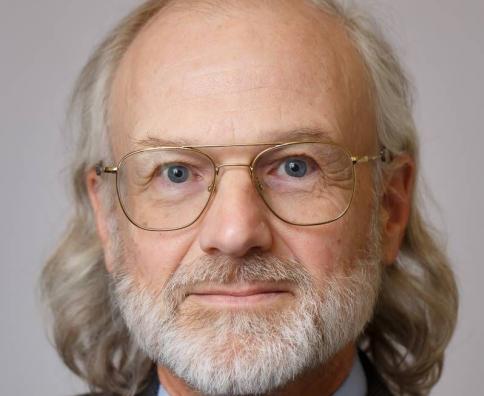
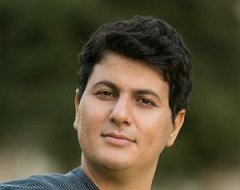
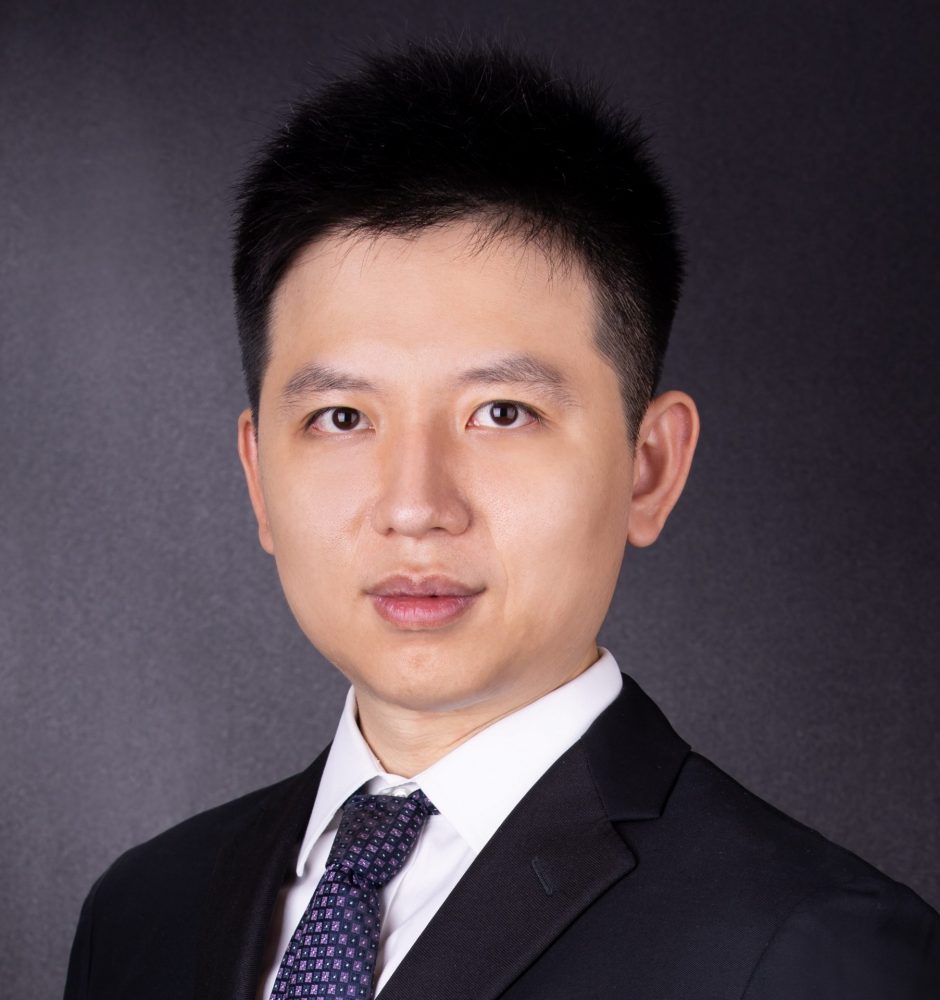
Ralf Bierig joined Maynooth University's Computer Science Department in 2017, teaching topics including information retrieval, software testing, interaction design, and virtual reality. He is the programme director of the Higher Diploma in Human-Computer Interaction (HCI) and User Experience (UX). He earned his BSc (2002) from University of Furtwangen and PhD (2008) from Robert Gordon University. Research Interests His work spans information retrieval, interactive information retrieval, personalisation, information search behavior, usability (UX), and virtual reality (VR). Recent publications focus on multimodal concept indexing, hybrid IR approaches, and contextual adaptation in search systems. Publication Trends His research combines statistical semantics, graph modeling, and multimodal data analysis across academic collaborations in Austria, Germany, and international venues like ECIR and SIGIR.
Prof. Torsten Wolfgang Kuhlen serves as a Universitätsprofessor at RWTH Aachen University, leading the Teaching and Research Area for Virtual Reality and Immersive Visualization within the Department of Computer Science. He is affiliated with Chair of Computer Science 12 (High Performance Computing), the Visual Computing Institute, and remains an integral part of the RWTH IT Center where his research group operates one of the world's largest Virtual Reality laboratories including the 30 sqm aixCAVE visualization chamber. The group maintains strong connections with Computational Science & Engineering Division, National High Performance Computing Center for Computational Engineering Science (NHR4CES), and VR in Science and Industry Network NRW e.V. Prof. Kuhlen's research spans virtual reality, immersive visualization, and multimodal 3D user interfaces with applications across simulation science, production technology, neuroscience, and medicine. His work combines basic research on advanced methods and algorithms with interdisciplinary collaborations involving RWTH Aachen institutes, Forschungszentrum Jülich, and industry partners. Recent publications demonstrate strong focus on audiovisual perception, immersive analytics, collaborative virtual environments, and practical VR applications in education and manufacturing. His research group has produced significant work on listening effort in virtual environments, immersive authoring techniques, and VR applications for scientific visualization. Notable projects include VRScenarioBuilder for automated vehicle testing and applications in monitoring additive manufacturing processes. The group actively participates in major conferences including IEEE VIS and EuroVis, with several award-winning contributions. Prof. Kuhlen has advised PhD students including Martin Bellgardt who recently completed his doctoral degree on "Increasing Immersion in Machine Learning Pipelines for Mechanical Engineering". The research group maintains state-of-the-art VR infrastructure including the aixCAVE facility which is open to all RWTH research groups.
Dr. Yanqing Hu is an Associate Professor at the Department of Statistics and Data Science, School of Science, Southern University of Science and Technology (SUSTech). With a Ph.D. in Systems Theory from Beijing Normal University (2011) and postdoctoral experience at the Levich Institute, City University of New York (2011-2013), his work focuses on big data analysis of complex systems, particularly in social media dynamics, network resilience, and graph neural network applications. Ph.D.: Beijing Normal University (Systems Theory, 2011) Postdoctoral: Levich Institute, CUNY (2011-2013) Research spans complex network analysis, information spreading mechanisms, and predictability of network structures. His work combines theoretical frameworks with real-world applications in social networks, infrastructure systems, and brain connectivity. Recent publications explore information percolation in social media, resilience quantification in interdependent networks, and intrinsic structure predictability. These studies appear in high-impact journals like Nature Human Behaviour (IF: 24.3), Nature Communications (IF: 17.7), and PNAS (IF: 10). World AI Conference Youth Outstanding Paper Nomination Beijing Outstanding Doctoral Dissertation Award Guangdong Special Support for Young Talents Guangdong Outstanding Youth Fund Collaborations include leading researchers from Boston University, King's College London, and Shenzhen-Hong Kong Institute of Microelectronics. His work informs network defense strategies and efficient navigation mechanisms in complex systems.
Ben Seiyon Lee is an Assistant Professor in the Department of Statistics at George Mason University's College of Science. His work bridges computational statistics, climate modeling, and environmental risk assessment. Education: PhD in Statistics, Pennsylvania State University (2020) Lee specializes in computational methods for high-dimensional spatiotemporal data and uncertainty quantification in climate models. His research explores climate change impacts on extreme hydrological events, wildfire emissions, and medical decision-making. Recent publications focus on Bayesian spatiotemporal frameworks for extreme precipitation analysis, zero-inflated spatial models, and multisector uncertainty quantification. His work addresses challenges in flood risk assessment, agricultural yield projections, and healthcare compliance metrics.
Eduardo Pereyra is a Professor in the McDougall School of Petroleum Engineering at The University of Tulsa, where he serves as Associate Director for the Tulsa Fluid Flow Projects (TUFFP) and the Horizontal Wells Artificial Lift Project (TUHWALP) . His academic career spans theoretical and applied research in multiphase flow, flow assurance, artificial lift systems, and separation technologies. Education: Ph.D. and M.Sc. in Petroleum Engineering from The University of Tulsa; Dual B.S. in Mechanical Engineering and Systems Engineering from the University of Los Andes, Venezuela Pereyra’s research focuses on multiphase flow dynamics , particularly in gas-liquid and oil-water systems. His work addresses critical challenges such as slug flow mitigation , downhole separator efficiency , and ESP motor cooling , leveraging computational fluid dynamics (CFD) and experimental validation. Recent publications emphasize inclined pipe flows , severe slugging mitigation , and plunger lift optimization . Pereyra has received multiple accolades, including the 2023 SPE Production and Operations Award and the 2022 Kermit Brown Outstanding Teacher Award . His contributions to multiphase flow modeling have been recognized through the 2021 Zelimir Schmidt Outstanding Researcher Award . He actively collaborates with industry partners through TUFFP and TUHWALP, directing projects like the Horizontal Wells Artificial Lift Initiative .
Cristina Dondi serves as a Full Professor in the Department of Modern Literature and Culture at Sapienza University of Rome's Faculty of Arts and Philosophy. Her academic work centers on the history of the book with specialized expertise in incunabula (15th-century printed books), early book trade networks, and digital humanities methodologies. She teaches the "History of the Book" course for Global Humanities students, delivering lectures in person at Rome's Faculty of Arts and Philosophy during the 2024-2025 academic year. Her research spans material evidence of early printed books, Venetian printing practices, Dante's textual circulation, and library transformations during religious secularization. She pioneers digital approaches through projects like 15cBOOKTRADE and CERL, developing visualization tools for historical book movement data and collaborative digital infrastructures. Her work bridges traditional book history with computational analysis, emphasizing how physical artifacts reveal cultural and commercial networks. Analysis of her 2021-2023 publications shows consistent integration of digital tools with historical scholarship, particularly regarding Italian incunabula circulation and MEI database applications. She frequently examines Venetian commercial practices, Dante's reception, and collaborative digital resource creation, demonstrating how visual analytics transforms understanding of pre-modern book economies. Scientific Awards: No specific awards were documented in the provided sources. Professor Dondi leads significant research initiatives including the 15cBOOKTRADE project and Consortium of European Research Libraries (CERL) collaborations, which involve multi-institutional teams developing digital ecosystems for book historical research. These projects generate scholarly publications, digital tools, and educational resources while securing substantial research funding for infrastructure development and international conferences. She actively shapes the CERL digital ecosystem and 15cBOOKTRADE project framework, fostering interdisciplinary collaboration between historians, librarians, and computer scientists. Her current work focuses on expanding Material Evidence in Incunabula (MEI) applications and creating open-access platforms for analyzing early print culture across European collections.
Henry F. (Hank) Korth is a Professor of Computer Science and Engineering at Lehigh University, with a courtesy appointment in the Department of Decision and Technology Analytics in the College of Business. He serves as Director of the Blockchain Lab in the Center for Financial Services and Co-Director of the Computer Science and Business Program. Korth is a Fellow of the ACM and IEEE, and a recipient of the VLDB 10-Year Award and Bell Labs President's Silver Award for contributions to database technologies. PhD in Computer Science from Princeton University MA, MSE in Computer Science from Princeton University BA in Mathematics from Williams College Korth's research spans database systems, blockchain systems, distributed systems, and real-time systems. He has pioneered transaction management in parallel and distributed systems, query processing, and the impact of modern computing architectures on database performance. His recent work focuses on blockchain applications in enterprise databases, including acceleration of zero-knowledge proofs, benchmarking frameworks, central-bank digital currencies, and private-yet-provable accounting systems. His contributions are rooted in both theoretical advancements and practical implementations, such as the QTM™ aggregation engine and the DataBlitz™ main-memory storage manager. Scientific awards include: ACM Fellow IEEE Fellow 10-Year Award at the VLDB Conference Bell Labs President's Silver Award Korth actively supervises research within the Blockchain Lab and is affiliated with the Scalable Software Systems Research Group at Lehigh. His scholarly output reflects a deep engagement with blockchain benchmarking, concurrency control, verifiable databases, and the evolution of database systems in response to technological shifts.
Georg Fantner is an Associate Professor at the Swiss Federal Institute of Technology Lausanne (EPFL) with dual appointments in the School of Engineering (STI) within the Institute of Bioengineering and the School of Life Sciences (SV) for teaching. He directs the Laboratory for Bio- and Nano-Instrumentation (LBNI) and holds leadership roles including President of the Open Science Strategic Committee and the Association des Professeurs de l'EPFL. Research Focus: Bioinstrumentation, Nanotechnology, Scanning Probe Microscopy, and Metrology Teaching: Structural Mechanics for Life Sciences, Metrology, and Metrology Practicals His research pioneers advanced instrumentation for nanoscale characterization, emphasizing data-driven approaches to enhance microscopy techniques. Recent work integrates deep learning with scanning probe microscopy for real-time biological imaging and develops novel MEMS devices for fluid-compatible nanoscale manipulation. Key innovations include hermetically sealed sample chambers for pathogen studies and deterministic nanotopography engineering. Professor Fantner actively mentors 7 current PhD students and has supervised 14 graduates. His laboratory fosters interdisciplinary collaboration across engineering, physics, and life sciences to advance nanoscale measurement technologies and instrumentation development.
Professor Bing-Jie (Bruce) Ni is an Adjunct Professor at the University of Technology Sydney (UTS) within the School of Civil and Environmental Engineering and a full Professor at UNSW Sydney. He is an internationally recognised leader in environmental engineering, wastewater treatment, greenhouse-gas mitigation, microplastics fate, electrocatalysis and sustainable energy systems. Education PhD in Environmental Engineering, University of Science and Technology of China, Hefei (2005–2009) Research Interests Professor Ni’s research integrates process engineering, microbial biotechnology, materials science and mathematical modelling to develop sustainable technologies for high-efficiency pollutant removal, minimal carbon footprint and maximal energy recovery from wastewater. He is a global pioneer in: Modelling and control of nitrous oxide (N₂O) and methane (CH₄) emissions from wastewater systems, Micro- and nano-plastics ecotoxicity and mitigation in anaerobic digestion, Transforming sewage sludge into high-value liquid bio-energy (medium-chain fatty acids and long-chain alcohols), Designing cost-effective electrocatalysts from natural minerals for green hydrogen production and wastewater electrolysis. Research Output & Impact Over the last decade he has published 2 research books, 30 book chapters and >400 refereed journal papers , including 35 in Environmental Science & Technology and 85 in Water Research . His work has influenced global policy: the IPCC adopted his nitrous-oxide-emission model in 2019 to revise national greenhouse-gas inventories for the first time in 13 years. Awards & Recognition ARC Future Fellowship & ARC DECRA Fellowship Clarivate Analytics Highly Cited Researcher (Web of Science) Royal Society of Chemistry Highly Cited Researcher (2020–present) Mendeley Data Top 2 % Cited Researchers worldwide Listed among “Australia’s Most Innovative Engineers” (Engineers Australia, 2018) 50+ additional awards including Scopus Young Researcher Award, South Australian Water Awards, UQ Research Excellence Awards, and Outstanding Doctoral Dissertation Awards. Research Funding & Leadership He has secured ≈ AUD $10 million in competitive funding (six major ARC grants plus >20 government, university and industry projects). He serves as: Lead Guest Editor, Water Research Editorial Advisory Board, Environmental Science & Technology Associate Editor for Journal of Cleaner Production , Environmental Chemistry Letters , Environmental Research , Journal of Environmental Management Editorial Board member for five additional high-impact journals. Teaching & Supervision At UTS he teaches Renewable Energy Technologies , Environmental and Sanitation Engineering , Process Dynamics and Control , and Water and Wastewater Treatment . He is available to supervise Masters and PhD students in environmental biotechnology, process modelling and sustainable energy systems. Laboratory & Commercial Translation He heads active research teams at both UNSW and UTS and is the inventor of >10 granted patents , some of which are currently being commercialised to deliver real-world impacts in greenhouse-gas-neutral wastewater treatment and renewable energy production.
Mustafa Asım Kazancıgil is an Assistant Professor at Yeditepe University's Faculty of Computer and Information Sciences, Department of Information Security Technology. He has also served in the Department of Information Systems and Technologies at Yeditepe University since 2014. His academic journey includes a PhD in Informatics-Computer Science from Universita degli Studi di Milano (2013) and a Master's in Interactive Digital Television from the same institution (2006). PhD: Universita degli Studi di Milano (2013) Master's: Universita Degli Studi di Milano (2006) Bachelor's: Yeditepe University, Faculty of Communication, Department of Radio, Television and Cinema (2004) His research focuses on web design , information systems security , big data analytics , and emergency services technology . His publications include works on disaster resilience and interactive digital television applications. He has taught courses on Web Design, Information Systems Security, and Advanced Web Programming at both undergraduate and graduate levels. Administrative roles include Head of Department (2021) and multiple Erasmus Coordinator positions (2016-2019). He supervises theses in digital marketing and CRM trends, as well as CRM/SCM applications in management information systems. His teaching portfolio spans 2013-2025 across Yeditepe University's academic calendar.
Daniel Kifer is a Professor in the Computer Science and Engineering department at Pennsylvania State University, with affiliations to the Huck Institutes of the Life Sciences. His work bridges computer science, privacy-preserving machine learning, and geoscience applications. With over 10,000 citations and a high h-index, he focuses on methods to unify theoretical and applied research. Research Interests: Differential Privacy, Privacy-Preserving Machine Learning, Physics-Informed Neural Networks, Landslide Prediction, and Formal Verification of Privacy Systems. Recent projects include grants from the National Science Foundation: SaTC: CORE: Small (2024): privacy-preserving user data embedding in machine learning pipelines. SaTC: CORE: Medium (2017-2023): formal methods for differential privacy and accuracy optimization. His research outputs span domains like geoscience, database systems, and policy analysis, emphasizing precision and scalability of privacy-preserving algorithms.
Yize Zhao is an Associate Professor in the Department of Biostatistics at Yale School of Public Health and an Associate Professor in the Department of Biomedical Informatics & Data Science at Yale University. She holds affiliations with multiple Yale research centers including the Yale Center for Analytical Sciences, Yale Alzheimer's Disease Research Center, Yale Wu Tsai Institute, Yale Center for Brain and Mind Health, and Yale Computational Biology and Bioinformatics. Dr. Zhao's research focuses on developing statistical and AI methods to analyze large-scale complex biomedical data including medical imaging, genomics, and electronic health records. Her methodological expertise spans Bayesian statistics, feature selection, predictive modeling, data integration, missing data analysis, and network analysis. Her research interests span multiple biomedical domains with a strong focus on mental health, psychiatry, neurodegenerative diseases, and aging. Her recent work includes brain-to-behavior modeling, multi-layer biomedical networks, imaging genetics and genomics, and the integration of multi-modal biomedical data with real-world data. Dr. Zhao's work has resulted in numerous high-impact publications, with recent research focusing on Alzheimer's disease, brain network analysis, and advanced statistical methods for neuroimaging. Her publications show a strong trend toward integrating multi-modal data sources and developing sophisticated statistical approaches to address complex biomedical questions. Thelma and Marvin Zelen Emerging Women Leaders in Data Science Award from the Institute of Mathematical Statistics (IMS) COPSS Emerging Leader Award from the Committee of Presidents of Statistical Societies (COPSS) YSPH Investigator Research Award Yale Alzheimer's Disease Research Center Research Scholar Award Elected member of the International Statistical Institute Dr. Zhao serves as an Associate Editor for Biometrics and is a standing member of the NIH Biodata Management and Analysis (BDMA) study section. Her research is supported by multiple NIH grants, highlighting the significance and impact of her work in biostatistics and biomedical data science.
Prof Nigel Mehdi is the Director of the DPhil in Sustainable Urban Development at the University of Oxford's Department for Continuing Education, where he also serves as a Departmental Lecturer. He is a Fellow of Kellogg College, Oxford, and holds an Honorary Professorship in the School of Computer Science at the University of Birmingham. Additionally, he serves as Programme Director for the UAE National Artificial Intelligence Programme. Education: PhD in Real Estate Economics from London School of Economics Postgraduate qualifications in Software Engineering, Politics, Development and Democratic Education, Sustainable Development, Digital Education, and Professional Education and Training Research Interests: Prof Mehdi's research sits at the intersection of urban economics , digital technologies , and sustainable development . His work focuses on applying advanced technologies like AI and big data analytics to urban challenges. Key areas include: Real estate sustainability and economics Smart cities and intelligent buildings Spatial big data applications in urban planning Digital education for sustainability Urban resilience and governance Property technology (PropTech) innovations Research Trends: His recent publications demonstrate a clear focus on future-oriented urban governance , with multiple 'Executive Outlook' reports examining privacy, governance, money, ESG, and work in 2030+ scenarios. These works bridge academic research with practical policy implications for urban development. His earlier works focus on technological applications in surveying and urban development, showing an evolution from technical implementation to strategic foresight. Awards and Recognition: OUSU Outstanding Tutor (2017) Fellow of the Royal Institution of Chartered Surveyors Fellow of the British Computer Society Fellow of the Higher Education Academy Teaching and Supervision: Prof Mehdi leads the DPhil in Sustainable Urban Development programme and teaches on the Master's in Sustainable Urban Development. He welcomes doctoral applications in areas including: Real estate sustainability Spatial big data and smart cities Digital economies and urban analytics AI applications in urban contexts Urban resilience and governance Professional Roles: He serves as Chair of the UK Education Standards Board for the Royal Institution of Chartered Surveyors and as an Accreditation Team member for the Institution of Engineering and Technology. His consultancy work spans public and private sectors, including governments, NGOs, and global corporations.
Mohsen Lesani is an Associate Professor in the Computer Science and Engineering Department at the University of California, Santa Cruz's Baskin School of Engineering. His research focuses on reliability and security of software systems, particularly concurrent and distributed systems, with recent emphasis on secure replicated systems and distributed machine learning. Dr. Lesani received his PhD from UCLA, MS in artificial intelligence from Sharif University of Technology, and BS in software engineering from University of Tehran. He was previously a postdoc at MIT. His educational background provides a strong foundation for his interdisciplinary research spanning programming languages, distributed systems, and security. His research interests center on creating reliable and secure distributed systems. Current projects include resilient and secure distributed systems, heterogeneous and reconfigurable secure distributed systems, automatic analysis and synthesis of replicated objects, verification of distributed systems, data analytics, secure exchange across blockchains, machine learning for performance models, domain-specific languages and type systems, and automatic fence insertion for concurrent systems. His work bridges theoretical foundations with practical implementations to address real-world challenges in distributed computing. Lesani's research has been recognized with several prestigious awards including the NSF CAREER award in 2020 and DARPA YFA award in 2022. His work has also received the SIGPLAN Research Highlight in 2019, a distinguished paper award at OOPSLA 2018, and a best paper award at ISSRE 2015. These accolades reflect the impact and quality of his contributions to the field. He actively mentors PhD students in the Safe and Secure Software (S3) lab, including Xiao Li, Eric Chan, Javad Saber-Latibari, and Tejas Mane. His research has been supported by multiple NSF grants, demonstrating sustained funding for his innovative work. Lesani serves on program committees for major conferences including POPL, PLDI, OOPSLA, and DISC, contributing to the academic community. Lesani leads the Safe and Secure Software (S3) lab at UC Santa Cruz, where his team works on cutting-edge research in distributed systems, programming languages, and security. The lab fosters a collaborative environment where theoretical insights are translated into practical systems that address real-world challenges in reliability and security of distributed applications.
Fangzhou LU is an Assistant Professor of Finance at the HKU Business School, The University of Hong Kong, since 2020. His research focuses on fintech, cryptocurrency, behavioral finance, and China's economic development. He received his academic training at prestigious institutions: PhD and MS in Financial Economics from Massachusetts Institute of Technology (MIT), 2020 BS in Business from New York University, Stern School of Business, 2014 Dr. Lu's research interests encompass Fintech, Cryptocurrency, Behavioral Finance, Entrepreneurial Finance, Household Finance, Emerging Markets, consumption, fiscal stimulus, bond markets, and China's economic development. His work often leverages large datasets from China to examine how technological innovations and government policies impact financial markets and firm behavior, particularly during crises like the COVID-19 pandemic. His recent publications demonstrate a strong trend toward applied research in emerging markets, with significant contributions on SPAC IPOs, government subsidy effectiveness for failing firms, and stock market informativeness in China. These works appear in top finance journals including the Journal of Financial Economics and Journal of Financial and Quantitative Analysis, highlighting his expertise at the intersection of finance, technology, and policy analysis.