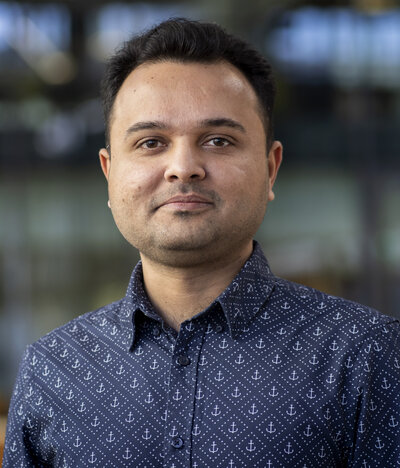
Aaqib Saeed is an Assistant Professor in the Department of Industrial Design at Eindhoven University of Technology. His research focuses on Human-Centric AI, Federated Learning, Self-Supervised Learning, and Audio Understanding, with applications in Personal Health. He holds a PhD (cum laude) from TU/e and an MSc (cum laude) from the University of Twente. Education: PhD in Computer Science (cum laude), TU/e (2021) MSc in Computer Science (cum laude), University of Twente (2018) Research Interests: Development of robust federated learning frameworks for decentralized data Self-supervised learning for audio and physiological signal analysis AI-driven solutions for healthcare monitoring Key Contributions: DeltaMask: Reducing communication overhead in federated fine-tuning FedNS: Mitigating noisy decentralized data in federated learning Labeling Chaos to Learning Harmony: Handling label noise in FL Professional Experience: Visiting Industrial Fellow, University of Cambridge (2023) Research Scientist, Philips Research (2019–2023) Research Internships: Google Research, TNO/EIT Digital Awards: UT Scholarship (MSc) Cum Laude awards for both PhD and MSc Labs/Teams: EAISI Health, EAISI Foundational, Computational Design Systems.
Michael French is an Associate Professor at Stony Brook University's School of Marine and Atmospheric Sciences (SoMAS), Department of Atmospheric Sciences. His research focuses on using Doppler radar data to study severe weather phenomena, particularly tornado dynamics and mesoscale processes. He holds a Ph.D. in Atmospheric Sciences from the University of Oklahoma (2012). His expertise includes analyzing phased array and dual-polarization radar data to improve understanding of supercell thunderstorms, tornado formation, and operational forecasting techniques. He has contributed to major field campaigns like VORTEX2 and has published extensively on radar signatures, hydrometeor analysis, and tornadic processes. Key research themes include radar-based tornado prediction, mesoscale snow banding, and improving short-term forecasting methods. His work integrates advanced radar technologies and GIS tools to study environmental impacts on severe weather events. Dr. French collaborates with institutions like NOAA and the University of Oklahoma, focusing on advancing radar meteorology and severe storm dynamics. His recent studies explore the influence of radar scanning strategies on thunderstorm observations and the role of hydrometeor size sorting in distinguishing tornadic supercells.
Archontis Politis is an Assistant Professor in the Department of Computing Sciences at Tampere University's Faculty of Information Technology and Communication Sciences. His research focuses on signal processing, machine learning, and their applications in audio engineering, particularly in spatial audio, sound source separation, and parametric audio coding. He explores topics such as Ambisonics, reverberation control, and neural network-based approaches for audio processing. His work emphasizes spatial audio reproduction, including six degrees of freedom (6DOF) rendering, microphone array processing, and efficient compression techniques for higher-order Ambisonics. He also investigates sound event localization and detection, leveraging machine learning for real-world acoustic scenarios. His contributions span theoretical advancements in spherical harmonics and practical implementations of spatial audio systems. Recent research highlights include developing datasets for music source separation, improving synthetic-to-real generalization in classical music, and creating neural encoding models for irregular microphone arrays. His methodologies often integrate deep learning with traditional signal processing to address challenges in multi-speaker environments and dynamic acoustic scenes.
Dr. Rachel Player is a Senior Lecturer in the Department of Information Security at Royal Holloway, University of London . Her research focuses on post-quantum cryptography, lattice-based cryptographic schemes, homomorphic encryption, and quantum algorithm applications in cryptanalysis. She holds a PhD in Information Security from Royal Holloway, supervised by Prof. Carlos Cid and Prof. Sean Murphy. Education: PhD in Information Security, Royal Holloway, University of London (supervisors: Prof. Cid & Prof. Murphy) Research Interests: Rachel explores cutting-edge areas in cryptography with a focus on privacy-preserving technologies. Her work bridges theoretical advancements and practical implementations, particularly in homomorphic encryption and post-quantum security protocols. Recent efforts emphasize applying quantum algorithms to cryptanalytic challenges. Professional Activities: Rachel actively contributes to standards development in cryptography, including organizing HomomorphicEncryption.org meetings and participating in ISO/IEC JTC 1/SC 27/WG 2 (cybersecurity standards). She also serves as an editor for the Designs, Codes and Cryptography journal. Labs/Teams: Collaborations include the PolSys team at Sorbonne Université (Paris) and the EU H2020 PROMETHEUS project. Current research is anchored in Royal Holloway's Information Security Department.
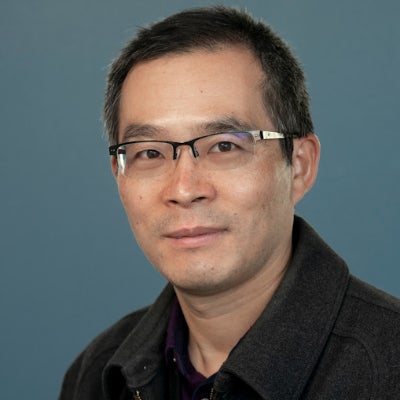
Ming Yuan is a Professor in the Department of Statistics at Columbia University and serves as Associate Director of the Data Science Institute. His research focuses on high-dimensional statistics, machine learning, and statistical methodology with applications in genomics, finance, and imaging. Yuan holds a Ph.D. in Statistics from the University of Wisconsin-Madison (2004) and a B.S. in Electrical Engineering from the University of Science and Technology of China (1997). Education: 2004 Ph.D., Statistics, University of Wisconsin-Madison 2003 M.S., Computer Science, University of Wisconsin-Madison 2000 M.S., Probability and Statistics, University of Science and Technology of China 1997 B.S., Electrical Engineering, University of Science and Technology of China Research Interests: Dr. Yuan’s work bridges theoretical and applied statistics, emphasizing scalable methods for high-dimensional data. Key areas include tensor decomposition, covariance estimation, and statistical machine learning. His contributions to methods like sparse inverse covariance estimation and matrix/tensor completion have found applications in finance, genomics, and image analysis. Publications: His recent work explores tensor-based methods for high-dimensional analysis and develops optimal algorithms for compressed sensing. Articles often address statistical theory and computational challenges in modern data science, reflecting a balance between foundational and applied research. Awards: 2025 JASA Theory & Method Invited Discussion Paper 2024 William F. Sharpe Award (JFQA) 2018 Medallion Lecturer (Institute of Mathematical Statistics) 2014 Guy Medal in Bronze (Royal Statistical Society) 2007 Leo Breiman Junior Award Professional Activities: Yuan has served as Co-Editor of The Annals of Statistics (2019–2021) and Program Secretary for the Institute of Mathematical Statistics (2018–2021). His work integrates interdisciplinary collaborations, particularly in biomedical imaging and financial econometrics.
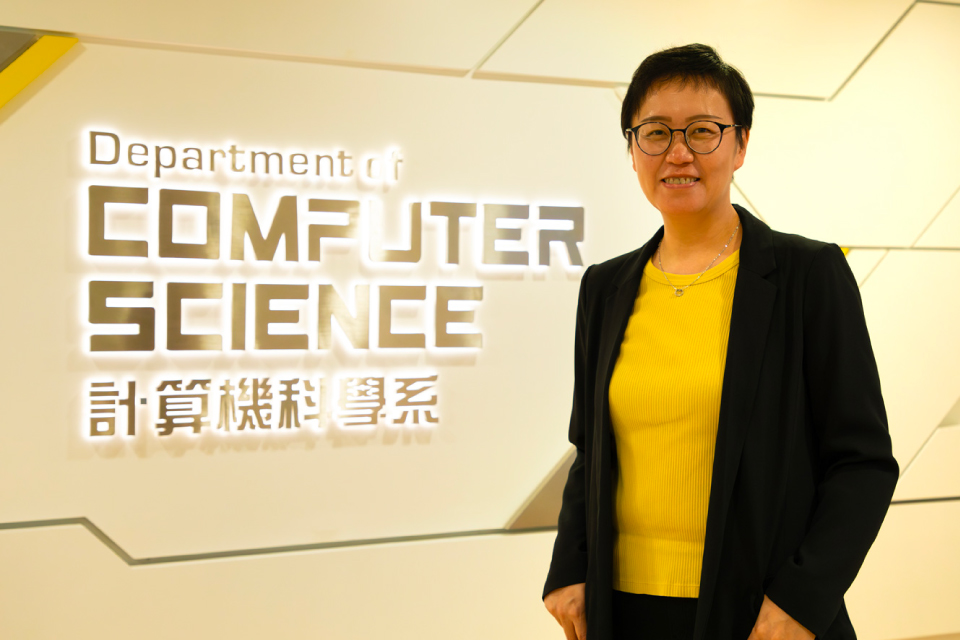
Ka Ho Chow is an Assistant Professor in the Department of Computer Science at the University of Hong Kong, part of the School of Computing and Data Science. He holds a PhD from Georgia Institute of Technology and was previously a research scientist at IBM Research. His research focuses on the intersection of machine learning, cybersecurity, and scalable systems, emphasizing trustworthy AI and defense against security/privacy threats in federated learning, large language models, and visual recognition systems. Key achievements include IBM PhD Fellowship (2022) and Croucher Scholarship (2021). Education: PhD in Computer Science from Georgia Tech (2020), advised by Prof. Ling Liu. His work spans algorithmic optimization, infrastructure resilience, and adversarial machine learning. Current research explores attack-resilient solutions for centralized/federated learning and AI system vulnerabilities. Recent articles highlight innovations in federated learning security, gradient inversion attacks, backdoor detection, and privacy-preserving techniques. He has openings for PhD students interested in AI security and trustworthy systems. His lab collaborates on projects involving blockchain fraud detection (ZipZap), facial recognition privacy (Personalized Masks), and graph neural network robustness. Awards: IBM PhD Fellowship (2022), Croucher Scholarship (2021). Active in guiding PhD candidates and advising on microservices cloud migration (Atlas/SCAD systems). Research outputs include over 30 peer-reviewed papers spanning cybersecurity, AI ethics, and distributed learning frameworks.
Dr. YANG, Renchi is an Assistant Professor in the Department of Computer Science at Hong Kong Baptist University, Faculty of Science. He earned his BEng in Software Engineering from Beijing University of Posts and Telecommunications and his PhD in Computer Science from Nanyang Technological University, followed by a postdoctoral fellowship at the National University of Singapore. His research is centered on developing efficient algorithms and systems for large-scale data management and analysis. His research interests include: Big Data Management and Analysis Graph Learning and Network Embedding Databases and Data Management (especially graph query processing and similarity search) The Web and Information Retrieval (search, ranking, recommendation, web mining) Data Mining and Machine Learning (social network analysis, text mining, large language models) Dr. Yang’s recent publications span top conferences such as KDD, SIGMOD, WWW, ICDE, and AAAI, focusing on scalable graph clustering, network embedding, GNNs, and LLM integration. His work emphasizes algorithmic efficiency, scalability, and practical applications in real-world graph data. Scientific honors include: VLDB 2021 Best Research Paper Award 2022 ACM SIGMOD Research Highlight Award Best Paper Award Nominee in WWW 2022 Honorable mention as best PC member in WWW 2022 Dr. Yang actively mentors PhD and research students, currently supervising several RPg students including LIN Xiaoyang, LAI Yurui, and ZHENG Haoran. He has secured research funding enabling PhD scholarships and research assistant positions. He serves on the program committees of major conferences like VLDB, KDD, WWW, and SIGIR, and reviews for journals including TKDE and VLDBJ. He is a key member of the Database Research Group at HKBU, which has published extensively in top venues, including 8 papers at SIGMOD 2023. His research lab, the LAGAS Group, focuses on large-scale graph analytics and systems. The team is actively working on projects involving graph clustering, embedding, GNNs, and integration with large language models. Dr. Yang is currently recruiting PhD students for 2026 and research assistants for 2025, indicating active and expanding research operations.
Fenglong Ma is an Associate Professor at Pennsylvania State University, affiliated with the Institute for Computational and Data Sciences and the Center for Socially Responsible Artificial Intelligence. His research focuses on data mining, healthcare informatics, machine learning, natural language processing, and multimodal learning. He holds a Ph.D. from the University at Buffalo (2019) and degrees from Dalian University of Technology. His work addresses challenges in federated learning, medical AI, adversarial robustness, and multimodal systems. Key contributions include innovations in quantization for large language models, federated knowledge injection, and medical vision-language benchmarking. Recent publications explore topics like collaborative fairness in federated learning, robust medical vision-language models, and adversarial attack mitigation. His research bridges theory and practical applications in healthcare, cybersecurity, and personalized recommendation systems. He leads the PSU Data Science Lab and collaborates on projects involving AI ethics, multimodal data integration, and scalable medical foundation models.
Kevin Gary is an Associate Professor in the School of Computing and Augmented Intelligence (SCAI) within the Ira A. Fulton Schools of Engineering at Arizona State University (ASU). He joined ASU in 2004 after prior industry experience and faculty work at the Catholic University of America. His research focuses on software agility, open source software, and applications in healthcare and e-learning. He has contributed to mHealth platforms addressing pediatric chronic conditions and adaptive e-learning systems. Education: Ph.D. in Computer Science from Arizona State University (1999). Research Interests: Software Architecture, Agile Methods, Open Source Software, Healthcare Informatics, and Educational Technology. His recent work explores agile impact on regression testing and lean metrics in open source software. He has developed mobile health apps for asthma, epilepsy, and anxiety, leveraging agile principles and AI. Teaching & Innovation: Created the Software Enterprise program, an industry-aligned pedagogy integrated into ASU’s software engineering curriculum. This initiative earned the President’s Award for Innovation in 2011. He has taught courses in software engineering, web applications, and secure software systems. Grants & Projects: Led projects funded by NSF, industry partners (e.g., UNICON, GEORGETOWN UNIV MED CTR), and foundations (Children’s National Medical). Notable projects include the Image-Guided Surgical Toolkit and the ATIC-funded Software Enterprise pedagogy model. Service: Reviewed for journals/conferences, served as Associate Chair of computing programs, and contributed to professional organizations (IEEE, ACM, ASEE).
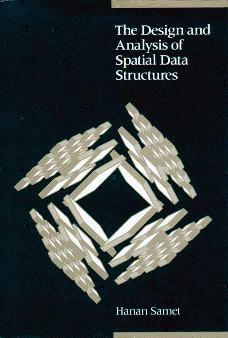
Hanan Samet is a Distinguished University Professor at the University of Maryland's Computer Science Department, affiliated with the Institute for Advanced Computer Studies (UMIACS) and the Center for Automation Research. He holds a Ph.D. from Stanford University (1975) and specializes in spatial databases, data structures, and geographic information systems. His research bridges computer science and geospatial analytics, with applications in image databases, computer vision, and spatio-temporal data management. Education: Ph.D., Computer Science, Stanford University, 1975 Research Interests: Focuses on spatial data structures, GIS, spatio-textual systems like NewsStand and CoronaViz, trajectory analysis, and metric indexing. His work emphasizes scalable algorithms for spatial networks and multimedia databases. Notable Projects: CoronaViz : Tracks disease spread via spatio-temporal data visualization NewsStand : Maps news articles geospatially SAND: Spatial browser for digital government Awards: ACM Paris Kanellakis Award (2014), IEEE McDowell Award (2015), UCGIS Research Award, and Fellowships in ACM/IEEE/AAAS. Recognized for advancing spatial database theory and practice. Grants/Advising: Leads NSF-funded projects on spatio-textual extraction and similarity search. Advises graduate students (e.g., Nicole Schneider, Montana Hoover) and undergraduate researchers. Labs/Teams: Active in UMIACS and the Center for Automation Research, collaborating on projects like VASCO (spatial visualization tools) and MARCO (image database systems).
Charles M. Bachmann is a Professor at the Chester F. Carlson Center for Imaging Science , part of the College of Science at Rochester Institute of Technology (RIT) . He also holds the Frederick and Anna B. Wiedman Chair and serves as the CIS Graduate Program Coordinator since 2016. His research focuses on hyperspectral remote sensing of coastal and desert environments, with expertise in BRDF and radiative transfer modeling, goniometer development, and manifold/graph algorithms for multi-sensor imagery analysis. Recent work emphasizes UAS-based soil moisture and carbon mapping for climate studies. Education : AB in Physics (Princeton, 1984), Sc.M. (1986) and Ph.D. (1990) in Physics (Brown University). Scientific Awards : U.S. Patents for hyperspectral remote sensing methods. Teaching : Radiometry, Radiative Transfer, Mathematical Methods of Imaging Science, and graduate thesis/research courses. Students : Mentored research on soil moisture, coastal biomass, and UAS applications.
Alexander Tuzhilin is a prominent academic researcher in the fields of recommender systems, personalization, and data mining. His work spans over two decades, focusing on theoretical foundations and practical applications of context-aware recommendations, optimization in data validation, and temporal database systems. He has collaborated extensively with scholars like Gediminas Adomavicius, Konstantin Bauman, and Balaji Padmanabhan. Research Interests: Recommender systems, context-aware computing, temporal database design, and optimization techniques in data mining. Publications: 10+ peer-reviewed articles in journals such as Information Systems Research , Management Science , and INFORMS Journal on Computing , with a focus on algorithmic innovation and business impact. Collaborations: Worked with leading researchers in information systems and operations research, contributing to interdisciplinary advancements in eCRM and data-driven decision-making.
Christine Bauer is a Professor of Interactive Intelligent Systems at the Department of Artificial Intelligence and Human Interfaces (AIHI), University of Salzburg, Austria. She is also Co-Lead of the interdisciplinary focus area InterMediation. Music—Effect—Analysis at the inter-university organization Wissenschaft & Kunst. Her research lies at the intersection of artificial intelligence, human-computer interaction, and human-centered computing, with a strong emphasis on fairness, context-awareness, and multi-method evaluation in recommender systems. Doctoral degree in Social and Economic Sciences (Business Informatics), 2009, University of Vienna MSc in Business Informatics, 2011, TU Wien Diploma in International Business Administration, 2002, University of Vienna Study of Jazz Saxophone, Konservatorium der Stadt Wien Her research interests center on interactive intelligent systems , particularly recommender systems in music and media, with a human-centered approach. She investigates how technology can align with societal and individual needs, focusing on fairness in algorithms , culture-aware recommendation , and multi-stakeholder evaluation . Her work often integrates interdisciplinary methods and real-world impact. The recent publications highlight a consistent trend in fairness and diversity in music and news recommendation, cross-cultural user behavior , and evaluation frameworks . Her research bridges technical rigor with ethical considerations, particularly in algorithmic bias and artist equity. She has made significant contributions to understanding gender imbalance , cultural granularity , and user conformity in digital music ecosystems. Elise Richter laureate (FWF) 6 best paper awards, 5 nominations Women in RecSys Journal Paper of the Year Award (2023, 2024) 5 awards and 6 recognitions for reviewing excellence Christine Bauer has supervised over 70 theses and taught at 17 institutions worldwide. She is deeply involved in academic service, including editorial roles (AE at TOIS, TORS, JITT), conference organization (RecSys, CHI, CIKM), and mentoring initiatives (WiMIR, LEA, Allyship at CHI). She leads impactful projects such as FairRecKit and SpART: Spotlight on Artists in Recommender Systems , aiming to create more equitable and transparent recommendation technologies. She frequently engages in public outreach through keynotes, media appearances, and policy discussions. She is affiliated with the University of Salzburg as her primary institution and was previously associated with JKU Linz and the University of Klagenfurt. Her labs and research teams focus on interactive intelligent systems , music recommenders , and fair AI , often in collaboration with interdisciplinary partners in arts and social sciences.
Professor Li Chen is a full Professor and Associate Head (Research) in the Department of Computer Science at Hong Kong Baptist University (HKBU), with an affiliate appointment at the Academy of Wellness and Human Development. She leads the Positive Intelligence Lab , focusing on intelligent technologies for human well-being. Her research spans conversational AI, explainable AI, recommender systems, and human-computer interaction. Education: PhD in Computer Science, Swiss Federal Institute of Technology in Lausanne (EPFL), Switzerland (Nominee for Best PhD Thesis Award) Master in Computer Software and Theory, Peking University, China Bachelor in Computer Science, Peking University, China Her research interests revolve around personalized conversational and explainable AI, with applications in entertainment, education, e-commerce, and mental well-being. She has published over 150 papers in top venues including ACM TOIS, IJHCS, CHI, SIGIR, AAAI, RecSys, and UMAP . Her work has been recognized with awards such as the RecSys Best Student Paper Award (2024), CHI Honourable Mention (2022), and multiple best paper awards at UMAP and UMUAI. The most recent publications reflect a strong trend toward fair, explainable, and user-centric recommender systems , with increasing integration of large language models , mental health applications , and conversational agents . Her research emphasizes user feedback, negative sampling techniques, and evaluation frameworks grounded in real user behavior. Scientific Awards & Recognition: President’s Award for Outstanding Performance in Teaching (Individual), HKBU (2024/25) President’s Award for Outstanding Performance in Research Supervision (2022/23) World’s Top 2% Most-Cited Scientists, Stanford University (2021–2024) ACM Senior Member (2015) RecSys’24 Best Student Paper Award CHI’22 Honourable Mention Award UMAP’20 Best Student Paper Award UMUAI 2018 Best Paper Award THE Awards Asia 2021 Excellence and Innovation in the Arts (Co-I) Professor Chen is actively involved in mentoring PhD and Master’s students such as Wanling Cai and Yuhan Zhao, who have co-authored award-winning papers. She has secured research funding through grants like the HKBU IRCMS Project. Her editorial leadership includes serving as Co-Editor-in-Chief of ACM Transactions on Recommender Systems (TORS) , Associate Editor for ACM TiiS , and Editorial Board Member for UMUAI . She has chaired major conferences including ACM RecSys’23 (General Co-Chair), RecSys’20 (Program Co-Chair), and UMAP’18 (Program Co-Chair). She leads the Positive Intelligence Lab , which conducts interdisciplinary research on AI for well-being. The lab has developed datasets like the Intent Annotation of Recommendation Dialogue (IARD) and focuses on user-centric AI design, mental health chatbots, and personalized recommendation interfaces.
Dr. Haibo He is the Robert Haas Endowed Professor in the Department of Electrical, Computer, and Biomedical Engineering at the University of Rhode Island (URI). As an IEEE Fellow and NSF CAREER awardee, his research focuses on computational intelligence, neural networks, and reinforcement learning with applications to smart grids and microgrid systems. Ph.D. in Electrical Engineering, Ohio University, 2006 M.S. in Electrical Engineering, Huazhong University of Science and Technology, 2002 B.S. in Electrical Engineering, Huazhong University of Science and Technology, 1999 His research interests include: Computational Intelligence Adaptive Dynamic Programming Reinforcement Learning Deep Learning for Power Systems Distributed Control in Microgrids Imbalanced Data Learning Recent research trends from publications (2018-2025) show a focus on: Multi-agent reinforcement learning for energy systems Digital twin frameworks for grid security Event-triggered control mechanisms Finite-time convergence algorithms Cyber-attack resilient control systems Evolutionary computation in power networks Awards: IEEE Fellow (2018) NSF CAREER Award (2017) Dr. He leads the Computational Intelligence and Self-Adaptive Systems (CISA) Laboratory at URI, which conducts fundamental research on computational intelligence methods with applications to power systems, data mining, and neural networks.