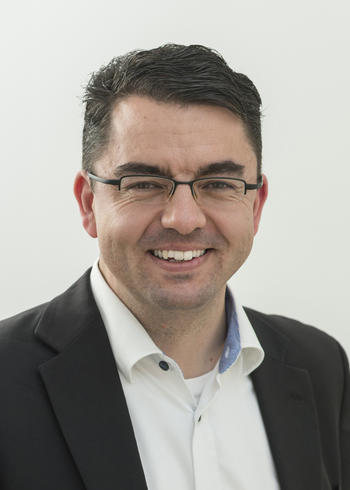
Professor Guoyin Li is a faculty member at the School of Mathematics & Statistics , University of New South Wales (UNSW Sydney). He holds a Ph.D. from The Chinese University of Hong Kong (2007) and has been at UNSW since 2011, currently serving as Professor and Research Director. Research Interests His work spans optimization , variational analysis , and multilinear algebra , with applications in robust optimization , structural engineering , and machine learning . He specializes in nonconvex nonsmooth optimization , tensor eigenvalue problems , and exact semi-definite programming relaxations . Recent Publications His articles focus on robust optimization for structural design, nonlinear approximation techniques, and conic programming for uncertain data. Key journals include Foundations of Computational Mathematics , Mathematical Programming , and Computer Methods in Applied Mechanics and Engineering . Awards and Grants Fellow of the Australian Mathematical Society (2023) 2022 AustMS Medal 2024 Marguerite Frank Award ARC Discovery Grants (2021-2023, 2025-2027) ARC Research Hub Project (2017-2021) Professional Roles He serves on editorial boards of SIAM Journal on Optimization , Optimization Letters , and Journal of Optimization Theory and Applications , and has delivered plenary lectures at international conferences in Austria, Spain, and Canada.
Thorsten Faas is a Professor and Head of the Department of Political Sociology Office of the Federal Republic of Germany at the Otto Suhr Institute for Political Science, Freie Universität Berlin. He has held this position since October 1, 2017, after serving as Professor of Political Science in Empirical Political Research at Johannes Gutenberg-University Mainz (2012-2017) and Junior Professor of Political Science at the University of Mannheim (2009-2012). His educational background includes a PhD from the University of Duisburg-Essen (2008) with a dissertation on "Direct and indirect experiences of unemployment and their political consequences in East and West Germany," a Master's in European Politics and Policy from the London School of Economics (2001), and a Diplom in Political Science from Otto-Friedrich-University Bamberg (2000). Professor Faas's research focuses on political sociology, electoral behavior, political communication, and political methodology . His work examines voting behavior, political polarization, media consumption in politics, and experimental methods in political science. He has conducted extensive research on German federal elections, youth voting, and the impact of media on political perceptions. His recent scholarly output reveals a strong emphasis on voting age reform, political polarization, electoral methodology, and open science practices . Faas has been particularly active in studying youth voting patterns, the effects of lowering the voting age, and the reliability of survey methods in electoral research. His work often combines theoretical insights with methodological innovation, particularly in the areas of experimental design and data transparency. Professor Faas leads several major research projects including RAPID-COVID (examining information reception during the pandemic), the Comparative National Elections Project (CNEP) 2017-2025, youth studies on federal elections, and CliWaC (Climate and Water under Change). He has received research funding for these projects from various academic and governmental institutions. His research group at the Otto Suhr Institute functions as a hub for electoral studies in Germany, collaborating with national and international partners on large-scale election studies. The Center for Political Sociology of the Federal Republic of Germany, where he serves as a key figure, provides consultation hours and resources for students and researchers interested in political sociology and electoral behavior.
Dr. Seyed Mojtaba Hoseyni is a Lecturer in Process Safety and Loss Prevention at the School of Chemical, Materials and Biological Engineering, University of Sheffield. Previously a Postdoctoral Research Associate at the same institution (2022-2024), he holds a PhD in Energy Engineering from Politecnico di Milano (2021). His research focuses on enhancing system resilience, risk assessment, and decision-making under uncertainty in engineering systems, particularly for decarbonization applications. Royal Academy of Engineering Global Talent (Exceptional Promise) in Chemical and Process Engineering His work spans hydrogen safety, climate change risk, nuclear engineering safety, and predictive maintenance. Recent publications emphasize integrating resilience metrics into HAZOP analysis and optimizing sensor placement for risk-informed decision-making. Teaching activities include the Hazards and Protections module (CPE61020). Specializes in RAMS (Reliability, Availability, Maintainability, and Safety) analysis Develops safety frameworks for hydrogen energy systems Applies advanced computational techniques to nuclear and industrial safety
Dr. Boyin Ding is an Associate Professor at the University of Adelaide , serving as Academic Director at Haide College and researcher in the Mechanical Engineering department within the Faculty of Sciences, Engineering and Technology. He leads the Wave Energy Research initiative established in 2014, while also contributing to Robotics and Biomechanics through his work with the Flinders Medical Device Research Institute. Research Areas: Ocean Wave Energy Harvesting Control Systems for Renewable Energy 6DOF Robotic Testing Spine Biomechanics Transnational Education Programs Key Collaborations: Australia-China Joint Research Centre for Offshore Wind & Wave Energy Acoustics, Vibration and Control Research Group Scientific Awards: Australian Endeavour Fellowship Malcolm Kinnaird Engineering Excellence Award (2012) His recent publications focus on hybrid offshore energy systems, nonlinear hydrodynamics in wave energy converters, and biomechanical testing technologies. He has developed control algorithms for floating offshore wind-wave systems and pioneered 6DOF robotic platforms for medical applications. As an eligible PhD supervisor, he actively collaborates with global industries and academic institutions.
Daniel Fremont is an Associate Professor of Computer Science and Engineering at the University of California, Santa Cruz, where he conducts research at the intersection of formal methods and autonomous systems. His work focuses on developing mathematical techniques to improve the reliability of software, hardware, and cyber-physical systems through precise specification, formal verification, automatic synthesis, and principled testing approaches. Dr. Fremont's research interests center on applications of logic in computer science, particularly using automated reasoning to enhance system reliability. His work spans formal methods for cyber-physical systems (CPS), especially autonomous systems that incorporate machine learning. Key research areas include algorithmic improvisation for creating systems with controlled randomness, probabilistic programming through the Scenic language for environment modeling, and formal verification techniques applicable to safety-critical autonomous systems. His group has successfully applied these methods to autonomous vehicles, aircraft systems, and robotics, with significant contributions to both theoretical foundations and practical implementations. The publication record reveals a strong trajectory from theoretical foundations of control improvisation toward practical applications in autonomous systems verification. Early work established the theoretical framework of control improvisation, while recent publications focus on applying these techniques to real-world challenges in autonomous driving, aircraft systems, and AI-based autonomy. A consistent theme across his research is the integration of formal methods with machine learning to address the verification challenges posed by complex, learning-based systems operating in uncertain environments. Best Paper Award at IoTDI 2016 for 'Control Improvisation with Probabilistic Temporal Specifications' Dr. Fremont leads a research group focused on formal methods for autonomous systems, with significant contributions to the development of tools like Scenic (a probabilistic programming language for scenario specification) and VerifAI (a toolkit for formal design and analysis of AI-based systems). His work bridges theoretical computer science with practical engineering challenges in safety-critical autonomous systems, receiving funding from various sources supporting research at the intersection of formal methods and artificial intelligence. The group's approach combines theoretical algorithm development with practical implementation and testing, often collaborating with industry partners working on autonomous vehicle technology. The research group maintains active development of several open-source tools, including the Scenic language for scenario specification and VerifAI for formal analysis of AI systems. They have demonstrated applications across multiple domains including autonomous vehicles, aircraft systems, and robotics, with particular emphasis on simulation-based testing and verification approaches that can provide formal guarantees about system behavior.
Dr. Seth B. Hunter is an Associate Professor of Education Leadership at George Mason University ’s College of Education and Human Development . He serves as a Senior Fellow at EdPolicy Forward (Mason’s Center for Education Policy) and a Fellow with the Tennessee Education Research Alliance . His work bridges educator effectiveness, policy implementation, and human-machine collaboration in education. PhD in Education Policy from Peabody College, Vanderbilt University Dr. Hunter’s research integrates educator evaluation systems , instructional coaching , and policy impacts on educational outcomes . He employs mixed methods (econometric, psychometric, qualitative) and interdisciplinary frameworks (psychology, economics, leadership theory). Notably, he investigates how feedback mechanisms and human-machine partnerships shape instructional quality. His recent publications focus on teacher evaluation policy effects , instructional coaching distribution , and equity in rural education . Articles span topics like feedback valence, policy implementation in rural districts, and intersectional impacts of leadership demographics. Though no scientific awards are listed, his work informs state-level policies in Kentucky, Tennessee, and Virginia. Dr. Hunter previously served K-12 organizations as a teacher, union representative, and professional association president. He teaches courses on school improvement , instructional supervision , and doctoral research . Personal interests include barbecuing , ice hockey , and music .
Haibo Yang is an Assistant Professor in the Department of Computing and Information Sciences at Rochester Institute of Technology's Golisano College of Computing and Information Sciences. He earned his Ph.D. in Electrical and Computer Engineering from The Ohio State University under the supervision of Prof. Jia (Kevin) Liu. Rochester Institute of Technology , Golisano College of Computing and Information Sciences Ohio State University , Ph.D. in Electrical and Computer Engineering His research focuses on distributed and federated learning systems, examining how statistical and system variability affect algorithm performance under constraints like privacy and communication limitations. Key areas include optimization algorithms, communication-efficient frameworks, Byzantine robustness, and multi-modal adversarial attacks. He is actively involved in developing theoretically grounded solutions for scalable and intelligent distributed learning. Recent publications highlight advancements in multi-objective reinforcement learning, zeroth-order federated optimization, and robustness against heterogeneous client participation. His work has appeared in top venues like UAI, IJCAI, ICLR, AAAI, NDSS, ACM CCS-LAMPS, and ACM MobiHoc, with notable acceptance rates (e.g., 19.3% for IJCAI 2025). Current projects investigate exact convergence mechanisms and adaptive weighting strategies. Dr. Yang received the RIT AI Seed Funding and GWBC Award in February 2024. He supervises funded Ph.D. students and teaches advanced machine learning topics, including CSCI-635: Introduction to Machine Learning.
Darko Marinov is a Professor at the Siebel School of Computing and Data Science and a member of the Information Trust Institute at the University of Illinois at Urbana-Champaign. His research focuses on software testing methodologies, particularly regression testing, flaky tests, and software reliability engineering. He has contributed to frameworks like Ekstazi for regression test selection and DeFlaker for identifying flaky tests. Marinov holds an NSF CAREER Award (2008) for his work in this domain. His research interests span testing techniques for modern software systems, including configuration testing, test prioritization, and fault localization. He has pioneered studies on the characteristics of flaky tests in large-scale projects and developed tools to improve software quality assurance processes. Marinov collaborates across academic and industrial settings, addressing challenges in continuous integration, reproducibility of computational experiments, and hardware-software co-design for resilience. His work bridges theory and practice, with applications in cloud computing, AI workloads, and cybersecurity. Awards: NSF CAREER Award (2008) Key Contributions: Ekstazi, DeFlaker, FastFlip, and Ctest4J frameworks Labs/Teams: Active member of the Information Trust Institute and leads software testing research groups at UIUC
Yu Nie is a Professor in the Department of Civil and Environmental Engineering at Northwestern University, affiliated with the NU-TREND research group within the McCormick School of Engineering. His work focuses on optimizing transportation networks, integrating human behavior, infrastructure design, and network topology to enhance mobility, reliability, and sustainability. He holds a Ph.D. from the University of California, Davis, an M.S. from the National University of Singapore, and a B.S. (cum laude) from Tsinghua University. His research interests span interdisciplinary approaches combining optimization, network science, traffic flow theory, economics, and statistics. Key areas include congestion pricing strategies, ride-hailing market dynamics, autonomous vehicle integration, and transit system design. He has contributed to studies on dockless bike-sharing systems, ethics-aware transit design, and traffic management in autonomous vehicle zones. Nie’s recent publications (2024–2025) highlight advancements in modular autonomous vehicle systems, co-modal freight solutions, and policy frameworks for sustainable urban mobility. His work often bridges theoretical insights with practical applications, addressing challenges like EV charging chaos and ride-pooling impacts. He received the 2021 Transportation Science Meritorious Service Award for his editorial contributions. His research also explores freight exchange platforms, taxi market resilience during pandemics, and the role of route choice models in transit design. Labs/Teams: Yu Nie is associated with the NU-TREND research group, specializing in innovative transportation solutions through interdisciplinary collaboration.
Joaquin Vanschoren is an Associate Professor of Machine Learning at Eindhoven University of Technology (TU/e), affiliated with the Faculty of Mathematics and Computer Science. He leads the Automated Machine Learning group and serves as Education Director for the Data Science program. His research focuses on democratizing AI, algorithm selection, and open science platforms like OpenML. He has received awards including the Dutch Data Prize and Amazon Research Award. Education: PhD in Engineering (KU Leuven, Belgium), MSc in Computer Science (KU Leuven). Research visits included IBM, Amazon Research, and universities globally. Research Interests: Machine Learning, Automated ML, Meta-learning, AI Safety, Data-centric AI. He co-founded OpenML and chairs MLCommons' AI Safety working group. Key Projects: NeurIPS Datasets and Benchmarks track, MLCommons initiatives, OpenML platform. Supervised 78 research works and authored 200+ papers. Awards: Dutch Data Prize (2016), Amazon Research Award (2019), Microsoft Azure Research Awards (2016–2017). Labs/Teams: OpenML open source team, MLCommons collaborations, Automated Machine Learning group at TU/e.
Beth Smith, PT, DPT, PhD is an Associate Professor of Pediatrics and Biokinesiology & Physical Therapy at the University of Southern California. She directs the Infant Neuromotor Control Laboratory, where she leads research on neural control of movement during infancy and develops interventions for infants with or at risk for developmental delay. Dr. Smith's research focuses on several critical areas in pediatric development: Neural mechanisms underlying infant motor development Application of wearable sensor technology for objective movement measurement Early identification of developmental delays through quantitative analysis Evaluation of intervention effectiveness for at-risk infants Cross-cultural studies of infant development in diverse settings including rural Guatemala Her work demonstrates a strong integration of technology and clinical practice, with recent publications highlighting innovative approaches to measuring infant movement in natural environments. Dr. Smith's research on algorithmic detection of developmental disabilities using wearable sensors represents a significant advancement in early identification methods. Her studies on telehealth administration of developmental assessments have gained particular relevance following the COVID-19 pandemic, potentially expanding access to early intervention services globally. As director of the Infant Neuromotor Control Laboratory, Dr. Smith oversees a research program that bridges neuroscience, engineering, and clinical practice to improve outcomes for infants with developmental challenges. Her work has important implications for developing evidence-based interventions that can be implemented across diverse healthcare settings.
Ed Pickering is a Senior Lecturer in Metallurgy and Materials Engineering at the University of Manchester. He has held roles since 2015, advancing to Reader in 2023. His affiliations include the Henry Royce Institute (Research Area Lead for Advanced Metals Processing), the Advanced Metallics System CDT and Fusion CDT Management Boards, and industrial technical advisory panels. Ed’s work bridges academic and industrial collaboration with Rolls-Royce, UKAEA, Airbus, EDF, and Sheffield Forgemasters. Ed completed his undergraduate studies (2011) and PhD (2014) in Materials Science at the University of Cambridge, followed by a Research Associate role in Cambridge’s Rolls-Royce UTC. His academic trajectory includes: Senior Lecturer (2019–present) Reader (2023–present) Ed’s research focuses on phase transformations, microstructural characterization, and alloy development for nuclear (fission/fusion) and aerospace applications. Key themes include optimizing processing routes to enhance material properties while minimizing waste and environmental impact. His studies frequently address steel, high-entropy alloys, and novel refractory alloys, emphasizing their service performance under extreme conditions. His scientific contributions span structural integrity assessment of welded joints, machine learning applications in metallurgy, and material flow uncertainties in forging. He has also advanced heat treatment optimization for reactor steels and explored cobalt-free hardfacing alloys. Frank Fitzgerald Medal (2017) Grunfeld Memorial Medal (2021) In advising and grants, Ed leads the Materials Performance Centre (MPC) and co-leads the NEWAM project on wire-additive manufacturing. He supervises research across these initiatives and collaborates with over 30 PGR students in interdisciplinary teams. His work also involves managing technical facilities like the Advanced Metal Processing platform. Ed’s laboratory affiliations include the MPC and WAAM-based Engineering and Process Metallurgy groups, where he explores sustainable materials solutions for energy and aerospace industries.
Amritanshu Pandey is an Assistant Professor in Electrical Engineering at the University of Vermont, with a part-time adjunct appointment in Electrical and Computer Engineering at Carnegie Mellon University. His research focuses on enhancing the efficiency, reliability, and security of electric grids through methods in circuit theory, optimization, and machine learning. He pioneered the SUGAR simulation engine for power systems and collaborates globally on grid challenges. Research Interests: Pandey's work spans renewable integration, grid cybersecurity, digital twins, and decarbonization. Key projects include developing algorithms for large-scale grid optimization, anomaly detection, electric vehicle infrastructure modeling, and cyber-resilient energy systems. His research addresses real-world challenges in rapidly evolving grids across Asia and Africa. Awards: Best Paper Award, IEEE PES General Meeting (2017, 2021) Best-of-the-Best Paper Award, IEEE PES General Meeting (2021) Best Student Paper Runner-up, ECML-PKDD (2018) Students & Labs: He advises 7 PhD students and has graduated 11 advisees (PhD/MS/BS). His lab focuses on power systems innovation, including the SUGAR simulation framework and projects on grid cybersecurity and sustainable electrification.
Dr. Min Liu is a Professor and the Abdallah H. Yabroudi Endowed Professor in Sustainable Civil Infrastructure at Syracuse University, where she directs the Syracuse University Infrastructure Institute. She holds a Ph.D. in Engineering Project Management from UC Berkeley, and prior degrees from National University of Singapore and Xi’an University of Architecture and Technology. Her research focuses on integrating human and engineering aspects in construction planning, with emphasis on Lean Construction, Digital Twin design, and machine learning applications. She has published over 50 articles in top-tier journals and won prestigious awards such as the 2021 ASCE Thomas Fitch Rowland Award. Dr. Liu advises numerous graduate students and postdocs, offering positions in Construction Engineering and Management. Her lab develops innovative approaches for infrastructure project delivery, worker mental health, and bridge preservation strategies. Education: Ph.D. in Engineering Project Management, UC Berkeley (2007) MSCE, Xi’an University of Architecture and Technology (1997) MSc in Building Science, National University of Singapore (2001) BSc in Civil Engineering, Qingdao University of Technology (1994) Research Highlights: Large language models for construction planning reliability Ontology-based knowledge systems for construction methods Lean techniques for worker mental health improvement Socioeconomic analysis of bridge preservation strategies Awards: 2021 ASCE Thomas Fitch Rowland Award Multiple Best Paper Awards (2017-2018) "Thank a Teacher" awards (2011-2018) Her advising record includes notable students like Chuanni He (2023 Chinese Government Award) and Gongfan Chen (2022 Three-Minute Thesis Award). Current opportunities include Ph.D. financial support and postdoc positions. Dr. Liu’s work appears in journals like ASCE Journal of Management in Engineering and Engineering, Construction and Architectural Management.
Eoin Delaney is a Lecturer in the School of Computer Science and Statistics at Trinity College Dublin (as of Spring 2025). Previously, he was a Postdoctoral Researcher at the Oxford Internet Institute (OII), University of Oxford (October 2023 – March 2025), focusing on Trustworthiness Auditing in AI. His research spans Explainable AI, algorithmic fairness, computer vision, and sustainable AI applications. He holds a PhD from University College Dublin (UCD), advised by Dr. Derek Greene and Prof. Mark T. Keane, where he developed counterfactual explanations for time series and image data. His work bridges technical AI research with societal impact, including collaborations with Accenture Labs and the VistaMilk SFI Research Centre. Key achievements include developing the OxonFair toolkit (accepted to NeurIPS 2024), winning the 2022 AI Ireland Award for Best Application of AI in a Student Project, and authoring papers in top venues like NeurIPS, AIJ, and IJCAI. He is actively involved in academic service, serving on program committees for FAccT 2025 and AAAI workshops. Eoin has supervised students at the University of Oxford and organizes workshops on AI accountability, such as the Auditing Accountability in Trustworthy Artificial Intelligence in personalized medicine. His teaching and outreach efforts include promoting STEM education through initiatives like an educational website for children, emphasizing cryptography and probability. He continues to explore fairness in AI systems, user-centric explanations, and scalable machine learning frameworks (PyTorch, TensorFlow).