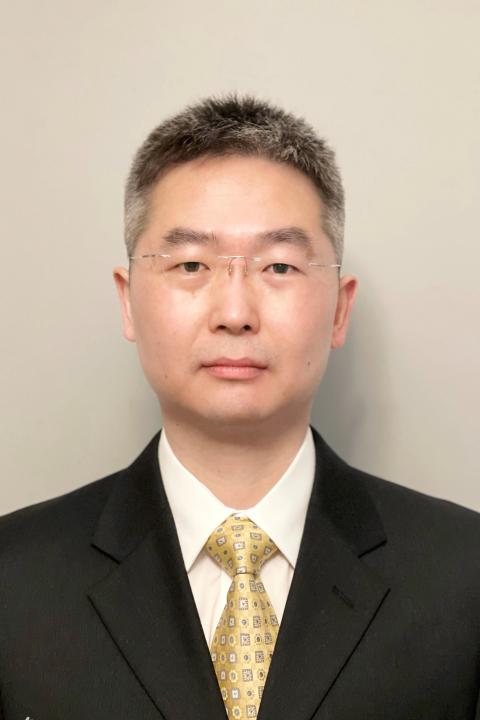
Jenn Brophy is an Assistant Professor of Bioengineering at Stanford University, developing technologies for genetic engineering of plants and microbes to address environmental stress resilience and agricultural sustainability. Her lab focuses on synthetic genetic circuits for plant root reprogramming and stress response optimization. B.S. in Bioengineering, UC Berkeley (2010) Ph.D. in Biological Engineering, MIT (2016) Postdoctoral Fellow, Stanford University (Biology) Research spans synthetic biology, plant genetics, and microbiome engineering, emphasizing climate adaptation and sustainable biotechnology. Current projects include: Plant-microbe interaction engineering Stress-responsive biosensors High-throughput genetic tool development Plant cell atlas integration Sustainable laboratory practices Her recent publications highlight advances in recombinase circuits, root architecture engineering, and plant cell mapping, with applications in climate resilience and microbiome design. Collaborators include José Dinneny (Stanford) in plant synthetic biology research.
Dr. Halefom Abraha is an Assistant Professor at the International and European Law (IER) Department of Utrecht University's School of Law. He specializes in Digital Human Rights, focusing on privacy, data protection, AI regulation, and algorithmic management in labor markets. His research addresses cross-border data access for law enforcement and digital sovereignty. Abraha holds a joint PhD from the University of Malta and Edith Cowan University (Australia) for his thesis on 'Cross-Border Data Access for Law Enforcement Purposes,' which earned the 2021 Dean's Award for Academic Excellence. He completed postdoctoral research at the Bonavero Institute of Human Rights, University of Oxford (2021-2024), and has advised the European Parliament’s LIBE Committee. His expertise spans EU and international law, with notable fellowships including Marie Sklodowska-Curie ITN (2017-2020) and AFRINIC (2017). Abraha is affiliated with the Netherlands Institute of Human Rights (SIM) and RENFORCE, focusing on governance challenges in the digital society. His research areas include the Future of Work under digital transformation, Security in Open Societies, and Contesting Governance paradigms. Key publications address workplace data protection frameworks, algorithmic management regulation, and cross-border data governance. Abraha advocates for contextualized legal solutions balancing innovation with human rights protections.
Gerald Quon is an Associate Professor in the Department of Molecular and Cellular Biology at the University of California, Davis. He is affiliated with the Genome Center and participates in multiple graduate programs, including Integrative Genetics and Genomics, Neuroscience, Computer Science, Biostatistics, and Biomedical Engineering. Education: PhD in Computer Science from the University of Toronto (2012) MSc in Biochemistry from the University of Toronto (2006) Research Interests: Dr. Quon applies computational approaches to genetics and genomics problems, focusing on the genetics of human disease , models of cell population dynamics , and neurogenomics . His lab builds neural network models to understand how genetic variation affects disease risk through molecular and cellular phenotypes, with applications to obesity, Alzheimer’s disease, psychiatric disorders, and Rett syndrome. Recent Research Trends: Recent publications highlight work in neuroplasticity , single-cell multimodal analysis , brain evolution , morphological variation modeling , and microbiome-based classification . His team combines sequencing and imaging technologies to model cellular interactions and gene expression dynamics. Scientific Awards: NIH New Innovator Award (2021) Grants & Collaborations: He received NSF funding (2019) for computational tools in single-cell analysis and collaborates across disciplines, including neuroscience, biomedical engineering, and computational biology. His lab develops software like scProjection , siVAE , and scAlign .
Simon Arthur is a Professor of Immune Signalling at the University of Dundee, School of Life Sciences, within the Department of Cell Signalling and Immunology. His research focuses on understanding inflammatory processes, particularly the role of innate immune cells in coordinating inflammation and resolving immune responses. He holds a PhD from the University of Oxford (1995) and a BSc from Durham University (1990). Arthur is a Fellow of the Royal Society of Biology (2015) and serves on the editorial board of the Journal of Biological Chemistry . His teaching includes courses on Genetics, Cell Signalling, Immunology, and advanced topics in immunology and cell signalling. He supervises PhD projects on microglial phenotypes in brain ageing and immunomodulatory factors in helminth-host interactions. Arthur leads research projects funded by the Medical Research Council and other agencies, including studies on liver fibrosis, bile acid diarrhoea, and pulmonary fibrosis. Key research themes include cytokine regulation, macrophage function, and the molecular mechanisms underlying chronic inflammation. His work spans from fundamental biology to translational research, aiming to develop therapies for autoimmune and inflammatory diseases. Arthur collaborates internationally and has over 180 publications in high-impact journals.
Gregory S. Miller is Ernst & Young Professor of Accounting at the University of Michigan's Ross School of Business. His research examines financial communication mechanisms, specifically how corporate managers convey firm information to external stakeholders and how market structures influence communication effectiveness. Professor Miller maintains editorial roles at leading journals including The Accounting Review and Journal of Accounting and Economics. Research concentrations include: Information flow dynamics in financial markets Managerial communication strategies Impact of disclosure regulations on market efficiency Investor relations and shareholder activism Cross-cultural aspects of financial disclosure Publications appear in top-tier journals including The Accounting Review, Journal of Accounting and Economics, and Journal of Accounting Research. His practitioner-oriented work has been featured in Harvard Business Review and Investor Relations Quarterly. Educational credentials include PhD from University of Michigan (1998) and BS in Accounting from Miami University (1990). Professional experience includes four years as auditor at Arthur Andersen.
Prof. Thomas Kuner is a Professor and Director of the Department of Functional Neuroanatomy at the University of Heidelberg's Medical Faculty. He holds a medical degree (MD) from Heidelberg (1998) and completed postdoctoral work at Duke University and the Marine Biological Laboratory. Since 2000, he has led a research group at the Max Planck Institute for Medical Research, followed by habilitation in Physiology (2003) and appointment as Professor of Anatomy and Cell Biology (2006). Research Focus: His work focuses on neuroanatomy, synaptic transmission mechanisms, and pain research. Key projects include investigations into the structural and functional properties of synapses (e.g., calyx of Held), the role of presynaptic proteins like Mover, and the molecular basis of pain signaling via the SFB 1158 consortium. His lab uses advanced imaging techniques (e.g., STED microscopy) and genetic models to study neuronal circuits and synaptic plasticity. Funding & Collaborations: Kuner's research is supported by grants from the DFG (e.g., SFB 1158), the Baden-Württemberg Foundation, and other national/international bodies. His interdisciplinary approach bridges cellular neuroscience, molecular biology, and clinical applications in pain management. Teaching & Leadership: He oversees the Institute of Anatomy and Cell Biology, contributing to graduate programs in medical education and anatomy. His team includes postdocs and technicians, with collaborations extending to imaging technology development and medical education innovation.
Michael Kleemann is an Associate Professor at the Faculty of Engineering Technology within KU Leuven , affiliated with the Department of Electrical Engineering (ESAT) . His research focuses on Power System Protection , Wireless Power Transfer , and Renewable Energy Integration , with a particular emphasis on inverter-based grid dynamics and fault analysis. Key Research Areas : Power system protection algorithms, capacitive wireless power transfer, fault location methods in medium voltage cables, and grid stability with high renewable penetration. Notable Projects : Lead projects on Protection of Future Distribution Grids (2021-2025), Capacitive Wireless Power Transfer (2020-2024), and Flux 50 ICON (2024-2026) for low-voltage DC grid protection. Publication Trends : Recent work explores capacitive wireless power transfer materials and control systems (2024-2025), fault detection algorithms for inverter-dominated grids (2023-2025), and machine learning applications in voltage regulation for photovoltaic-rich networks (2024). Teaching : Courses include Power System Protection (JPI322), Power Electronics (JPI0L8/JPI318), and Capacitive Wireless Transfer topics in graduate seminars.
Dr Jonathan Baker is a Senior Lecturer in Strategy at the Adelaide Business School , part of the Faculty of Arts, Business, Law and Economics at the University of Adelaide. He previously served as Director of the Yunus Centre for Business, Sustainability & Social Impact (2022-2023) and has held academic positions at Auckland University of Technology, University of Auckland, and guest professorship at University of Bayreuth. His research focuses on Interdisciplinary intersections of markets, strategy, and social impact Market-shaping strategies Sustainability and circularity transitions UN Sustainable Development Goals (9, 11, 12) Systemic business model perspectives Dr Baker's work appears in top journals including Industrial Marketing Management , Journal of Business Research , and Marketing Theory . He serves on the Editorial Review Board of Industrial Marketing Management (ABDC A*). Scientific Awards Excellence Early Career Researcher Award (ANZAM-European Management Journal, 2023) Emerging Career Researcher Award (Adelaide Business School, 2023) As a principal supervisor, he welcomes PhD/MPhil candidates interested in market shaping, sustainability transitions, or social entrepreneurship. His methodology emphasizes qualitative research and ecosystem-level analysis.
Dr. Michael Stevens is a Senior Lecturer at University of New South Wales (UNSW) Canberra , where he focuses on advanced manufacturing and biomedical device control systems . His work bridges digital manufacturing for SMEs with smart artificial heart technologies , emphasizing industry collaboration and translational research. Specializes in physiological control systems for rotary blood pumps Develops unobtrusive fall detection systems for dementia patients Leads international projects on total artificial heart development Education : B.Eng (Medical - First Class Honours), Queensland University of Technology (2010) PhD in Physiological Control for Biventricular Assist Devices, University of Queensland (2014) Research Trends show consistent focus on: Machine learning for biomedical diagnostics (2018–2025) mmWave radar and thermal sensors in patient monitoring (2021–2024) Computational fluid dynamics in artificial heart modeling (2016–2024) Physiological control algorithms for rotary blood pumps (2011–2025) Scientific Awards : UNSW Scientia Education Award (2021) for contextual teaching Heart Foundation Runner-up for "Smart Artificial Hearts" pitch (2021) ARC PGC Supervisor Award (2017) for mentoring Grants & Supervision : Holds over $6 million in competitive funding including MRFF and ARC grants. Currently supervises 4 PhD students while maintaining industry partnerships with VitalCare and BiVACOR. Labs & Facilities : Works across UNSW Engineering labs and Graduate School of Biomedical Engineering platforms, including mock circulation loops and high-performance computing clusters for CFD simulations.
Dr. Alexander Campbell is a Senior Lecturer at the Peter Faber Business School within the Australian Catholic University . His work bridges social marketing , educational technology , and public health , focusing on behavioral change through corporate and social interventions. Research Themes : Corporate social marketing, social advocacy models, AI in education, financial decision-making, and public health risks associated with supplement use. Academic Contributions : Recent studies explore the dual-edged impact of generative AI on learning outcomes and academic integrity, while earlier works develop frameworks for social advocacy and constructivist learning . Article Trends : A shift toward understanding technology's role in education (2025) and sustained focus on social marketing effectiveness (2023-2024), with historical roots in public health campaigns (2018-2021). Collaborations : Regularly works with researchers like Janneke Blijlevens, Sameer Deshpande, Sharyn Rundle-Thiele, and Tracey West across interdisciplinary projects.
Jingwei Cheng is an Assistant Professor in the Department of Molecular, Cellular, and Biomedical Sciences at the University of New Hampshire's College of Life Sciences and Agriculture. His research focuses on understanding the molecular mechanisms of DNA tumor viruses, particularly polyomaviruses, and their roles in cancer development. Specifically, his work investigates how Merkel cell polyomavirus (MCV) contributes to Merkel cell carcinoma (MCC) through interactions with tumor suppressors like p53 and RB, and the epigenetic regulation of transcriptional complexes. Cheng completed his B.S. in Biotechnology at Peking University and earned his Ph.D. in Biochemistry from the University of Illinois at Urbana-Champaign. His lab explores viral oncogenesis, MYC-driven cancers, and the interplay between transcriptional activation (via the SLaP complex) and repression (via PRC1.6) in neuroendocrine tumors. He also studies RNA methylation and splicing regulation in cancer cells with MYC overexpression. Cheng's research has identified druggable targets such as PRMT5 and the Tip60-p400 complex, aiming to develop therapies targeting MYC-driven cancers. His work bridges virology and cancer biology, with implications for neuroendocrine tumors like MCC and small cell lung cancer. He teaches courses on virology and cancer biochemistry and mentors students in molecular oncology research. His recent publications focus on viral mechanisms of immune evasion, molecular markers in MCC subtypes, and the therapeutic potential of targeting viral and epigenetic pathways. Cheng collaborates on genome-scale CRISPR screens and omics technologies to uncover cancer dependencies.
Zhiru Sun is an Associate Professor at the University of Southern Denmark, affiliated with the Department of Design, Media and Educational Science. Their research focuses on the intersection of education, humanities, and data science, with expertise in Learning Analytics (LA), Digital Humanities (DH), and AI applications in education and humanities. Sun holds a Ph.D. in Educational Technology from The Ohio State University (2011–2015), alongside advanced degrees in Applied Statistics and Cultural Foundations of Technology. Key research interests include student motivation and performance analysis, historical data mining in DH, and human-centered AI in education. They have received notable awards such as the Outstanding Proposal Award (2021) and the Loadman Outstanding Dissertation Award (2016). Sun leads projects like 'Empowering Humanities Education with Deep Learning' and 'Flipped Classroom Design for Self-Regulation.' Their work spans collaborative learning algorithms, flipped classroom efficacy, and generative AI policy analysis in education. Educations: Ph.D. in Educational Technology, M.Sc. in Applied Statistics, and M.Sc. in Cultural Foundations (all from The Ohio State University) Key Projects: FREI: The Danish Family Revolution, DH Visualization Tools Teaching: Courses include Digital Humanities, Data Science, and Web-mediated Communication Recent publications address learner empowerment in online environments, negotiation skills in collaborative games, and group formation algorithms for optimal learning outcomes.
Markus König is a Professor of Informatics in Civil Engineering at Ruhr University Bochum, where he has been researching and teaching since October 2009. His work focuses on Building Information Modeling (BIM), digital construction technologies, and civil engineering informatics, with significant contributions to the development and implementation of digital methods in German construction industry. Dr. König earned his degree in civil engineering with a focus on applied computer science at Leibniz University Hannover, where he also completed his doctorate on cooperative building planning at the Institute for Building Informatics. He subsequently held a junior professorship for Theoretical Methods of Project Management at Bauhaus University Weimar before joining Ruhr University Bochum. His research spans multiple cutting-edge areas including Building Information Modeling (BIM), construction process simulation, tunneling informatics, infrastructure asset management, and the application of artificial intelligence and computer vision in civil engineering. As chair of the Building Informatics Working Group from 2012-2016, he played a key role in developing the first national BIM curriculum for German universities and serves as editor of the book 'Building Information Modeling: Technological Foundations and Industrial Practice.' Analysis of his recent publications reveals a strong trend toward semantic technologies, digital twins, automated compliance checking, and the integration of AI in construction processes. His work increasingly focuses on information containers, ontology development, and the application of large language models to infrastructure data, reflecting the evolving landscape of digital construction. Dr. König's significant contributions to digital construction have been recognized with prestigious awards: Lower Saxony-Bremen Construction Industry Award (2017) for 'services in the development and introduction of digital construction in Germany' Konrad Zuse Medal (2020) While specific details about his advising and grant activities aren't explicitly mentioned in the provided text, his extensive publication record with numerous co-authors suggests active supervision of doctoral students and research staff. His involvement in multiple collaborative research projects is evident from his publication history. At Ruhr University Bochum, Professor König leads a research group focused on civil engineering informatics, with particular emphasis on BIM, digital construction technologies, and their application across the building lifecycle. His team appears to work at the intersection of computer science and civil engineering, developing innovative solutions for construction process optimization, infrastructure management, and digital transformation of the AEC industry.
Timothy Tricas is a Professor at the University of Hawaii at Manoa's School of Life Sciences, specializing in fish sensory systems and coral reef ecology. He leads a research lab focused on understanding acoustic communication, neuroethology, and behavioral ecology in marine species. His work integrates field observations with neurophysiological and anatomical studies, often using advanced techniques like rebreather diving and hydrophone recordings. Affiliations: School of Life Sciences, Department of Zoology, Hawaii Institute of Marine Biology Courses Taught: Ethology, Animal Behavior, Sensory Ecology, Fish Behavior and Sensory Biology Research Interests: His studies explore how fish use sensory systems (auditory, lateral line, electrosense) to navigate, communicate, and survive in coral reef ecosystems. Key projects include decoding fish acoustic behaviors, understanding the evolution of specialized sensory adaptations (e.g., butterflyfish hearing mechanisms), and applying bioacoustics for coral reef health monitoring. Grants & Funding: Secured grants from NOAA, NSF, and the Hawaii Undersea Research Laboratory for projects like parrotfish soundscapes analysis and stingray electrosensory systems. Lab Activities: Mentors graduate and undergraduate students in field experiments, neuroanatomical studies, and acoustic data analysis. Current projects include parrotfish home range behavior and开发 new bioacoustic monitoring tools.
Jianping Fu is a Professor in the Department of Mechanical Engineering at the University of Michigan , with joint appointments in Biomedical Engineering and Cell and Developmental Biology. His research integrates micro/nanoengineering , mechanobiology , and stem cell biology to model human development and disease. Education: PhD (MIT, 2007), BE (University of Science and Technology of China, 2000) His research interests focus on stem cell bioengineering , developmental bioengineering , and mechanobiology , particularly in modeling early post-implantation human development, neural tube formation, and pluripotent stem cell mechanoregulation. His work combines biomimetic culture systems with microfluidic gradients to study embryogenesis and organogenesis. Recent publications highlight advances in human embryo modeling (2024 Cell, Nature, Cell Stem Cell), neural tube patterning (2024 Nature), and mechanobiology of stem cells (2024 Nature Reviews Physics). These studies emphasize computational methods , single-cell analysis , and standardization of embryo models . Scientific honors include: Friedrich Wilhelm Bessel Research Award (2022) ISSCR Merit Award (2024) Fellow, American Institute for Medical and Biological Engineering (2019) NSF CAREER Award (2012) Life Member, World Association of Chinese Biomedical Engineers (2024) Dr. Fu mentors extensively, with 20+ alumni including PhD students and postdocs now in academic and industry positions. His lab has received $3M NIH funding for immunological diagnostics and MTRAC grants for translational research. Collaborations with institutions like Cincinnati Children's Hospital and Rice University enhance his interdisciplinary approach to regenerative medicine.