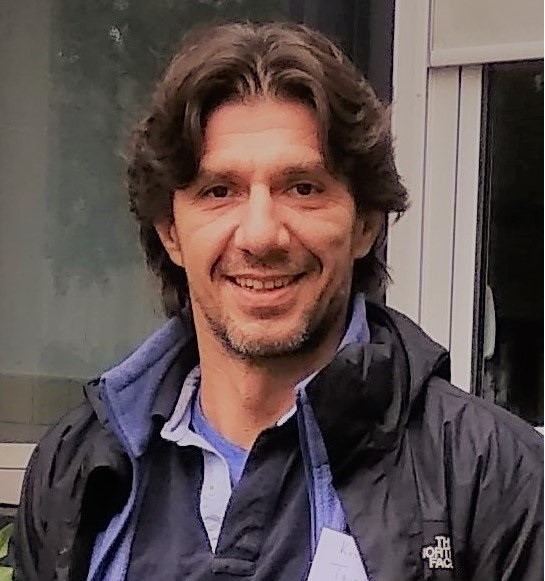
Maximilian Schreieck is an Associate Professor for Information Systems at the Department of Information Systems, Production and Logistics Management, University of Innsbruck. He earned his PhD at Technical University of Munich (2020) and completed habilitation at University of Innsbruck (2025). Previously a DFG Walter Benjamin Fellow at Wharton School (2021-2022). Education: PhD in Information Systems, Technical University of Munich (2020) Habilitation in Information Systems, University of Innsbruck (2025) His research focuses on digital platform ecosystems, platform governance, digital platforms for social causes, and digital transformation of established companies. He has published extensively in top journals like MIS Quarterly, Information Systems Journal, and Electronic Markets. Recent publications address generative AI ecosystems, EU digital regulation impacts, cloud platform adoption, and multi-platform strategies. His work combines technical platform analysis with organizational and regulatory implications. Scientific awards include: Best Paper Award, AIS SIG Grounded Theory Methodology (2021) Paper of the Year Award, AIS SIG Electronic Markets (2020) His research has practical applications in automotive, banking, and refugee integration platforms, with collaborations at SAP, BMW, and EU policy contexts. Teaching activities include master's theses supervision and courses on digital platform management.
Erich Schweighofer serves as Associate Professor at the University of Vienna within the Institute for European, International and Comparative Law, specifically affiliated with the Department of International Law and International Relations. His research activities are centered at the Juridicum building (Schottenbastei 10-16, 1010 Vienna), where he maintains an active office presence with scheduled consultation hours. His scholarly focus spans Legal Informatics , Artificial Intelligence and Law , Data Protection , and Legal Knowledge Representation , with particular emphasis on explainable AI systems for legal contexts and formal methodologies for translating legal norms into computational frameworks. This interdisciplinary work bridges jurisprudence and computer science through projects examining biometric regulation, autonomous vehicle governance, and natural language processing applications in legal domains. Analysis of his 2021-2024 publications reveals consistent thematic progression toward operationalizing legal principles in AI systems, with increasing focus on transparency mechanisms, temporal logic for dynamic regulations, and cross-jurisdictional compliance challenges. His work predominantly appears in the International Legal Informatics Symposium (IRIS) proceedings and JURIX conferences, reflecting deep engagement with the legal informatics community. Professor Schweighofer leads a dedicated research team including project assistants Mag. Jessica Fleisch, Mag. Jonas Pfister, Felix Schmautzer, and Mag. Jakob Zanol, while actively participating in the University of Vienna's Working Group on Legal Informatics (Arbeitsgruppe Rechtsinformatik). His collaborative approach extends to organizing the biennial IRIS symposium, which has established itself as a cornerstone event for European legal informatics scholarship since 1998.
Prof. Chen Jinjun is a **Professor** at **Swinburne University of Technology, Australia**, leading the **Data Science Platforms and Systems** program. Previously, he held roles at the **University of Technology Sydney (UTS)** and Swinburne. His research focuses on **cloud computing, distributed systems, data privacy, and scalable privacy protection**. He is an **IEEE Fellow (2022)** and a **Highly Cited Researcher (2021–)** with over 13,500 citations and an h-index of 69. **Education**: BSc (Applied Mathematics) and MEng (Communication) from **XiDian University, China**; PhD (Information Technology) from **Swinburne University of Technology**. **Leadership & Service**: Chair of IEEE Technical Committee on Scalable Computing (2014–2017), Editorial roles for IEEE Transactions (e.g., TCC, TSUSC, TKDE), and conference leadership (e.g., General/PC Chair for 15+ international events). He has secured multiple **ARC grants** and industry projects. **Awards**: Highlighted awards include the IEEE TCSC Excellence Award (2020), Australia’s Top Researchers in Computing (2020), and 20-year Most Influential Paper (2018). **Labs/Teams**: Leads initiatives in data science platforms and systems, with collaborations in scalable computing and privacy-preserving technologies.
Carlo Rondinini is a Full Professor of Zoology at Sapienza University of Rome and serves as Coordinator of the Global Mammal Assessment for IUCN. He has held visiting roles at the University of Southampton and the State University of New York. His research focuses on mammal extinction risk, spatial conservation prioritization, and biodiversity change scenarios. He leads global assessments for IPBES and CBD, and edits Conservation Biology . Awards include ISI Highly Cited Researcher (2018). Professional roles include Scientific Advisor at Rome Zoo and membership in national committees for research evaluation and academic appointments. Positions: Full Professor (Sapienza), European Regional Editor (Conservation Biology), IPBES Lead Author Key Projects: Global Mammal Red List, Biodiversity Scenario Modeling Research emphasizes integrating ecological data with policy through habitat mapping, climate change impacts, and conservation prioritization frameworks. His work bridges academic research with global conservation policy development. Awards: ISI Highly Cited Researcher (Clarivate Analytics) Committees: Board of Italian Society for Conservation Biology, Accademia Nazionale dei Lincei
Kostas Triantis is an Associate Professor of Biodiversity of Ecosystems at the Department of Ecology and Taxonomy, Faculty of Biology, National and Kapodistrian University of Athens. He holds a PhD from the University of Crete and has held post-doctoral positions at institutions including Oxford University and the University of Azores. His research focuses on island biogeography, macroecology, conservation biology, and the biogeography of Aegean invertebrates. He has served as a Visiting Professor at the University of Bayreuth and held roles in Greece’s Ministry of Environment. Triantis is a leading expert in land snail biodiversity and has contributed to over 70 peer-reviewed articles. Awards include Marie Curie Fellowship and editorial roles in journals like Journal of Biogeography . His work addresses species-area relationships, island ecosystems, and conservation strategies for endangered species. Current projects include understanding biodiversity patterns in the Aegean under the Anthropocene and global avian extinction dynamics. Education: PhD and MSc in Biology, University of Crete Post-doctoral fellowships at Oxford, Azores, and Patras Research Interests: Island biogeography, conservation biology, macroecology, ecological modeling, Aegean biodiversity His articles explore topics like ant biodiversity on Aegean islands, global avian functional diversity loss, and extinction debt on oceanic islands. Triantis collaborates internationally on projects such as the European Red List of terrestrial molluscs and biodiversity databases like MEDIS. He actively contributes to conservation policy through IUCN Red Listing assessments for over 200 Greek land snail species. Grants & Projects: Principal Investigator: 'Understanding the Anthropocene: the case of the Aegean Islands' (Hellenic Foundation for Research and Innovation, 2020–2023) Co-PI: 'Biodiversity on Oceanic Islands' (Portugal’s FCT, 2012–2015) Triantis leads the University of Athens’ Ecology and Taxonomy Department’s research on island ecosystems, emphasizing the interplay between ecological theory and conservation practice. His lab focuses on integrating spatial data and evolutionary dynamics to address biodiversity challenges.
Tobias Ofner-Graff is a researcher at the Institute of Forest Growth within the Department of Ecosystem Management, Climate and Biodiversity at the University of Natural Resources and Life Sciences, Vienna (BOKU). Based at Peter-Jordan-Straße 82, 1190 Wien, his work focuses on advanced forest monitoring technologies. His research interests include: LiDAR and remote sensing applications in forestry Automated forest inventory systems Forest regeneration quantification Airborne Laser Scanning (ALS) data analysis Sustainable forest harvesting planning Recent project contributions include: Leading lidar-based forest monitoring systems development Developing spatial forest growth models Implementing digital inventory workflows His publications demonstrate expertise in: Quantifying forest resources through 3D point clouds Advanced timber stack measurement techniques ALS data integration for forest modeling Mobile laser scanning applications Forest climate adaptation strategies
Philipp Haindl is a lecturer at the Department of Computer Science and Security at St. Poelten University of Applied Sciences. His work focuses on software engineering, cybersecurity, and AI integration in education and manufacturing. Software Engineering Cybersecurity Artificial Intelligence DevOps Quality Assurance Research Interests: Dr. Haindl explores software metrics, inter-service security in microservices, and AI tools like ChatGPT in programming education. He investigates quality models and non-functional requirements in DevOps environments. Publications: Recent work includes studies on ChatGPT's impact in software engineering education, systematic reviews of microservice security, and frameworks for human-AI teaming in manufacturing.
Alex X. Liu is a Professor in the Department of Computer Science & Engineering at Michigan State University (2016-2022), currently serving as Chief Information Security Officer and President of Midea Software Engineering Institute. His academic career includes roles as Associate Professor (2012-2016) and Assistant Professor (2006-2012) at the same institution. He holds a Ph.D. and M.S. in Computer Science from The University of Texas at Austin, and a B.S. in Computer Science from Jilin University, China. Education Ph.D. in Computer Science (UT Austin, 2006) M.S. in Computer Science (UT Austin, 2002) B.S. in Computer Science (Jilin University, 1996) Liu's research focuses on Dependable computing , Networking algorithms , Cloud computing , Mobile computing , Privacy computing , and Computer/network security . His work spans secure systems, network protocols, and resource optimization in distributed environments. Recent publications address quantum neural networks , microservices autoscaling , RFID tag recognition , network traffic classification , and hybrid physical-layer authentication , demonstrating expertise at the intersection of AI and network security. Key trends include deep learning applications for cloud systems and robust security protocols. Scientific Awards IET Fellow (2021) IEEE Fellow (2019) ACM Distinguished Scientist (2019) Withrow Distinguished Scholar Awards (Senior 2019, Junior 2011) NSF CAREER Award (2009) IEEE & IFIP William C. Carter Award (2004)
Dr. Markus Ellmer is affiliated with the University of Salzburg's Faculty of Law, Business and Economics, within the Department of Business (Human Resource Management). As a Lecturer, his work bridges academic research and practical applications in digital HRM tools and user research at TeamEcho. His teaching focuses on qualitative research methods and digital HRM, including courses like 'Basics and Methods of Empirical Research' (since 2018) and 'HRM and Digital Technology' (since 2021). His research explores socio-technical dynamics of digital HR platforms, platform worker voice mechanisms, and the impact of data-driven HR analytics on organizational credibility. Key themes include digital participation, epistemic alignment in HR practices, and global mobility in multinational employer branding. Notable research contributions address platform labor policies in Europe, affordance-based analyses of e-HRM systems, and the governance of human computation labor on platforms like Amazon Mechanical Turk. His work critically examines the interplay between technology design, organizational performance, and worker welfare in digital labor markets. Ellmer has published extensively on crowdwork, HR analytics credibility, and digital voice mechanisms, with a focus on socio-technical systems and epistemological dimensions of digital HR practices. He actively contributes to debates on improving platform work conditions and rethinking traditional HRM frameworks in the digital era.
Ao.Univ.Prof. Dipl.-Ing. Dr.techn. Andreas Rauber is an Associate Professor at TU Wien's Research Department E-Commerce. His work focuses on digital preservation, machine learning, and reproducible research. He leads projects like EOSC-Life (FAIR principles in life sciences) and PLANETS (long-term data access). Key affiliations include the Network Lab and TU Wien's Institute for Software Technology. His research emphasizes data citation frameworks, secure data infrastructure (OSSDIP), and ethical AI practices. He has advised over 20 PhD/Master’s students in areas like adversarial ML and privacy-preserving systems. Notable contributions include DBRepo (semantic databases) and the DBRepo infrastructure for relational data. He collaborates internationally on initiatives like EOSC support offices and cultural heritage projects linking ethnomusicology datasets.
Rupert Wimmer is a Professor at the Institute of Wood Technology and Renewable Resources of the University of Natural Resources and Life Sciences, Vienna. He serves as an Editorial Board Member for journals like Frontiers in Chemistry and Wood and Fiber Science , and has been a Review Editor for ISRN Forestry (2009–2018). His work bridges wood science , renewable materials , and dendrochronology , with a focus on 3D-printed bio-composites , triboelectric wood processing , and climate reconstruction . His research spans Biocomposites: Innovations in lignin-based materials , wood-plastic composites , and fully recyclable wall systems . Wood Technology: Studies on surface activation , mechanical properties , and dust reduction during machining. Dendrochronology: Climate history analysis via tree rings and wood chemistry . The most recent articles explore circular economy in construction, electrostatic wood treatment , and drought proxies , reflecting his interdisciplinary approach. Awards include Rudolf Sallinger S&B Innovation Award nominations (2018, 2019) German Study Prize for Wood Materials Research (2010) Fellow of the International Academy of Wood Science (2005) He has supervised over 74 theses, including Roman Myna (2025) on innovative dust reduction and Raphaela Hellmayr (2024) on wood-based circular bioeconomy . Grants from EU , FFG , and Fonds zur Förderung der wissenschaftlichen Forschung fund his work. Collaborations span institutions in Australia, Germany, and the Czech Republic.
Daniel Dörler is a Senior Scientist at the Institute of Zoology, University of Natural Resources and Life Sciences, Vienna (BOKU), where he has been employed since 2019. His academic background includes a doctorate in Natural Resources and Life Sciences from BOKU and studies in Biology/Zoology from the University of Vienna. He is a leading figure in the Austrian and European citizen science movement, with a focus on biodiversity, road ecology, and public engagement in science. Institution: University of Natural Resources and Life Sciences, Vienna (BOKU) Department: Institute of Zoology Position: Senior Scientist (wissenschaftlicher Mitarbeiter) Email: daniel.doerler@boku.ac.at ORCID: 0000-0003-2056-4084 Daniel Dörler’s research interests center on citizen science, biodiversity monitoring, and ecological research, particularly in urban and road environments. He investigates the role of public participation in data collection for scientific research and conservation, with a focus on roadkill and amphibian populations. His work bridges ecology, social science, and science communication, emphasizing the transformative potential of citizen science for both science and society. He is deeply involved in methodological development, quality criteria, and the scalability of citizen science projects. His recent publications demonstrate a strong trend towards the integration of technology, policy, and community engagement in citizen science. Works such as automated species detection for anurans, roadkill hotspot analysis, and the development of scalability toolkits highlight a move towards data-driven, policy-relevant, and ethically sound citizen science. The articles consistently focus on practical applications, project design, and the societal impact of participatory research, spanning sub-fields like conservation biology, bioacoustics, and science policy. Daniel Dörler has received numerous scientific awards, reflecting his excellence in research, teaching, and public outreach: 2023: Ars Docendi Award for excellent teaching, Honorary Mention for the Roadkill project (EU Citizen Science Prize), and multiple awards for co-supervised Master’s theses. 2022: Sustainability Award from Austrian Federal Ministries. 2017: BOKU Sustainability Prize and recognition as a Pioneer of Open Innovation in Science. 2018: Nomination for the National Animal Welfare Prize. Dörler is a principal investigator and project leader on numerous research grants from the European Commission, Austrian Science Fund (FWF), and national agencies. He is a key figure in the Citizen Science Network Austria and the platform "Österreich forscht." He frequently presents at international conferences, contributes to policy discussions, and mentors students. His collaborative work with Florian Heigl and others has established a robust network for citizen science in Austria and beyond. Daniel Dörler is a core member of the Citizen Science Network Austria and leads multiple projects such as "Leading Lights," "STEM education," and "Explore Research from East to West in Austria." He is also deeply involved in the "Roadkill" project and the "AmphiBiom" initiative for amphibian conservation. His work fosters a collaborative environment that brings together researchers, citizens, and policymakers to address pressing environmental challenges.
Adam Thomas Clark is an Associate Professor in the Department of Biology at the University of Graz, Austria, where he leads research on ecological community stability, self-assembly, and persistence across spatial and temporal scales. He is affiliated with the Institute of Biology and the Department of Plant Sciences, focusing on predictive models of community ecology. His academic journey includes a PhD from the University of Minnesota under David Tilman, postdoctoral work at the Helmholtz Centre for Environmental Research (UFZ) and iDiv with Stan Harpole and Helmut Hillebrand, and undergraduate research at Harvard University's Museum of Comparative Zoology. His research interests span Community Ecology , Grassland and Plant Ecology , Ant Community Assembly , Biodiversity , and Theoretical Modeling . He investigates how ecological systems maintain stability despite disturbances, integrating field experiments, taxonomy, and data synthesis. His work has particular emphasis on tallgrass prairies in the US Midwest, Central European grasslands, and ant communities in the Caribbean and northeastern US. The recent publications and social media activity highlight a strong focus on ecological acclimation , coexistence mechanisms , landscape and historical ecology , climate change impacts , and food web dynamics . His work often bridges empirical data with theoretical frameworks to improve predictive ecology. He is actively involved in mentoring, having advertised funded PhD and postdoctoral positions, and collaborates with institutions across Europe. ORCID: 0000-0002-8843-3278 Homepage: adamclarktheecologist.com Social: Bluesky , Twitter , GitHub , Google Scholar Clark is engaged in broader academic discourse, commenting on faculty hiring practices, research evaluation, and scientific trust. He promotes interdisciplinary climate research and has contributed to studies on public perception of science and ecological resilience in marine and terrestrial systems.
Ahmet Tekalp is a Professor in the Department of Electrical and Computer Engineering at Koc University's College of Engineering since 2001. He holds dual citizenship in Turkey and the USA, with prior academic roles at the University of Rochester (1986-2005) and research positions at Eastman Kodak (1984-1987) and Rensselaer Polytechnic Institute (1981-1984). He chairs the Electronics and Informatics Group at TUBITAK since 2004 as a part-time position. B.S. (1980) in Electrical Engineering & Mathematics, Bogaziçi University M.S. (1982) and Ph.D. (1984) in Electrical, Computer, and Systems Engineering, Rensselaer Polytechnic Institute His research focuses on digital image and video processing, including video compression, motion-compensated filtering for high-resolution applications, video segmentation, object tracking, content-based video analysis, multi-camera surveillance processing, and digital content protection. He has led numerous European and U.S. grants, including FP7 STREP projects and NSF awards, emphasizing applications in sensor networks, visual databases, and medical imaging. His scholarly work spans diverse areas such as superresolution reconstruction, head gesture animation, 3DTV streaming, and reversible data hiding. He has played pivotal roles in editorial boards, including serving as Editor-in-Chief of Signal Processing: Image Communication, and has contributed to major standards bodies like ISO MPEG and ANSI NCITS. Member, Turkish Academy of Sciences (TUBA) Fellow, IEEE Fulbright Senior Scholarship (1999) TUBITAK Science Award (2004) IEEE Signal Processing Society Distinguished Lecturer (1998) He has led multiple international research collaborations and projects, including European FP6/FP7 networks and NATO programs, with substantial grant funding from NSF, NYSTAR, and industry partners like Eastman Kodak, Xerox, and Siemens.
Bernhard Rinner is a Professor at the Institute of Networked and Embedded Systems within the Faculty of Technical Sciences at Alpen-Adria-Universität Klagenfurt. He is a member of the university Senate and serves as Prodekan (Deputy Dean). His research spans robotics, embedded systems, sensor networks, and privacy-aware computing , with a focus on resource-efficient designs for drones, autonomous systems, and IoT applications. Email: Bernhard.Rinner@aau.at Phone: +43 463 2700 3671 Office: B02.1.62, Lakesidepark Haus B02, Klagenfurt, Austria Research Interests include: Self-aware autonomous systems for adaptive mission planning and anomaly detection Resource-efficient embedded AI for drones and camera networks Secure IoT applications with privacy-preserving visual data processing Multi-agent coordination in confined environments and 3D navigation Dynamic sensor calibration for low-cost wireless networks Publications reflect trends in drone networks, self-aware computing, and privacy-aware sensing , emphasizing lightweight architectures, distributed coordination, and energy-efficient designs. Many recent works focus on binary neural networks, decentralized re-identification, and adaptive sensor reconfiguration .