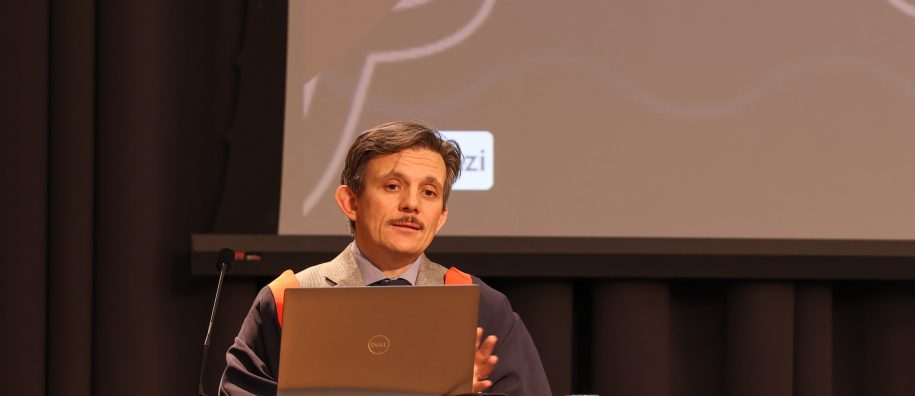
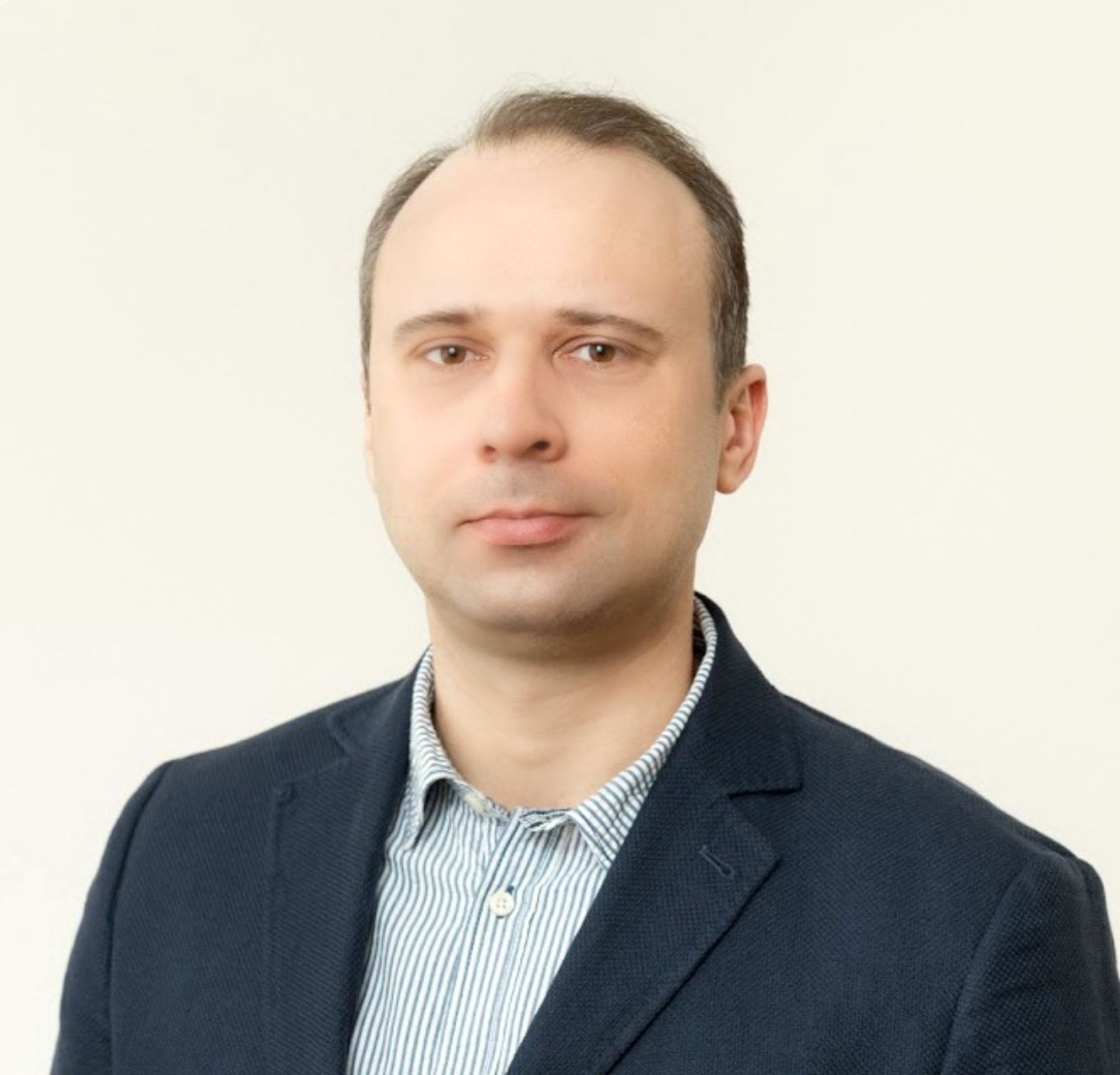
Vincas Grigas is an Associate Professor at the Department of Digital Cultures and Communication , Faculty of Communication , Vilnius University. His work focuses on media and information literacy, book piracy dynamics, scholarly communication, and digital culture transformations. He holds a PhD and has extensive international collaboration through ERASMUS programs and research visits to institutions like HTWK Leipzig and the University of Osijek. Research Interests: Media and Information Literacy Book Piracy Mechanisms Scholarly Publishing Practices Digital Transformation of Publishing Accessibility in Publishing Recent work analyzes digital piracy's societal impacts, challenges in small-language publishing ecosystems, and the transition from print to digital scholarly journals. He co-authored Lithuanian Scientific Periodical Publishing: From Printed Journals to Digital Ecosystems (2024) and has published in Publishing Research Quarterly , Information & Media , and LOGOS . Awards : Recognized as the Best Lithuanian Young Librarian (2011) and winner of the EU Journalist Award for Diversity (Lithuania) . Holds roles in professional bodies like the Lithuanian Library Council and Crossref Board.
Lorenzo Zucca is a Professor at King's College London, affiliated with the School of Law and the Department of Law. He is a distinguished legal philosopher and scholar with expertise in constitutional law, human rights, religion and state relations, and the philosophical dimensions of legal uncertainty. Recently, he visited Mykolo Romerio University (MRU) as part of an educational exchange program, delivering lectures and engaging in academic dialogue on pressing legal and philosophical issues. His educational background spans major institutions including Milan, Paris, Oxford, Florence, and New York, reflecting a deeply international academic trajectory. His research centers on the concept of uncertainty—not merely as a lack of knowledge, but as a constitutive element of legal and human experience. He explores how legal systems, institutions, and artificial intelligence navigate ambiguity, risk, and moral complexity. Legal Philosophy Constitutional Law Human Rights Religion and State AI and Law Shakespeare and Jurisprudence His recent and forthcoming publications reveal a strong interdisciplinary trend, merging law with literature, philosophy, and technology. The thematic focus across his articles shows a consistent engagement with indeterminacy, power, knowledge, and ethical responsibility in legal systems. He advocates for a 'poetic wisdom' approach in legal education, emphasizing dialogue, narrative, and sensitivity to ambiguity. Scientific contributions and recognition include: Author of The Poet of Uncertainty: Shakespeare on Law, Knowledge, and Power (2025) Leading a new international research project on uncertainty and cybersecurity Active participation in global academic discourse on democracy, AI ethics, and constitutional resilience Professor Zucca advises graduate students and collaborates internationally, with emerging partnerships discussed with MRU faculty, particularly in the areas of digital governance and democratic sustainability. He emphasizes the importance of interdisciplinary and transnational collaboration in addressing contemporary legal challenges. His teaching methodology is dialogic and Socratic, fostering intellectual engagement and critical thinking. He is associated with research initiatives at King’s College London that explore the philosophical foundations of law and the impact of emerging technologies on legal norms. His work contributes to a vibrant intellectual community that bridges legal doctrine with deeper existential and ethical questions.
Viktor Medvedev is an Associate Professor and Senior Researcher at Vilnius University's Institute of Data Science and Digital Technologies, where he serves as Project Lead Researcher in the Blockchain and Quantum Technologies Group. His work focuses on the intersection of machine learning, data visualization, and cybersecurity applications. Dr. Medvedev earned his Doctor of Science in Computer Science Engineering in 2007 from Vilnius Gediminas Technical University and the Institute of Mathematics and Informatics. His doctoral research centered on 'Research on the application of feedforward neural networks for multidimensional data visualization,' establishing the foundation for his continued work in data analysis and visualization techniques. His research interests span machine learning , deep learning , data visualization , and cybersecurity applications . Specifically, he has made significant contributions to keystroke dynamics authentication , behavioral biometrics , dimensionality reduction techniques , and medical data analysis . His work often bridges theoretical computer science with practical applications in security and healthcare domains. Dr. Medvedev's publication record demonstrates a consistent trajectory of research excellence, with recent work focusing on advanced authentication systems using deep learning, pancreatic cancer detection through machine learning, and innovative approaches to data visualization. His research shows a clear evolution from foundational work in neural networks for data visualization to contemporary applications in cybersecurity and medical diagnostics. ICAISC'06 - Best Presentation Award (The 8th International Conference on Artificial Intelligence and Soft Computing) ICANNGA 2007 - Best Young Researcher Paper Award in Neural Networks DAMSS 2021, 2022, 2023 - Best Poster Awards As a Project Lead Researcher in the Blockchain and Quantum Technologies Group, Dr. Medvedev oversees research initiatives that combine cutting-edge technologies with practical applications. His work in cybersecurity has particular relevance to critical infrastructure protection, where insider threat detection using behavioral biometrics represents a significant contribution to the field.
Linas Bukauskas is a Professor at Vilnius University's Department of Informatics under the Faculty of Mathematics and Informatics. Since 2005, he has supervised academic projects and taught courses in cybersecurity, with a focus on practical skill assessment, network analysis, and human factors in security systems. Research Interests: Cybersecurity, Machine Learning, E-Vehicle Infrastructure, Cyber Defense Training Key Contributions: Development of cybersecurity training platforms, behavioral analysis in cyber exercises, and novel network flow modeling techniques Recent Work: Focus on maritime cybersecurity resilience, individualized risk assessment frameworks, and AI integration in smart learning environments
Joana Katina is an Assistant Professor at the Faculty of Mathematics and Informatics, Vilnius University, Lithuania, teaching Internet Technologies and Algorithms and Data Structures continuously from 2016/2017 through 2025/2026 academic terms across multiple course formats including lectures, exercises, and subgroup sessions. Her research bridges computer science with energy systems and financial engineering, focusing on household energy behavior in Lithuania/Morocco, cryptocurrency forecasting using neural networks, Industrial Control Systems cybersecurity, and queueing theory. She integrates computational modeling with socio-technical analysis to address sustainability challenges and market prediction problems. Analysis of her 2023-2025 publications reveals a dominant trend toward renewable energy transitions (particularly waste-to-energy systems and cross-regional green strategies) combined with machine learning applications in finance. This evolution from earlier virtual stock exchange simulations demonstrates increasing interdisciplinary scope while maintaining core expertise in stochastic modeling and predictive analytics.
Arnold Budžys is a Junior Researcher at the Vilnius University Institute of Data Science and Digital Technologies , focusing on cybersecurity, machine learning, and behavioral biometrics. His work addresses critical infrastructure security, insider threat detection, and keystroke dynamics-based authentication. Research Highlights : Keystroke biometrics, anomaly detection, deep learning, data fusion, and red team tactics. Technical Focus : Behavioral analysis, neural networks, security frameworks, and adversarial attack modeling. His publications reveal a trend toward integrating advanced AI techniques with cybersecurity protocols to enhance authentication accuracy and threat prevention in sensitive systems.
Agnė Brilingaitė is an Associate Professor at the Faculty of Mathematics and Informatics, Vilnius University. Her work bridges cybersecurity with transportation systems and mobile services, focusing on practical skill development, risk assessment, and human-centric approaches to security education.
Miglė Petkevičienė is a Visiting Lecturer at ISM and Partner at Ellex Valiunas, where she serves as the Head of the Data Protection & Compliance Team. With over 15 years of experience, she specializes in legal issues related to data protection, cybersecurity, information technologies, compliance, and advising clients in regulated industries. She is a frequent speaker at national and international conferences, having delivered more than 200 legal trainings and seminars for audiences ranging from 5 to 1,000+ participants, including a TEDx Talk titled: "Digital and physical footprint – a lawyer’s perspective". Her research and teaching focus on Business Law, Corporate Governance, and Compliance, as demonstrated by her course Corporate Governance and Business Law (MNG240) . She emphasizes understanding clients' business operations to provide tailored legal and regulatory guidance. Miglė’s advisory work includes addressing complex data protection cases and regulatory challenges for clients. While no grants are explicitly mentioned, her role at Ellex Valiunas involves leading a specialized team dedicated to advancing legal and compliance practices in the digital age.
Tadas Limba is a Full Professor at Mykolas Romeris University (MRU) and a Visiting Lecturer at the International Management School (ISM). He leads the Joint Study Programs with South Korea and the Study Program Branding and Advertising Management. His expertise spans over 20 years in Disruptive Technologies, Data Protection, Cybersecurity, Cryptocurrency, E-Business, E-Government, and Startup Development. He actively contributes to research, with over 70 scientific publications and involvement in international consortia such as the National Joint Doctorate in Management (4 Lithuanian Universities) and the International Joint Doctorate Law, Science and Technologies (LAST-JD) led by Bologna University. Tadas Limba emphasizes ethical leadership, academic excellence, and international collaboration, having visited institutions like Dongseo University (South Korea), Communication University of China, and Arizona State University (USA). Awards: Fellow of New Westminster College of Canada Teaching Focus: Technology and Cybersecurity Management (Course Code: MNG286) Grants/Consortia: Member of LAST-JD and National Joint Doctorate in Management No specific labs or teams are explicitly mentioned in the provided information.
Edita Gruodytė is a tenured Professor at Vytautas Magnus University, specializing in Criminal Law (national, EU, and comparative perspectives), Legal Ethics , and Human Rights . She serves as Vice-Dean for Research at the Faculty of Humanities and Faculty of Law, and is Chief Editor of the legal journal Teisės apžvalga/Law Review . Key Affiliations : Department of Public Law, Faculty of Humanities, Faculty of Law, Vytautas Magnus University Expertise : EU Criminal Law, Business Crimes, Legal Education, Migration Policy Her research spans Criminal Policy (including drug laws and corruption prevention in healthcare), Digital Law (AI accountability and electronic personhood), and Human Rights (privacy vs. right to truth, migration crisis responses). She has authored 1+ books and 40+ articles, with recent work focusing on GDPR compliance in telemedicine and the impact of smart technologies on private law. As a legal practitioner with 17+ years of experience, she teaches courses in criminal law, business crimes, EU criminal law, and legal ethics.
Professor Marius Laurinaitis is a distinguished academic at Mykolo Romerio University (MRU) in Vilnius, Lithuania, holding positions as Professor and Senior Researcher. He serves as the head of the Law and Fintech bachelor's program at MRU and is affiliated with multiple academic units including the Faculty of Public Governance and Business, the Institute of Business and Economics, and the Law School. With a robust research portfolio spanning cybersecurity, hybrid threats, financial regulation, and data protection, Professor Laurinaitis has established himself as a leading expert in the intersection of law, technology, and security in the Lithuanian and international academic communities. Professor Laurinaitis's research primarily focuses on cybersecurity, hybrid threats, financial regulation, and data protection. His work bridges legal frameworks with technical security challenges, examining how legal systems can effectively address emerging cyber threats while protecting individual rights. He has conducted extensive research on hybrid threats as a new generation of security challenges, Belarus's cyber landscape, Russian cyber activities in the Ukraine conflict, and the implementation of cybersecurity measures in various sectors including healthcare and financial institutions. His research demonstrates a consistent pattern of addressing contemporary security challenges through interdisciplinary approaches that combine legal analysis with technical understanding of cybersecurity threats and solutions. Professor Laurinaitis has supervised numerous master's theses covering diverse topics within cybersecurity, data protection, and financial technologies. His supervision portfolio includes research on cyber literacy, responsible disclosure principles, personal data leakage prevention, cybersecurity culture in Lithuanian hospitals, social networks for business marketing, online identity verification, biometric technologies, and youth financial literacy. This breadth of supervision topics demonstrates his commitment to developing the next generation of experts in cybersecurity and related fields. Professor Laurinaitis leads or is affiliated with research initiatives focused on cybersecurity, particularly examining hybrid threats and their implications for national and international security. His work often involves international collaboration, as evidenced by co-authored publications with researchers from Australia and other countries. His research group appears to focus on practical applications of cybersecurity principles in real-world contexts, with particular attention to regulatory frameworks and organizational implementation challenges.