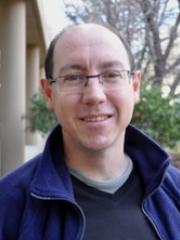
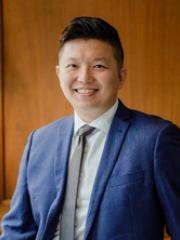
Andrew Mitchell is a Professor at the Faculty of Law, Monash University, and a member of the WTO Dispute Settlement Panelists Indicative List. He has extensive legal practice experience with Allens Arthur Robinson and consults for governments, international organizations, and the private sector. Mitchell has taught law in Australia, Canada, Indonesia, Singapore, and the US. He holds law degrees from the University of Melbourne, Harvard Law School, and a PhD from the University of Cambridge. His research focuses on international economic law, public international law, and digital trade governance, with a particular emphasis on the intersection of trade law and public health. Mitchell has secured six major grants, including an Australian Research Council Future Fellowship, and has authored over 170 books and articles. He serves as an editor for Edward Elgar’s International Economic Law Series and multiple journal editorial boards. Recent projects include 'Safeguarding Health in International Investment Agreements' (2022–2025) 'Maritime Cooperation for a Sustainable Indo-Pacific' (2021–2022) 'Global E-Commerce and Cottage Industries in India' (2020–2021) He has contributed to policy submissions on bilateral investment treaties and delivered lectures on data sovereignty and digital trade. His awards include editorial leadership roles at journals like the Journal of World Investment and Trade and Asia Pacific Law Review .
Professor Isabella Alexander is a distinguished legal historian and intellectual property scholar at the University of Technology Sydney (UTS), Faculty of Law. She specializes in copyright law with a particular focus on its historical dimensions and application to cartography and visual works. As a leading researcher in her field, she holds significant research grants including ARC Discovery projects on copyright law in the 21st century and copyright in cartography. Her educational background includes: PhD from the University of Cambridge LLB (Hons) from the Australian National University BA (Hons) from the Australian National University Professor Alexander's research explores how laws inform and regulate the creation, circulation and reception of knowledge and culture from a historical perspective. Her work bridges legal history with contemporary intellectual property challenges, particularly in areas of copyright for visual works, cartography, and digital creativity. She has made significant contributions to understanding the historical development of copyright principles and their application to modern technological contexts. An analysis of her recent publications reveals a strong focus on the intersection of copyright law with visual culture, cartography, and emerging digital challenges including AI-generated content and memes. Her work demonstrates a clear trajectory toward interdisciplinary approaches that connect historical legal frameworks with contemporary technological and cultural phenomena, showing increasing engagement with how historical understanding can inform solutions to modern intellectual property challenges. Her notable scientific achievements include: 2023 LSAANZ Award for published scholarly book/monograph for "Copyright and Cartography: History, Law, and the Circulation of Geographical Knowledge" Professor Alexander has secured significant research funding as Lead Chief Investigator on the ARC Discovery grant "Hacking Copyright Law in the 21st Century: Art, Law, History and Technology" and as sole Chief Investigator on "Copyright and Cartography: Understanding the past, shaping the future." She has actively contributed to policy development through submissions to the Australian Productivity Commission's Inquiry into IP Arrangements and on addressing copyright infringement online through secondary liability and website blocking mechanisms. She currently serves as President of the Australian and New Zealand Law and History Society and is a member of the Governing Board of the International Society for the History and Theory of Intellectual Property, demonstrating her leadership and influence in both national and international academic communities.
Marcus Smith is an Associate Professor in Law at the Charles Sturt University , where he teaches LAW222 Technology Law and directs the Bachelor of Laws program. He holds advanced degrees from the Australian National University (PhD, LLM) and the University of Cambridge (MPhil). His research spans technology law and regulation , focusing on genomic data governance biometric identification AI ethics blockchain policy cybersecurity surveillance law He leads the Contemporary Threats to Australian Security research group and serves as Chief Investigator on an NHMRC-funded project (MRF2015531) addressing genomic dataset governance. His recent work analyzes algorithmic bias in facial recognition AI in healthcare blockchain's regulatory challenges post-pandemic cybercrime surveillance ethics data security frameworks He actively supervises PhD and honours students in technology law and contributes to law reform through submissions to international bodies like the UN Human Rights Council .
Professor Anthony Richardson is a mathematical ecologist at the University of Queensland , holding a joint position with CSIRO Environment since 2005. He leads the Mathematical Marine Ecology Lab , focusing on marine conservation through mathematical, statistical, and computational modeling. School of the Environment, Faculty of Science, University of Queensland Affiliate, Centre for Marine Science Affiliate, Centre for Biodiversity and Conservation Science Research Interests span marine spatial planning (climate-smart protected areas, 3D ocean zoning), marine ecosystem modeling (lower trophic levels, plankton-dynamics), and climate change impacts (carbon sequestration, fisheries productivity, and marine diseases). His work has been cited in IPCC Assessment Reports and emphasizes international collaboration through projects like the Global Working Group on Climate Change Synthesis . Recent Publications focus on Zooplankton's role in carbon cycling Climate-smart marine protected area design Ecosystem modeling under climate uncertainty Marine megafauna connectivity patterns Supervision is offered for >250 peer-reviewed papers and advanced projects in climate-smart conservation planning, with established funding from ARC Discovery Projects and Norwegian Polar Institute .
Professor Janet McColl-Kennedy is a leading figure in marketing and service science at The University of Queensland's Business School. She serves as Program Lead for Innovation Pathways (FaBA) and co-founded the Service Innovation Alliance (SIA) research hub, focusing on customer experience, AI, digital transformation, and sustainability. With Fellow status in the Academy of the Social Sciences in Australia and the Australian and New Zealand Marketing Academy, she holds international recognition including Research.com's World's Best Business Scientists ranking and the Christopher Lovelock Career Contributions to the Services Discipline Award (2025). University of Queensland Business School Honorary Visiting Professor, Cambridge Service Alliance Research Collaborator, University of Cambridge Her research spans customer experience management, service ecosystems, digital transformation, and healthcare services. She has pioneered frameworks for customer value co-creation and service recovery strategies, integrating AI and behavioral science. Her 2019 paper on customer experience insights was implemented by a major B2B organization, while her work on value co-creation improved outcomes at Lutheran Community Care. Recent publications focus on AI impacts in food and beverage services, sustainable service ecosystems, and digital health interventions. She has secured over $89 million in competitive grants, including multiple ARC Linkage and Discovery Projects, and leads cross-disciplinary teams with institutions like Cambridge University and Arizona State University. 2024 - ARC College of Experts appointment 2023 - Bo Edvardsson Industry Impact in Services Award 2022 - Elected Fellow of Academy of the Social Sciences in Australia 2021 - Clarivate Highly Cited Researcher 2018 - Ranked most influential marketing academic in Australia With over 220 publications and a Google Scholar H-index of 62, she has mentored 15 PhD students and examined theses at multiple universities. Her teaching spans 30+ years across undergraduate, postgraduate, and executive programs in Australia, USA, Italy, China, and Korea, with awards for blended learning and corporate education.
Matthew Dunbabin is a Professor at Queensland University of Technology (QUT) and Chief Investigator at the Australian Centre for Robotic Vision (ACRV). His expertise spans environmental robotics, with a focus on vision-based autonomous systems for marine conservation, water quality monitoring, and greenhouse gas management. He holds a PhD from QUT and a BEng (Aerospace) from RMIT. Dunbabin has led projects at CSIRO and QUT, developing robots like COTSBot and RangerBot to combat marine pests and promote reef restoration. His work has earned national and international awards, including the 2019 Australian Water Association Award and 2016 Google Impact Challenge. Education: PhD in Engineering, Queensland University of Technology (Queensland, Australia) BEng (Hons) in Aerospace Engineering, Royal Melbourne Institute of Technology (Melbourne, Australia) Research Interests: Environmental robotics and autonomous systems Vision-based perception and classification Marine habitat restoration and pest control Greenhouse gas monitoring via autonomous vehicles Cooperative robotics and sensor networks Awards & Recognition: 2019 Australian Water Association Award (SAMMI Project) 2019 Good Design Award - Sustainability (RangerBot) 2016 Google Impact Challenge People’s Choice Award (RangerBot AUV) 2010 Australian ICT Industry Association National iAward (iSnet) 2006 Queensland Engineering Excellence Innovation Award (Starbug Project) Grants & Projects: ARC Centre of Excellence for Robotic Vision (ACRV): Leading robotic vision research (2014–present) Revolutionising Protection Against Air Pollution: Air quality monitoring networks (2015–present) Establishing Advanced Networks for Air Quality Sensing: Sensor development for urban environments (2017–present) Labs & Collaborations: ACRV at QUT Institute for Future Environments (QUT) CSIRO Autonomous Systems Laboratory (2001–2013)
Professor Philip Birch is a distinguished academic in Criminology at the University of Technology Sydney (UTS), Faculty of Design & Society, School of International Studies & Education. With over 15 years of academic experience across British, American, and Australian university systems, he has established himself as a leading expert in policing, community safety, and criminal justice. His extensive practical background in criminology, including roles as a Specialist Crime Team Manager, Community Safety Research Manager, and Through Care Worker in UK correctional facilities, informs his applied research approach. Professor Birch's educational background includes a BSocSci. (Hons) in Social Policy (Crime & Justice) from the University of Manchester, multiple postgraduate qualifications from the Open University (including an MSc. in Social & Criminological Research Methods), a Post Graduate Certificate in Higher Education Practice from the University of Huddersfield, and a PhD in Criminology from the University of New South Wales. He also holds a Fellowship with the Higher Education Academy. His research centers on six key areas: Police & Policing; Community Safety & Crime Prevention; Prisons, Probation & Parole Policy & Practice; Assessment, Treatment & Management of Offenders; Gender & sexuality inclusive Domestic and Family Violence; and Sex Work, Sex Workers and Procurement. His work emphasizes the practical application of criminological research to real-world justice issues, with strong industry engagement across law enforcement and correctional services. Recent publications reveal a clear trend toward police mental health, aging in policing, hate crime identification, trauma-informed policing approaches, and digital community safety initiatives. His research employs diverse methodologies including qualitative case studies, Delphi methods, rapid evidence assessments, and comparative analyses across multiple jurisdictions. Teaching award (2019) from Australian College of Educators for outstanding contribution to education Literati Award (2019) for published work Fellowship of the Higher Education Academy Professor Birch has supervised numerous Honours, Masters by Coursework, Masters by Research and PhD students in Criminology, Criminal Justice and Policing, with several completions to date. He has secured over $1.3 million in research funding, including an ARC Linkage grant, and has acted as an external assessor for domestic and international funding bodies. His research projects address critical issues in criminology and policing, often with direct policy implications. He established the Crime & Security Science (CaSS) Research Group at UTS in 2022, a cross-faculty initiative connecting academia with industry to advance evidence-based criminology, criminal justice, policing, and community safety research. This group serves as a hub for collaborative projects addressing contemporary security challenges through translational research.
Professor Ryan Ko is a leading academic in Cyber Security at the University of Queensland (UQ), serving as Chair and Director of the UQ Cyber Research Centre, Director of Research at the School of Electrical Engineering and Computer Science, and a member of UQ's Academic Board. He holds a BEng (Computer Engineering) and PhD from Nanyang Technological University, Singapore. His research focuses on data provenance, industrial control systems (ICS) security, privacy-preserving technologies, and AI-driven cybersecurity solutions. Ko has pioneered initiatives such as the UQ Cyber Centre, interdisciplinary cybersecurity education programs (MCyber, PGDipCyber), and the Oceania Cybersecurity Challenge. He has attracted over AUD 20 million in competitive grants as lead investigator, including the NZ$12.2M STRATUS project. Ko’s work spans industry and policy, including advisory roles with INTERPOL, governments, and NGOs. He has authored over 100 publications, contributed to ISO standards (e.g., ISO/IEC 21878), and co-founded cybersecurity startups. Awards include Fellowships from the Australian Computer Society and Queensland Academy of Arts and Sciences, and the CSA Ron Knode Service Award. Education: Bachelor of Engineering (Computer Engineering) (Hons.), Nanyang Technological University (2005) PhD in Computer Science, Nanyang Technological University (2011) Awards: Fellow, Australian Computer Society (2016) Fellow, Queensland Academy of Arts and Sciences (2020) Young Professional Award, Singapore Government (2018) Grants & Leadership: AUD 20M+ lead investigator grants; NZ$12.2M STRATUS project (2014–2018) Established UQ Cyber Centre (2019) and NZ’s first cybersecurity graduate program (2012) His research emphasizes returning data control to users, with applications in agriculture, energy, and critical infrastructure. Ko’s contributions include patents, open-source tools (e.g., Kali Linux), and frameworks like TrustCloud for cloud accountability.
Shiqing (Frank) Yao is a Senior Lecturer in Operations Management at the Department of Management, College of Business, Monash University. Holding a PhD in Decision Sciences and Managerial Economics from the Chinese University of Hong Kong, Dr. Yao's research focuses on analytical modeling approaches to supply chain management challenges. PhD - Chinese University of Hong Kong (Operations Management) His primary research interests include economic modeling in supply chains, quality management, collusion dynamics, and optimization strategies. Dr. Yao's work aligns with multiple UN Sustainable Development Goals, particularly those related to responsible consumption and production. Recent research outputs demonstrate expertise in anti-counterfeiting strategies, collusion risk mitigation, and sustainable operations. His publications cover topics ranging from digital transformation in retail to responsible audit systems. Scientific Awards: M&SOM Meritorious Service Award (2020) Dr. Yao maintains active editorial roles with leading journals including Operations Research, Management Science, and Transportation Research Part E. He is currently accepting PhD students for supervision.
Andrew Stewart is a Professor at the School of Law, Queensland University of Technology (QUT), specializing in Labour Law, Employment Relations, and regulatory frameworks for the Gig Economy. His research focuses on internships, platform work regulation, and workplace fairness. Key Collaborations: Penny Williams, Paula McDonald, Rosemary Owens, Jim Stanford Research Themes: Gig economy fairness, internship regulation, employment classification, workplace surveillance His recent work includes Creighton and Stewart's Labour Law (7th Edition) and submissions to parliamentary inquiries on digital platform work. He co-edited Internships, Employability and the Search for Decent Work Experience (2021). Publications span the Industrial Law Journal , American Journal of Comparative Law , and The Economic and Labour Relations Review . Research emphasizes regulatory innovation in employment law and the intersection of education/work.
Associate Professor Anton Didenko is a leading academic at UNSW Sydney's School of Private & Commercial Law, specializing in FinTech regulation, banking law, and central bank digital currencies (CBDC). He holds law degrees from Russia and the UK, including an MJur and DPhil from the University of Oxford. His research focuses on CBDC design, regulatory sandboxes, open banking frameworks, and cybersecurity in finance. University Affiliation: UNSW Sydney Key Academic Roles: Author of Banking Law in Australia (11th ed, 2024) and lead author of Customer Data Sharing Frameworks (2024) Global Engagement: Adviser to G20, Asian Development Bank, and UN agencies Research Interests: - CBDC policy and design implications - Regulatory frameworks for FinTech innovation - Cybersecurity in financial systems - Transnational commercial law and secured transactions - Open data and customer consent mechanisms Recent Articles: Focus on CBDC adoption in Pacific economies, weaponization of digital currencies in geopolitical conflicts, and comparative analysis of blockchain liabilities. His work bridges legal, technological, and policy dimensions of financial innovation. Awards : Australian Academic of the Year in Digital Finance (2023) Advising & Grants: - No listed advisees - Collaborations include Asian Development Bank-funded Pacific CBDC studies - Co-authored policy reports for UN Capital Development Fund and CPA Australia Labs/Teams: - Editor-in-Chief of the Cape Town Convention Journal - Co-leader of UNSW's FinTech regulation research initiatives
Mark Davison is an Emeritus Professor and Adjunct Professor in the Faculty of Law at Monash University, specializing in intellectual property law. He holds dual roles as a legal academic and a practicing lawyer with Knightsbridge Lawyers. His expertise spans trade marks, WTO agreements, and public health regulation, particularly tobacco plain packaging. He has authored seminal works such as Shanahan's Australian Law of Trade Marks and Passing Off and contributed to landmark cases including Australia’s successful defense of tobacco plain packaging laws at the WTO. Research Interests: Intellectual Property Law, Trade Marks, Geographical Indications, WTO Dispute Resolution, Public Health Policy, Database Protection, Competition Law. His work intersects international trade law, health policy, and legal reform. Awards: Recognized globally as one of the 50 most influential figures in IP (2014) and awarded the Vice-Chancellor's Distinguished Teaching Prize (2001). His research has been cited in over 100 court decisions and 250 IP office rulings, including a landmark High Court of Australia ruling in 2023. Advisory Roles: Member of the Advisory Council on Intellectual Property, Commonwealth Department of Health’s Plain Packaging Expert Group, and Intellectual Property Committee of the Law Council of Australia. He advised the Australian government during WTO tobacco litigation and contributed to free trade agreement negotiations involving geographical indications. Projects: Led ARC-funded research on geographical indications in Australian trade agreements and the impact of venture capital on innovation. Collaborated internationally on studies about the New Plurilateralism in global governance and the ‘Human Rights in Three Minutes’ video project. Media Engagement: Regularly commented on IP disputes, EU trade negotiations, and public health policy in media outlets, emphasizing the intersection of law, trade, and societal welfare.
Professor Megan Richardson is an Honorary Professor at the University of Melbourne's Law School, specializing in intellectual property, privacy rights, and legal theory. She has contributed significantly to privacy law reform through advisory roles with the Australian Law Reform Commission and NSW Law Reform Commission. Research focuses on: Evolution of privacy rights in digital contexts Intellectual property intersections with personality rights Data governance frameworks Legal responses to automated decision-making Historical development of privacy doctrines Publication trends show increasing engagement with technology-law interfaces, particularly algorithmic systems and data rights. Recent work examines AI's impact on privacy, blockchain applications, and pandemic surveillance technologies, often employing interdisciplinary approaches combining law with cultural studies. Scientific Awards: No awards mentioned in provided materials. Research Leadership: Serves as Coordinating Editor for Cambridge Elements Series: Data Rights and Wrongs. No specific student advising information available.
Kanchana Kariyawasam serves as Associate Professor in the Department of Accounting, Finance and Economics within Griffith University's Business School. Holding a PhD in IP Law from Griffith University, an LL.M (Advanced) in IP Law from The University of Queensland, and an LL.B (Hons) from the University of Colombo, she maintains active research affiliations with the Law Futures Centre (2009-2024) and Griffith Asia Institute (2019-present). Her research spans Intellectual Property Law with specialized focus on Copyright and Artificial Intelligence, IP and Right to Repair, Patent Law in Biotechnology, and Gender Equality in IP systems. Current projects examine AI-generated works, digital exhaustion doctrine, and NFT legality under Australian copyright frameworks, reflecting strong alignment with Sustainable Development Goals 4 (Quality Education) and 9 (Industry Innovation). Professor Kariyawasam's funded research portfolio includes significant projects such as the WIPO Study on Illegal Retransmission of Live Broadcasts (2023), Queensland Government Ewaste initiatives (2022), and Griffith University's Right to Repair Workshop (2020). Her publications demonstrate consistent output in high-impact journals including European Intellectual Property Review and International Journal of Law and Information Technology , with recent works analyzing AI copyright challenges, spatial data protection, and medical device repair rights. Deputy Vice-Chancellor's 2024 Student Experience of Teaching Survey Commendation Green Impact Gold Award Recipient (2023, Griffith Repair Cafe) Highly Commended Griffith Award for Excellence in Teaching (Large Classes) Two GBS teaching citations She currently supervises five doctoral candidates researching AI data privacy, patent law intersections, and agricultural IP issues, while having successfully completed supervision of four doctoral theses including works on female entrepreneurship and agribusiness marketing. As Coordinator of Griffith Repair Cafe and Steering Committee Member of Australian Repair Network, she bridges academic research with community engagement on repair rights and e-waste reduction.
Dr. Wahed Waheduzzaman is a Lecturer in Human Resource Management and Organizational Studies at Swinburne University of Technology's School of Business, Law and Entrepreneurship. His research focuses on HRM, Public Service Management, Local Government, and Corporate Governance, with recent emphasis on gender diversity, AI integration in HR, and workplace bullying in public sectors. He has supervised numerous PhD and Master's theses on topics ranging from green HR practices to migrant worker inclusion. Research interests include the intersection of HRM with environmental performance, governance reforms, and digital transformation. He actively contributes to peer-reviewed journals and conferences, and serves as Editor for Administrative Sciences . Professional activities include committee roles with Ratepayers Australia Inc. and editorial leadership. Teaching expertise covers Human Capital Analytics, HR Analytics, and Workplace Relations. Key publications highlight innovative methodologies like thematic analysis for strategic HRM research and quantitative content analysis for digital education integration. His work bridges theoretical frameworks with real-world governance challenges, particularly in public and municipal sectors.