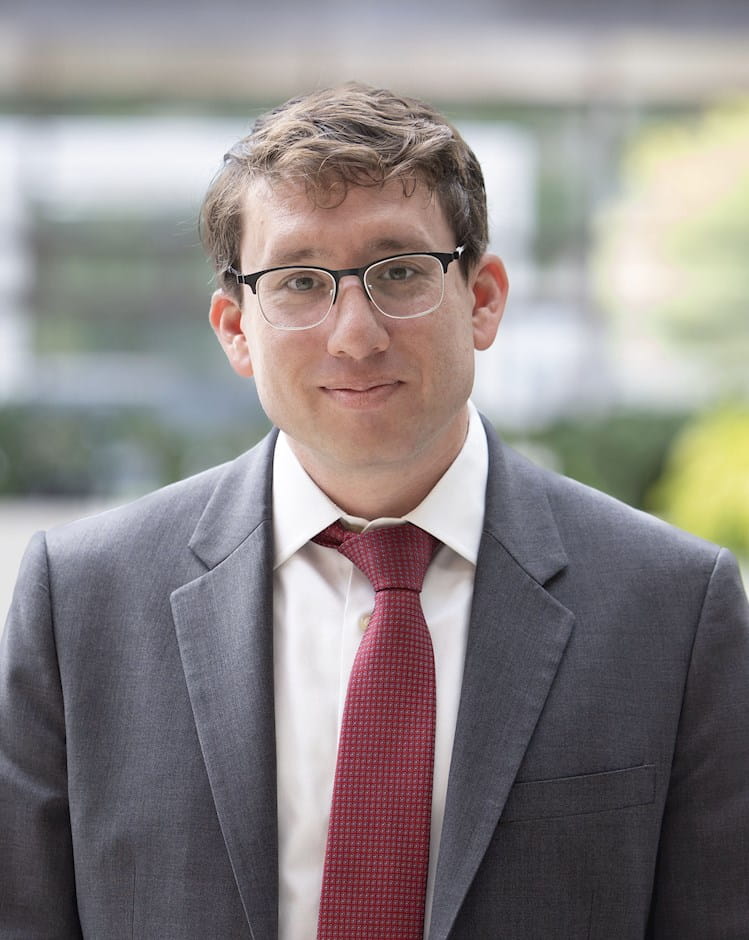
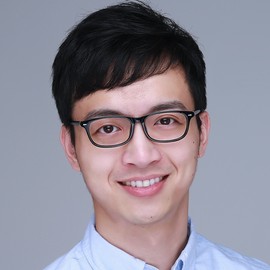
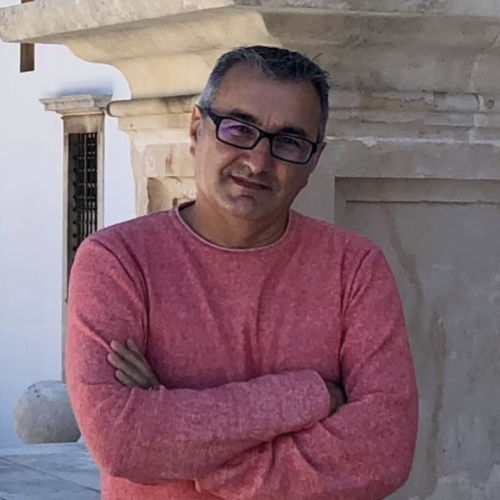
Alan Briones Delgado is a researcher at the La Salle School of Engineering , Universitat Ramon Llull , with a focus on Internet of Things , Cybersecurity , and Transport Protocols . His work spans projects funded by the European Commission and national grants, including EXCEL4HOUSING4.0 , WeB-Nimbus , and NG-SOC , addressing challenges in cloud computing education, ecological monitoring, and security operations. His research integrates Artificial Intelligence and Wireless Sensor Networks for sustainable solutions. Key research areas include Quality of Service in heterogeneous networks, Environmental Conservation via IoT, and Teaching and Learning strategies for Big Data. Projects like EcoSentinel and BTL-COP highlight his commitment to Environmental Monitoring and Community Policing applications. His collaborations extend to institutions in the UK , Albania , and Western Balkans . Contact: alan.briones@salle.url.edu
Felix Gomez Marmol is an Associate Professor at the University of Murcia's Faculty of Informatics, Department of Information and Communication Engineering. His research focuses on cybersecurity, artificial intelligence, network security, and IoT security. He holds a PhD in Computer Science from the University of Murcia (2010), supervised by Dr. Gregorio Martínez Pérez. Key research interests include adaptive intrusion detection systems, dark web analysis, and AI-driven cybersecurity frameworks. He leads the Intelligent Systems and Telematics research group and previously contributed to the Sistemas Inteligentes group. His work emphasizes practical applications such as the SCORPION Cyber Range platform for cybersecurity training and gamification. Recent projects involve detecting hate networks on social media, optimizing malware defense using transfer learning, and developing SIEM systems for IoT environments. His contributions span technical papers on cybersecurity education, ethical hacking fundamentals, and blockchain-based security solutions. Prof. Gomez Marmol has collaborated on initiatives like the COBRA framework for simulating advanced persistent threats (APTs) and the COnVIDa dashboard for pandemic-related data analysis. His research bridges theoretical advancements with real-world cybersecurity challenges.
Andrés Baselga Fraga is a Professor at the University of Santiago de Compostela, affiliated with the Department of Zoology, Genetics and Physical Anthropology within the Faculty of Biology. He leads the BiBiCI research group (Biodiversity, Biogeography and Integrative Conservation) and is associated with the Center for Interdisciplinary Research in Environmental Technologies (CRETUS). His doctoral work (2002) focused on Chrysomelidae beetles in Galicia, supervised by Dr. Francisco Novoa Docet. Education: PhD in Biology, University of Santiago de Compostela (2002) Thesis: 'Study of the Chrysomelidae (Coleoptera) of Galicia' Research Interests: His work centers on biodiversity patterns, biogeographical processes, and community ecology, with a focus on spatial scaling of phylogenetic diversity, climate change impacts, and dispersal limitation effects. He explores these through macroecological approaches, integrating genetic, taxonomic, and environmental data. His studies often address beetle communities, particularly Chrysomelidae, and their responses to environmental changes. Article Trends: Recent publications analyze biodiversity value through phylogenetic uniqueness, climate stability's role in species abundance-genetic diversity congruence, and dispersal mechanisms shaping community turnover. He also examines spatial and temporal shifts in montane ecosystems and develops novel statistical methods for assessing distance-decay relationships. Awards: No specific academic awards noted in the provided texts. Grants & Advising: No grant details or student advisees explicitly listed. His research has been supported through institutional affiliations like CRETUS. Labs/Teams: Leads the BiBiCI group and collaborates with CRETUS, focusing on interdisciplinary environmental research.
Dr. Jose R Juan Sanchez is a full Professor at the Faculty of Law, Universitat de València, specializing in Procedural Law within the Institute of Criminology and Criminal Science (ICCP). He serves in the Administrative Department and leads the NCPJ New conflicts and judicial process research group. Doctorate in Law (1997) from Universitat de València Thesis: Autonomous Communities as Parties in Civil Proceedings Supervised by Dr. Manuel Ortells Ramos His research focuses on procedural law, judicial management, and legal reforms. He investigates tribunal jurisdiction, victim rights, and data protection in criminal proceedings. Recent work includes Photovoice analysis of pandemic healthcare systems and efficiency in Spanish criminal justice. Key article trends span judicial reforms (2015-2024), victim rights in EU legal frameworks (2020-2023), digital justice systems (2016-2017), and social justice in legal education (2022-2023). His work bridges law, criminology, and policy analysis. Current affiliations: Universitat de València, ICCP Institute Research group: NCPJ New conflicts and judicial process
Paolo Rota is a tenure-track Assistant Professor at the University of Trento, affiliated with the Department of Information Engineering and Computer Science (DISI) and the Center for Mind/Brain Sciences (CIMeC). His research lies at the intersection of computer vision, machine learning, and multimodal AI, with a strong emphasis on vision-language models and activity recognition. His research interests include zero-shot action recognition, temporal action localization, open-world recognition, and person image synthesis. He explores how large multimodal models can be leveraged for practical applications in video analytics and industrial AI, often developing training-free or source-free adaptation methods that improve model generalization. Recent publications show a consistent trend in utilizing large vision-language models (e.g., CLIP, LMMs) for tasks such as image classification, domain adaptation, and action recognition, emphasizing simplicity, zero-shot capabilities, and real-world applicability. His work frequently appears in top venues including CVPR, NeurIPS, ICCV, and ICIAP. He actively mentors PhD students including Benedetta Liberatori, Jiaqi Liu, Yan Shu, Shiyao Xu, and Alessandro Conti, often co-advising with faculty such as Elisa Ricci and Nicu Sebe. He also contributes to teaching, including delivering lectures on machine learning for the MSc in Data Science program. He co-founded Mountain Maps, a startup using AI to enhance outdoor navigation and mountain exploration. His work bridges academic research and practical innovation, aiming to increase the real-world impact of AI systems.
Marta Casanellas is a full professor in the Department of Mathematics at the Polytechnic University of Catalonia (UPC) and a researcher at the Centre de Recerca Matemàtica. She teaches at the Faculty of Mathematics and Statistics, ETSEIB, and FIB. She earned her PhD in mathematics from the University of Barcelona under RM Miró-Roig, focusing on algebraic geometry and liaison theory. After completing a postdoc at UC Berkeley with a Fulbright Scholarship, she shifted her research to applications of algebraic geometry in computational biology, particularly phylogenetics. Her educational background includes a PhD from the University of Barcelona (2002), followed by a postdoctoral fellowship at UC Berkeley (2002-2003) supported by a Fulbright Scholarship. She obtained a prestigious Ramón y Cajal contract at UPC in 2003, which marked her transition to interdisciplinary research at the intersection of mathematics and biology. Casanellas' research focuses on applying algebraic and geometric techniques to phylogenetics, with particular emphasis on evolutionary models, phylogenetic invariants, and computational methods for genomic data analysis. Her work bridges pure mathematics (particularly algebraic geometry) with biological applications, developing mathematical frameworks to reconstruct evolutionary histories and understand genomic relationships. She has published extensively in both mathematics journals like Advances in Mathematics and biology journals like Molecular Biology and Evolution. Her recent publications demonstrate a consistent focus on developing algebraic methods for phylogenetic analysis, with increasing attention to heterogeneous evolutionary processes across lineages, time-reversible models, and computational implementations of theoretical results. The trend shows progression from theoretical foundations in algebraic geometry toward increasingly sophisticated and applicable computational methods for biological data. Fulbright Scholarship for postdoctoral research at UC Berkeley Ramón y Cajal contract (2003) Casanellas has supervised PhD students including A. Kedzierska (co-supervised with R. Guigó of the CRG). She has served as principal investigator for three competitive Spanish government projects involving fifteen researchers each. She has held significant academic leadership roles including Deputy Director of Research of the Department of Mathematics at UPC (2015-2018), head of studies for the Degree in Data Science and Engineering at UPC (2018-2022), and currently coordinates UPC's PhD in Bioinformatics program and Bachelor's Degree in Bioinformatics. She leads the BIO-GEOMAP research group focused on applying mathematical techniques to biological problems.
Miguel Ángel Sotelo Vázquez is a full Professor at the University of Alcalá, leading the INVETT Research Group (Intelligent Vehicles and Traffic Technologies). He holds the Department of Automatic Control and specializes in autonomous systems, particularly in path planning, sensor fusion, and human-vehicle interaction. His research integrates machine learning, robotics, and control theory to address challenges in intelligent transportation systems. He earned his Ph.D. in 2001 with a thesis on autonomous vehicle navigation in partially known environments. His work emphasizes real-world deployment, explainable AI, and safety-critical systems. Recent projects focus on lane change prediction, pedestrian behavior modeling, and cybersecurity for autonomous systems. Key contributions include neuro-symbolic frameworks for decision-making, real-time multi-physics field reconstruction, and cross-cultural studies of pedestrian interactions. He collaborates internationally on urban mobility resilience and hydrogen refueling infrastructure. Research Highlights : Development of knowledge graph-based prediction architectures Experimental validation of human-vehicle interaction in VR environments Creation of the SCOUT trajectory prediction framework
Gemma Boleda is an ICREA Research Professor at Universitat Pompeu Fabra in Barcelona, Spain, where she co-directs the Computational Linguistics and Linguistic Theory (COLT) research group. Her research focuses on understanding how humans convey meaning through language, investigating the formal properties that support communication, and exploring how languages are shaped by cognitive and communicative factors. Her primary interests include lexical semantics, cross-linguistic variation, and the integration of linguistic theory with computational methods. She employs interdisciplinary approaches combining linguistics, artificial intelligence, and cognitive science, utilizing large-scale data analysis to study universal patterns and variations across languages. Boleda's publications demonstrate a consistent focus on computational semantics, lexical variation, and language evolution. Her recent work explores the intersection of symbolic and neural approaches to language processing, lexical creativity across development and evolution, and computational models of semantic phenomena like colexification and polysemy. She teaches Computational Semantics in the Master's in Theoretical and Applied Linguistics program and has secured significant research funding including ERC Starting Grants. Her work has contributed valuable linguistic resources such as the ManyNames dataset and Database of Catalan Adjectives.
Jorge Garcia Vidal is a Professor in the Department of Computer Architecture at the School of Computer Science, Universitat Politècnica de Catalunya (UPC). He is a key member of the CNDS - Computer Networks and Distributed Systems research group, with a sustained record of research activity from the late 1980s to the present, including publications projected into 2025. His work bridges theoretical network performance analysis and applied IoT systems, particularly in environmental monitoring. His research interests center on Computer Networks , Internet of Things (IoT) , Sensor Networks , and Data Quality in IoT . He has made significant contributions to ATM network performance, medium access control, and traffic modeling. More recently, his focus has shifted to air quality monitoring using low-cost sensor networks, employing techniques in Graph Signal Processing , Machine Learning , and Anomaly Detection to improve data reliability and estimate pollutants like black carbon. The recent article trends show a strong emphasis on developing data-driven frameworks, virtual sensors, and robust models for environmental IoT platforms. His work integrates advanced signal processing and machine learning to address the challenges of heterogeneous, low-cost sensor data in urban settings. His scientific achievements have been recognized with awards including the Premio Extraordinario de Doctorado and the Premio Mejor Tesis Doctoral . He has advised several doctoral students, including Pau Ferrer-Cid, David Fusté Vilella, Steluta Iordache, and Julian David Morillo Pozo. He is actively involved in numerous competitive and non-competitive R&D projects, such as those related to digital twins, IoT platforms for smart cities, and nature-based urban solutions, often funded by state and regional programs. He collaborates extensively within UPC and with external partners. His research is conducted primarily within the CNDS research group at UPC, a collaborative environment focused on computer networks and distributed systems, with connections to broader initiatives in smart cities and environmental monitoring.
Gaël Georges Marcel Le Mens is a Full Professor at Pompeu Fabra University (UPF), holding a position in the Department of Economics and Business. He is also affiliated with the Barcelona School of Economics and serves as academic co-director of the Executive Master in Business Administration (EMBA) at the UPF Barcelona School of Management. His academic journey includes teaching roles at INSEAD, London Business School, ESADE, and the University of Lugano, alongside positions at the universities of Southern Denmark and New York. Education: Doctor in Business Administration, Stanford Graduate School of Business MSc in Management Science and Engineering, Stanford University Diploma in Engineering, Supélec Bachelor of Economics, University of Paris XI His research focuses on decision-making processes, information sampling, machine learning applications in semantics, and organizational behavior. Key themes include cognitive heuristics, social media impact on political expression, and the interplay between popularity and evaluation dynamics. He has explored how feedback mechanisms shape political communication and developed methodologies to compare human and machine conceptual judgments using models like BERT. His publications span journals such as PNAS , Psychological Review , and Industrial and Corporate Change , reflecting his interdisciplinary approach. Though no explicit awards are noted, his prolific output highlights sustained academic impact. He has advised multiple institutions on curriculum design and executive education, leveraging his cross-university teaching experience. Le Mens is affiliated with the Barcelona School of Management’s research teams and contributes to initiatives bridging artificial intelligence and social sciences. His work often addresses practical challenges in organizational decision-making and digital communication strategies.
Pablo Aragón is a Research Scientist at the Wikimedia Foundation and an Adjunct Professor at Universitat Pompeu Fabra. His work bridges computational social science, civic technology, and technopolitics, with a focus on Wikipedia's governance, digital democracy tools, and participatory systems. He co-founded the Democratic Innovation Lab in Barcelona and the DatAnalysis15M research network. Key research interests include analyzing knowledge integrity in Wikipedia, configuring digital participatory budgeting systems, and studying platform effects in civic technologies. He has led projects like DECODE (decentralized citizen engagement) and contributed to platforms like Decidim, which empower participatory democracy in cities like Barcelona. Recent conference engagements include KDD 2024 (data mining), ICWSM 2024 (social media analysis), and Wikimedia CEE Meeting 2024. His work emphasizes cross-cultural collaboration, with studies published in ACM Transactions on Computer-Human Interaction and peer-reviewed conferences like CIKM and ACM SIGKDD. Professional affiliations include the Decidim association, Amnistía Internacional España, and the open knowledge advocacy group Civio. His research often intersects with open science, free culture movements, and gender equity in urban mobility.
Alexander P. Frankel is the Isidore Brown and Gladys J. Brown Professor of Economics at the University of Chicago Booth School of Business. His research focuses on mechanism design, game theory, and contracting, with applications across various economic domains. Previously, he worked at Yahoo! Research and has published in top economics journals including the American Economic Review and Journal of Political Economy. Education: BS in Mathematics from the University of Chicago BA in Economics from the University of Chicago PhD in Economic Analysis and Policy from Stanford Graduate School of Business Frankel specializes in information economics, mechanism design, and contract theory. His work explores how information structures affect economic outcomes, with applications to delegation, signaling, and strategic communication. He has made significant contributions to understanding how information is designed and used in strategic settings, particularly in areas such as R&D investment, admissions policy, and central banking. Frankel's publication record demonstrates a consistent focus on information design and its applications across diverse contexts. His work spans theoretical developments in signal structures and information hierarchies to practical applications in education policy, corporate decision-making, and monetary policy. The research shows increasing sophistication in modeling information environments and their economic consequences, with recent work addressing contemporary issues like test-optional admissions while maintaining strong theoretical foundations. As a faculty member at Chicago Booth, Frankel teaches Microeconomics (33001) and The Economics of Contracts (33931). His research has received attention in major media outlets including the New York Times, Chicago Tribune, and Freakonomics blog, indicating the broader relevance of his theoretical work to practical economic issues.
Luo Mai is an Assistant Professor at the University of Edinburgh's School of Informatics , with an upcoming promotion to Associate Professor (UK Reader) in August 2025. He leads the Large-Scale Machine Learning Systems Group and co-leads the UK EPSRC Centre for Doctoral Training in Machine Learning Systems and an ARIA Project on Scaling AI Compute by 1000X . PhD in Computer Science (Imperial College London, 2018) MRes in Advanced Computing (Imperial College London, 2012) His research focuses on the intersection of computer systems , machine learning , and data management . Key contributions include award-winning systems like WaferLLM (wafer-scale LLM inference), Tenplex (elastic ML), and ServerlessLLM (serverless LLM serving), published at top venues (OSDI, SOSP, ICML, NeurIPS, JMLR). Recent publications demonstrate trends in GPU-based distributed systems , LLM optimization , and adaptive machine learning . His team has developed groundbreaking open-source projects including TensorLayer , TorchOpt , and ServerlessLLM . Awarded Microsoft Research StarTrack Scholar (2024) , secured ARIA grant (2024) with Imperial College & Cambridge University, and received Google Fellowship during PhD (2012-2016). As an educator, he designed Edinburgh's popular Machine Learning Systems course (150+ students). His group supervises multiple PhD students including Yao Fu (recognized as 2024 Rising Star in ML & Systems) and Leyang Xue .
José Ramón Yela Bernabé is a Professor at the Faculty of Psychology, Pontifical University of Salamanca, specializing in Basic Psychology. He leads the research group 'Evaluation and intervention in psychological well-being and health' and has been actively contributing to the fields of clinical and health psychology for over three decades. Education: PhD in Psychology from Universidad Pontificia de Salamanca (1994) - Thesis: 'Learned helplessness in humans (effects of exposure to uncontrollable aversive stimuli and reversal of deficits based on the variables percentage of reinforcement, sequence of failures and attributional instructions)' supervised by Dr. José Luis Marcos Malmierca Research Interests: His research spans multiple interconnected domains within psychology, with particular emphasis on mindfulness-based interventions and self-compassion training . He has extensively investigated the mechanisms through which these approaches improve psychological well-being and reduce symptoms of anxiety and depression. His work also encompasses learned helplessness phenomena, eating disorders particularly bulimia nervosa, stress reduction interventions , and the role of meaning in life as a protective factor for mental health. Additionally, he explores emotional regulation processes and their impact on psychological outcomes across various populations. Research Trends: Recent publications demonstrate a clear shift toward mindfulness and self-compassion interventions , with systematic evaluations of programs like Mindfulness-Based Stress Reduction (MBSR) and Mindful Self-Compassion (MSC). His work increasingly focuses on meta-analytic approaches to establish evidence bases for psychological interventions. There is also notable attention to specialized populations including mental health professionals, parents of children with chronic illnesses, and individuals with behavioral addictions. Scientific Recognition: While specific awards are not mentioned in the provided text, his extensive publication record spanning from 1987 to 2025, with particular productivity in recent years (2020-2025), demonstrates sustained scholarly impact in clinical and health psychology. Contact Information: Email: jryelabe@upsa.es Research Group: He leads the Evaluation and intervention in psychological well-being and health research group, which focuses on developing and evaluating evidence-based psychological interventions to enhance well-being and address mental health challenges across diverse populations.
Andrea Jamardo Lorenzo is an Assistant Professor at the University of León , affiliated with the School of Law and working within the Department of Public Law . Her research focuses on Procedural Law , with particular emphasis on Chain of Custody mechanisms, Technology in Law , and Legal Education innovations. Education : PhD in Law from the University of León (2023), thesis titled La cadena de custodia: análisis sistemático , supervised by Dr. Piedad González Granda. Her research explores the legal configuration and technological evolution of chain of custody systems in both national and European contexts. She investigates how digital evidence handling , AI applications , and cybersecurity protocols impact judicial integrity and procedural guarantees. Recent work also addresses pedagogical methods like flipped classrooms and role-playing in legal education. Analysis of her publications reveals trends in criminal procedure reforms , comparative chain of custody models (Spain vs. US), and ethical implications of legal technology . While no scientific awards are documented, her work contributes to debates on judicial efficiency , fundamental rights , and data protection in criminal contexts.