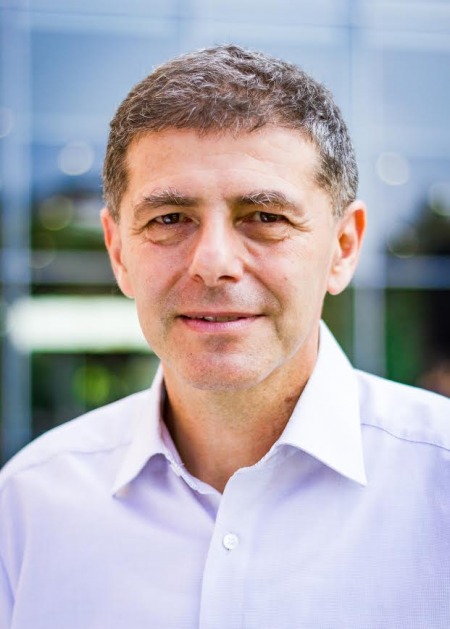
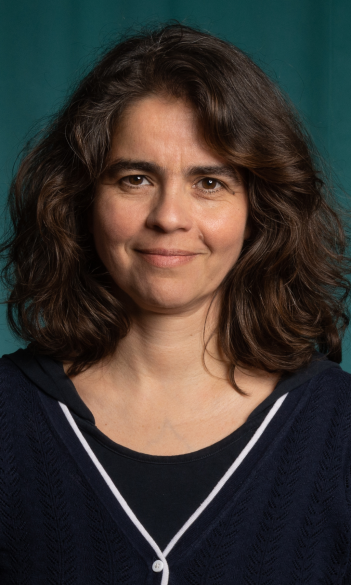
Máté Szabó is an Assistant Professor at the University of Debrecen , affiliated with the Faculty of Informatics and the Department of Information Technology . His email contact is szabo.mate@inf.unideb.hu . He works in areas such as Machine Learning , Smart Cities , and Mobile Computing . His research spans topics like microservice architecture for ensemble models, Markov modeling of traffic flows, and distributed machine learning on mobile platforms. He has explored neural models for conversational AI and gamification in programming education through Minecraft-based challenges. His work also addresses edge computing and data parallelism in mobile environments. His publications (2016–2024) reflect trends in machine learning deployment on Android platforms smart city traffic analytics gamified educational tools cognitive modeling of numerical understanding microservice-based model integration .
Budapest University of Technology and EconomicsHungary
Dr. HAJNAL Géza is an Associate Professor at the Budapest University of Technology and Economics (BME), Faculty of Civil Engineering, where he serves in the Department of Hydraulic and Water Resources Engineering. His office is located in Room K. ép / mf. 12/7, and he can be contacted via email at hajnal.geza@emk.bme.hu or phone at +36 1 463 2362. His teaching portfolio includes active courses such as Hydraulic Engineering, Water Management (BMEEOVVAT43) and Hydrometric Field Course (BMEEOVVAI44). Previously, he taught Hidrogeology (BMEEOGMMET3) and Hydrogeology of Subsurface Water (BMEEOGMDT81). HAJNAL's research specializes in hydrogeology , with emphases on karst aquifer dynamics, groundwater flow modeling, climate impacts on hydrology, and hydraulic engineering. His work integrates field measurements (e.g., drip-water monitoring in Buda Castle Cave) with advanced numerical modeling to address complex hydrological challenges in Hungarian watersheds. Analysis of his 15 most recent publications (2013–2025) reveals dominant themes: 73% focus on karst/fractured aquifers , 20% on hydrological modeling techniques , and 7% on socio-environmental conflicts. Recurrent technical subfields include seepage flow validation, transmissivity determination, and rainfall-runoff sensitivity. No scientific awards, grants, student advisees, or lab affiliations are documented in the provided materials.
Miklós Zeidler is a habilitated Associate Professor at Eötvös Loránd University (ELTE), Budapest, lecturing in the Department of Modern and Contemporary Hungarian History within the Institute of Historical Studies. His principal research covers Hungary’s twentieth-century diplomatic, political and cultural history, with a strong focus on the Treaty of Trianon, inter-war revisionism, the League of Nations, and the memory-culture of irredentism. Research interests: Professor Zeidler explores the consequences of the 1920 peace settlement for Hungarian state- and nation-building, the functioning of the League of Nations in East-Central Europe, and the interplay between sport, propaganda and national identity. His recent publications analyse financial stabilisation loans supervised by the League, the micro-history of border disputes, and the symbolic geography of inter-war Geneva. Publication profile: Between 2020 and 2024 he authored studies on the making and reception of the Trianon treaty, the composition and lobbying activity of the Hungarian peace delegation, and the cultural mythology of irredentism. A recurrent methodological thread is the integration of diplomatic, urban and memory-history perspectives, often relying on previously unused Hungarian and League archives. Campus presence: His office is located in the Humanities Faculty building at 1088 Budapest, Múzeum körút 6–8, room 216; he can be reached at zeidler.miklos@btk.elte.hu. Comprehensive publication lists are available on MTMT.hu and his doctoral data sheet at doktori.hu.
Budapest University of Technology and EconomicsHungary
Dr. FARKAS Dávid is an Assistant Professor in the Department of Hydraulic and Water Resources Engineering, Faculty of Civil Engineering, Budapest University of Technology and Economics (BME). His office is located in Building K, basement level, room 12/7, and he holds weekly consultation hours on Mondays from 1–3 pm. Educational contributions include teaching core courses in hydrogeology and groundwater engineering: Groundwater (BMEEOVVMV63) Hydrogeology (BMEEOGMMG62) Infrastructural Design Project (BMEEODHAI41) Research activities concentrate on quantitative hydrogeology, with a special emphasis on karstic groundwater systems, seepage hydraulics, and the safety of flood-protection levees. He couples field investigations in iconic Hungarian cave systems (Buda Castle Cave, Molnár János Cave) with laboratory sandbox experiments and numerical modelling to advance understanding of flow and transport processes in fractured carbonates. Over the past decade his work has evolved from fundamental hydrogeological mapping toward the design and deployment of automated monitoring networks that integrate classical hydrological instruments with modern sensor technologies. This progression is evident in his most recent publications (2024-2025) that document the establishment of high-resolution cave monitoring systems capable of capturing rapid responses to precipitation events. Scientific awards currently listed: none. Advising and grants: no specific student names, grant numbers, or funded project titles are provided in the supplied text. Laboratories and teams: while no dedicated laboratory name is stated, his affiliation with the Department of Hydraulic and Water Resources Engineering implies access to the faculty’s hydraulics and hydro-environmental laboratories, including sandbox and seepage modelling facilities.
Budapest University of Technology and EconomicsHungary
Dr. Tamás Koltai is a Professor and Dean at the Faculty of Economics and Social Sciences of Budapest University of Technology and Economics (BME). He leads the doctoral school's Specialization Group in Production Management. His roles include overseeing academic programs and research in production management, operations research, and efficiency analysis. Education: Doctor of the Hungarian Academy of Sciences (2016) Dr. habil. (2000), Budapest University of Technology and Economics Candidate of Technical Sciences (1987), Hungarian Academy of Sciences M.Sc. in Mechanical Engineering (1983), BME Faculty of Mechanical Engineering Research Interests: Dr. Koltai focuses on production management optimization, including the application of Data Envelopment Analysis (DEA), sensitivity analysis in mathematical models, and the integration of robotics in assembly lines. His work bridges theoretical models (e.g., MILP/CP optimization) with practical industrial challenges, particularly in healthcare efficiency and educational management. Notable Awards: IEOM Society Teaching Excellence Award (2021) BME GTK Faculty Memorial Medal (2016) János Susánszki Award (2013) Széchenyi Professorship Scholarship (1999–) Teaching & Leadership: He has held visiting roles at the University of Seville (1990–1992) and the University of Michigan (1988/89). His teaching excellence is recognized through awards and his contributions to business simulation education. His research often collaborates with industry partners to address real-world operational challenges. Labs/Teams: Leads the Production Management Specialization Group and contributes to interdisciplinary teams focusing on manufacturing efficiency and healthcare operations within BME.
Balazs Vedres is a **Professor** at the **Central European University (CEU)**, with a joint appointment in the **Department of Network and Data Science**. His research integrates network science, data science, and social theory to explore creativity, innovation, and historical processes in collaborative networks. He holds a **PhD in Sociology from Columbia University** and an **MA in Economics from Corvinus University**. **Research Interests**: Focuses on structural dynamics in creative fields (e.g., jazz, video games, open-source software), gender inequality in collaborative platforms, historical network evolution, and the impact of social bots on human collaboration. He analyzes how network configurations like *structural folds* and *forbidden triads* drive innovation and creativity. **Awards**: Elected **Member of the European Academy of Sociology (2017)**, recognizing his contributions to sociological research. His work bridges computational methods with sociological theory, as seen in his publications in *American Journal of Sociology* and interdisciplinary journals. **Projects**: Leads initiatives like *Gendered Creative Teams: From Marginality to Success* and *Ceunet/Indra Mapping European Network Science*. His research often involves empirical studies of transnational activism, entrepreneurial networks, and digital platforms. **Labs/Teams**: Active in CEU’s **Data and Network Dynamics Studies (DNDS)** group, fostering interdisciplinary collaboration in computational social science. His work emphasizes the interplay between global economic integration and local developmental agency.
Dr. Gábor Koloh is a contemporary Assistant Professor and Research Fellow at the Eötvös Loránd University (Department of Economic and Social History) and the HUN–REN RCH Institute of History . His scholarly work focuses on demographic history , social history , and rural economic structures , with particular emphasis on fertility transitions , household organization , and modernization processes in 19th-20th century Hungary. Education : Law (ELTE), Aesthetics (BA), MA and PhD in Economic and Social History (supervised by György Kövér) Research Themes : Demographic change in interwar Hungary Ethnic agricultural practices in Baranya Temporal/spatial patterns in peasant communities Social mobility of Protestant clergy Methodology : Micro-historical analysis, family reconstitution, manuscript source interpretation Current Projects : Interdisciplinary studies on pronatalist discourse, cooperative territorial development, and aristocratic demographic patterns
Andrea Kő is a researcher at the Corvinus University of Budapest's Institute of Data Analysis and Informatics, with a focus on artificial intelligence, fintech, and big data applications. She has held positions in the Department of Information Systems until 2022 before transitioning to her current role. Her work emphasizes investment recommenders, Industry 4.0 readiness, and e-government solutions. Her research spans financial technologies, manufacturing optimization, and organizational resilience in SMEs. Notable contributions include hybrid AI models for production systems and frameworks for digital transformation assessment. She actively contributes to international conferences like EGOVIS and BiDEDE, editing proceedings and presenting on topics such as robo-advisors and smart manufacturing. Key projects include the CCMS2.0e maturity model for Industry 4.0 adoption and studies on pandemic impacts on SMEs. Her work integrates machine learning (ANFIS, MMNN) with domain-specific challenges, addressing both theoretical and practical aspects of digital innovation across sectors.
Károli Gáspár University of the Reformed ChurchHungary
Dr. habil. Dringó-Horváth Ida is an Associate Professor at the Faculty of Humanities and Social Sciences of Károli Gáspár University of the Reformed Church in Hungary (KRE). She serves as Head of the ICT Research Center under the Rector's Office and as Head of the Educational Informatics Continuing Education Center at KRE BTK. Her leadership extends to multiple research projects focused on educational technology in higher education, particularly examining digital competencies, teacher development, and the integration of information and communication technologies in academic settings. Dr. Dringó-Horváth earned her PhD in German Studies/Linguistics from Eötvös Loránd University in 2004, with a dissertation titled "Analysis and Evaluation of the Modern Teaching and Learning Medium 'Elektronisches PC-Wörterbuch'." She completed her habilitation in Educational Science at the same institution in 2019. Her academic background includes an MA in German from Eötvös Loránd University (1998) and additional qualifications in educational informatics and social work. Her research focuses on the intersection of educational technology and higher education pedagogy, with particular emphasis on digital competence development for teachers, dictionary skills in language learning, and the digital transformation of educational practices. Dr. Dringó-Horváth leads the "Educational Informatics in Higher Education" research project, which examines effective learning/teaching opportunities in electronic learning environments and maps ICT indicators of higher education lecturers. Her work explores how reflection processes contribute to long-term teacher competency development in the digital age. Analysis of her recent publications reveals a strong focus on artificial intelligence in higher education, technostress reduction, and digital competence measurement. Her research shows how digital transformation impacts both teaching practices and student learning experiences. She has made significant contributions to understanding how educators develop digital competencies and integrate technology into their teaching practices across different disciplines. Károli Kiválóság Díj (2022) for Q1 publication Károli Kiválóság Díj (2023) for Q1 publication Károli Kiválóság Díj (2023) for Q2 publication A. S. Hornby Trust Grant for dictionary research presentation at EURALEX Conference Dr. Dringó-Horváth actively mentors doctoral students including Sebestyén Lilla Anna, Veres Violetta, and Gulmira Kusajynkyzy. She serves as institutional coordinator for multiple significant research projects including "PROFFORMANCE+" (2022-2025), "Ensuring Quality Digital Higher Education in Hungary" (2022-2023), and "Support of Digital Transformation of Hungarian Higher Education" (2021-2022). Her grant portfolio demonstrates strong institutional support for her work in educational technology and faculty development. As leader of the ICT Research and Training Centre (Educational Technology Research and Training Centre), Dr. Dringó-Horváth oversees a dynamic team conducting research on information and communication technologies in higher education. The center collaborates with international and domestic institutions to develop best practices for digital learning environments. Her team's work has significantly influenced Hungarian higher education policy regarding digital transformation and teacher development.
Budapest University of Technology and EconomicsHungary
László Lengyel is a Professor at the Budapest University of Technology and Economics (BME), affiliated with the Department of Automation and Applied Informatics . His work bridges theoretical and applied computer science, focusing on industrial automation, IoT systems, and model-driven engineering. Research interests include Model transformations and domain-specific languages IoT device management and multi-domain integration Software obfuscation and cybersecurity Graph algorithms and distributed computing (MapReduce) Real-time data analysis in manufacturing Automotive sensor networks His recent publications reflect expertise in model-driven IoT architectures , granule manufacturing automation , and MapReduce-based graph analysis , with a focus on industrial and automotive applications. He contributes to open-source frameworks like SensorHUB and explores gamification in driver behavior systems.
Dr. Gergely Kocsis serves as an Associate Professor at the University of Debrecen's Faculty of Informatics, Department of Informatics Systems and Networks. His office is located in the Faculty of Informatics building at 4028 Debrecen, Kassai út 26, ground floor, IF13 (Lecturers' room), with contact email kocsis.gergely@inf.unideb.hu and central telephone +36 52 512 900 75013. Dr. Kocsis's research program focuses on: Information spreading phenomena Agent-based and individual-based simulations Cellular automata applications Network structure and dynamics His scholarly output reveals a sophisticated research trajectory evolving from foundational work on cellular automata modeling of social dynamics (2007-2014) to contemporary investigations of transportation networks, VANETs, and AI applications. The 2023-2025 publications demonstrate particular expertise in network extraction methodologies, containerized computing environments, and the application of generative AI to productivity challenges. His work consistently applies computational modeling approaches to understand complex spreading phenomena across diverse network structures. Dr. Kocsis maintains comprehensive scientific profiles across major academic platforms including Google Scholar, ResearchGate, ORCID, Scopus, and Web of Science, demonstrating active participation in the international research community. His departmental colleagues work in complementary areas such as complex networks, embedded systems, and neural networks, suggesting rich collaborative opportunities within the Faculty of Informatics.
Anna Kende is a University Professor at Eötvös Loránd University, serving as Director of the Institute of Psychology and Head of the Department of Social Psychology. She actively contributes to academic governance as a member of both the Faculty Honors Committee and Faculty Council. Her research centers on the psychology of intergroup relations, with specialized expertise in social change processes, prejudice reduction mechanisms, and collective action dynamics. A defining focus of her work examines anti-Gypsyism and the social inclusion challenges faced by Roma communities across Europe, integrating both theoretical frameworks and applied interventions. Her research methodology frequently employs large-scale international collaborations spanning dozens of countries. Analysis of her 15 most recent publications (2025) reveals three dominant research trajectories: pandemic-induced shifts in intergroup relations (particularly migration attitudes), cross-cultural analyses of allyship motivations for marginalized groups (LGBTQ+ and Roma), and context-dependent interventions for reducing structural prejudice. Her work consistently utilizes multinational datasets and addresses contemporary societal challenges through psychological lenses. Professor Kende has secured substantial funding from European Union programs and other international organizations for numerous research projects. She leads the Social Groups and Media Research Workshop, which investigates group dynamics, media influences on social attitudes, and psychological mechanisms of social change. Her work bridges academic research with real-world applications in prejudice reduction and social cohesion.
Károli Gáspár University of the Reformed ChurchHungary
Dr. Adam Bence Bethlenfalvy is an Associate Professor at the Faculty of Humanities and Social Sciences, Károli Gáspár University of the Reformed Church in Hungary. Born in Delhi, India in 1977, he holds a PhD in Drama Pedagogy (Education) from Birmingham City University (2017) and MA degrees in English Language and Literature from ELTE (2004). He serves as Research Group Leader of the Theatre Pedagogy and Theatre Sociology Research Group and has directed numerous theatre productions while maintaining an active research profile. Bethlenfalvy earned his doctoral degree in 2017 from Birmingham City University with a dissertation titled "Living through extremes: an exploration of integrating a Bondian approach to theatre into 'living through' drama." His educational background includes dual MA degrees from ELTE Budapest in 2004 - one in English Language and Literature and another as an English Language and Literature Teacher. He also obtained professional qualification in drama direction from the Hungarian Drama Pedagogical Society in 1996. His language proficiency includes English (C2), French (A2), and Hindi (A2). Dr. Bethlenfalvy's research focuses on drama pedagogy, theatre education, and Edward Bond's theatre. His work explores the integration of Bondian approaches into living through drama, reflective practice in educational settings, and creative partnerships in theatre education. He has made significant contributions to understanding how fictional contexts can liberate educational and artistic processes, particularly through process drama methodologies. His research also addresses contemporary challenges such as digital media usage, online learning during the pandemic, and code-switching in multilingual drama classrooms. His extensive publication record shows a clear focus on mapping and analyzing educational theatre programs in Hungary and Europe. Recent work examines methodology for national mapping of educational theatre, the big picture of objectives and strategies in Hungarian educational theatre programs, and trends in educational theatre practices. His scholarship consistently connects theory with practical applications in drama education while exploring the intersections between Edward Bond's theatrical approaches and educational drama methodologies. Dr. Bethlenfalvy has supervised doctoral students including Melinda Gemza (University of Debrecen) and Dear Kristina (Babeș–Bolyai University). He has served as an opponent at numerous doctoral defenses, including for Ramona Gecse (2021), Antal Klaudia (2022), Vera Prontvai (2022), Kata Pető (2022), and Prezsmer Boglárka Laura (2023). He leads research projects including "Theatre and society – theatre pedagogy and theatre sociology in Hungary" (2022-2024) and participates in "Victim Roles" and "Code-switching in the arts" projects. As an active practitioner, Bethlenfalvy has directed numerous theatre productions, including "OnLife" at Csokonai National Theatre (2025), "Dragon's Eye" (2024), and several Edward Bond adaptations. He has organized significant conferences such as the Democracy through Drama Summer School (2019) and The GAP conference (2016). His professional activities also include membership in academic societies like IDEA Europe, Hungarian Drama and Theatre in Education Association, and National Association for the Teaching of Drama.
Imre Salma is a Professor at the Department of Analytical Chemistry within the Faculty of Science at Eötvös Loránd University (ELTE). His research focuses on atmospheric chemistry, aerosol physics, and environmental science, with an emphasis on particle formation, air quality, and health impacts. He holds a Doctor of Science (DSc) degree and has extensive experience in analytical techniques, including eddy accumulation and convolutional neural networks for particle detection. Salma’s work examines ultrafine particles in urban environments, investigating their sources, dynamics, and health consequences. His research spans long-term data analysis (e.g., 11-year datasets), lockdown effects on pollution, and regional comparisons across Europe. He also explores oxidative potential of particles, lung deposition mechanisms, and firework-related air quality degradation. Key applications include improving air quality monitoring, informing policy, and advancing climate models. His publications span aerosol nucleation mechanisms, hygroscopic properties, and interdisciplinary approaches bridging chemistry, computer science, and public health. Salma collaborates internationally, contributing to initiatives like the COST Action 633. His lab is located at the Institute of Chemistry in Budapest, with a focus on cutting-edge analytical methods and environmental problem-solving.
Budapest University of Technology and EconomicsHungary
Dr. BARANYA Sándor is an Associate Professor and Head of the Department of Hydraulic and Water Resources Engineering at the Budapest University of Technology and Economics, Faculty of Civil Engineering. He holds key administrative roles, including Faculty Council Representative, Chairman of the Economic Committee, and Erasmus Committee Member. His office is located in Building K, Room MF 19, and he can be contacted via email or phone. His research spans sediment transport , river morphology , microplastic pollution , and computational fluid dynamics (CFD) . He employs innovative methods such as acoustic mapping, machine learning, remote sensing (Sentinel-2, Landsat), and numerical modeling to study large river systems, particularly the Danube. His work addresses ecological impacts, including thermal pollution from power plants and microplastic distribution. Recent publications (2023–2025) focus on: Sediment-microplastic dynamics using integrated field-data and AI Historical river regulation impacts CFD-based restoration strategies Advanced monitoring techniques (e.g., acoustic velocimetry, deep learning for riverbed analysis) He teaches courses including Hydraulics , Hydromorphology , and Water Utilisation & Damage Prevention , and mentors students in TDK (Research Society) projects on sediment transport, river habitats, and microplastics. He participates in EU initiatives like DanubeSediment for transnational sediment management.